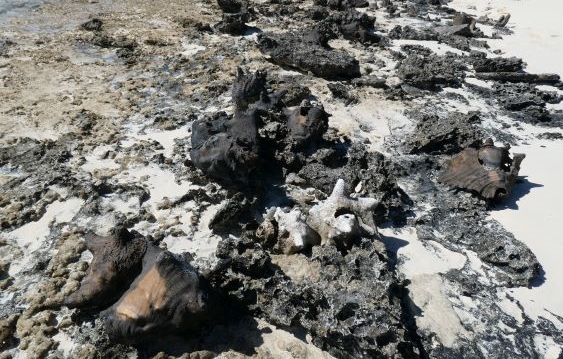
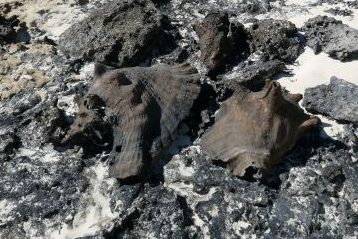
Speaking of conch, inquiring minds would like to know, just how long does it take for already harvested conch shells to turn brown/black and become one with the rock? Because these are “welded” into the “rock”
During our play time on the beach, someone (Susie) decided that small mangrove would make a great backdrop for one of our long-distance “selfies,” wherein Todd carefully positions/balances the camera somewhere (in this case, on a rock), sets the timer function, and dashes over to join in the shot.
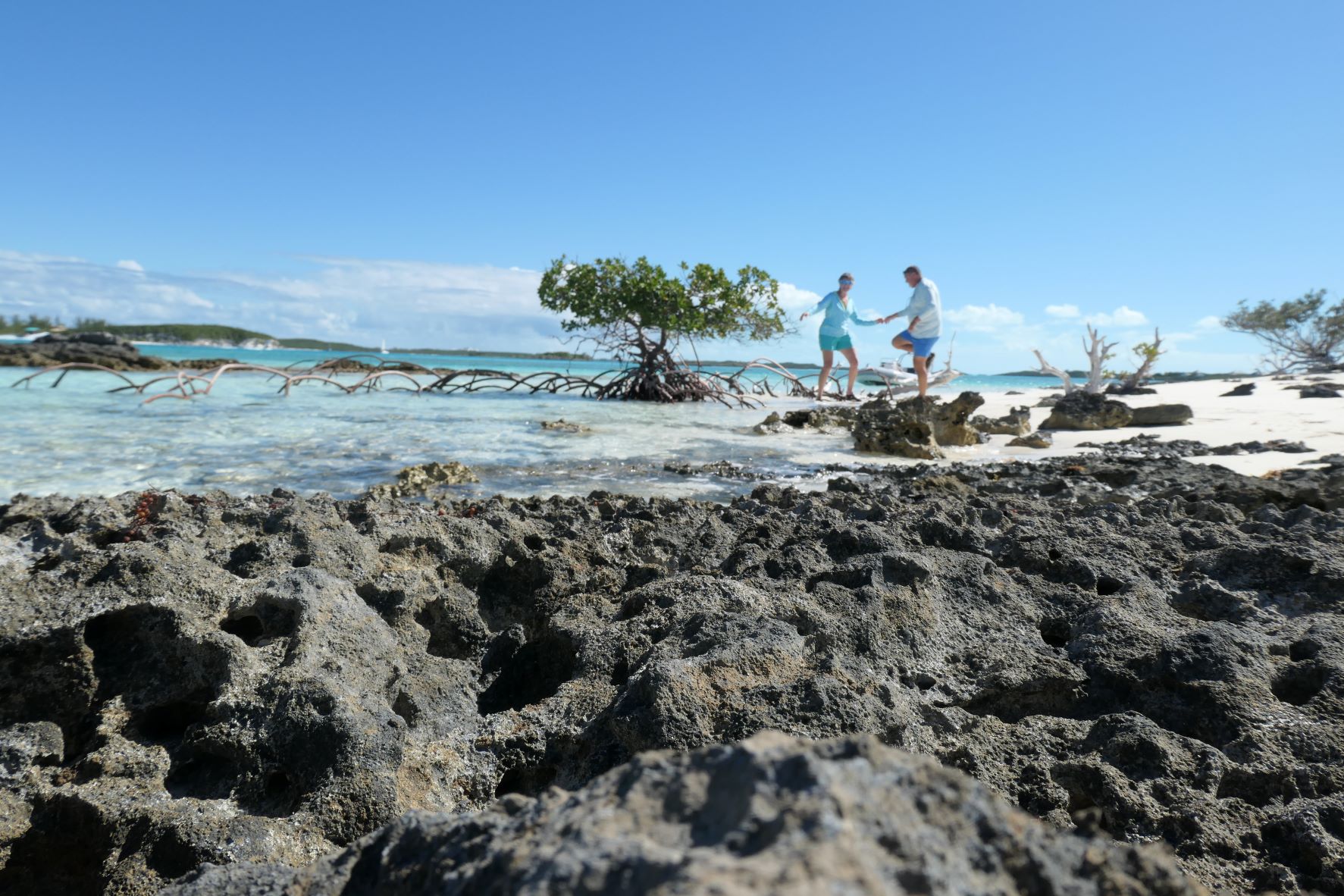
Nope. Just didn’t quite make it.
(Definitely need to select a closer rock platform.)
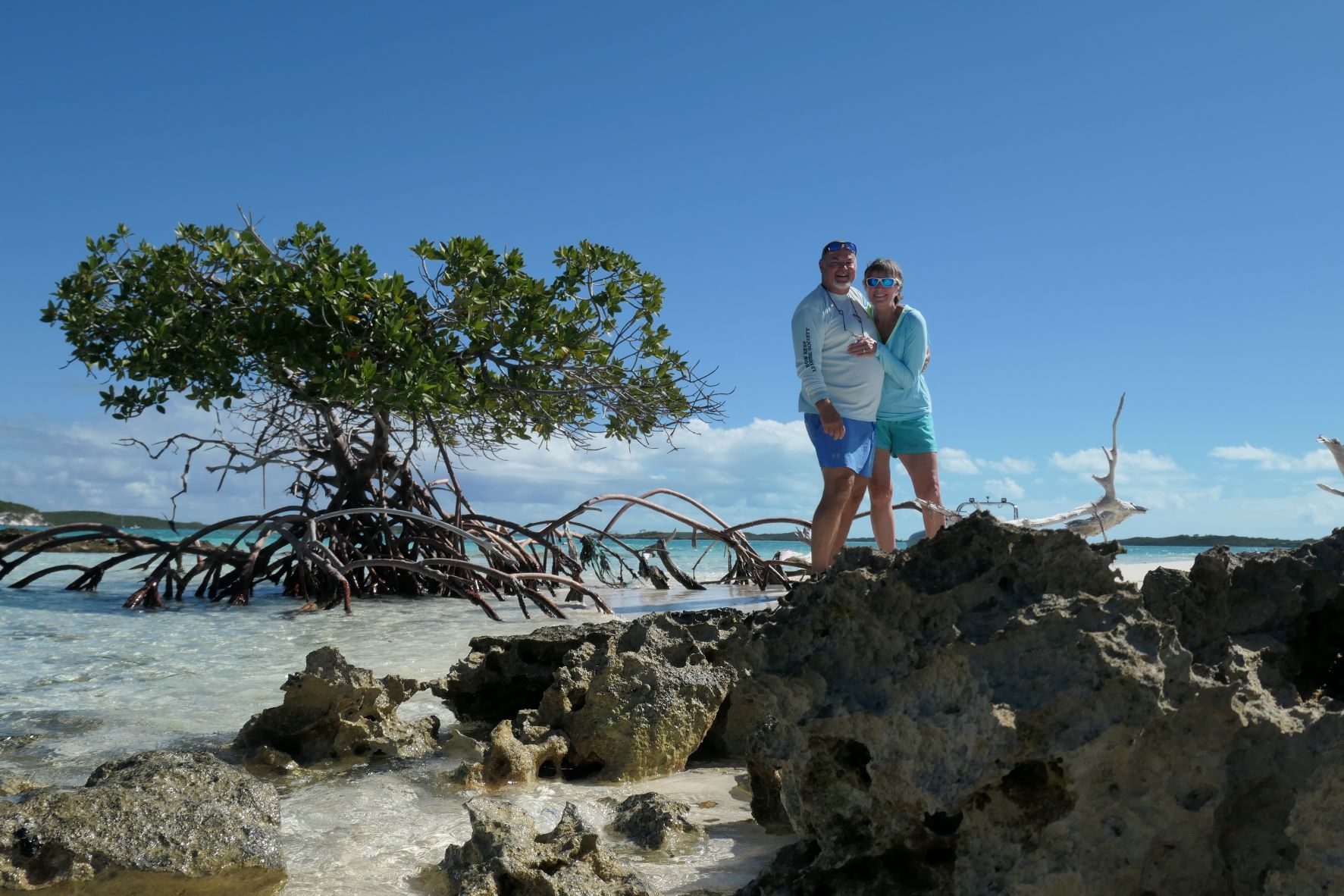
(Let’s try one more time from a closer rock.)
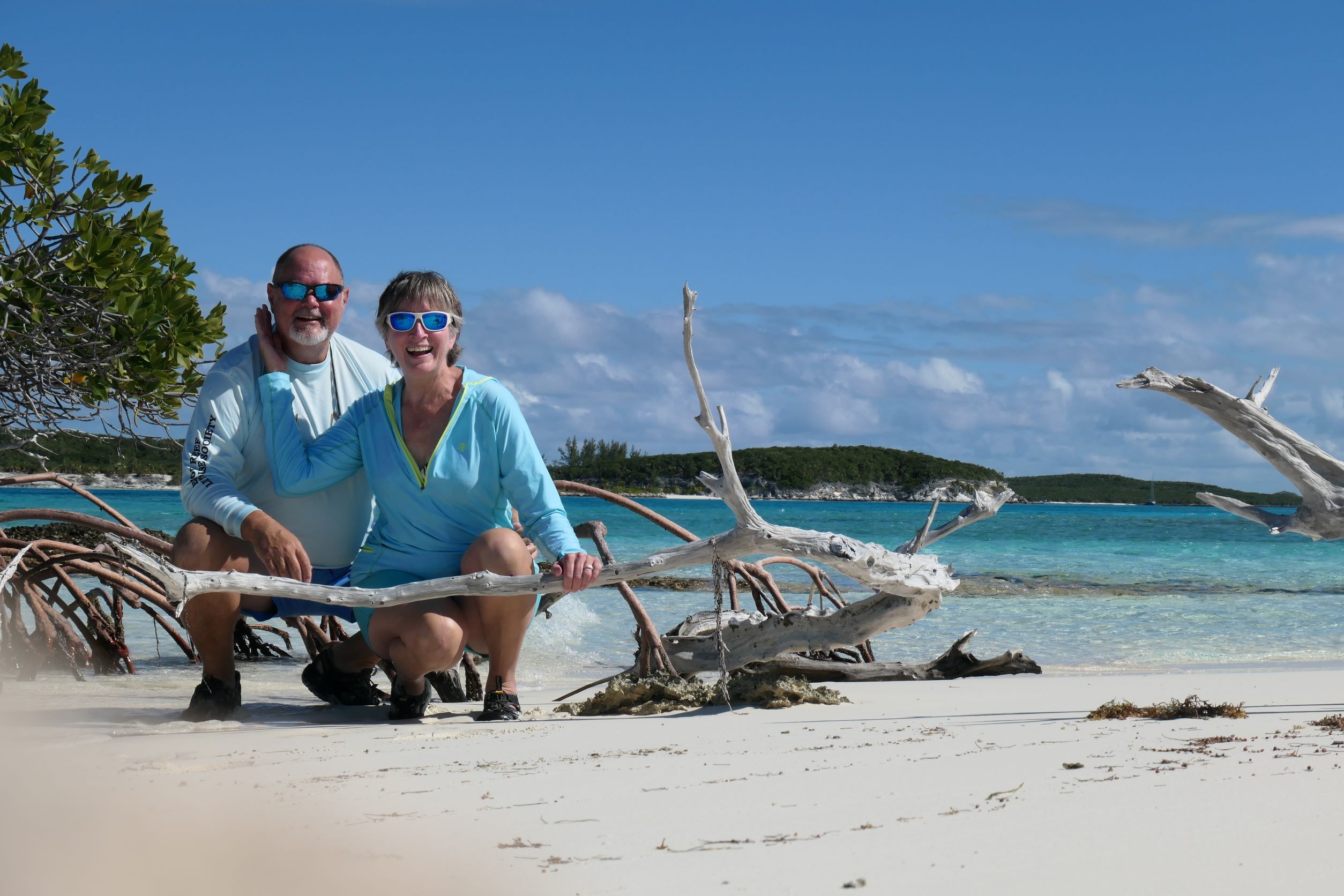
(No one’s tripped yet. Let’s quit while we’re ahead.)
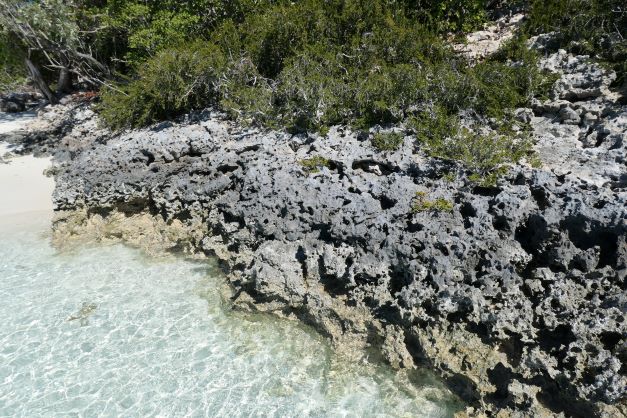
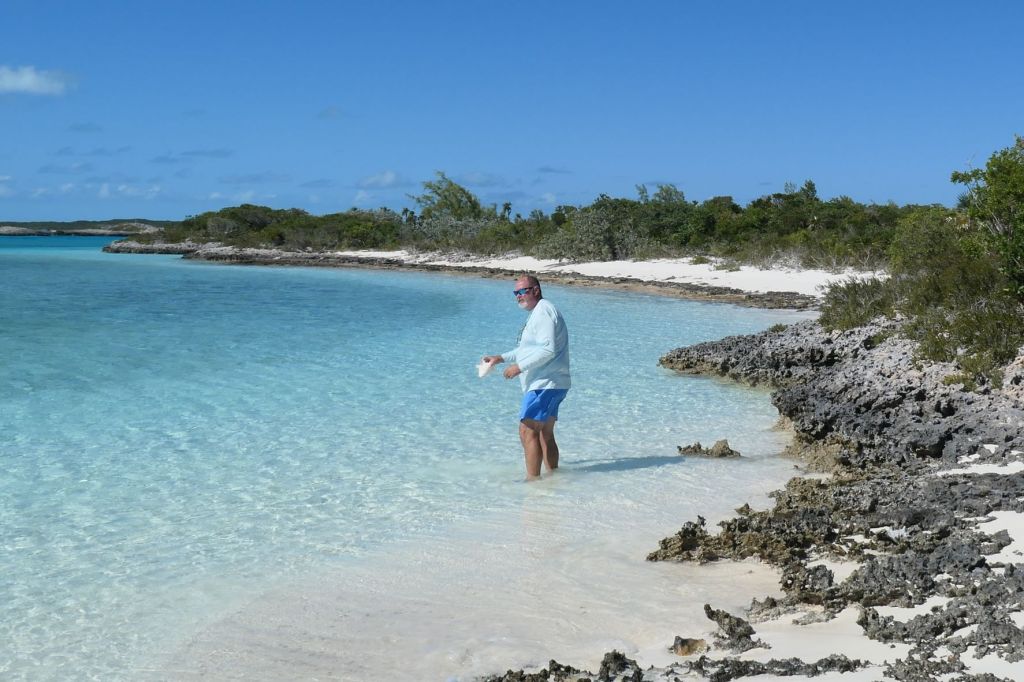
This and the spiky rocks in the photo of Todd with the conch shell are good examples of ironshore. Hence the need for rugged shoes to walk the beach.
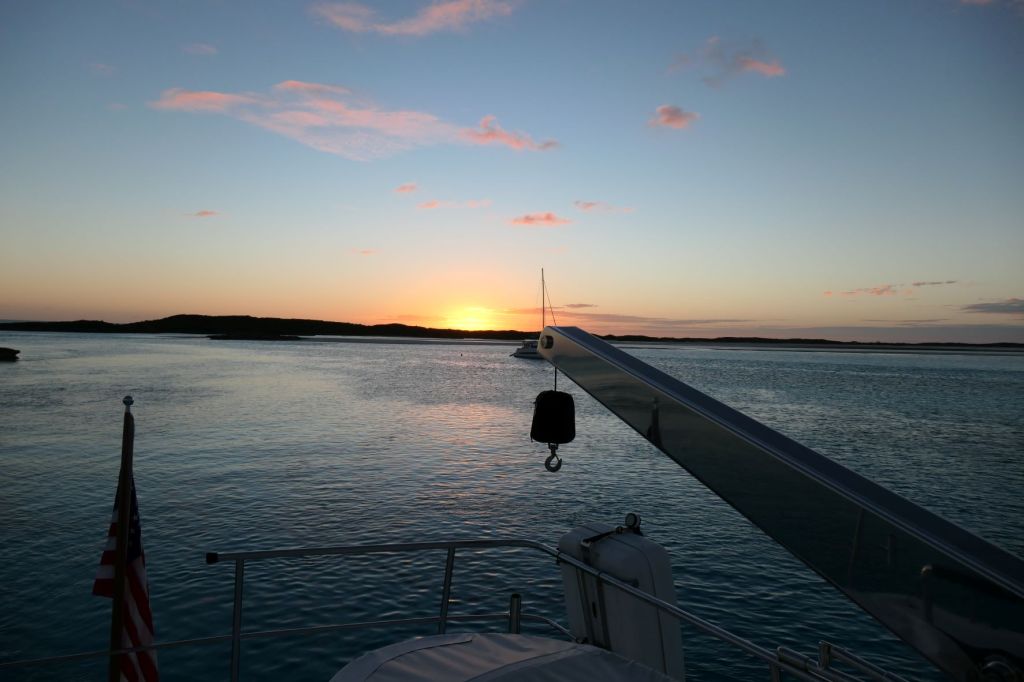
The catamaran that anchored with us the first night left during the day, so we were alone the second night.
Experience, life’s best teacher
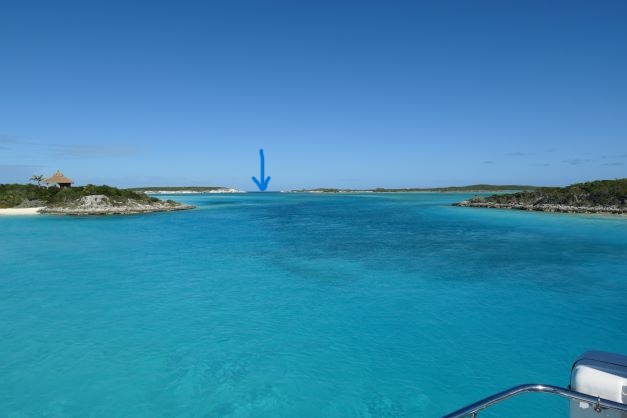
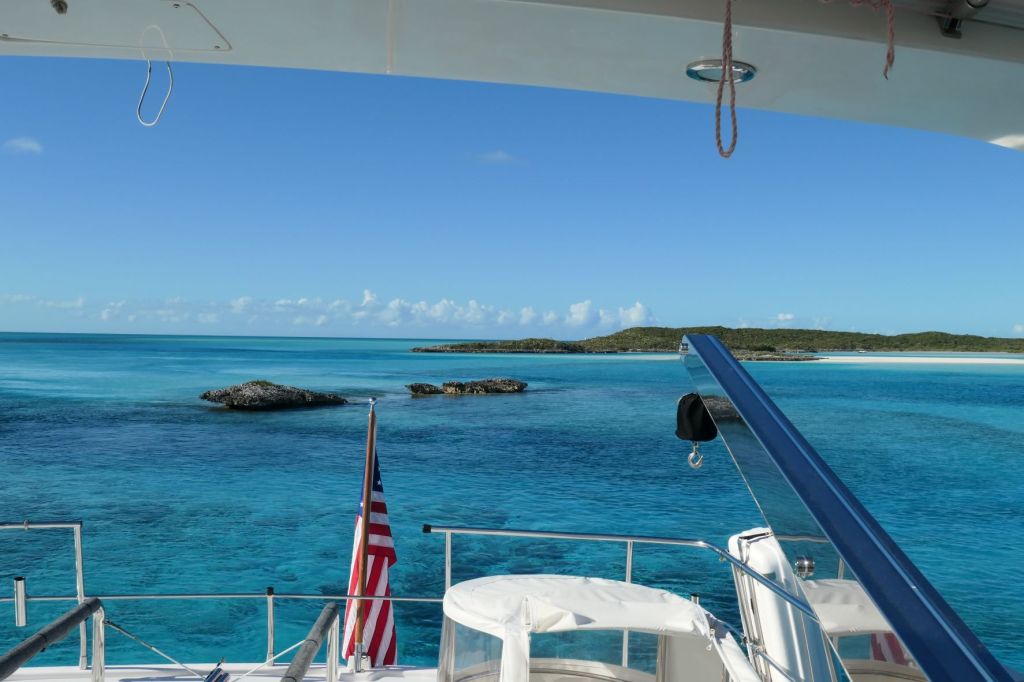
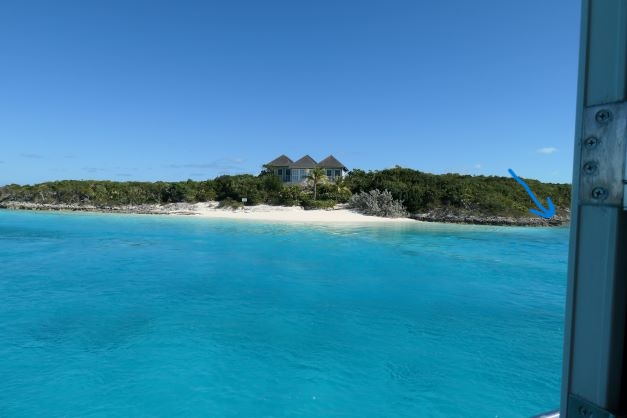
After our exploratory play time, sunset and a nice dinner, it looked like a storm might be heading our way, so we closed hatches, etc. and tucked in. About 2100, the winds really picked up and the incoming tide pushed a strong current through the cut on the far side of our little anchorage. It pushed and pushed, and we heard it until…anchor alarm! Yep, our well-buried anchor began to drag, and we were being pushed back. Remember those rocks to our stern? Uh-oh. We had no choice here but to weigh anchor, reposition, and drop it again, in the dark.
Deep breaths.
We pulled up the anchor and got away from the large rocks at our stern easily enough but didn’t get repositioned to drop the anchor before the current grabbed her and pushed us, sideways and slightly forward, onto an underwater bank literally right in front of the ironshore just beside the little beach. Our bow stopped about 6′ from the ironshore! Luckily, a Bahamian who normally keeps his 70′ sailboat moored in our little spot saw our lights move and came out in his really large rib (like 24′) to investigate and lend a hand. He also happens to do salvage, and while we didn’t need that, we most certainly did need his local knowledge, skillset, and assistance.
Todd dove several times to assess the situation, which was bad but not as dire as it might sound. SaltyMare is a tough gal, and her drive train is fully protected by an extended keel. Yes, we were aground and sideways to the current that was pushing us against that submerged bank which wasn’t all sand but wasn’t ironstone. The tide was still coming in; we’d get more water to float off, but the strong current would still push us. Our fully protected keel was doing its job – protecting. The “uphill” starboard stabilizer fin was on the bottom but in sand and undamaged. Most importantly, our bow was wedged securely on a smooth basketball-sized rock that was keeping us from moving any further forward into the ironstone! Praise the Lord!
The tricky part was that the incoming tide would indeed float us off, but we would then be free to get pushed by the still-rushing current up that not so soft hill beside us and worse still maybe forward against the ironshore! So, we had to somehow anchor/secure the boat before the water floated us off that little rock. Todd and our angel, Elie, lowered our 55 kg (120 lb) anchor into the front of his rib and while letting out chain (that weighs 1.6 lbs per foot!) they took the anchor out about 250 ft perpendicular to the boat and dropped it. Then they took our other anchor (only 90 lbs) off its chain and attached it to the longest line we own (400 ft), then attached it to our stern and hauled it also straight out away from the boat. So now we had two points holding us so that as we rose with the remaining tide we wouldn’t move sideways “up” that hill or forward into real damage.
A nervous two-hour wait, now around midnight, sure enough, she floated off the little rock and we began to see the depth rapidly change as she began to float – 4.5 ft. 5 ft. 8 ft! – and more importantly the current was about slack. Quick! Hand-over-hand, heave on those lines. We strained and pulled her by hand sideways away from that underwater hill and most importantly that terrible rock ironshore. 15 ft! Yes, we’re safe in 15 feet of water! For the time being… Who could sleep?? But just in case, we set an alarm for the tide change at 0600 because that would reverse everything, and we would have to get in the dinghy and move the “lighter” anchor. Then we could wait for the high tide (about noon) so we could figure out how to retrieve the anchors, get them back on the windlass, and get the heck out of Dodge.
- Three hours sleep
- A harrowing experience
- Cool heads prevail
- An adventurous tale to relive in our golden years
You betcha! Just another day, night, in the life of liveaboard cruising. Oh and this spot had no roosters!
 Our Travels
Wow, so beautiful. I’m so happy you are living the dream……soak up some sun for us land lubbets!!
LikeLike
It’s been quite the adventure and with Susie aboard you know we don’t go anywhere without our SPF50! ha!
LikeLike