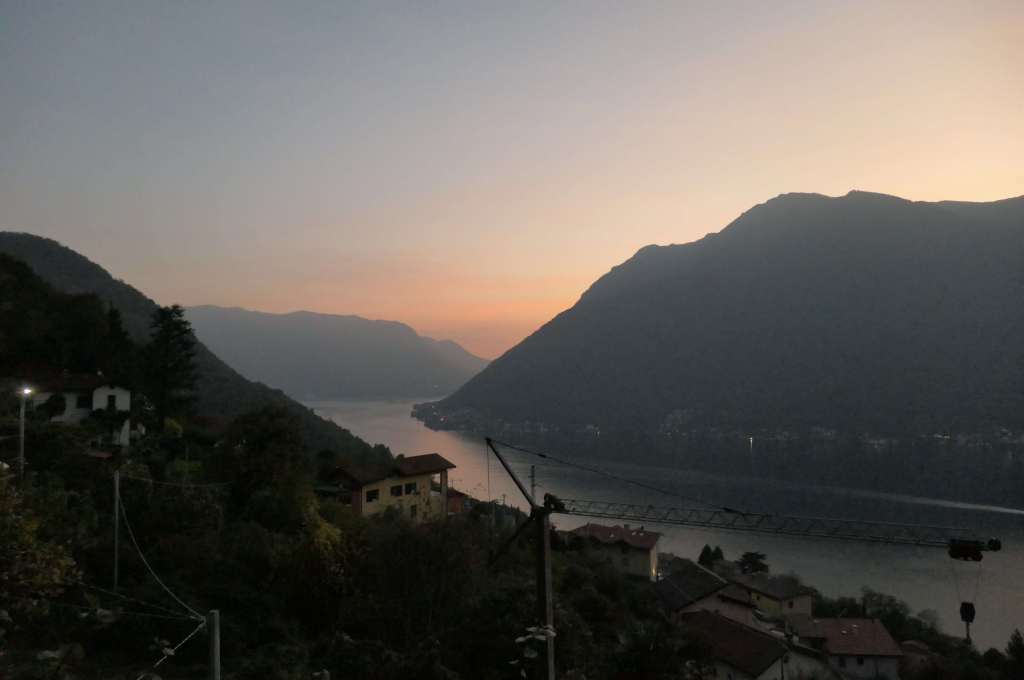
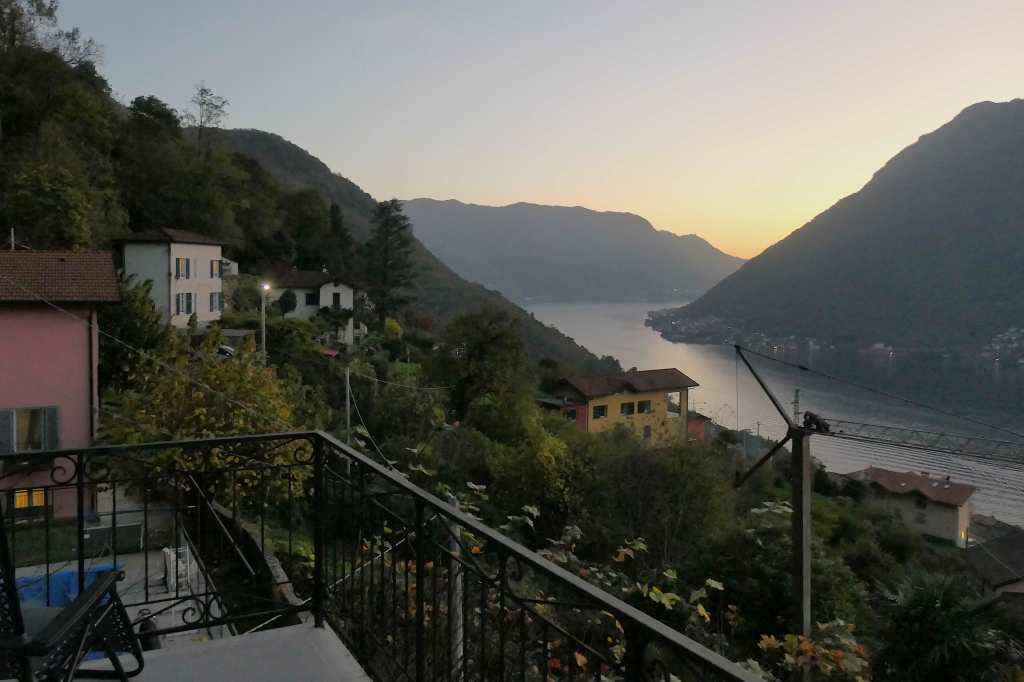
On November 3, after one more pretty sunset over Lake Como, we packed the car for an a.m. departure from Nesso.
Not the Swiss Alps, the Dolomites, otherwise known as the Italian Alps. We’d planned a 175-mile drive north and then east over to Trento to skirt along the lower edge of the Alps. Too close to winter to venture way up there – we prefer to see the snow only from a distance.
But first, a boat ride on Lake Como!
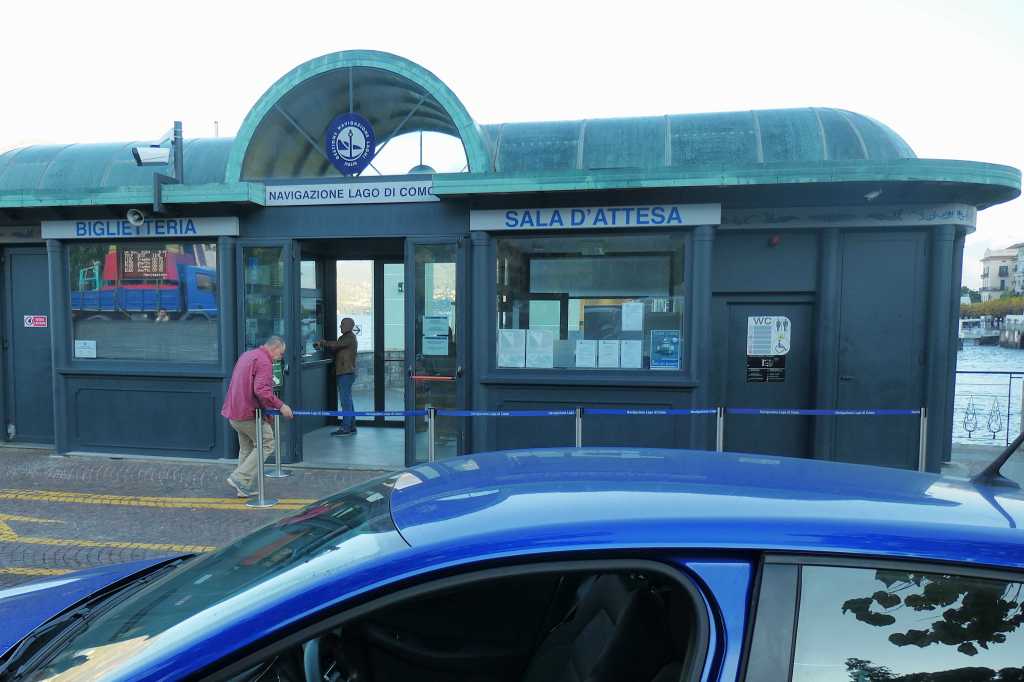
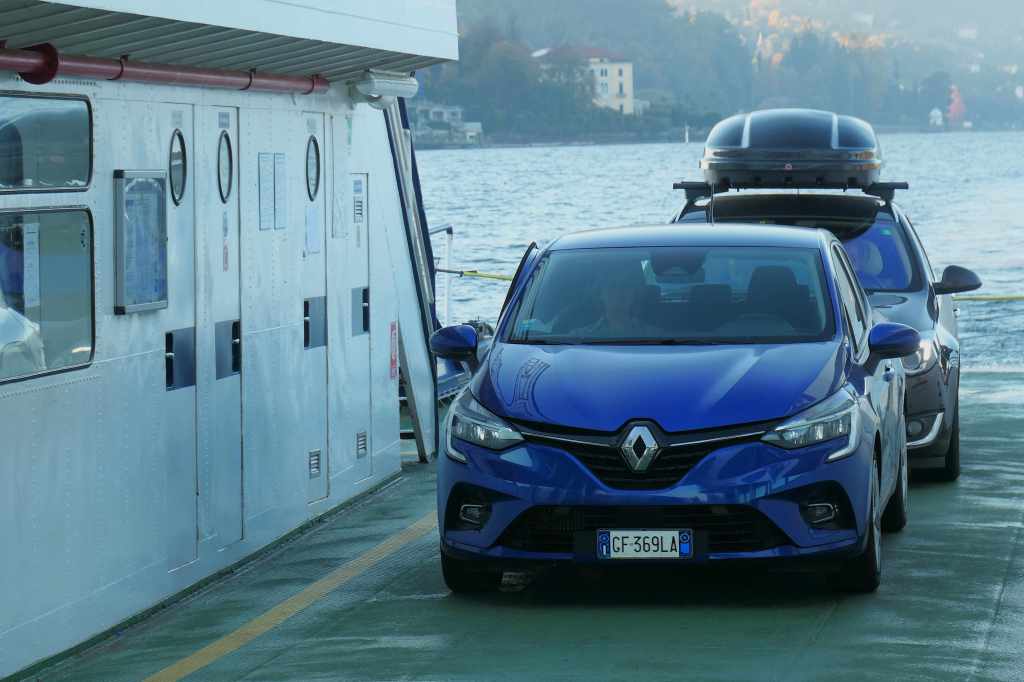
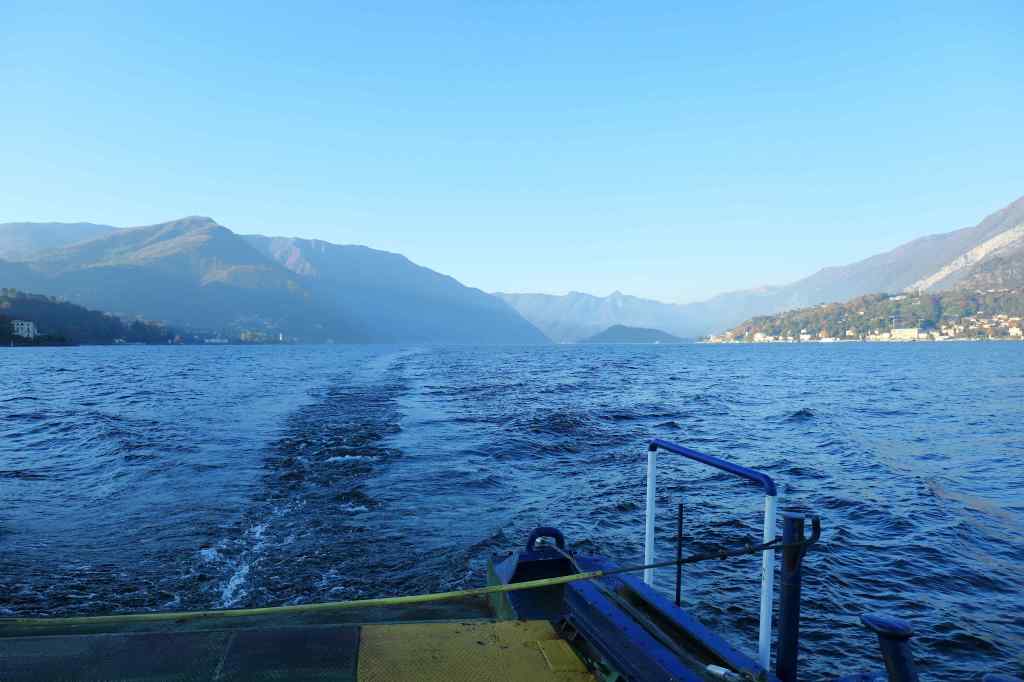
From the shoreline at Varenna, we wound our way up the mountain via switchbacks and through the mountains in numerous l-o-n-g tunnels.
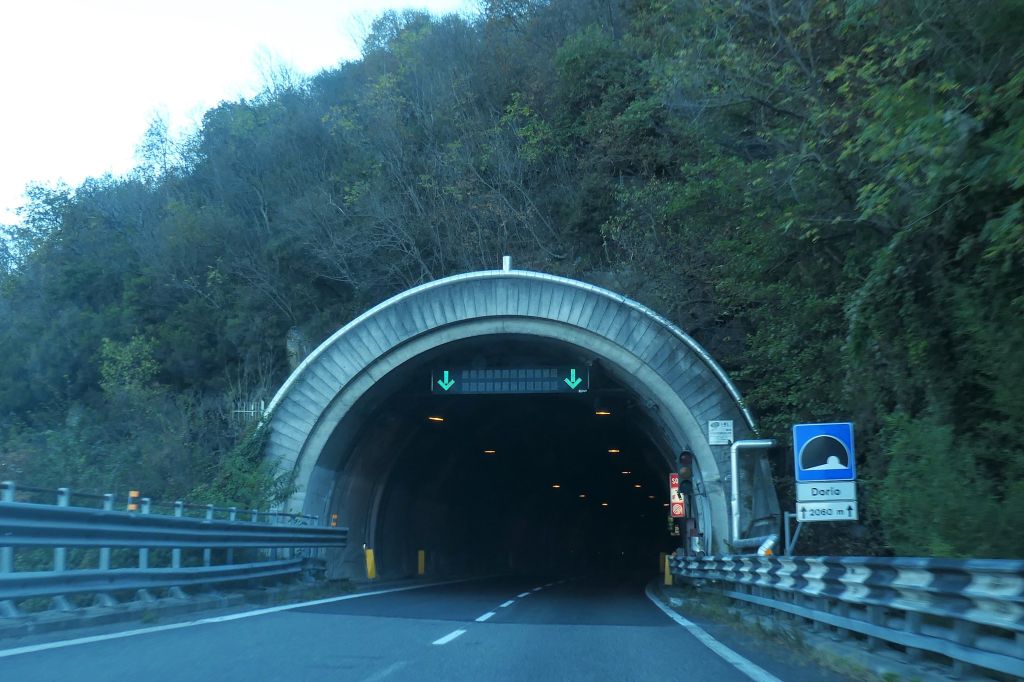
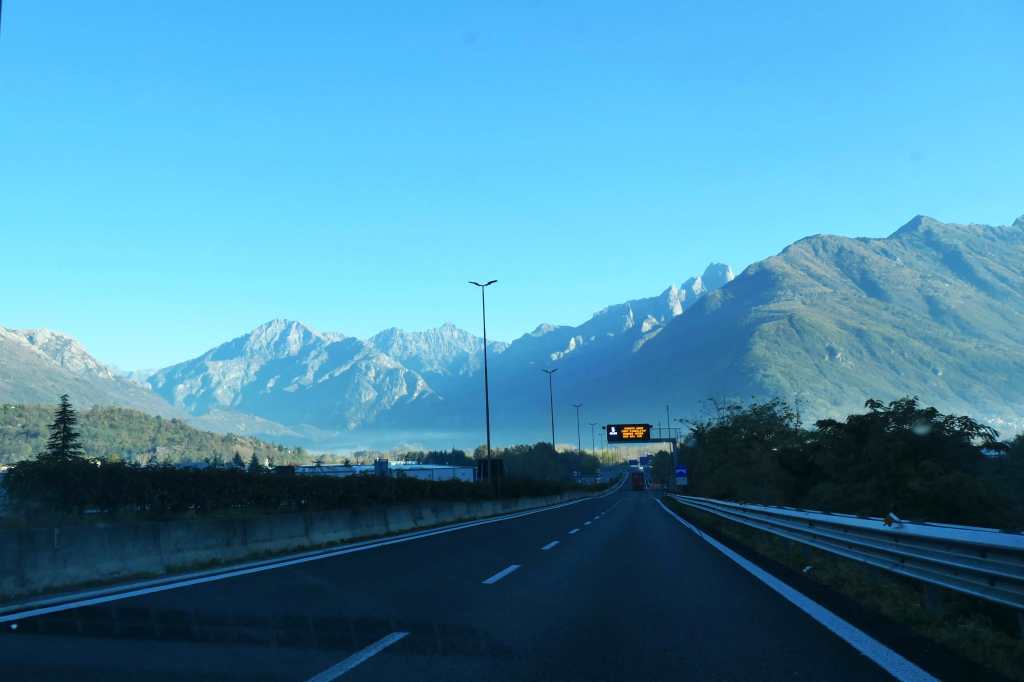
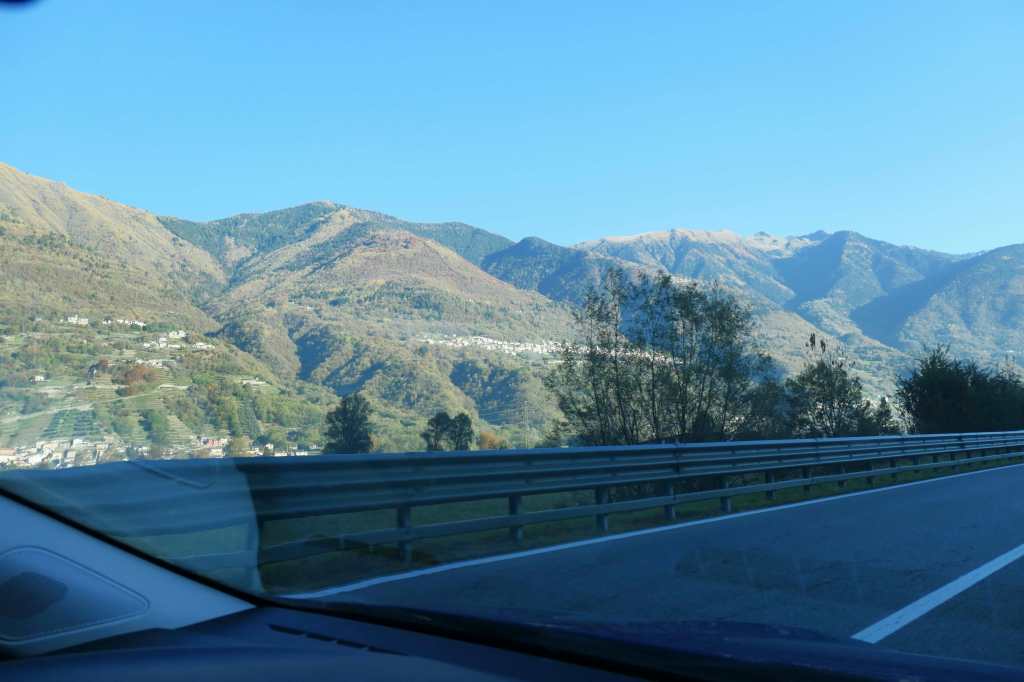
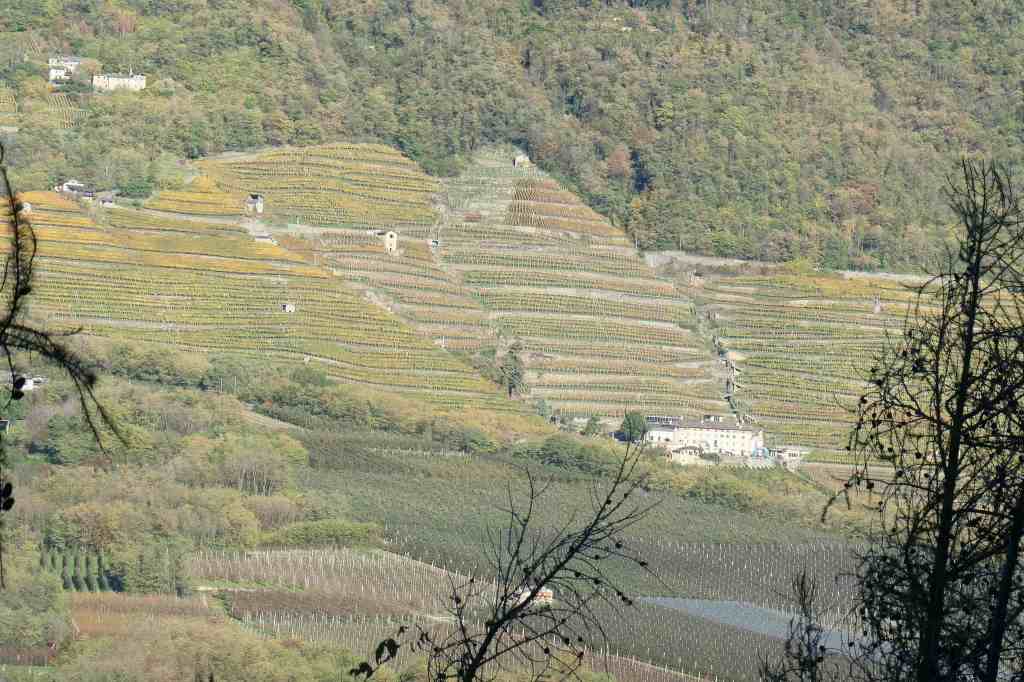
(we’d later appreciate the fruits of these labors – Ha!)
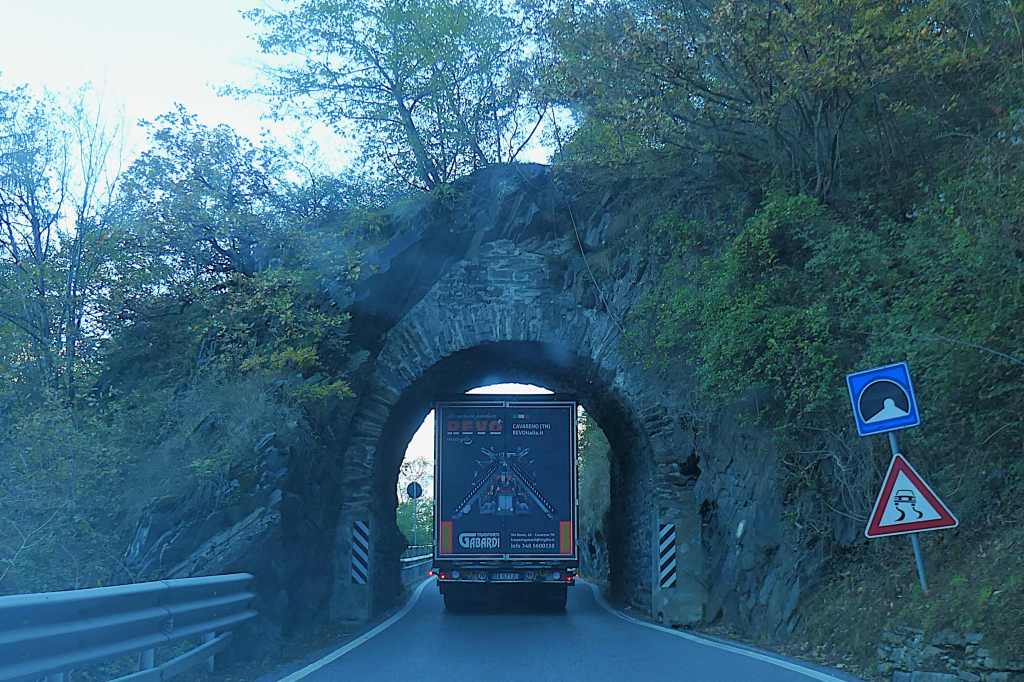

Along the way, we passed through towns of various sizes.
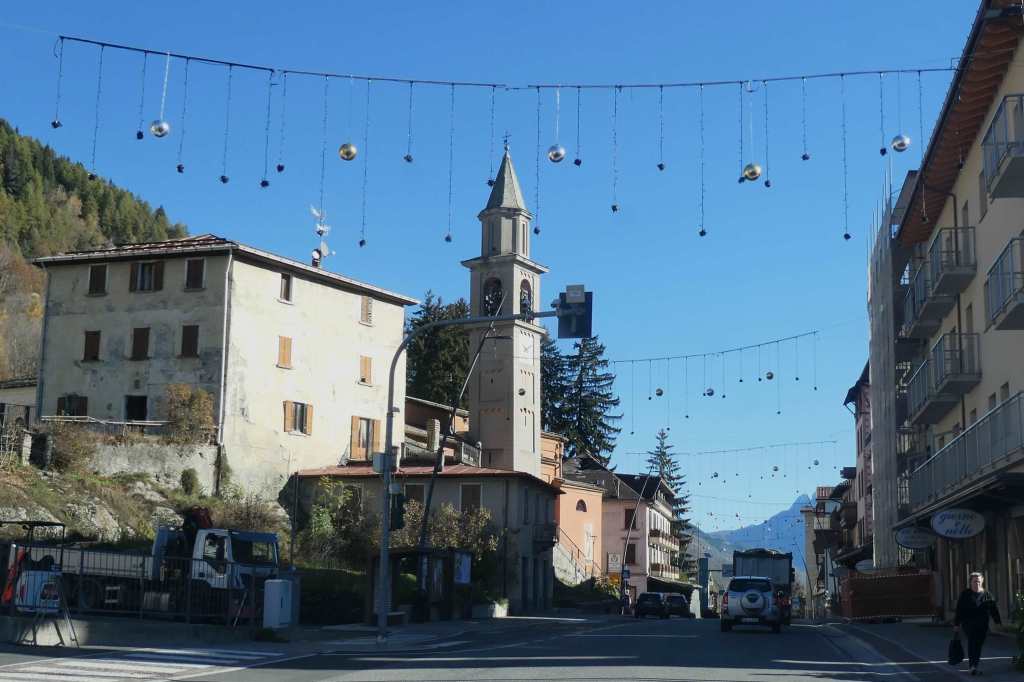
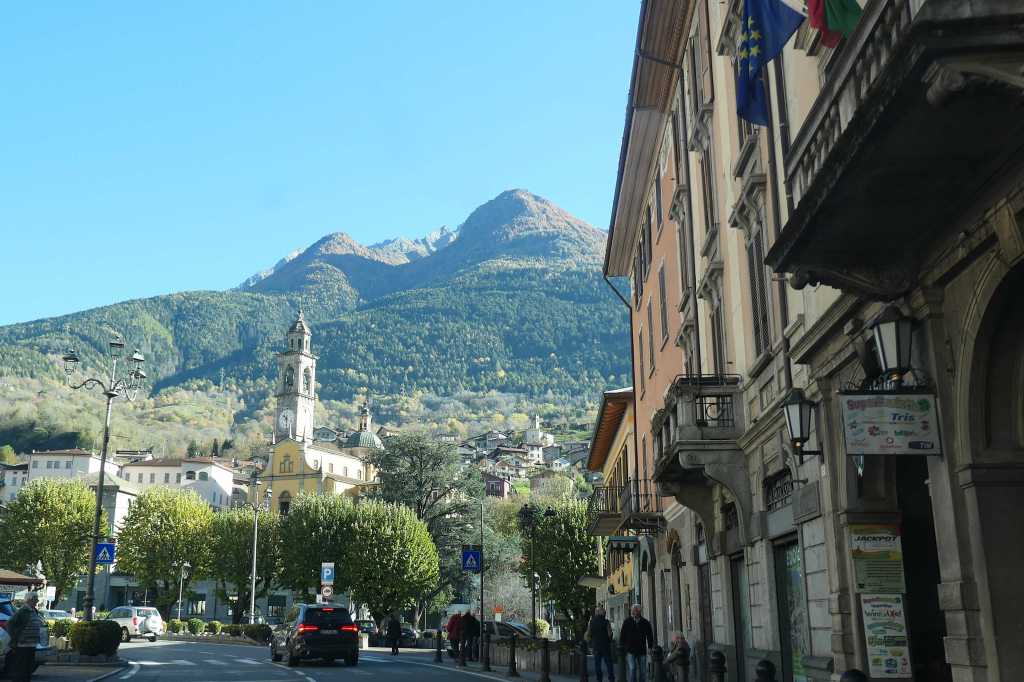
While stopped for an early lunch in the town of Vezza d’Oglio, we researched (i.e. googled) the unusual name. Legend has it that after a flood destroyed the ancient village of Rosolina, a large barrel of olive oil was found among the debris, giving rise to the name for the new town to be built on the ruins. The dialectal translation of Éza is “barrel,” thus basically “Barrel of Oil.” Tada!
The other tidbit we picked up led to a small adventure to find the nearby Parish Church of San Martino, one of many of the same name in Italy, this one dating back to 1100. Google claimed we could drive up to the small church. Unfortunately, you cannot always trust Google’s interpretation of “roads” to mean a car will actually fit. After reversing back down out of a particularly tight squeeze, we parked and set out on foot. When we tried to ask a few residents, the language barrier got in the way, so we were on our own.

(much wider than the lane we’d backed out of)
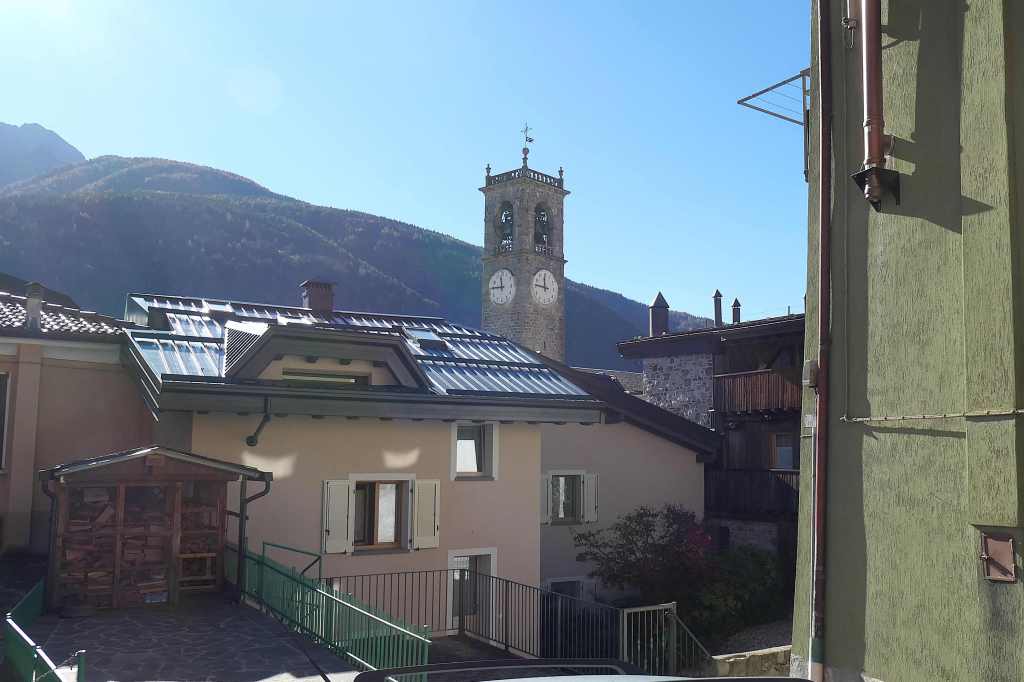
Once we could aim for the bell tower, we easily found the church. The inside is surprisingly ornate, from an entirely different time period than the tower, which, sadly, is the only thing remaining of the original church that was destroyed by fire in 1700, along with a large part of the town.
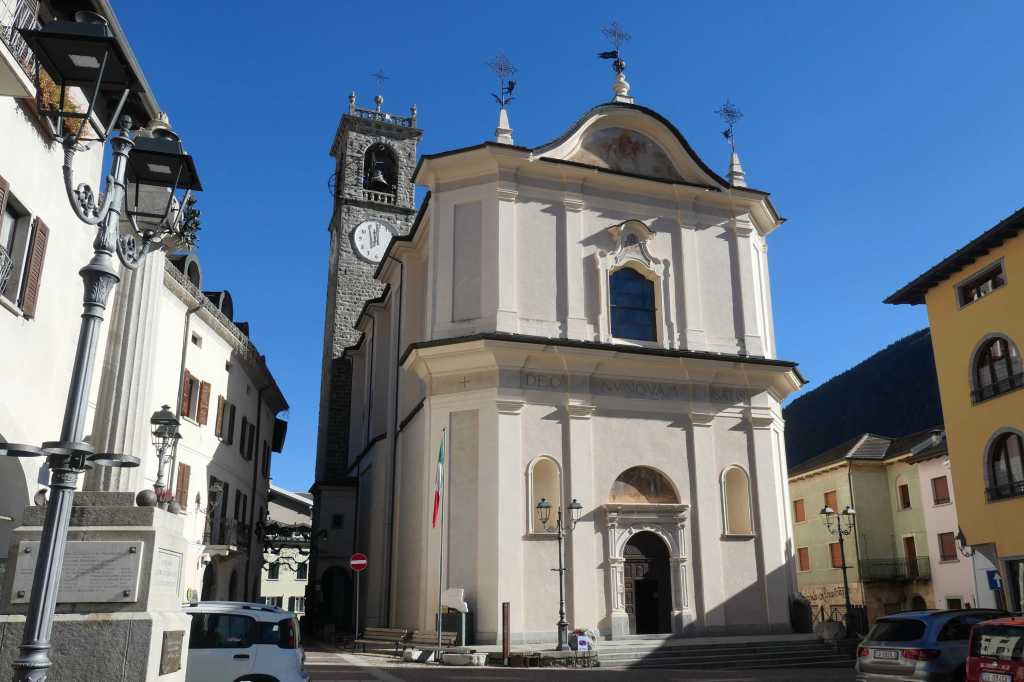
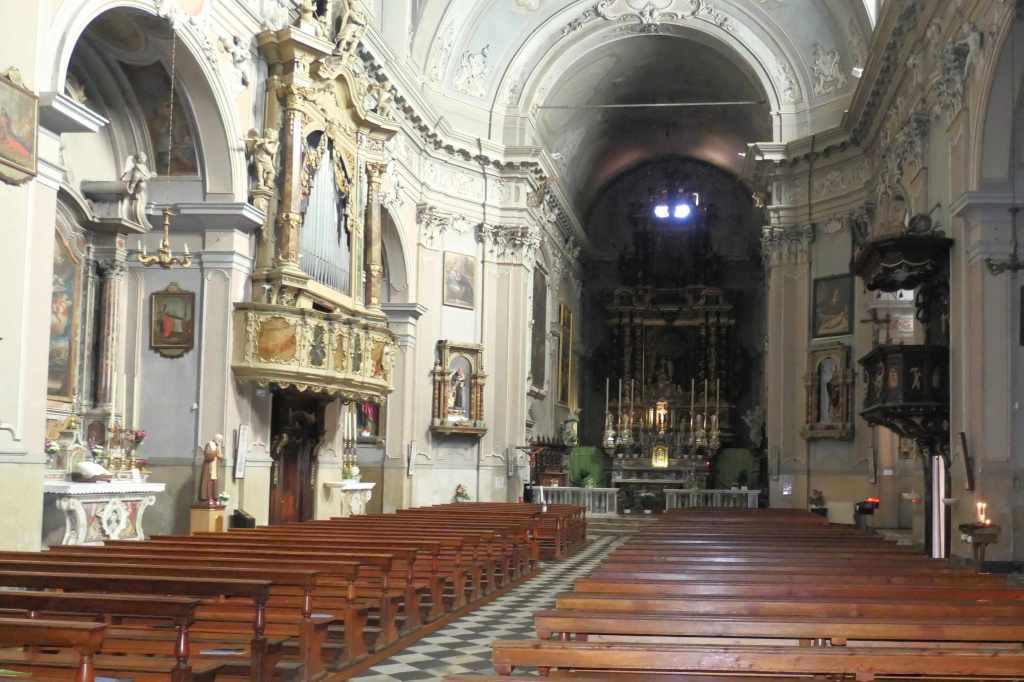
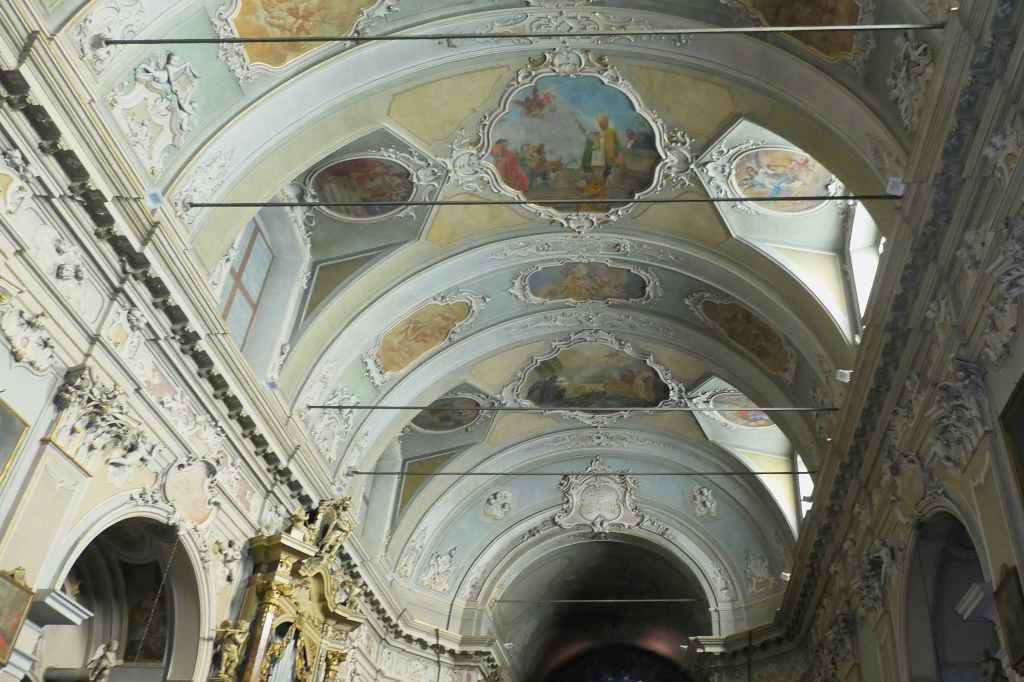
Post lunchtime adventure over, it was time to return to where we’d bailed on the car. Hmmm… Honey, just where was that again?? Oops.
In addition to not trusting Google Maps for what’s a viable road, we’ve now learned, A) the Italian word for church (since apparently neither making the sign of the cross nor folding hands in prayer are helpful gestures in the game of language charades); and B) to drop a pin on the map on one of the phones before wandering away from the car (since cars don’t have handy, easy-to-spot bell towers). 🙂

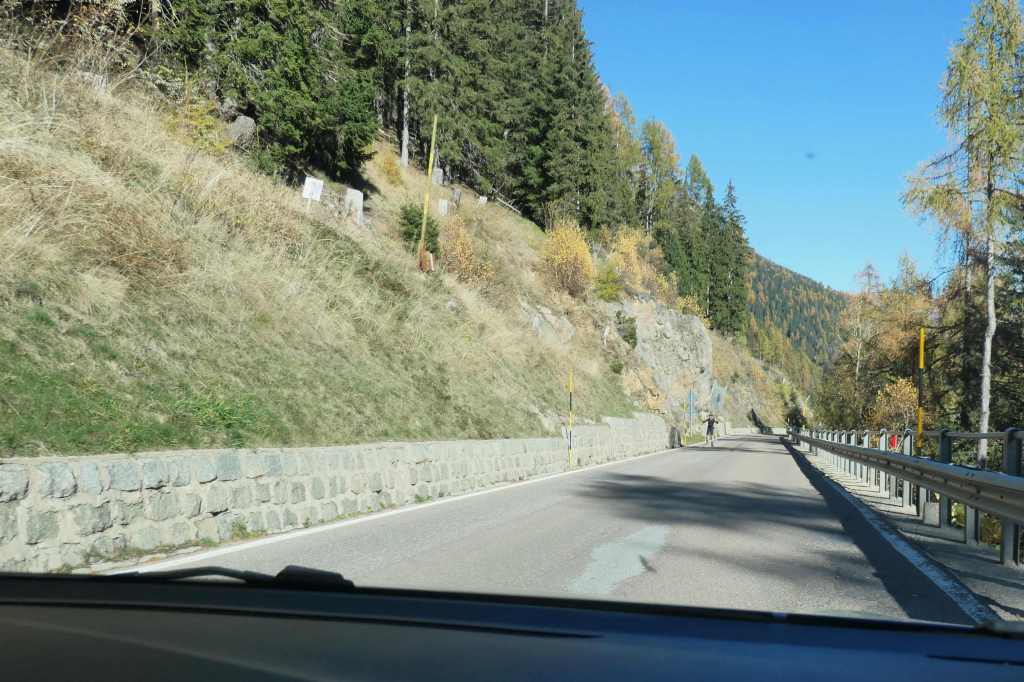
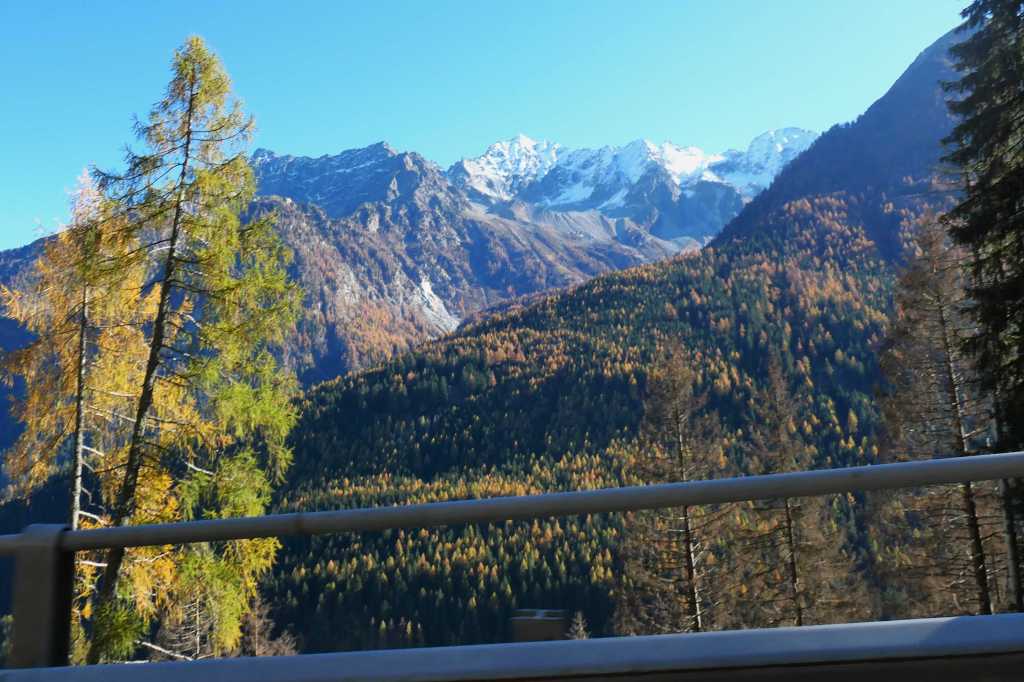
Once back on the road, we cheerfully enjoyed the fall color and snow-capped mountains! Until… 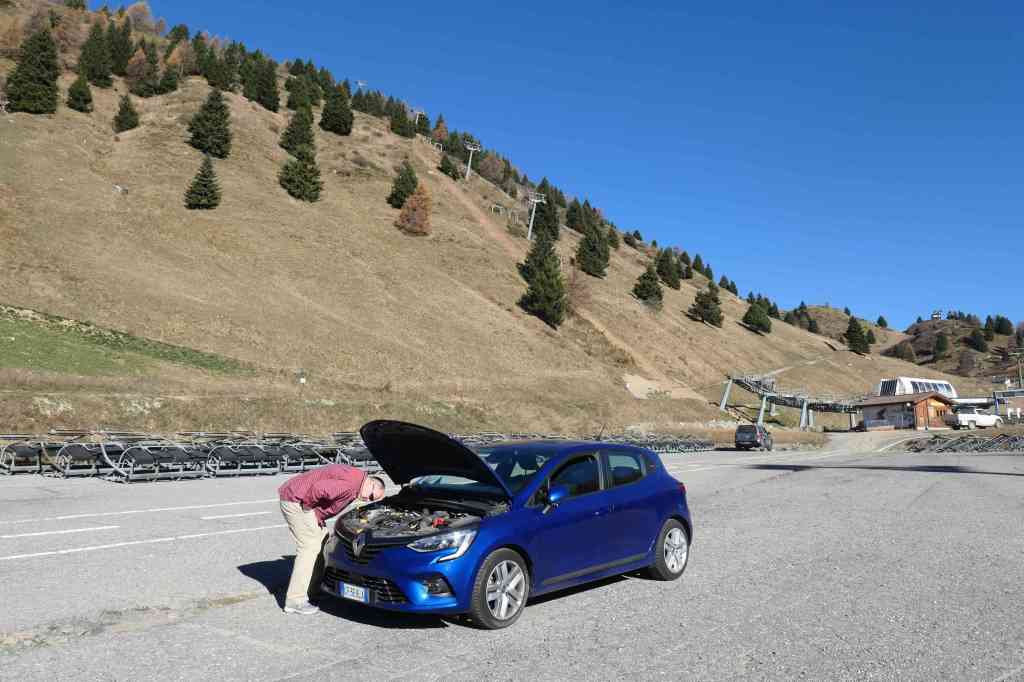
UH OH
If cruising is aptly referred to as “working on boats in exotic locations,” just what do you call it when the alarms go off on the foreign rental car and the main thing you can make out on the panel is WARNING OF IMMINENT ENGINE FAILURE. Huh. Not good.
Well, as we were more than five miles from the nearest town, we considered ourselves lucky to slowly make it to a place to pull off the narrow, curved mountain road, into the large parking lot of a ski lift. Bonus, perhaps we could ask the workmen over there for assistance in reading the instrument panel! No go on the assistance part, as both of them soon drove off right past us. Heading to lunch perhaps? (Insert enthusiastic raspberry here.)
No worries, we had our resident mechanic, Todd. Radiators being the same in any language, we waited for things to cool down and fortunately located the blown radiator cap in the engine compartment! Hmm, now we needed water, and we just happened to have most of a 1.5-liter bottle Susie had brought with us. Into the radiator, it went (yeah!), and we were back on the twisty road with fingers crossed and those praying hands folded, hoping to make it off the mountain and to Trento before dark. (Susie, you can stop hyperventilating now.)


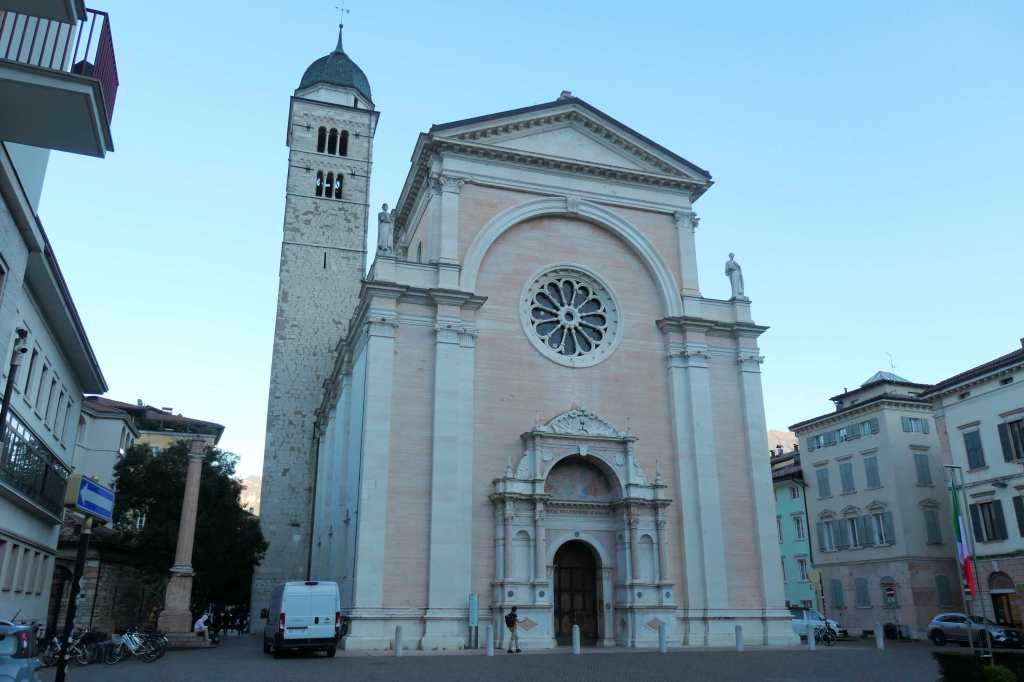
As the sun was setting, we reached Trento, left the car resting in a small parking garage outside the town center, and set out on foot to find our small B&B, supposedly very near the historic Church of Santa Maria Maggiore. We found the church easily enough – those bell towers are so helpful – and after a few wrong turns, located our lodging.
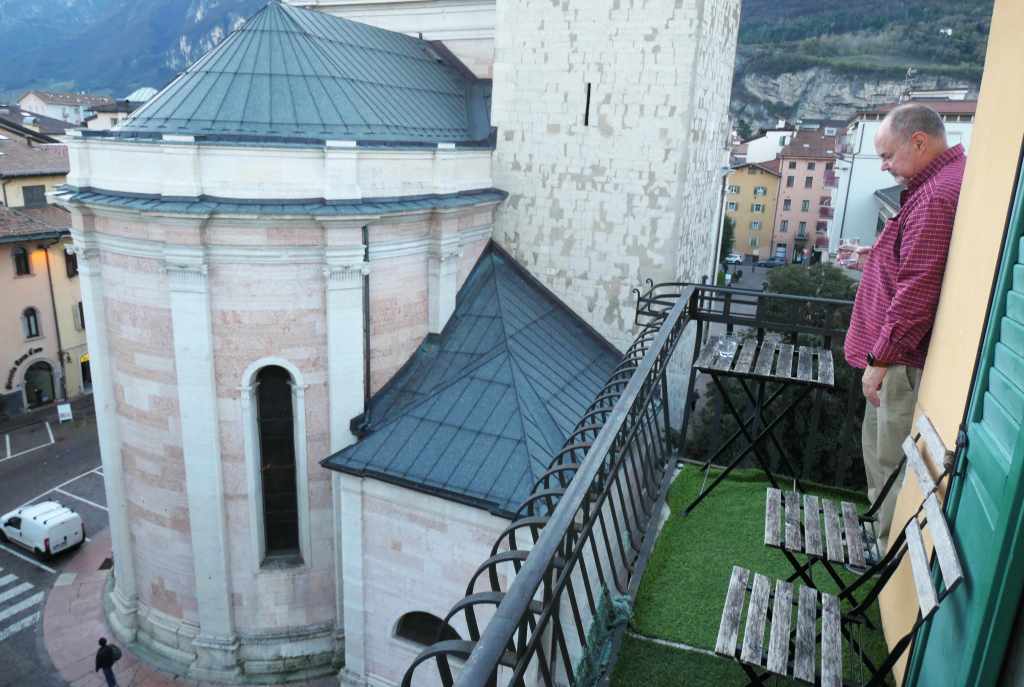
(as ours was sacrificed to the car’s radiator several hours before)
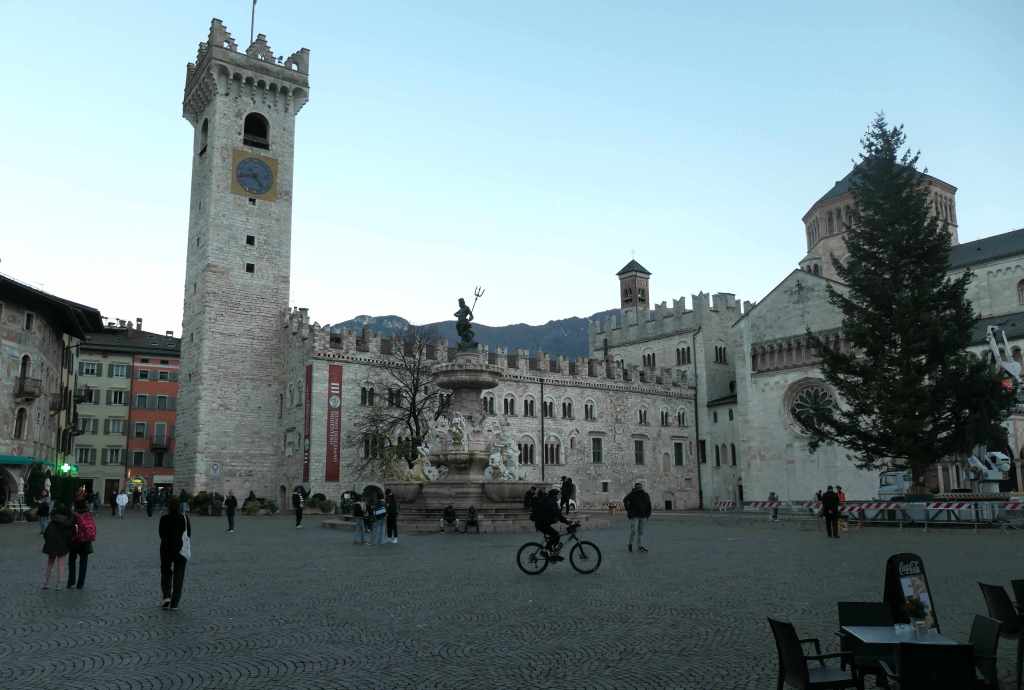
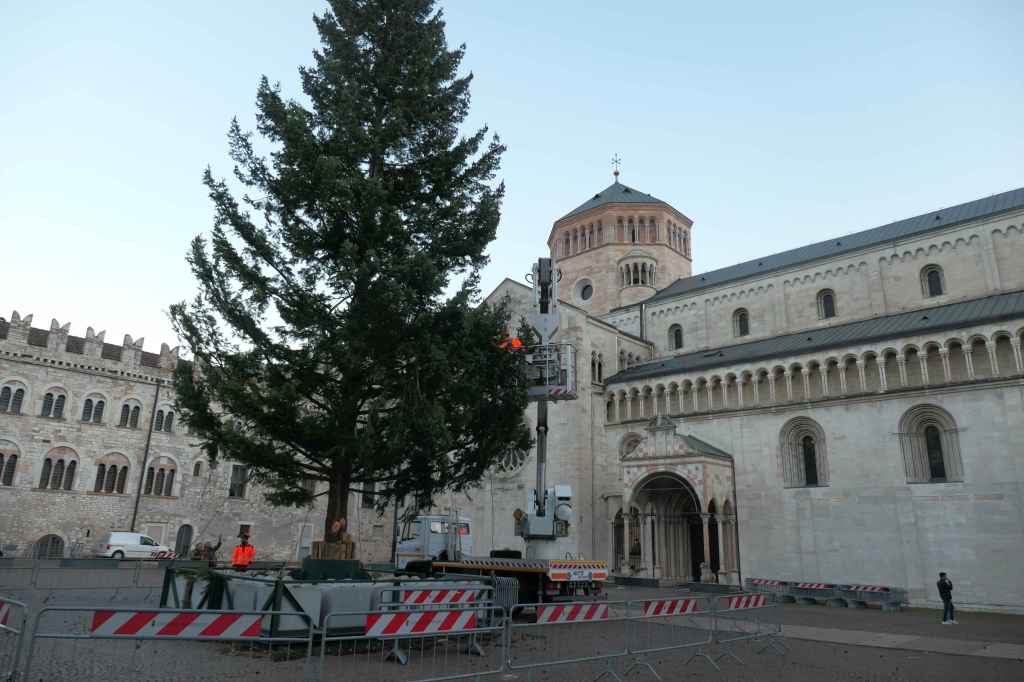
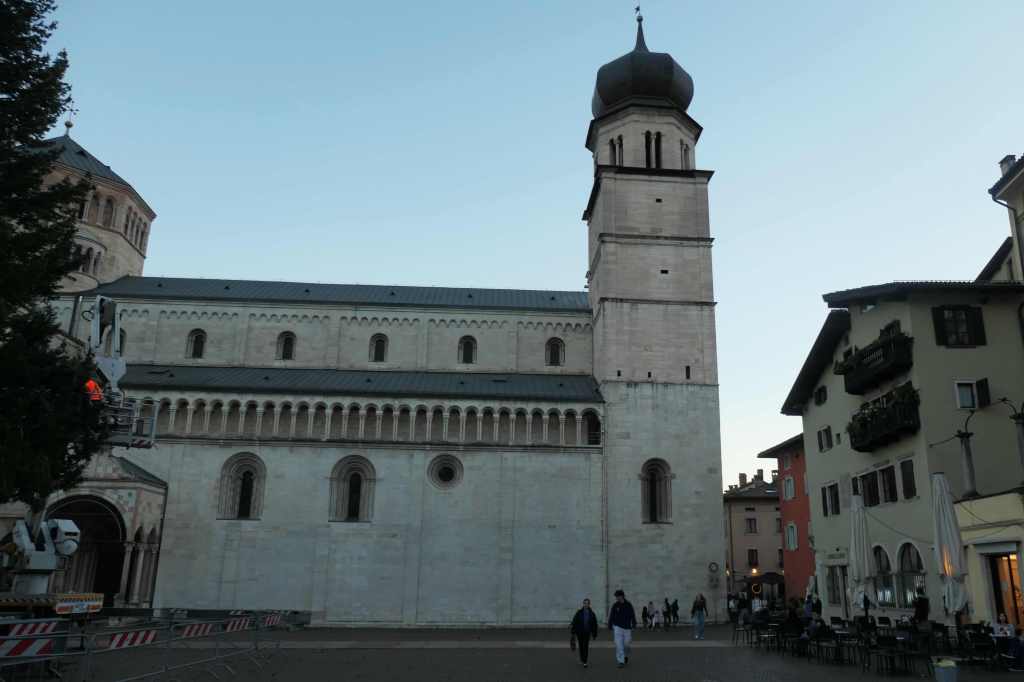
Since we would only be in Trento one night, we dropped the luggage, downed the water, and dashed back out, utilizing the remaining daylight to find the duomo of Trento / the Cathedral of San Vigilio.

(Yes, cars also pass through here…)
With roots back to 397 A.D., the L-shaped structure of the Cathedral of San Vigilio is so large, it took three shots to capture the facade from our perspective on the piazza.
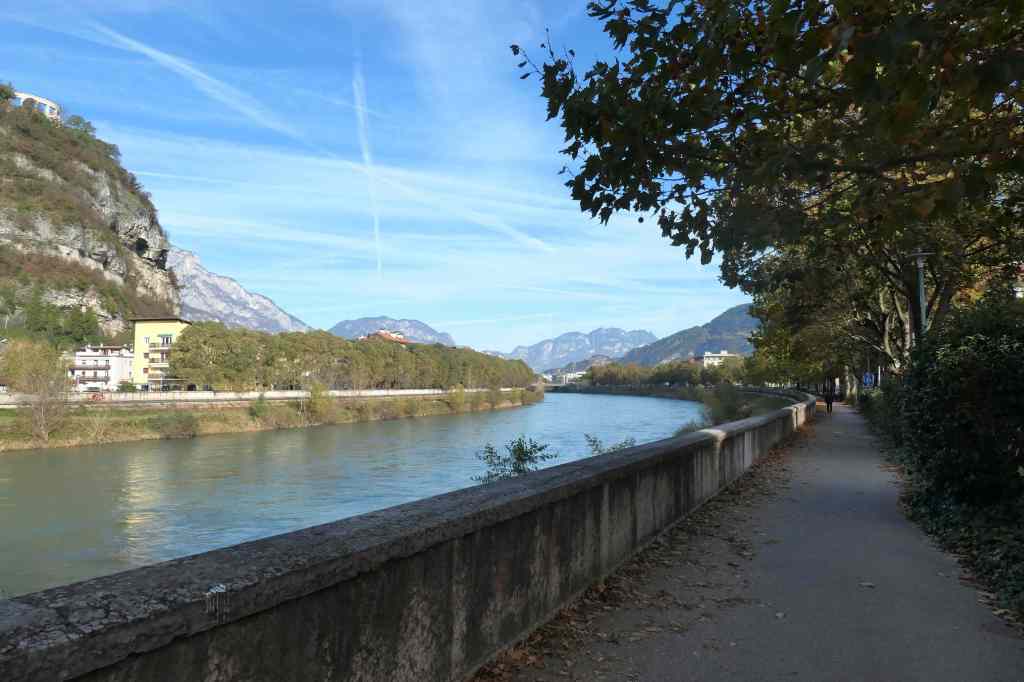
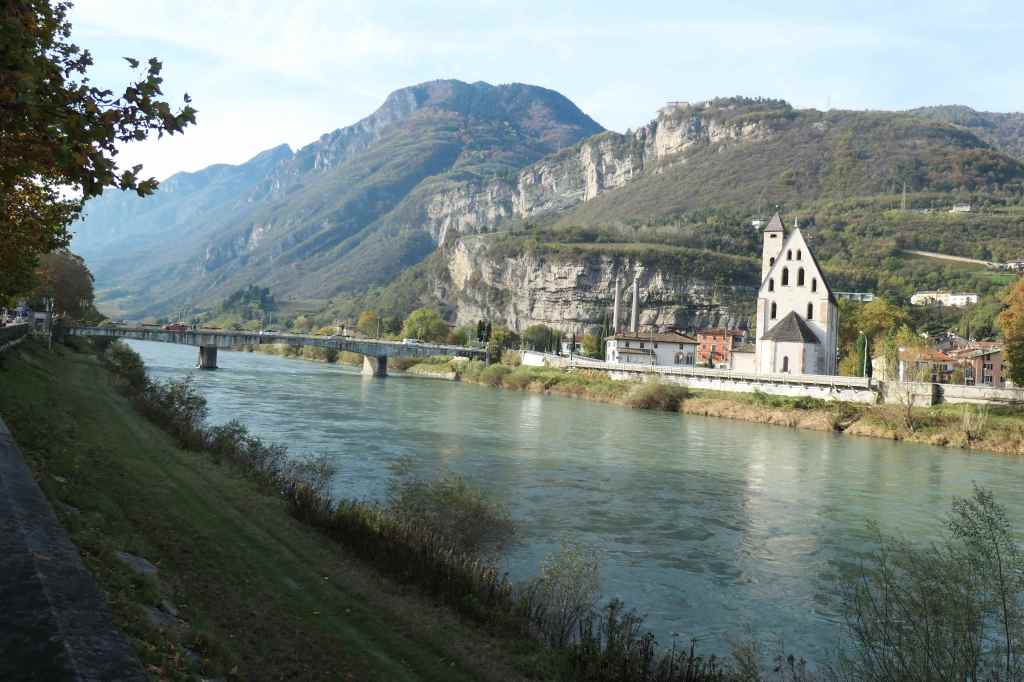
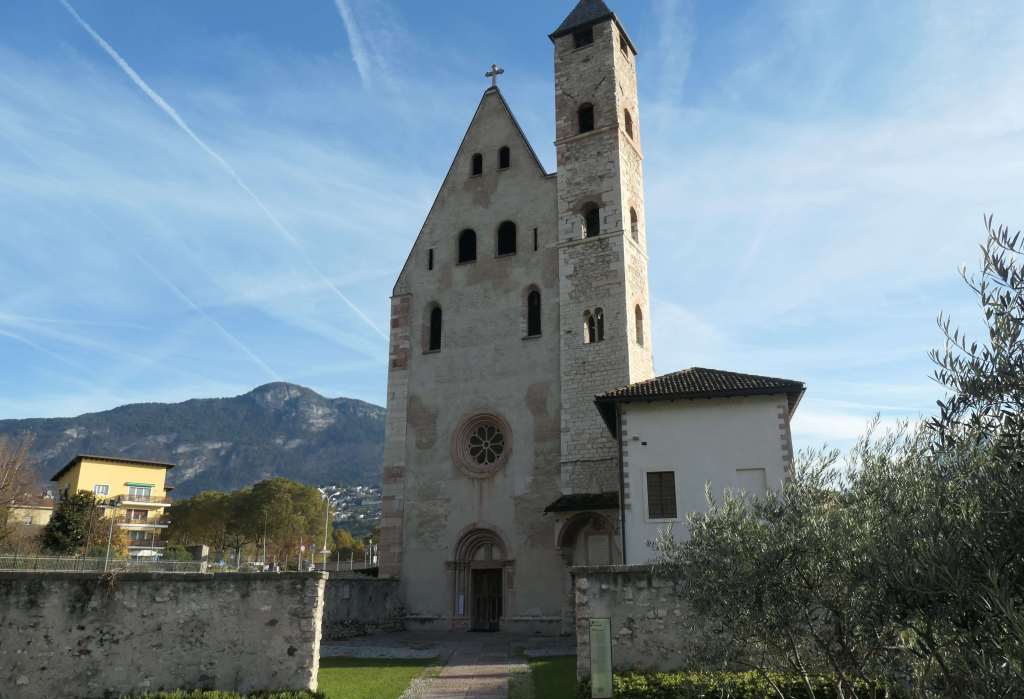
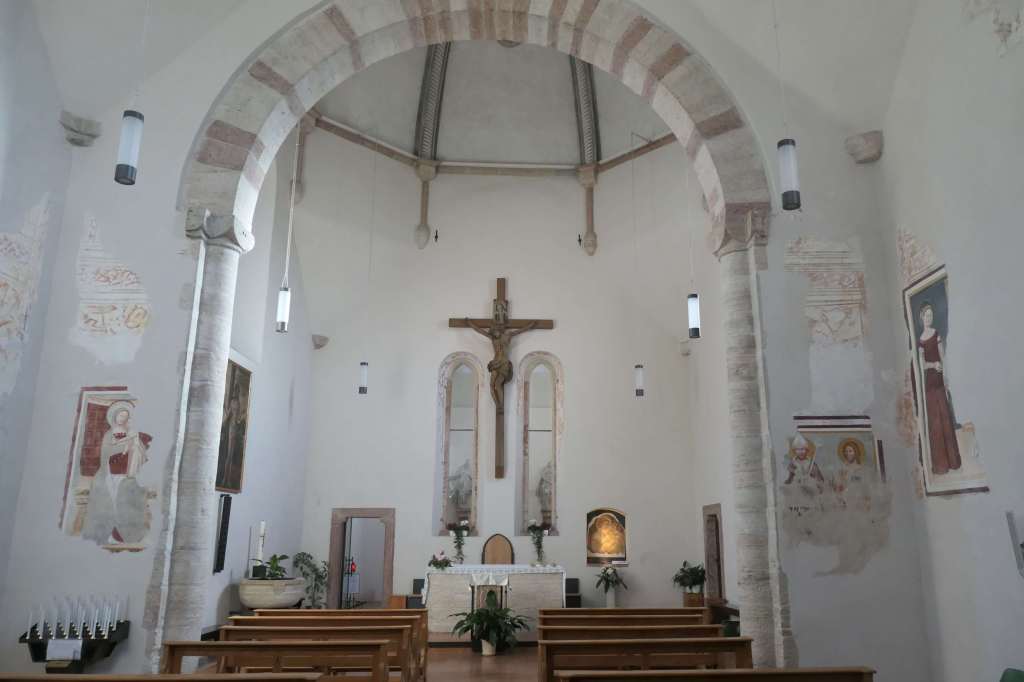
The next morning, we strolled over the bridge and along the river to the Church of Sant’Apollinare, one of the oldest buildings in the city. The church has looked this way since the 14th century, and among those buried in the outer walls is Marcus Apuleius, gravestone dated 23 BC. Now that’s old!
Our last stop in Trento was a cable car ride to the town of Sardinia at the top of the mountain.

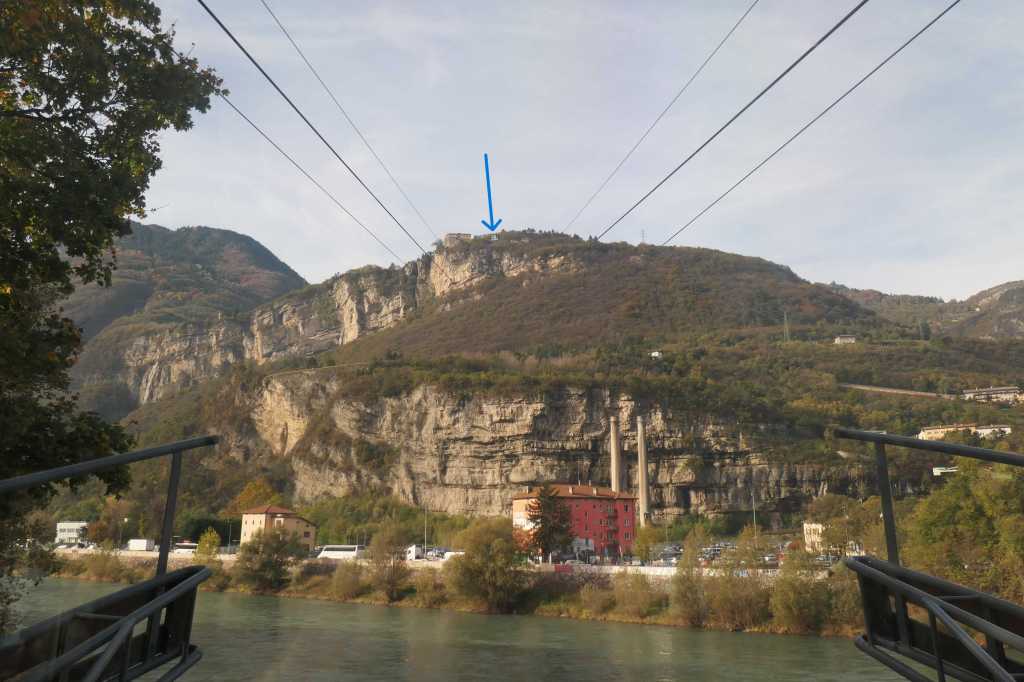
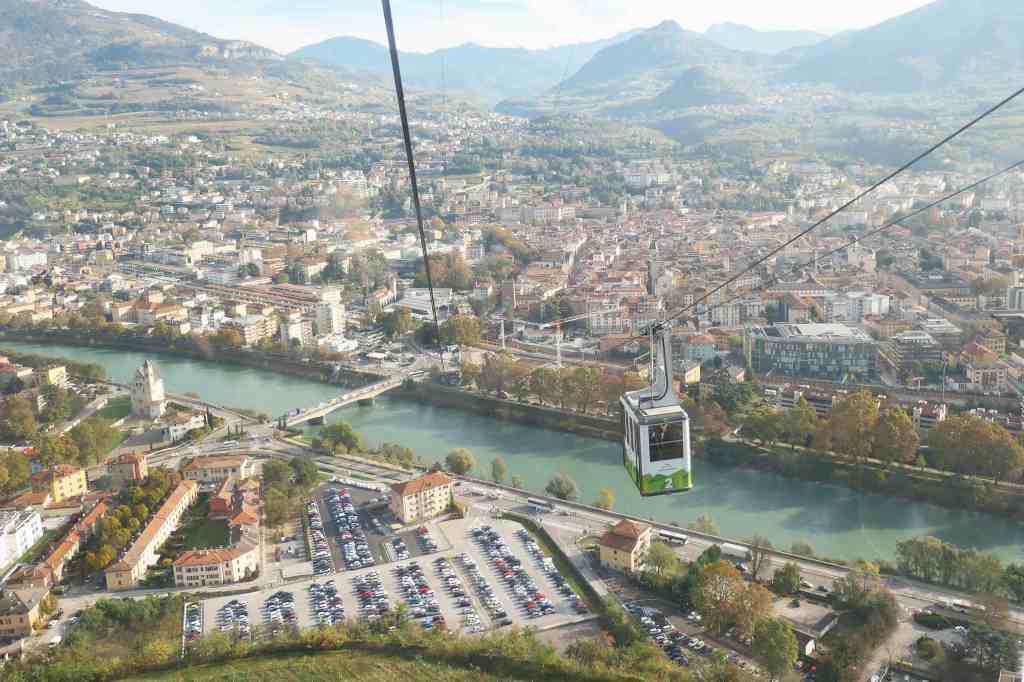
The scenic ride up and back was fairly quick. We found the most interesting part to be identifying the historic town center of Trento from the top. Game time!
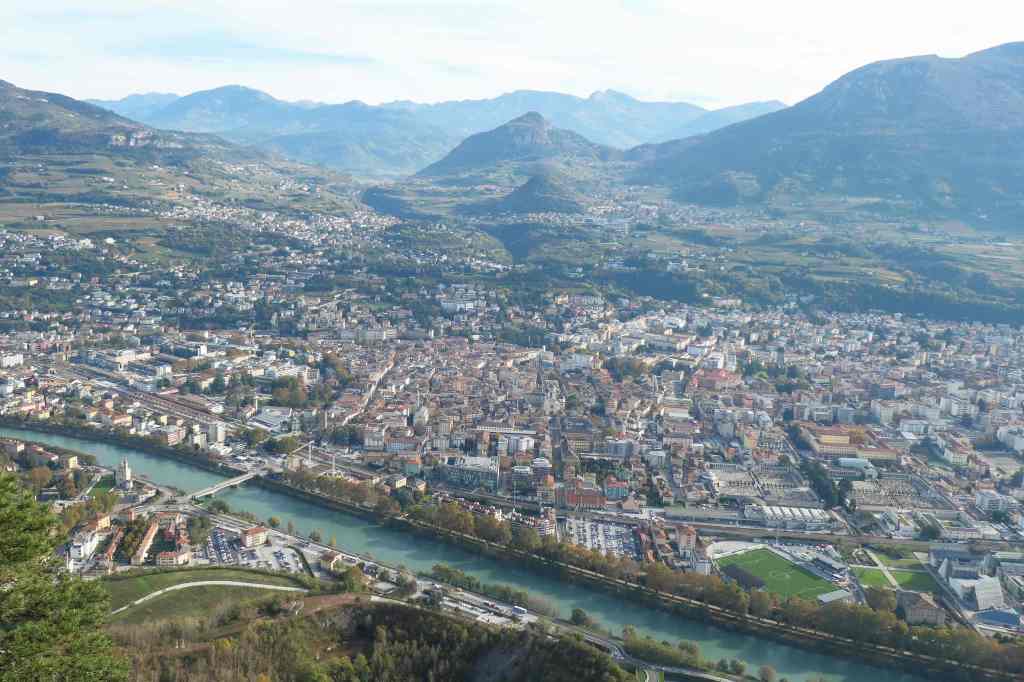
It is easy to see the oldest church near the bridge (lower left), but can you spot the town center on the other side of the river?
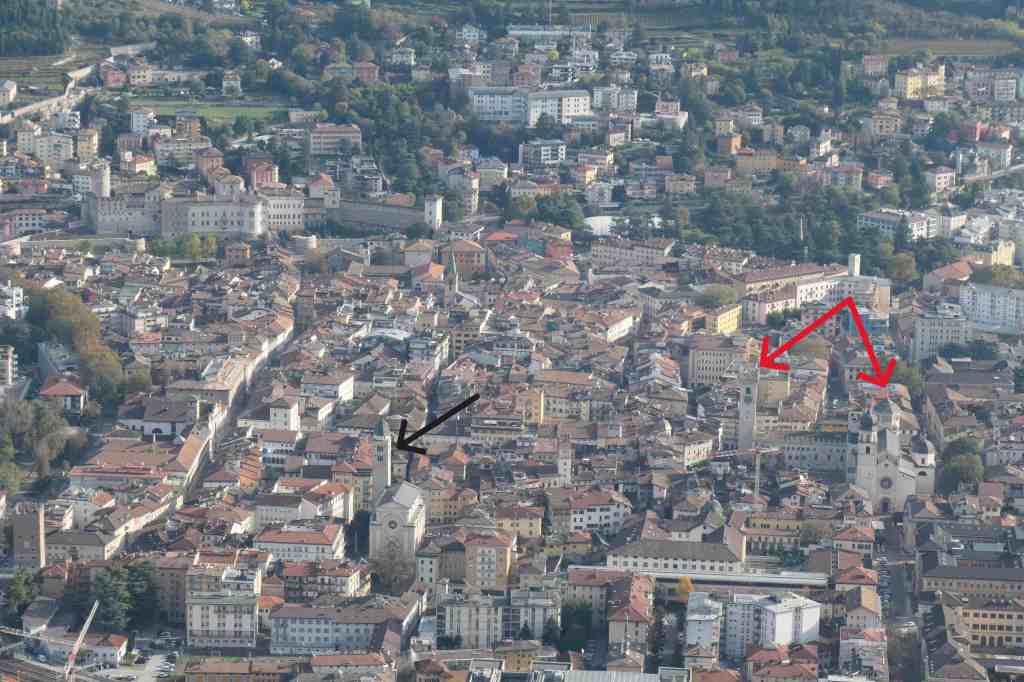
The black arrow shows the distinctive tower of the Church of Santa Maria Maggiore, behind which is the small B&B (not visible). The red arrows show the L-shaped Cathedral of San Vigilio. Now look back at the other shot – bet you can find it.
And with that, we grabbed our luggage and a bottle of antigelo (antifreeze) and confidently departed for Modena. Moving on!










 Our Travels