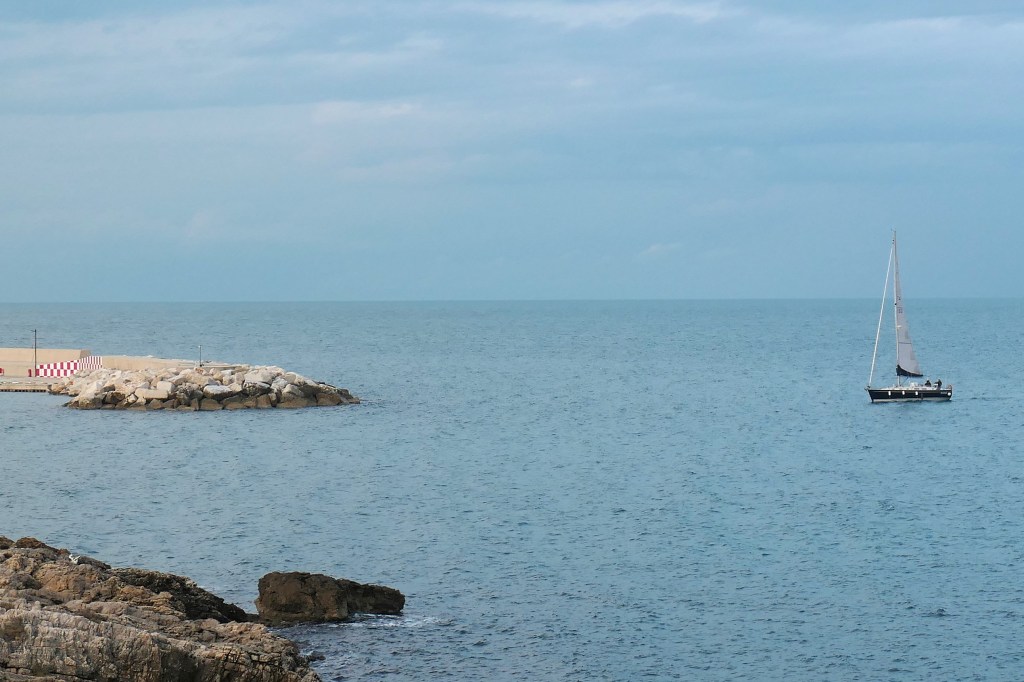
From that wonderful stop on the Amalfi Coast, we decided to head east across Italy, to the other side, for a short stay in the heel of the boot, Puglia (“poo lee uh”). The route took these former cruisers teasingly close to the shore, so we made a detour to see the Adriatic Sea. And just happened to step out of the car in time to catch a sailboat entering a marina, fenders at the ready! Look at the sea, how calm! Nice!

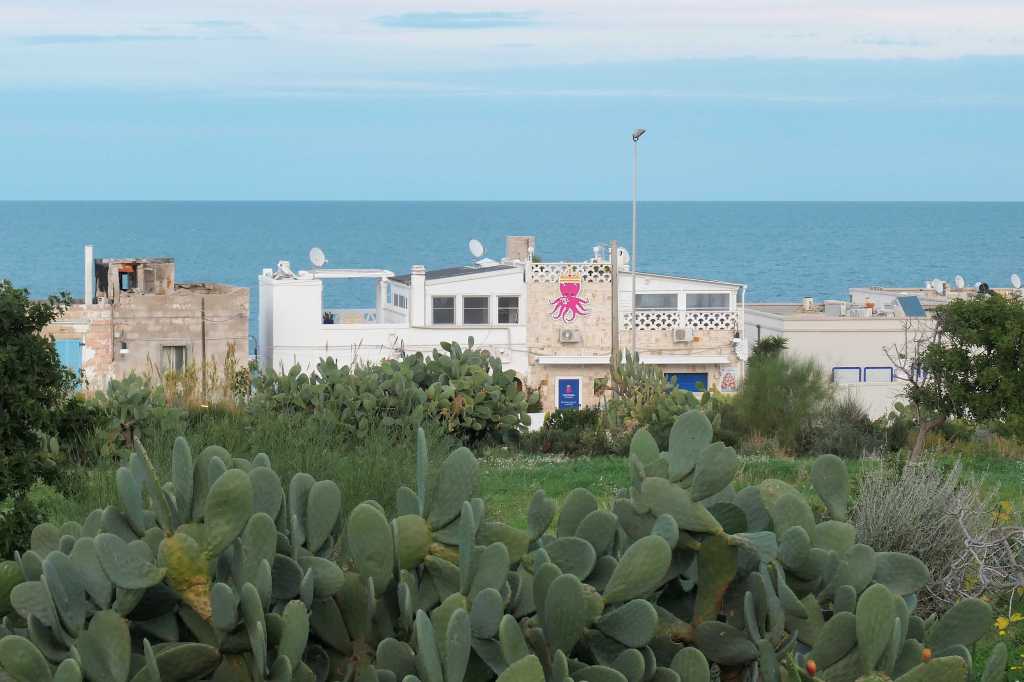
After taking a “shortcut” or two and reroutes for lunch, a road closure, a traffic jam, getting over a mountain, etc., we turned what was supposed to be a four-hour drive into more than seven. Another Olsen M.O. We ended up so far behind that we found ourselves searching for the destination in the dark. Again.
The GPS is typically close but not always accurate, and the directions provided by the owner took us to the wrong place. As we pulled up to the festively lit (incorrect) house, a smiling woman who spoke absolutely no English stepped out to assist. Recognizing the hosts’ names in our gibberish, she held up a hand for us to stay put, went back inside and returned with two teenage boys, telling us through gestures that we’d come too far and should turn around to follow the boys – now doubled up on a motorbike – to the proper house. We got a kind-hearted Italian escort to the correct gate, where we finally found the rental owner waiting, thanks to a phone call from her friendly neighbor!
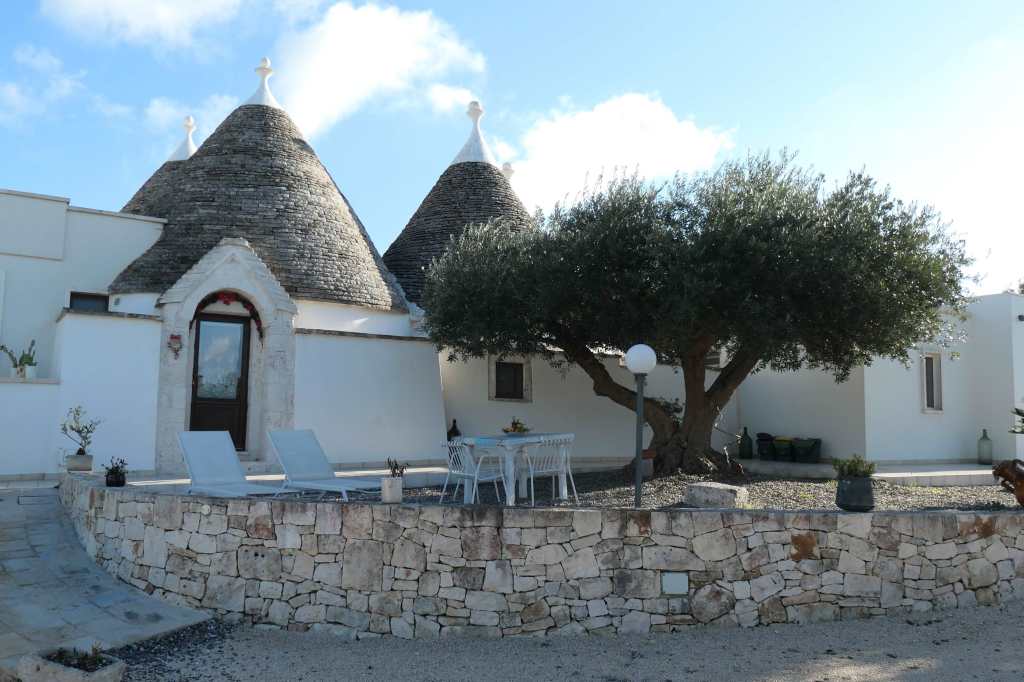
In the morning light, we saw our spot.
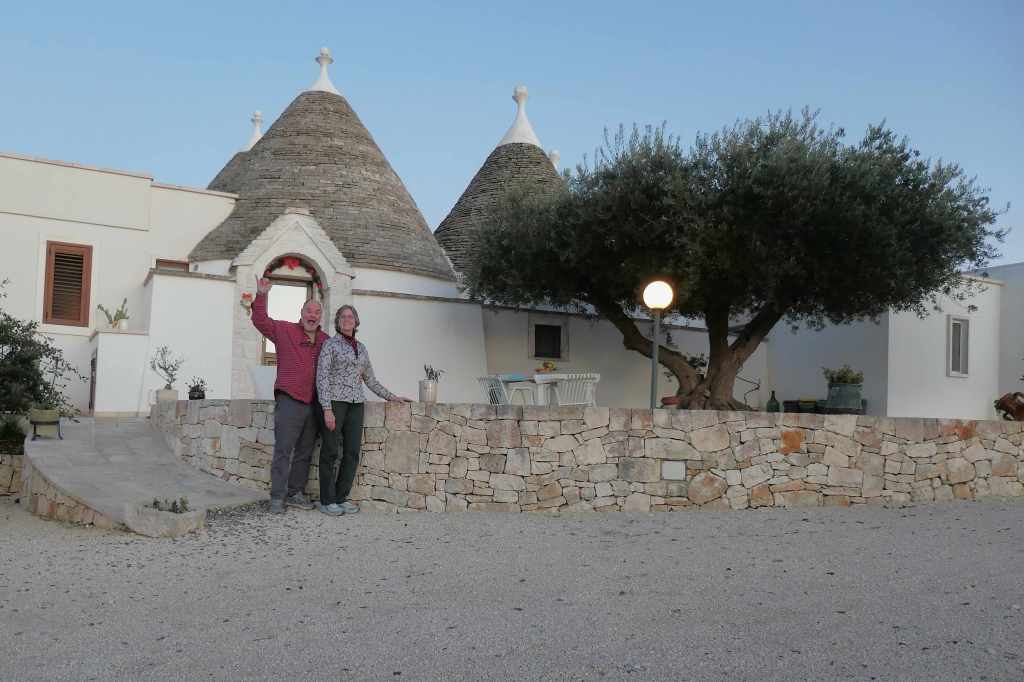
A set of trullo (trulli) & the family olive tree that has been there for hundreds of years!
We went back another day to photograph some of the things we’d seen whilst zipping along in our little car in the dark. Most of all, the amazing olive trees we’d marveled at but could barely see at dusk. Bigger than any we’ve seen in this land that’s covered in them!
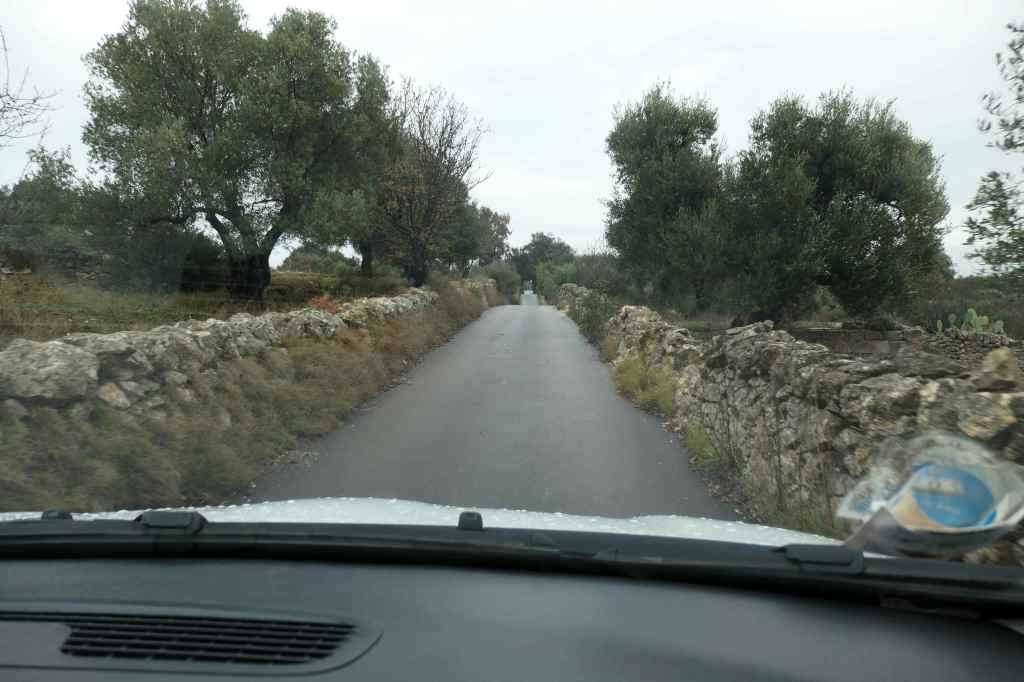
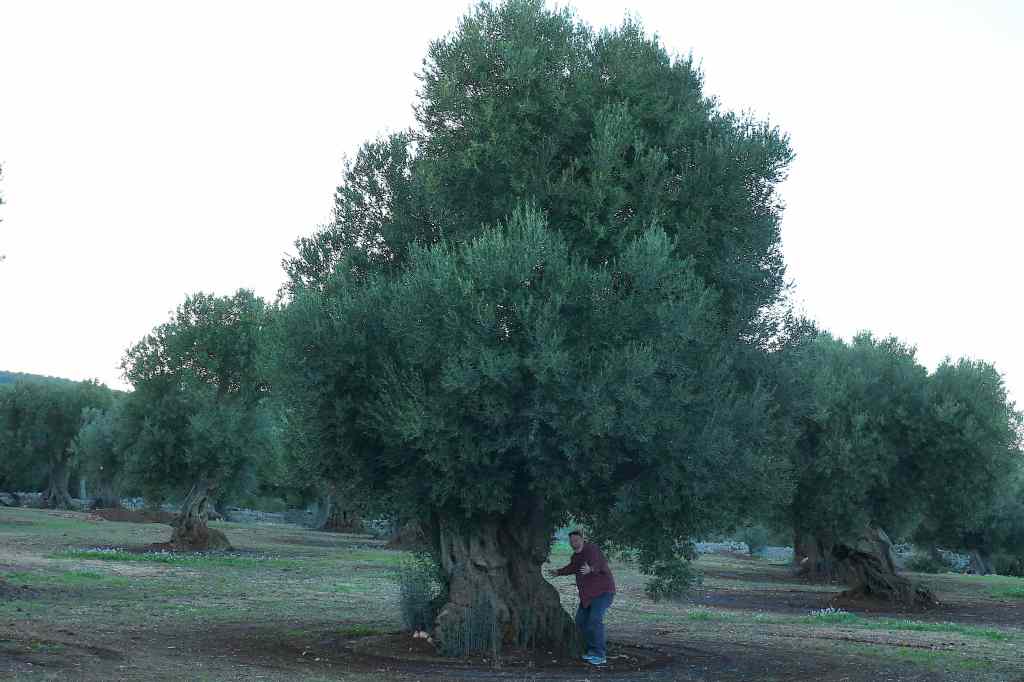
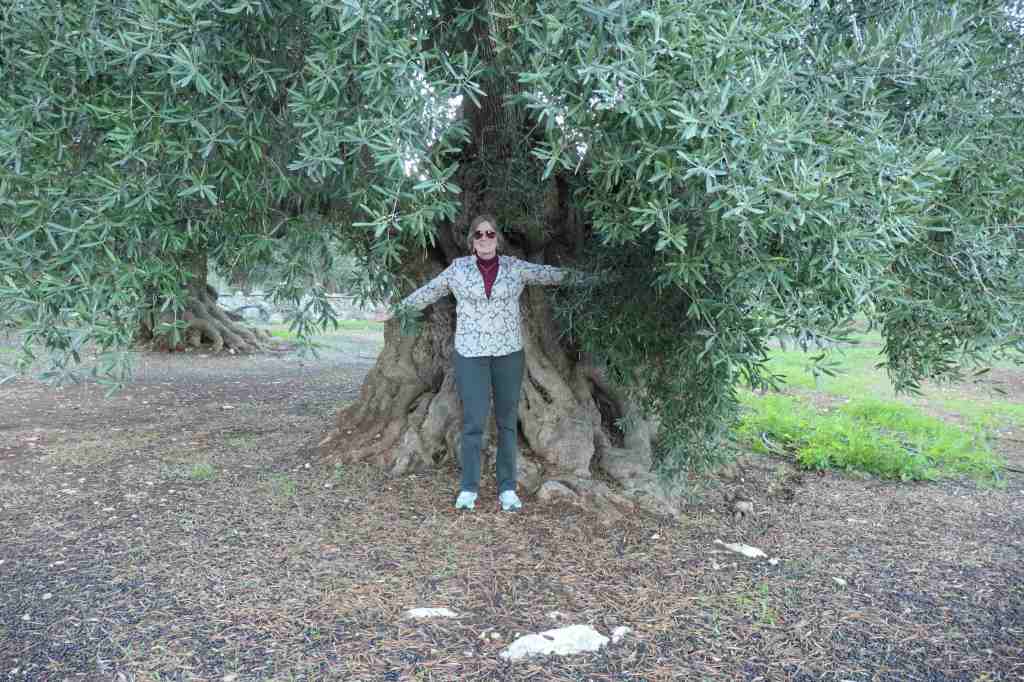
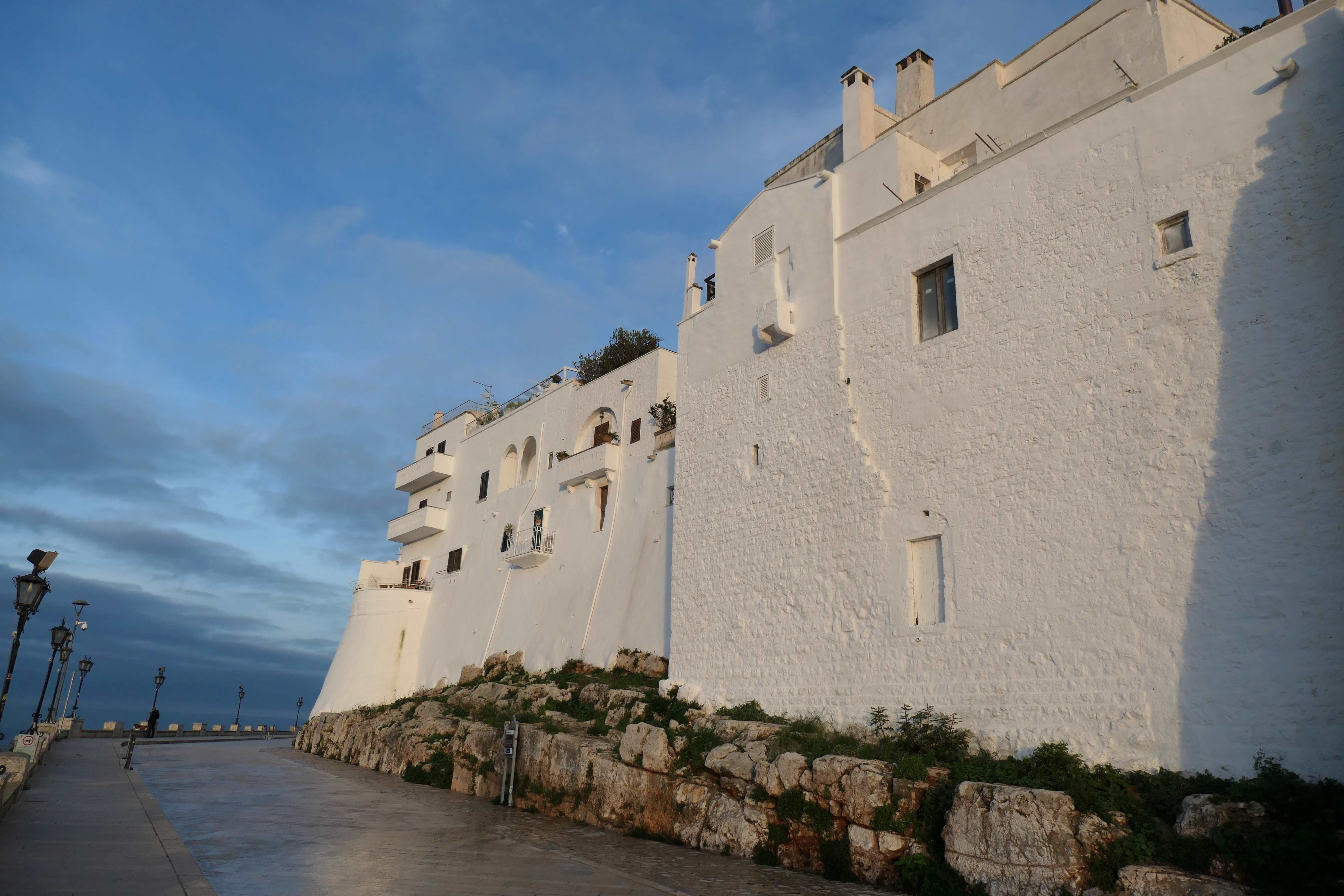
During the tree-hugging “backtrack,” we sidetracked again. Ha! This time to check out Ostuni in the Province of Brindisi. The “White City” of Ostuni and its nearby towns, known for producing high-quality olive oil (go figure!), strangely, is the fifth in Italy by percentage of British residents and the first for sale of houses and villas.
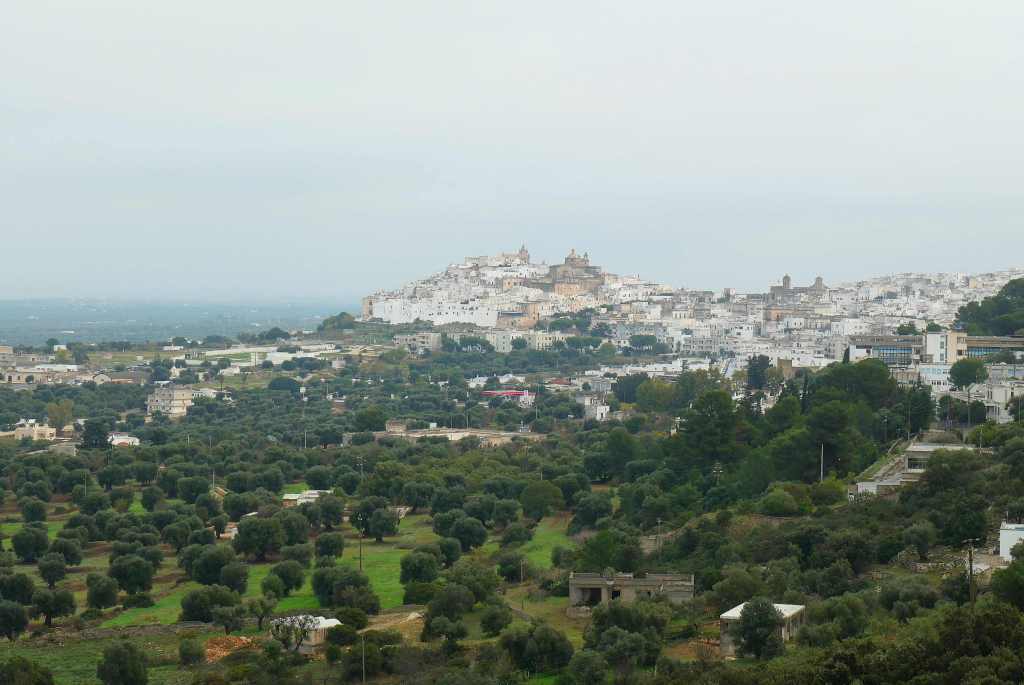
Being among the main towns attracting tourists in Puglia, Ostuni has a population of about 32,000 during the winter, that swells to 200,000 in the summer. In December, we had the maze of hilly white streets in the Old Town area pretty much to ourselves. (Yeah planning… 🙂 )
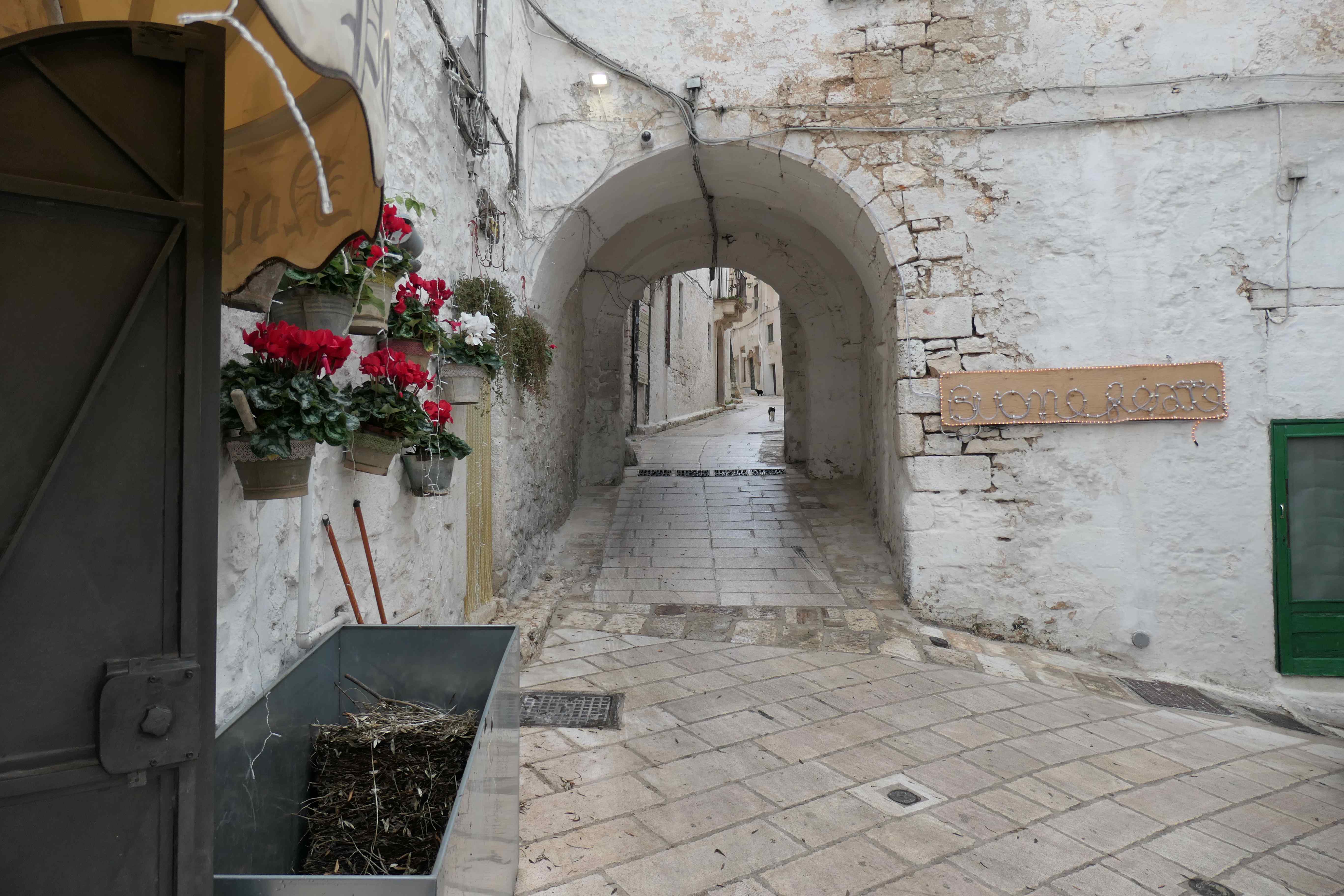
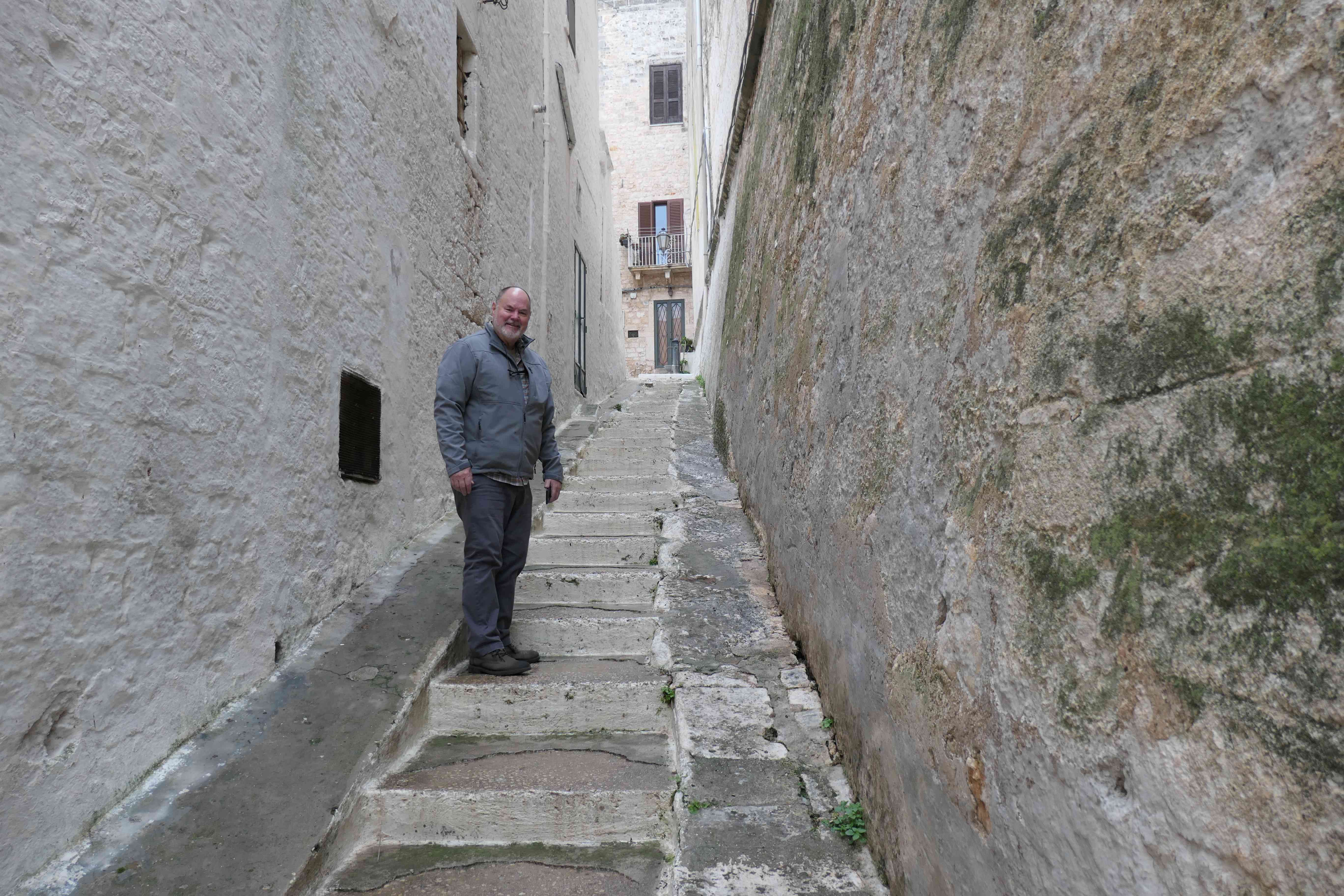
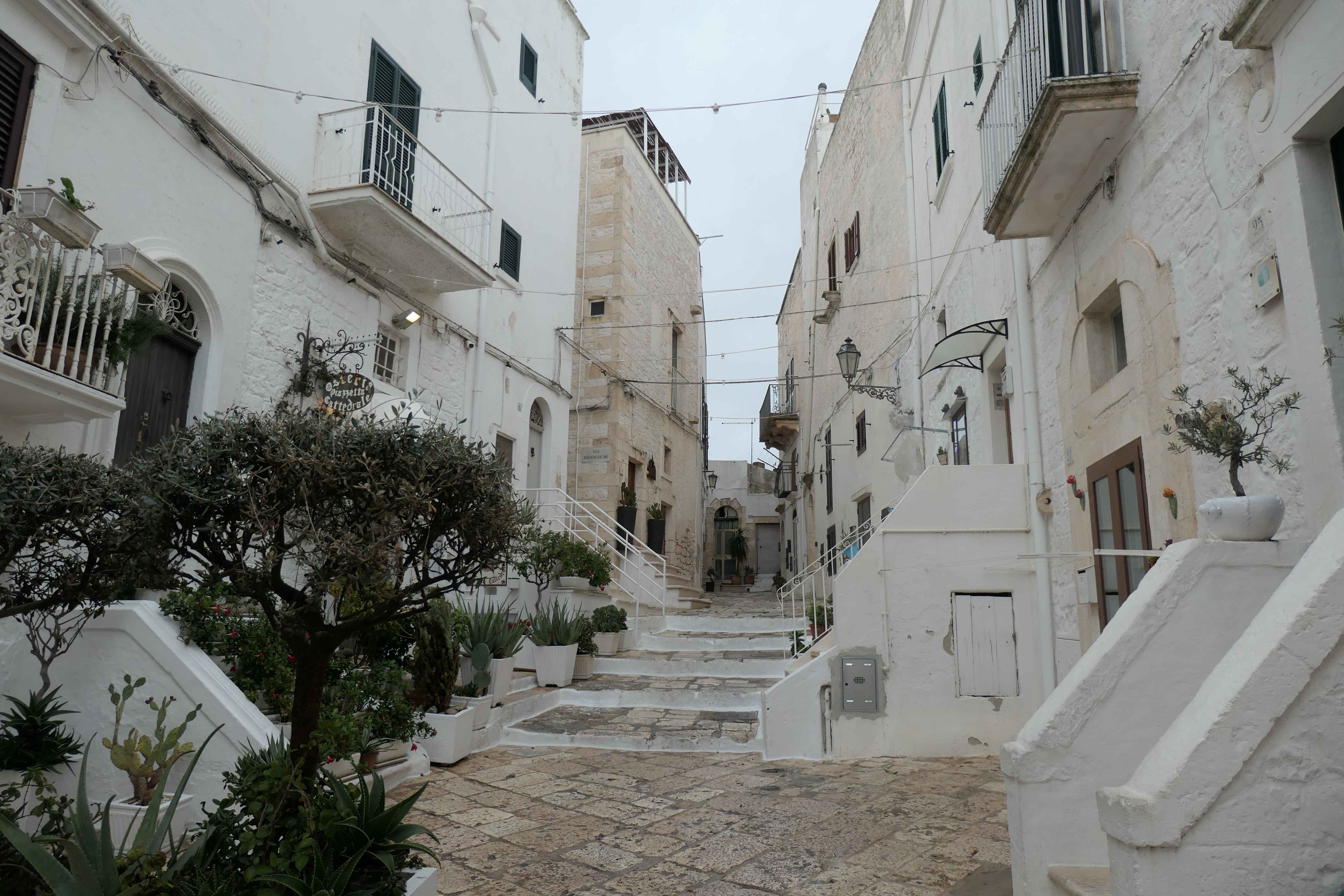
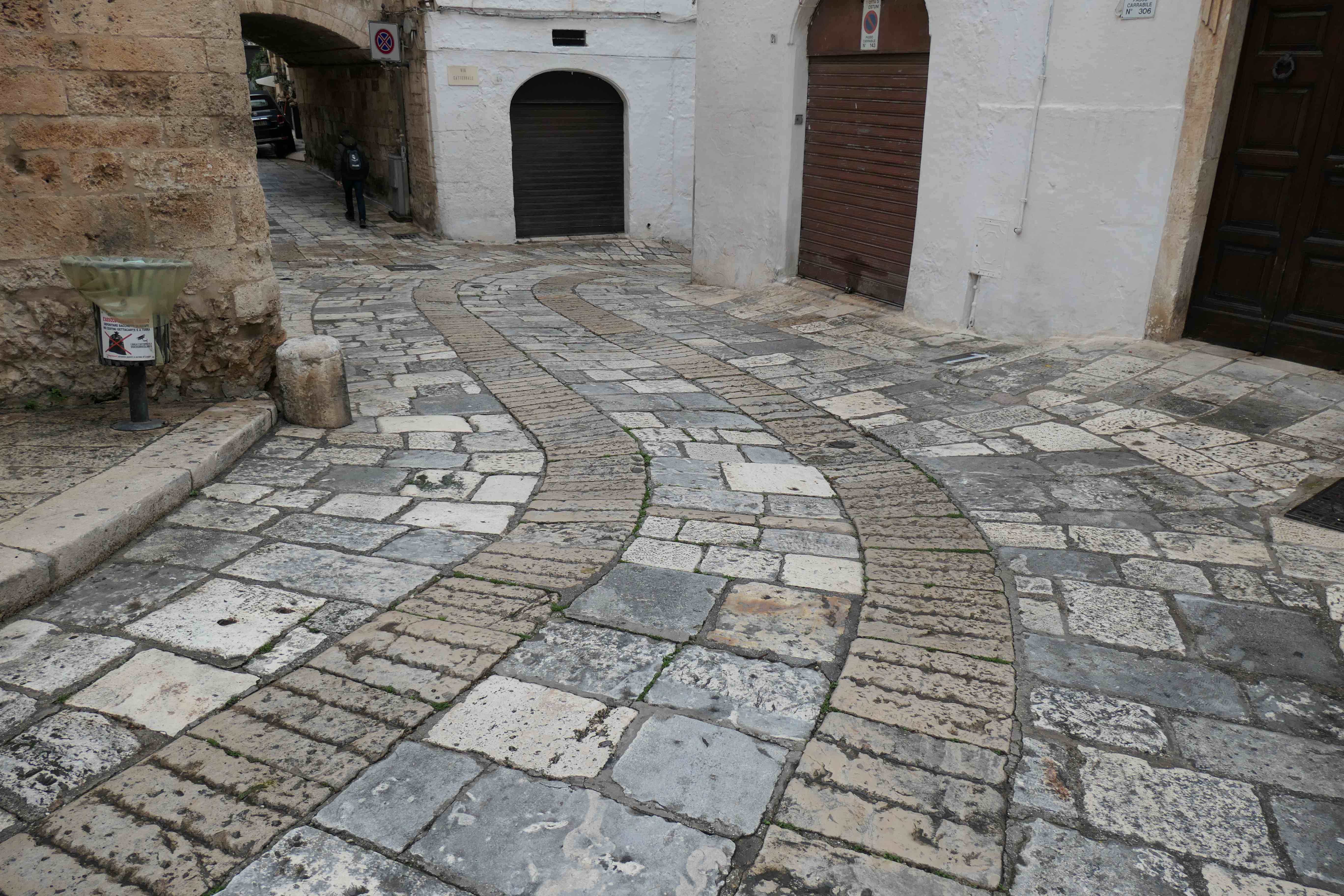
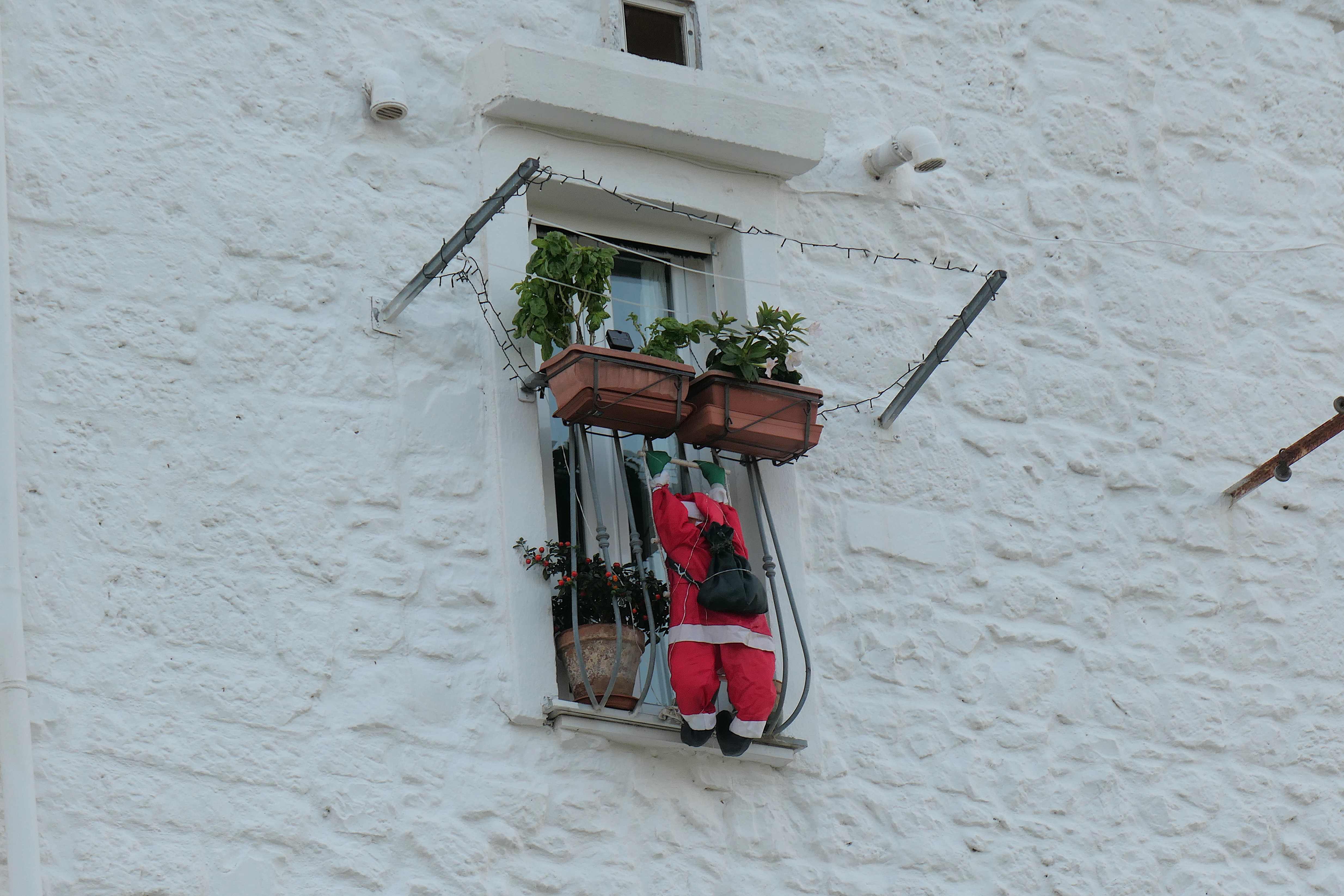
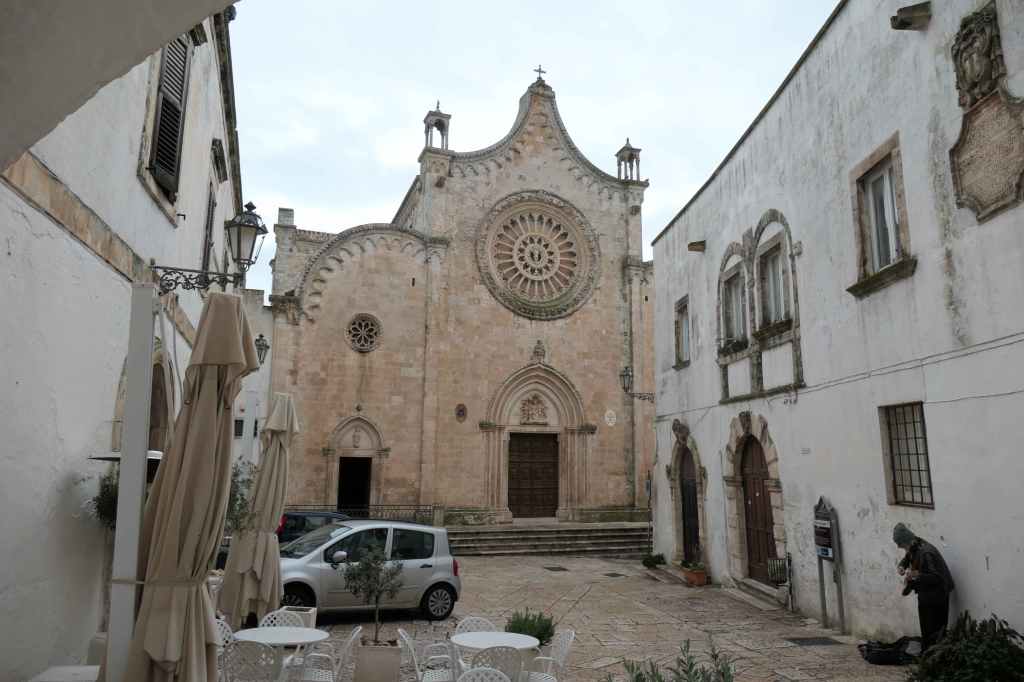
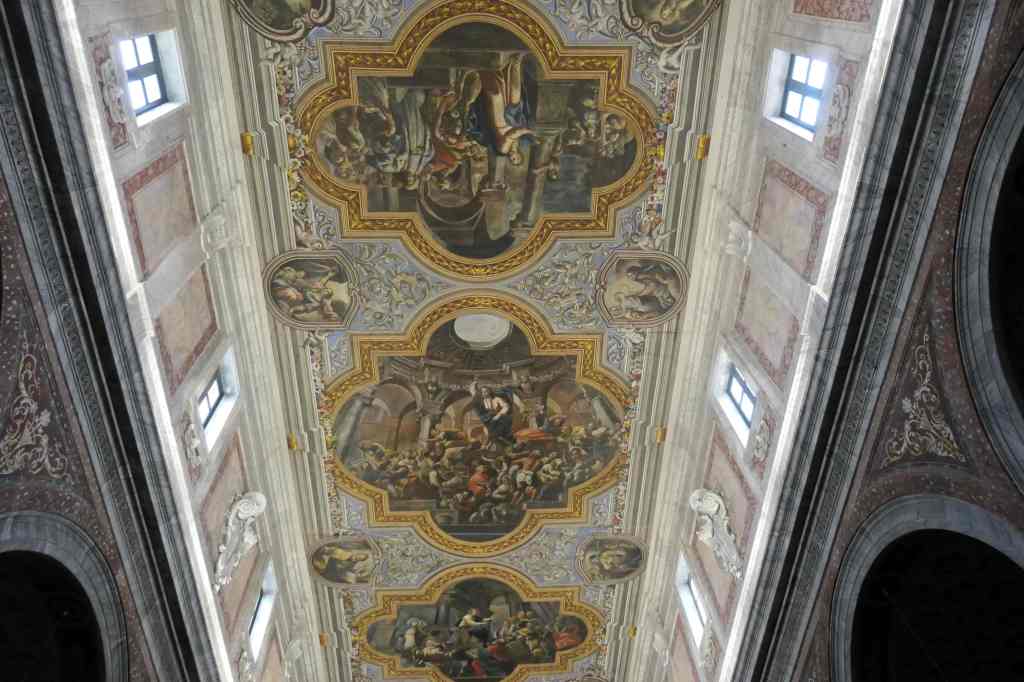
After stopping by the historic cathedral in the center of town, we took a moment to clown around with the architecture and take in the view, where we met a nice young man from the United States.
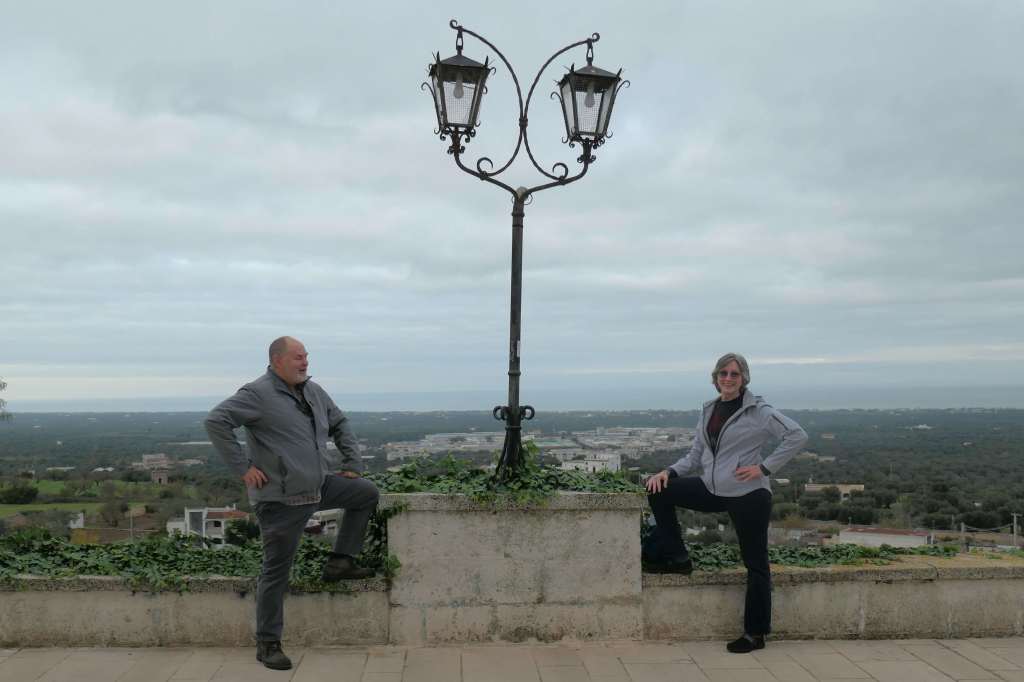
Kory from Eugene, Oregon 🙂
On the way back to the rental, at the suggestion of our host, we explored another charming, white-washed hilltop town to sip hot chocolate and enjoy the Christmas lights. Locorotondo, a town within the Metropolitan City of Bari, is a winner of the coveted “Most Beautiful Villages in Italy” award, and on this night, the town was wearing lots of sparkles!
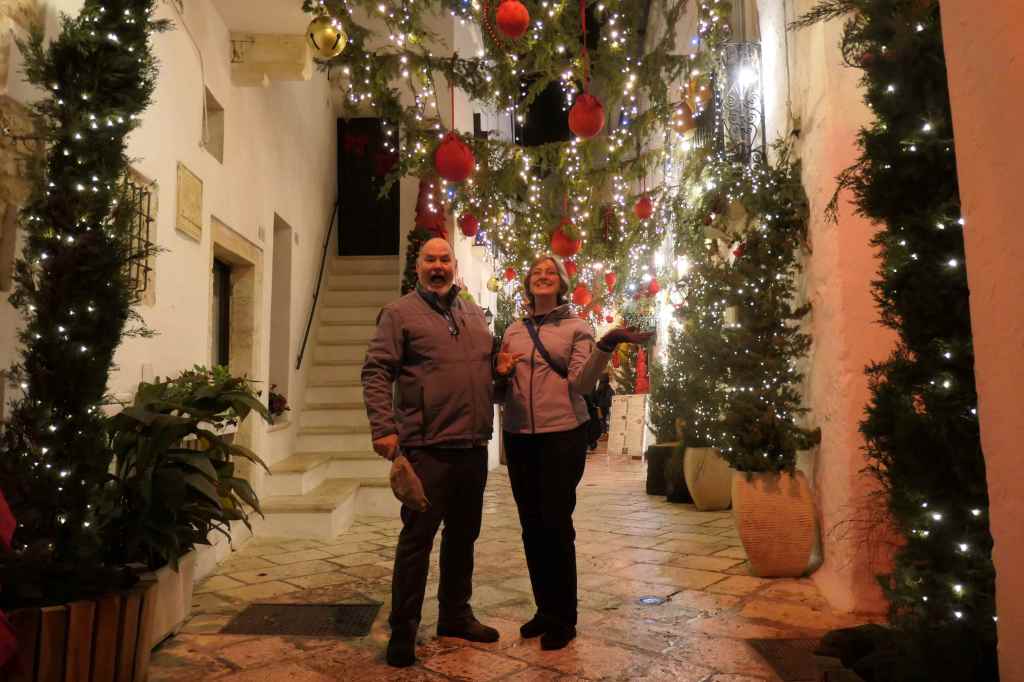
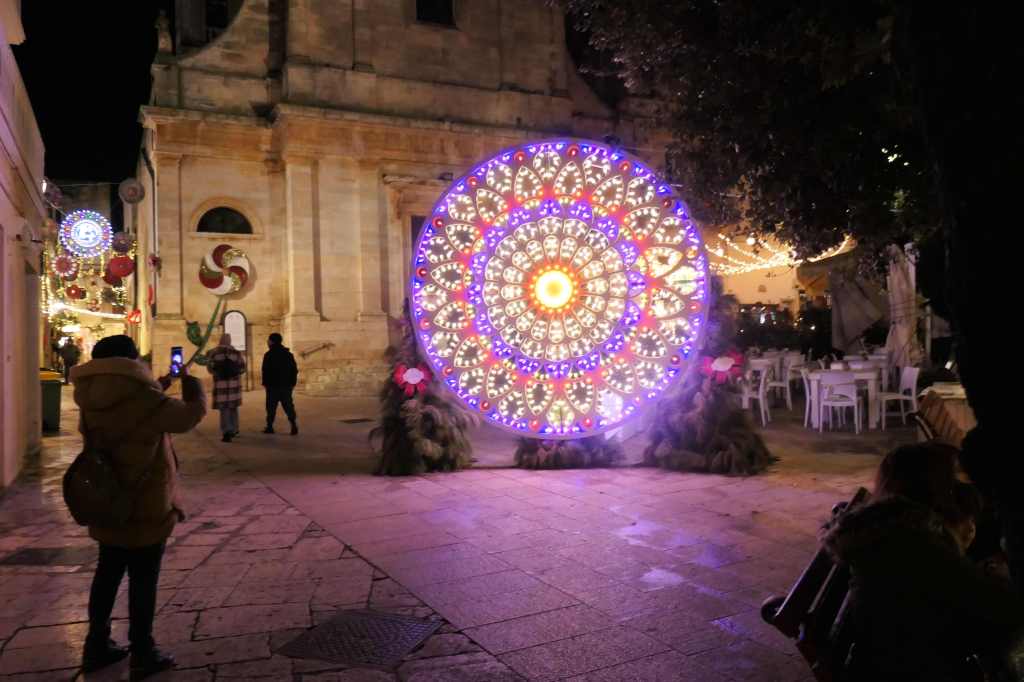
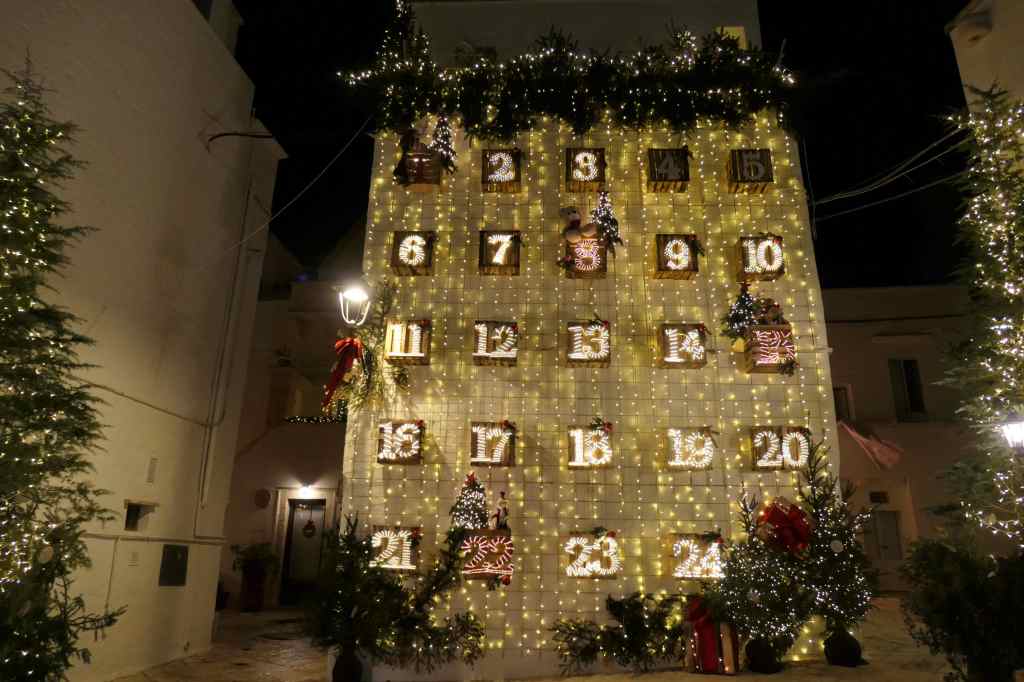
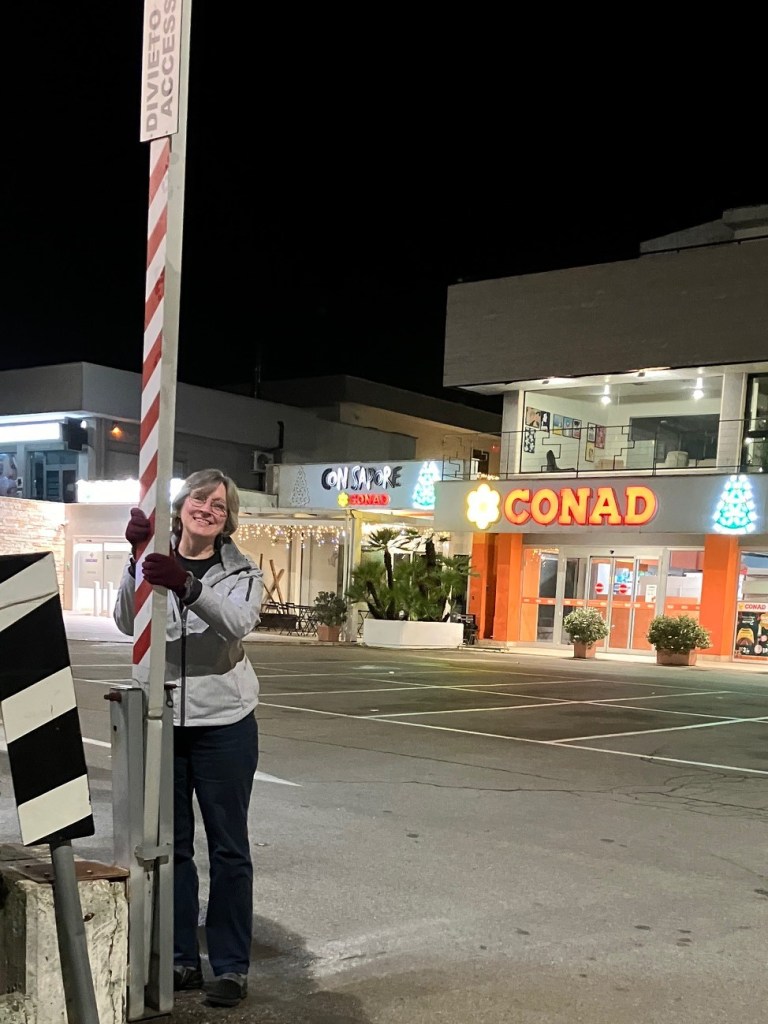
With all that walking, we’d worked up a fair appetite, so we stopped at a Conad market for dinner supplies. By the time we’d made our purchases, however, our appetites far exceeded “fair,” so taking the recommendation of a store employee, we stowed the purchases, left the car parked and headed “just across the street” to find the Fidelio Restaurant, which was, 1) a bit further than expected, and 2) … CLOSED.
Todd thinks, hmm what’s that lit up a little farther down the street? With some help from Google, he made a call. (Reservation? Yes, please, can you take us in ten minutes? We’ll walk slowly. 🙂 )
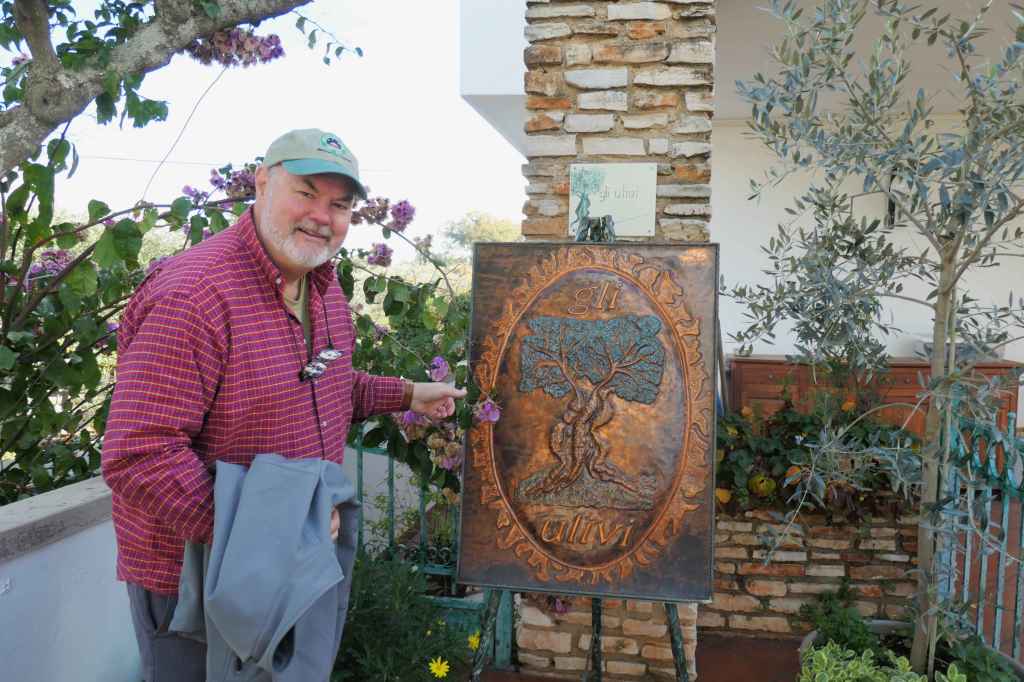
We arrived to find the lively Restaurant Gli Ulivi (“Olive Trees”) packed with locals. The prices were more than fair, and the food was great! We met and enjoyed chatting with one of the well-spoken principals, Vito.
With full bellies and restored spirits, we cheerfully headed back to the parking lot to retrieve the car but arrived to find the grocery store closed and gates blocking both entrances to the street. Our car sat all alone, locked in!
We chose the area near Alberobello for our stay in the boot specifically for the opportunity to sleep in a trullo. But just what is a trullo?
Using Google Translate, our host, Angelo, proudly provided the history of his trullo, which has been in the family for three generations.
Specific to the Itria Valley in Puglia, trulli (plural of trullo) are dry-stacked stone huts with walls exceeding three-feet thick and double layer conical stone roofs. Originally built as temporary field shelters or, as in Angelo’s case, storehouses for grain, they became simple, efficient homes that could be enlarged as the family grew or “easily” torn down when the tax inspector was in the area. The rooftop pinnacle stone represented the signature of the stonemason and that the trullo was finished and now occupied.
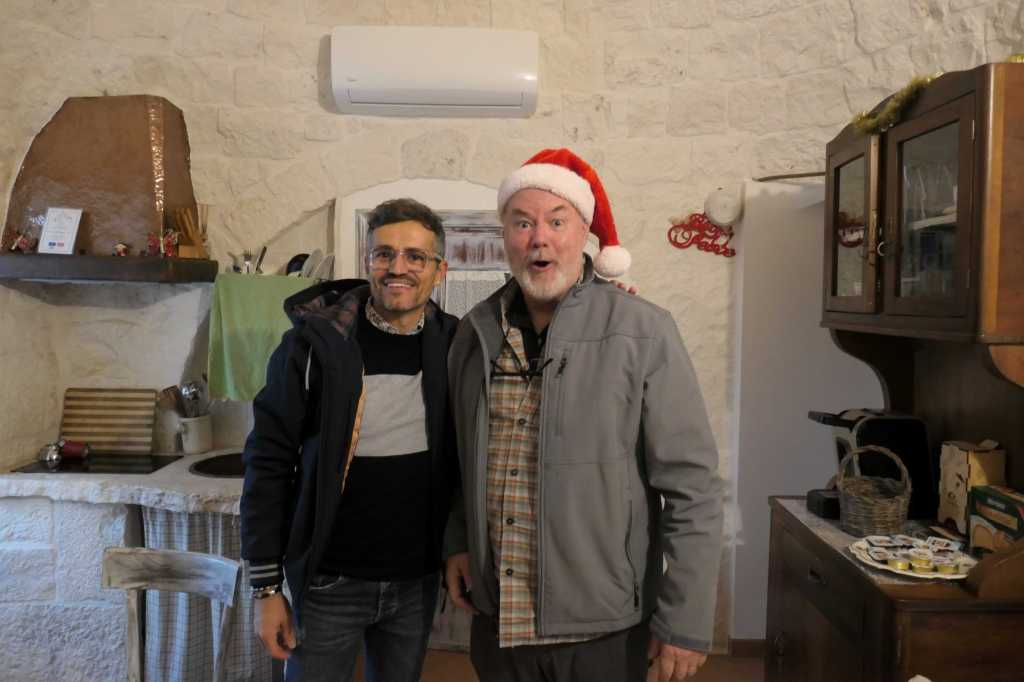
Todd with the talented Angelo

After we’d been introduced to the history of Angelo’s family trullo, we headed to the enchanting town of Alberobello, Puglia’s small town full of unique, stone-roofed trulli homes. A UNESCO World Heritage Site, Alberobello has also been awarded as one of the “Most Beautiful Villages in Italy.”
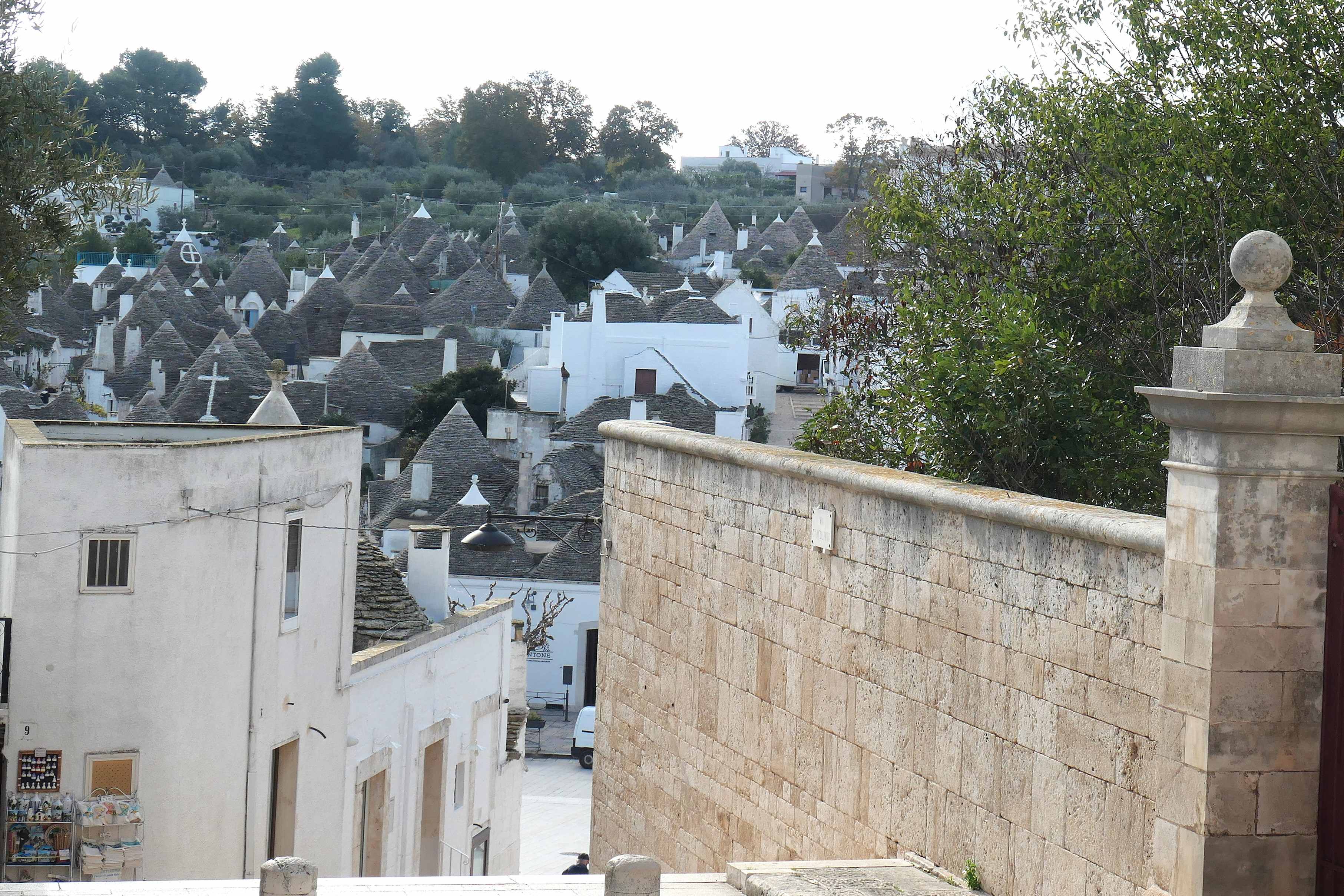
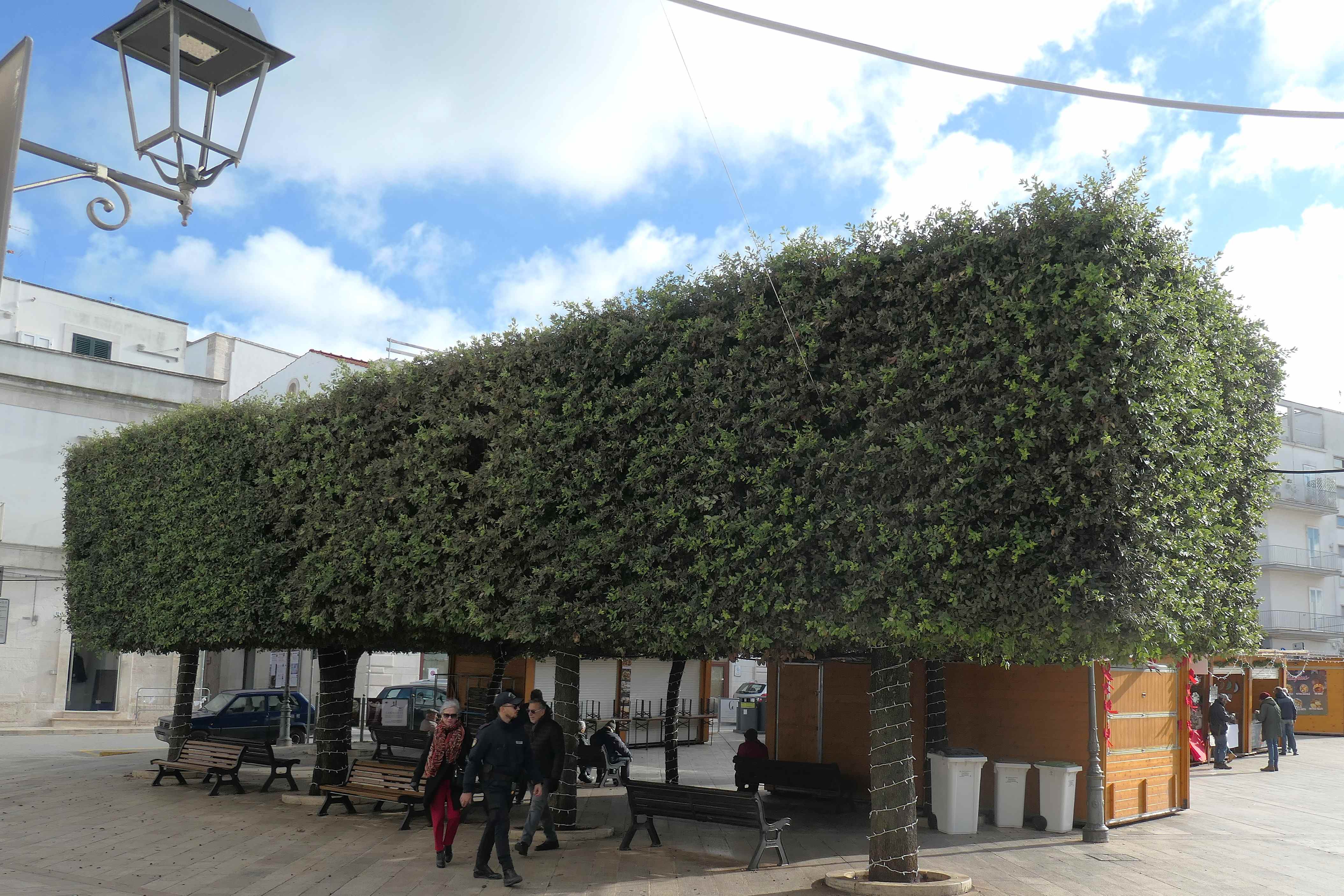
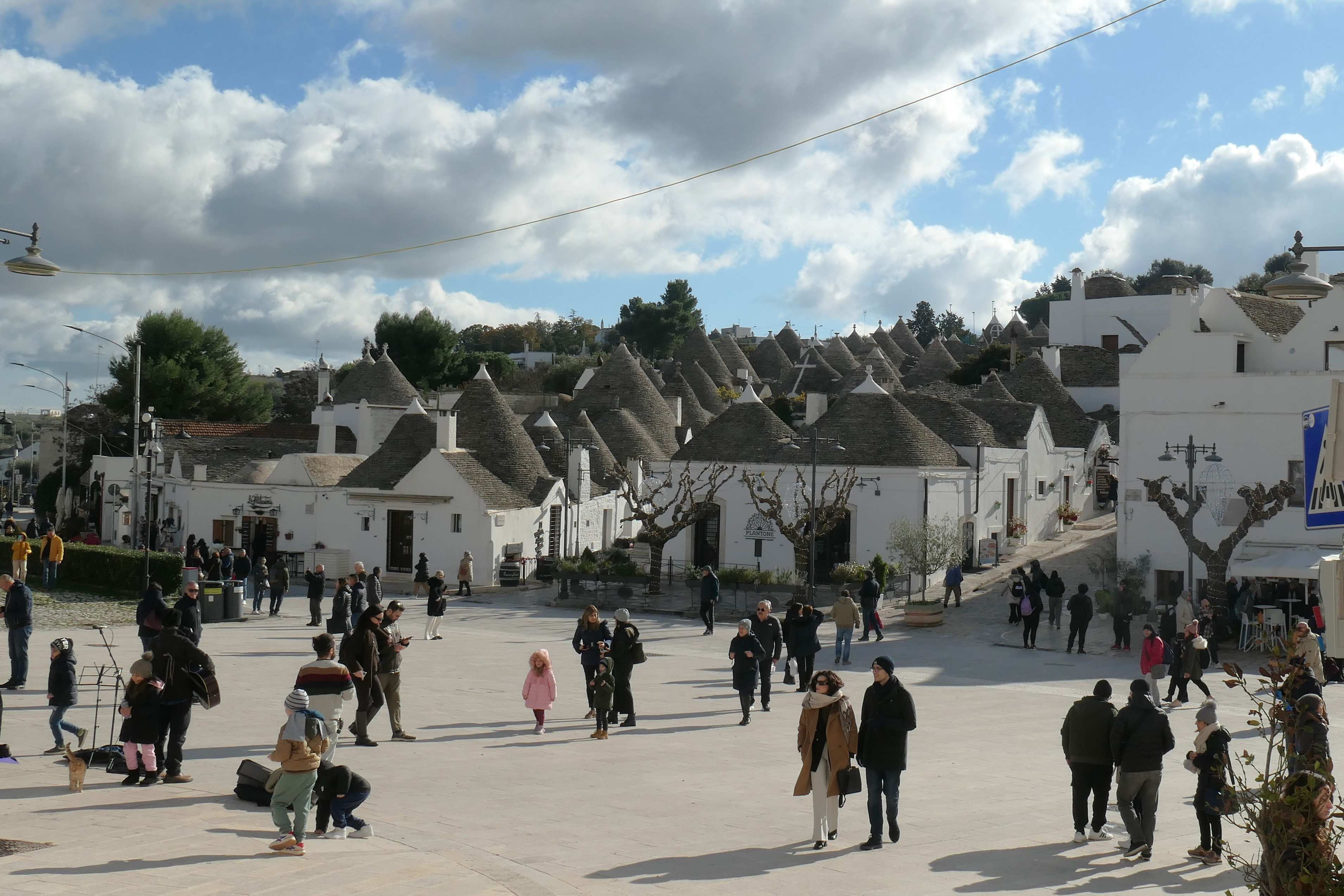
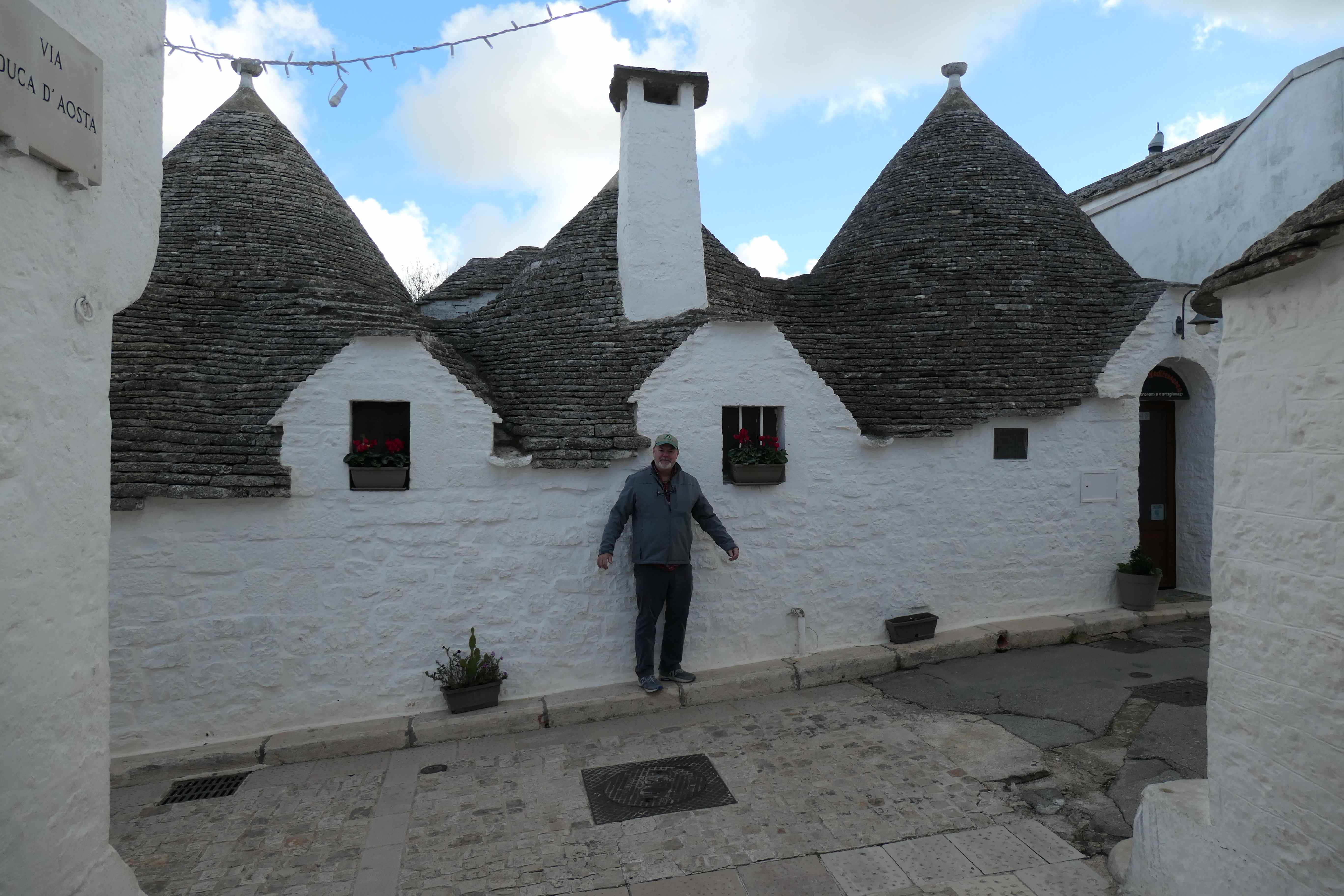
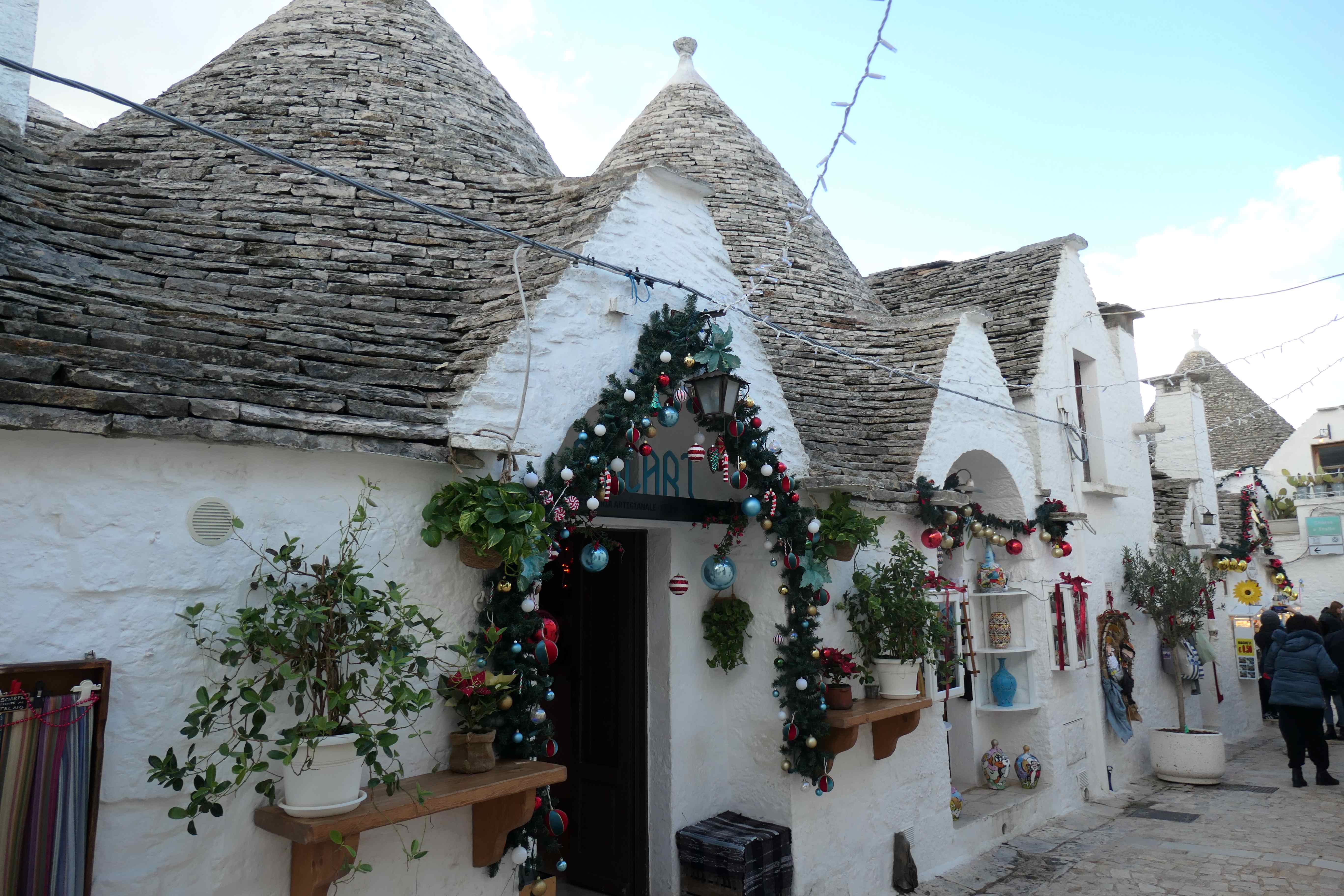
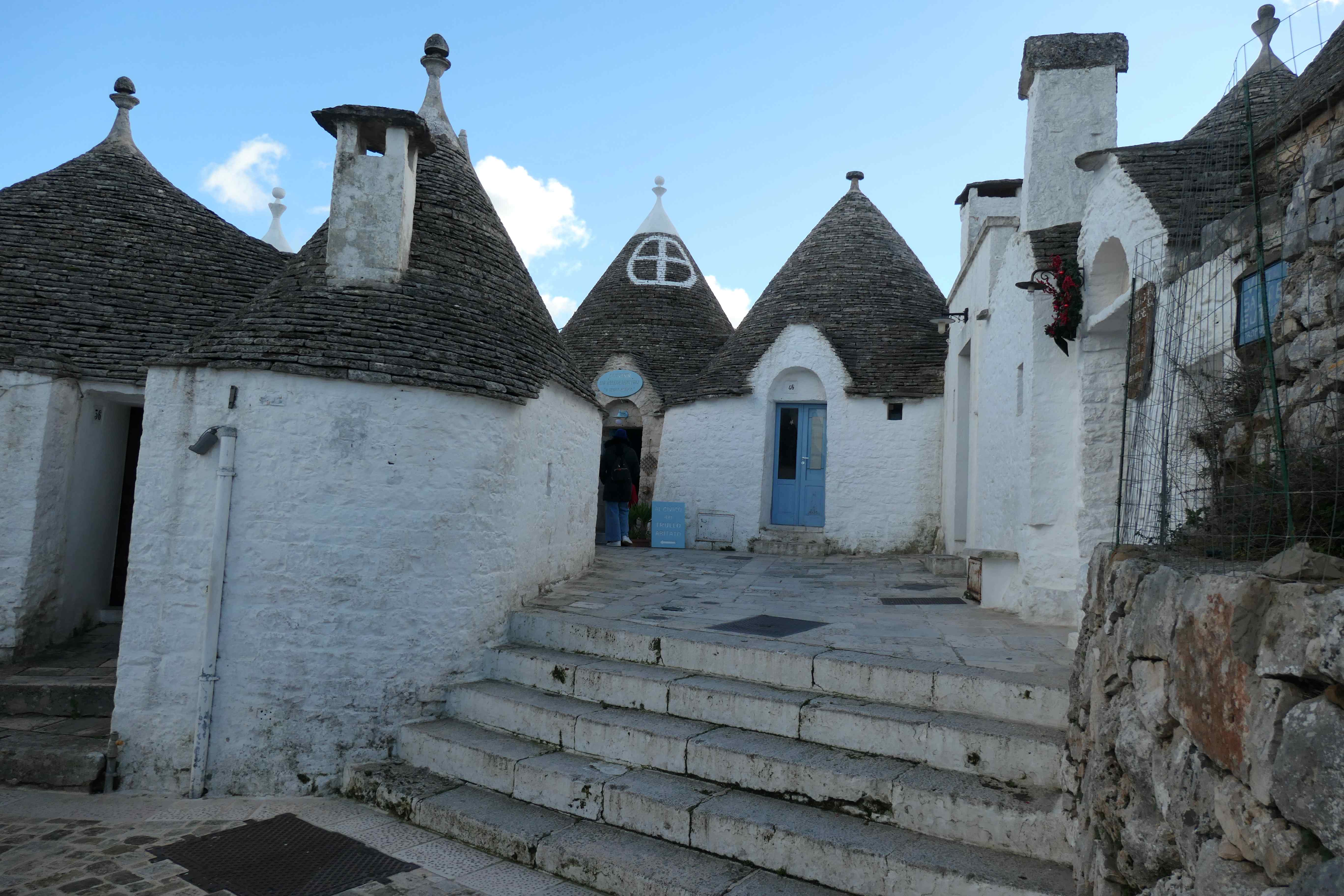
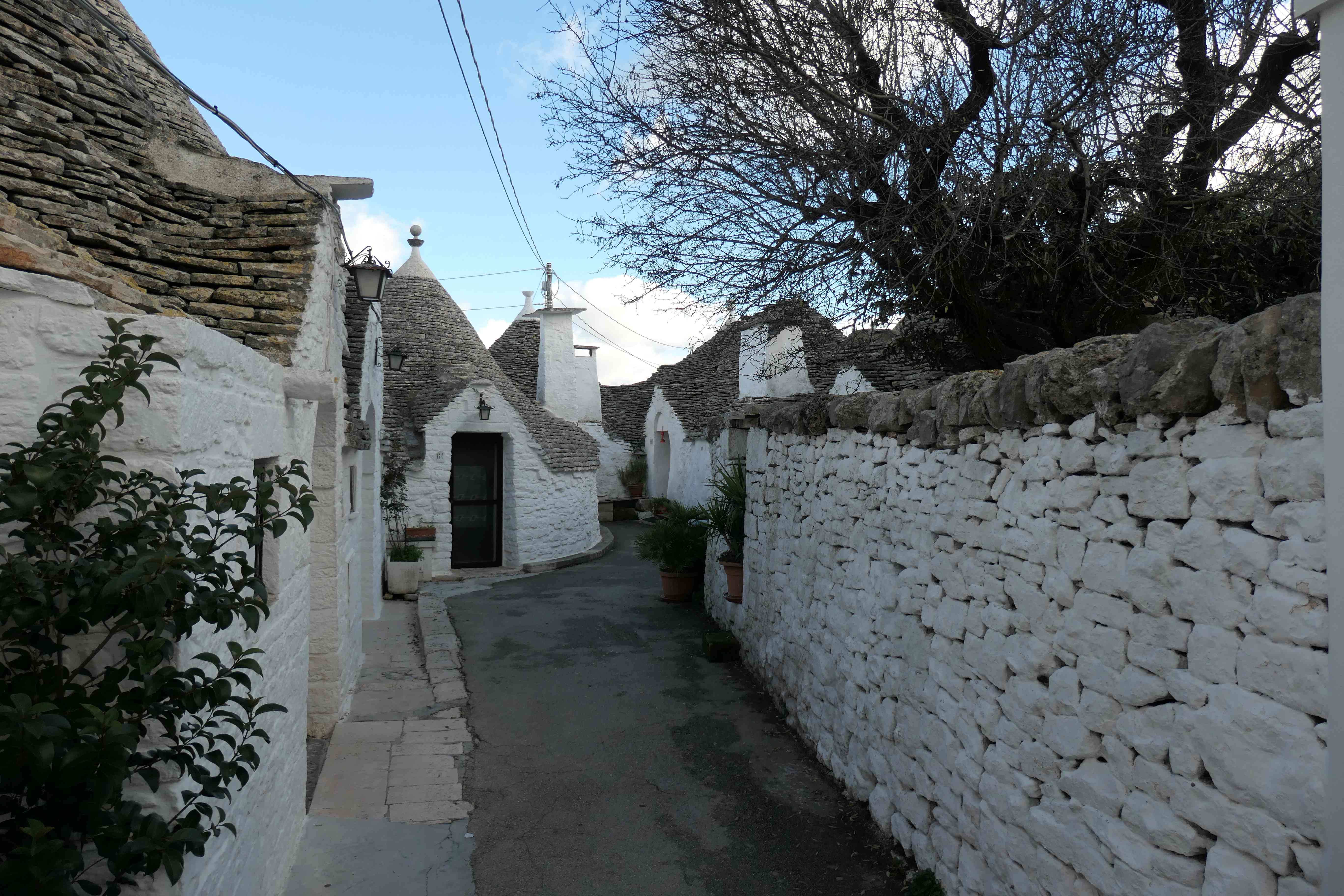
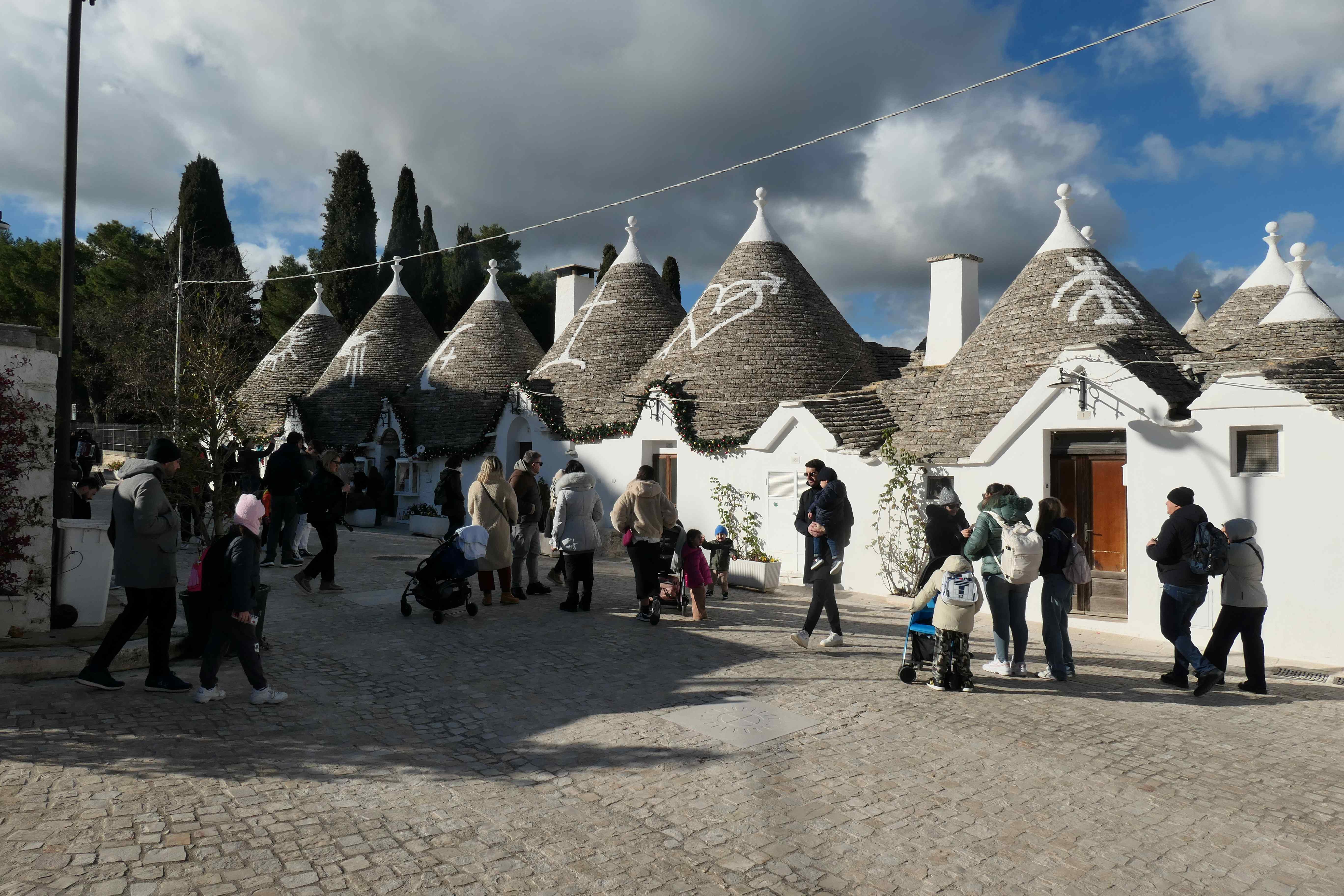
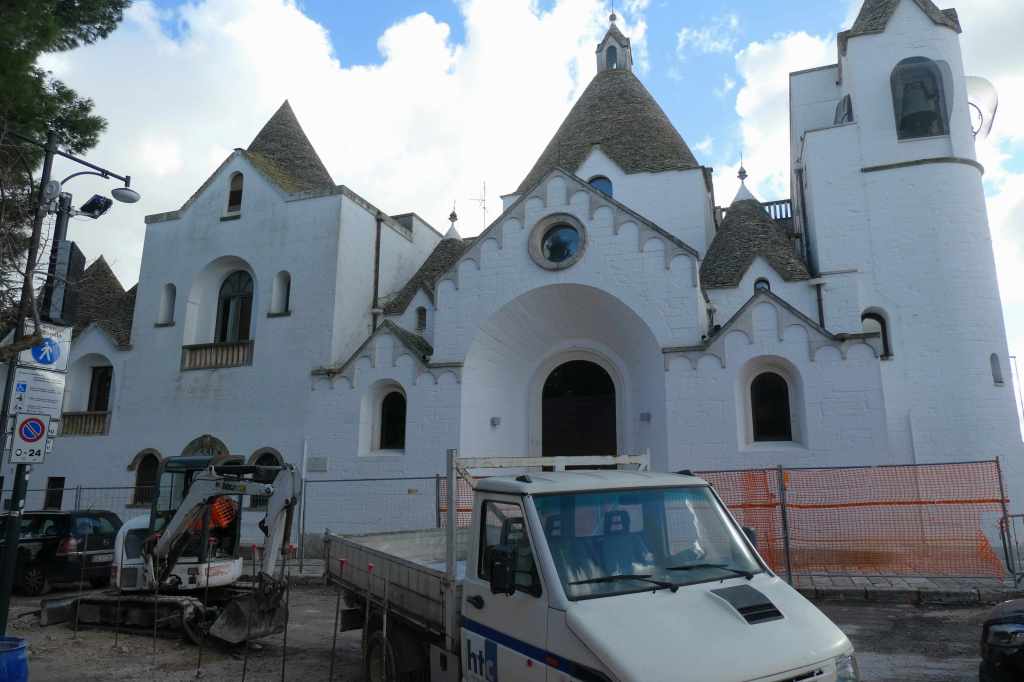
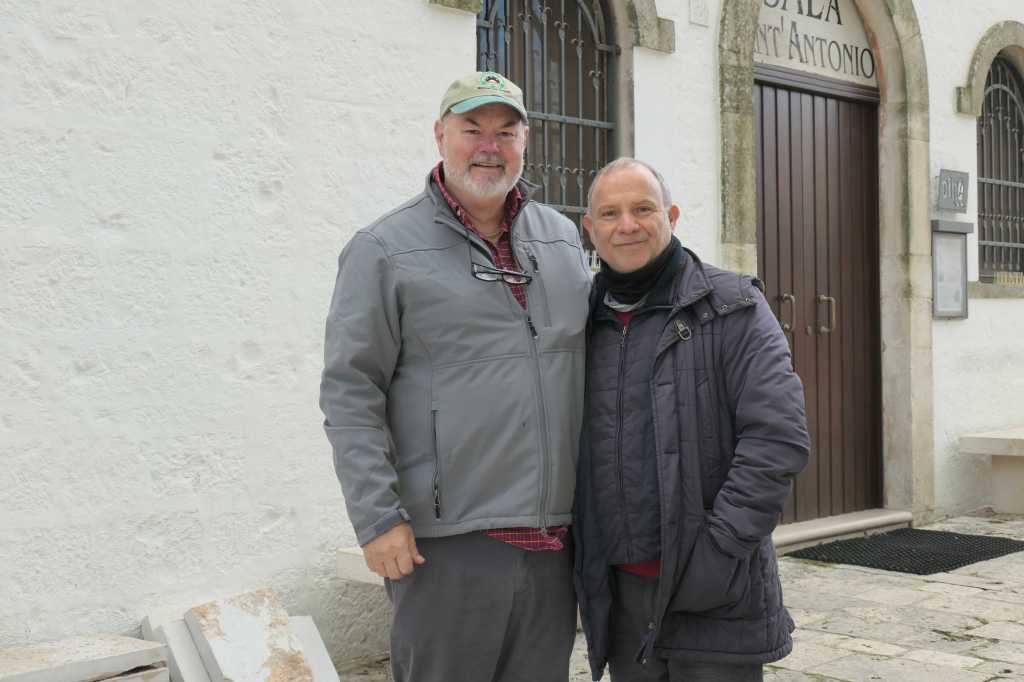
We made our way through the dual villages to the large church at the far end of the historic area to find it closed due to an exterior construction project. As we turned to retrace our way through Alberobello, we practically bumped into… Vito, from the restaurant the night before!
We’re going to miss all of the olive trees!
 Our Travels