Adderley’s Plantation Ruins

You’re on a scenic, tropical island. Why visit plantation ruins? Fair question. I suppose to see some of the heritage of the island, good and bad. Well, that and the fact that both of us like historic buildings.

Given its size, there are several plantation ruins on Long Island, but we only had the car for 24 hours, so we set out to find the one that supposedly has buildings still standing to the roof line.


Okay, so let’s get the history part out of the way. We mention it because it’s kind of interesting:

Following the American Revolution, about 1790, loyalist British slave owner, Abraham Adderley, moved to Long Island with his slaves in tow to take possession of the 700 acres he was granted by the English King. Uh? your side loses and the king gives you land on a tropical island? Anyway, by 1820, Abraham’s Long Island born son William had enlarged it to 2500 acres (not sure they asked anyone for permission), where they raised cotton and livestock – cattle, sheep, and work horses.

When William’s son, James, chose not to claim possession (kids, right?), William sold much of it to the plantation’s master and herdsman, Uriah T. Knowles and his son Alonzo, both from Long Island, at one shilling per acre (and no one objected).

The plantation prospered until problems began when Uriah disinherited Alonzo over his choice of second wife, who was “dark-skinned.” Things went downhill from there.

A terrible hurricane hit in 1927, destroying the buildings and ruining the bay, you’ll see how later.
In 1935, bummed for some reason, Uriah slit his own throat at the plantation’s dock. Having disinherited Alonzo, Uriah’s other four children inherited the property. Those heirs, however, didn’t want a plantation/working farm, so it slowly ceased functioning.

Many relatives of the owners and slaves are still living on Long Island.


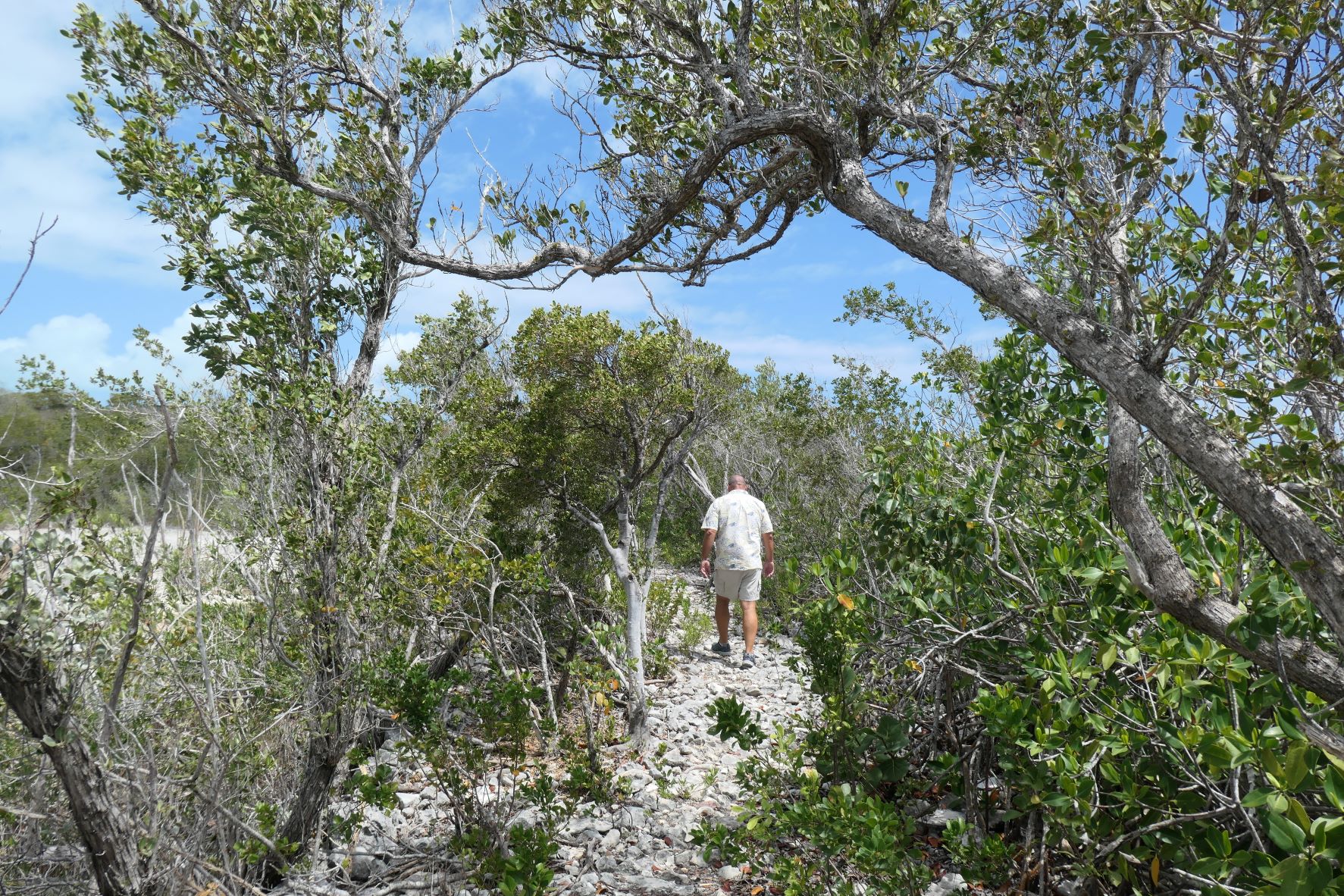
Background out of the way, let’s find what’s left of this plantation.

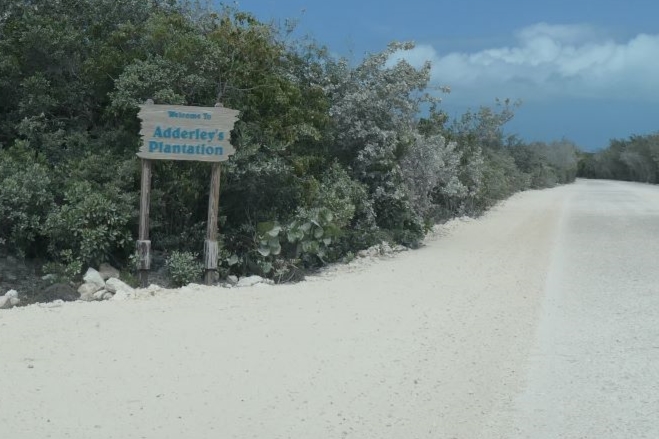
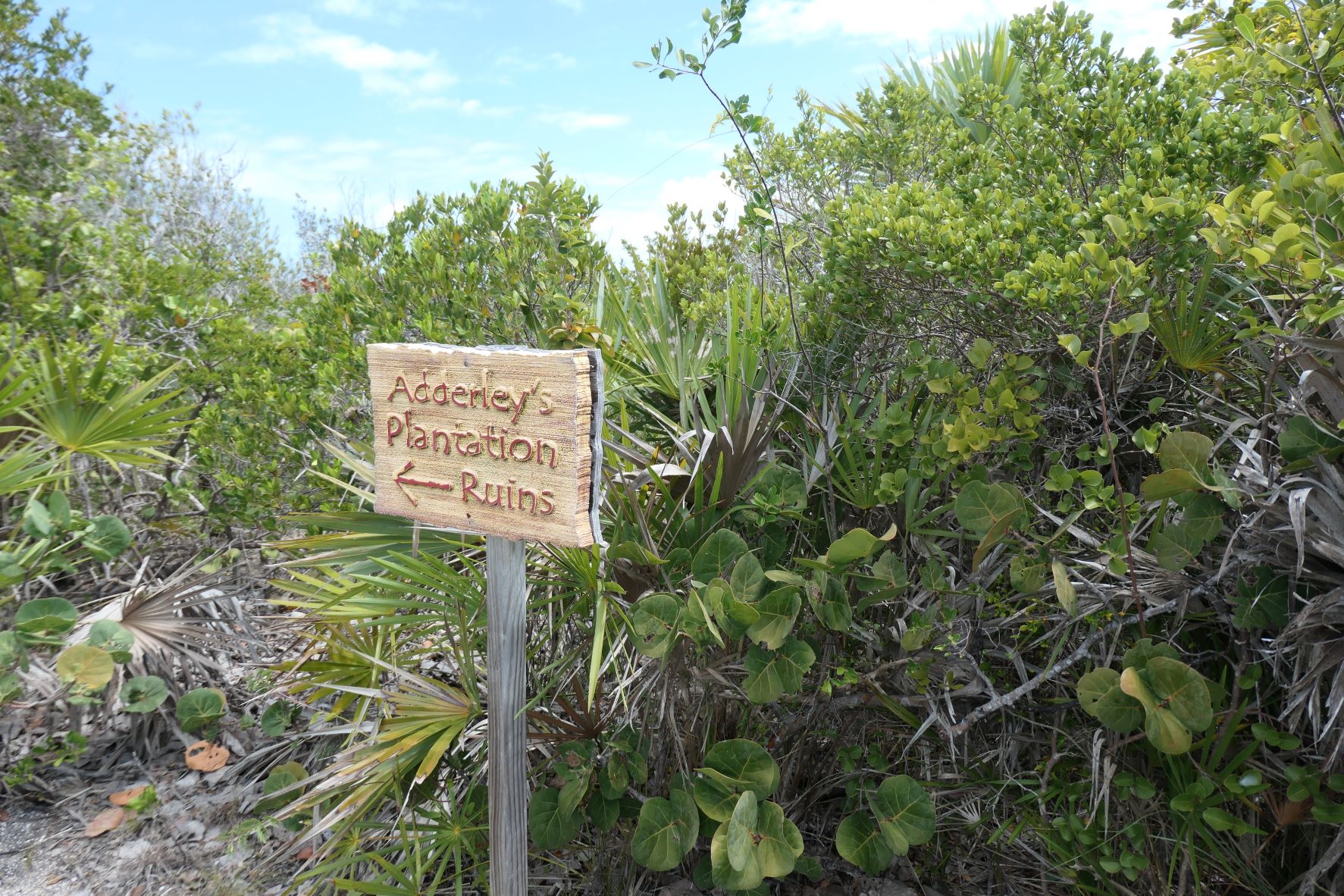
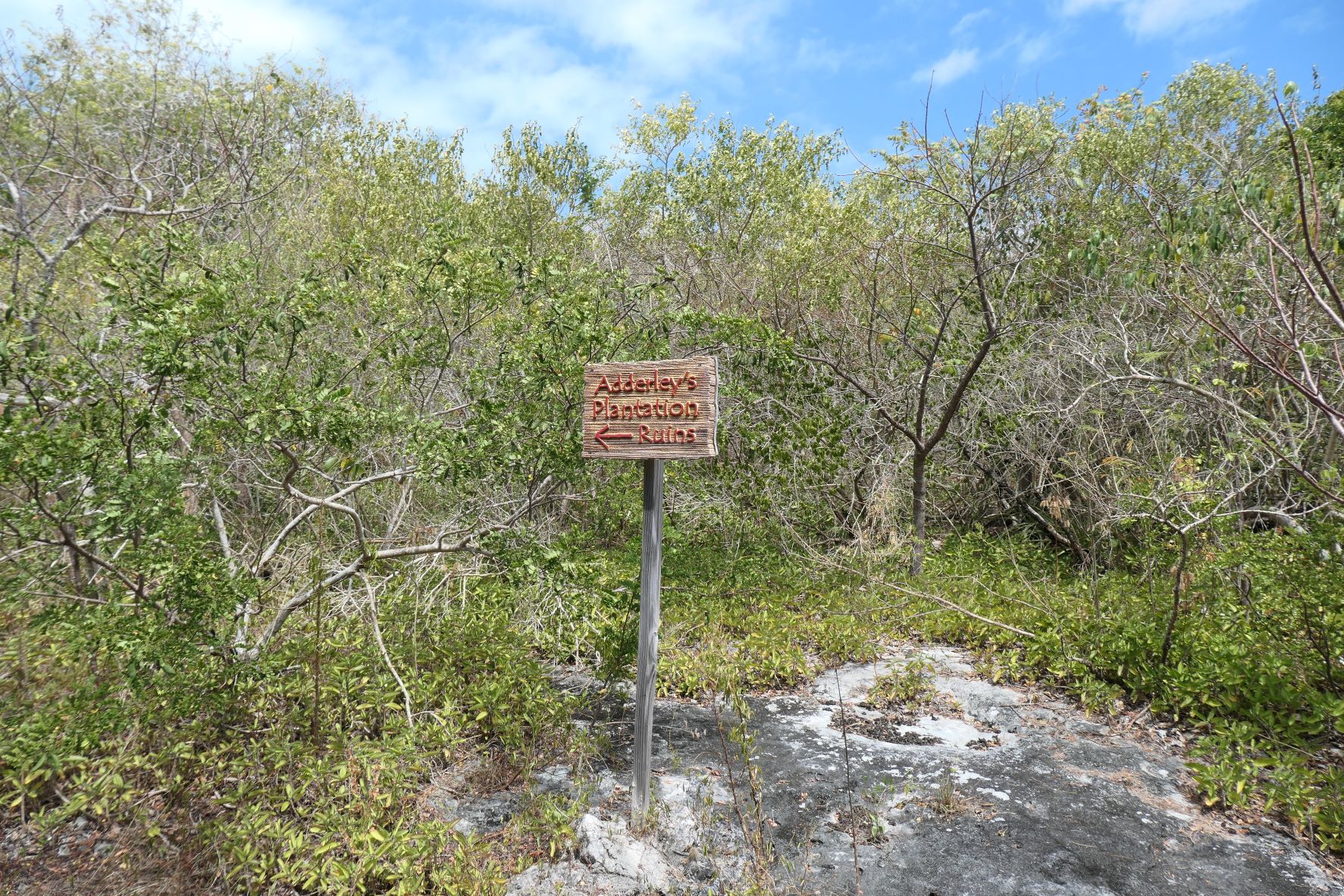
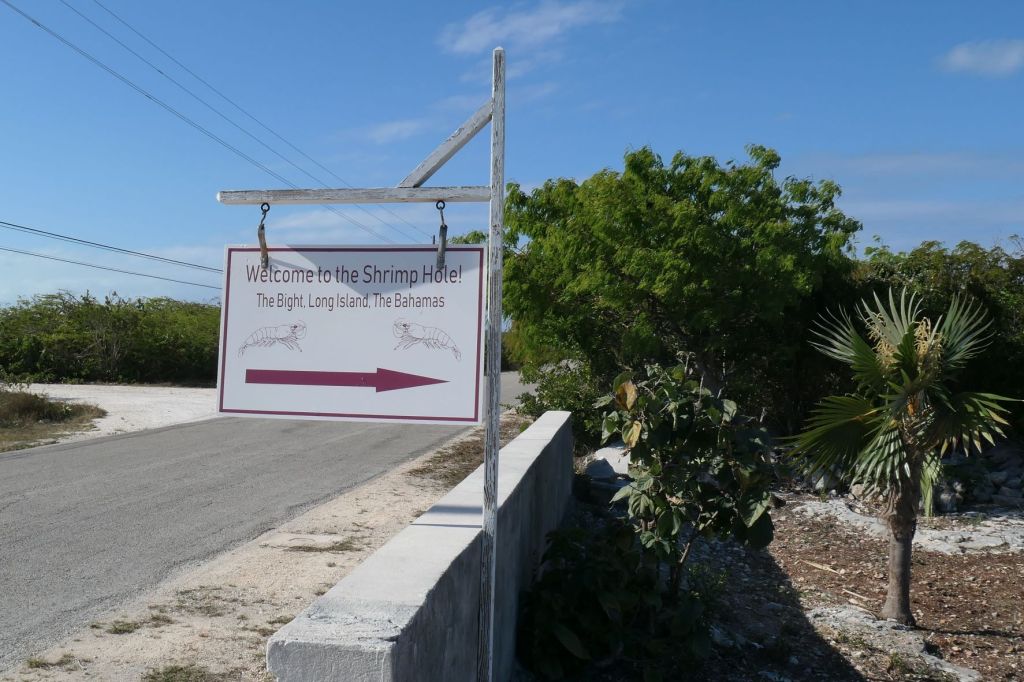
Aha! There’s the sign! Totally hidden by the dusty shrubs, you’ll miss it traveling south, but it’s easy to spot once you turn around and come at it heading north.

Don’t ask how we know.


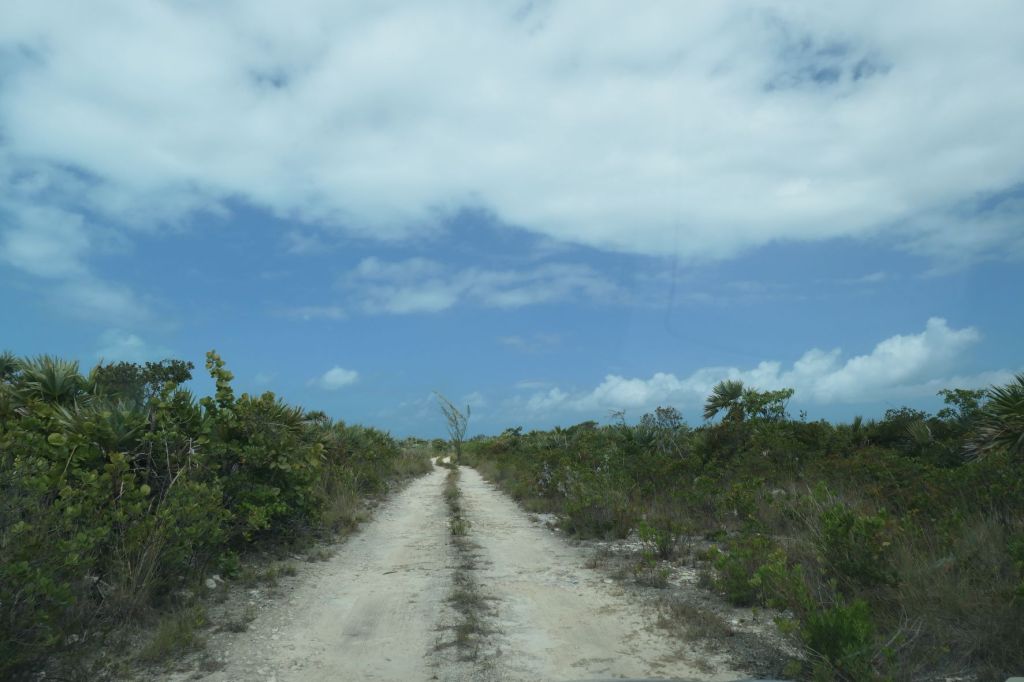
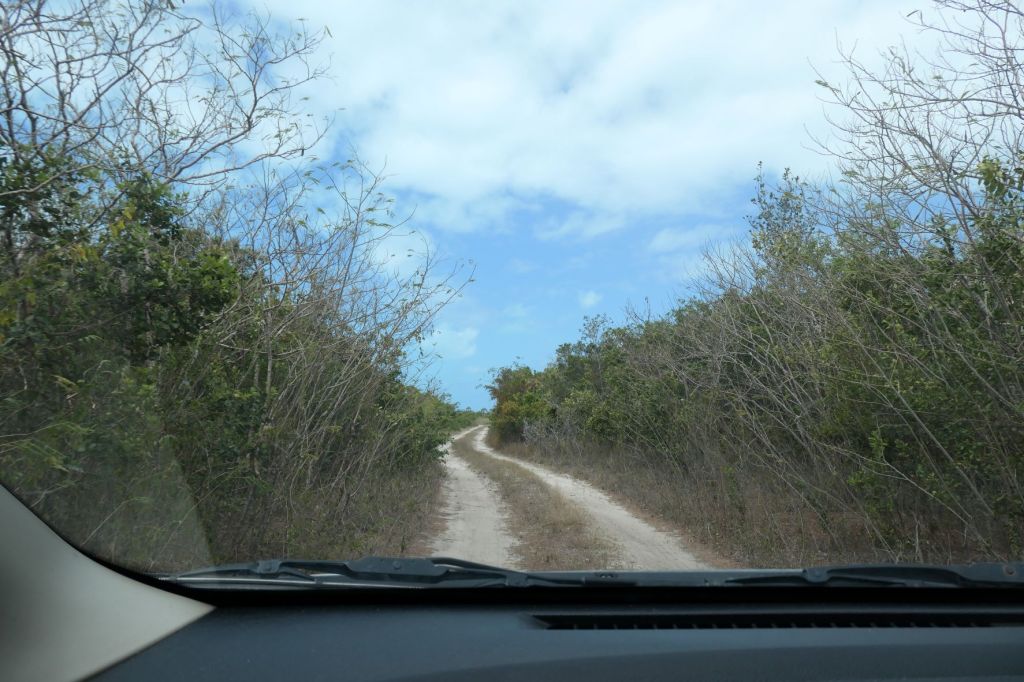
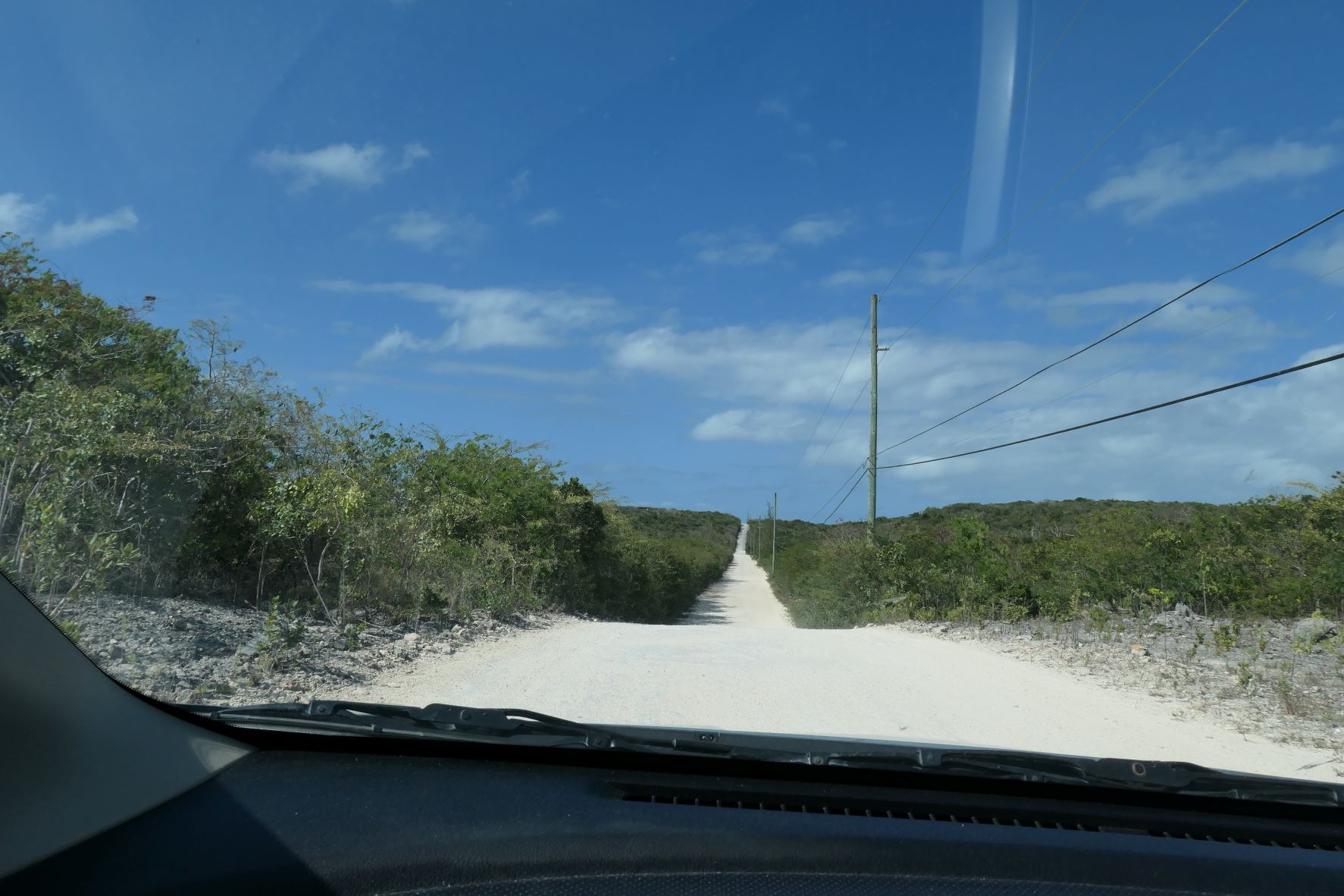
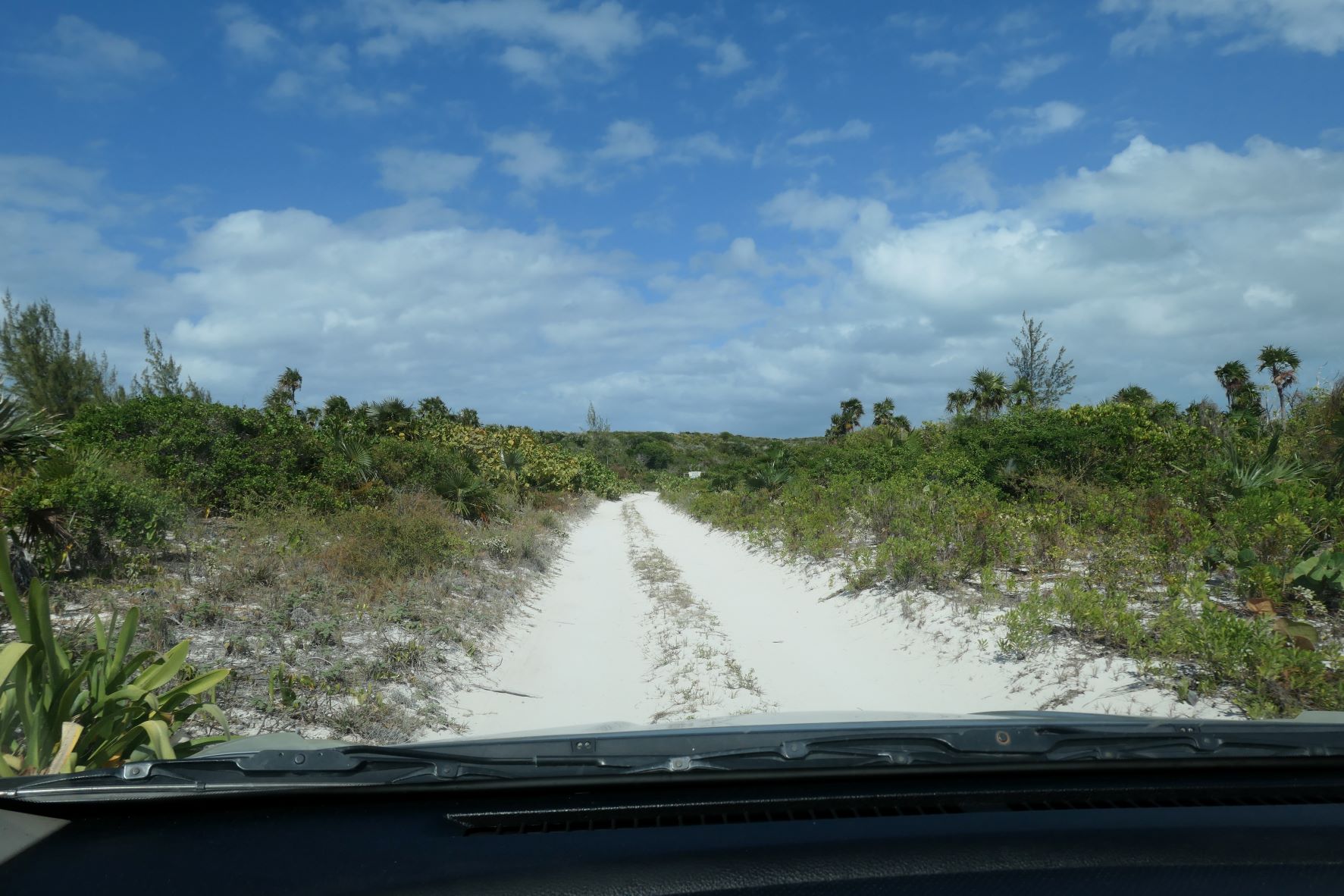
After turning off the main road, we traveled a route that, by the end, is a “road” in name only. It was too bouncy to even photograph the last rocky parts. (You’ve heard the old joke about what’s the toughest car ever made? A rental…)

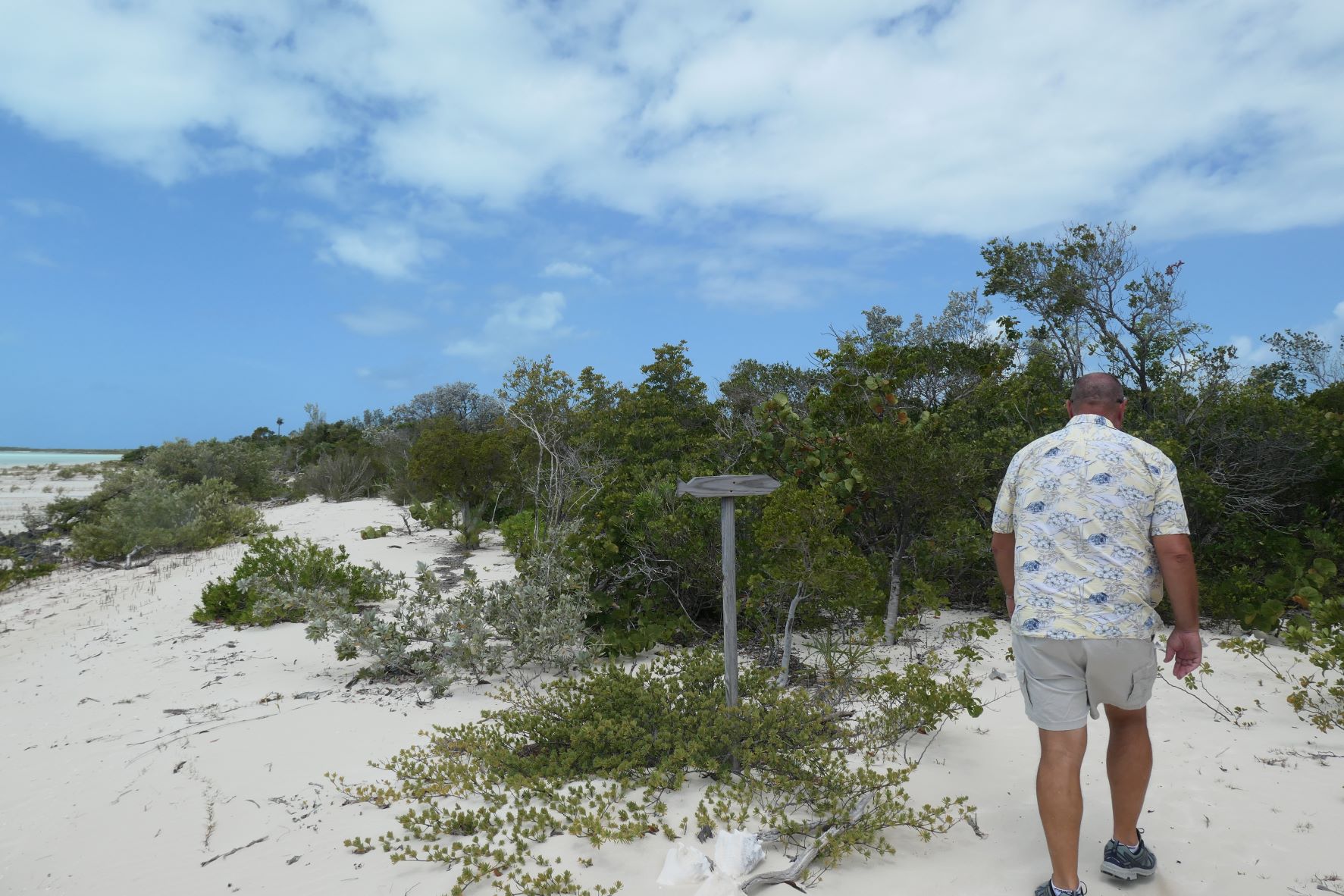
Finally, “You have arrived at your destination.” (Check your teeth.)

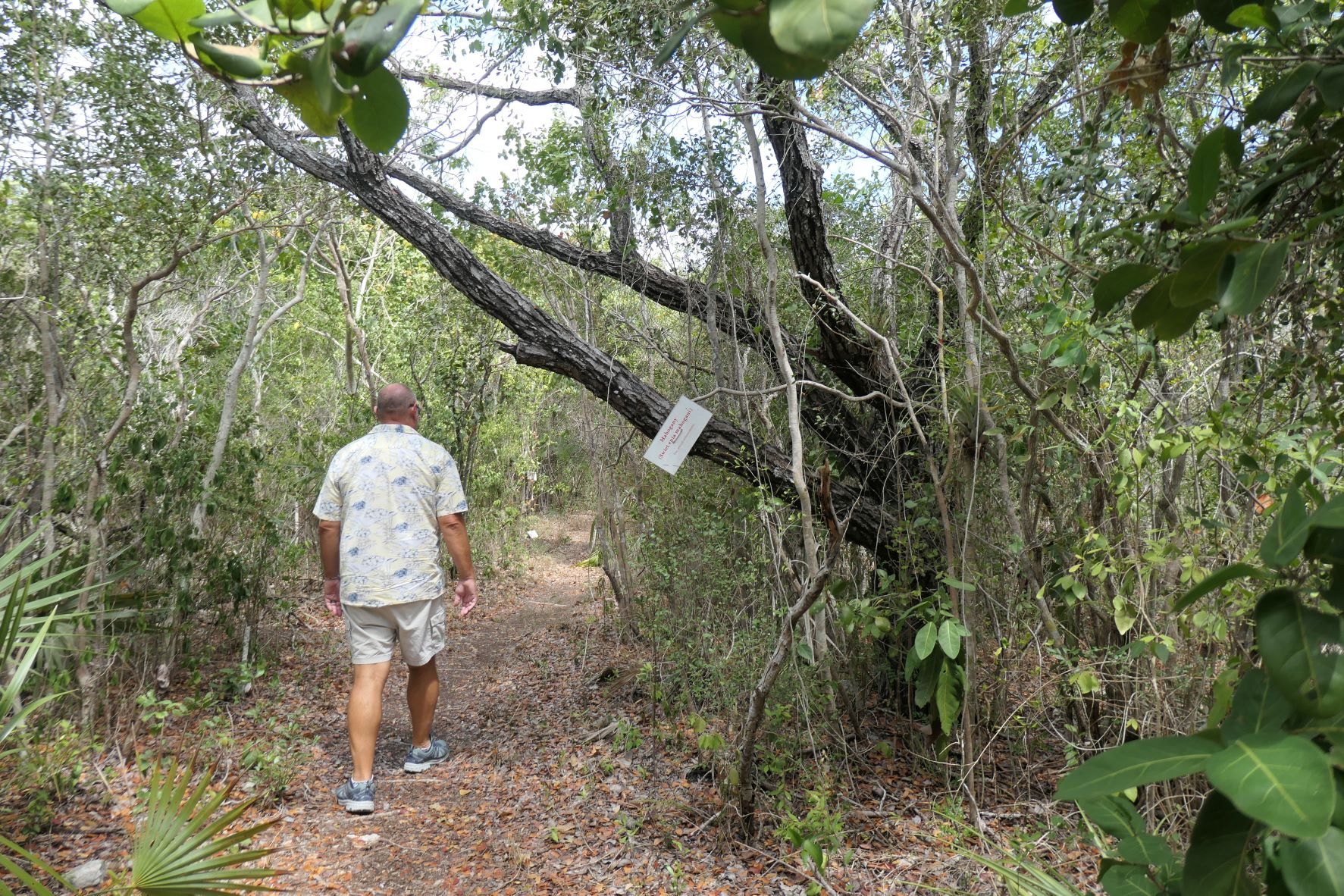
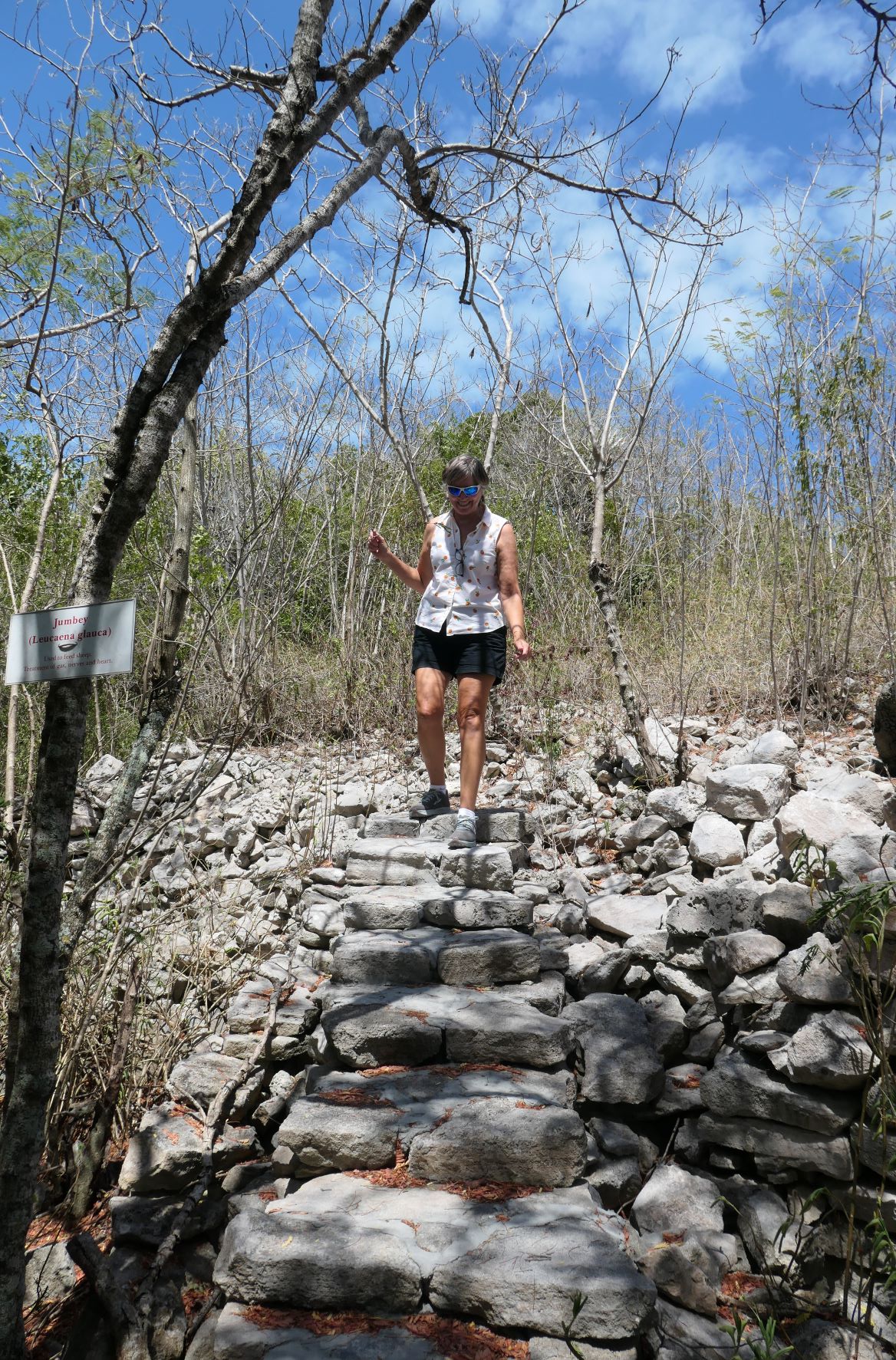
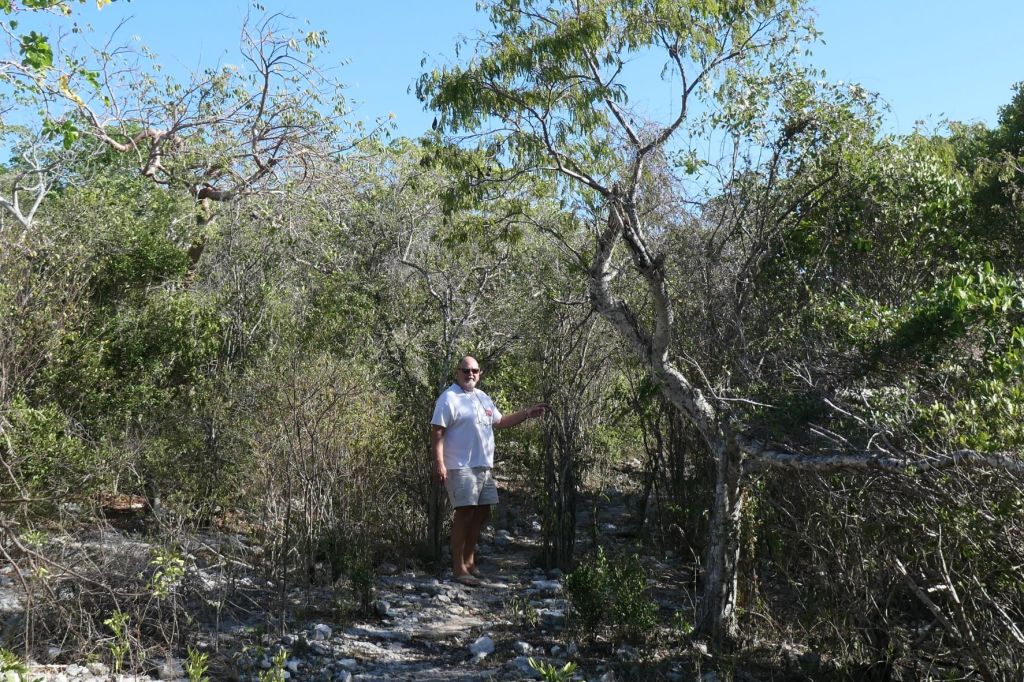
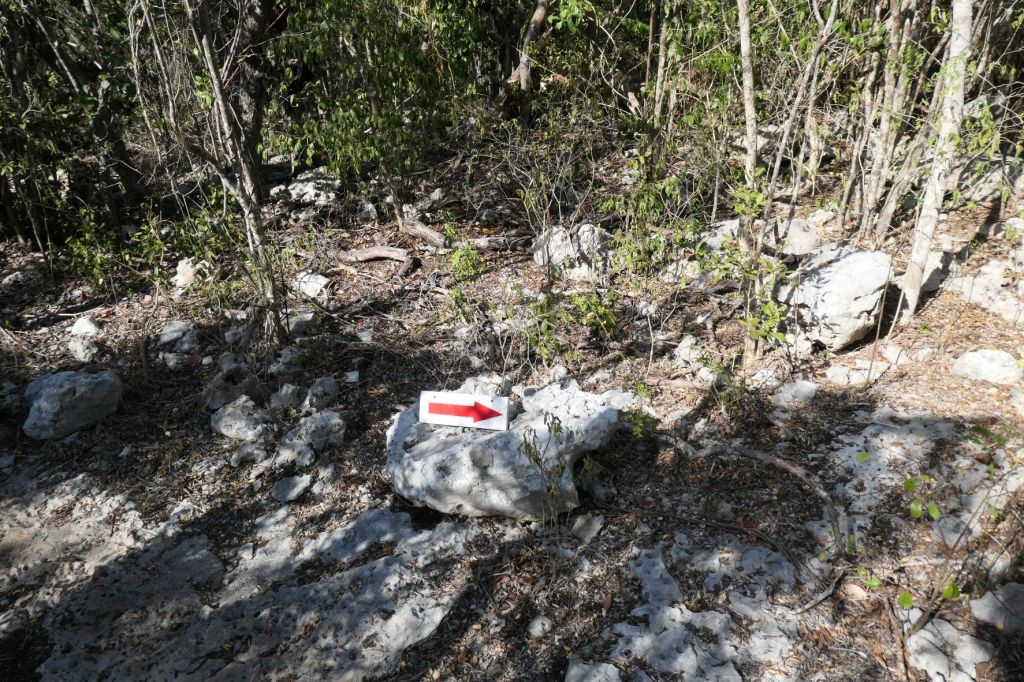
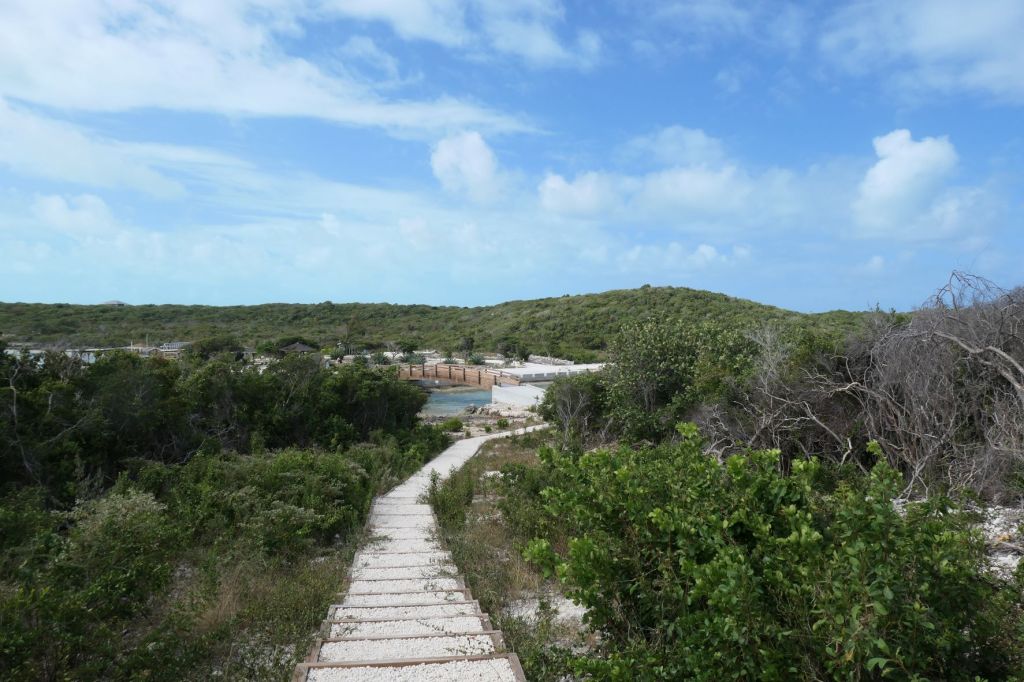
Followed by more walking and additional signs. Hey, at least these signs look official, like we’re actually going to find a plantation ruin (eventually), maybe?


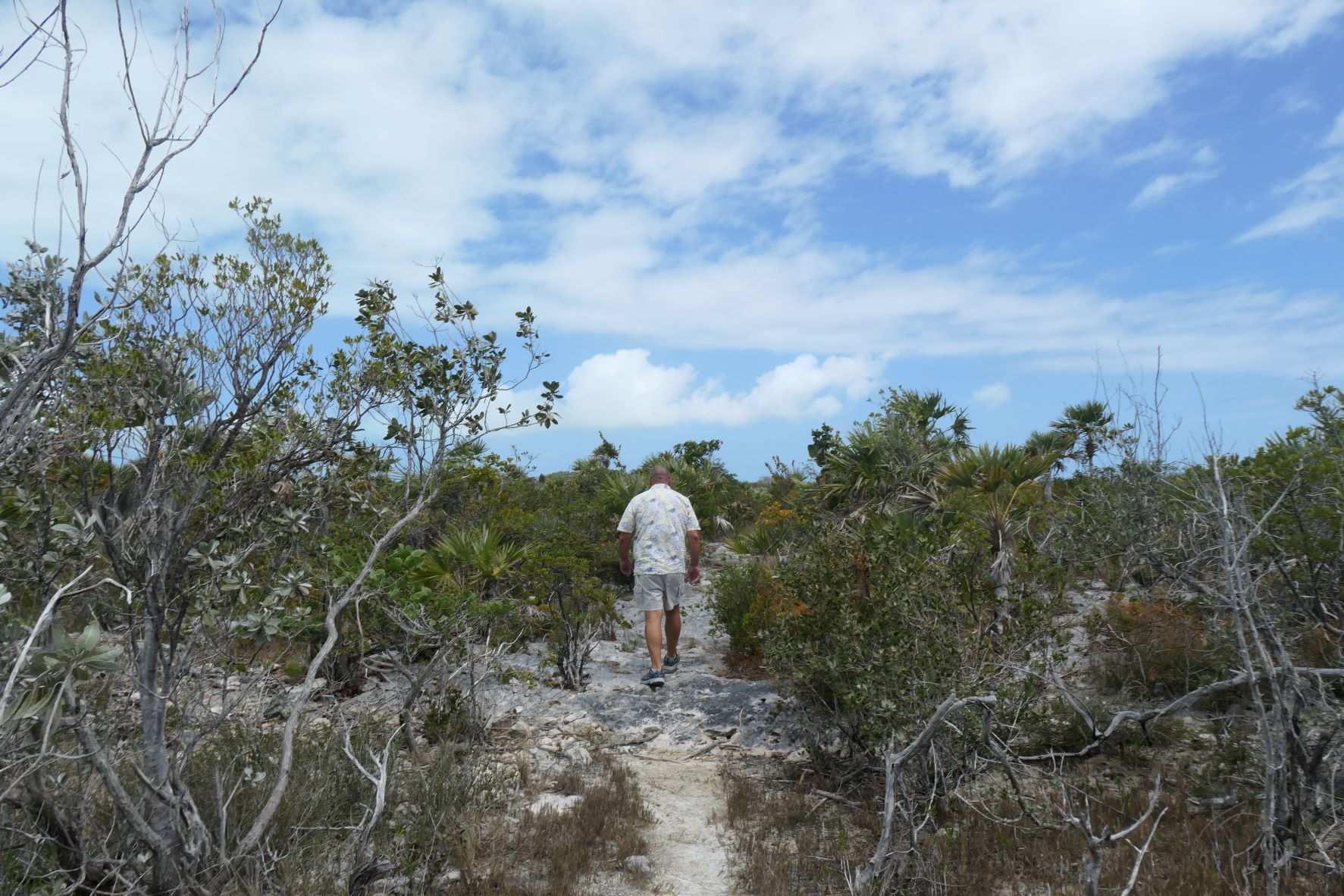
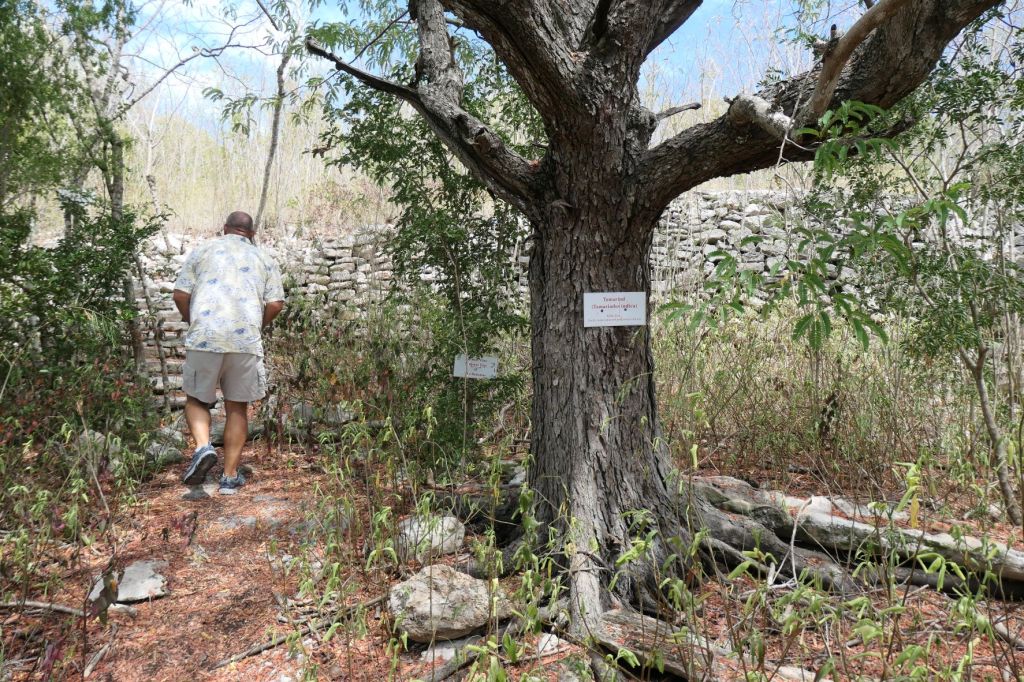
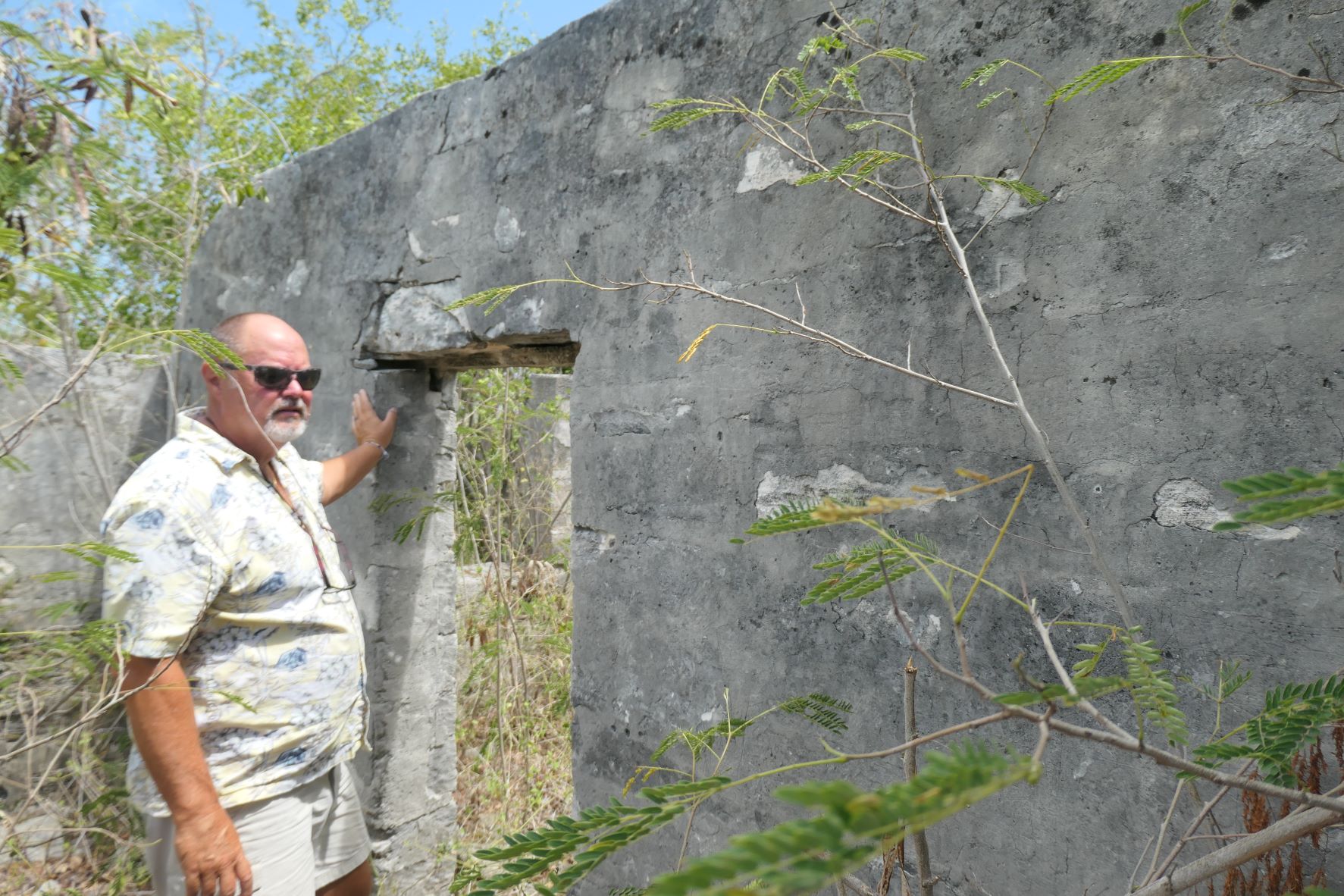
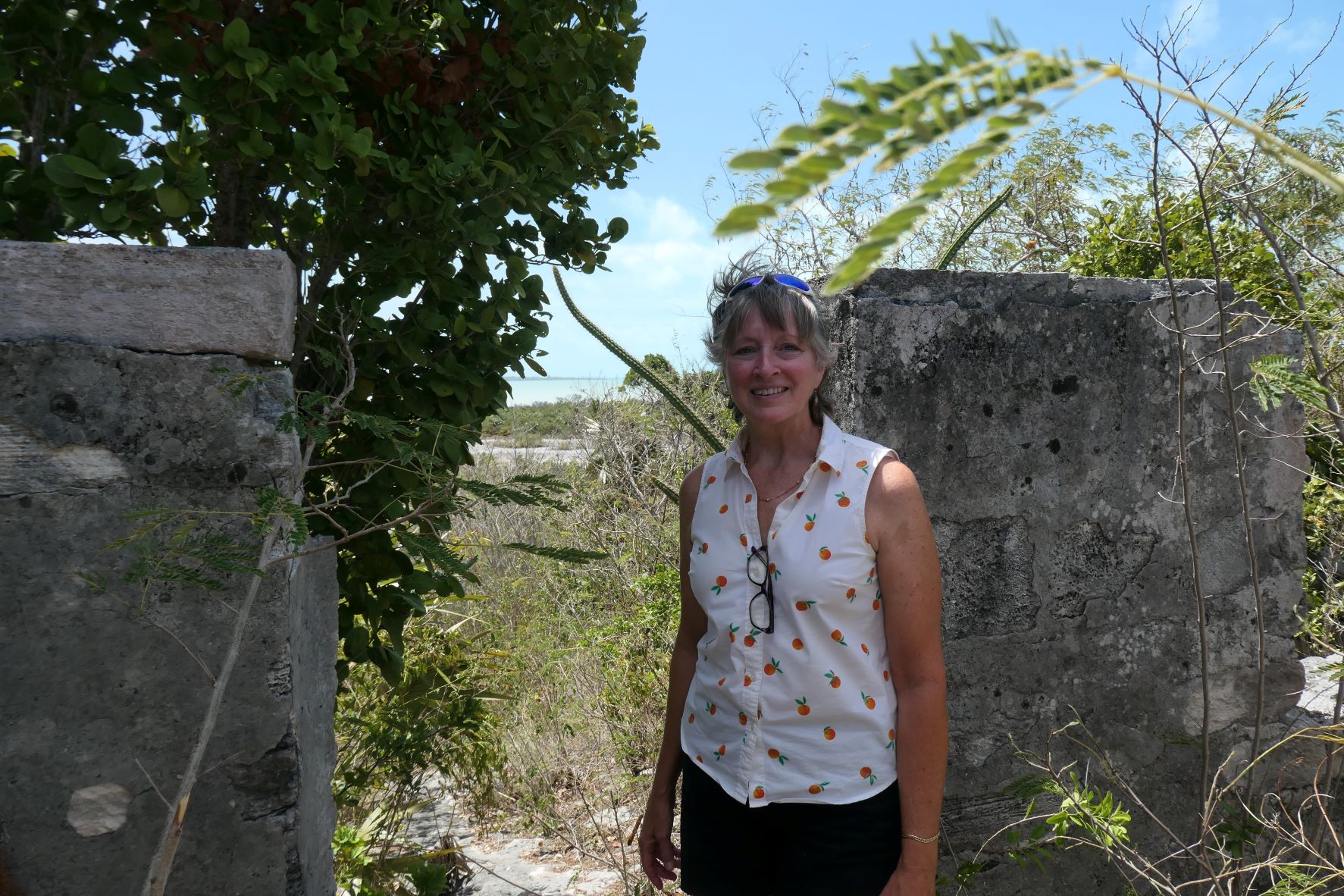
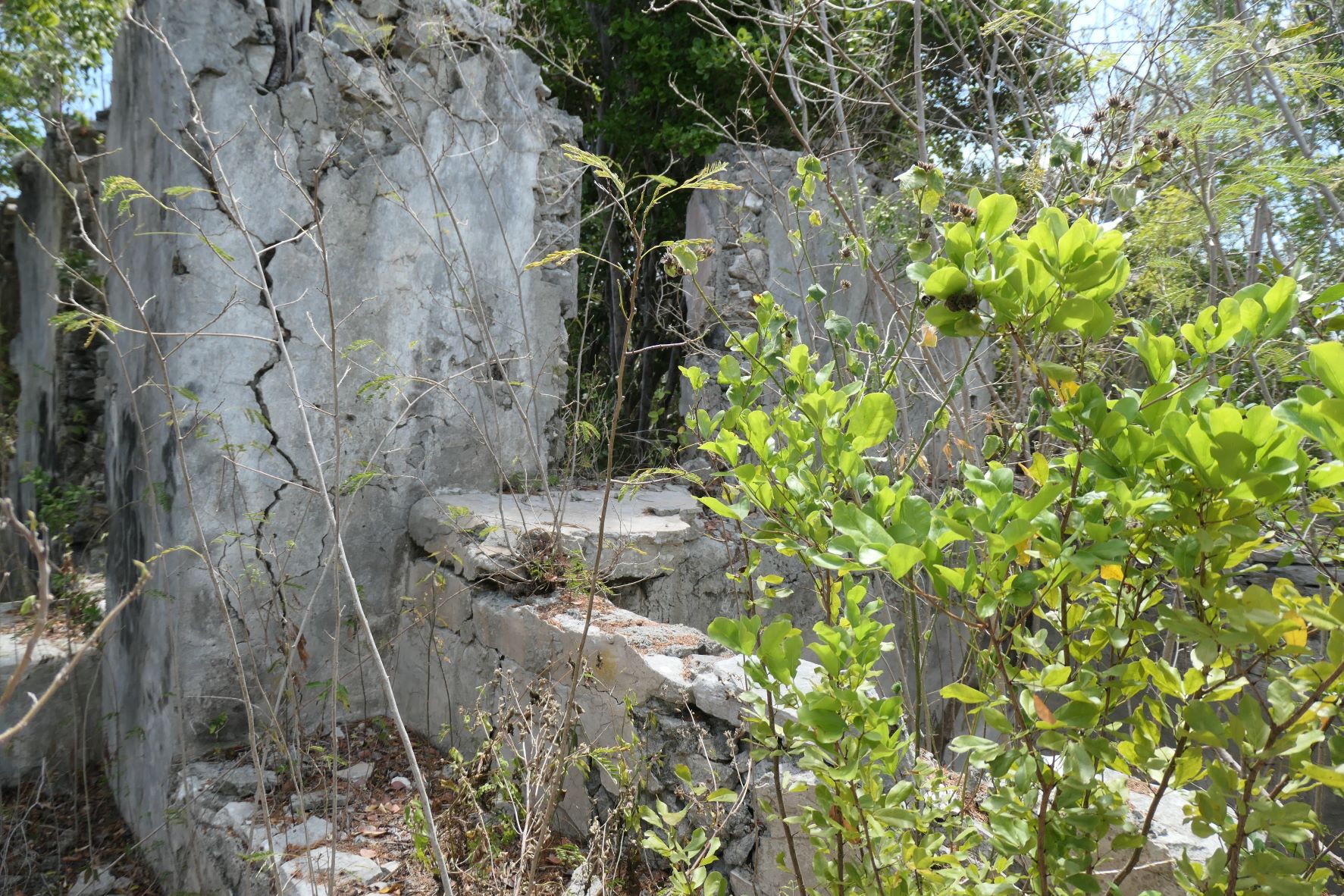
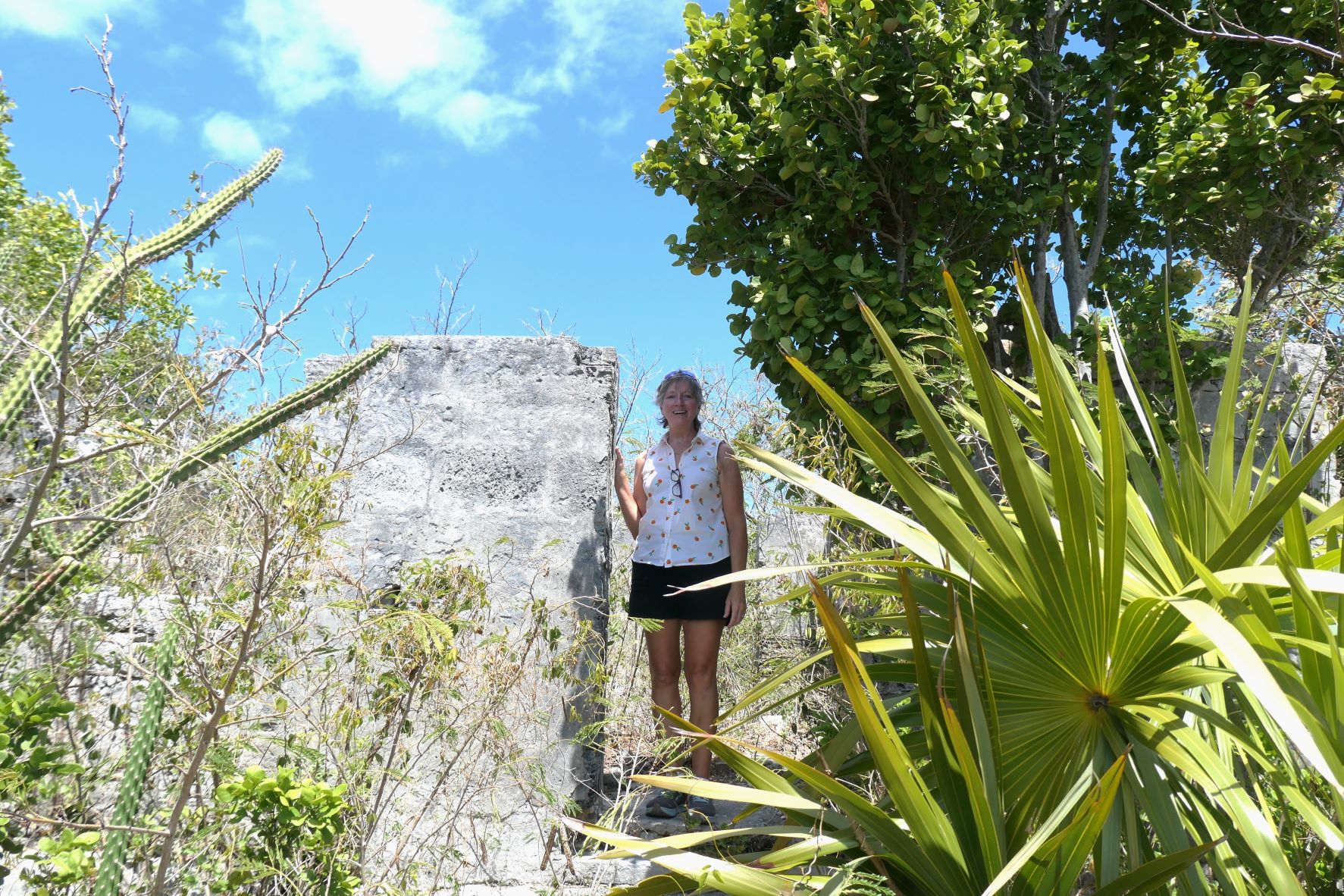
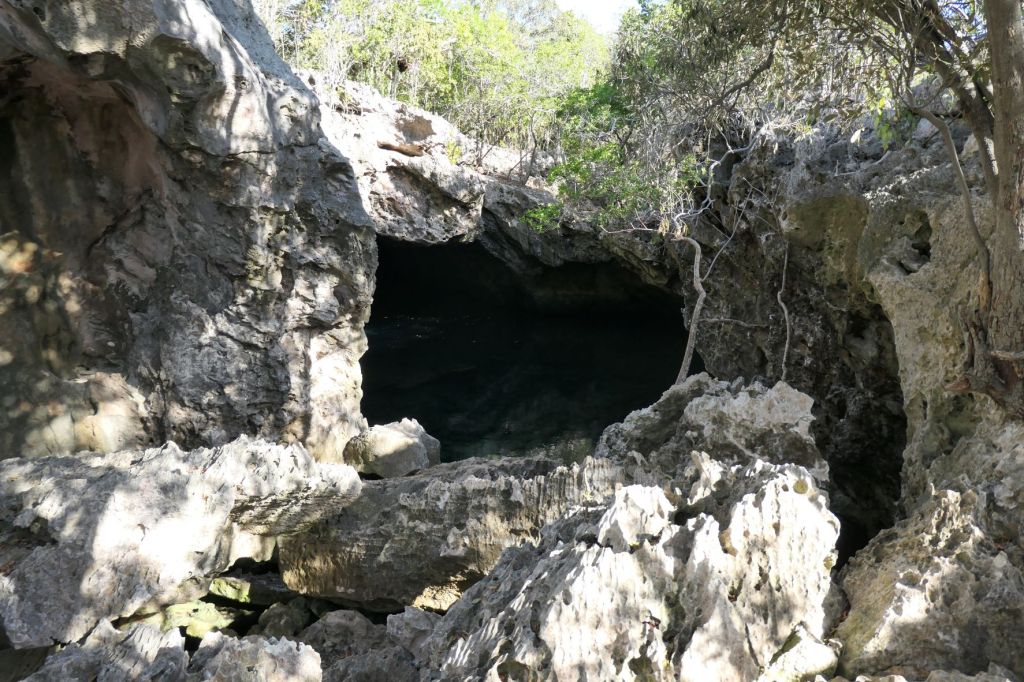
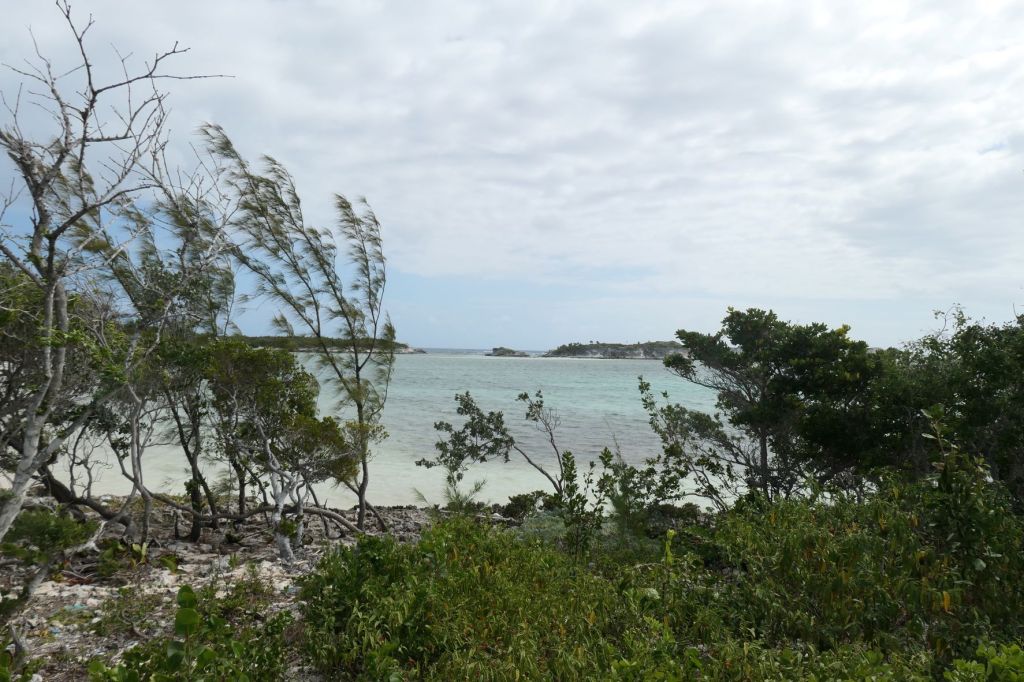
After the stone wall, it wasn’t much further before, “There it is, in the overgrowth. Finally!” Stone buildings, made for short people!

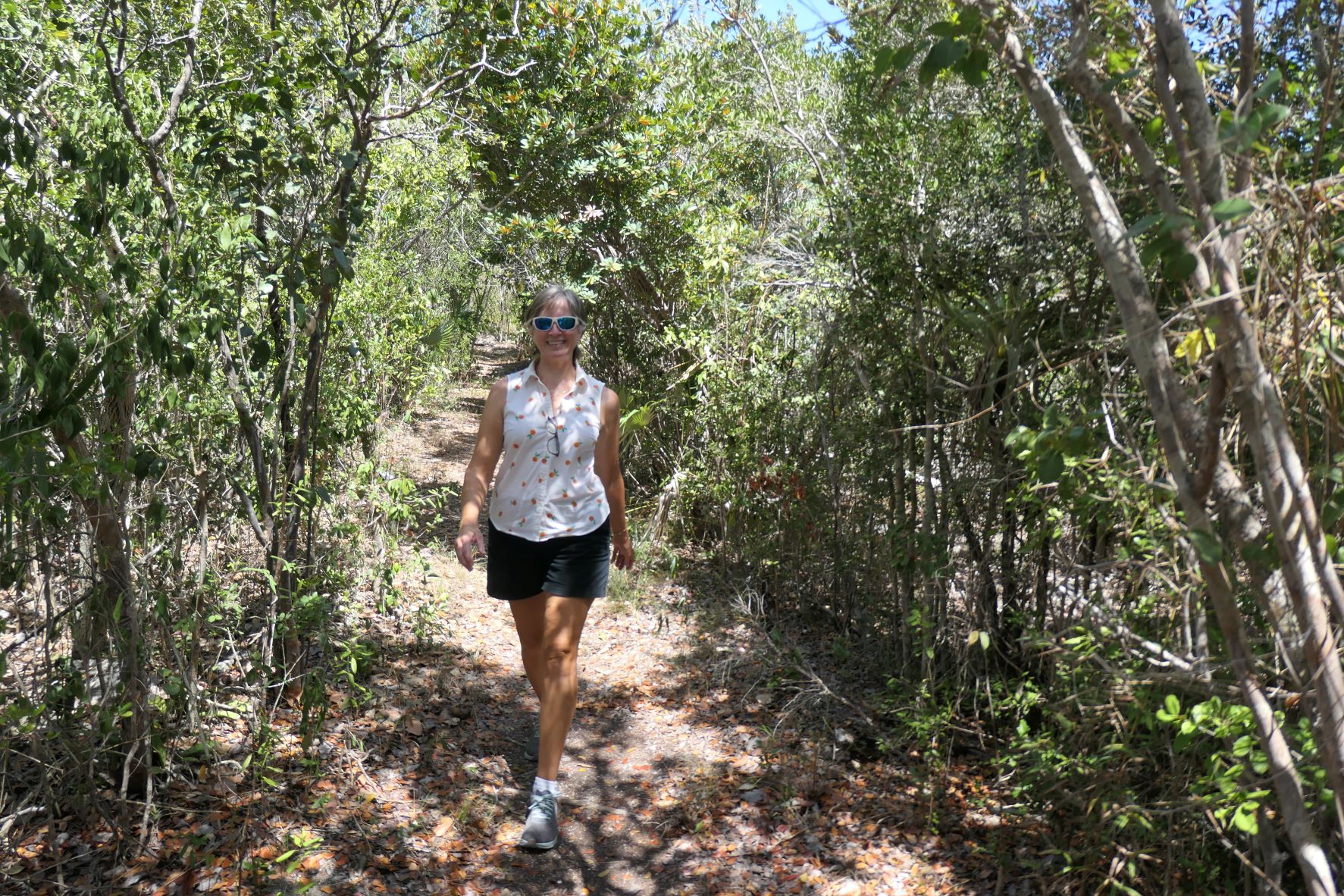
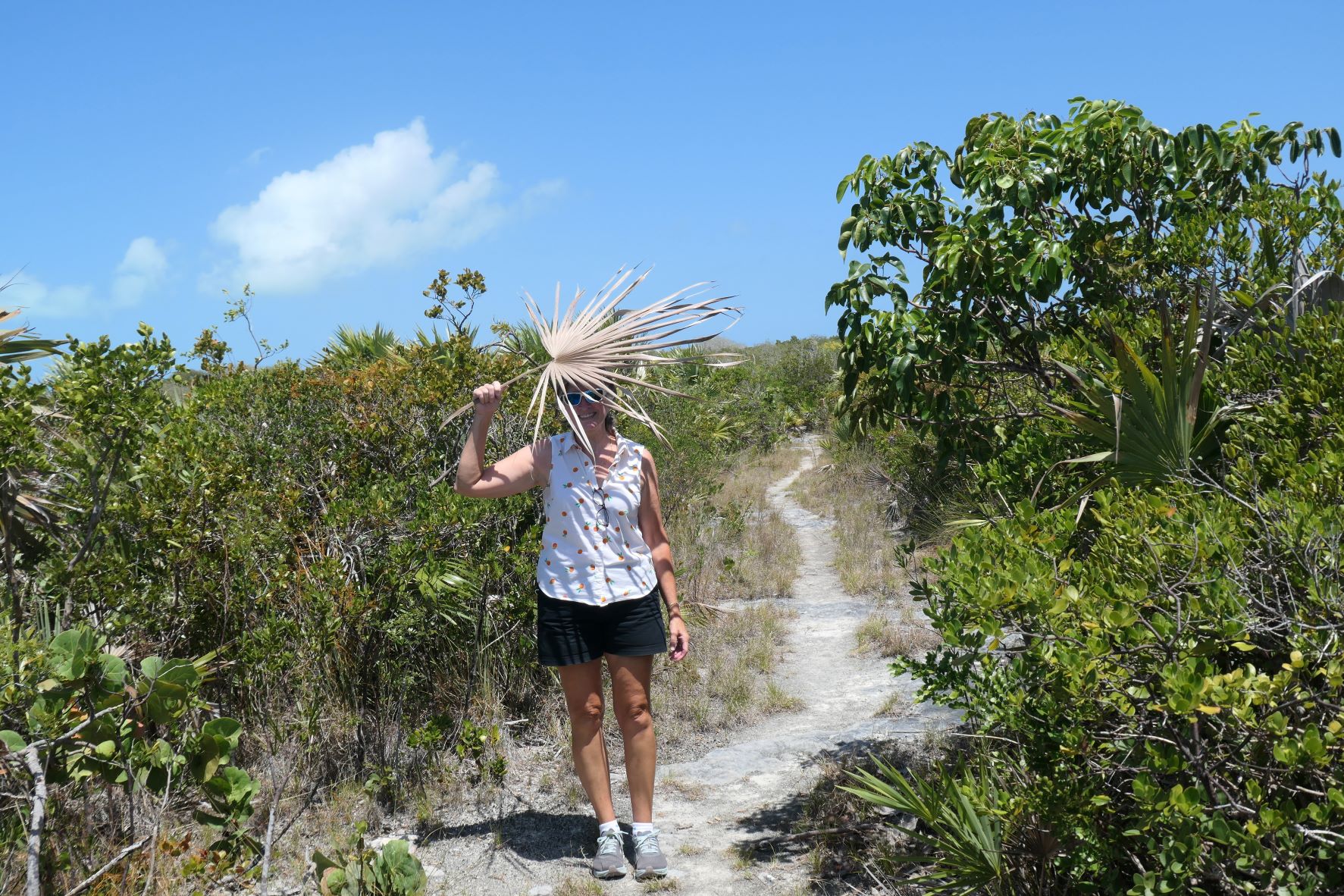
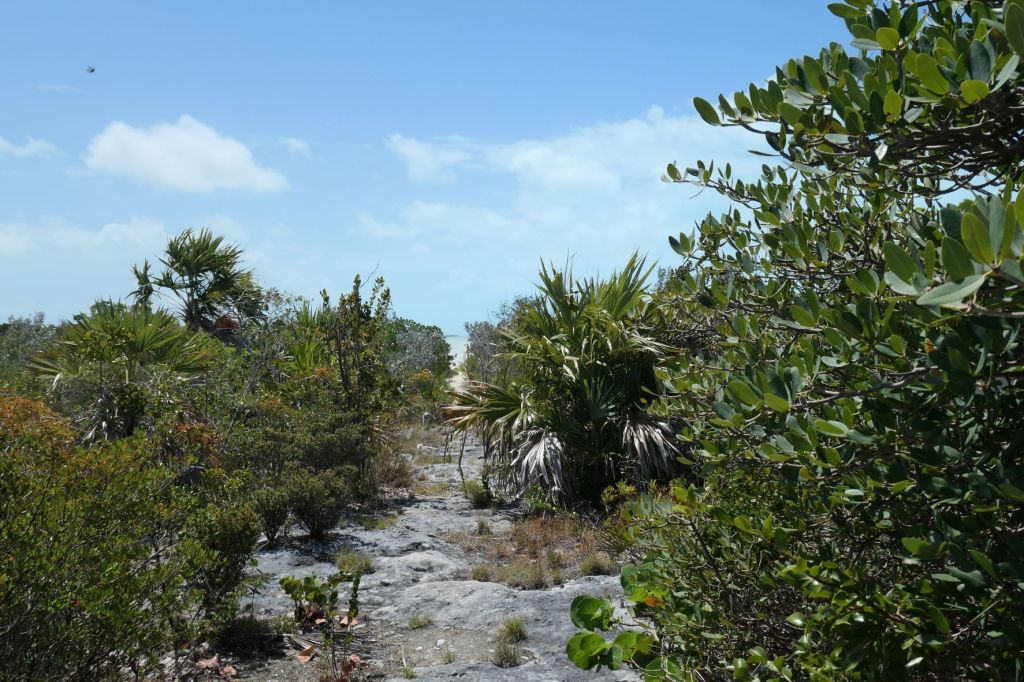
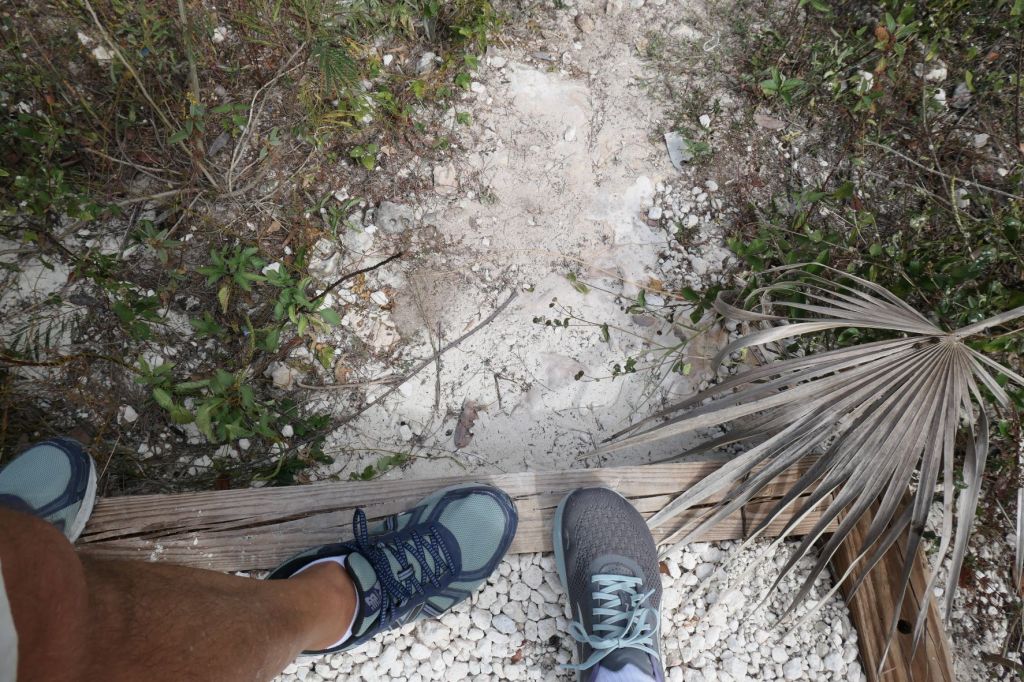
Now for the trek back to the car. The stones are tricky, but I can make tracks on the soft, woodland section of the trail. And, thank you, Mother Nature, for the improvised sun parasol.

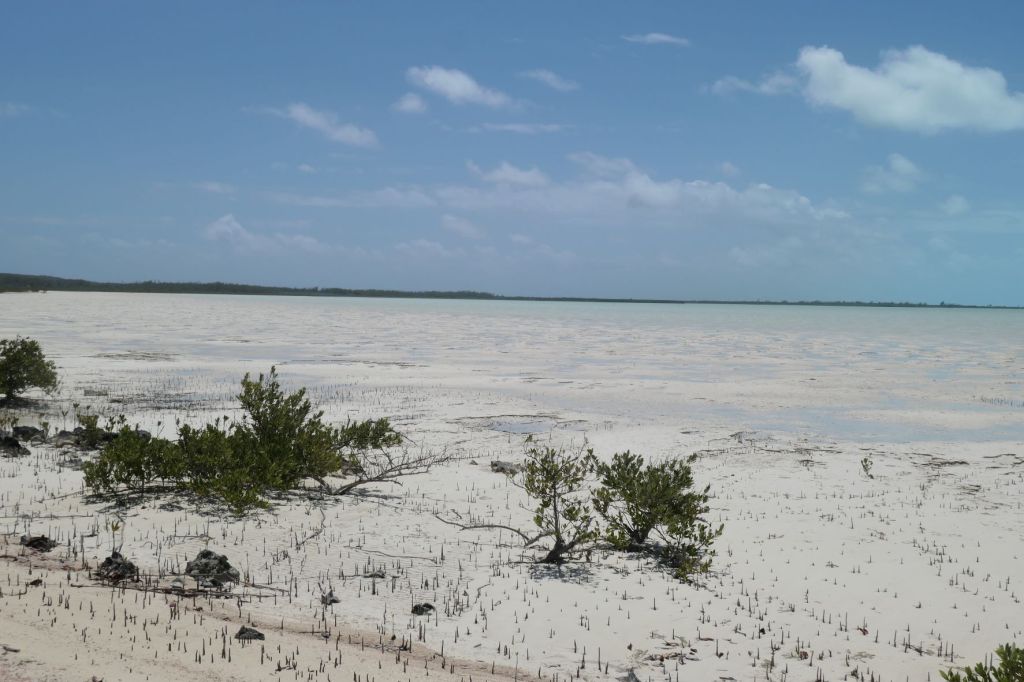
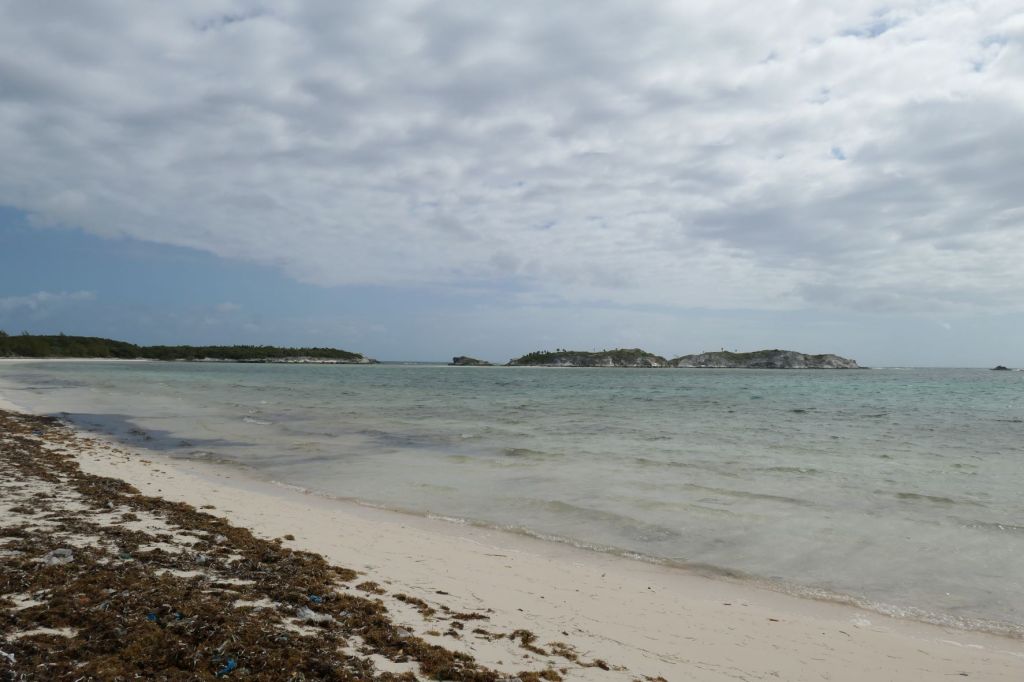
It’s amazing to think the plantation operated on a navigable bay that the 1927 hurricane rapidly, and apparently permanently, changed to nothing but silty shallows.


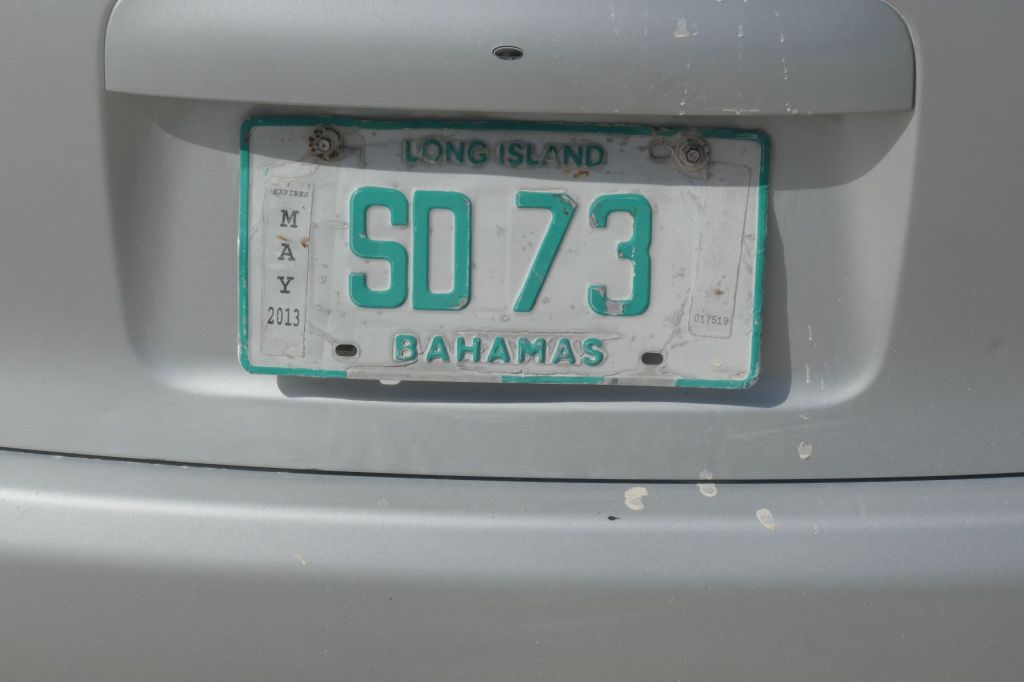
Back to our chariot for the day, which, to it’s credit (and Todd’s ever-so-careful driving), made it down here. Fingers crossed we can get back!

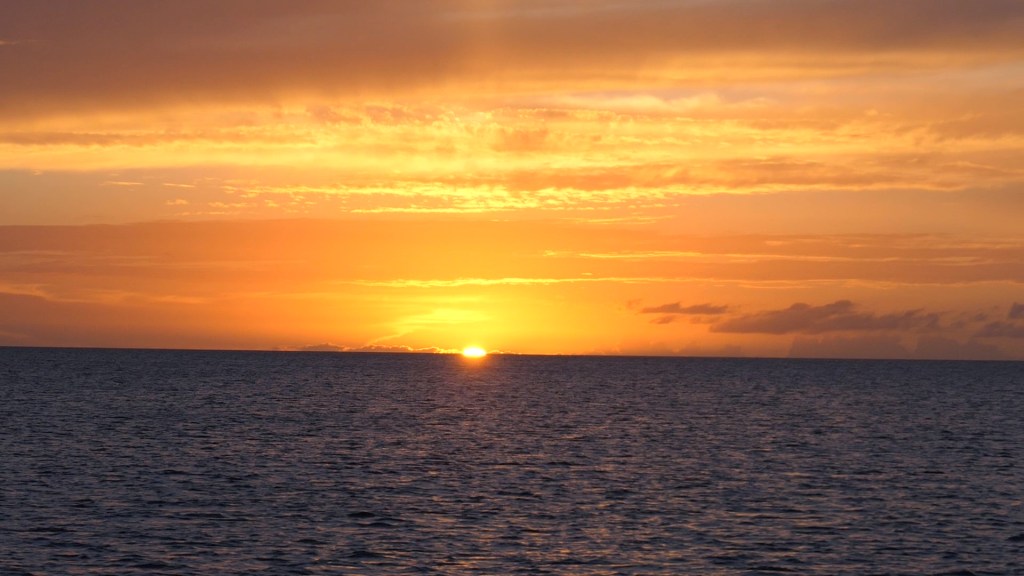
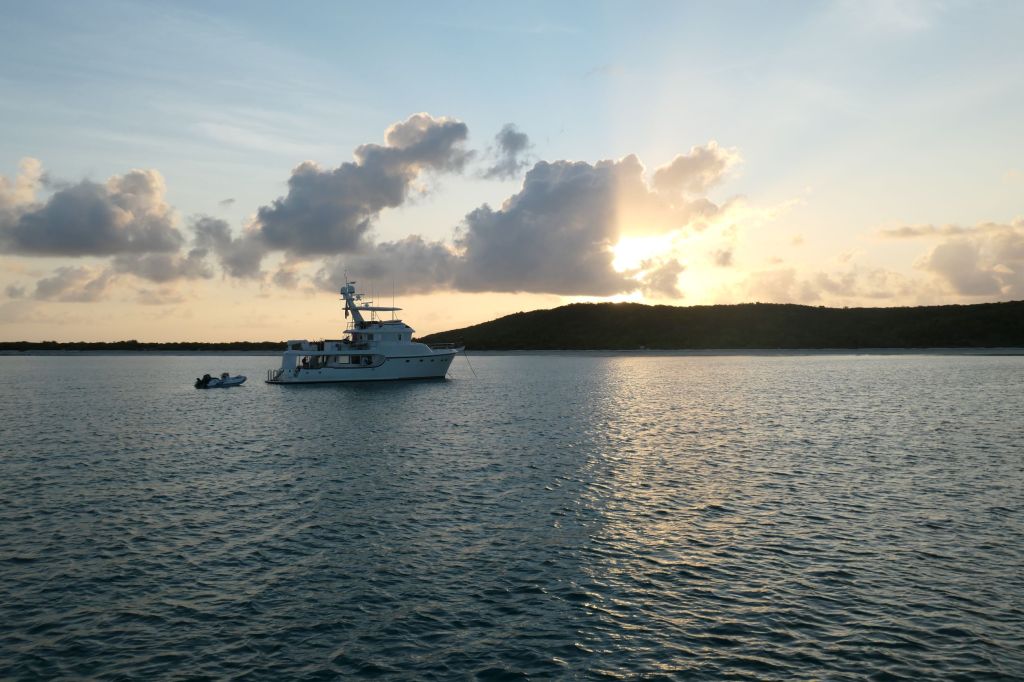
Obviously we made it back to the main road and the boat. Just in time to catch another sunset blocked by low-lying western clouds. Still windy as heck for a few days, so Sunday, we’re going to try for an Easter sunrise on the bow. Perhaps the east will be more cooperative. Happy Easter!

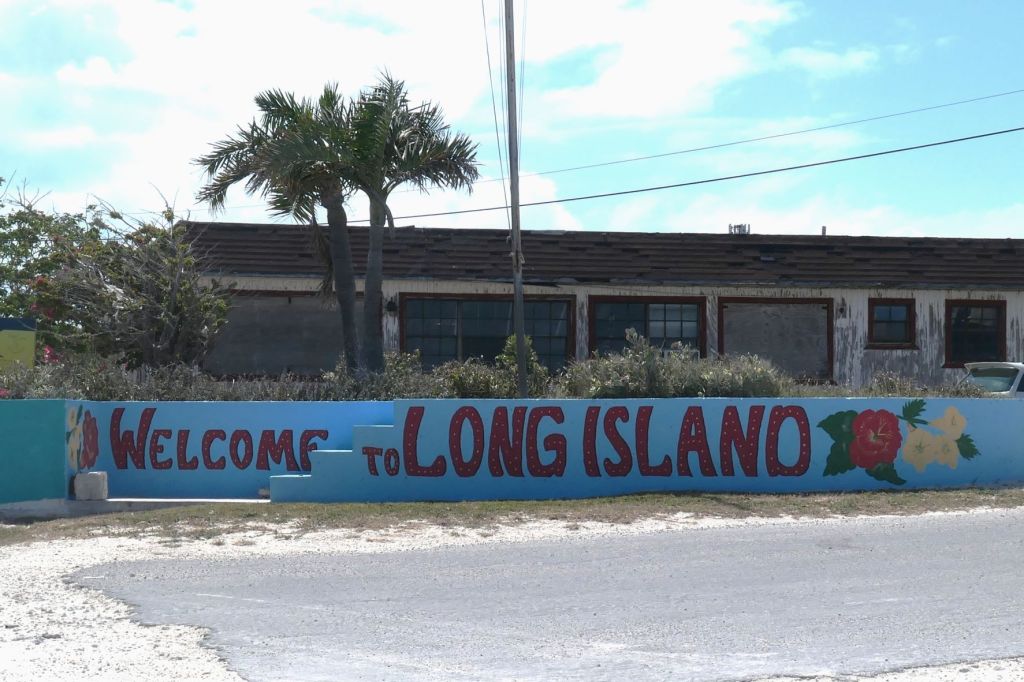
Welcome to Long Island! – Part 2

One important geographical feature we haven’t talked about is the Tropic of Cancer. Huh? That’s right, remember from school? The line on the earth that marks the northernmost point at which the sun is straight overhead at noon! Below the line, you’re in the tropics (more sunscreen, Susie); above, nope.

There is even a beach on Little Exuma named Tropic of Cancer Beach that we went “blazing” past (all 7 knots) a few weeks ago while headed south and didn’t realize it. Heck, we were way below it in the Jumentos and the Raggeds.

Until we got to Long Island, we hadn’t given it any thought. The line moves around a bit through the years, but it is generally N 23 26’, which cuts right through the upper portion of Long Island, so we continue to be below it where we presently sit in Thompson Bay. That concludes the refresher lesson for today. 🙂

The Shrimp Hole

Now we owe you something about the “Shrimp Hole.” What, you may ask, is a shrimp hole? We were certainly curious.

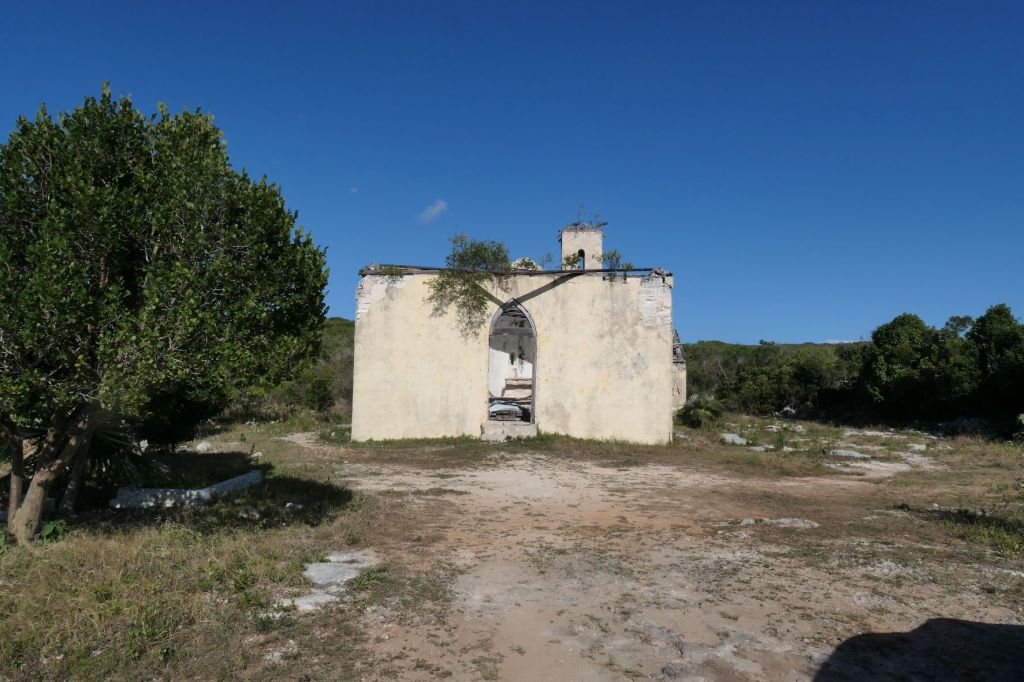
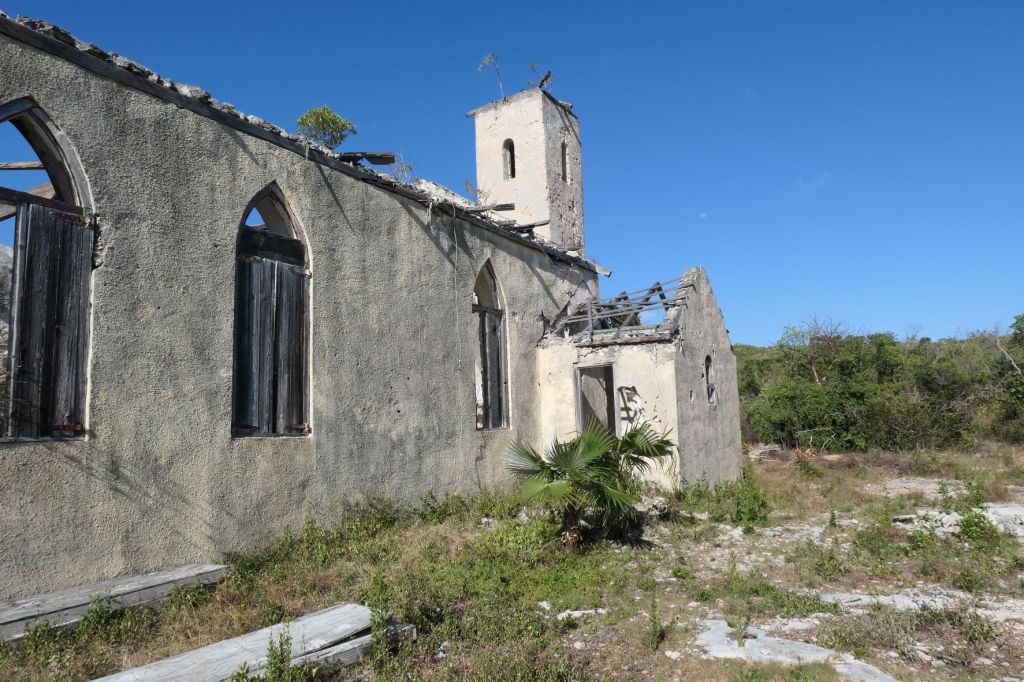
In yesterday’s post about the churches, we mentioned that when you turn off the road at the sign for the Shrimp Hole, you arrive… here… at the ruin of Saint Mary the Virgin Anglican Church.

Fantastic, but what does that have to do with shrimp??

Well, behind the church, there’s a path that,

Inland pools like this are special and called “anchialine.” Several of the islands in the Bahamas have them. The little red shrimp are thought to be the Sterrer’s cave shrimp. Fun little guys! Wish we’d brought snorkel gear and the underwater camera. Ah, exploring is fun!


Dean’s Blue Hole

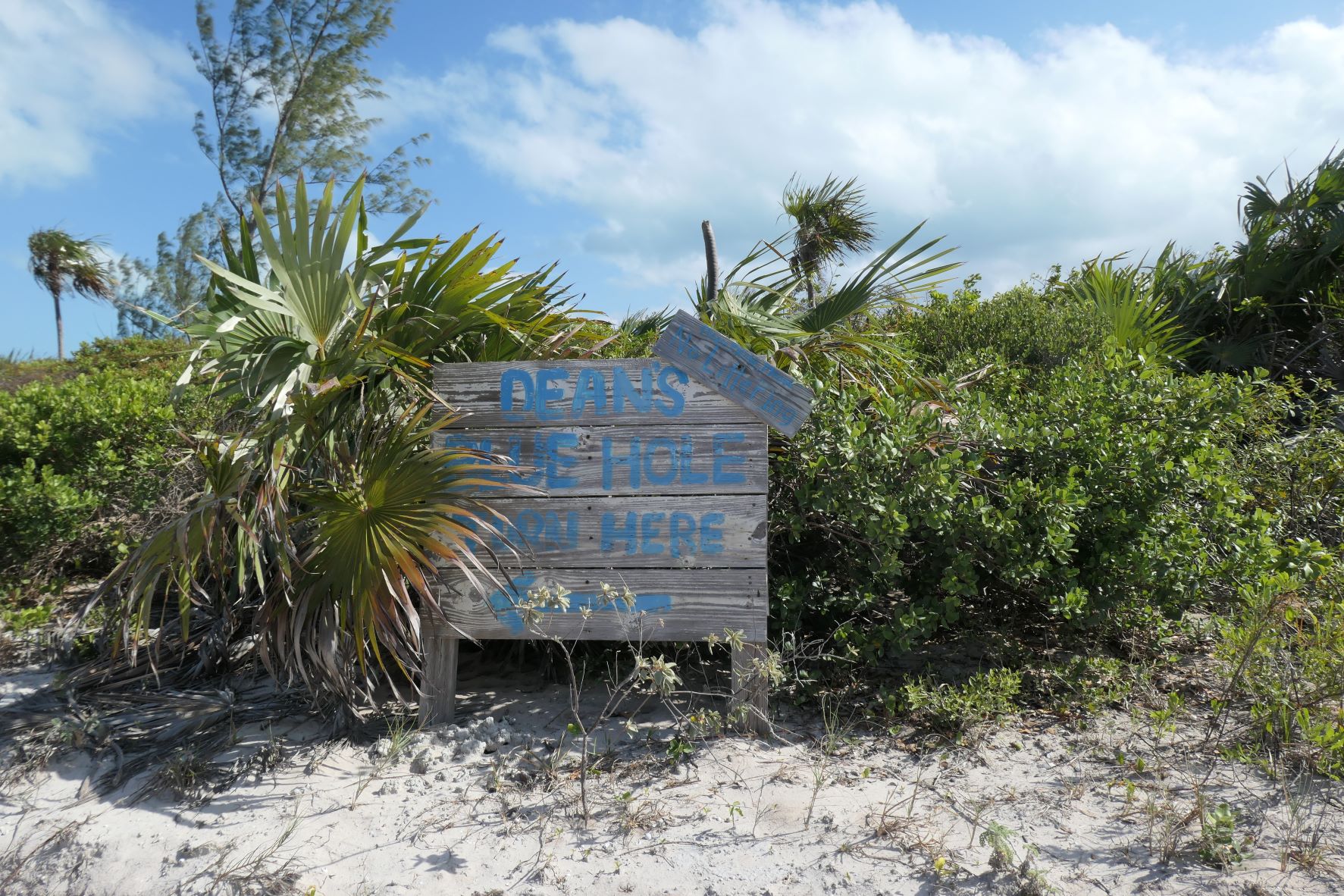
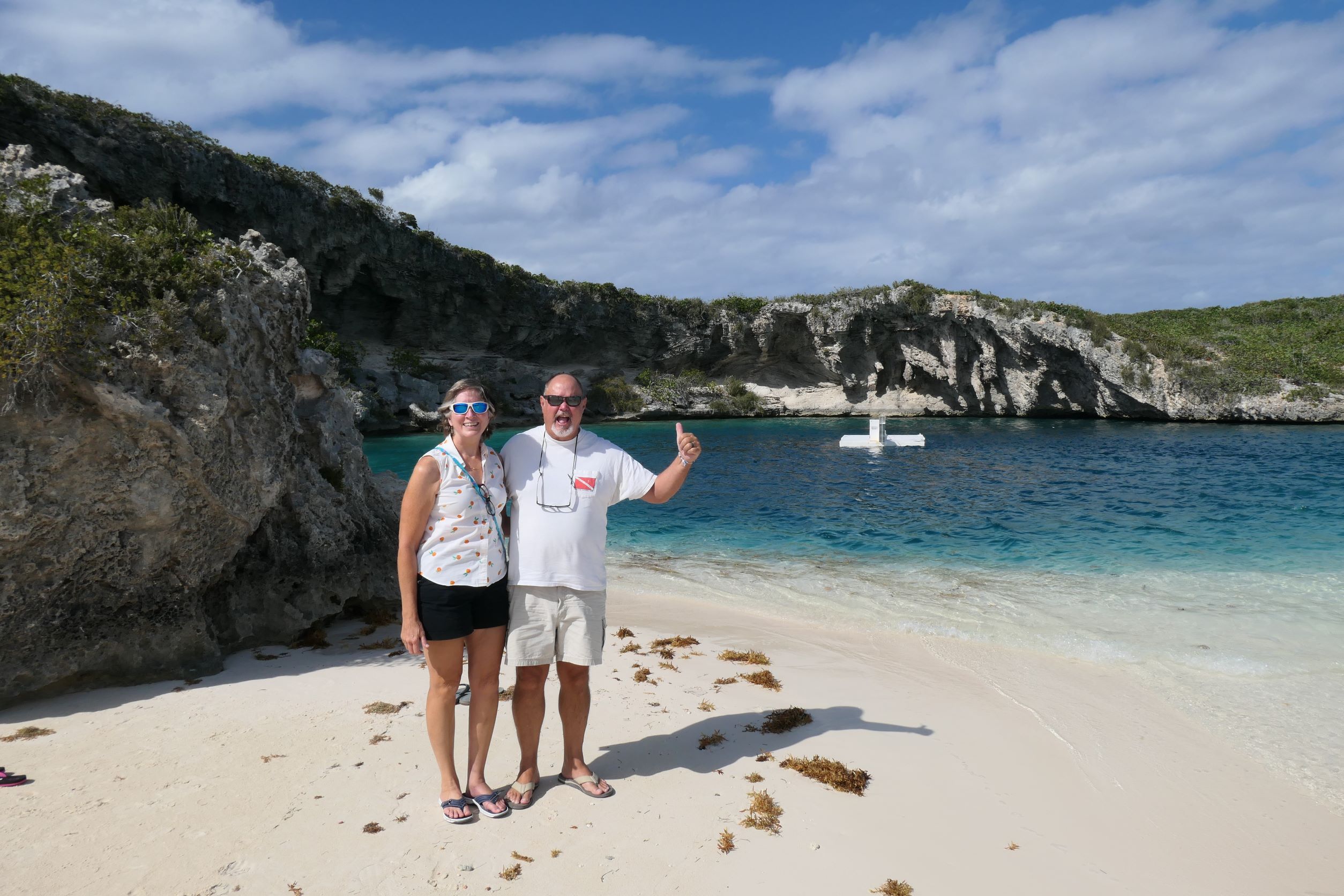
After the Shrimp Hole we found the long, unpaved road to Dean’s Blue Hole – one of the deepest salt water blue holes in the world, at 663 feet. The underwater room below the entrance is the 2nd largest known in the world! It’s used for attempts at very deep free diving. In fact, after breaking the record in April 2010, professional William Trubridge, extended the record in December 2010, when he swam to a depth of 331 feet (101 meters) on a single breath while using only his hands and feet for propulsion. Lord howdy, really can’t imagine; the drive is bad enough.

Again, someone wishes he’d brought his gear!


Columbus Monument

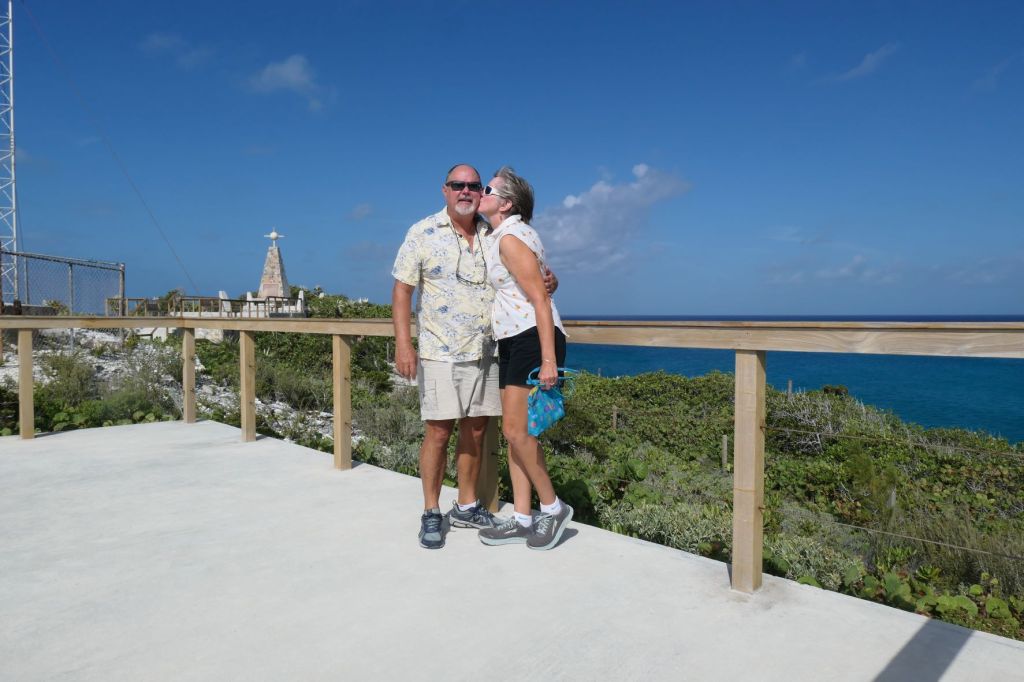
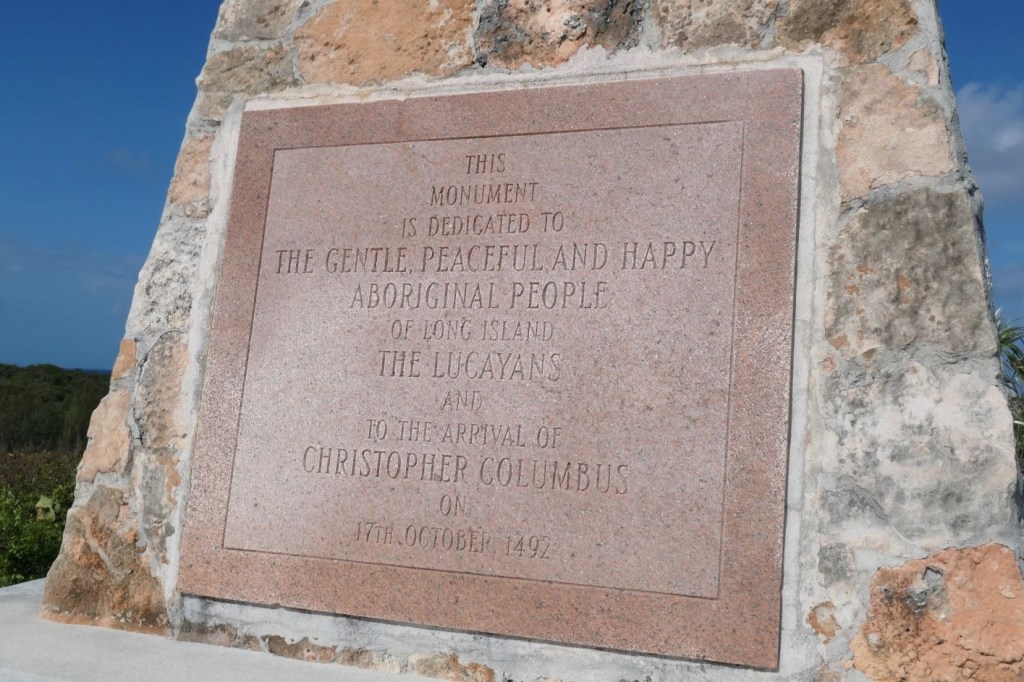
We finally headed way north to the very top of Long Island to visit the Columbus Monument; yep, another “Columbus landed here” spot. The plaque on this one mentions the “happy aboriginals, the Lucayans” first and then a visit by Columbus. Well, we know the story.

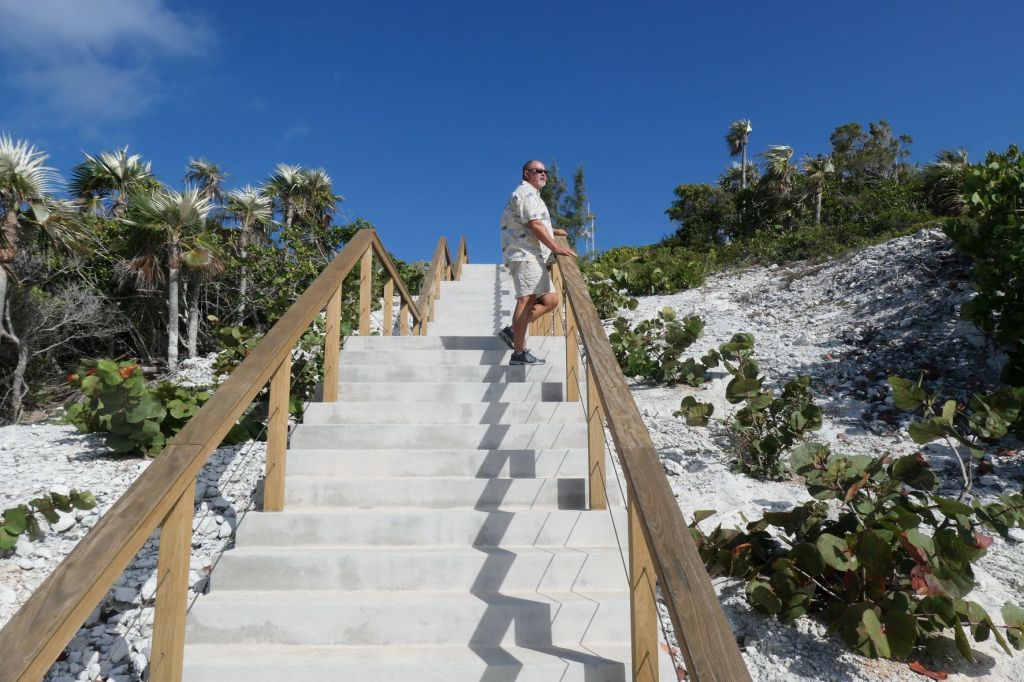
When government in Nassau built Monument Road in December 2020, boy did they build it! The barely maintained, two-lane main road that runs the length of the island, hangs a left onto the brand new, spiffy, with road signs, Monument Road that leads to an actual marked parking lot! Easily, it was the best road we’ve seen in the Bahamas.

I’d imagine they were happy, before said arrival…

Beyond Here There Be Dragons?

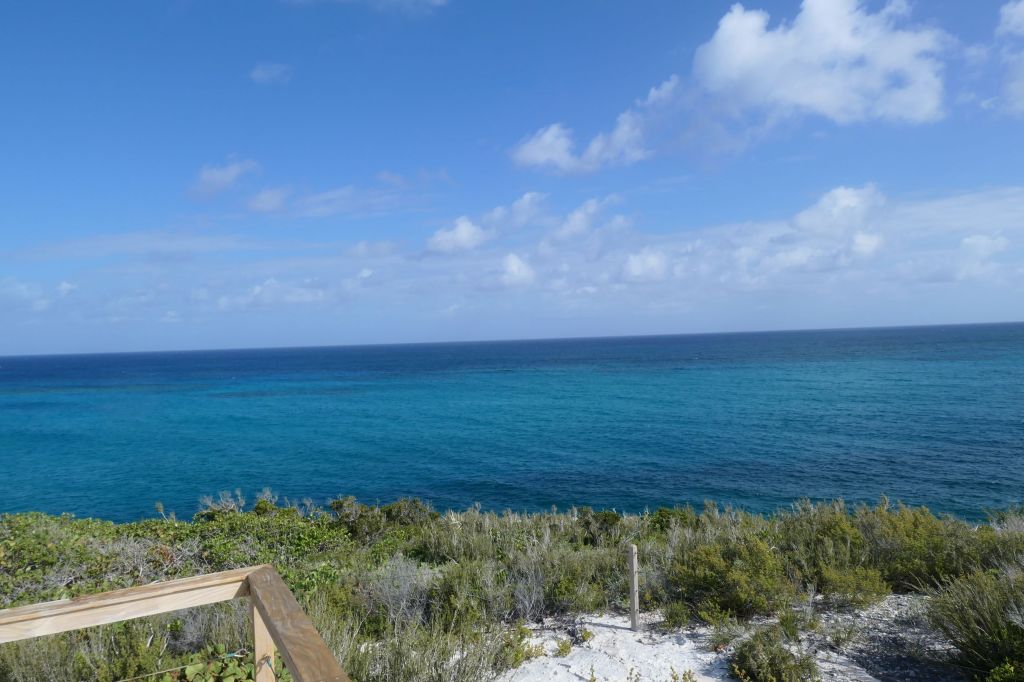
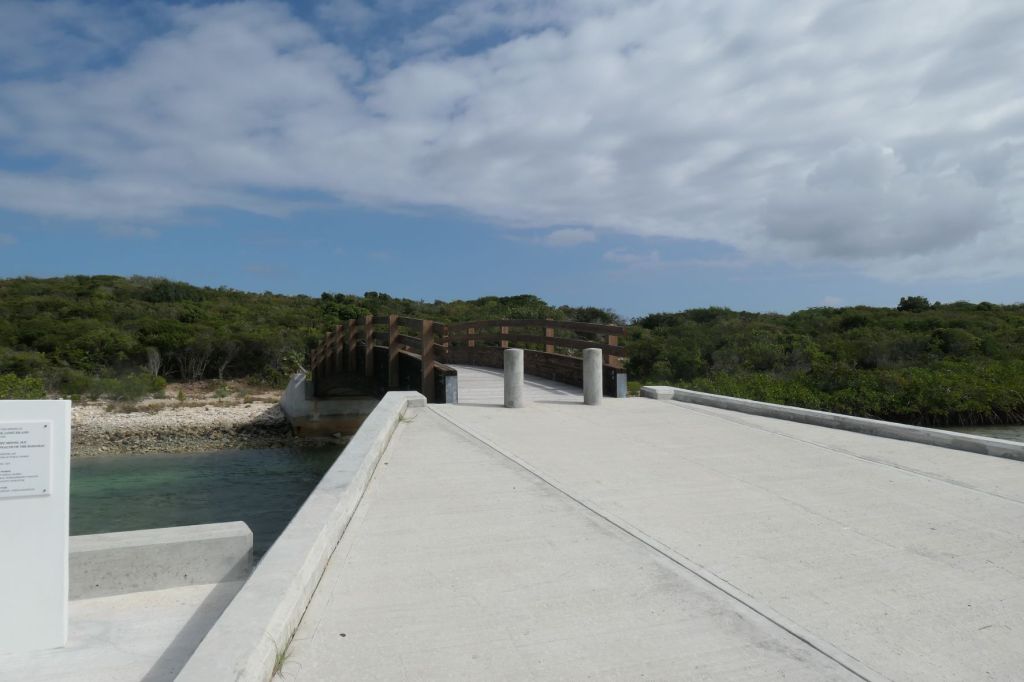
We were now so far north, we decided to drive to the end of the mapped road (just to say we did). After making the last of the bumpy ride on rock and pot holes – certainly not the Monument Road! – we came to a little “park” complete with a “Cold Beer!” sign and… a brand new… foot bridge? Per the sign, the bridge goes to Newton’s Cay.

Okay, out of the car. We don’t need a beer, but we have to see what’s on the other side of this stout new bridge.

Just a few steps off the beaten path, however, there’s a natural beach! Imagine that!

Bet you’re thinking that surely must be all now, right? Well, we still have one more exploratory tale from our rental car adventure. Next post: Adderley’s Plantation Ruins. 🙂

Welcome to Long Island! – Part 1

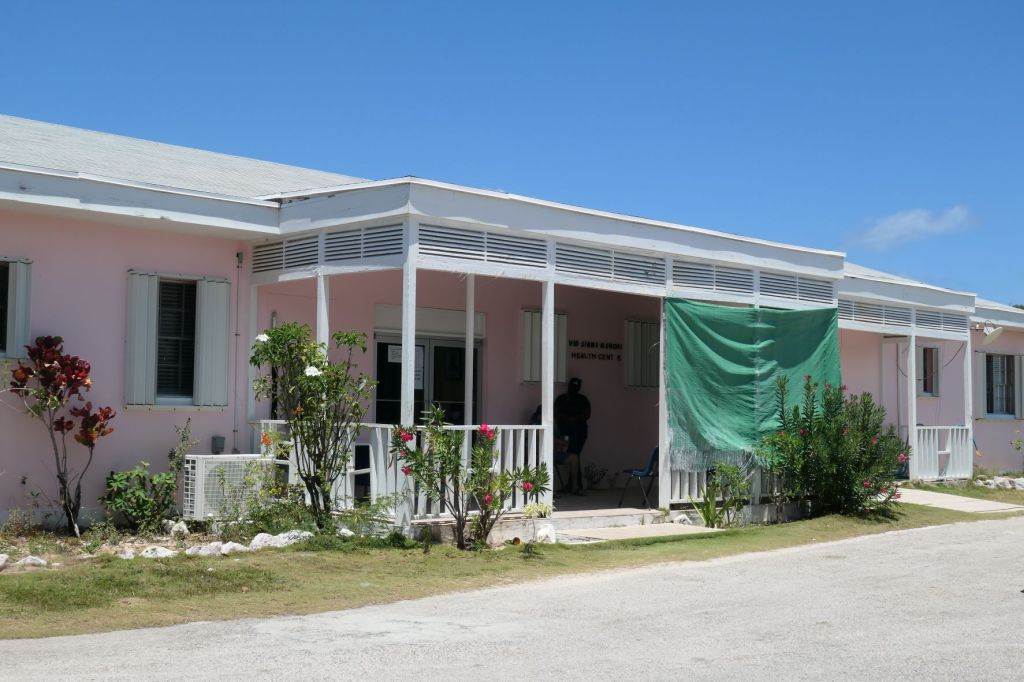
We’ve been told numerous times, “you have to rent a car when you get to Long Island.” Since we needed some medicine for Susie’s tummy, that’s exactly what we did. And since the clinic happens to be south of our centrally located anchorage, our initial direction was set.


Quickly in and out of the clinic in Deadman’s Cay. We only have the car for 24 hours. Let’s explore!

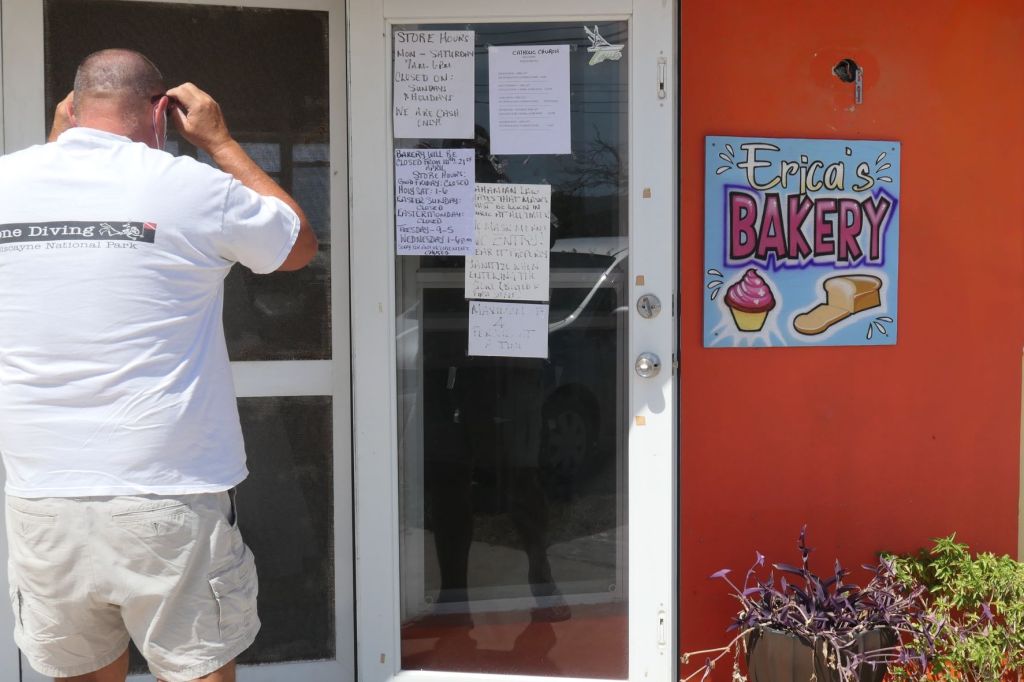
Sure. Right after we pick up a bit of fortification from the bakery.

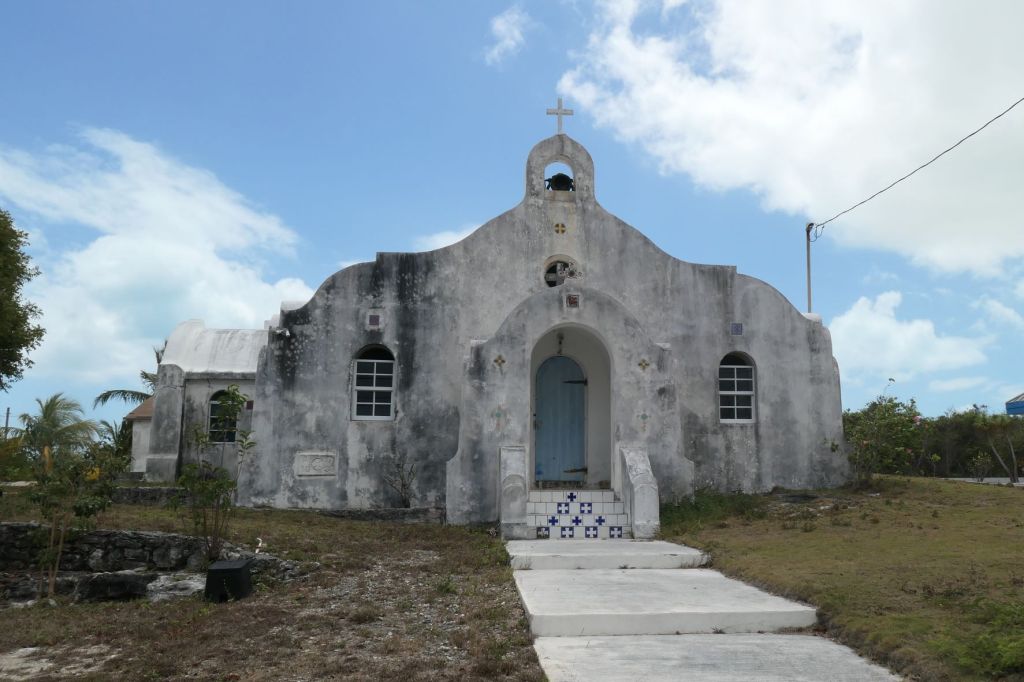
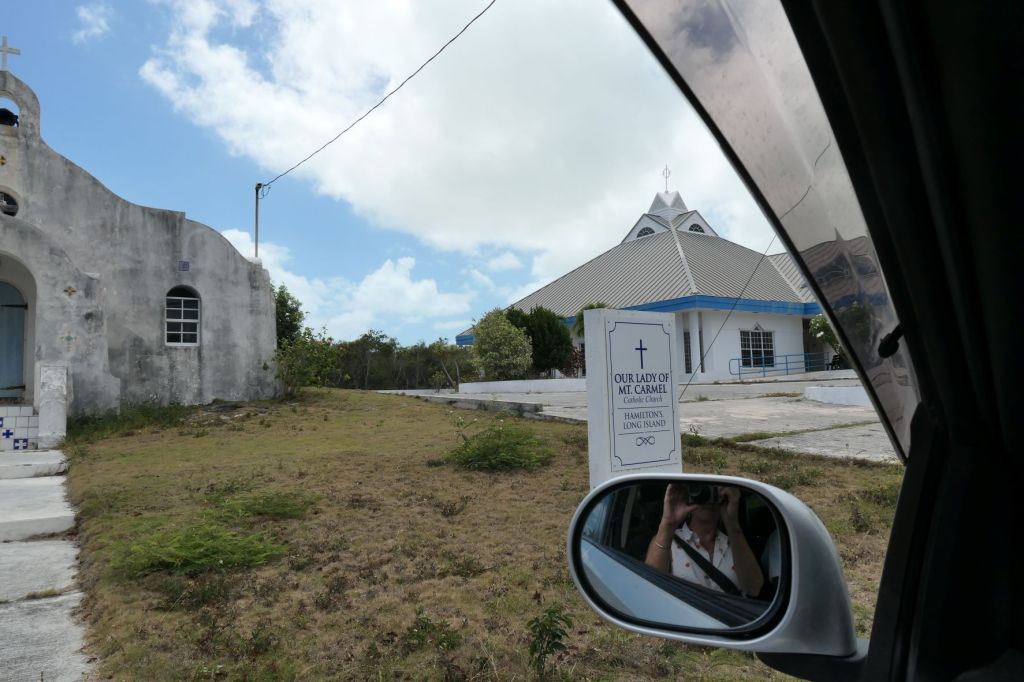
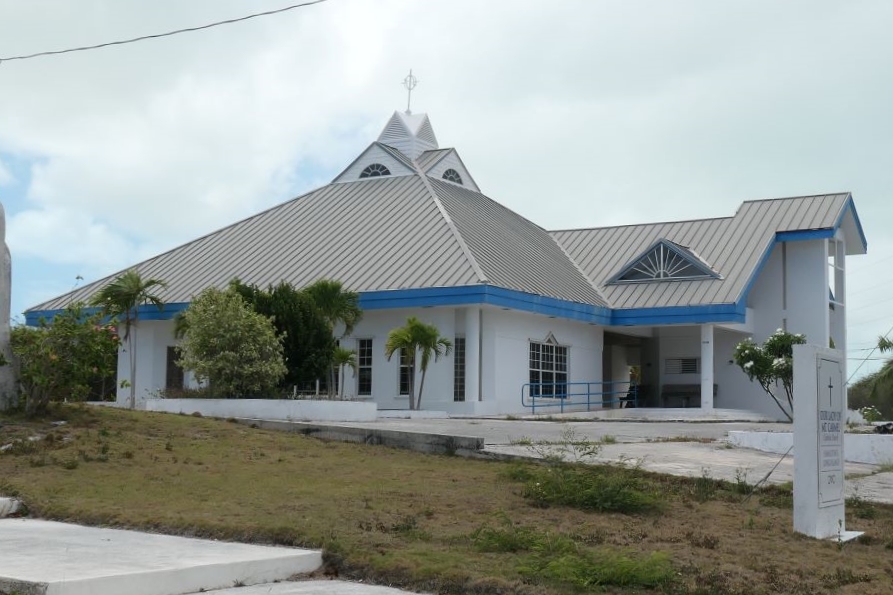
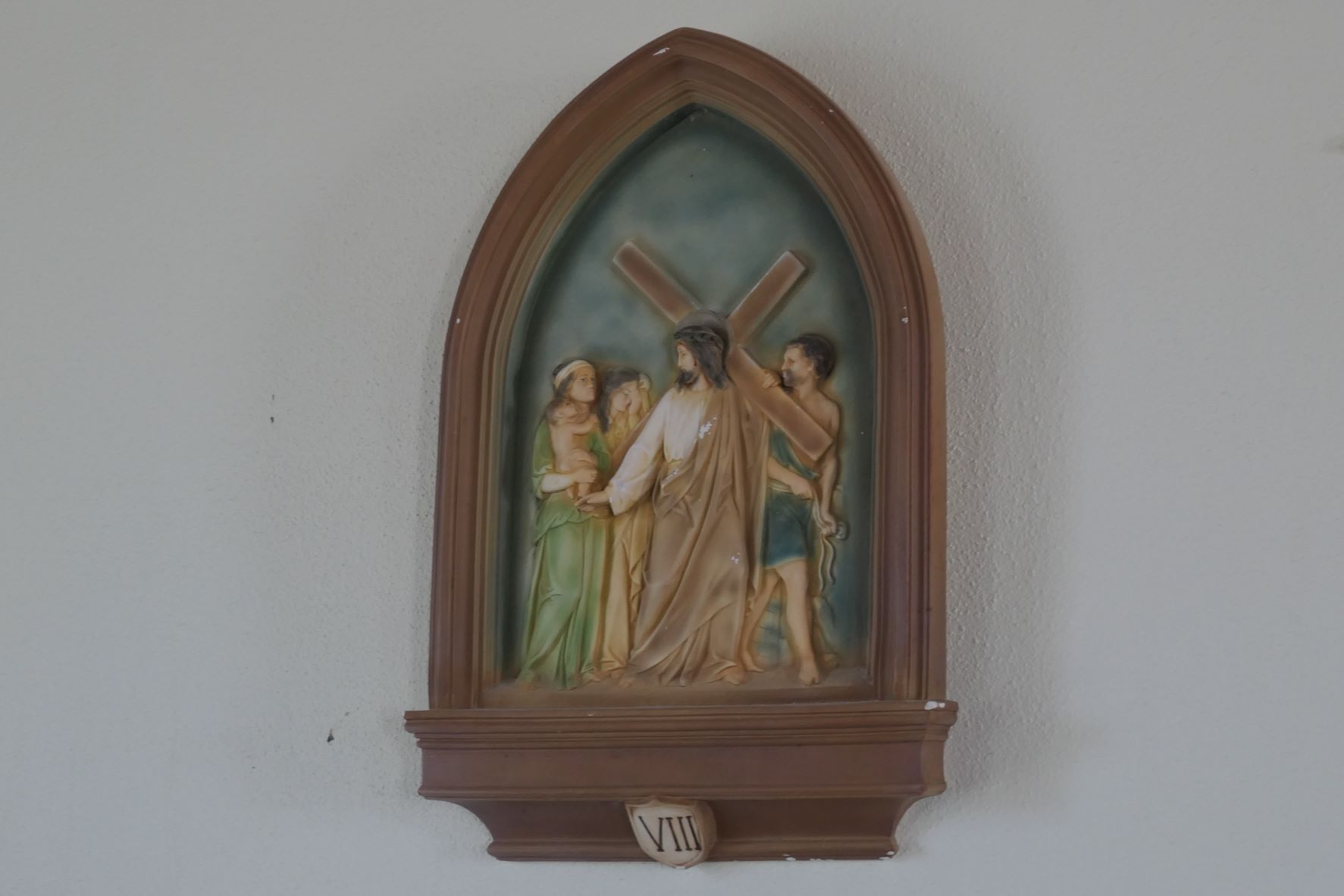
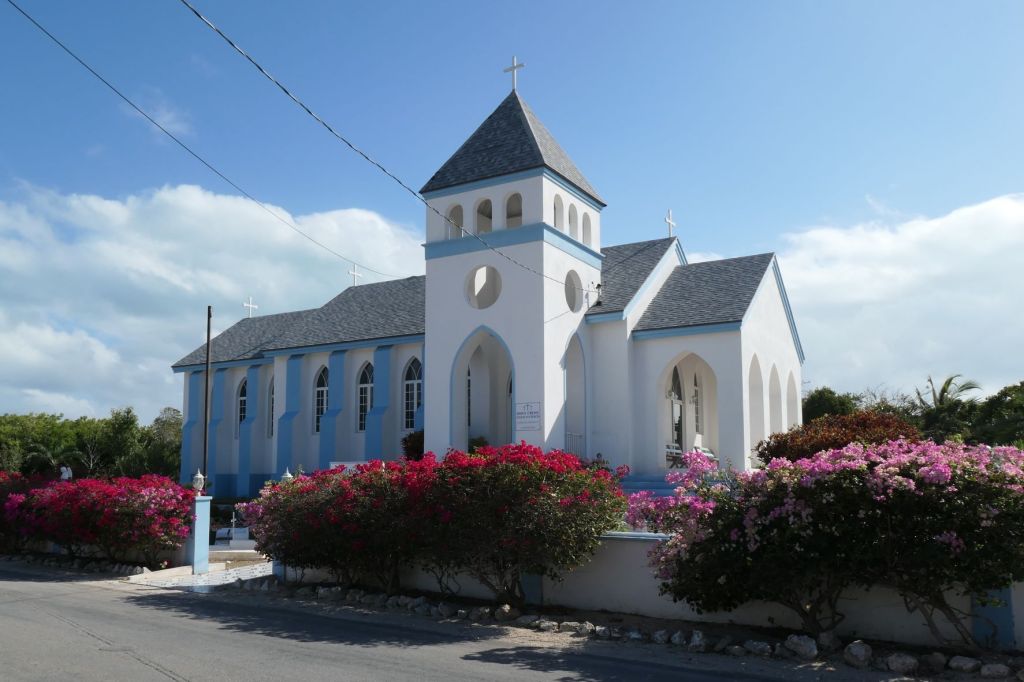
Man does not live on bread alone, right? Holy Week is a great time to visit God’s house, and that’s not at all difficult to do on Long Island. There are many churches, and I do mean, lots of churches in all sizes and denominations. From a purely historical perspective, here are just a few of our favorites.


Our Lady of Mt Carmel Catholic Church in the community of Hamilton’s, Long Island


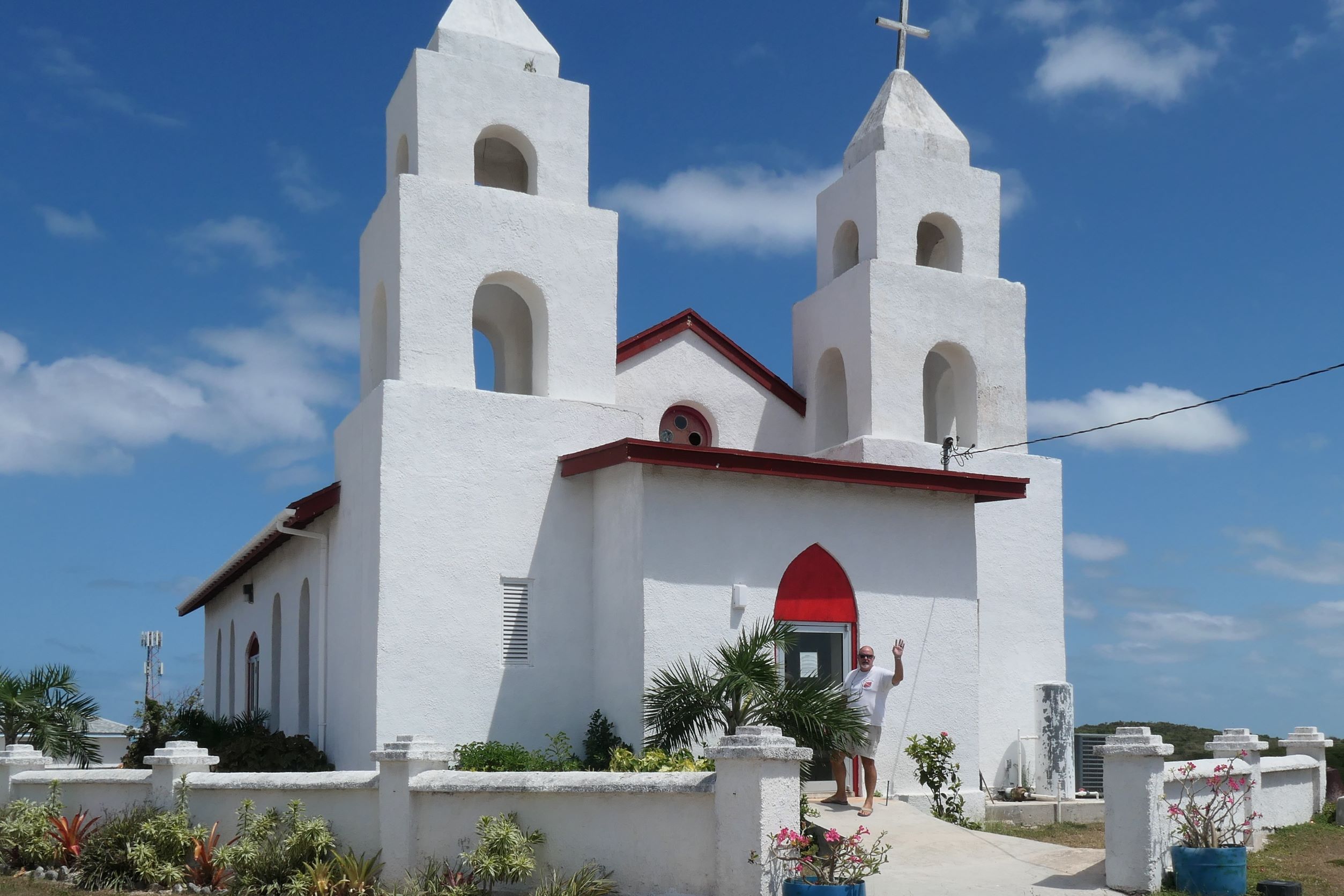
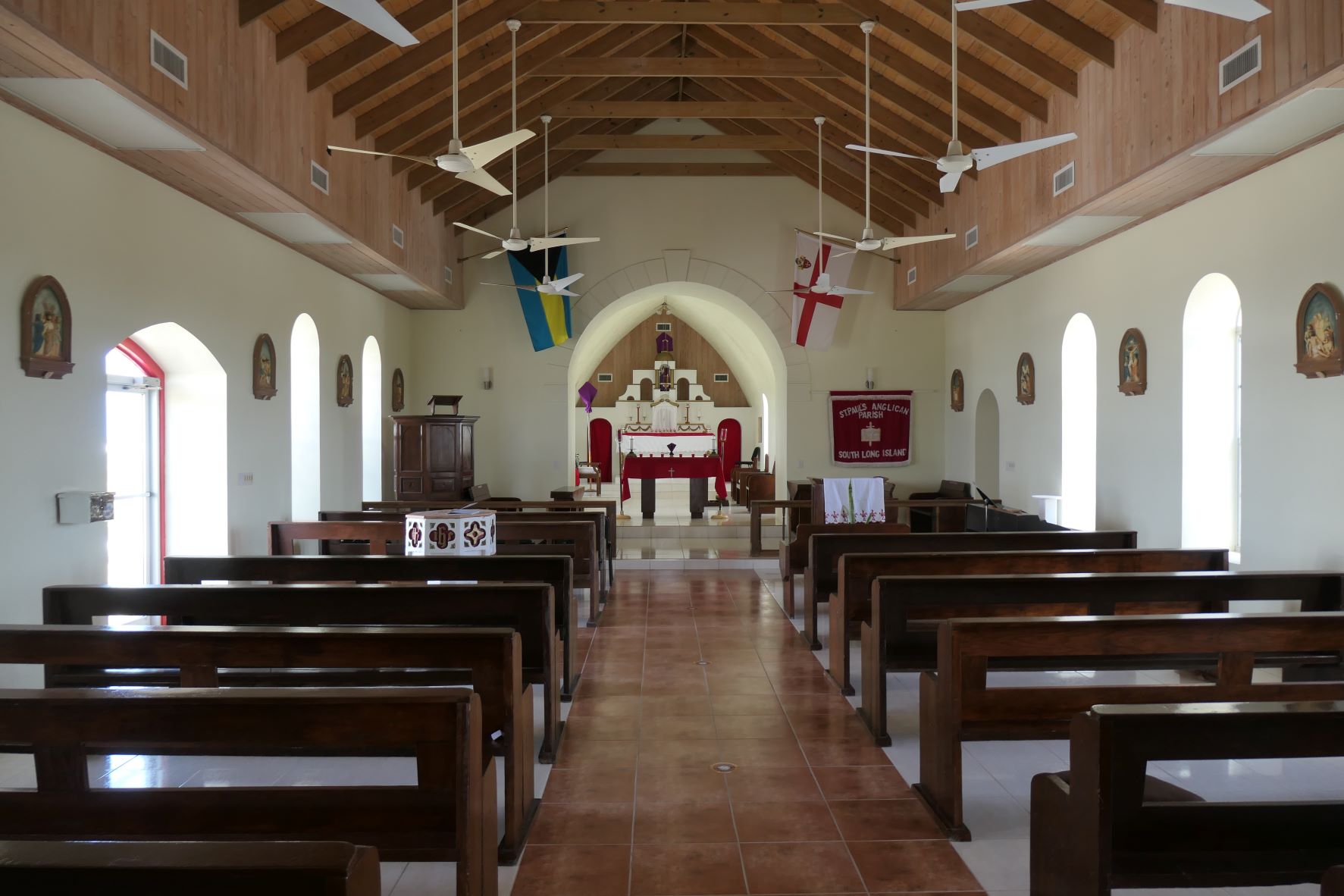
Next stop was Saint Paul’s Anglican Church in Clarence Town, Long Island, originally built in 1884. It was almost completely destroyed by a hurricane in 1908 and then rebuilt in 1910 by none other than John C. Hawes (later, Father Jerome), the architect and Anglican priest who converted to Catholicism in 1911. You may remember Father Jerome from our post about The Hermitage on Cat Island. He’d returned to the Bahamas planning to live as a hermit, but given his architectural skills and priestly talents, he went on to build four churches on Cat, one on Long, and one in Nassau, as well as his own Hermitage and Chapel on Como Hill, Cat Island.

The view from Saint Paul’s isn’t too shabby, either.


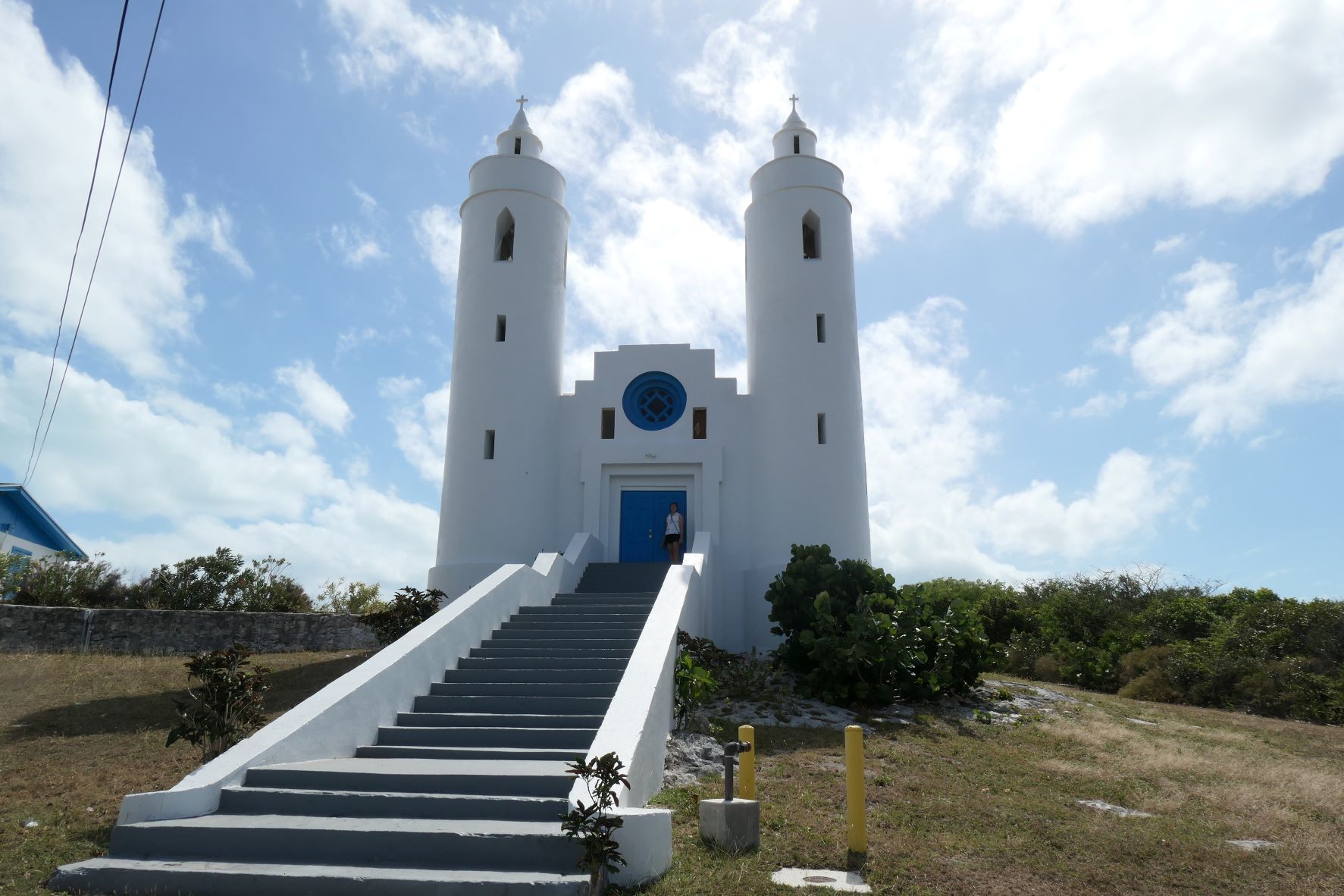
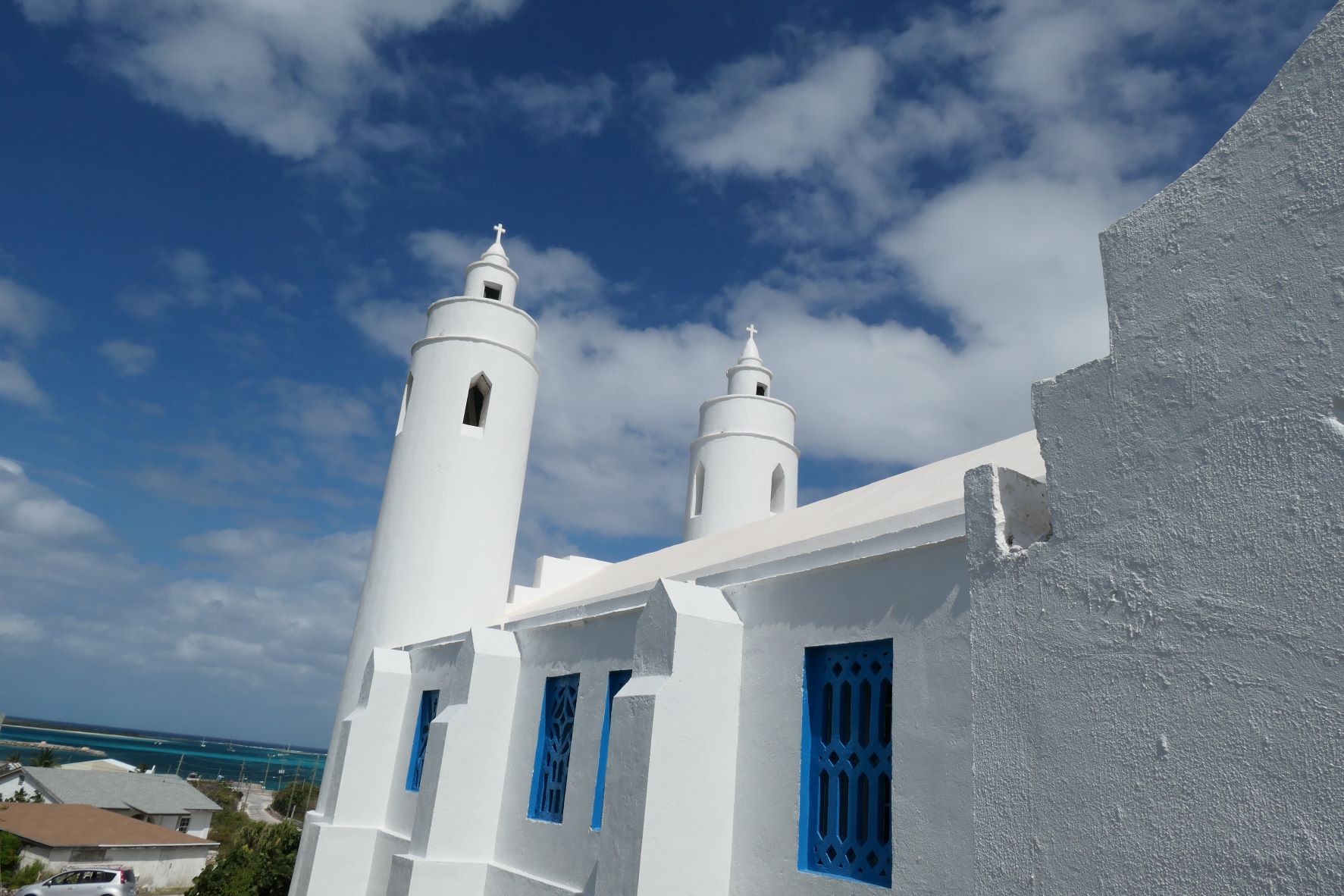
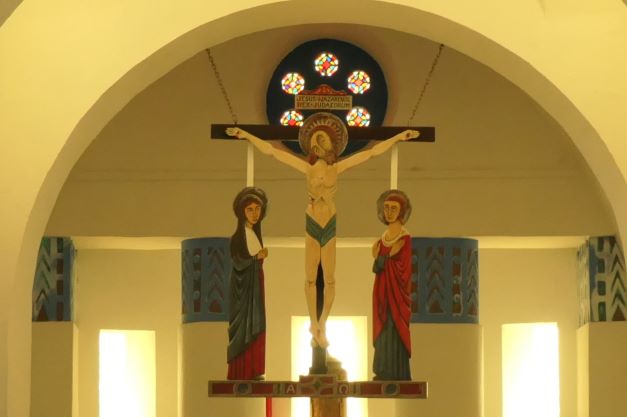
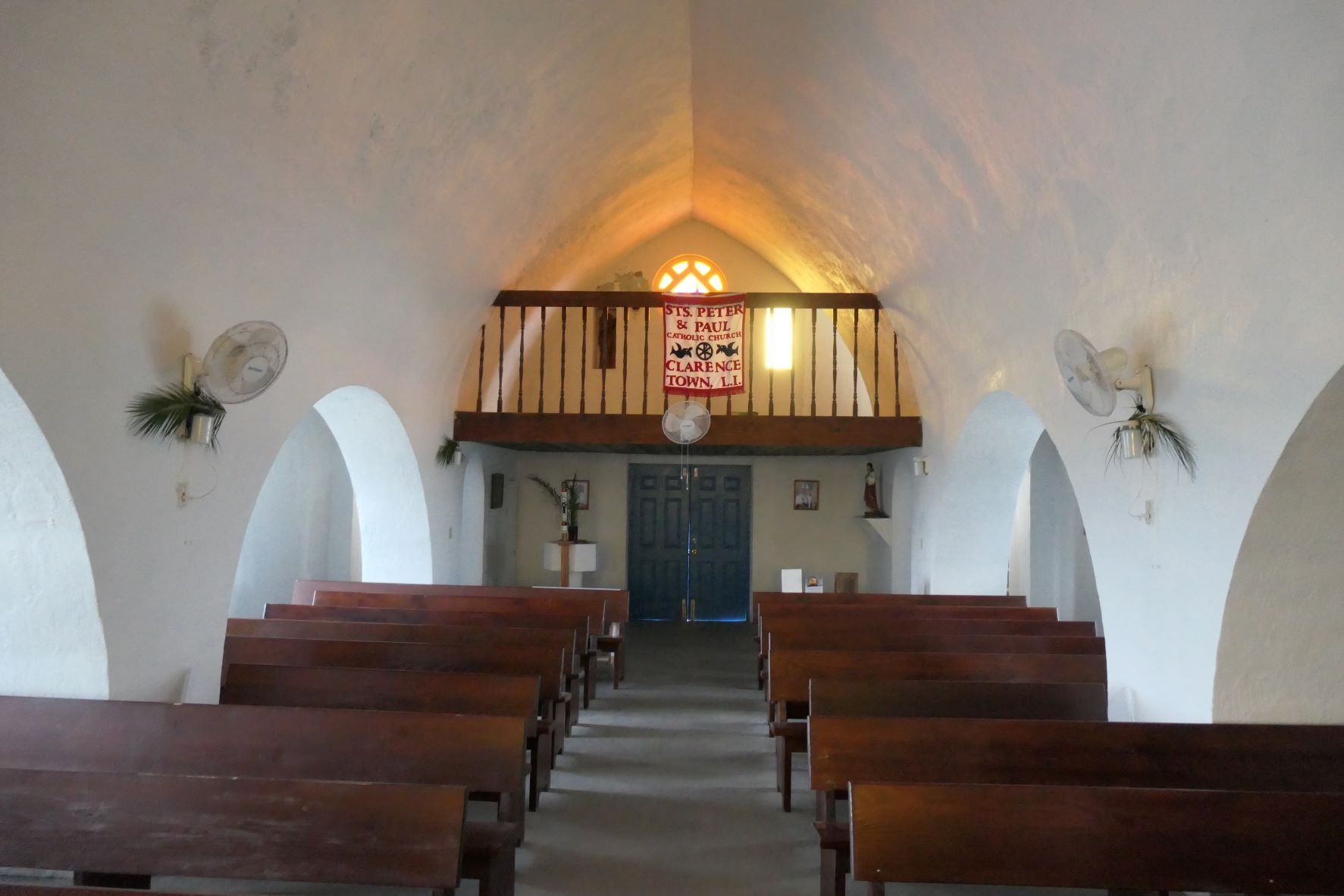
Then there’s Saints Peter and Paul’s Catholic Church, the Long Island landmark often seen in tourist brochures. The twin 40-foot towers atop Gun Hill help guide mariners into the Great Clarence Town Harbour. The church was completed by Father Cornelius Osendorf in 1947, but designed by – you guessed it – Father Jerome Hawes during his time living as a hermit on Cat Island.


This is the Holy Cross Anglican Church. We didn’t find information about this one, but what a picturesque little chapel.


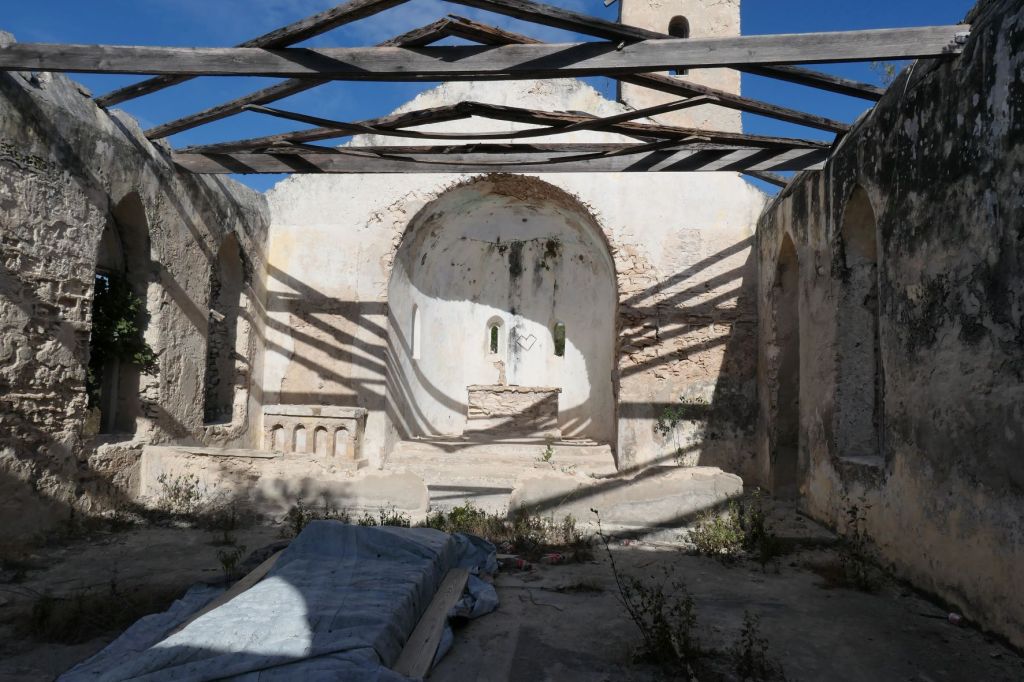
This last one is a bit odd. We’d been told not to miss “the Shrimp Hole” in New Bight, Long Island. Well, when you turn off the main road at the small sign for the Shrimp Hole, this is what you see. I don’t know about a Shrimp Hole, Honey, but there’s a lovely church ruin. There is no signage at the church, but research (good ol’ Google) reveals it to be Saint Mary the Virgin Anglican Church, thought to be the oldest church in the Bahamas, having been founded by the Spanish in 1600 and rebuilt in 1799. I think it warrants a sign! Oh, that Shrimp Hole? We’ll get back to that…

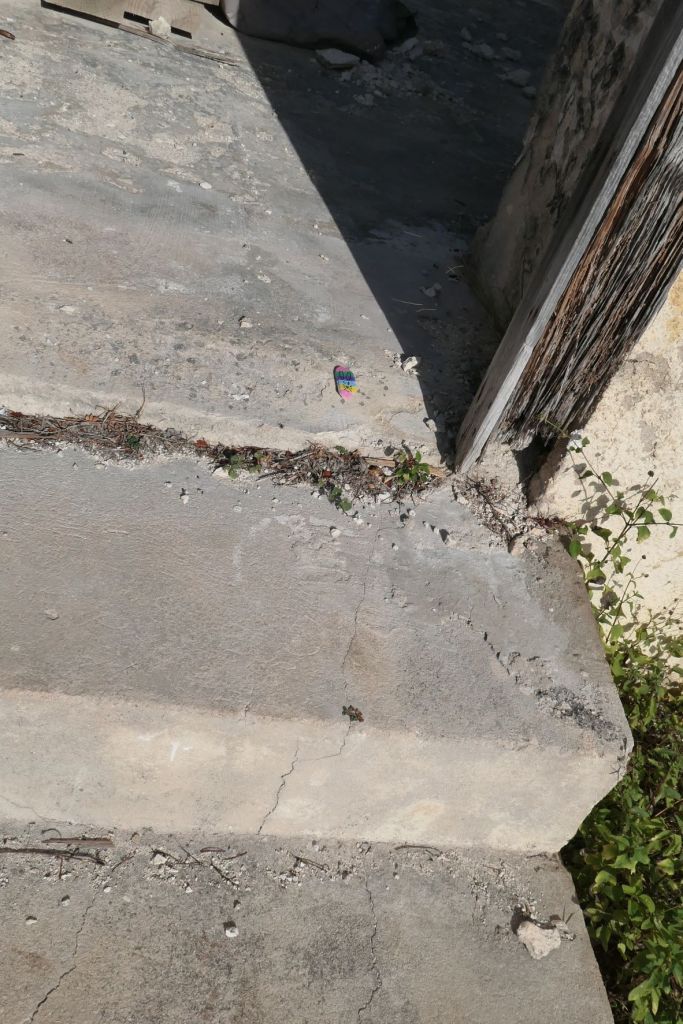
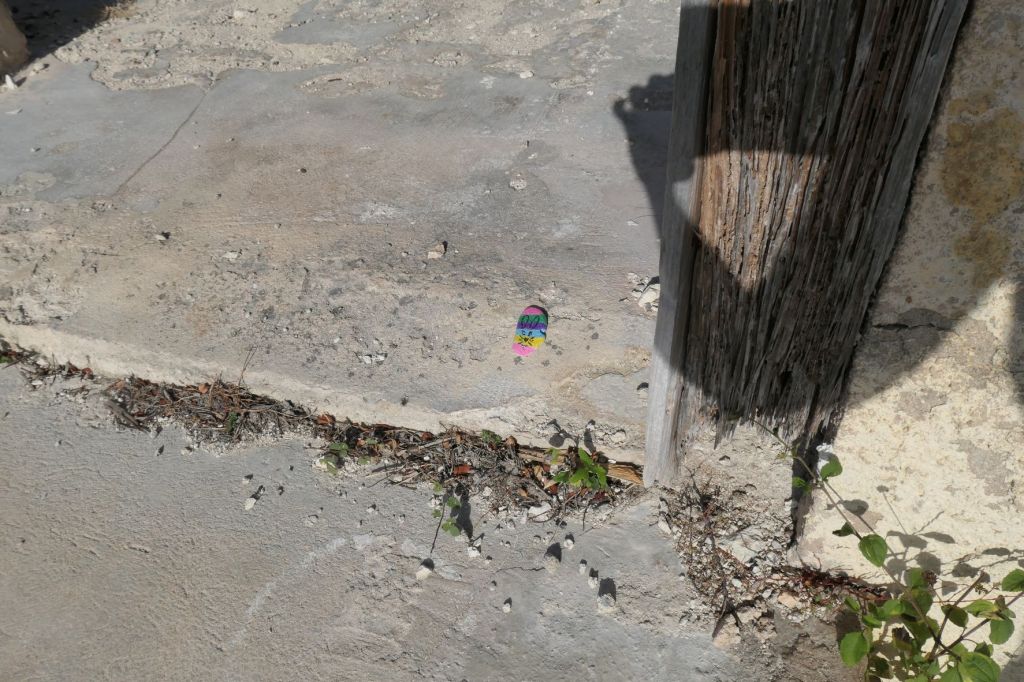
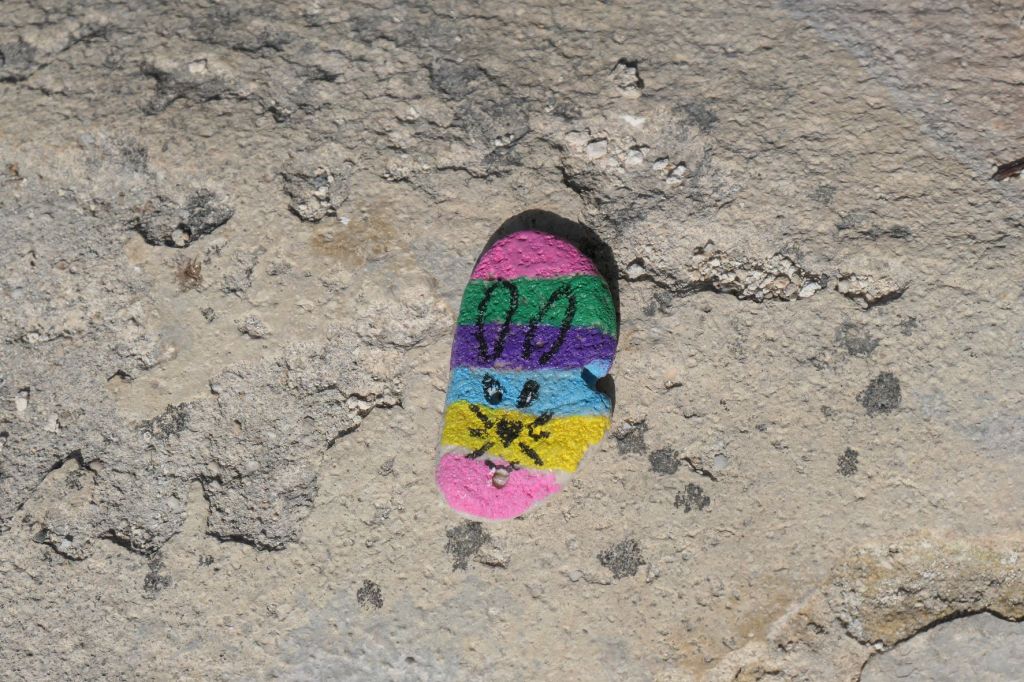
On the way out, we noticed someone had left a small gift on the stone steps.


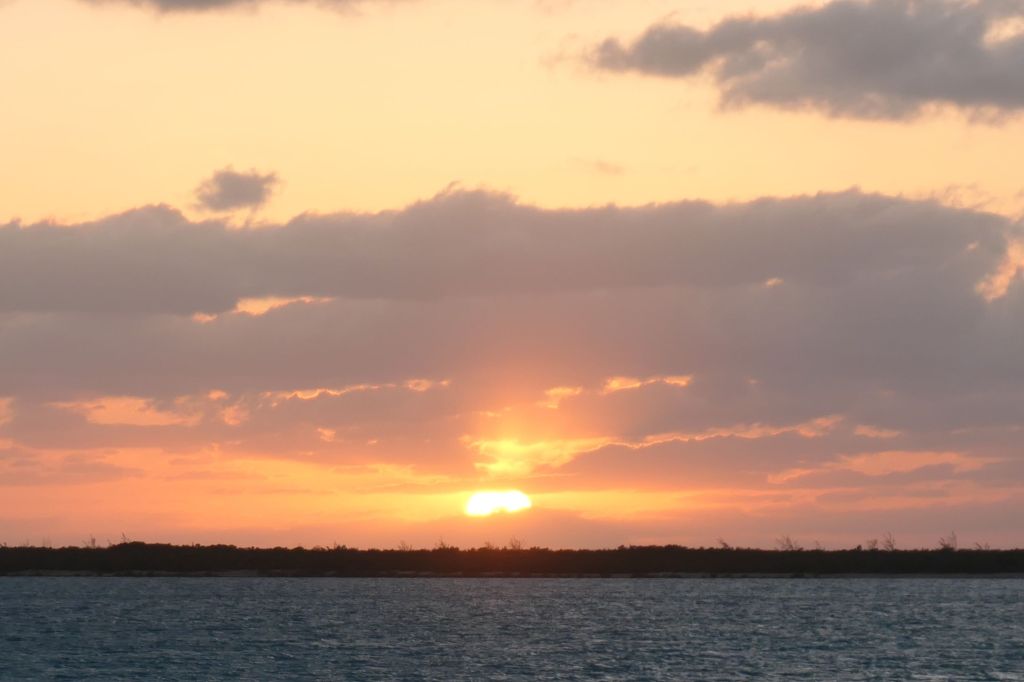
After a bit more exploring (we still owe you the story about the Shrimp Hole), it was back to the stirred up anchorage on Thompson Bay to have dinner and catch the sunset.

Interesting phenomenon on Thompson Bay. We’ve been here since Saturday, and every evening, a low bank of clouds forms in the west, just in time for sunset.

From both of us to all of you, we wish you God’s peace, love and mercy. Happy Easter!

Long after Water

Day 1: A Water stop

It was tough to leave the Raggeds, but, we’re all adults here (for the most part). When it’s time, it’s time. And Friday morning was the time to begin our two-day journey to Long Island.

The trip north…
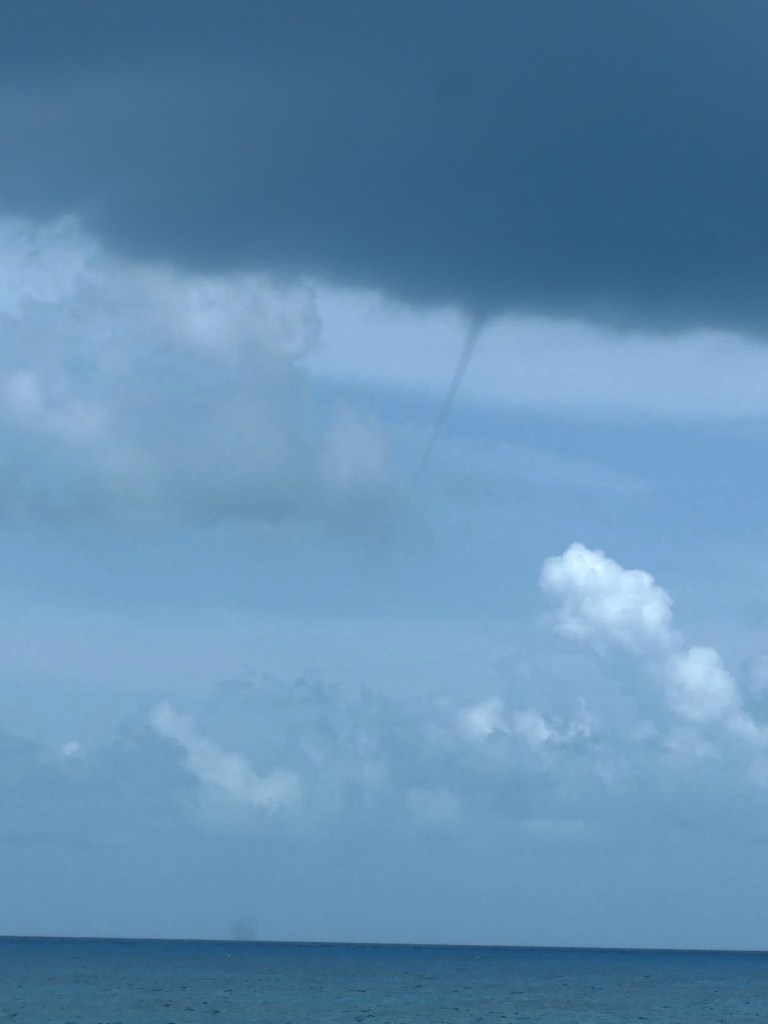
..was different from our path south, when we’d gone “outside” into the Atlantic. This time we stayed behind the Jumentos. Use those barrier islands wisely. Some do the job well, and as we smoothly passed, we said, “Nice, let’s come back one day to explore!” Then, there are the others – so tiny and spread out, they provide very little protection. We’d chosen a good day, however, and had insistent, but small, seas. There was even a fascinating waterspout to our port side for awhile (safely in the distance).

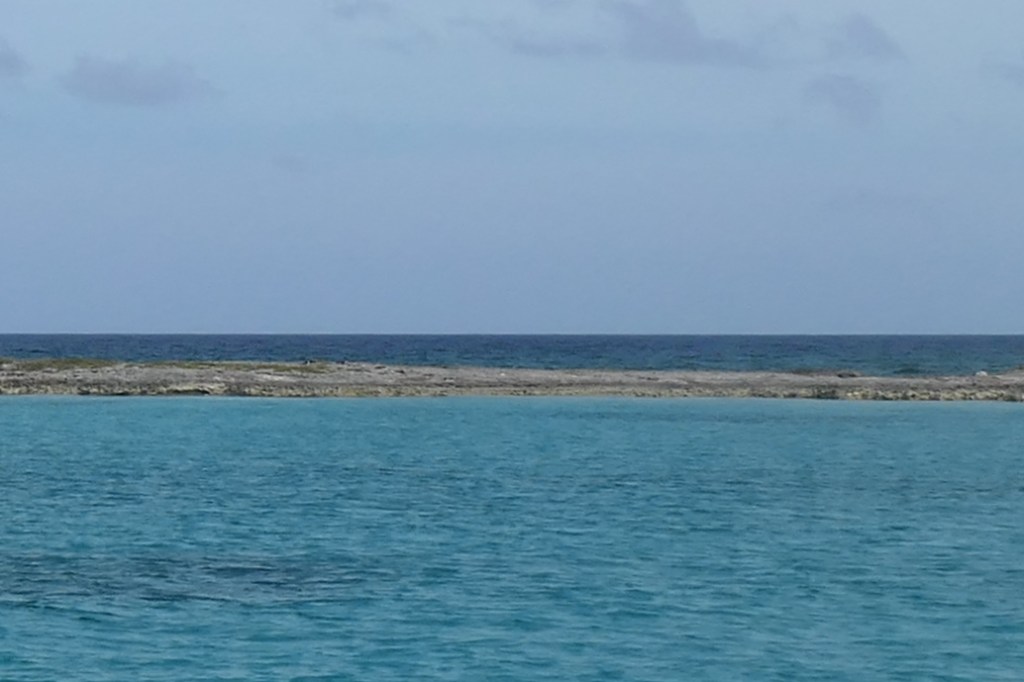
We anchored on the southern end of Water Cay, tucking into a small cove with a thin rim of island between us and the ocean. Tried to photograph the difference in water state and color, but once again, cameras don’t always capture what the eye can see, and certainly not what the ear can hear. That little rim was doing its job!

Water Cay, as mentioned previously, is a preferred anchorage for local fishermen. Note the contrast below. One a successful, vibrant operation. The other? Graduates of Todd’s School of Fishing?

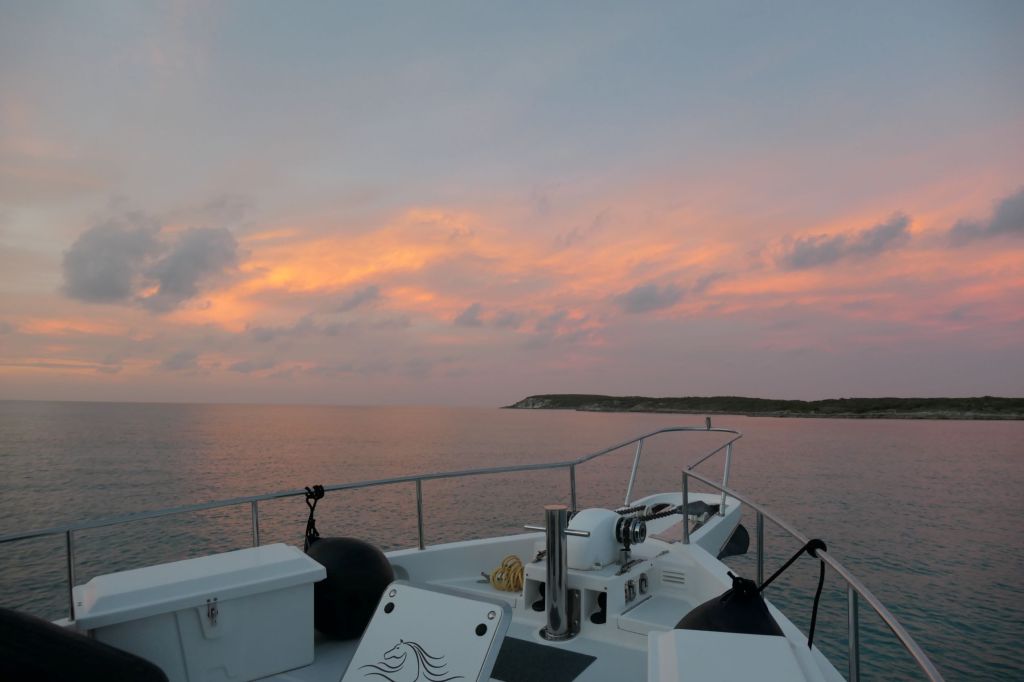
Water Cay also provided a stunning post-sunset sky to wrap up our long travel day!


Day 2: Not that Long Island

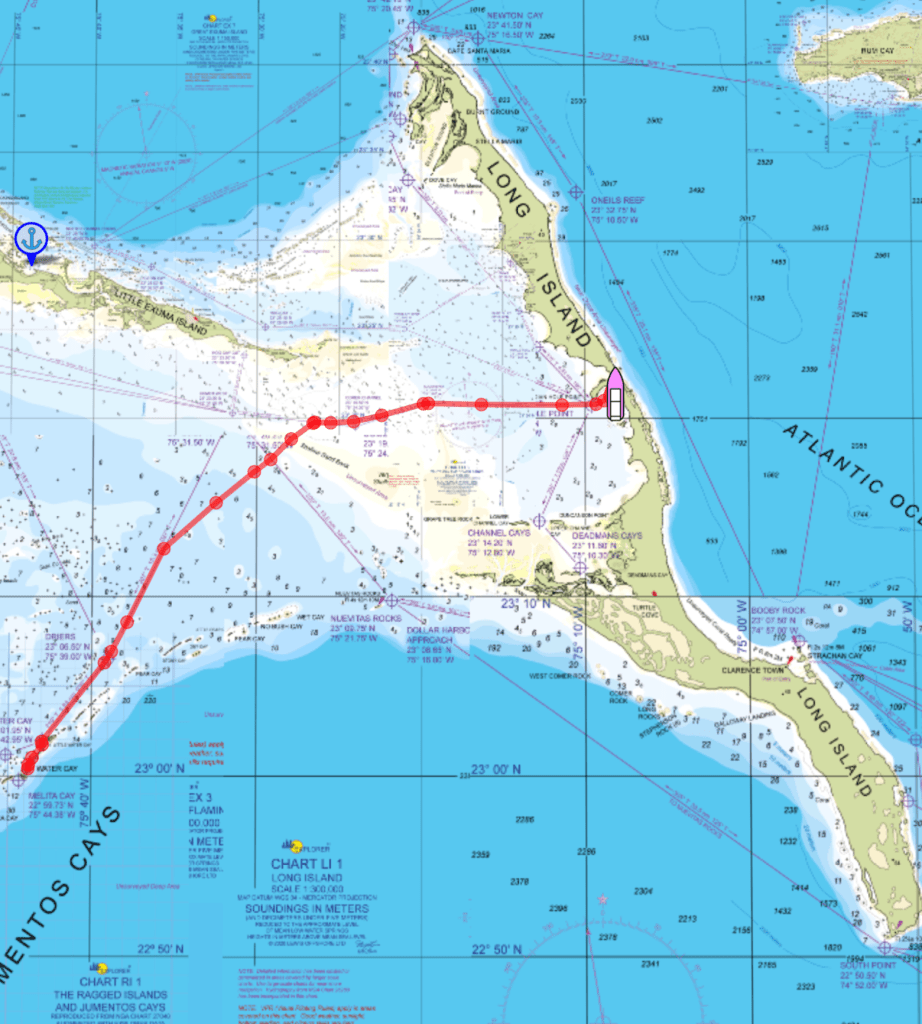
After a peaceful night by Water Cay, we headed north across the bank toward Long Island. The air was warm and sultry ahead of the coming cold front.

Near the center of the chart, our route crosses a shallow section (white and yellow are bad – that’s sand and/or very shallow water at low tide). We timed our departure to reach that section at mid-tide and cross it on the rising tide. Good plan.
Also, you might notice to the left of center, our route cuts the corner instead of following the known straight-line path (referred to as the “magenta line”). This is an example of modern “auto-routing” software taking a “seems okay” shortcut.

The seas were light, as expected, and we were making good time. As it turns out, too good. We got to that auto-routed “shortcut” ahead of mid-tide and scraped the sandy bottom a few times – Doink! – before we could return to the magenta line so Susie could resume breathing.

We slowed way down to await more water, which came in a few minutes with the tide and a squall that dumped rain on us. Thank You, Lord, for the water! Seems like that front was catching us!

Two lessons reinforced on the captain. First, thoroughly review all points along a route, sticking to the established paths. Second, once underway, adjust speed to maintain the planned tide-related arrival times, even if it means slowing down. Who said cruising was all fun and games??

Long Island, Bahamas

Originally named Yuma by the Lucayans who used to live here. Same sad story, thought to be Columbus’s third stop, enslavement and disease wipes out the locals, and years later, after the U.S. revolution, settlers come. Here’s what’s funny. They came from New England and New Jersey! So maybe, this is that Long Island! 🙂

It’s l-o-n-g, more than 80 miles, and not more than 4 miles wide. Famed for its farms, both agriculture (peas, corn, and bananas) and livestock (pigs, goats, sheep, chicken, and cattle). And, ready for this, it is also said Long Island has the best-looking folks in the Bahamas!

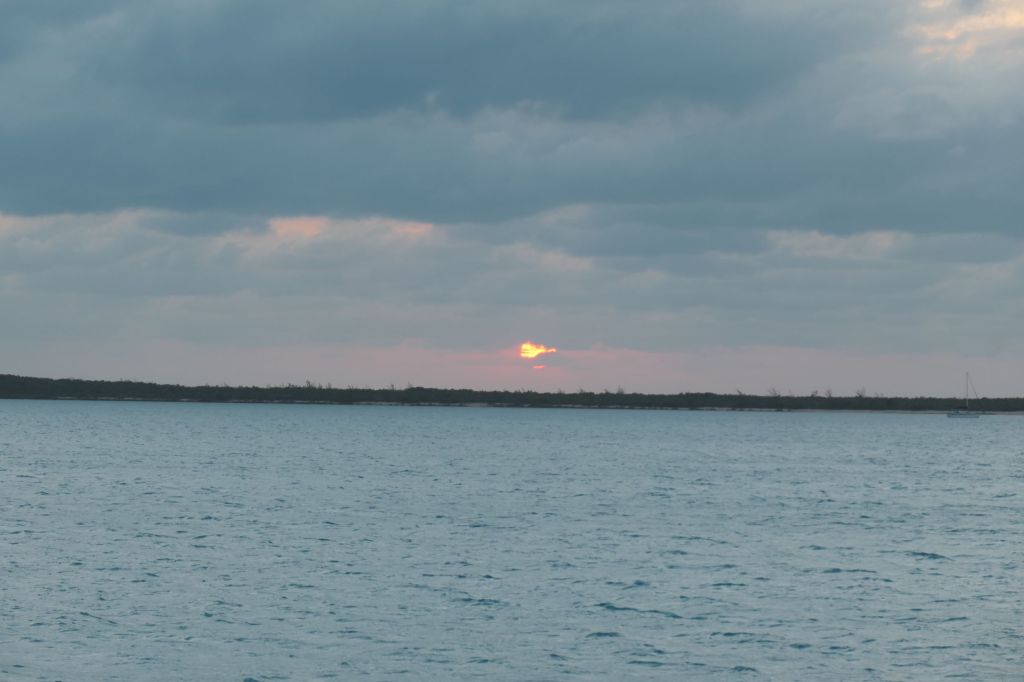
We are in a large anchorage in Thompson Bay along with about 25 other boats, and have full connectivity! There are more trawlers (rather than sailing vessels) than we’ve seen anywhere else, but it isn’t crowded at all. The sunset Saturday was muted by clouds associated with the cold front, but we celebrated our safe arrival nonetheless and have made full use of that connectivity to catch up with the posts!

Hog Cay, Ragged Islands

Hog Cay is ideal for relaxing, but once you’re refreshed, there’s also plenty to see and do – from playing in the water, obviously…
Martin, from SV Marly, trying out Booke-End‘s hover surfboard

…to wandering long beautiful beaches or hiking winding trails. After being “slugs” on the boat for a few days, it was time to get moving. The trail we selected for a hike to the other (ocean) side, quirkily marked with flipflops and various other items, goes up and over a small hill to the much more rugged side of the island.


The view from the top of the hill is spectacular!

Turquoise waters of the Great Bahama Bank on one side & the deep blue Atlantic on the other
Taking in the “aah” moment

Alas, all good things must come to an end. It’s time to leave this tranquility to begin slowly working our way back north.