“Fast cars and slow food”

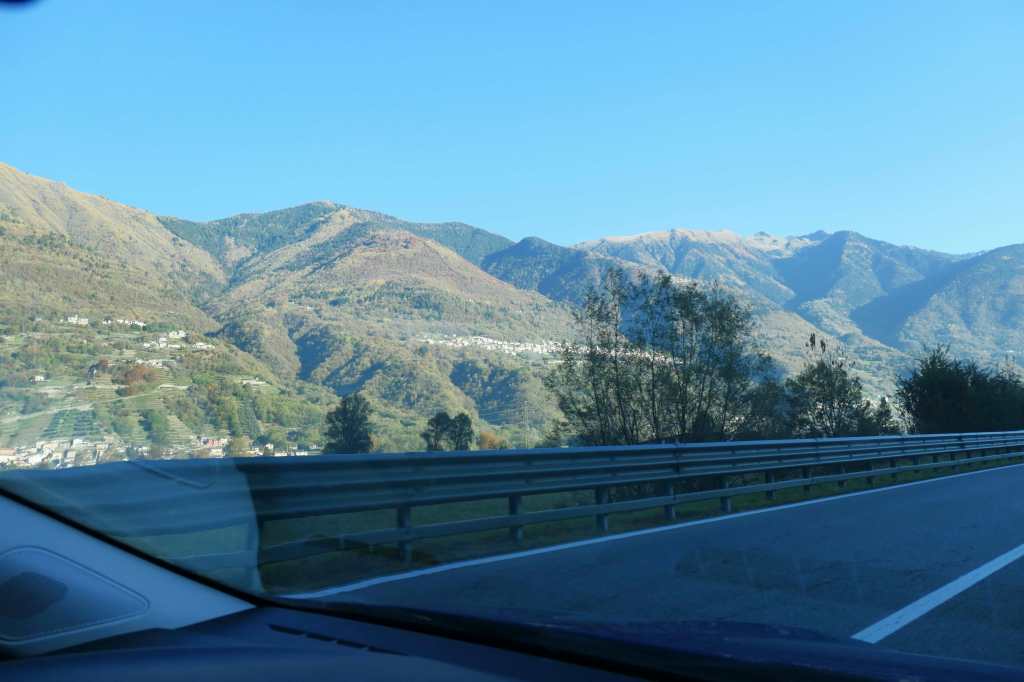
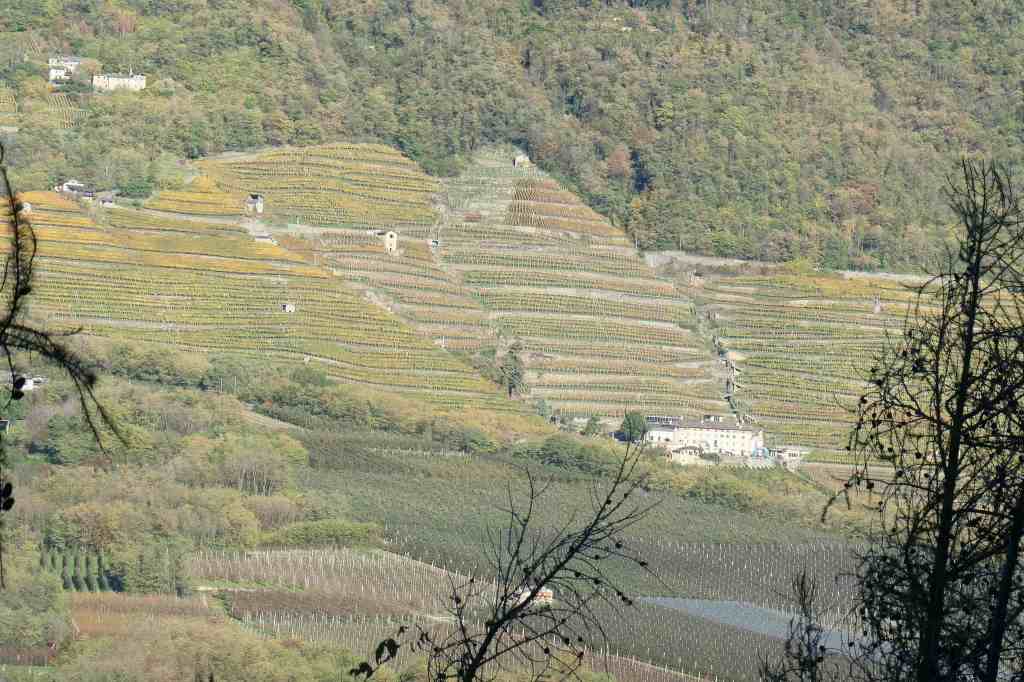
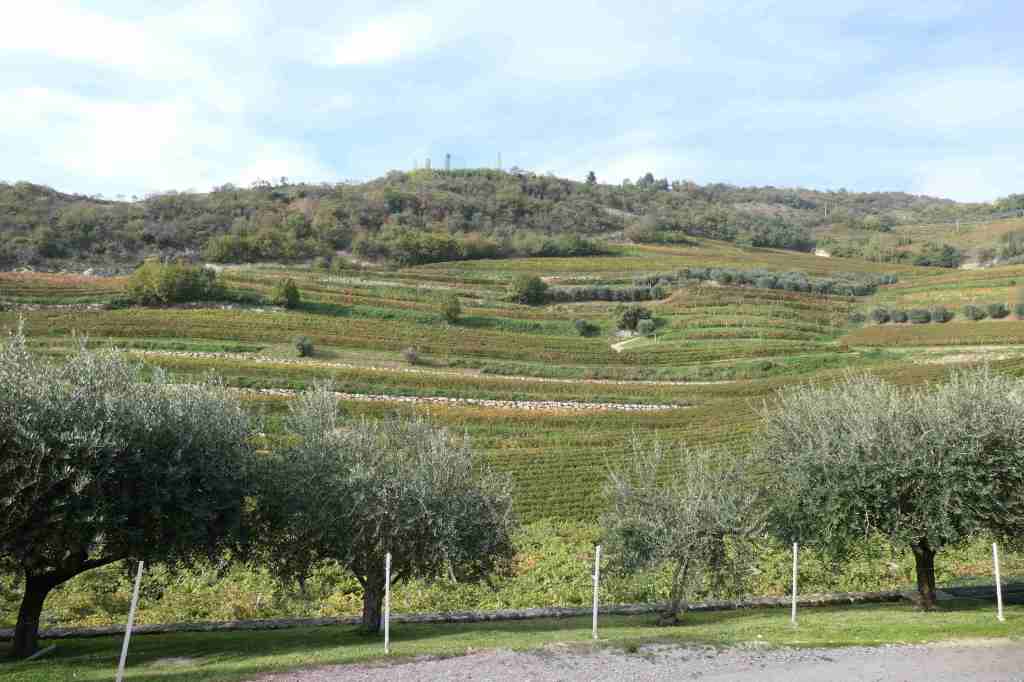
After the cable car ride in Trento, we drove approximately 200 kilometers south to Modena, a city in the Emilia-Romagna region of northern Italy. The trip out of the Alps took us through miles and miles of vineyards. Ahh…Italy!
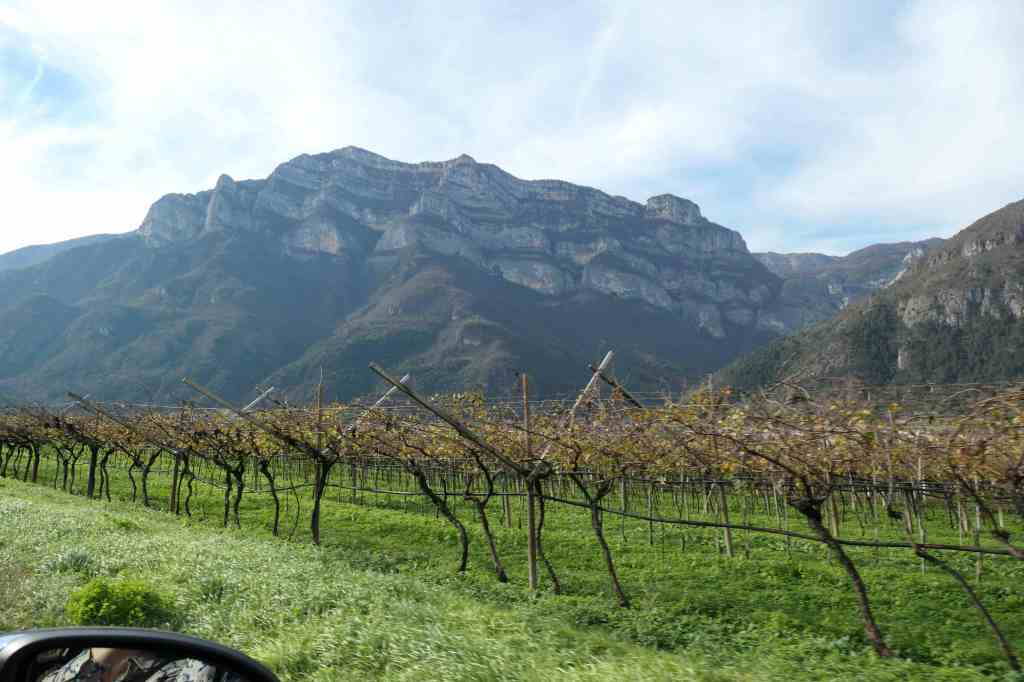
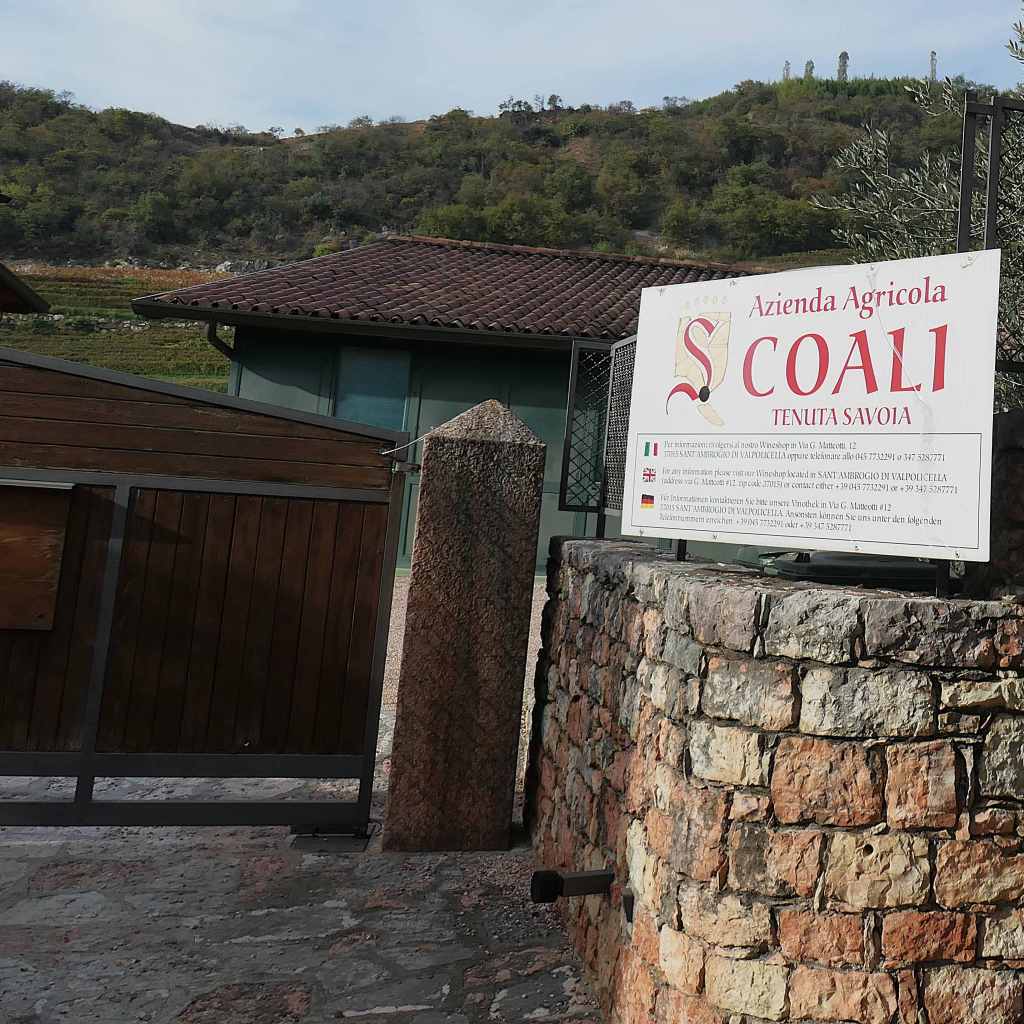
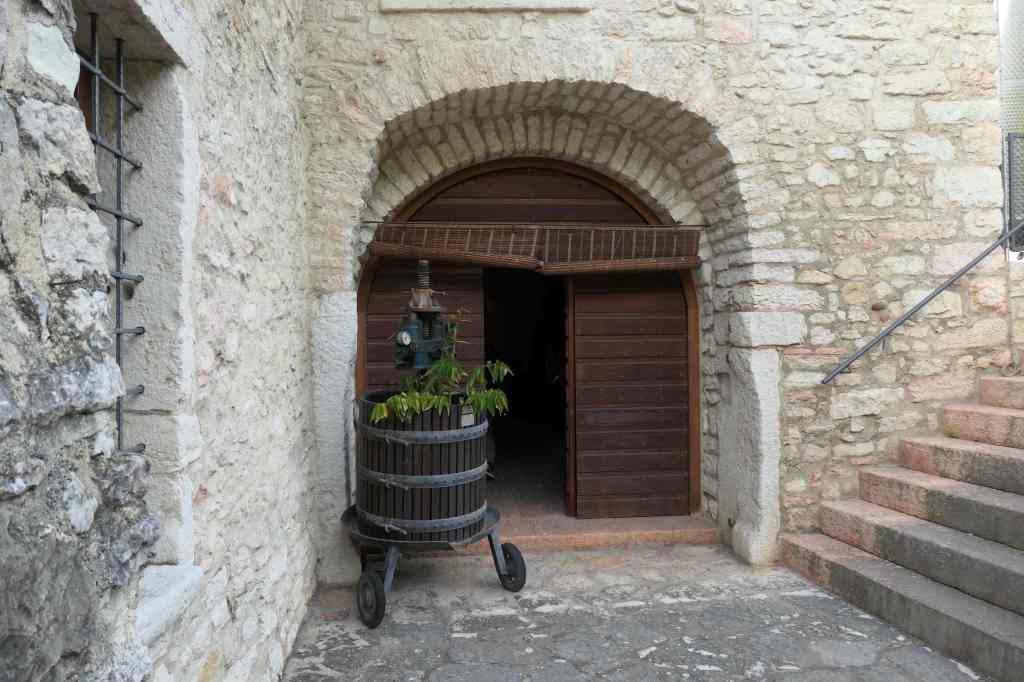
We turned off the main road in Verona, bound for our first Italian wine tasting!
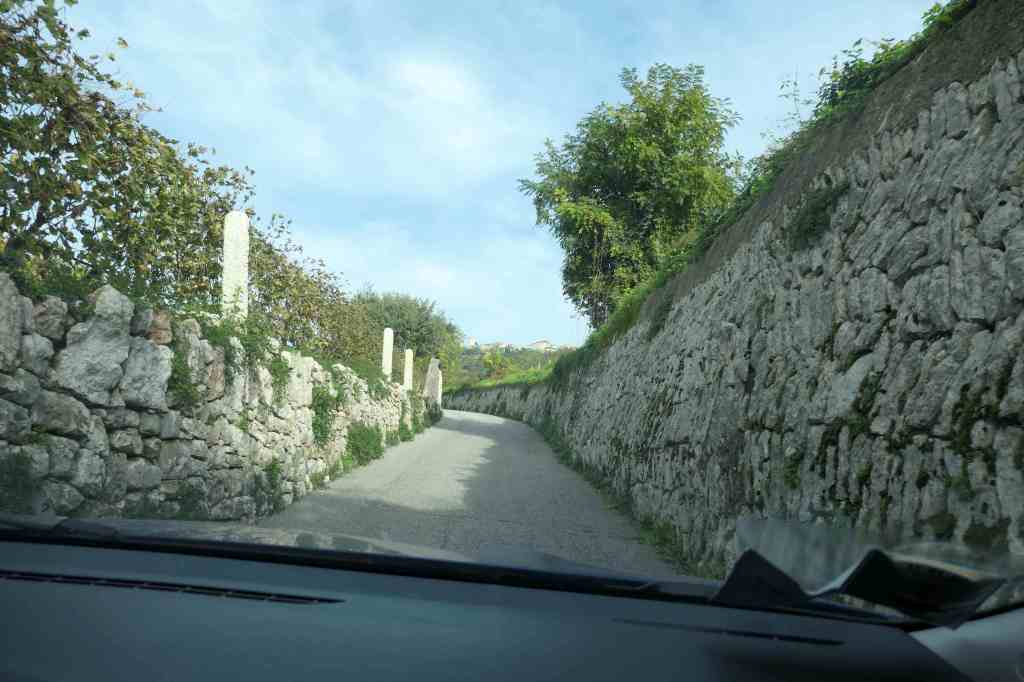
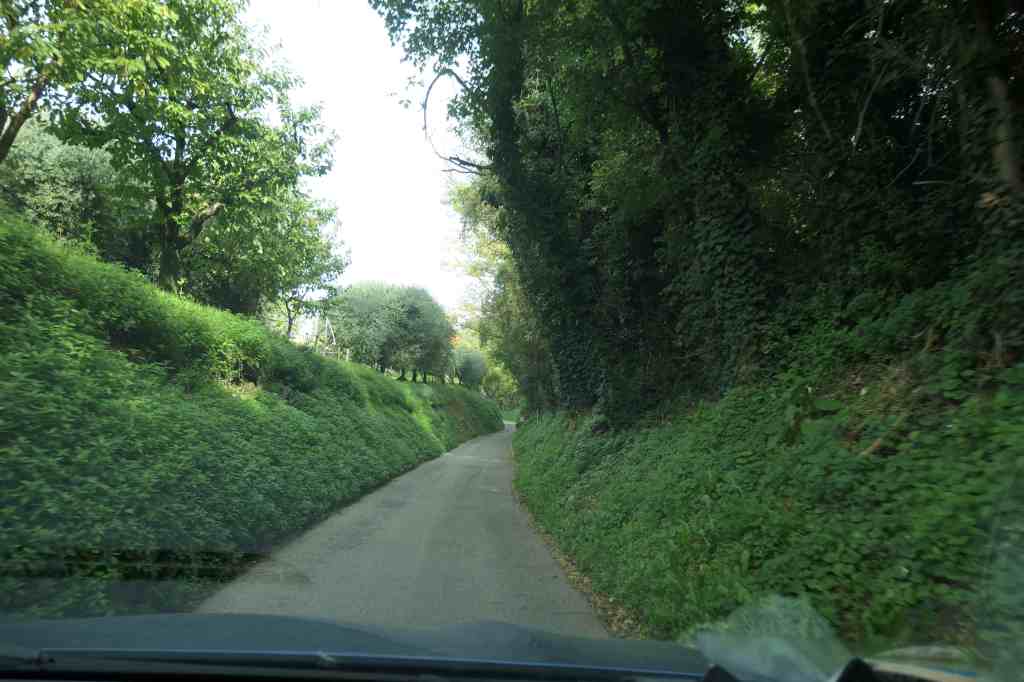
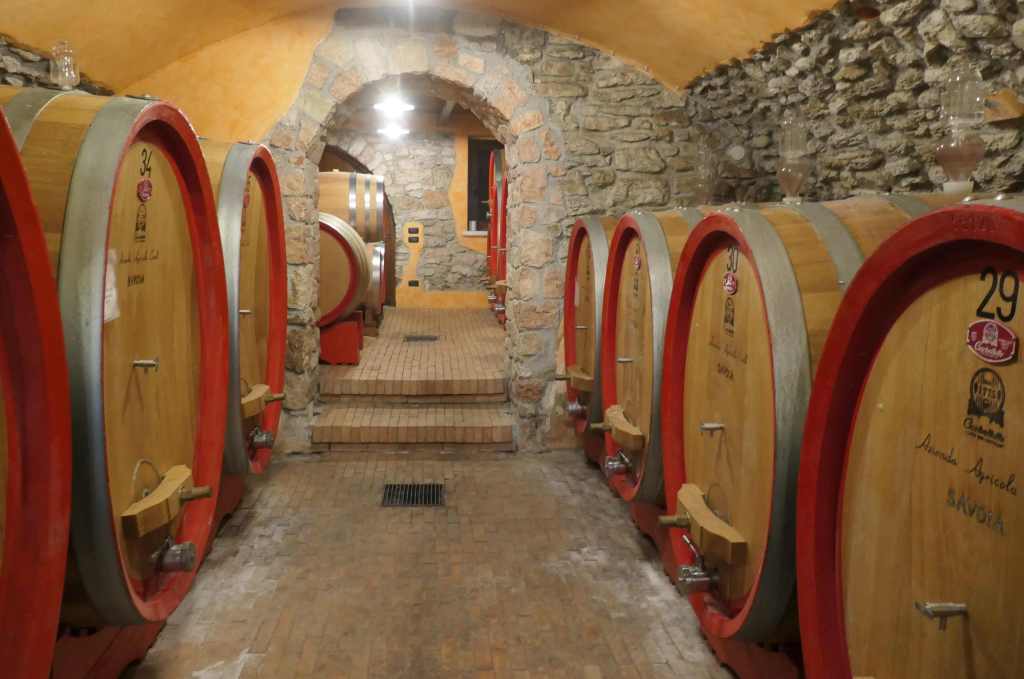
Another car had also stopped and already called the number listed on the sign, so the owner of this smaller winery was on the way. Voila! Impromptu tasting for four!
The city of Modena and the nearby area proudly embrace their reputation for “fast cars and slow food.” Let’s begin with the cars. Think famous Italian sports cars. Maserati. Ferrari. De Tomaso. Lamborghini. Pagani.

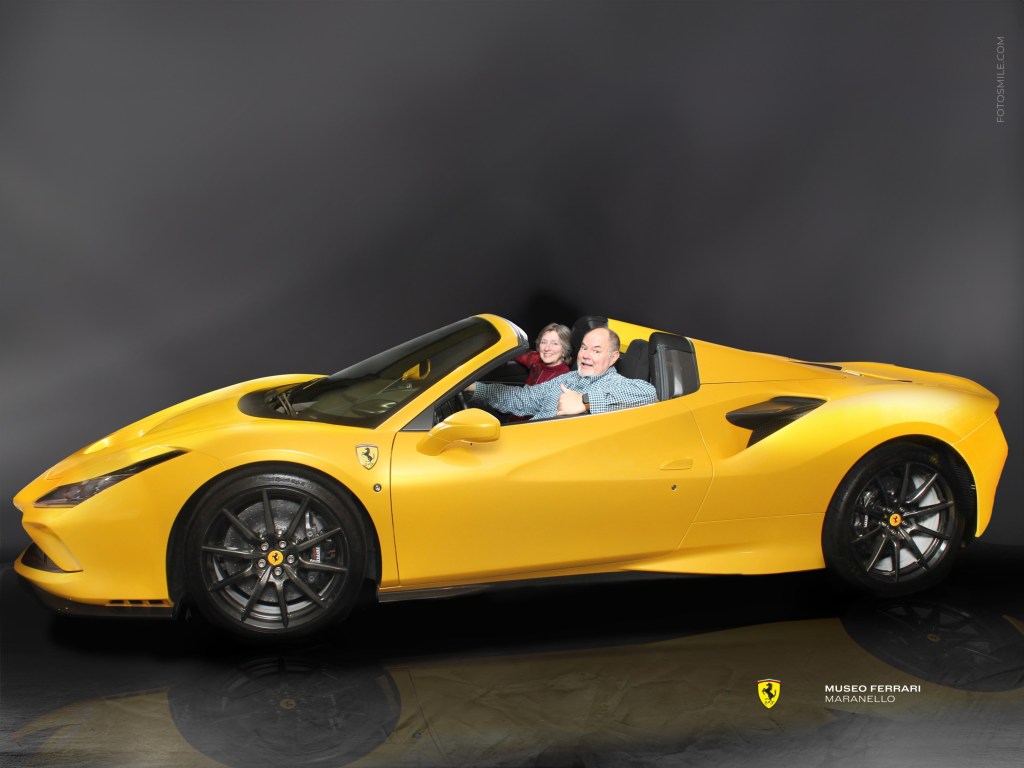
Unbeknownst to Susie as to why, Todd said, “let’s go to Ferrari!”

Modena was the birthplace of Enzo Ferrari, the man who sold his house when he was twenty years old to buy his first race car and went on to create a legend.

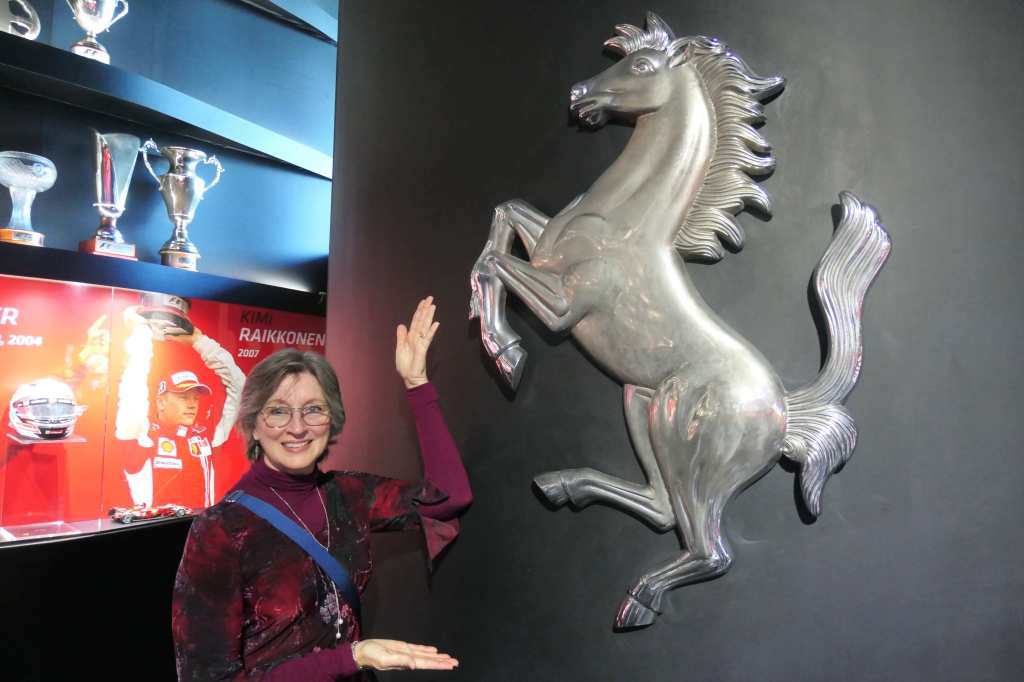
For her part, Susie likes the Prancing Pony logo. 😉

Todd smiled.

Win win.
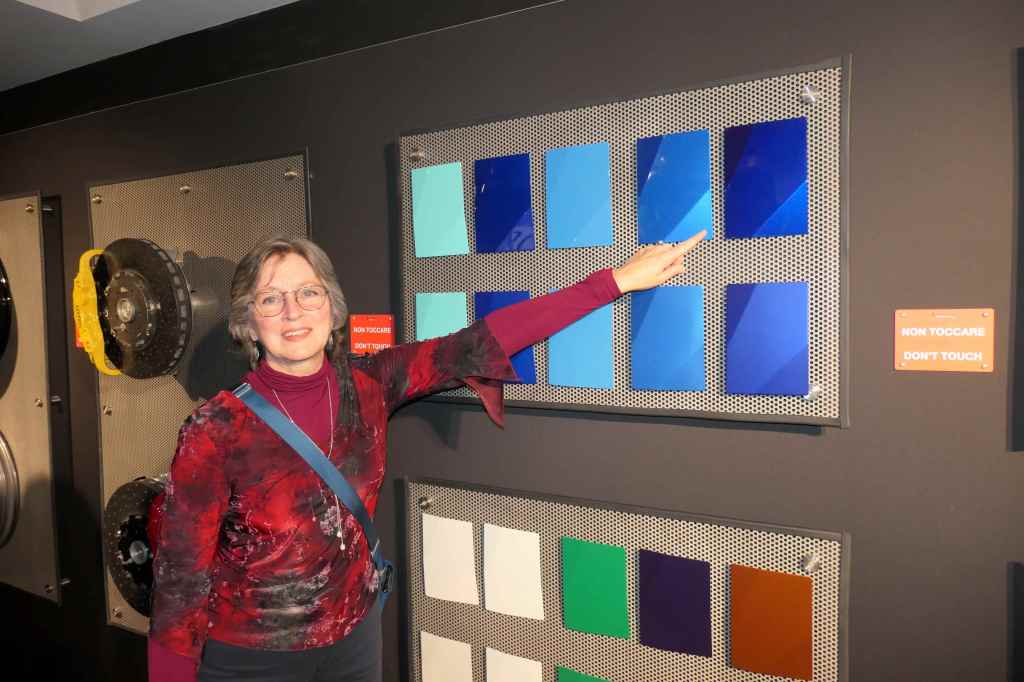
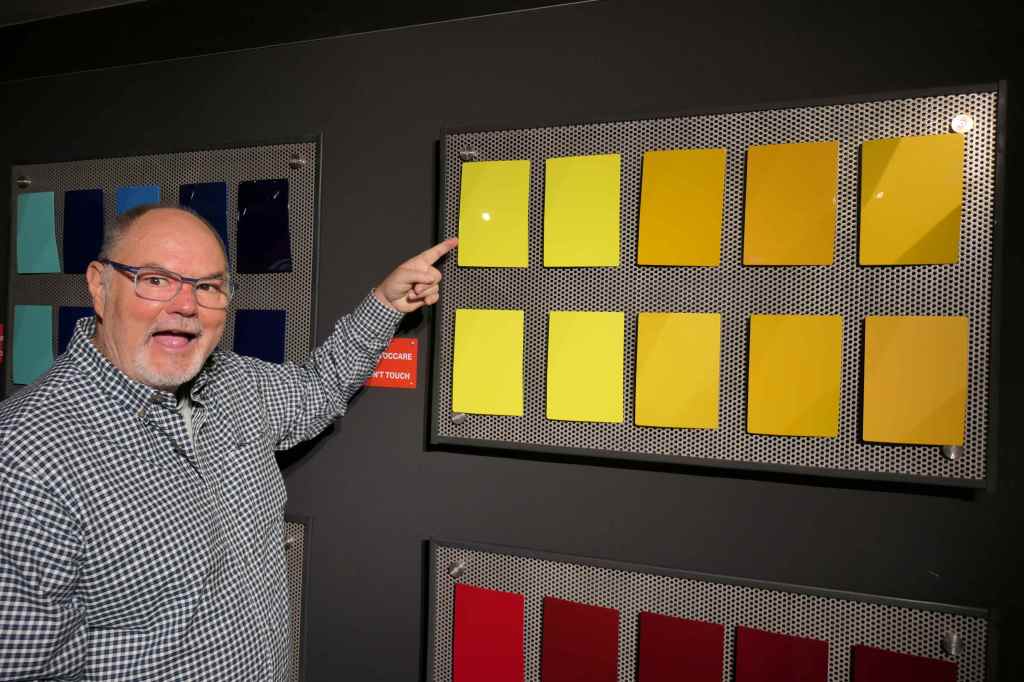
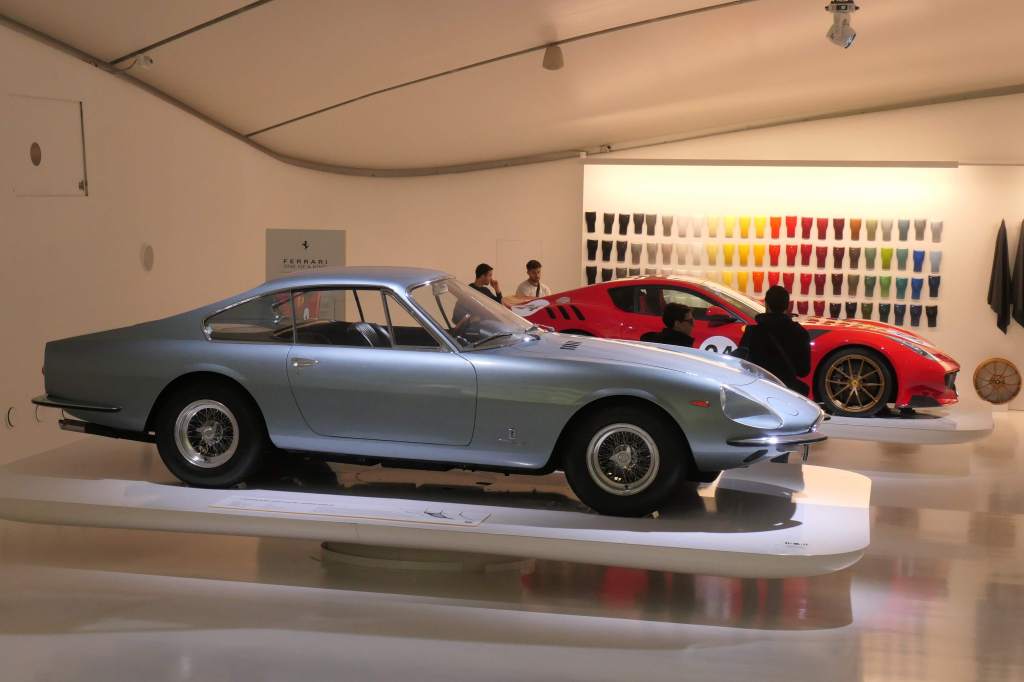
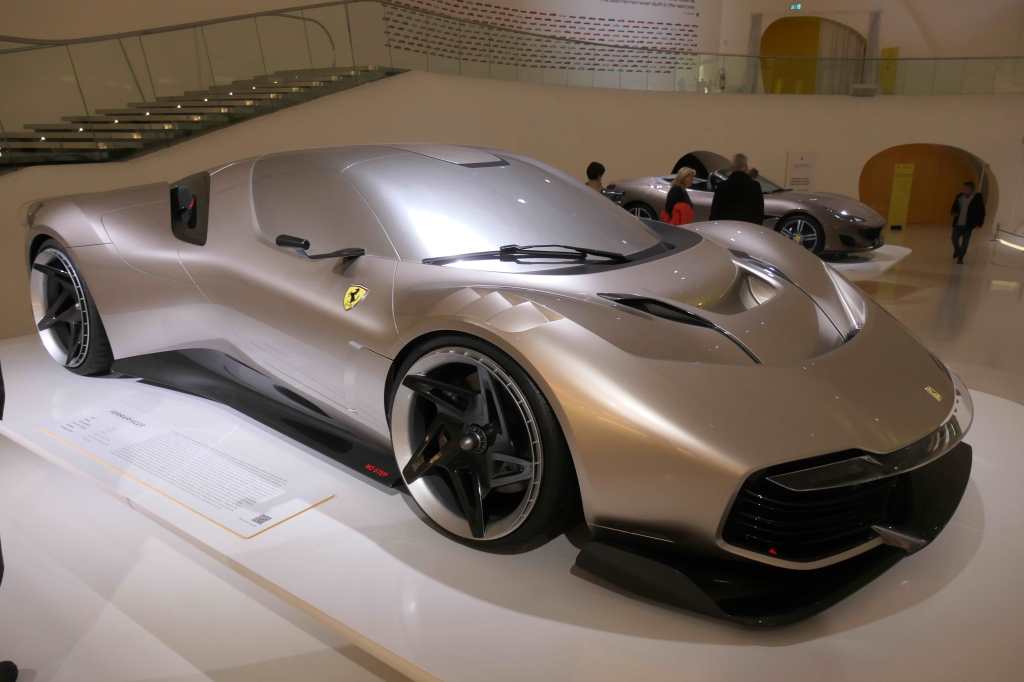
We worked our way through the two Ferrari museums, admiring lots of super-fast cars.
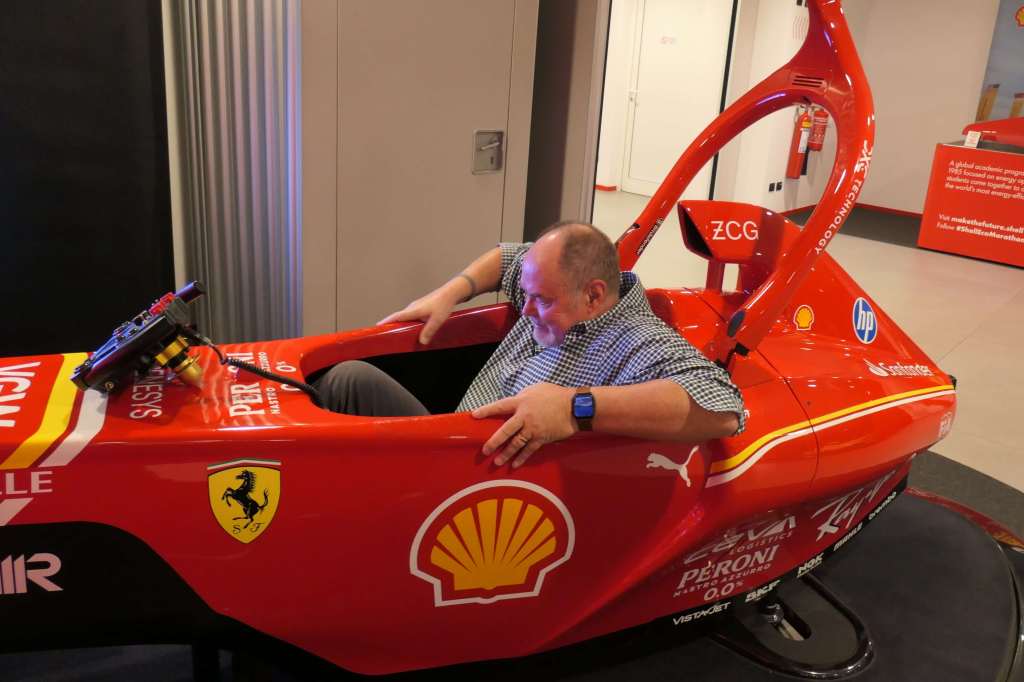
Todd happily took a turn in the simulator, and claiming it to be harder than it looks, only hit the wall once (okay, maybe twice). He performed better on the second lap. Quick progress!
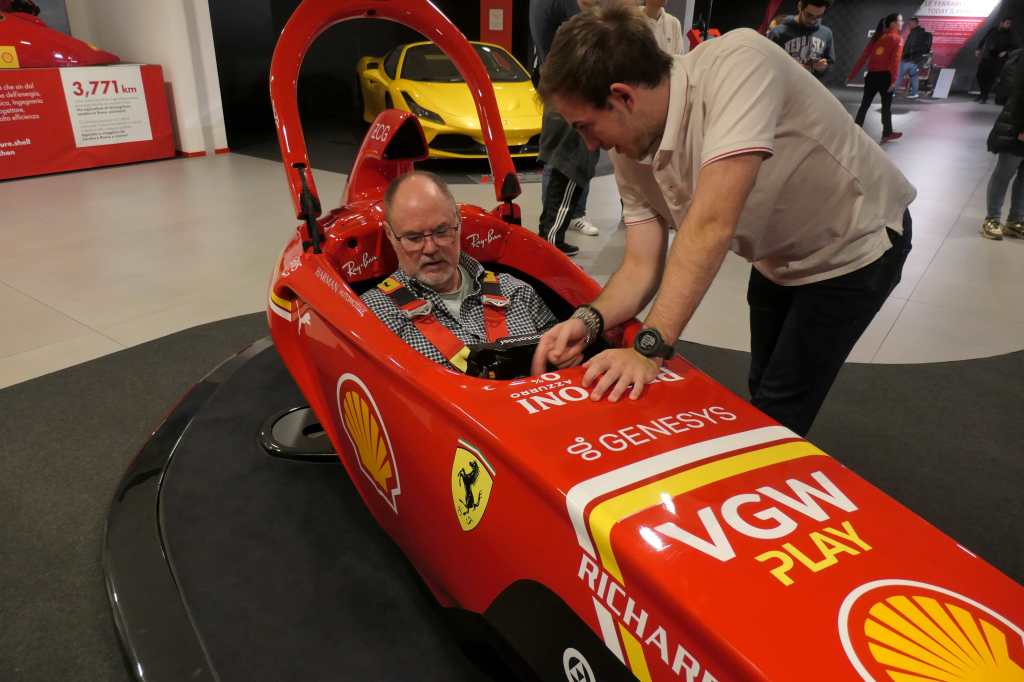
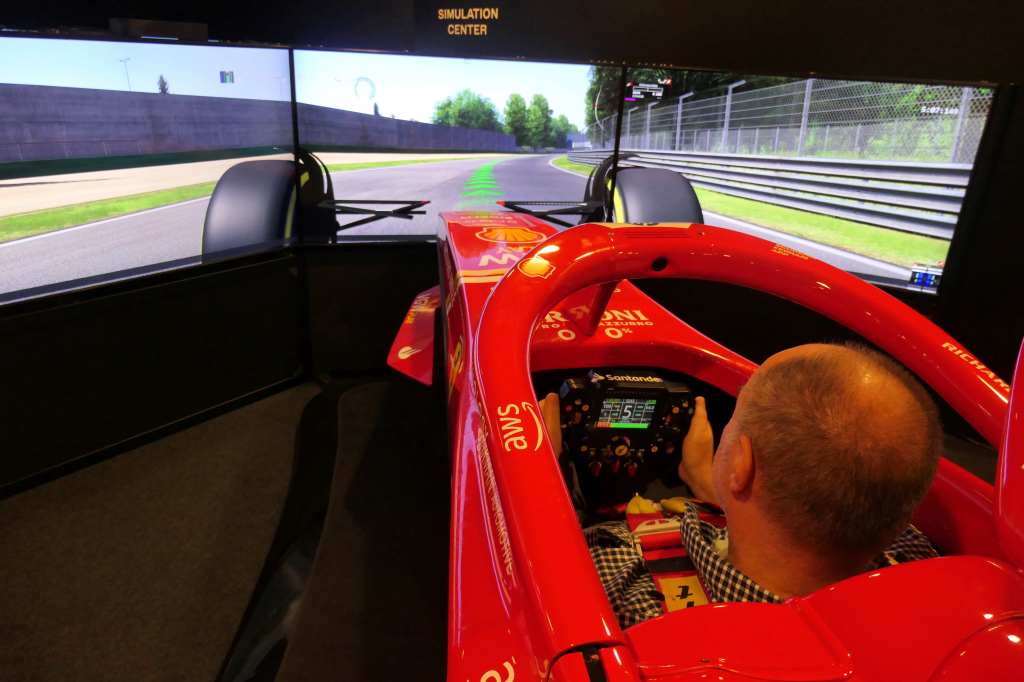
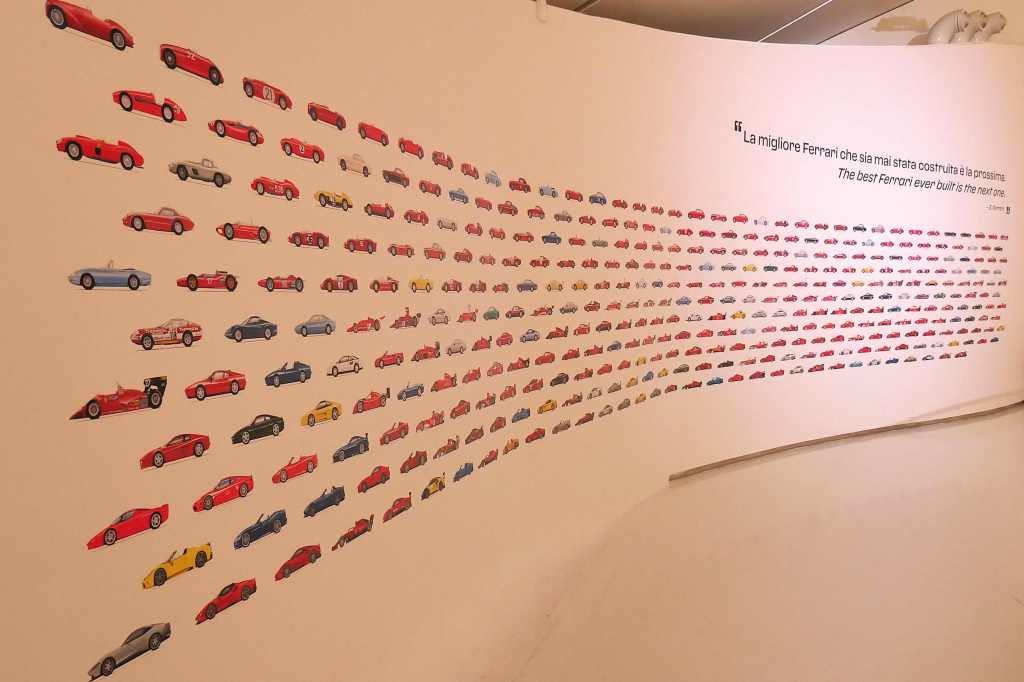
Apparently slower-reacting, old-ish, fat-ish guys aren’t built for the superfast, tiny movements of the F1 cars. So, off we went to see some of the many, many models made by Ferrari, each carefully produced one at a time with amazing precision.
Now about that slow food. The Modena area is famous for two food items – parmesan and balsamic vinegar – about both of which we had plenty to learn.

Parmigiano-Reggiano

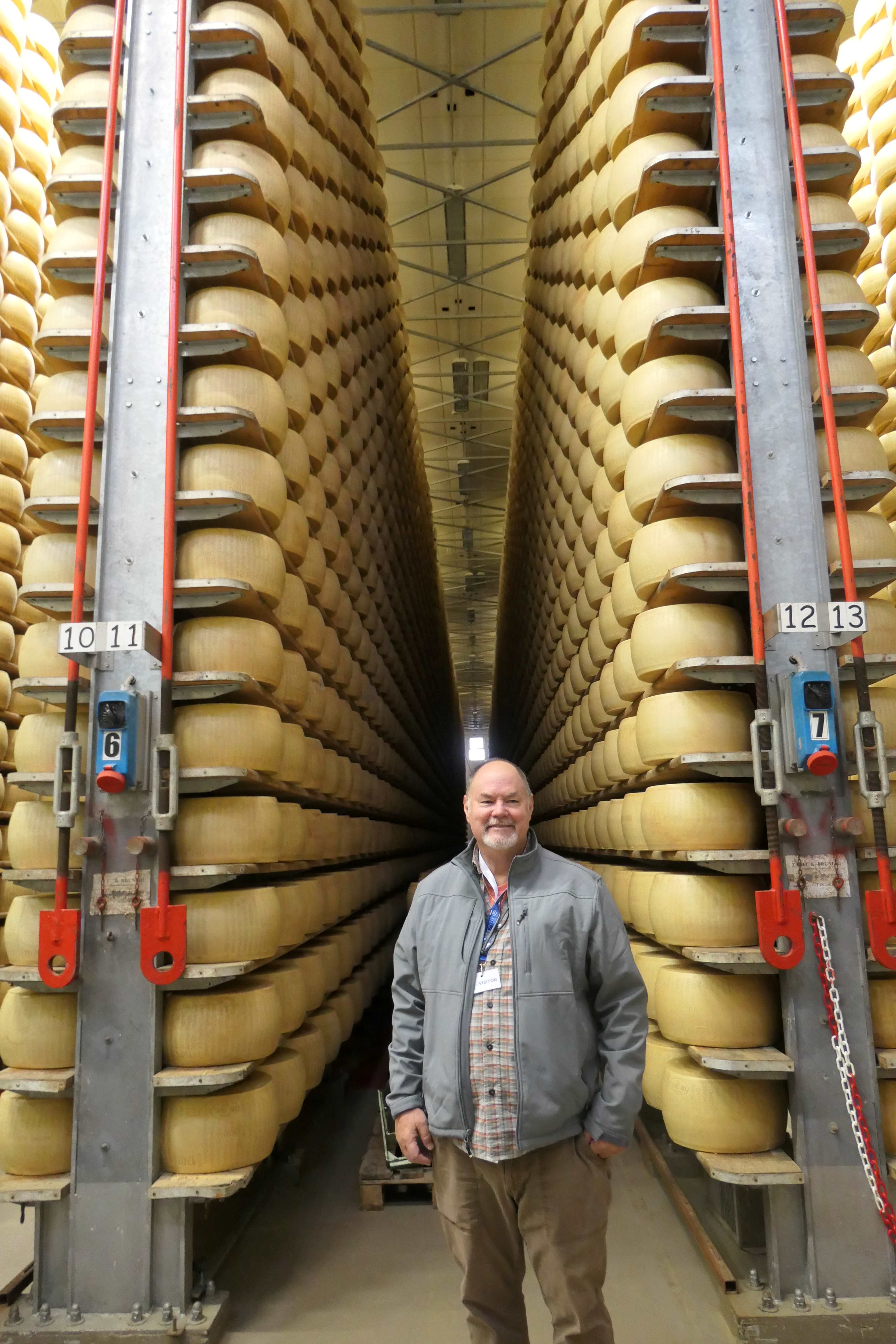
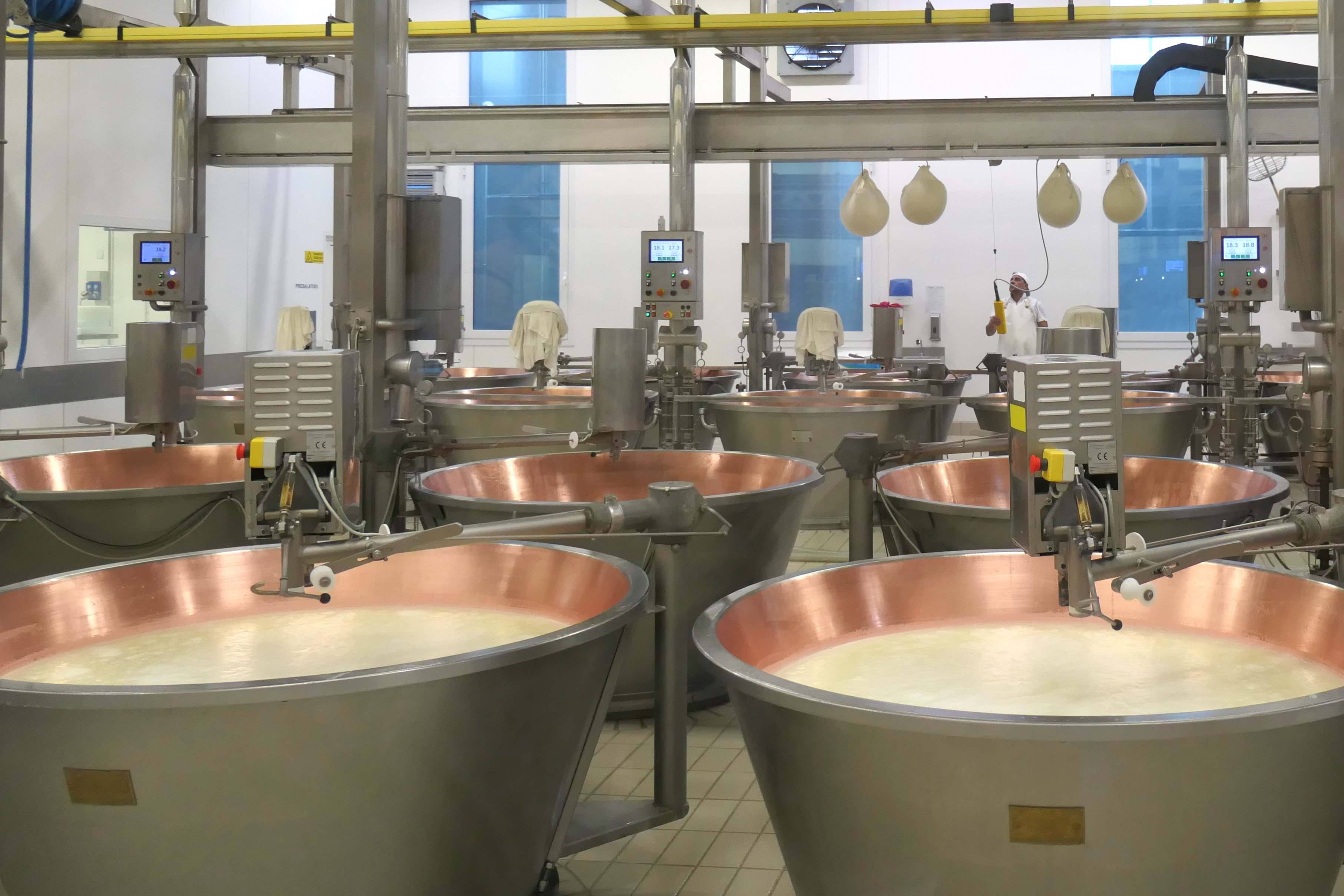
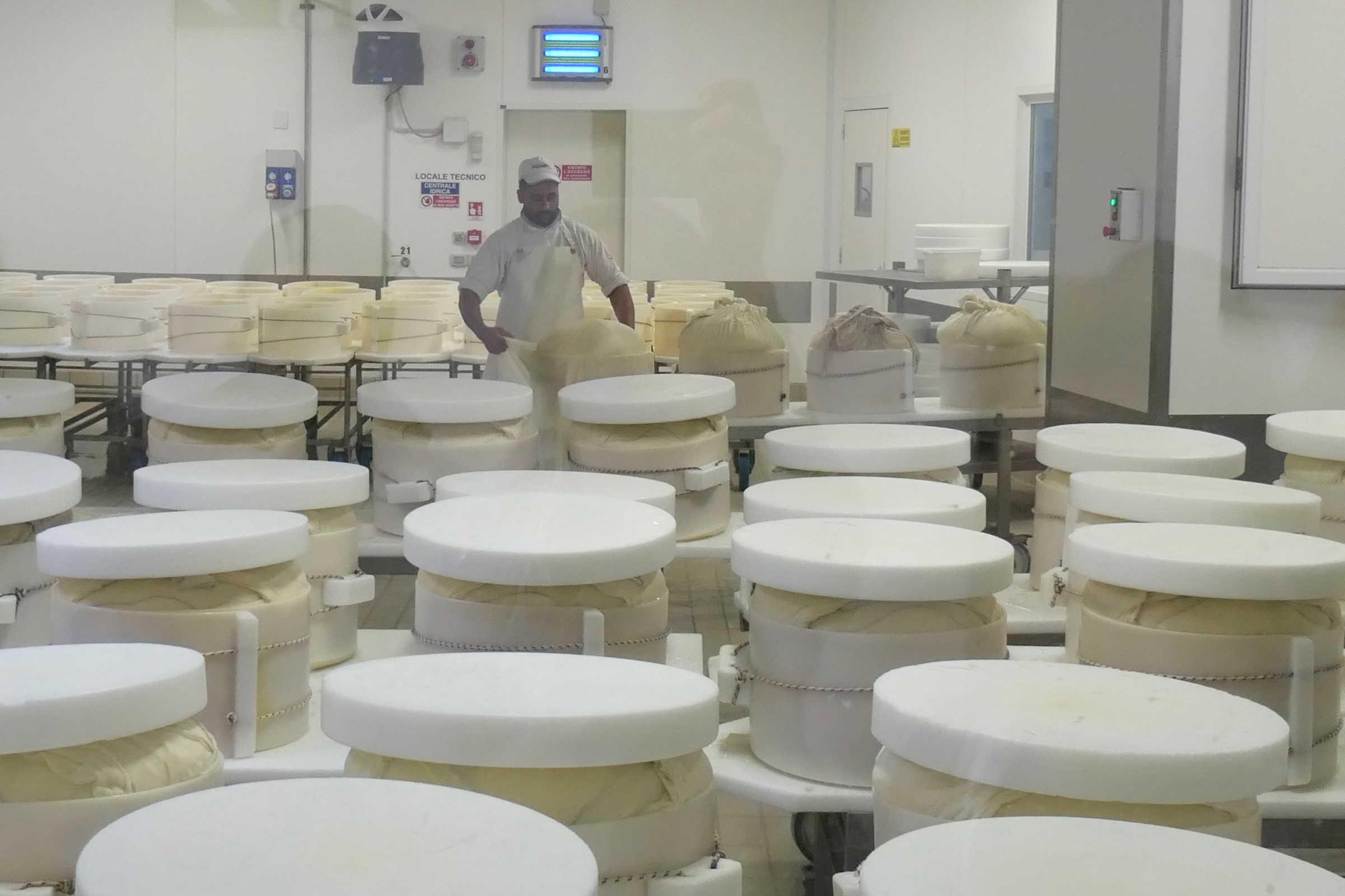
We started our culinary education with the so-called “King of Cheeses,” parmesan, which was created by local monks sometime before 1300. 4 Madonne Caseificio dell’Emilia, built in 1967, is the largest dairy among the several hundred now located in the Parmigiano Reggiano Consortium (1901). (The dairy’s tongue-twisting name comes from a nearby pillar depicting the Virgin Mary on all four sides.) With seven facilities and a team of 80 employees, they produce an average of 380 wheels of Parmigiano Reggiano daily, totaling approximately 140,000 wheels annually. Mama Mia, that’s a lot of cheese!

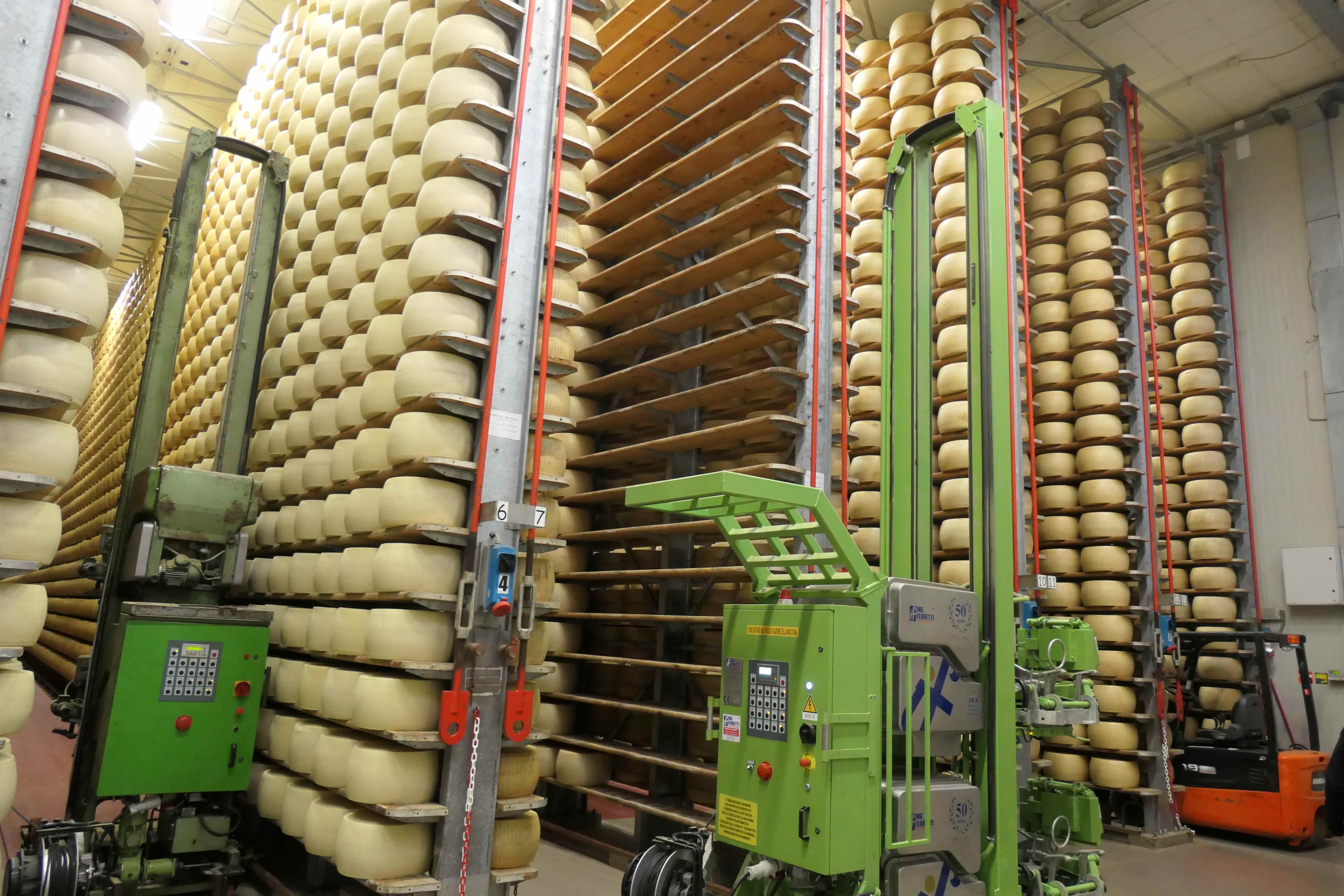
It takes approximately 160 gallons of milk to make each wheel. After a day or two in a ring mold, there’s an imprint left on the wheel that includes the “born on date.” Out of the ring, the wheels are then submerged in a salt bath for 15-20 days! After the soak, the wheels go into huge ripening rooms where the tens of thousands of wheels are flipped and brushed by “robots” every week. After 20 months, each wheel is inspected by government experts that grade it to be either Parmigiano Reggiano (since 1928) or… meh, just cheese. If it passes the test, the wheel gets the official dark stamp.

We saw stamped wheels that are more than 25 years old. Each wheel starts at 40 kilos (88 pounds)! The older ones are lighter.

Oh, and that rind on the outside is all cheese, nothing artificial. Toss it in soup to impart a bit of salt. 🙂
Balsamic Vinegar

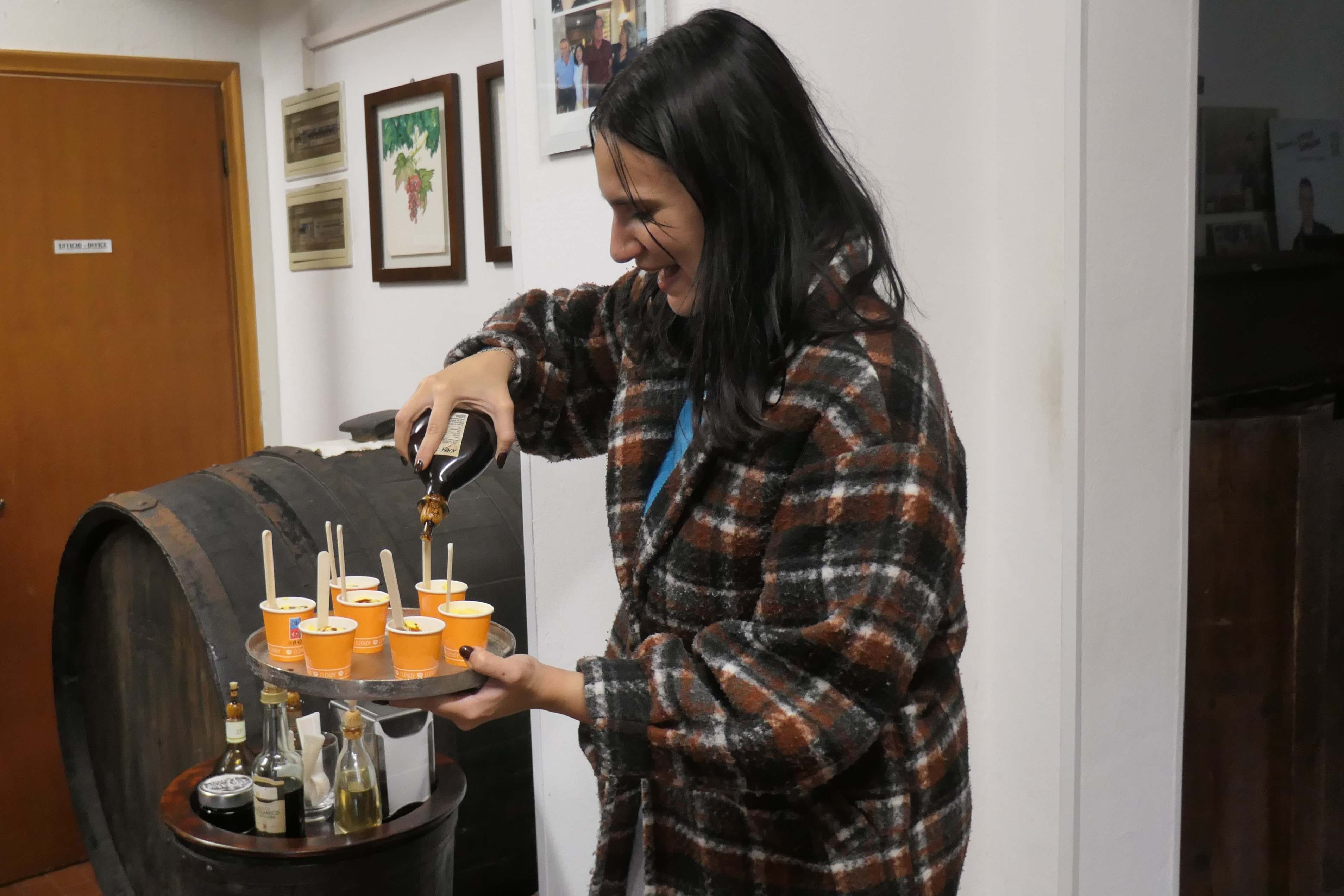
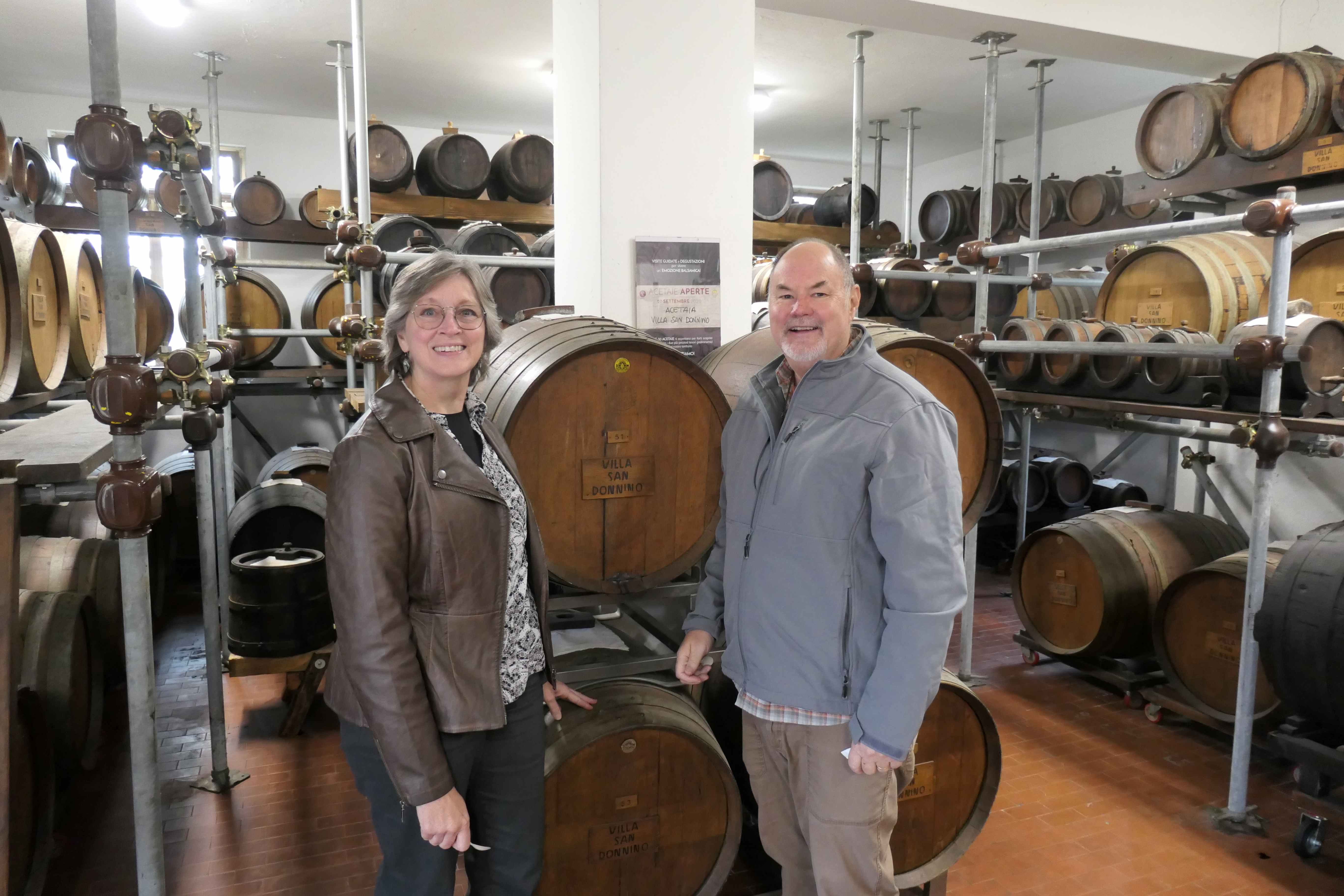
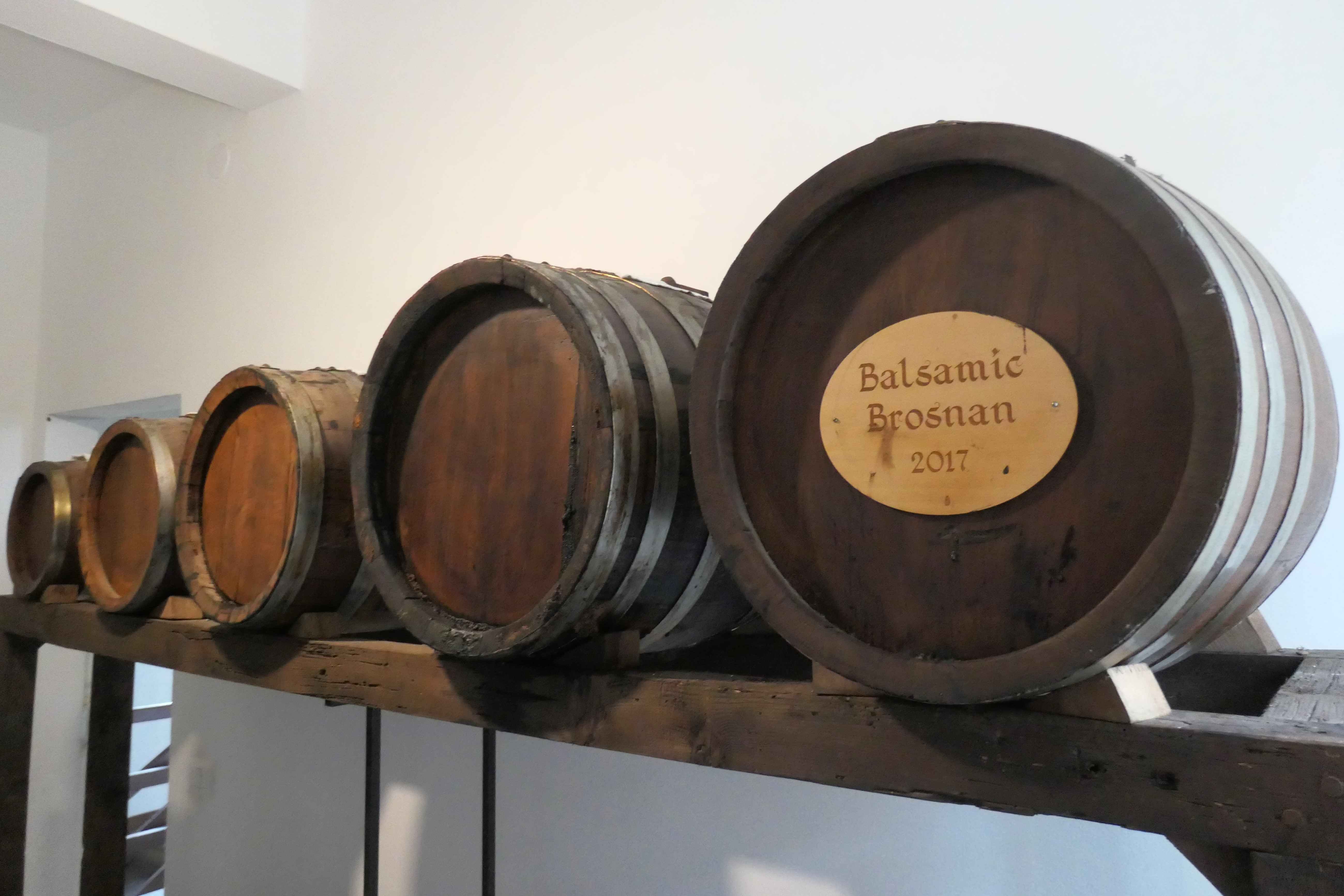
Next up, the other famous slow food of the area, balsamic vinegar, which has ancient roots involving a strict method of production handed down from generation to generation. We visited Villa San Donnino, one of many small “acetaias” producing traditional balsamic vinegar of Modena.

From Wiki, “The practice of cooking grape must (juice) can be traced back to ancient Roman times, where it was valued both as a medicinal remedy and a sweetener or condiment in cooking. The story of this quintessential Italian product began in the 11th century in the small city of Modena.”

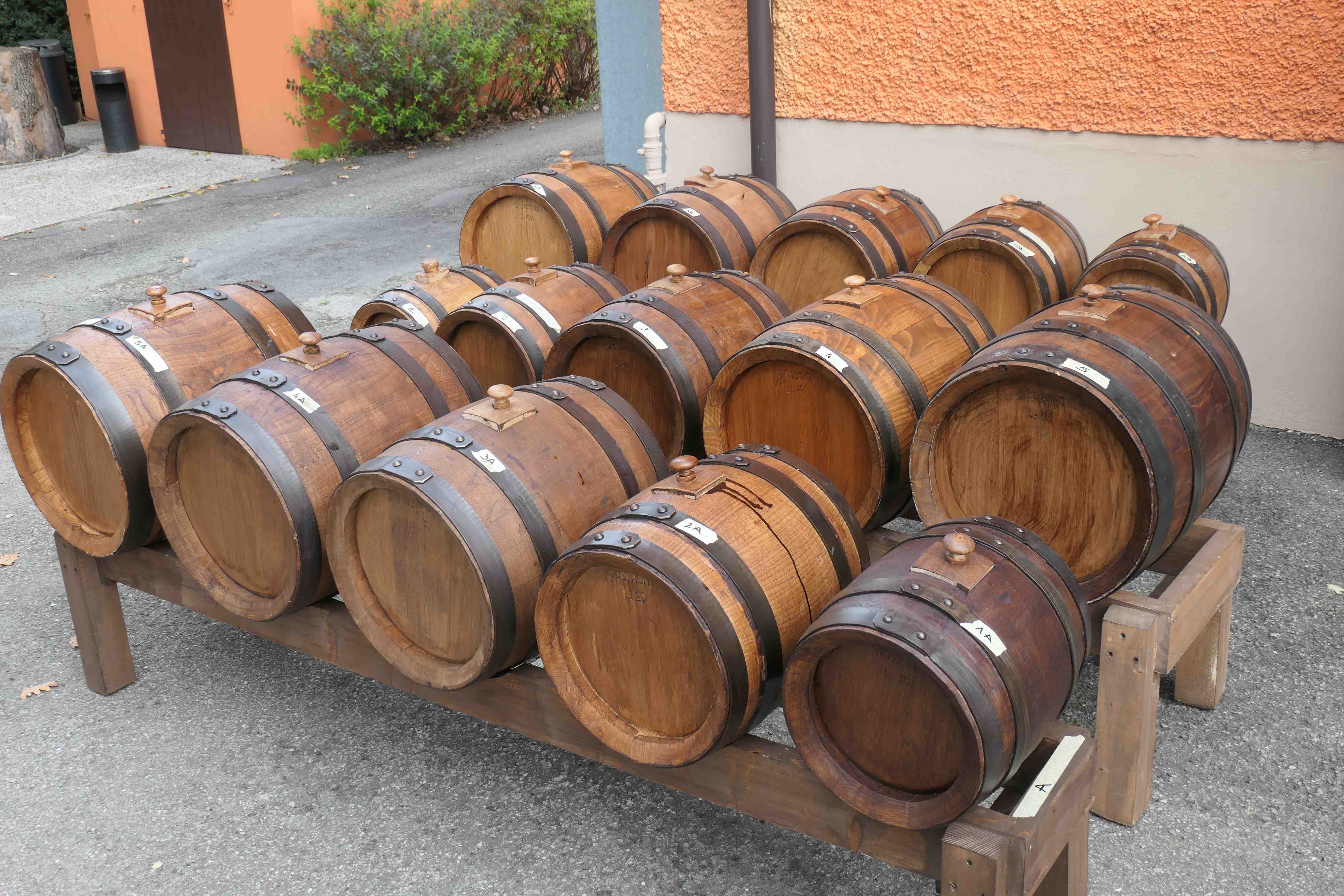
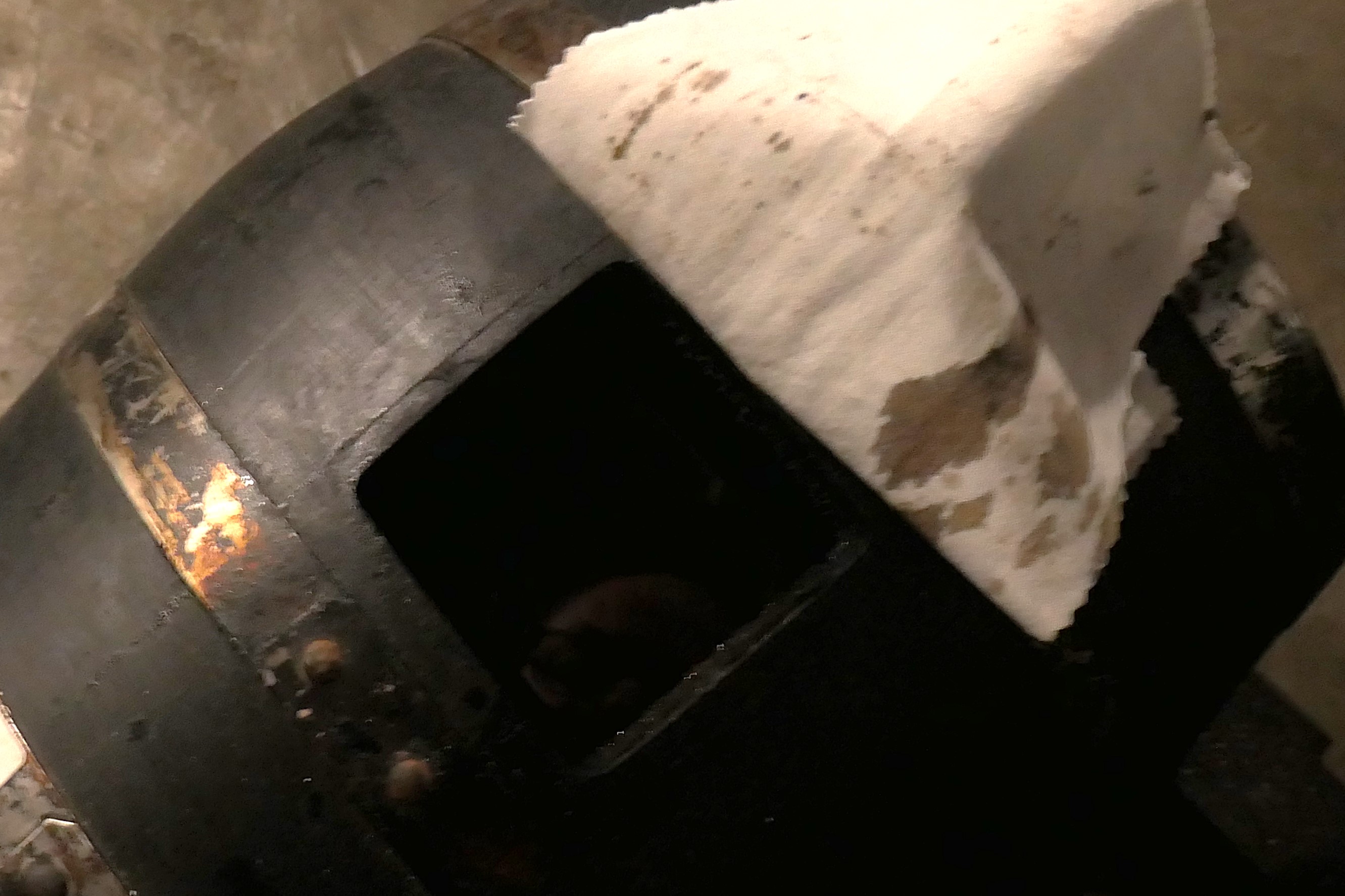
Once cooked, the grape must is poured into the set of barrels and ageing begins. Just like wine, the barrels lose “water” through evaporation. So, every year, to refill the smallest barrel, some grape must is removed from the next smallest barrel and poured into the smaller one, and so on through the set. The largest barrel then gets “new” must. The process is repeated each year, until twelve years later one has a small barrel of fresh balsamic vinegar. Don’t use it all, or you have to start over! Keep going for 25 years and you will have the really good stuff, a thicker concoction than we Americans hardly ever get, that is perfectly balanced between sweet and vinegary. Think small bottle, more expensive, only one ingredient and at least 12 years old.
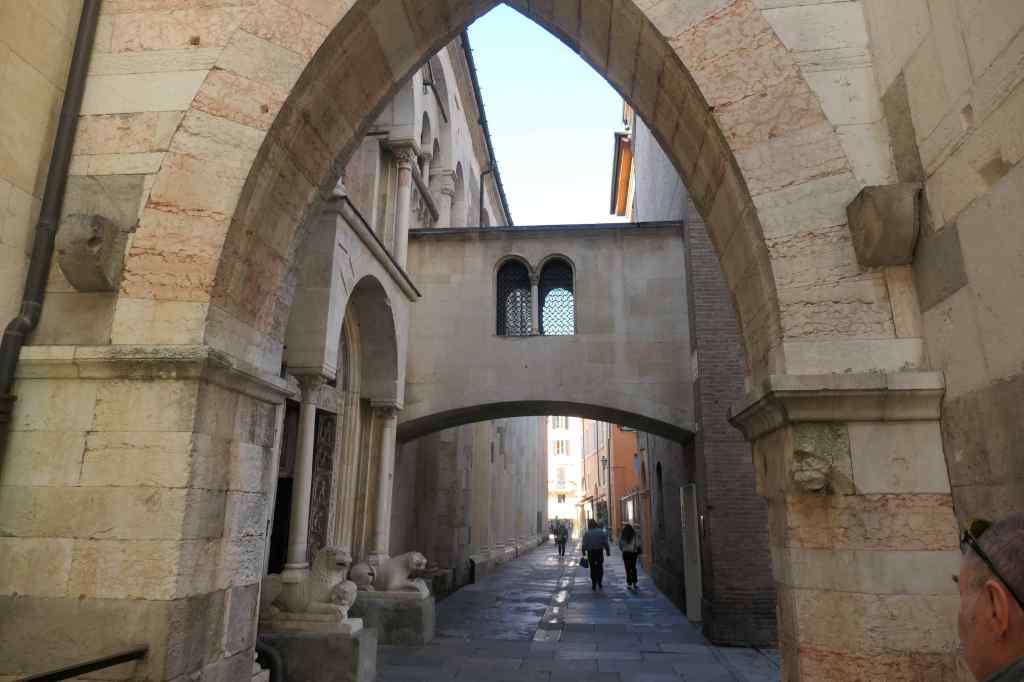
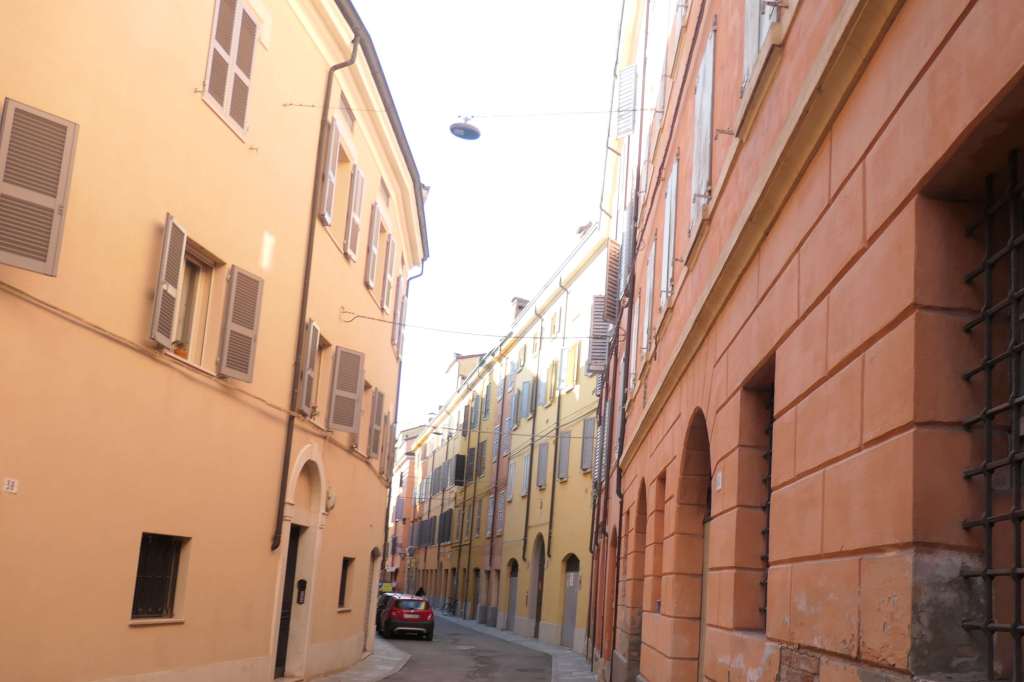
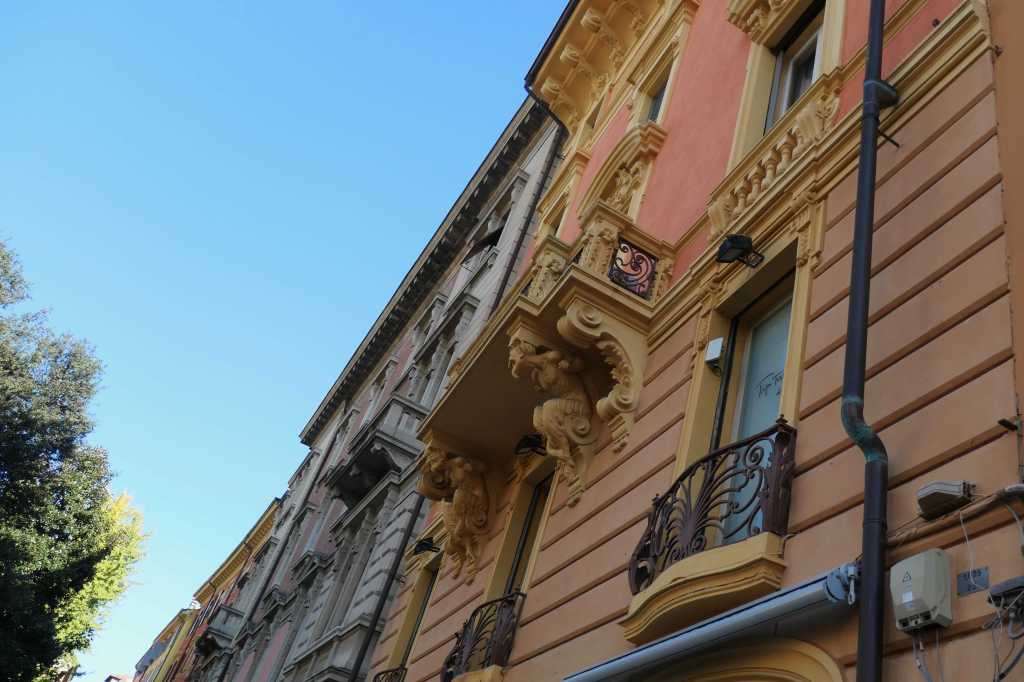
After all that focus on food, boy howdy, we needed a walk, which we took in the form of exploring the historic center. Into downtown Modena we went!
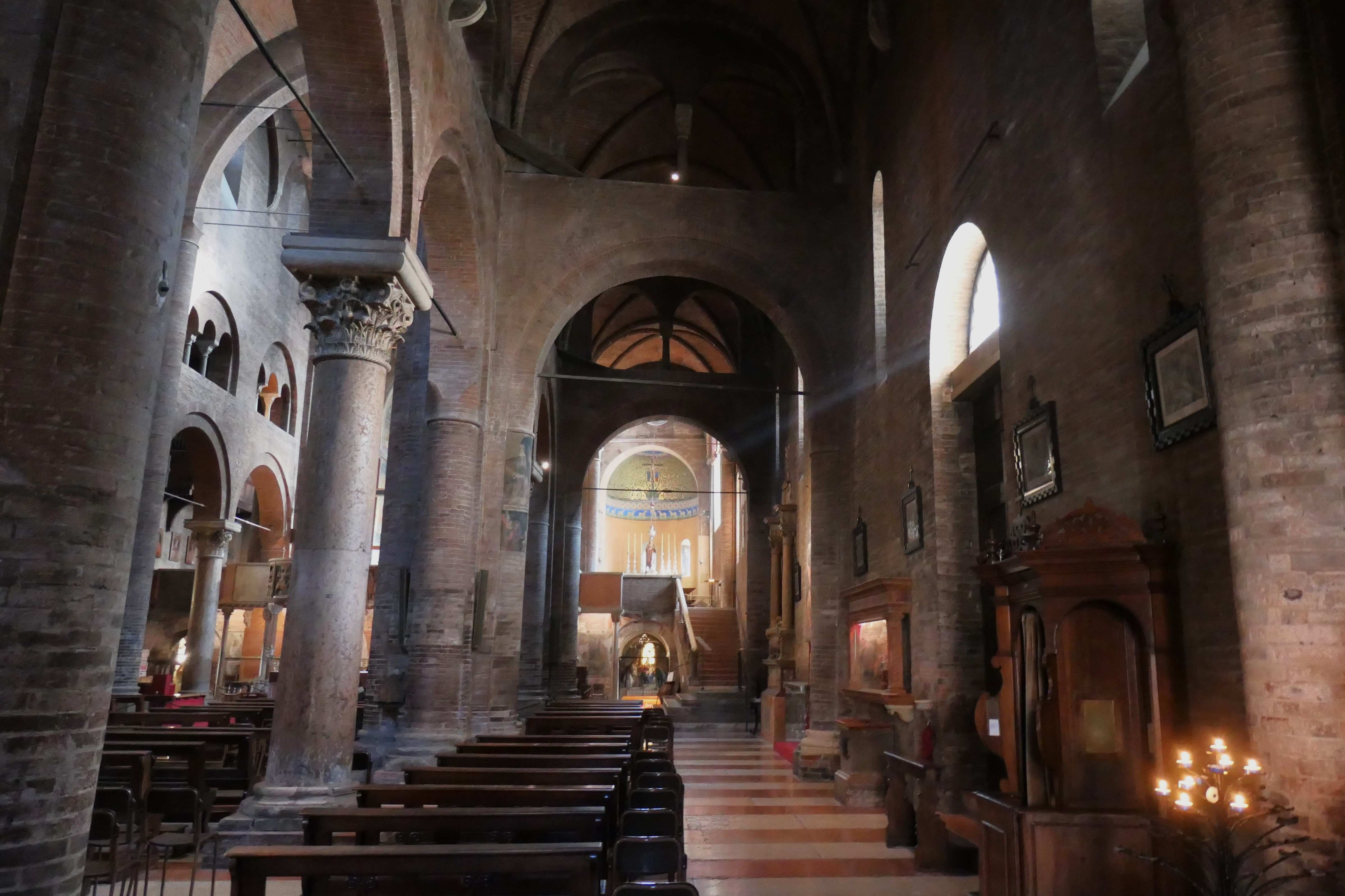
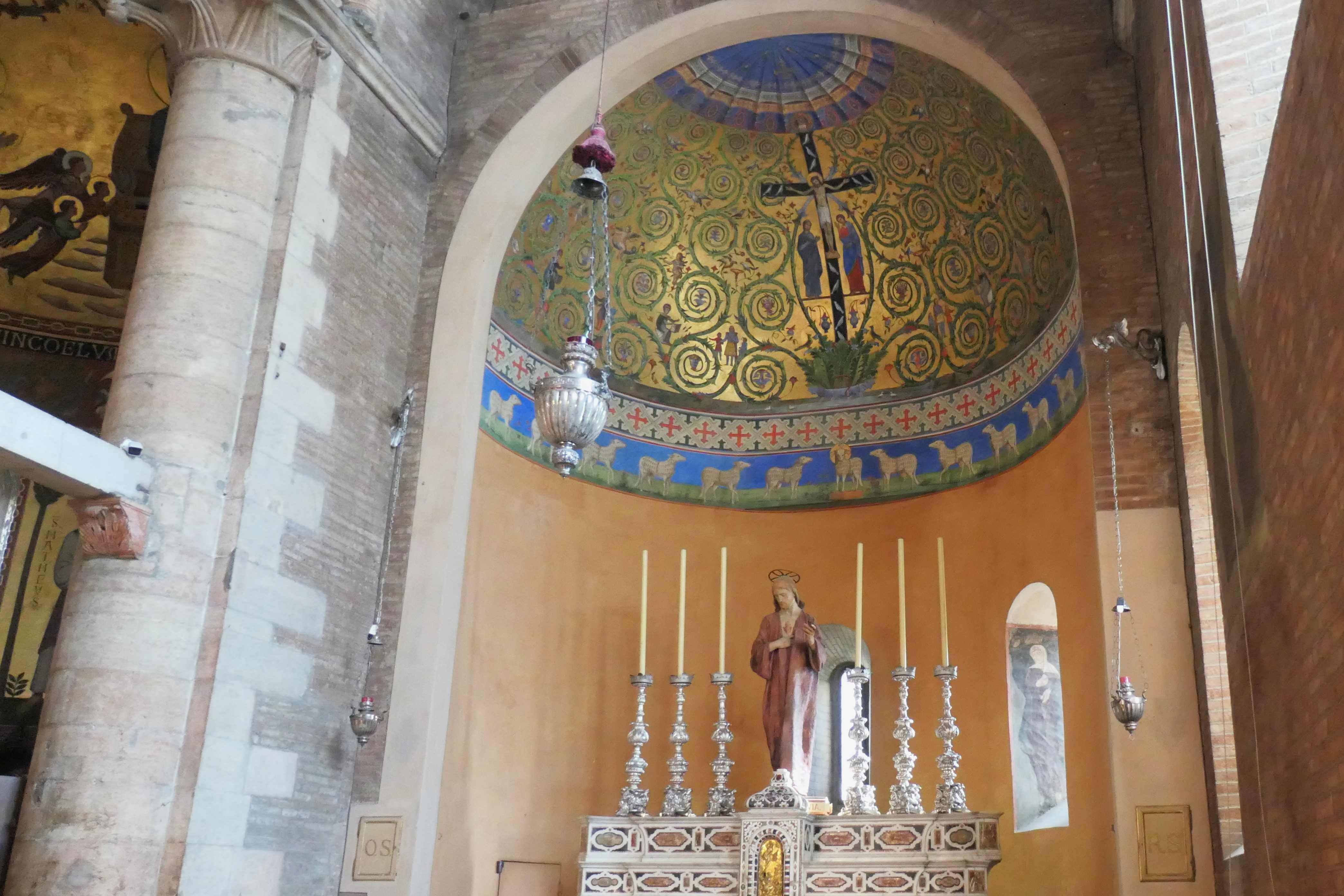
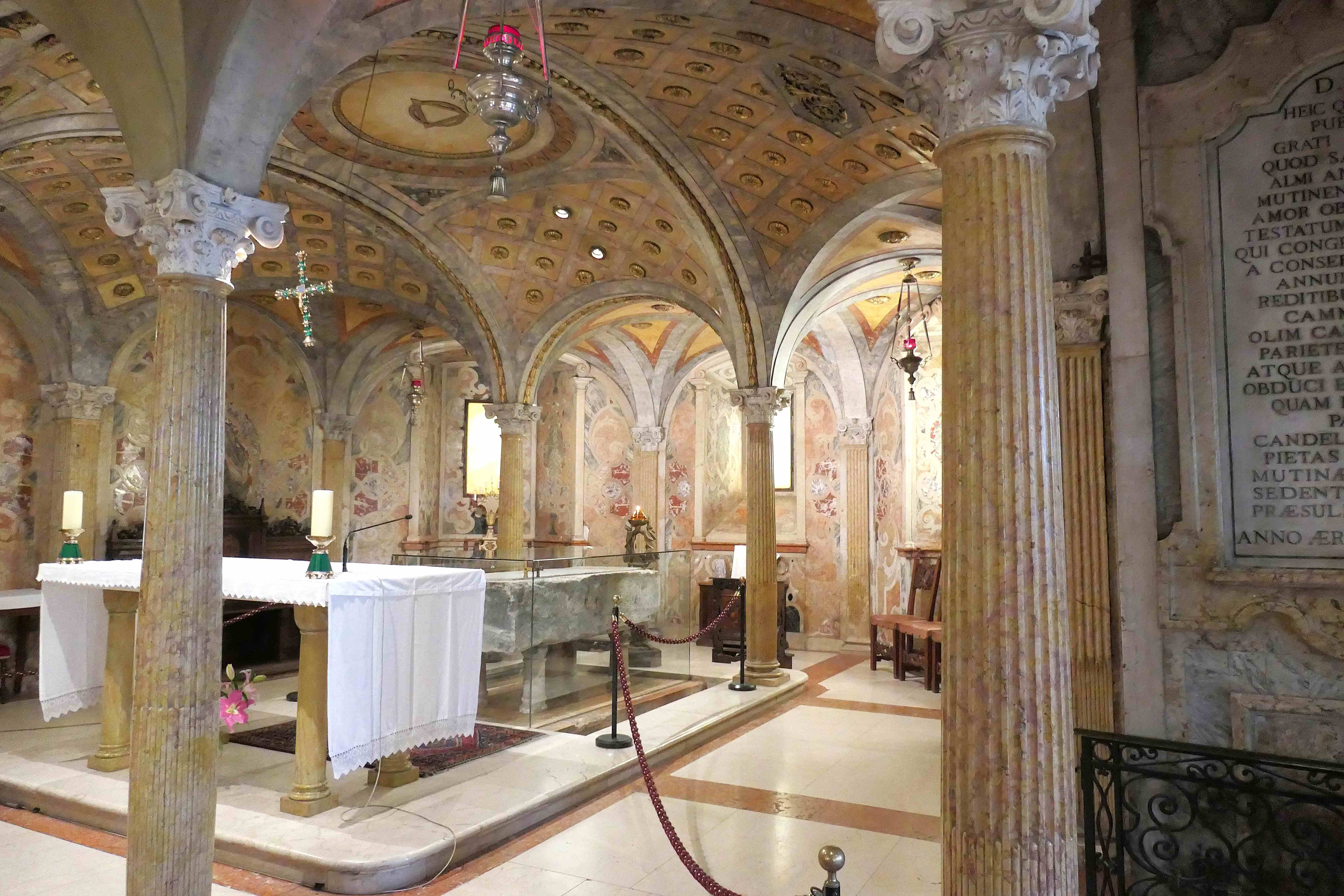
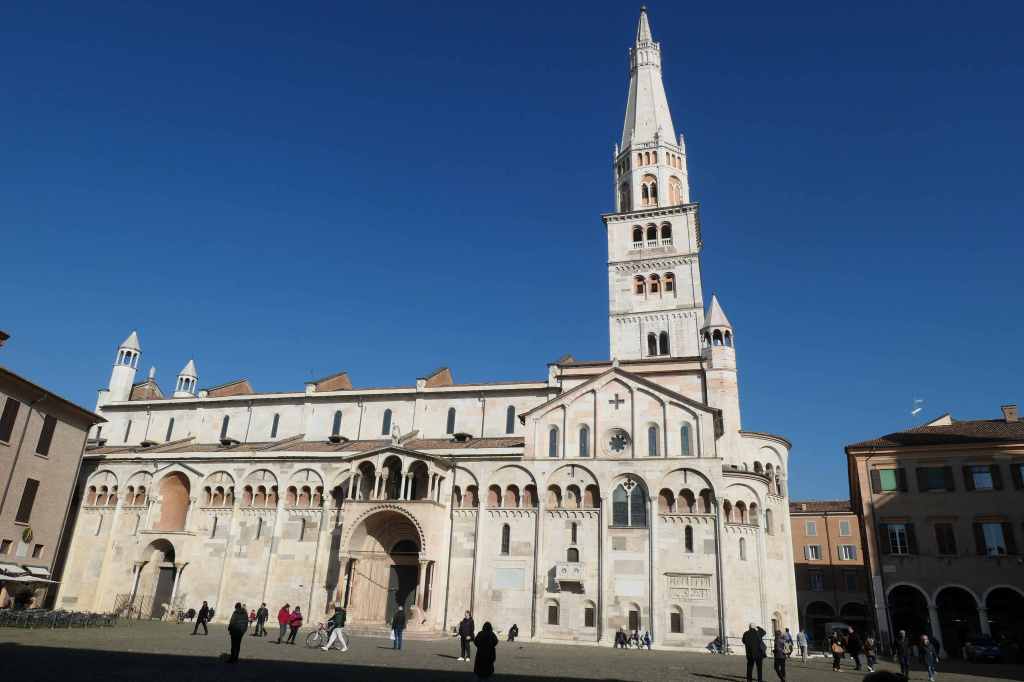
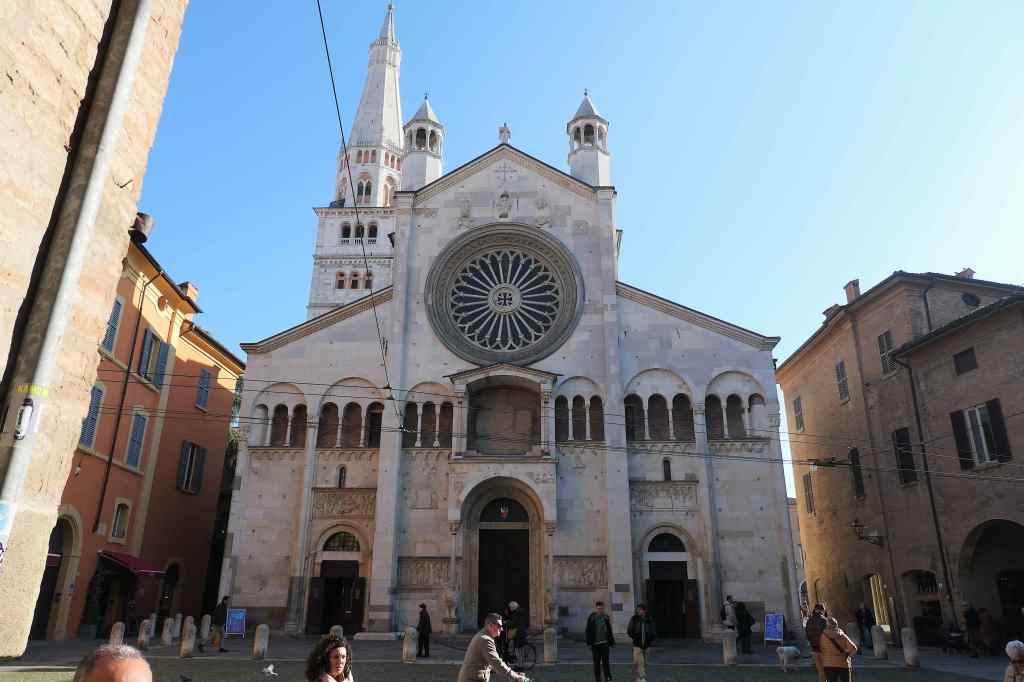
After a few wrong turns, we made it to the square and the Cathedral of Santa Maria Assunta in Cielo and San Geminiano. (See, “Duomo di Modena” is a whole lot easier to say.)
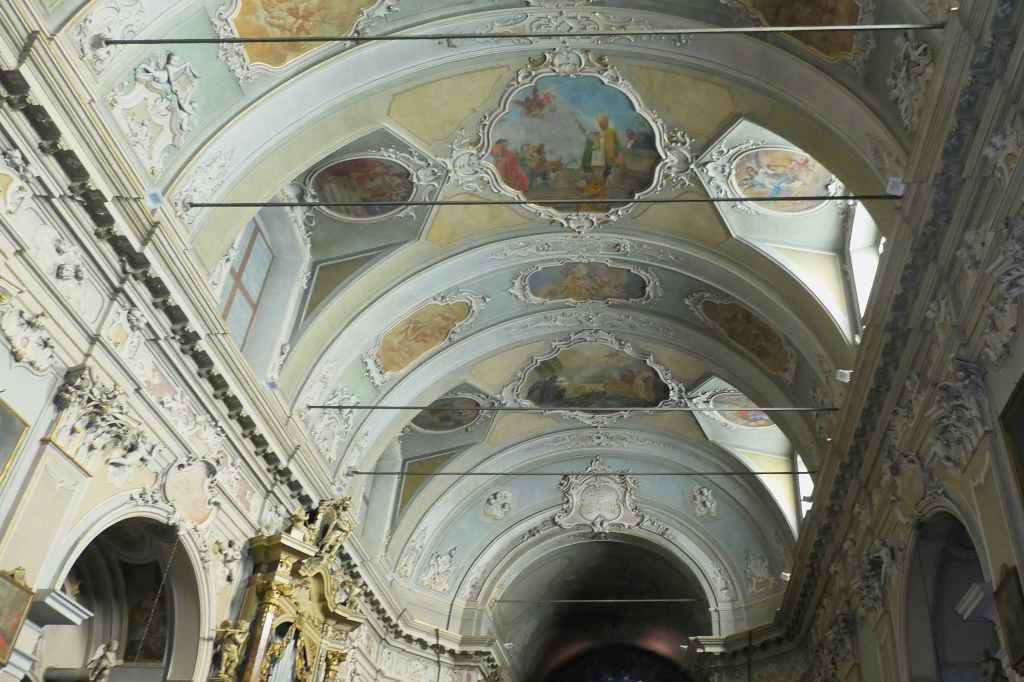
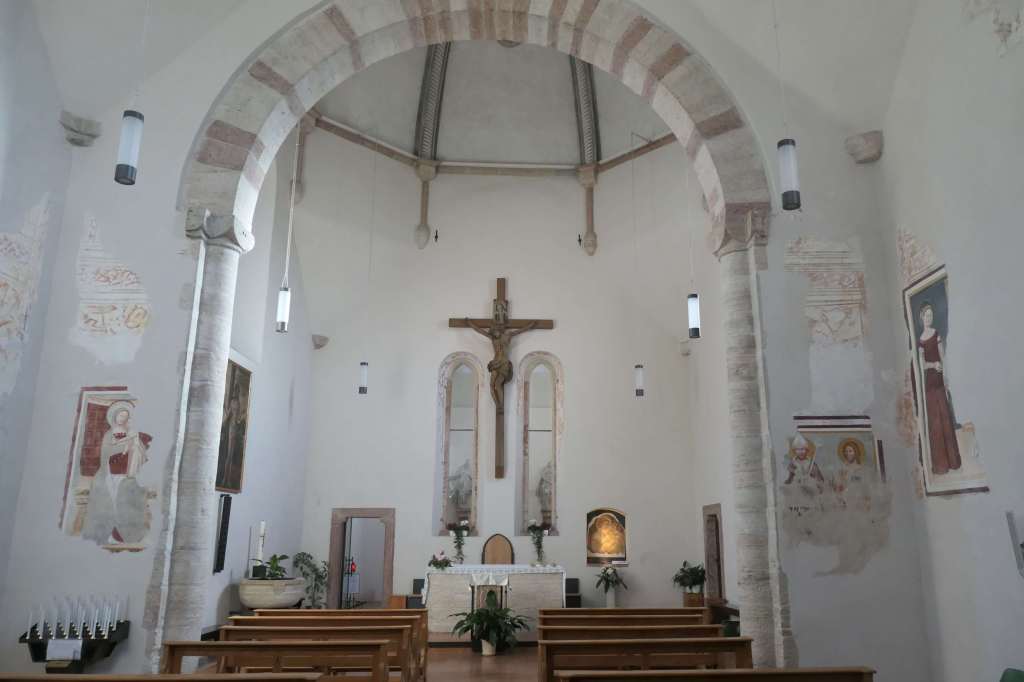
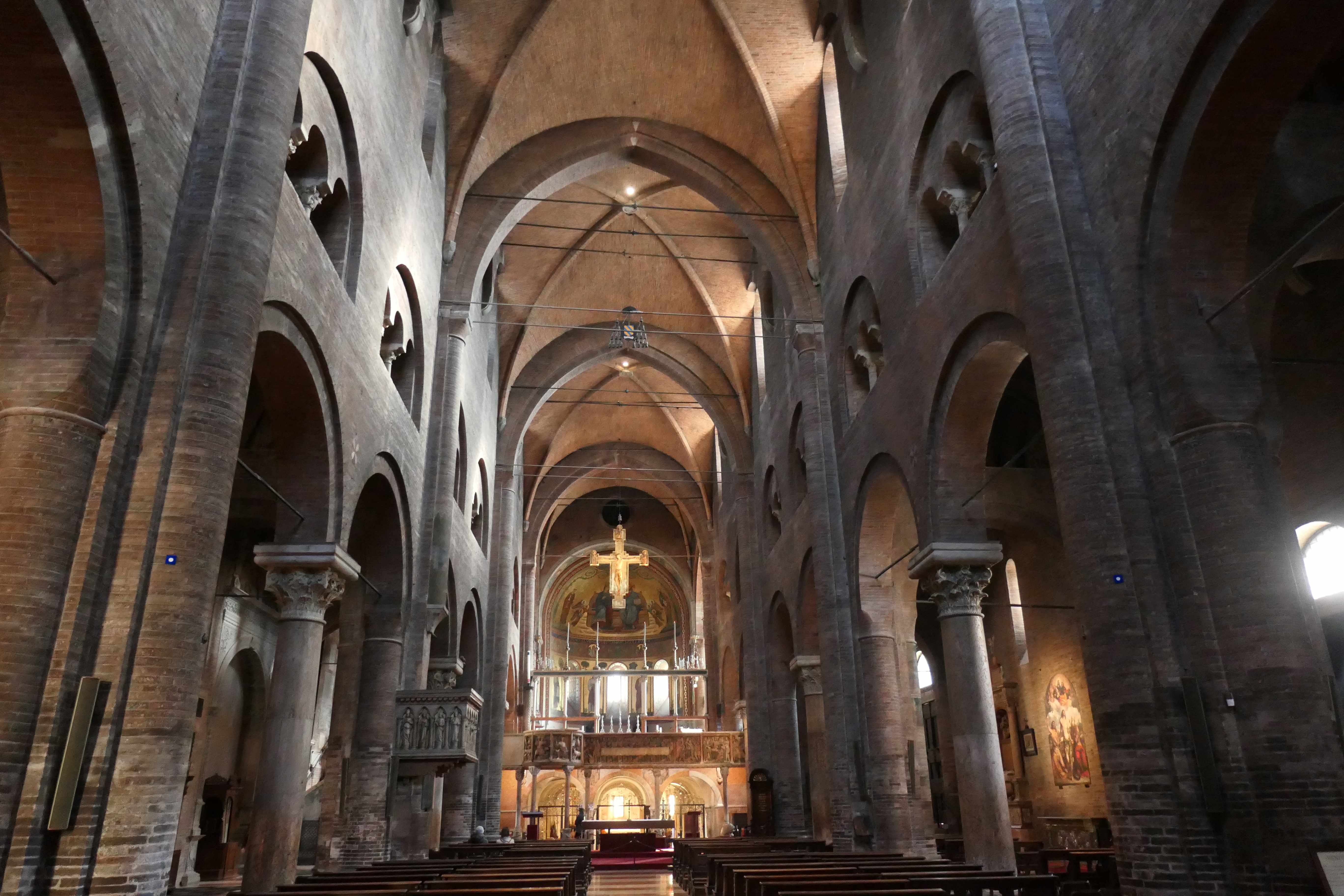
As with so many of the churches and cathedrals, the interior was quite ornate and full of religious artifacts.

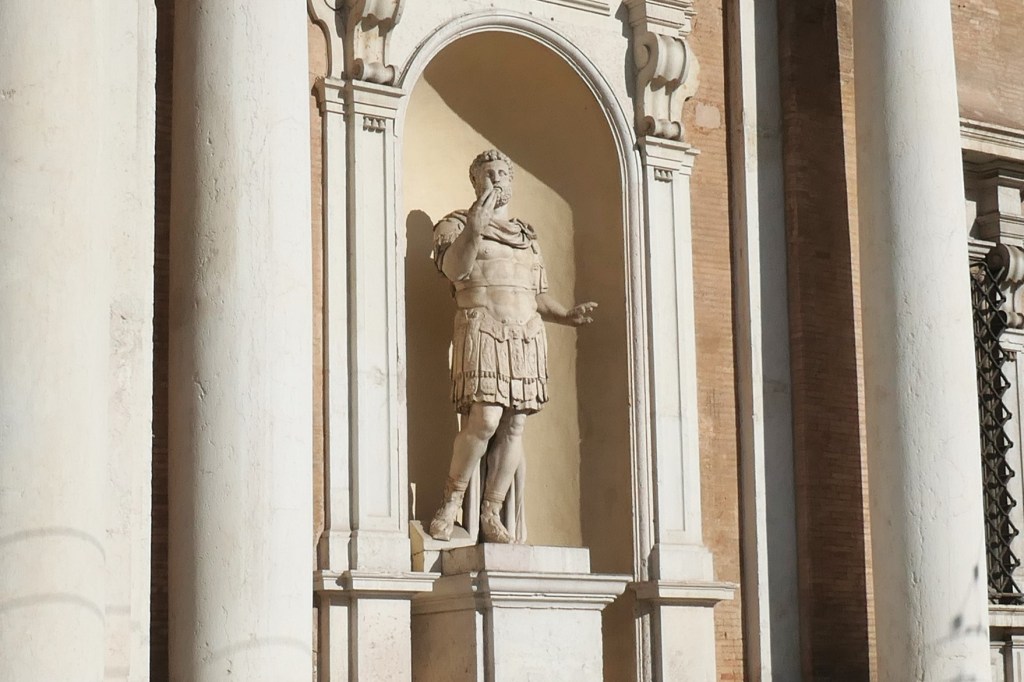
When it was time for lunch, we grabbed a bite at a sidewalk cafe, where, due to the language barrier, we each ended up with a plate full of cipollini onions for dessert! The quaint, onion-serving cafe was located near the Military Academy of Modena, a military university founded in 1678 and now housed in the Ducal Palace. There are heroic statues along the roofline of the large palace and touching memorials to those killed in past wars in the interior foyer.


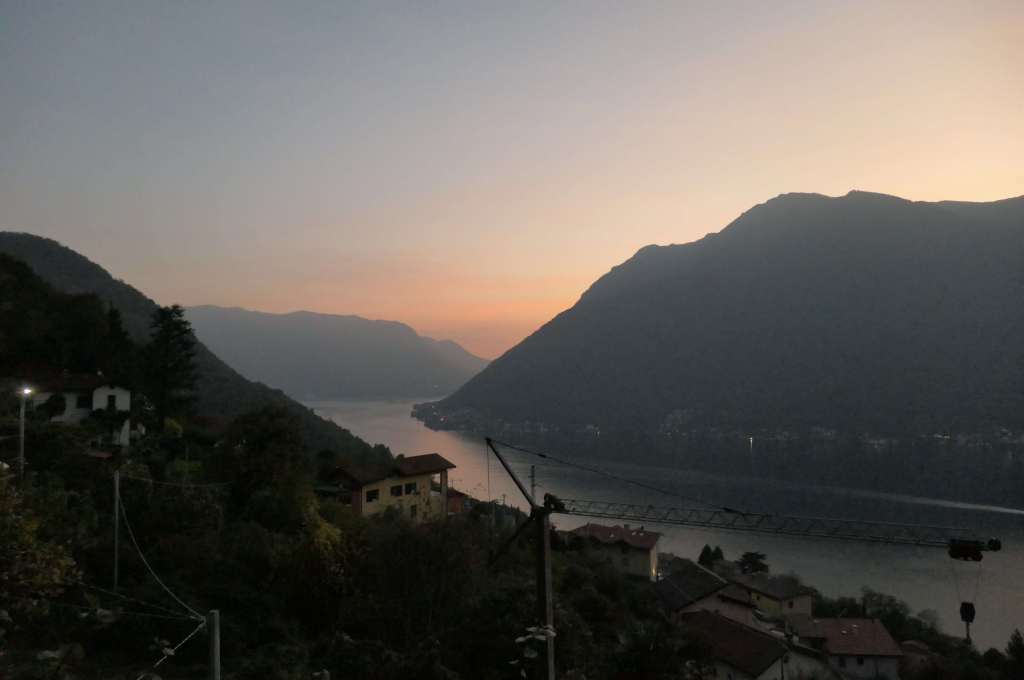
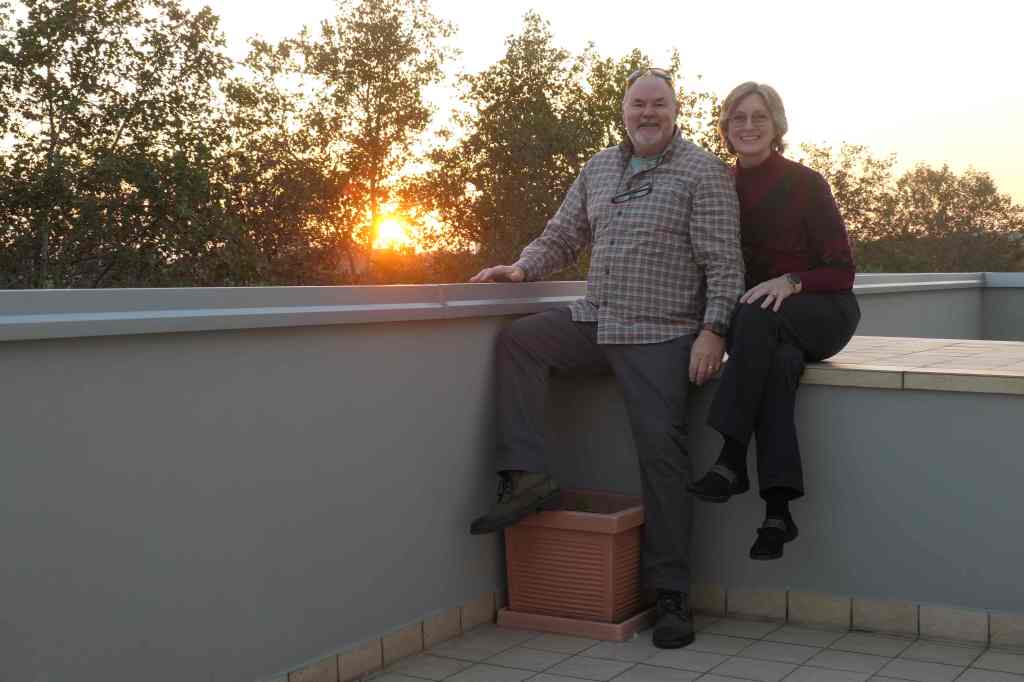
After a week experiencing the fast cars and slow food, we took in the sunset on November 11 and packed our things. Next stop, Tuscany!
The Italian Alps

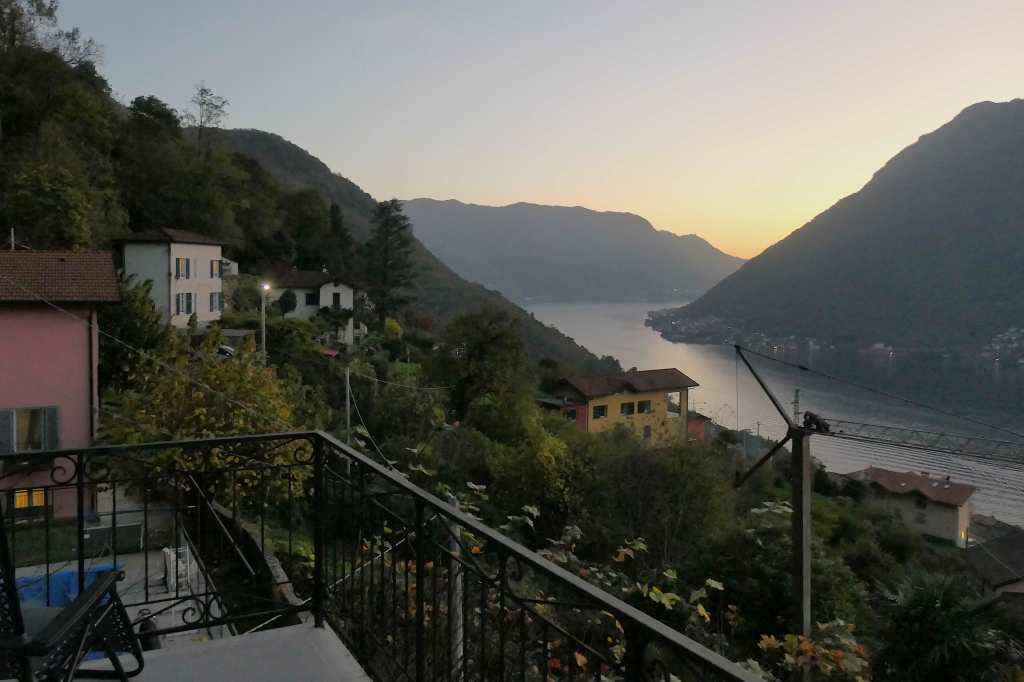
On November 3, after one more pretty sunset over Lake Como, we packed the car for an a.m. departure from Nesso.

Not the Swiss Alps, the Dolomites, otherwise known as the Italian Alps. We’d planned a 175-mile drive north and then east over to Trento to skirt along the lower edge of the Alps. Too close to winter to venture way up there – we prefer to see the snow only from a distance.

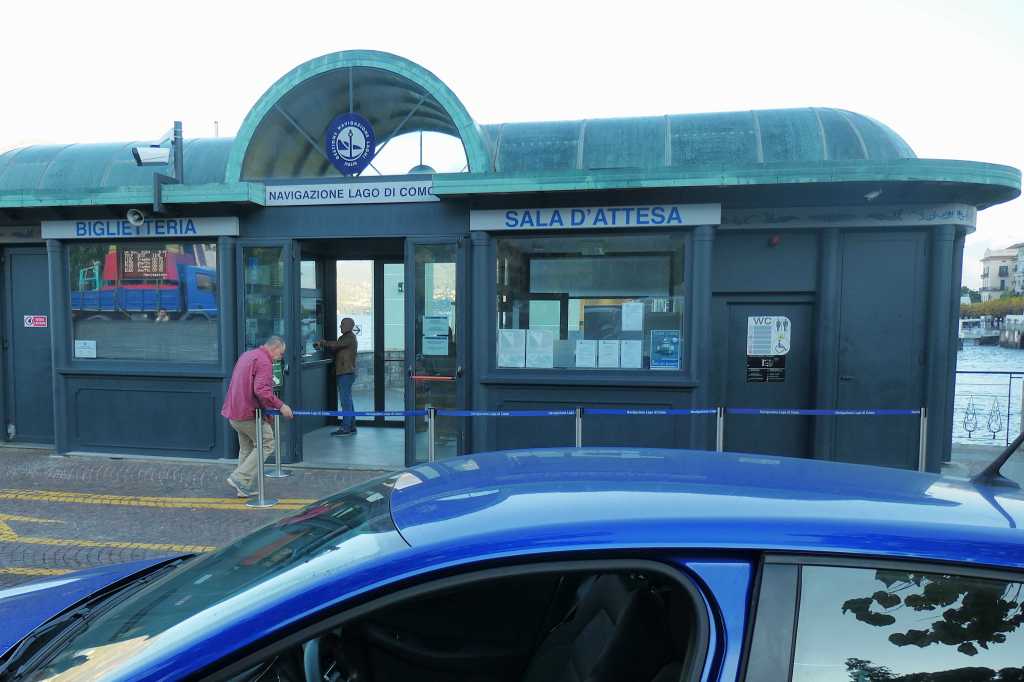
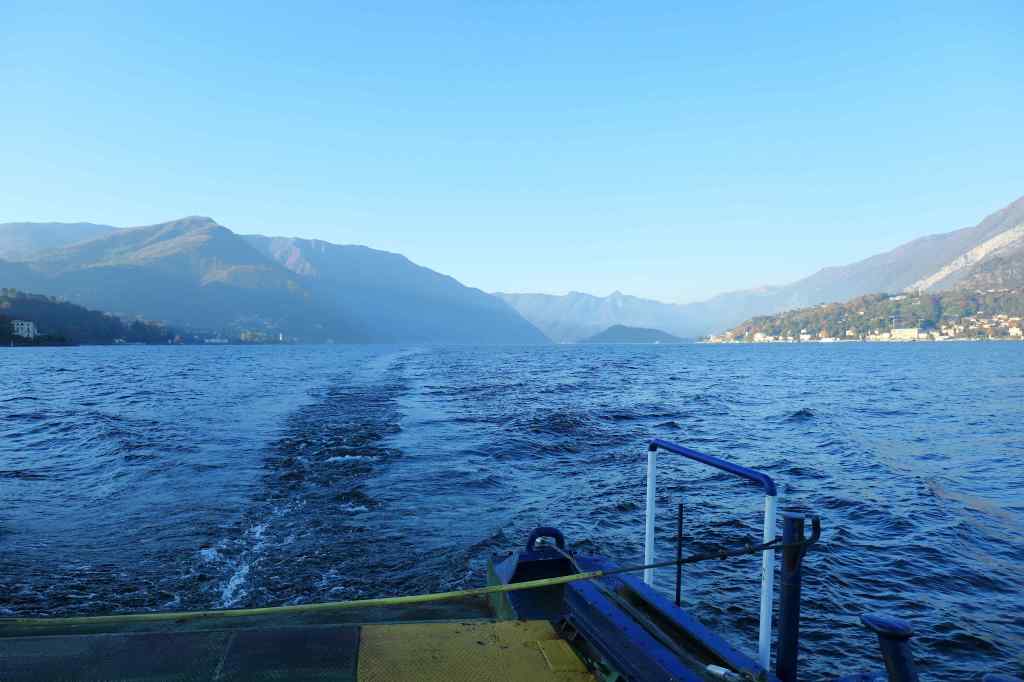
But first, a boat ride on Lake Como!


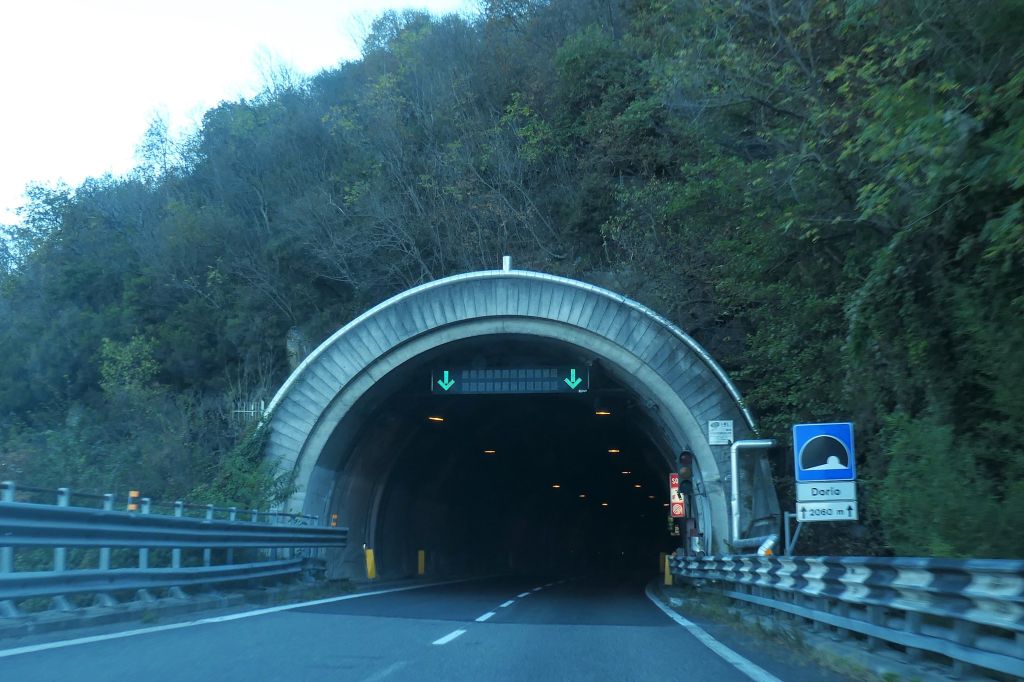
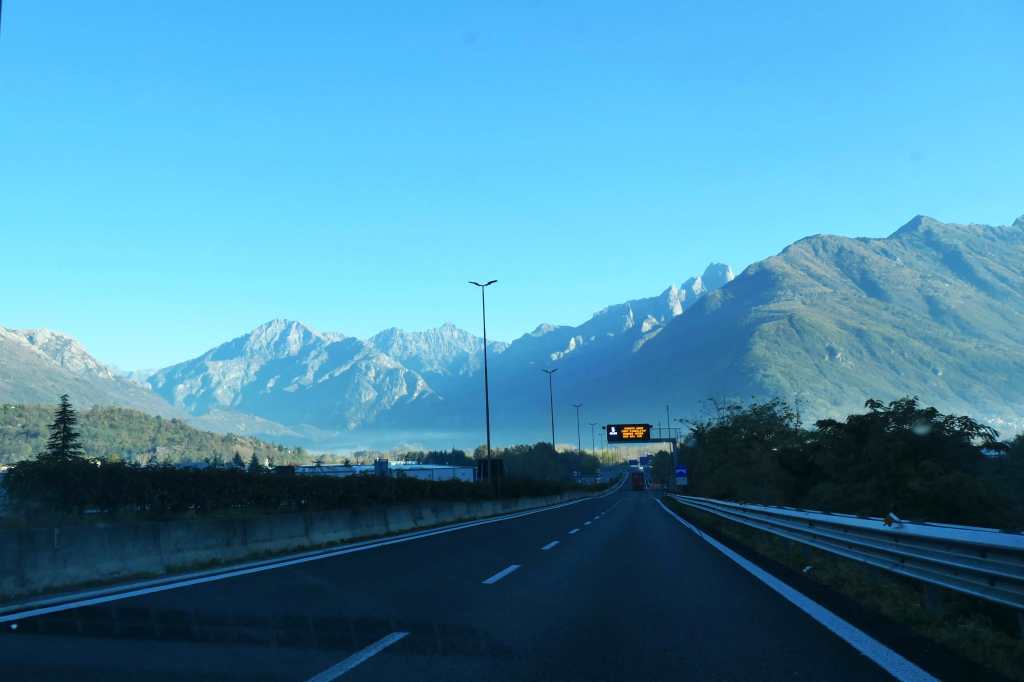
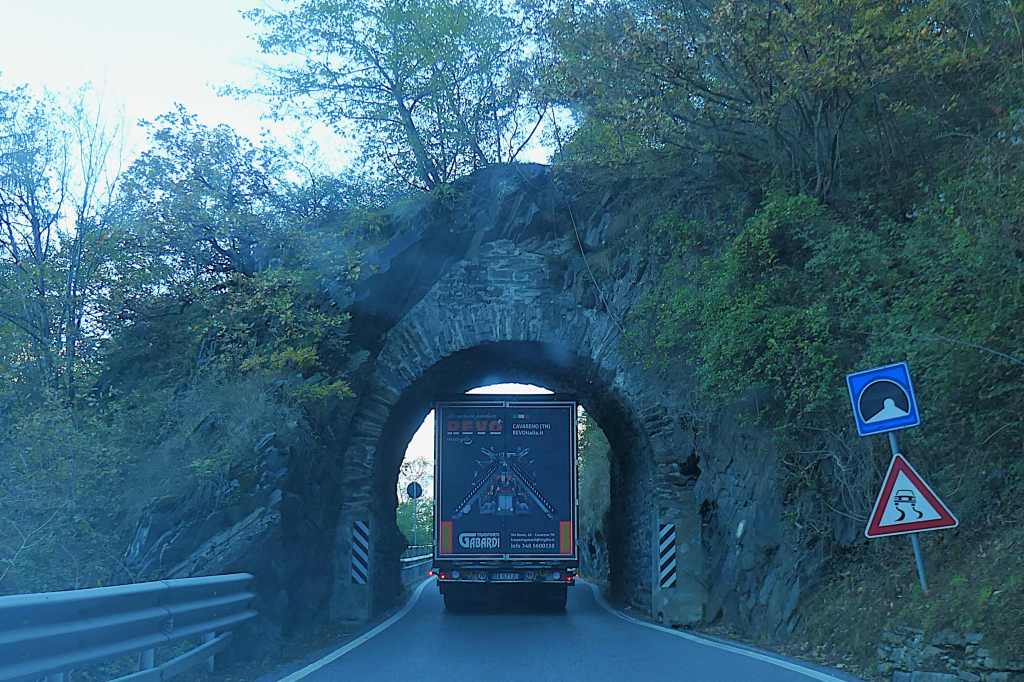
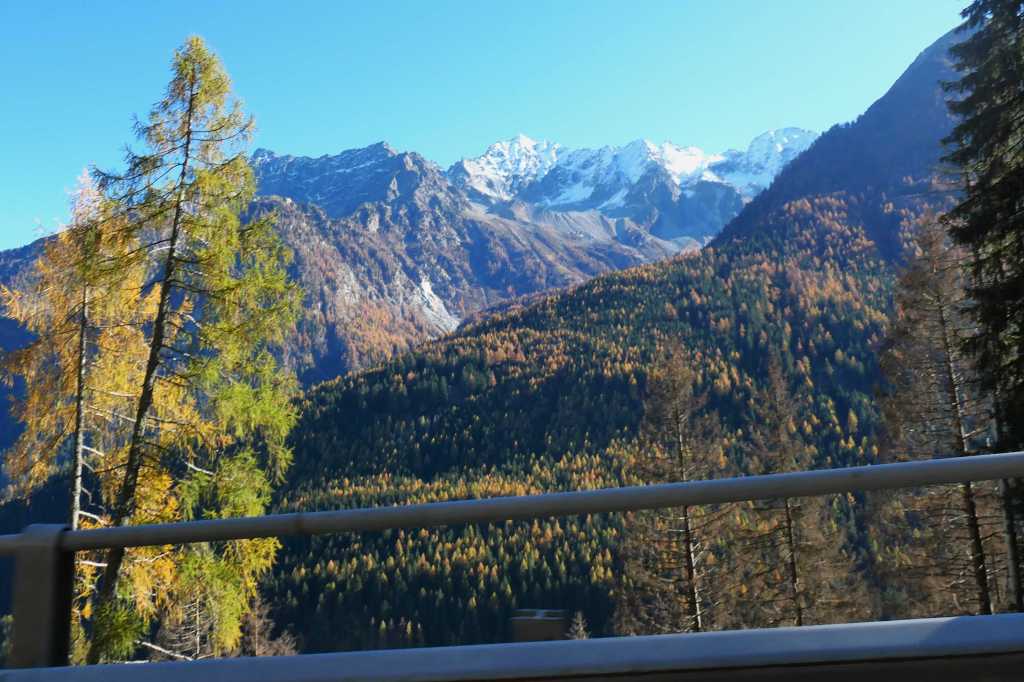
From the shoreline at Varenna, we wound our way up the mountain via switchbacks and through the mountains in numerous l-o-n-g tunnels.

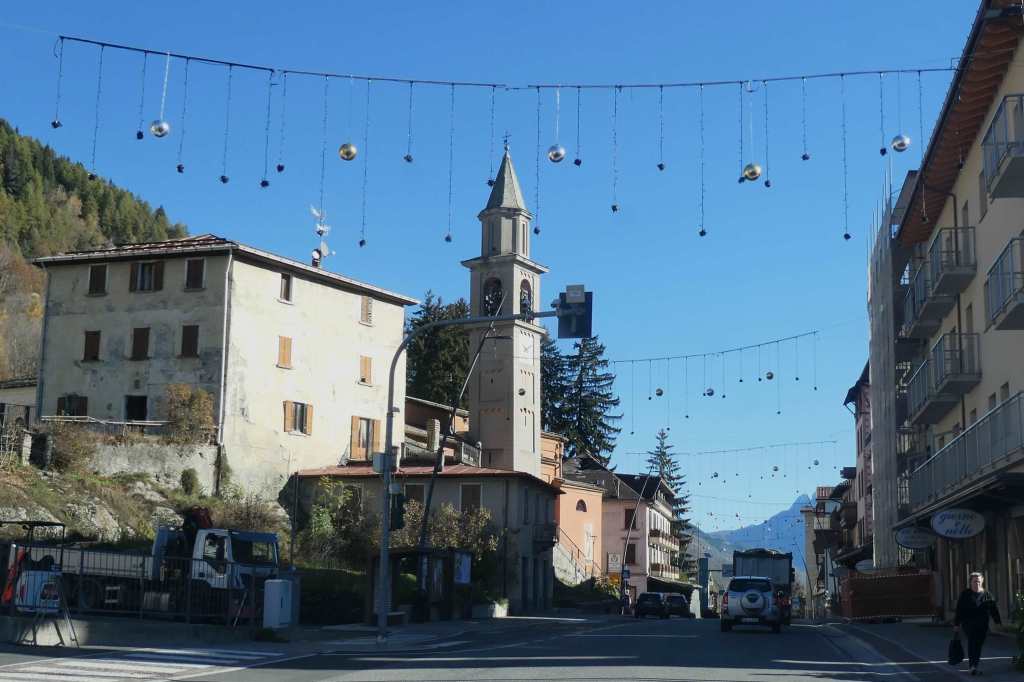
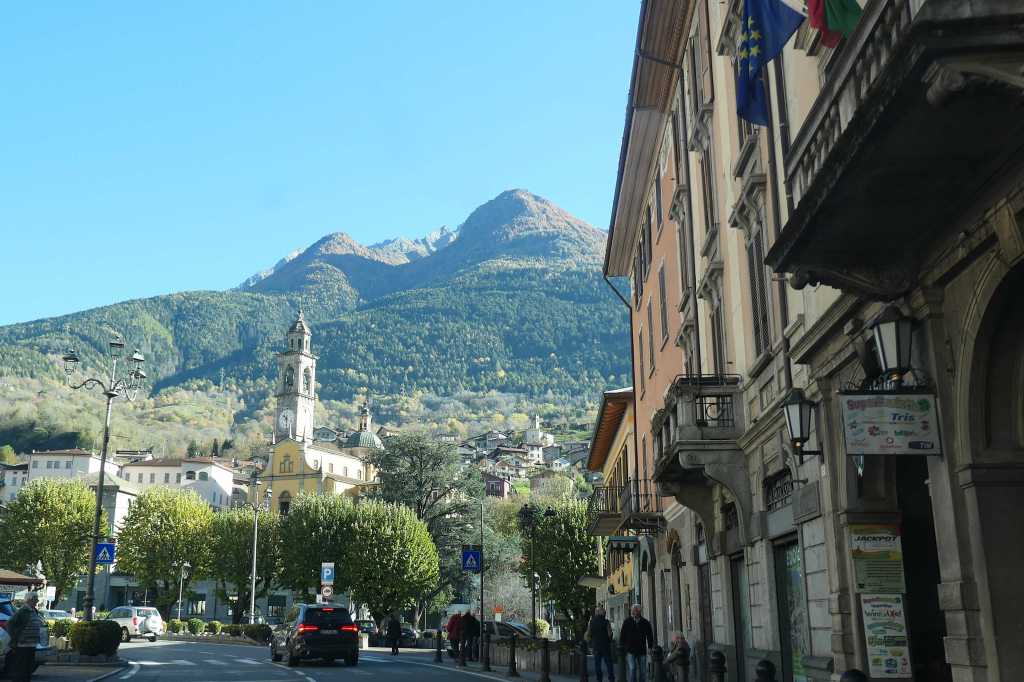
Along the way, we passed through towns of various sizes.


While stopped for an early lunch in the town of Vezza d’Oglio, we researched (i.e. googled) the unusual name. Legend has it that after a flood destroyed the ancient village of Rosolina, a large barrel of olive oil was found among the debris, giving rise to the name for the new town to be built on the ruins. The dialectal translation of Éza is “barrel,” thus basically “Barrel of Oil.” Tada!

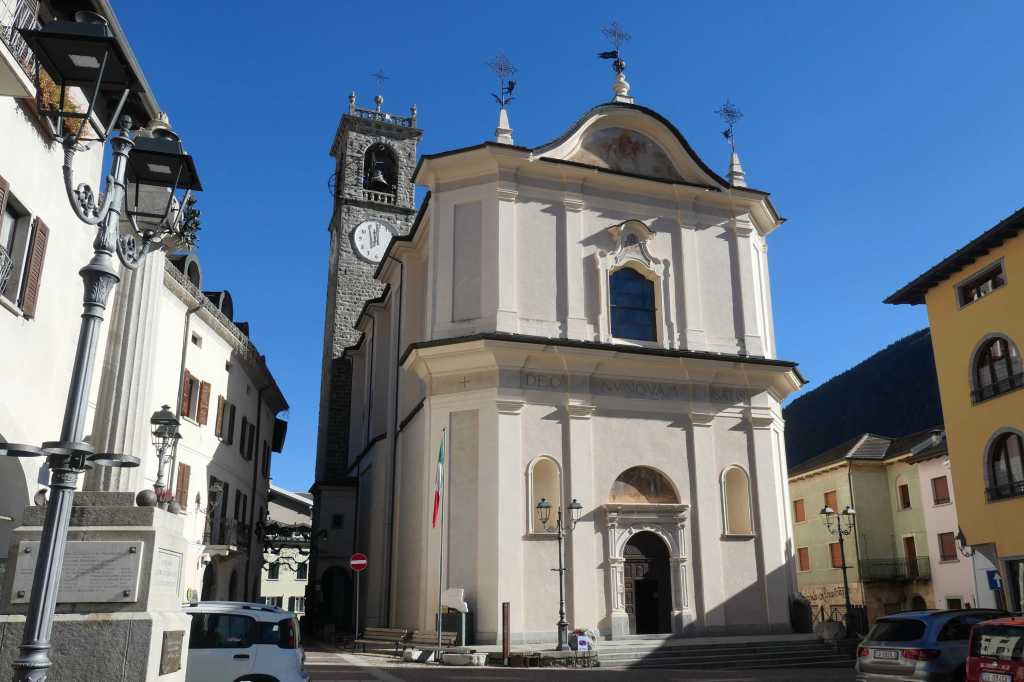
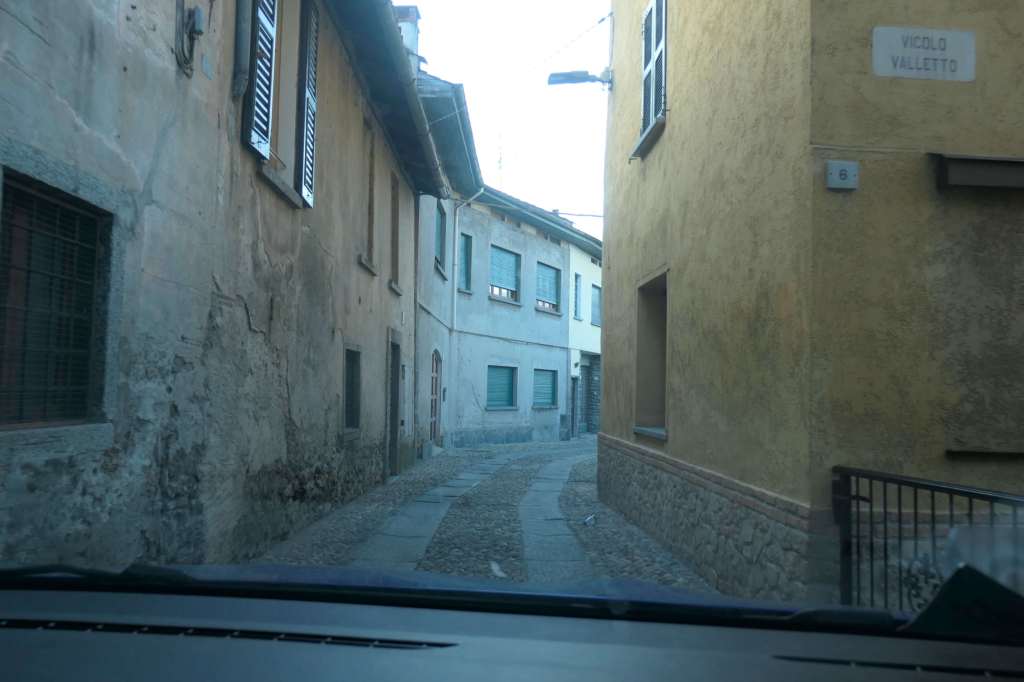
The other tidbit we picked up led to a small adventure to find the nearby Parish Church of San Martino, one of many of the same name in Italy, this one dating back to 1100. Google claimed we could drive up to the small church. Unfortunately, you cannot always trust Google’s interpretation of “roads” to mean a car will actually fit. After reversing back down out of a particularly tight squeeze, we parked and set out on foot. When we tried to ask a few residents, the language barrier got in the way, so we were on our own.

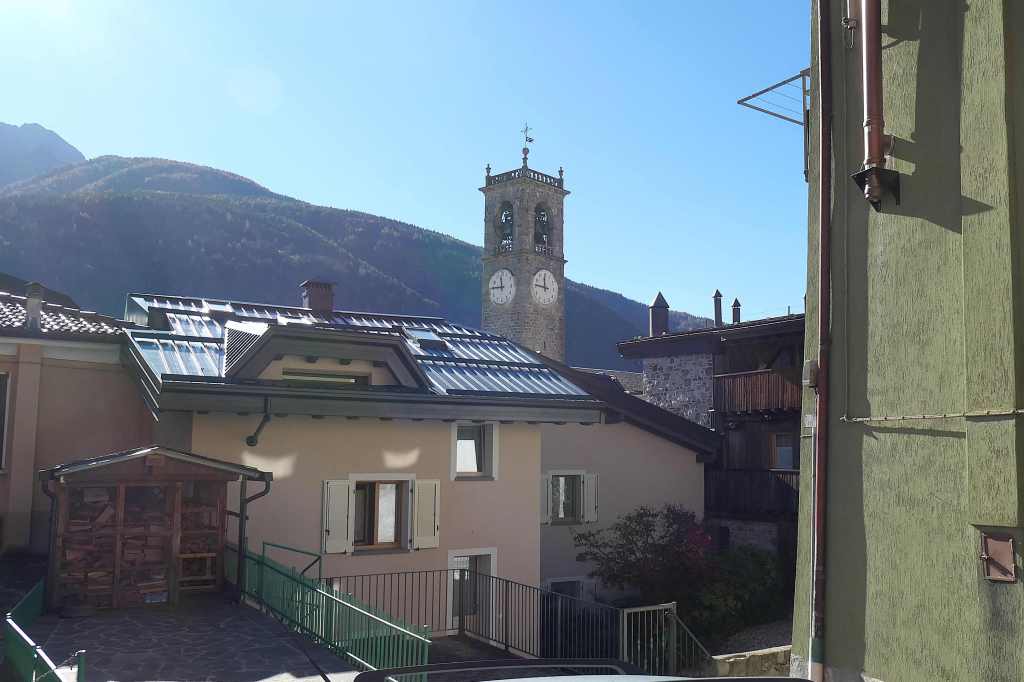
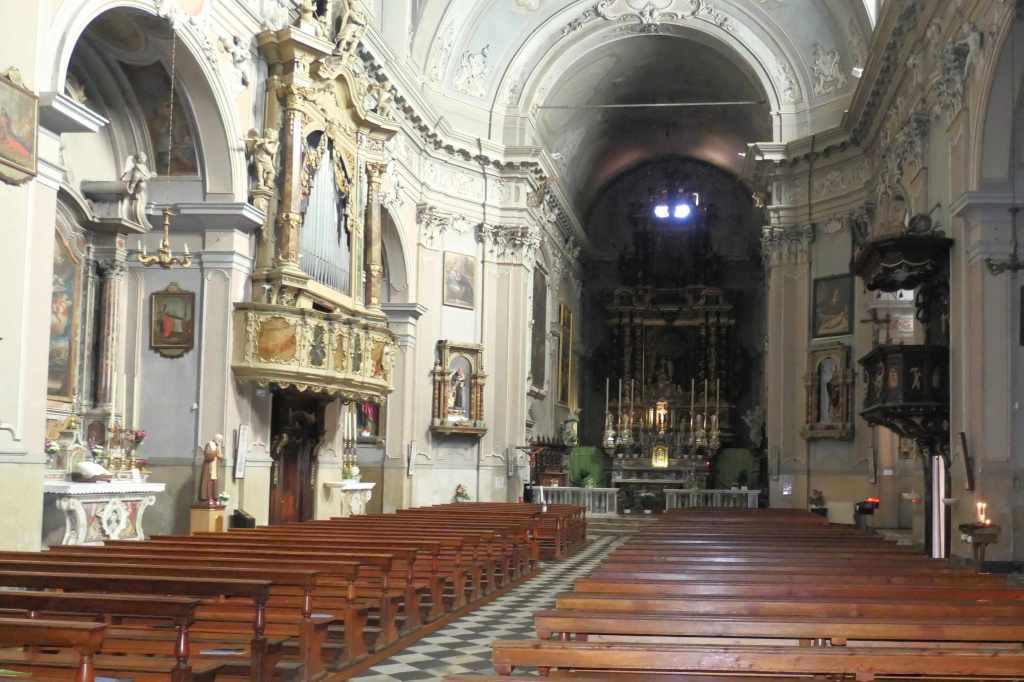
Once we could aim for the bell tower, we easily found the church. The inside is surprisingly ornate, from an entirely different time period than the tower, which, sadly, is the only thing remaining of the original church that was destroyed by fire in 1700, along with a large part of the town.


Post lunchtime adventure over, it was time to return to where we’d bailed on the car. Hmmm… Honey, just where was that again?? Oops.

In addition to not trusting Google Maps for what’s a viable road, we’ve now learned, A) the Italian word for church (since apparently neither making the sign of the cross nor folding hands in prayer are helpful gestures in the game of language charades); and B) to drop a pin on the map on one of the phones before wandering away from the car (since cars don’t have handy, easy-to-spot bell towers). 🙂

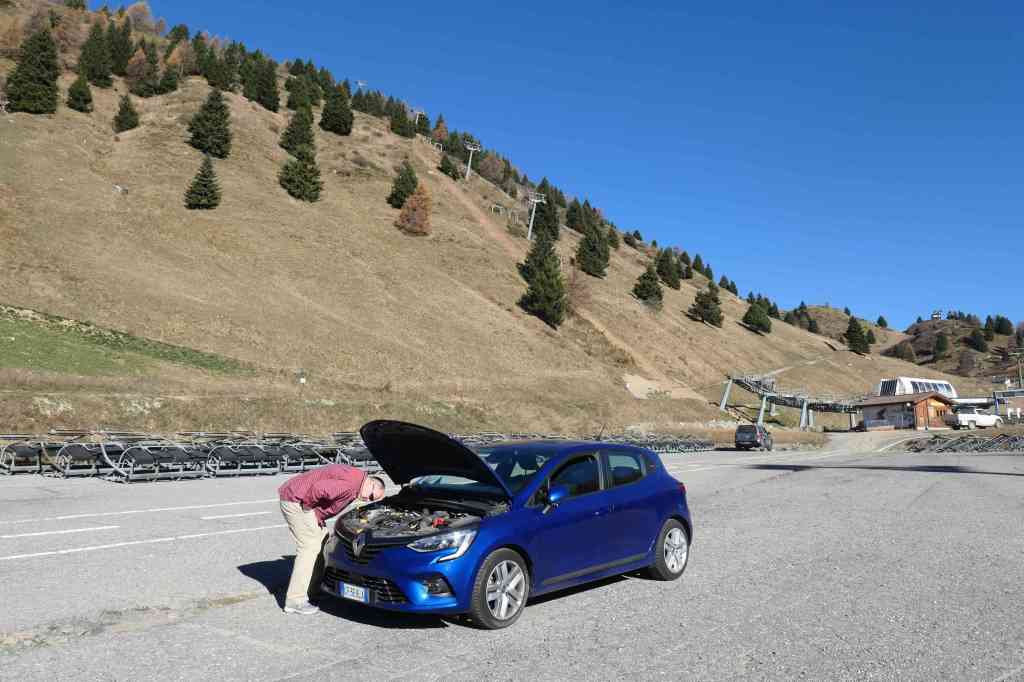
If cruising is aptly referred to as “working on boats in exotic locations,” just what do you call it when the alarms go off on the foreign rental car and the main thing you can make out on the panel is WARNING OF IMMINENT ENGINE FAILURE. Huh. Not good.

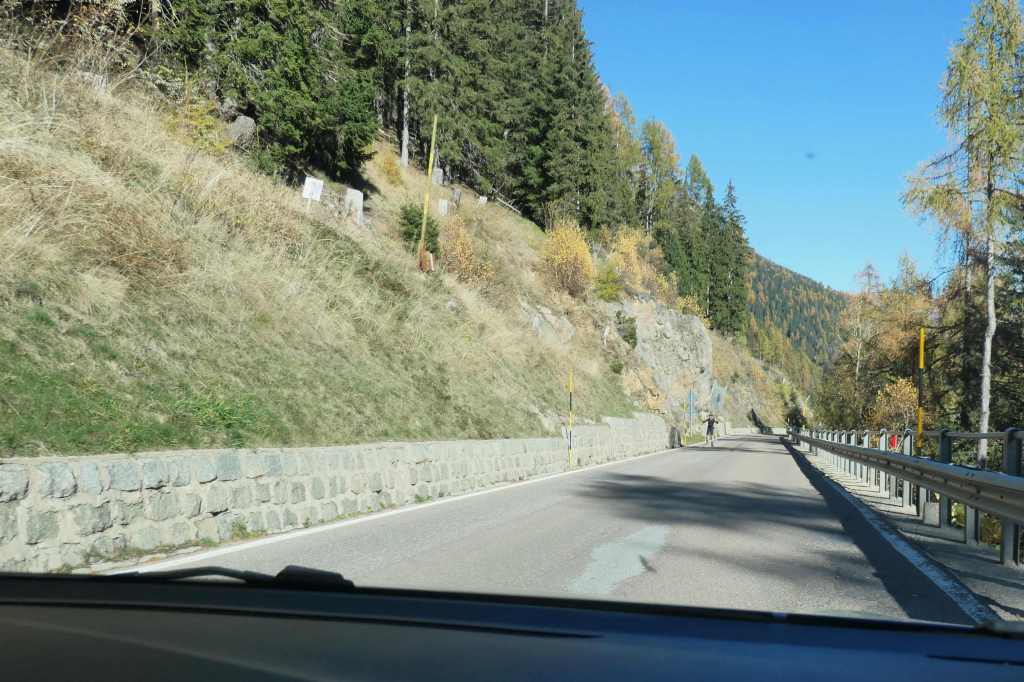
Well, as we were more than five miles from the nearest town, we considered ourselves lucky to slowly make it to a place to pull off the narrow, curved mountain road, into the large parking lot of a ski lift. Bonus, perhaps we could ask the workmen over there for assistance in reading the instrument panel! No go on the assistance part, as both of them soon drove off right past us. Heading to lunch perhaps? (Insert enthusiastic raspberry here.)

No worries, we had our resident mechanic, Todd. Radiators being the same in any language, we waited for things to cool down and fortunately located the blown radiator cap in the engine compartment! Hmm, now we needed water, and we just happened to have most of a 1.5-liter bottle Susie had brought with us. Into the radiator, it went (yeah!), and we were back on the twisty road with fingers crossed and those praying hands folded, hoping to make it off the mountain and to Trento before dark. (Susie, you can stop hyperventilating now.)


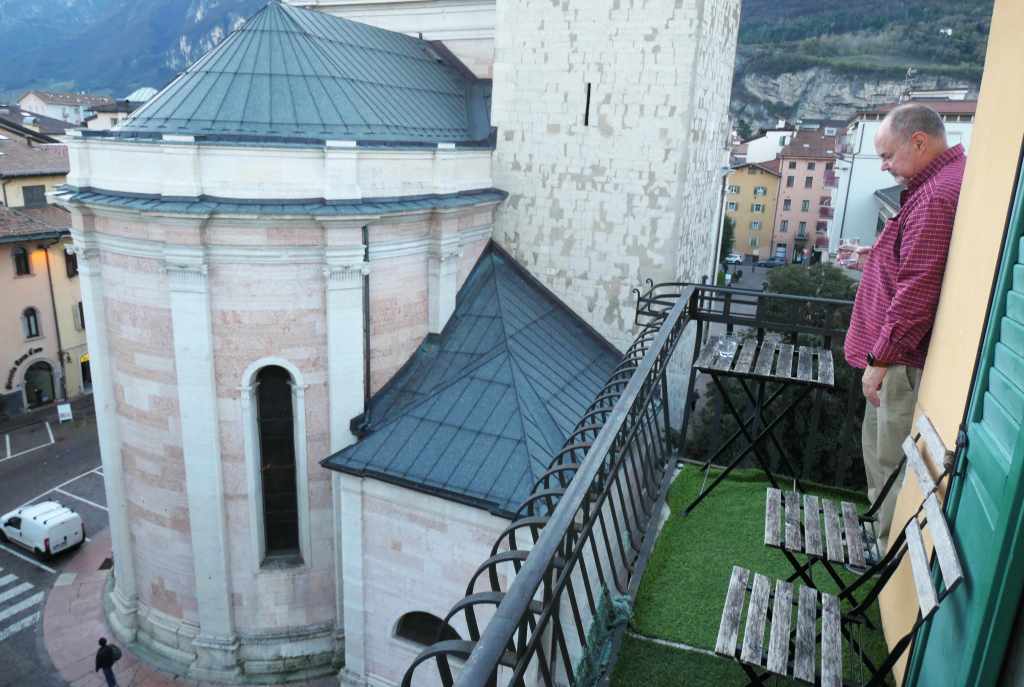
As the sun was setting, we reached Trento, left the car resting in a small parking garage outside the town center, and set out on foot to find our small B&B, supposedly very near the historic Church of Santa Maria Maggiore. We found the church easily enough – those bell towers are so helpful – and after a few wrong turns, located our lodging.


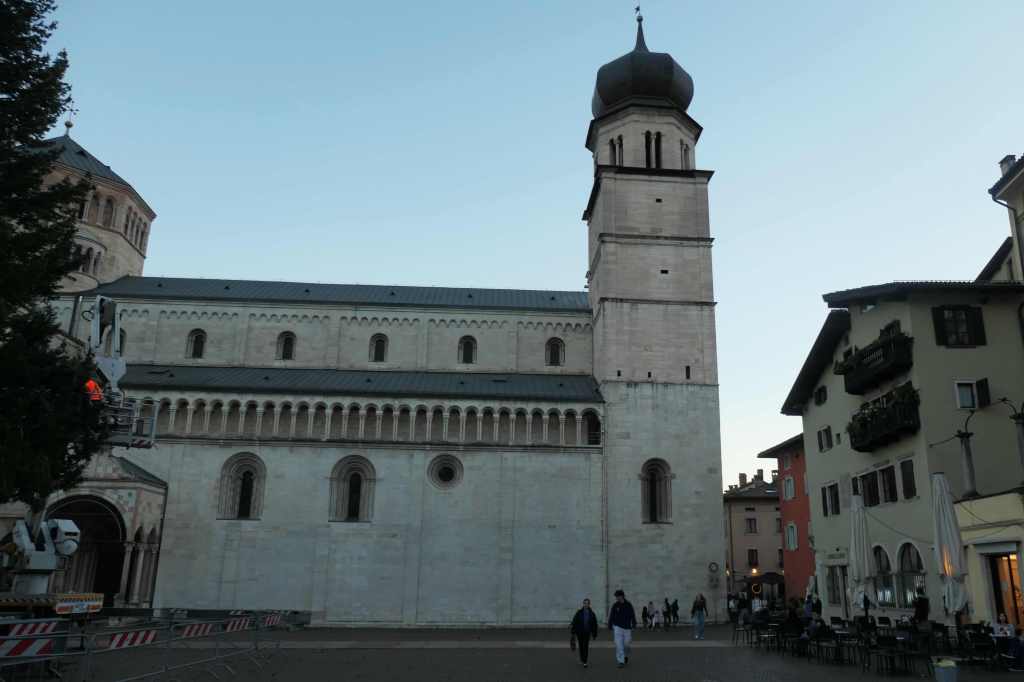
Since we would only be in Trento one night, we dropped the luggage, downed the water, and dashed back out, utilizing the remaining daylight to find the duomo of Trento / the Cathedral of San Vigilio.


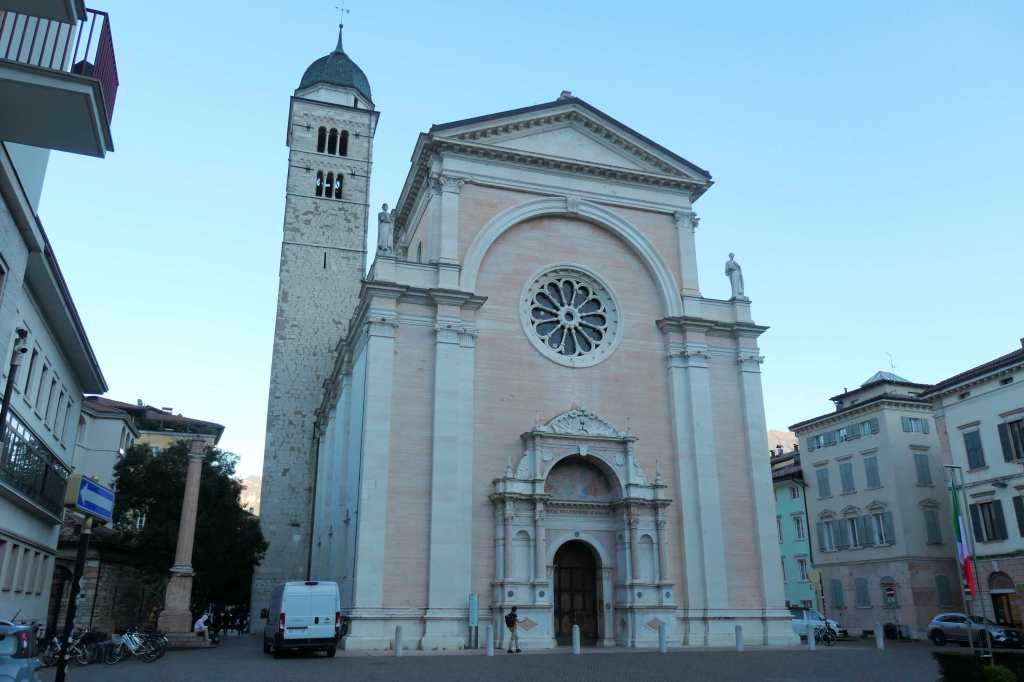
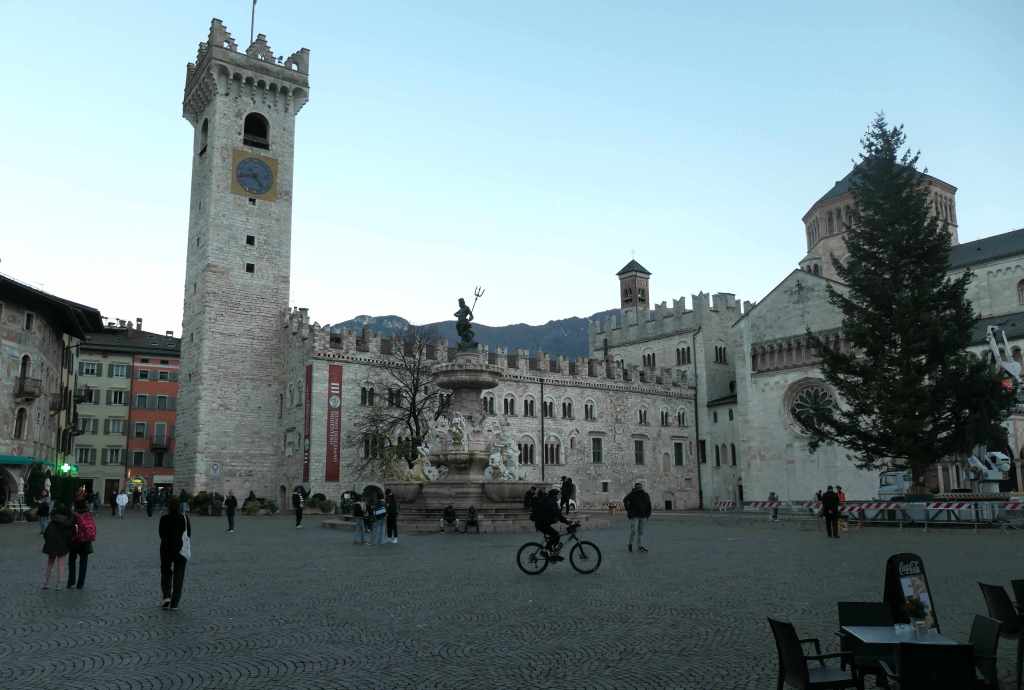
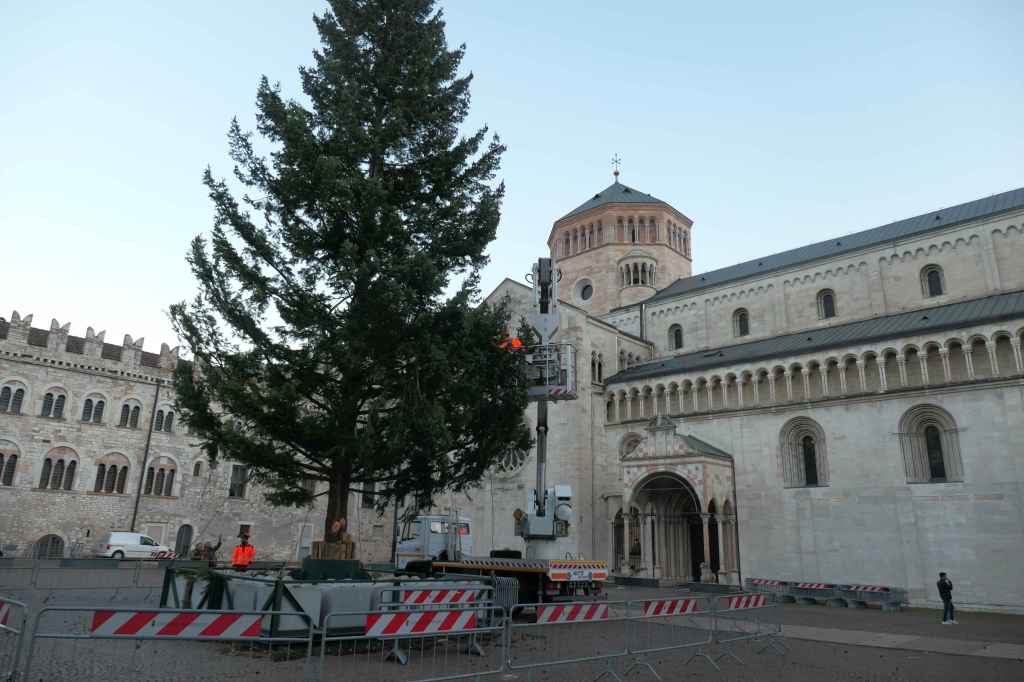
With roots back to 397 A.D., the L-shaped structure of the Cathedral of San Vigilio is so large, it took three shots to capture the facade from our perspective on the piazza.


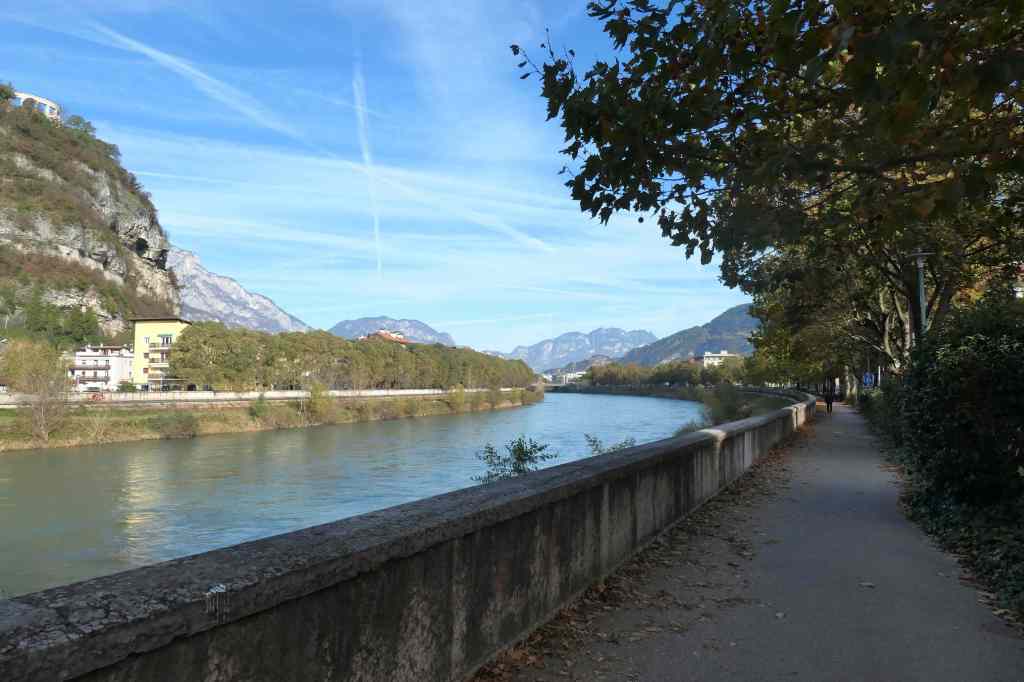
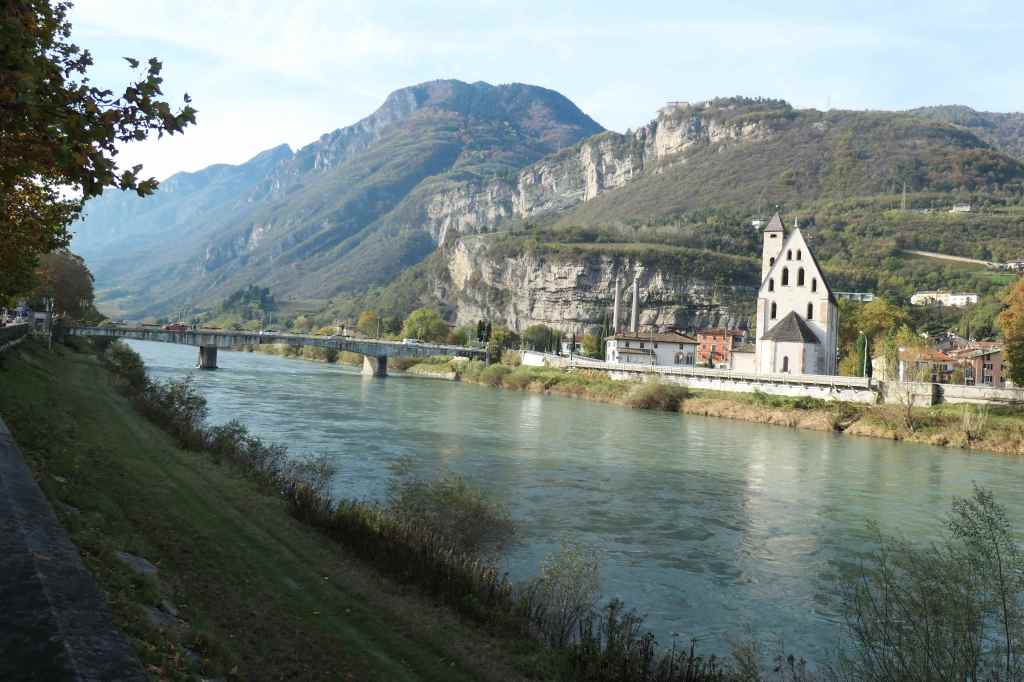
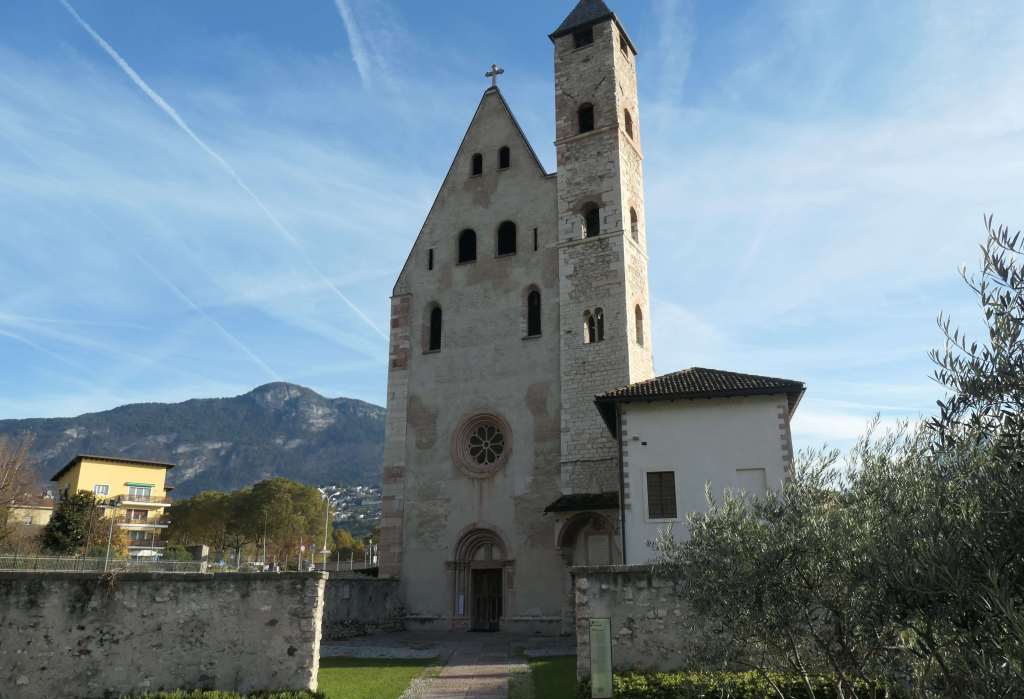
The next morning, we strolled over the bridge and along the river to the Church of Sant’Apollinare, one of the oldest buildings in the city. The church has looked this way since the 14th century, and among those buried in the outer walls is Marcus Apuleius, gravestone dated 23 BC. Now that’s old!


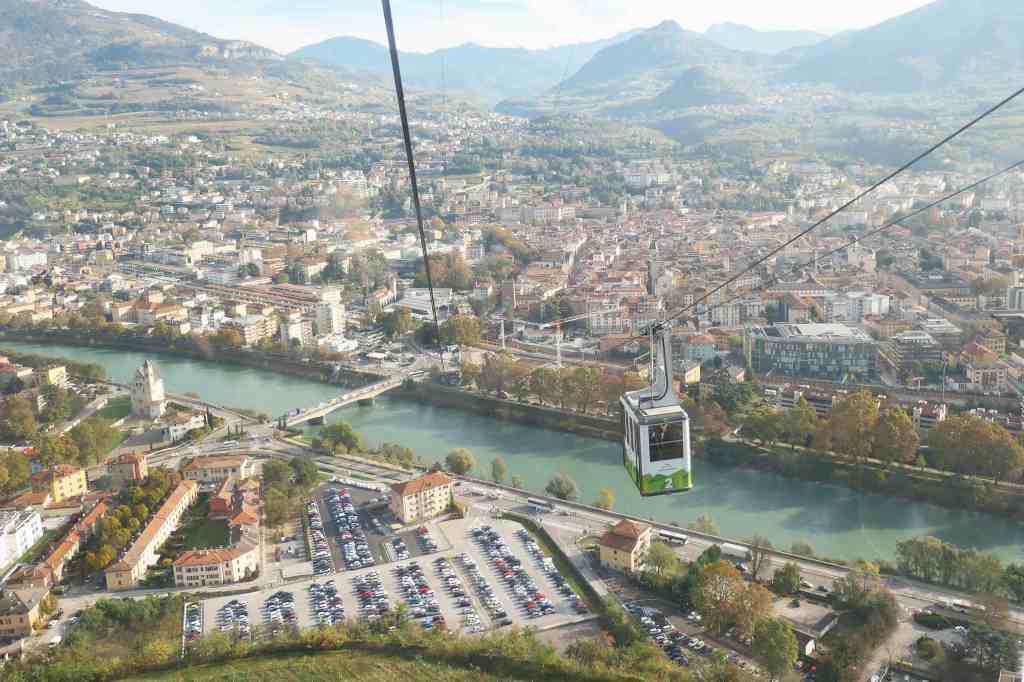
Our last stop in Trento was a cable car ride to the town of Sardinia at the top of the mountain.

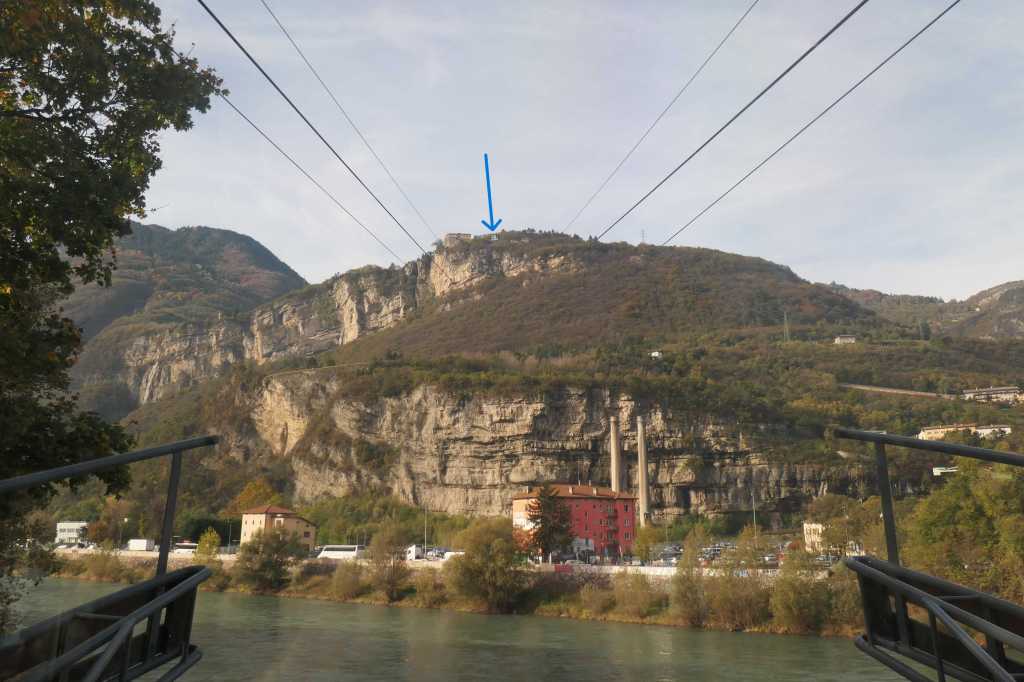
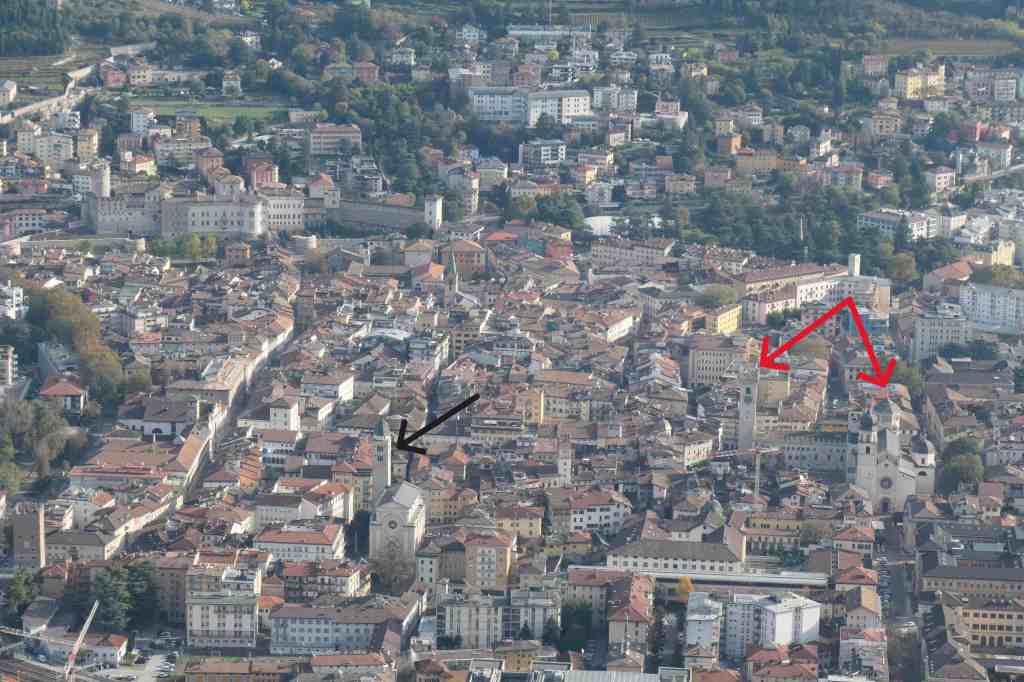
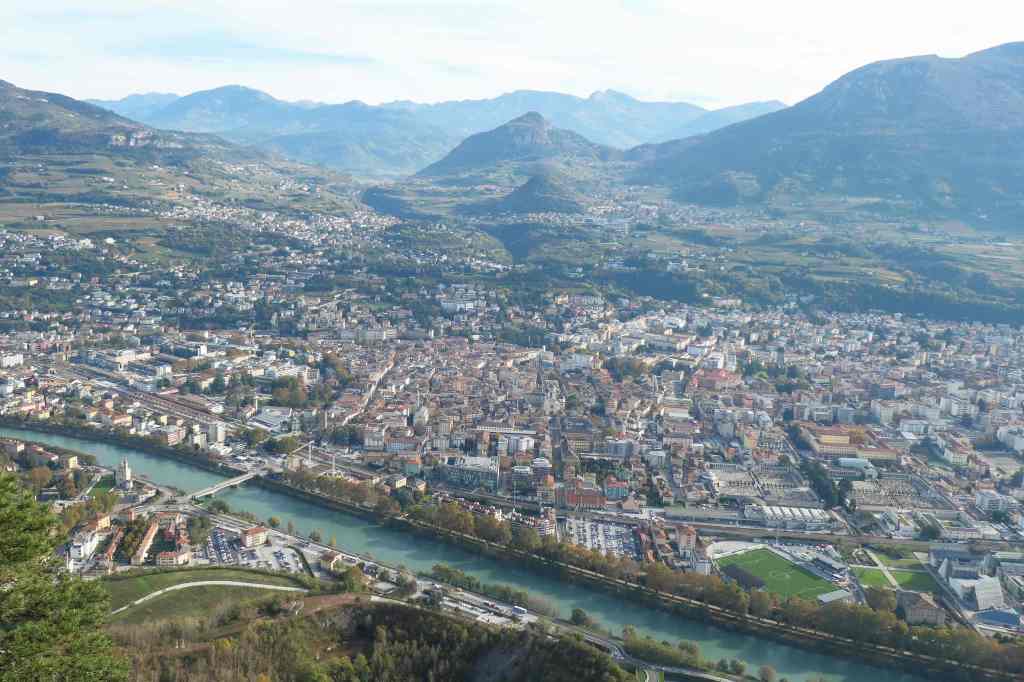
The scenic ride up and back was fairly quick. We found the most interesting part to be identifying the historic town center of Trento from the top. Game time!

It is easy to see the oldest church near the bridge (lower left), but can you spot the town center on the other side of the river?

The black arrow shows the distinctive tower of the Church of Santa Maria Maggiore, behind which is the small B&B (not visible). The red arrows show the L-shaped Cathedral of San Vigilio. Now look back at the other shot – bet you can find it.


And with that, we grabbed our luggage and a bottle of antigelo (antifreeze) and confidently departed for Modena. Moving on!

Duomo di Milano

Our venture into Italy was based largely on the quest for… great food, right? No, no, that’s a side benefit. We wanted to see the historic architecture, especially the many cathedrals. You might recall that we have now been in a basilica in the U.S. (It’s more than just a church. We’re learning.) This time up, it’s a real cathedral, a duomo /dwō′mō/. And so, it begins!

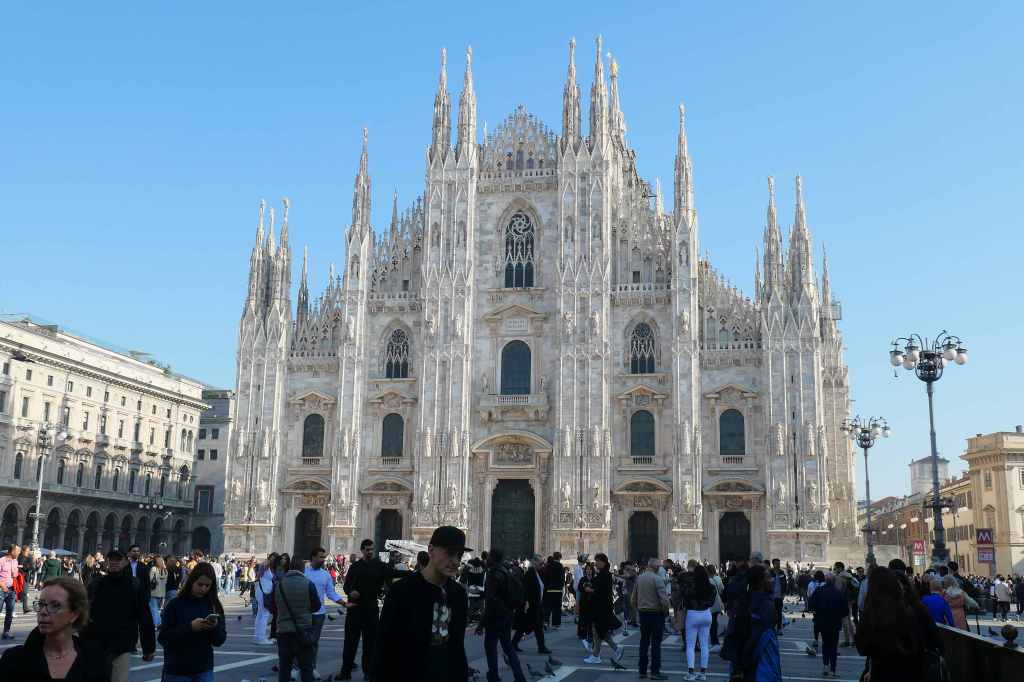
On October 31, we drove a couple of hours south of Nesso to tour the Duomo di Milano (Cathedral of Milan), one of the largest Roman Catholic cathedrals in the world. It depends on which list/criteria you’re considering, but at any rate, it’s really BIG. Capable of holding 40,000 visitors! May as well start there.

Construction began in 1386 and wrapped up around 1965, with ongoing maintenance continuing most likely… forever.


The drive into the city center took a bit longer than we’d planned. Susie worked on the fly to identify the parking garage closest to the cathedral, and Todd made it happen, squealing in on two wheels. We then practically jogged (okay, one of us gimps…) the last few blocks to arrive just in the nick of time to meet the guide, don headsets, and head into the cathedral with the group.

It was amazing, far bigger than anything we’ve seen. Even bigger than the stunning St. Patrick’s in New York!

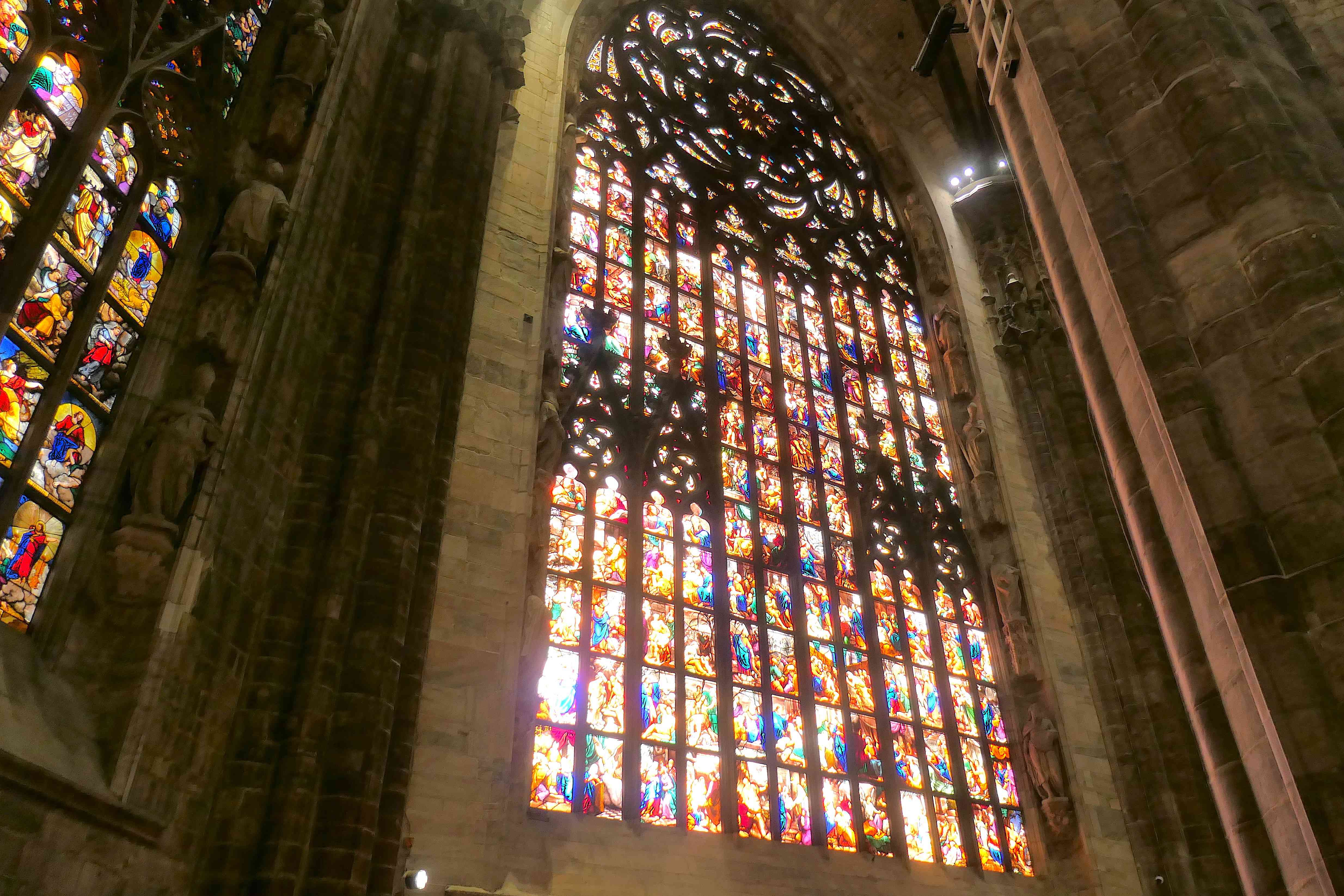
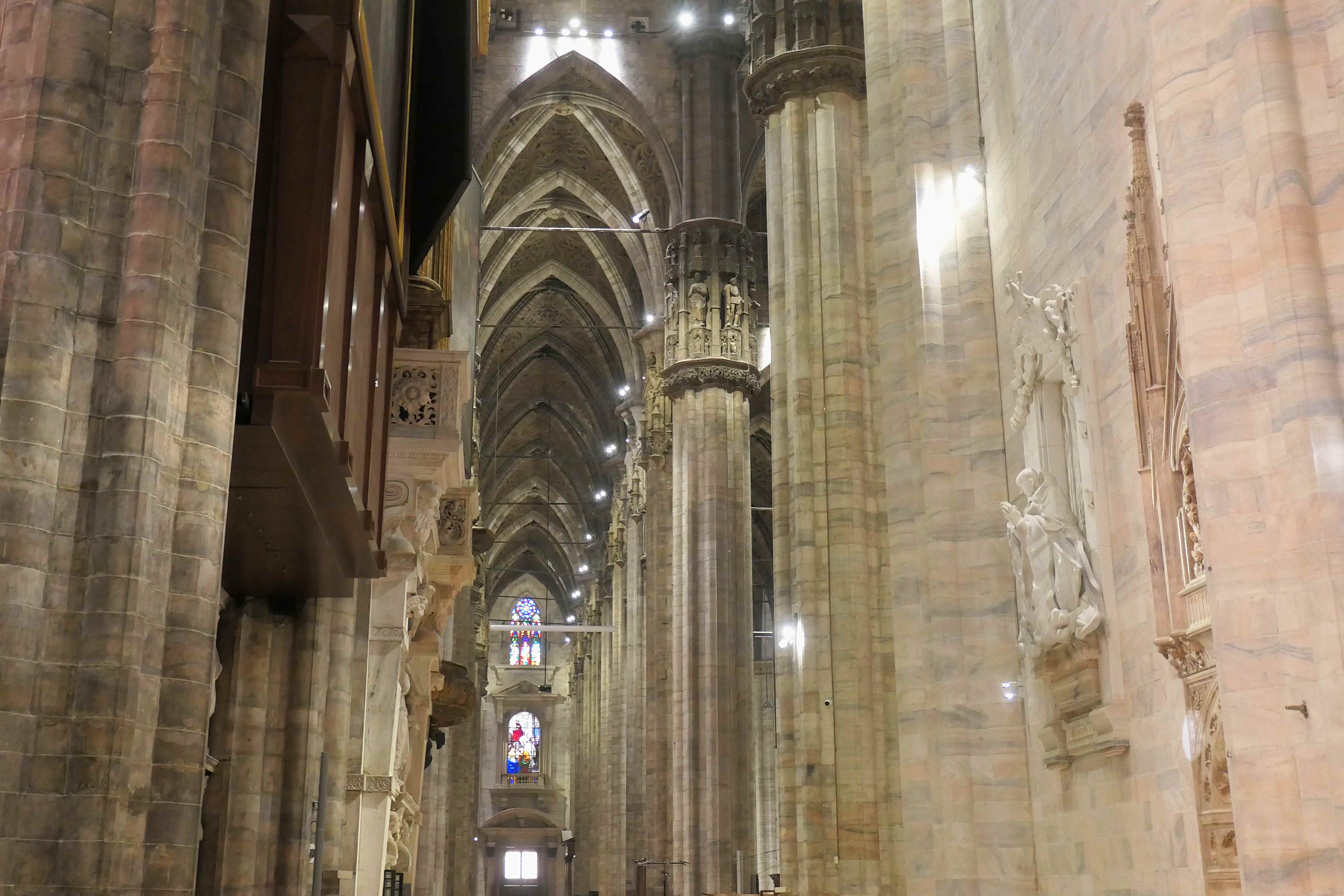
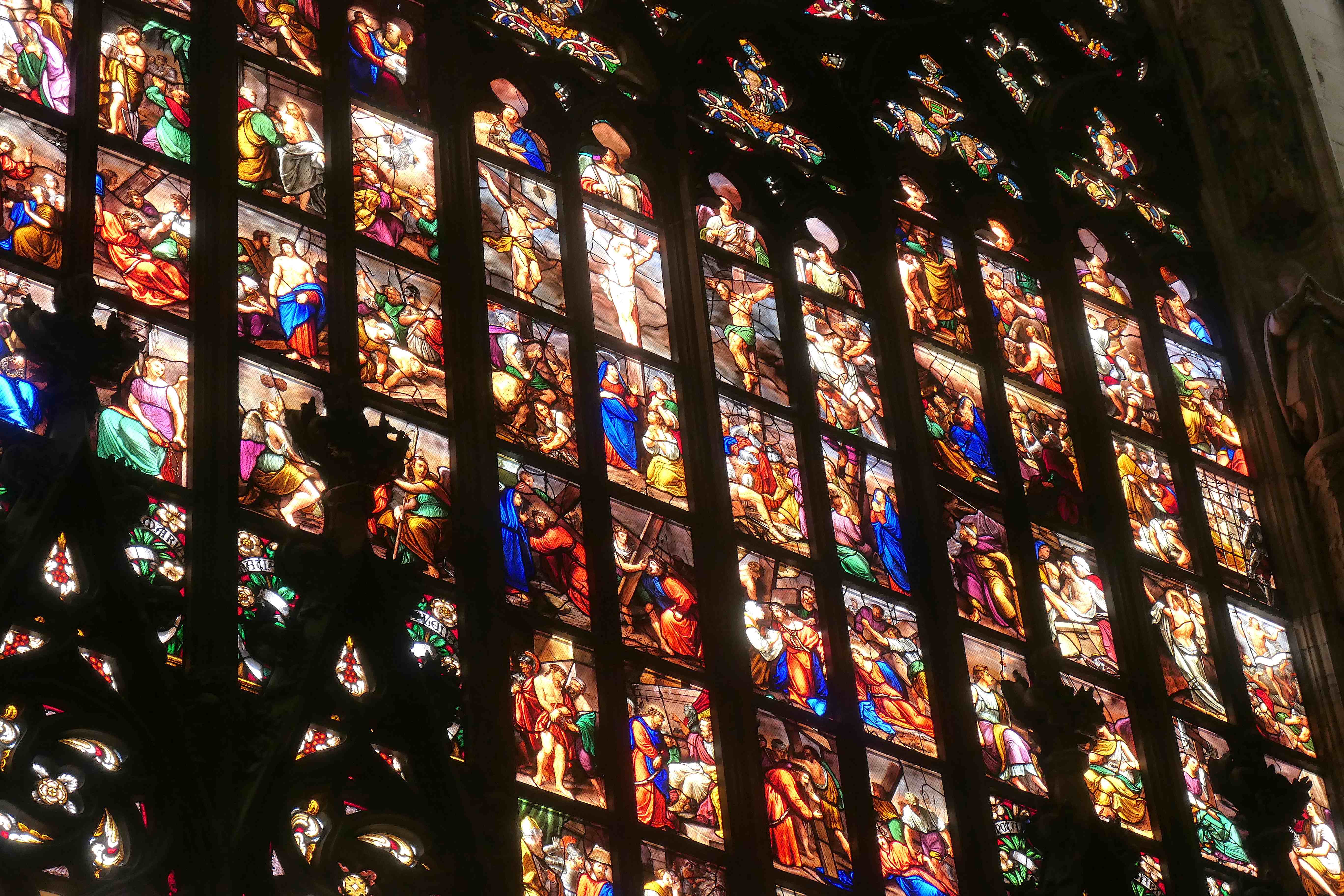
As expected, the cathedral is full of grand pillars, stained glass, paintings, statues, and buried saints. There are also interesting things like the “red bulb” way at the top in which is stored a nail from Christ’s crucifix and the sundial built into the floor (no photo – partly cloudy day). The place is full of history. What we had not accurately anticipated was the size of the crowd milling about, necessitating reaching up over people’s heads to snag photos. Yeah, us grumpy oldsters wanted some quiet time, not a selfie. Ha!

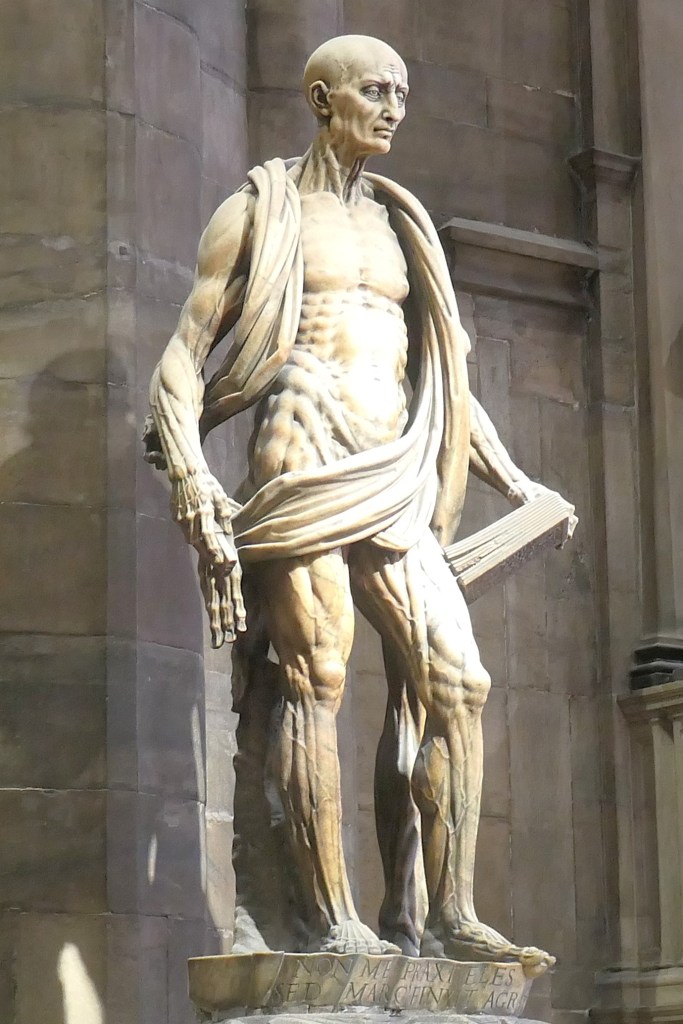
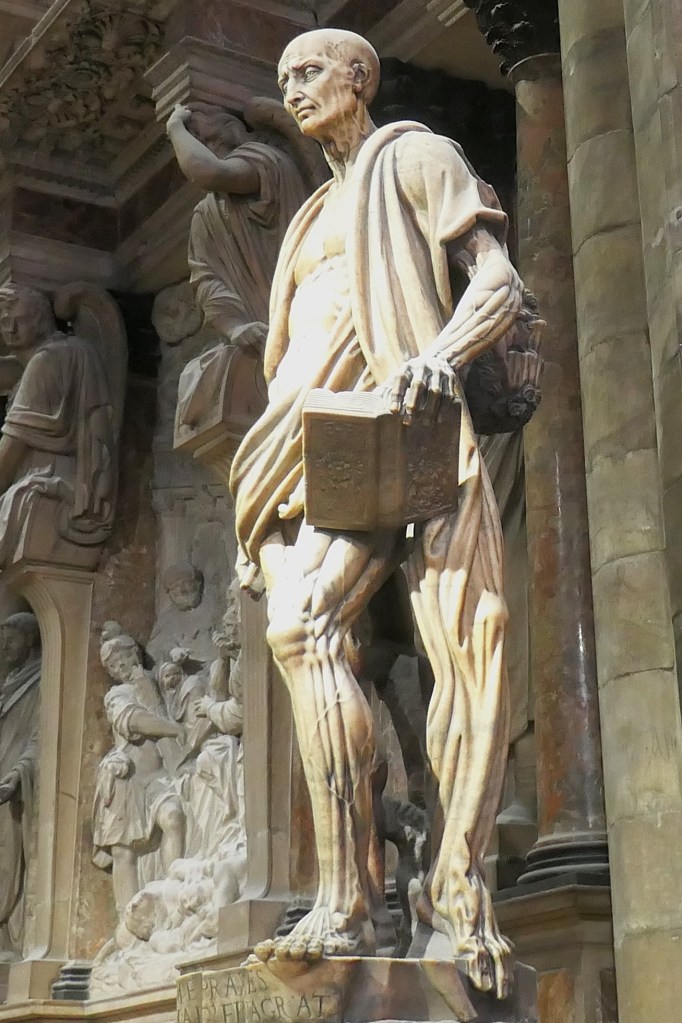
One of the more curious – and frankly creepy – statues in the cathedral is that of the fisherman Bartholomew (died about 70 AD), one of Christ’s Apostles, who, according to one tradition, went as far as Armenia, where he converted twelve cities to the Christian faith. In the process, he aroused the envy of the priests of the local divinities, for which he was ultimately punished – skinned alive, and beheaded. Yikes!

Created in 1562, the statue of Bartholomew is depicted still holding the Gospel in his hand. The sculpture is characterized by close attention to anatomy and without skin, which, in fact, drapes around him and down his back like a robe. All carved in stone!

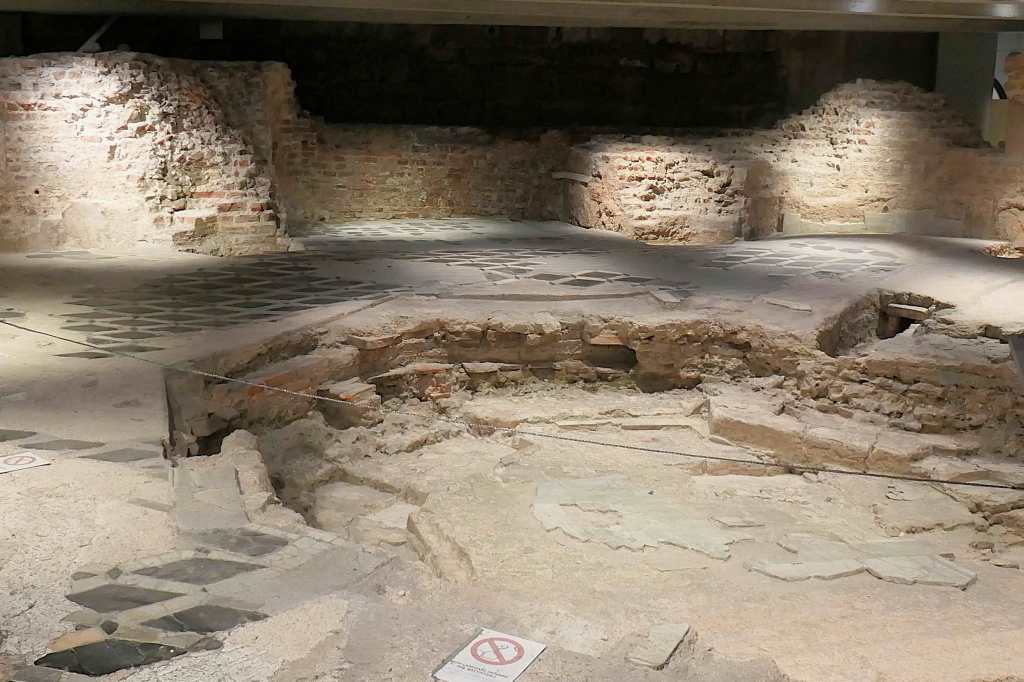
Beyond the grandeur (and the bizarre), for us, one of the more fascinating parts of the tour was beneath street level, below the front of the cathedral, where we walked among the remains of two previous churches dating back to a time between the Roman Empire and the Middle Ages. Demolished to make way for the construction of the new cathedral in 1386, the ruins reflect the square where two basilicas once stood, along with the Baptistery of San Giovanni alle Fonti, built in 378! Augustine was baptized here in 387, when Milan was the capital of the Western Roman Empire.


Next, we joined the queue waiting to go up to the multi-level “terrace” (roof).

256 stairs!

Our mamas didn’t raise no dummies, as they say. The tickets included the small elevator for the ride to the first level. 🙂

We would have to take the 256 stairs back down.


The first level of terraces is approximately 101 feet off the ground. After that, two steep stairways (with no elevator option – it’s exercise time) lead to the second level 148 feet above the ground, i.e., the Central Terrace, the highest point reachable by visitors.

There are more than 3,400 statues, 150 gargoyles, 96 giants, & 410 corbels! On the roof! Oh, these crazy, wonderful Italians!


The central “Great Spire” was commissioned in 1762, and in 1765, the proposal was made to top it with a statue of the Virgin being brought to heaven.

The Madonnina has been watching over Milano since December 1774. Of course she’s been worked on throughout the years, with the last re-gilding in brilliant copper in 2012.


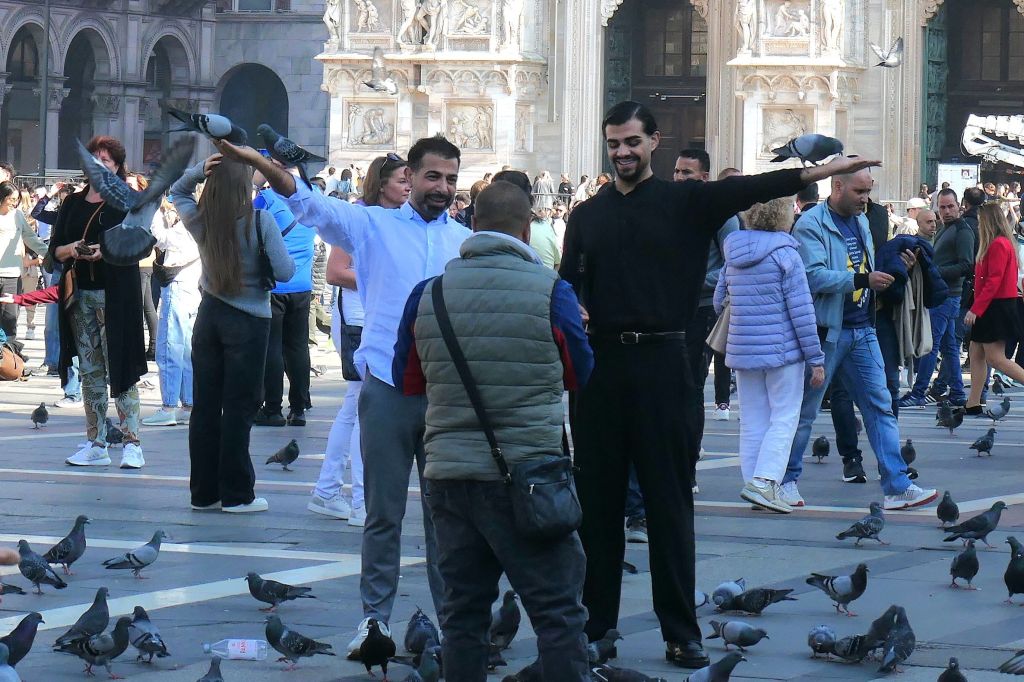
Back out on the piazza, we spent a few minutes watching the antics of the crowd with the pigeons and then paused for a quick selfie to prove we are cool before moving on. (Cool?? We took our selfie with a long arm and an actual camera, Honey. 🙂 )


The streets of Milan are b-u-s-y with a capital B!


Ultimately, it was quite a day. We were happy to complete the two-hour drive back – heck even yet another trip up the mountain – to the peaceful Villa Lorenza overlooking Lake Como, where we could take deep breaths and contemplate the historic, lovely duomo we’d been privileged enough to see. Thank you, Milan!

The “Pearl”

We’d planned to explore both Como and Bellagio during our stay in Nesso. Our few ventures into Como, however, proved somewhat too challenging for our taste. WOW! What a crazy, bustling city! Instead, we chose to spend a couple of days enjoying the much less busy town of Bellagio – not the one in Las Vegas, but the so-called “Pearl of Lake Como.” Ha, imagine finding a place that has the same nickname as our car!
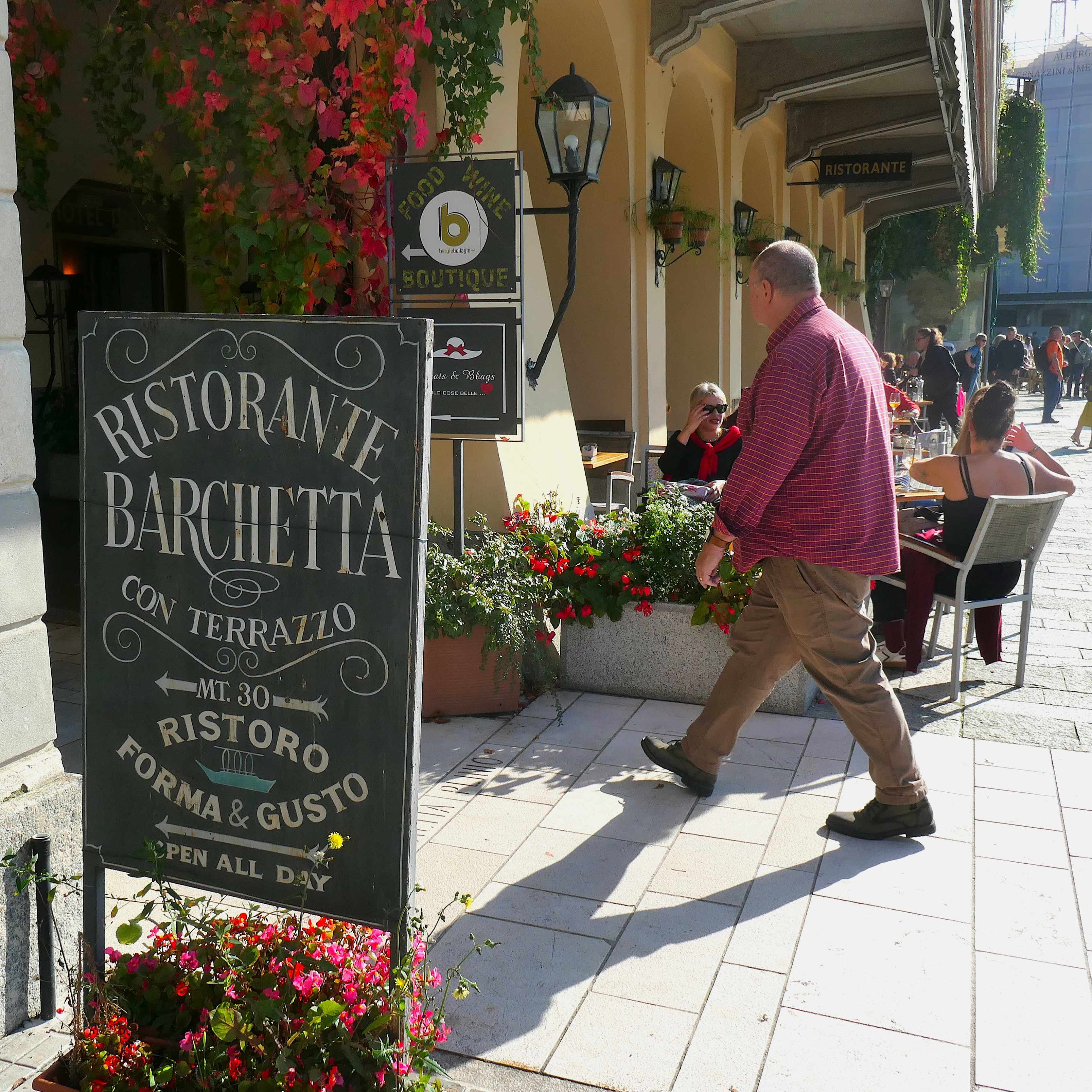
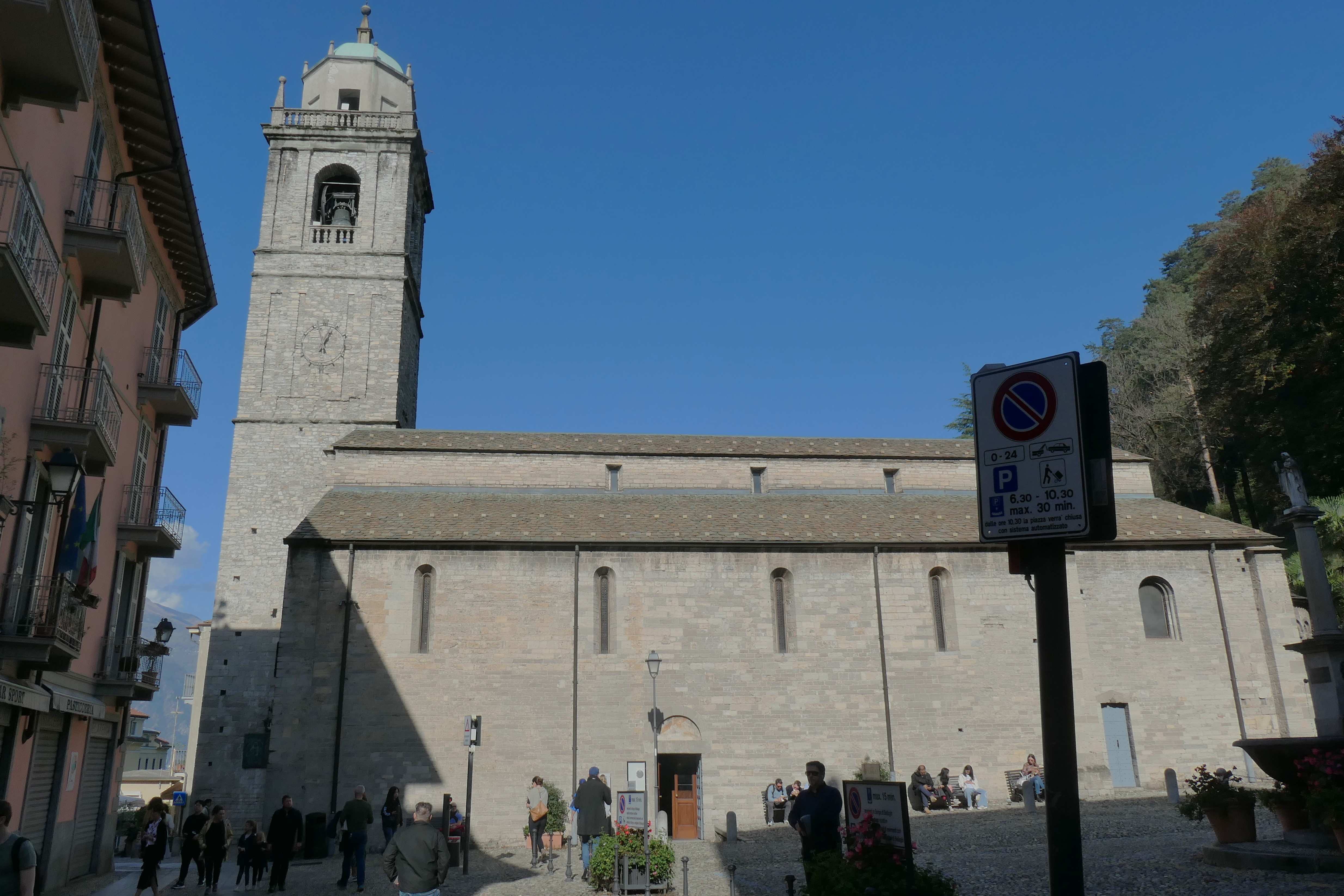
Having worked our way through the main street of shops in the historic center and checked out the 11th century chapel, then down to the lakeshore area for a late lunch, it was time to return to the car. Whew!


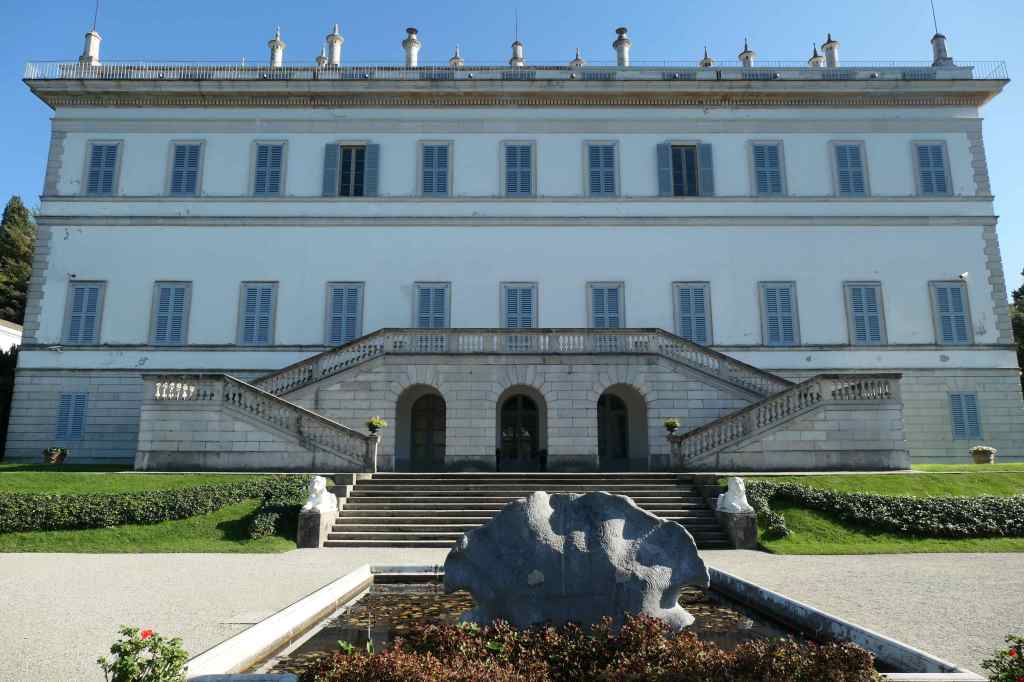
Not owning a house at the moment, we don’t really have need for a great deal of shopping. Surprise! The next day, we opted to return to Bellagio not for the shops, but for a stroll through the Giardini di Villa Melzi (Gardens of Villa Melzi) instead. The complex was created between 1808 and 1810 for Francesco Melzi d’Eril (1753-1816), Duke of Lodi, vice-president of Napoleon’s Italian Republic and, later, Grand Chancellor of the Kingdom of Italy…and a, oh, well, there’s more, but enough is enough! Most importantly for us, it would close for the season on November 3. Time to go!

Melzi dwelt in the villa until the end of his political career, after which it became his summer home.

Not too shabby…

The villa itself, still privately owned by the family, isn’t open to the public, but there are plenty of grounds to enjoy. One of the highlights is the sprawling, diverse garden filled with loads of majestic century-old trees that are in some cases quite massive. Even better, a great biological garden that included signs on the special plants. Todd loved it. No Todd, we can’t read them all! 🙂

Scattered through the garden is a fine collection of commemorative and mythological statues.

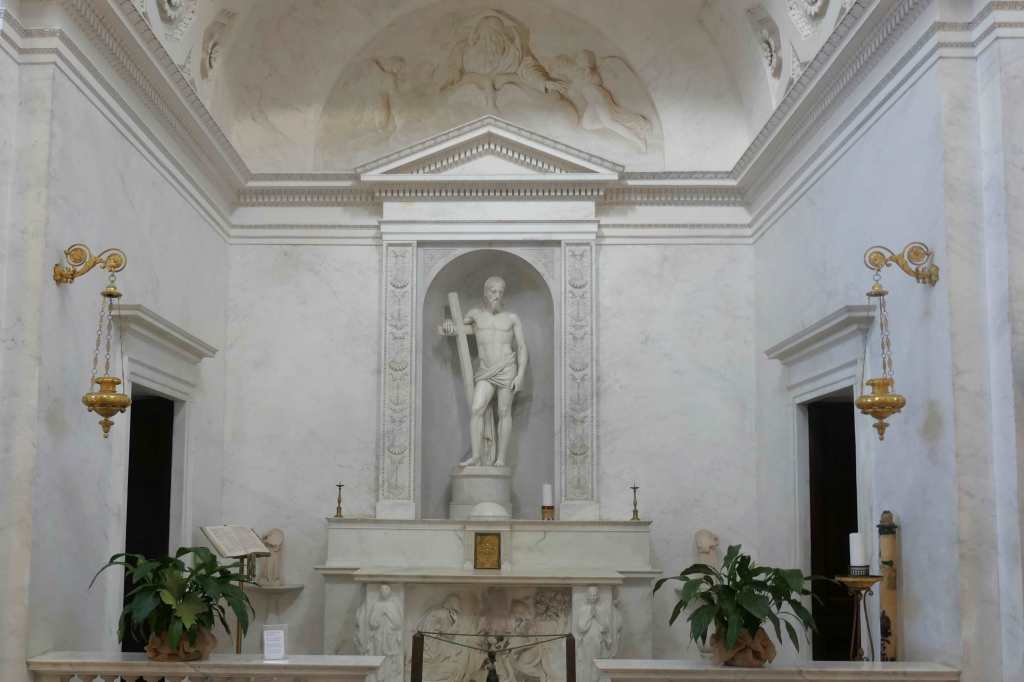
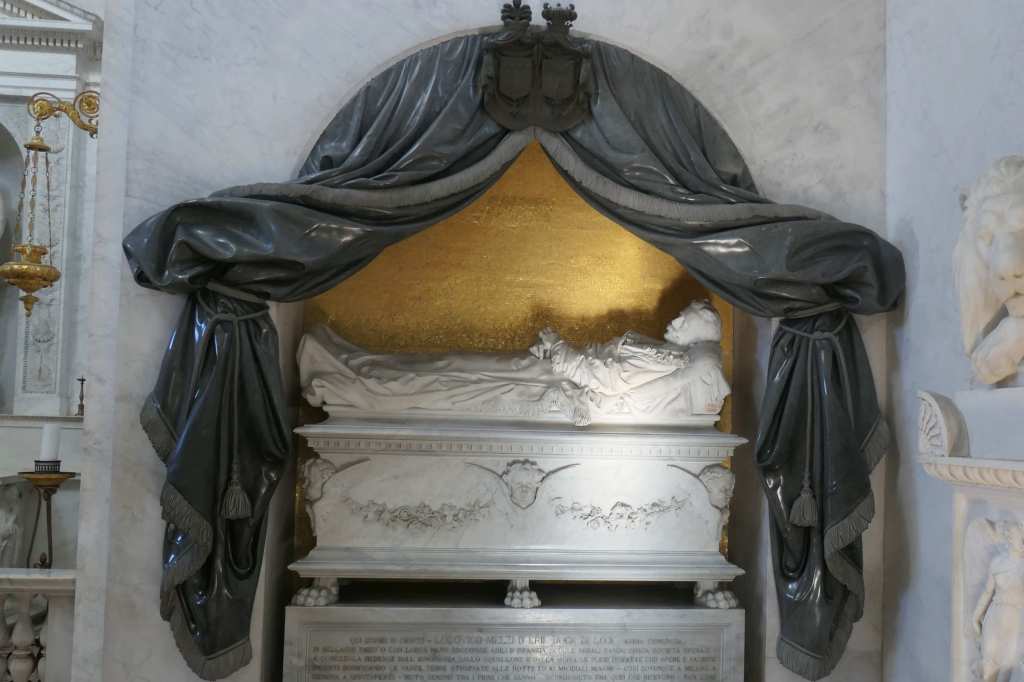
This fine nobleman was fortunate enough to have his own family chapel on the grounds.


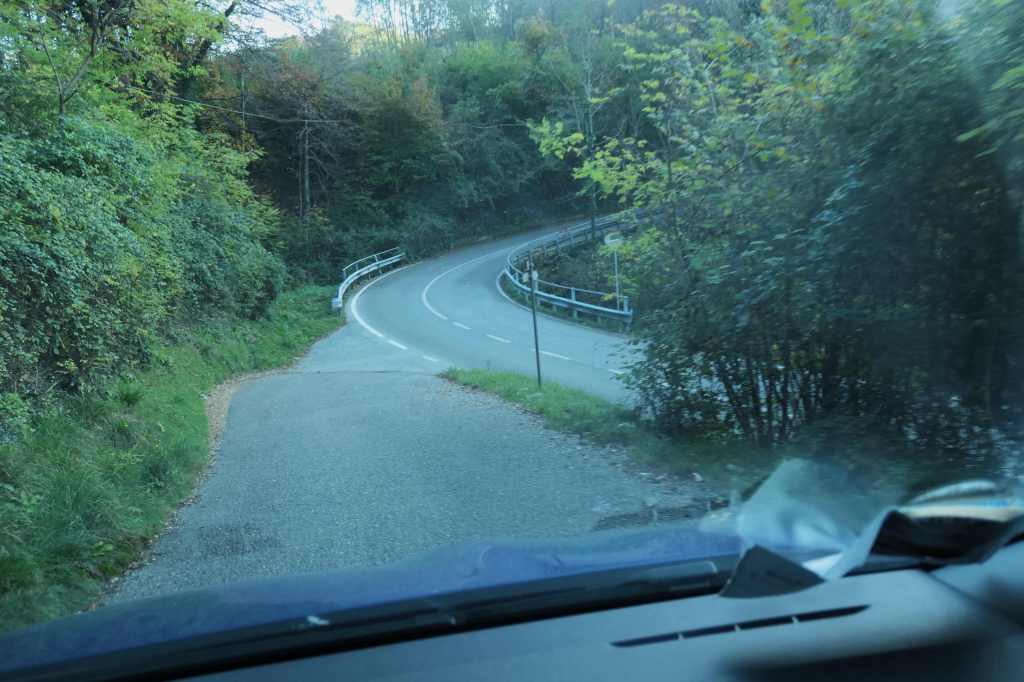
After wandering all through the garden, we hurried back to the car and headed off to find a “nearby” restaurant named Trattoria Baita Belvedere, enthusiastically recommended by the kind agent at the gate as her “favorite.” She failed to mention, however, that it is located near the top of a mountain. A wonderful drive until the last mile or so of the skinniest “one lane” road to date! Thank goodness Todd doesn’t have much because it was absolutely hair-raising! NO pictures were captured on the way up. (Breathe, Honey….)

Near the end, it seemed even this guy was chuckling.

But make it we did.

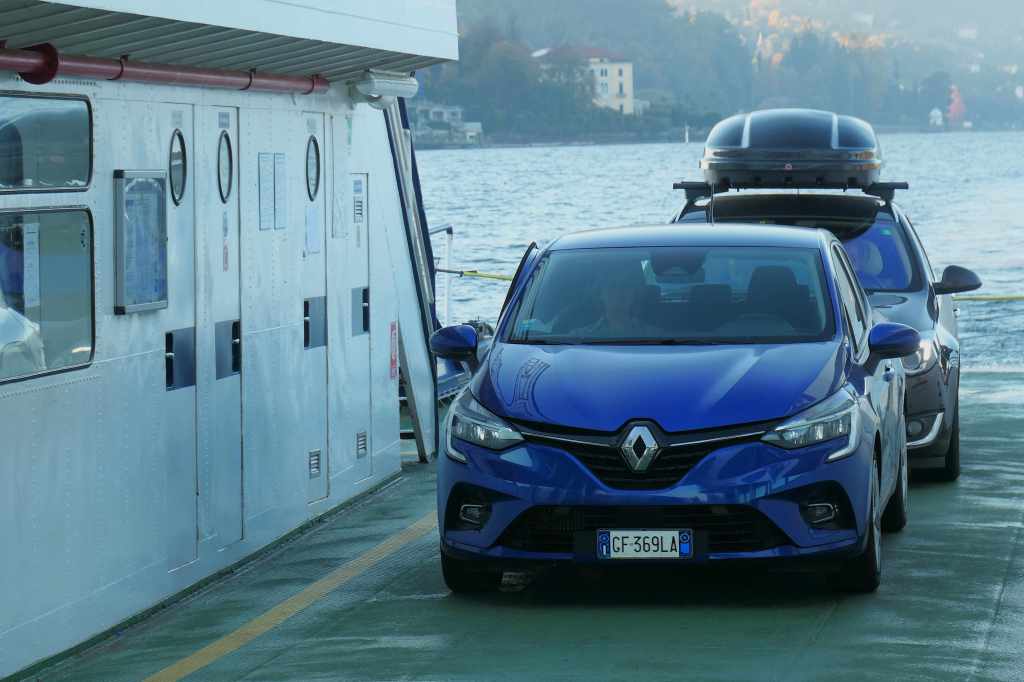
That’s our spiffy blue Renault parked in the “lot” at the top of the mountain.

UGH. Do we have to drive back down? NAH. It must be a one-way drive up & another down (he says, optimistically…)

One thing at a time. How about lunch?


Our friendly young server, Francesco, delivered a spectacular lunch along with plenty of local knowledge and basics he felt we needed to know. In fact, we closed the joint while pondering (putting off?) the drive back down. Eventually, we really had no choice but to hit the road. Francesco assured us that we shouldn’t meet anyone coming up since the restaurant was now closed until 7pm. Todd thinks he winked. 🙂

Whew! That’s a relief. Now that we’re back to the main road, let’s stop for a few supplies.

Wait. Are those “whacks” on the lefthand side??

Italian beef

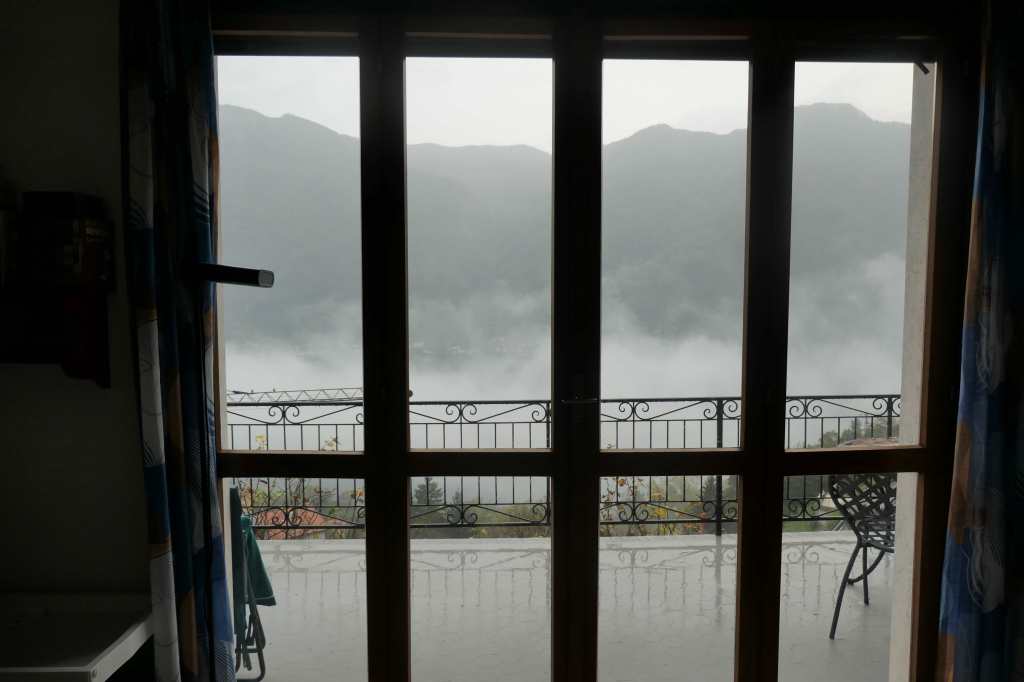
As we settled in last week, luck would have it, so did a lazy rain. Yup, you know, one of the kinds that drizzles on for a couple of days, or in this case more than a couple. It was fine as we were just getting used to the new world in which we landed.

It’s rumored that the villa below us and to the right belongs to George Clooney. Although that may very well be just something to tell the tourists, it didn’t stop one of us from keeping an eye out over there. 😉


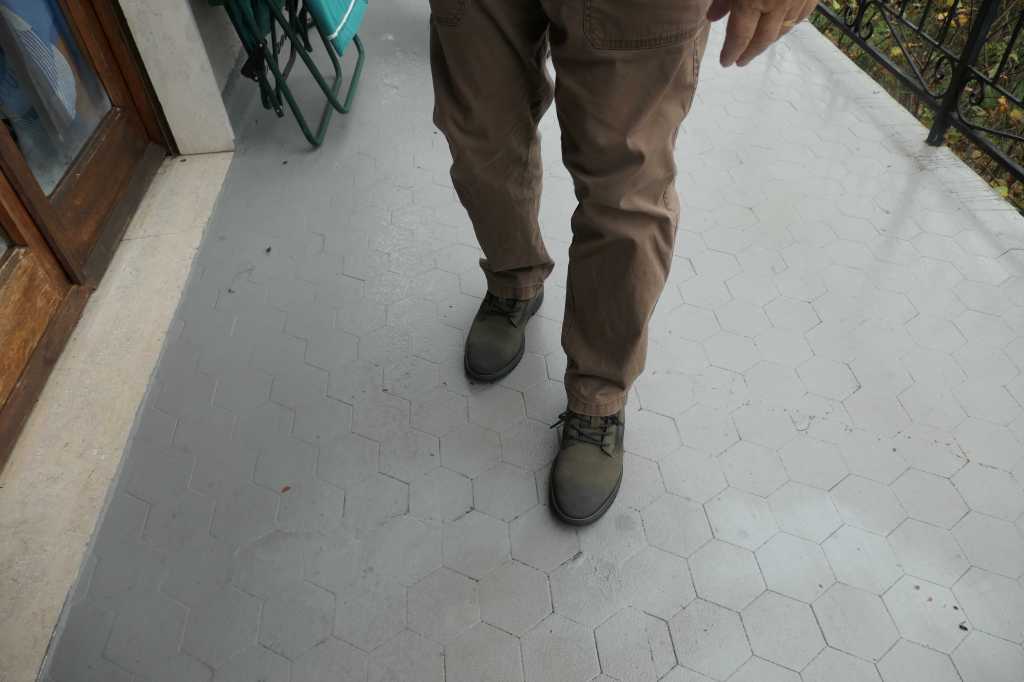
We managed to sneak out between showers to drive to Como for shoes because SOMEONE actually “forgot” theirs. Oh geez… in the 15 plus years of our life together, we used to laugh at the number of times Todd forgot a belt. Well, the new Todd remembered those; this time it was his shoes! He wore only sneakers and flip flops, much to his own chagrin. He feels like an “idiota,” but luckily, we found a nice pair on our first stop!


Into every life, a little rain must fall

The clouds and rain continued as we made a quick stop at our favorite market, the Granmercato, on the way back to the rental. Hence, we tucked back in for a couple more days.

Good thing there’s the awesome view of Lake Como, right?


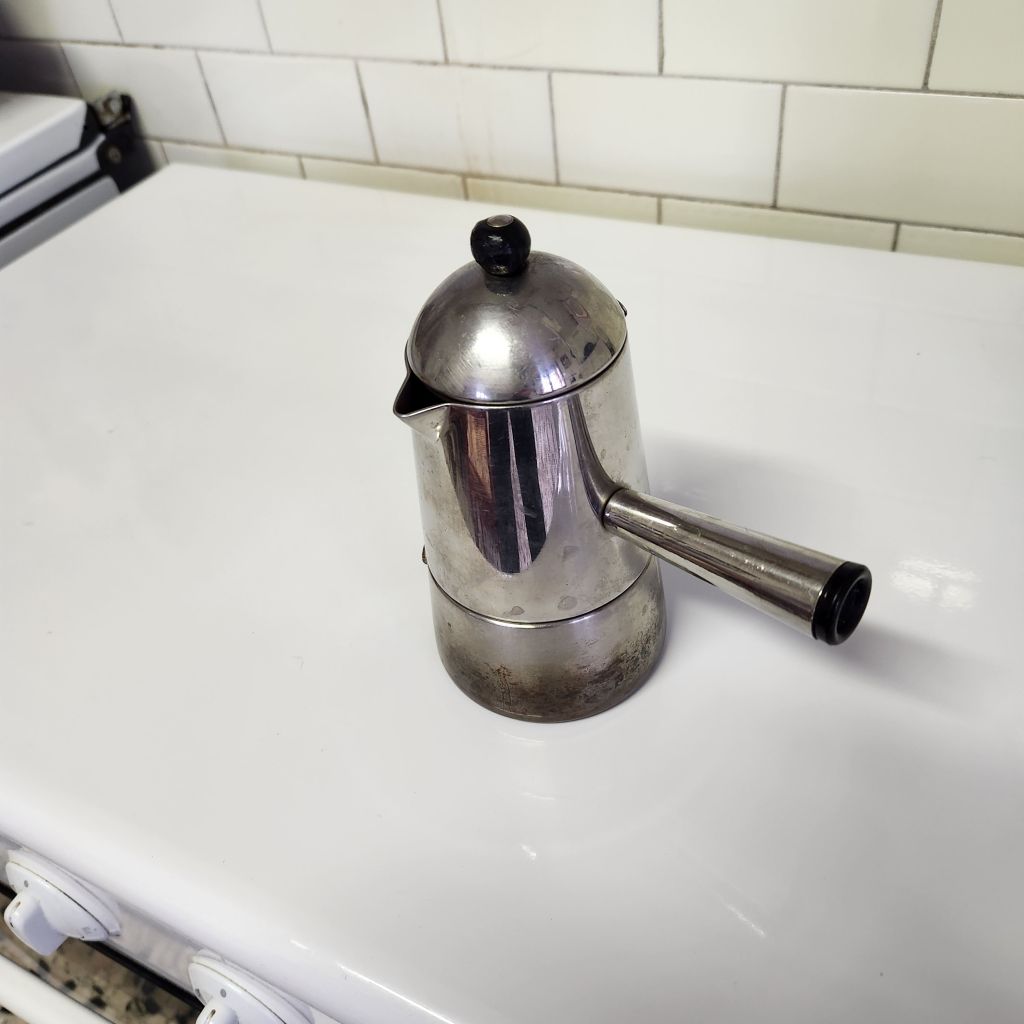
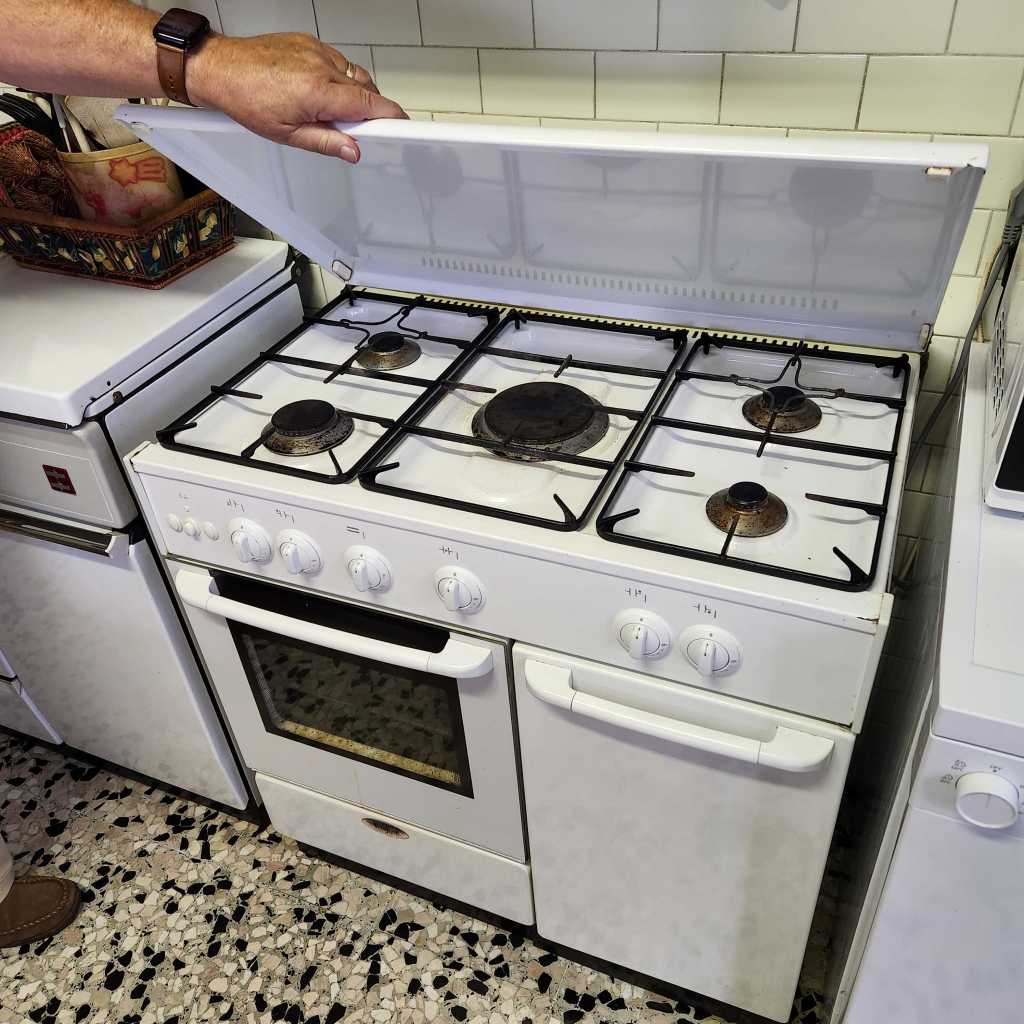
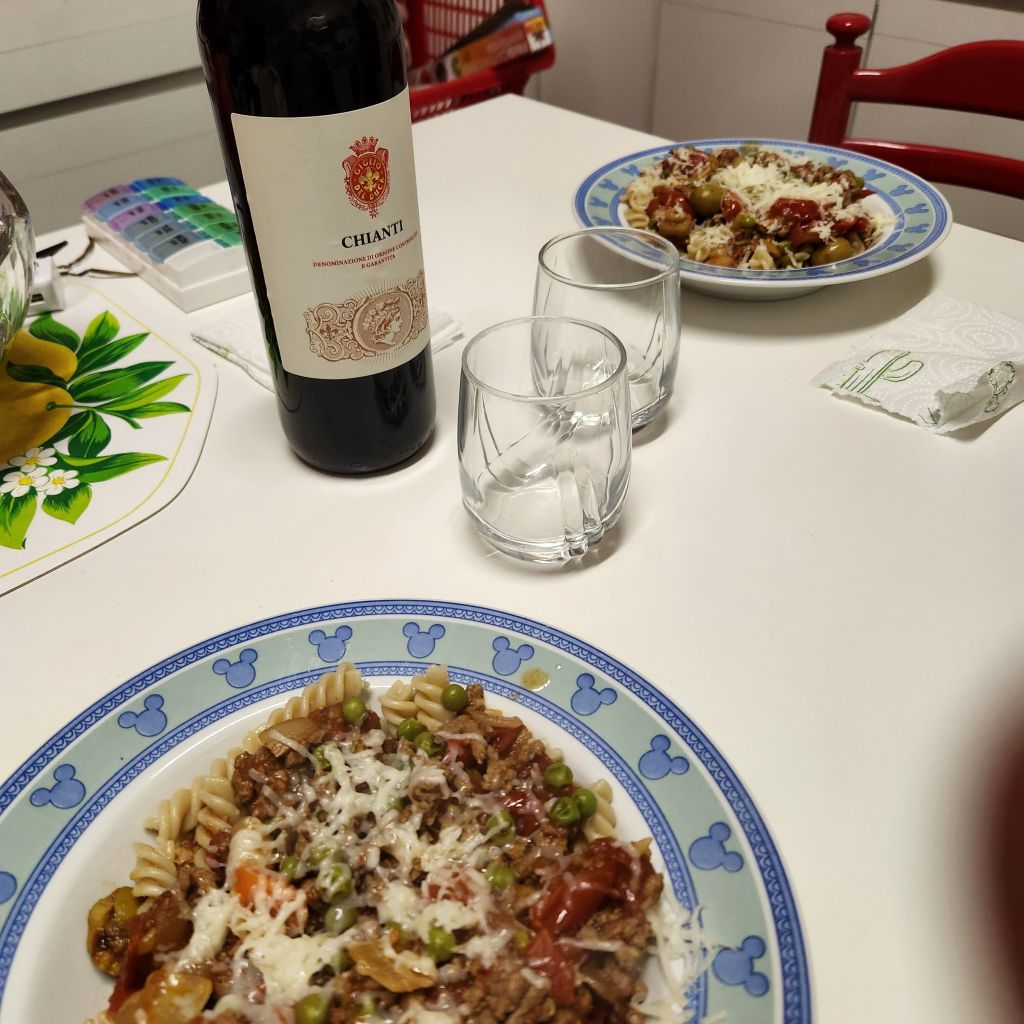
One never really knows what they will obtain when renting a small house. Kitchens come in all shapes and sizes. Fortunately, it’s one of the many things we enjoy about traveling and exploring – and the adventure of just cooking? Fuhgeddaboudit! We can always throw together a tasty pasta dish. Oh, and one little espresso pot waters down nicely into two lovely cups of coffee. Ha!


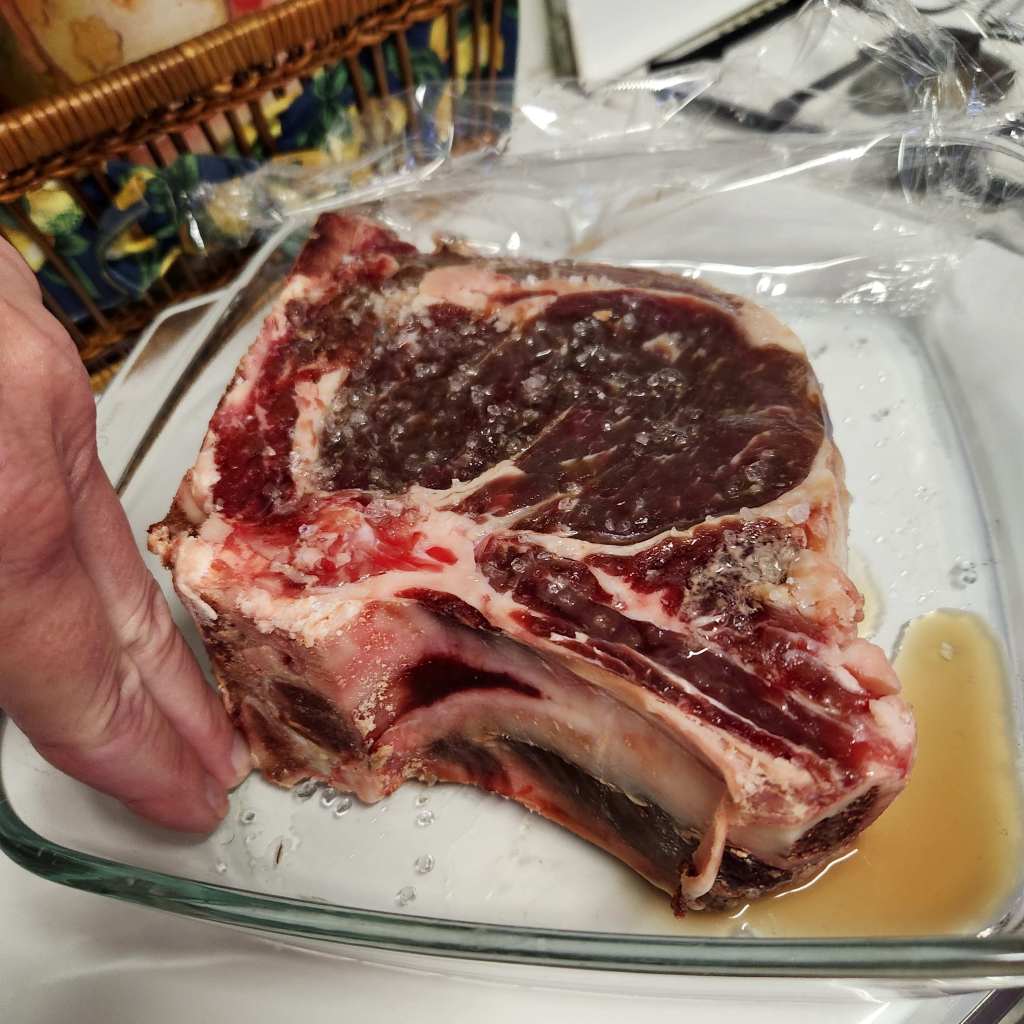
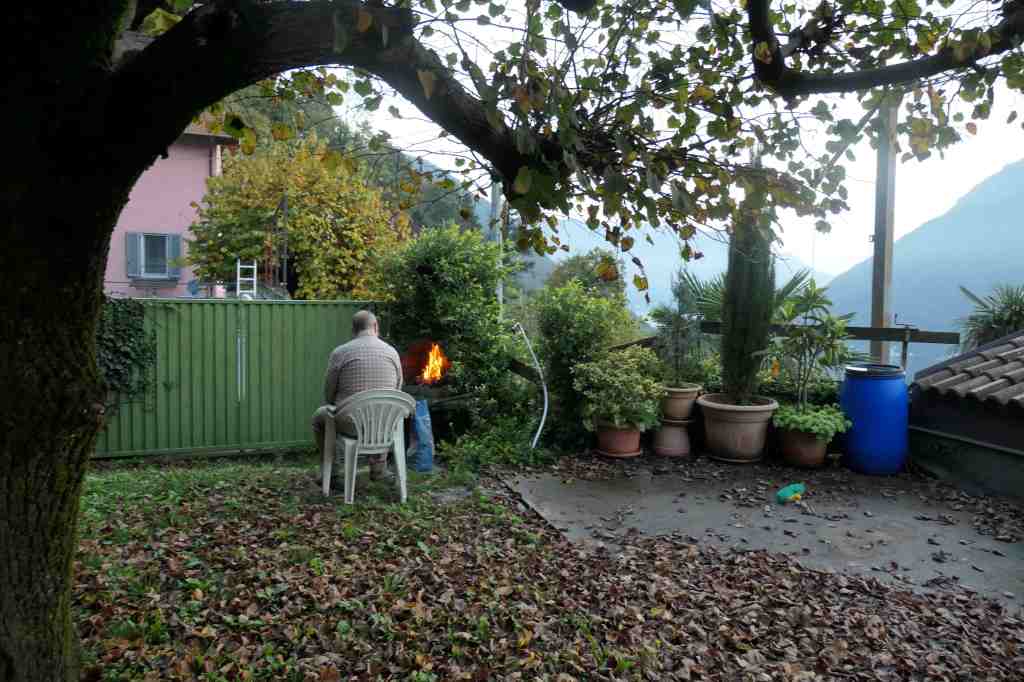
A few days in, the weather cleared enough for our Todd to try his hand at the BBQ down in the garden. Armed with a hunk of beef worthy of Fred Flintstone, off he went to evaluate the situation. Turned out that one ribeye was a thick one, weighing in at 1 kilo (2.2 lbs)!

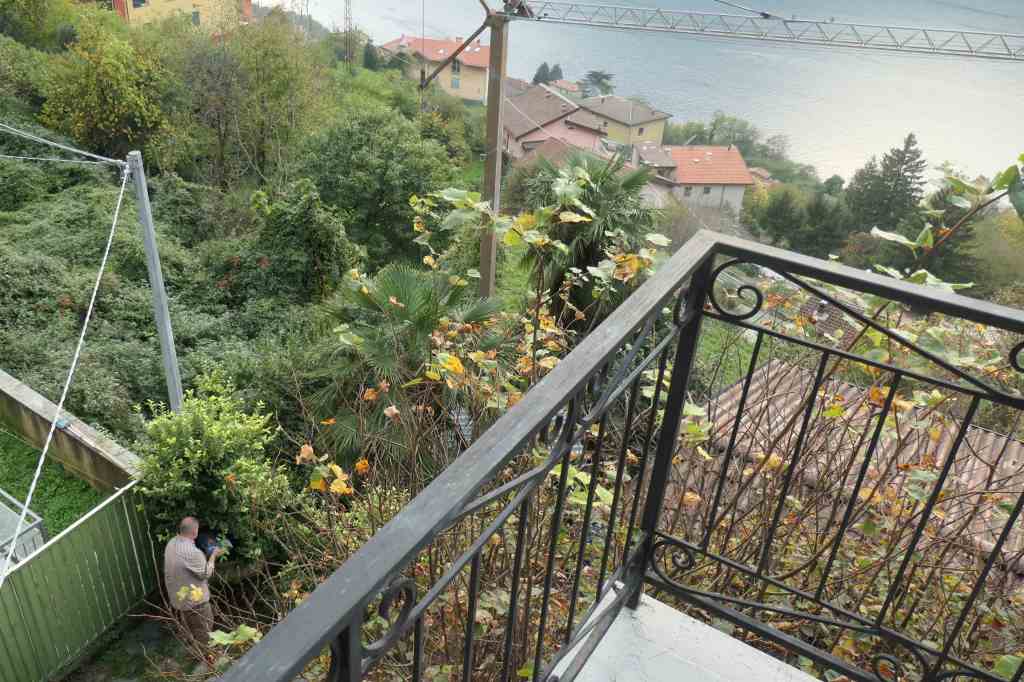
This Italian life in the lake district requires steps, lots of them. In fact, 35 down from the road to our front door, and the grill is down a couple more long flights, into the back yard.


With no luck finding grill tools in the house, Susie headed downstairs with the longest fork and spoon available in the kitchen, basically a small salad serving set.

To set the proper perspective, the long path to the grill goes like this:

The owners had provided lump charcoal and all the wood anyone could need. Lump doesn’t start quickly, but nothing a good fire can’t handle. So, Todd began the process saying, “That steak’s gonna need a good hot fire!”

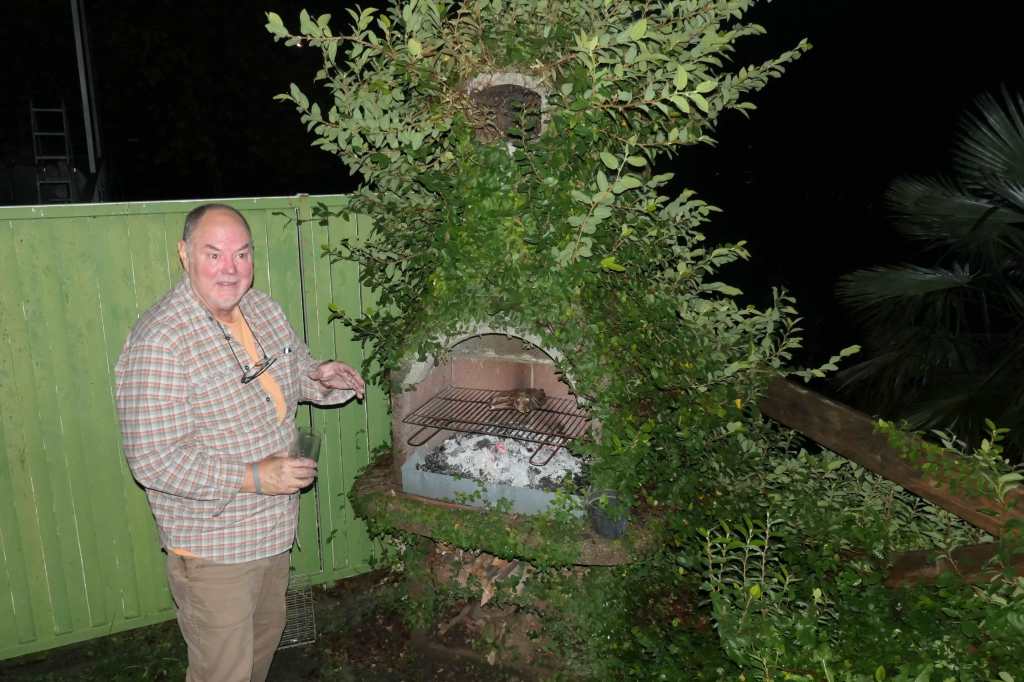
Undaunted – and actually having fun – he went back to work and got a “proper” fire burning. (Yes, the grill has a plant growing around it.)


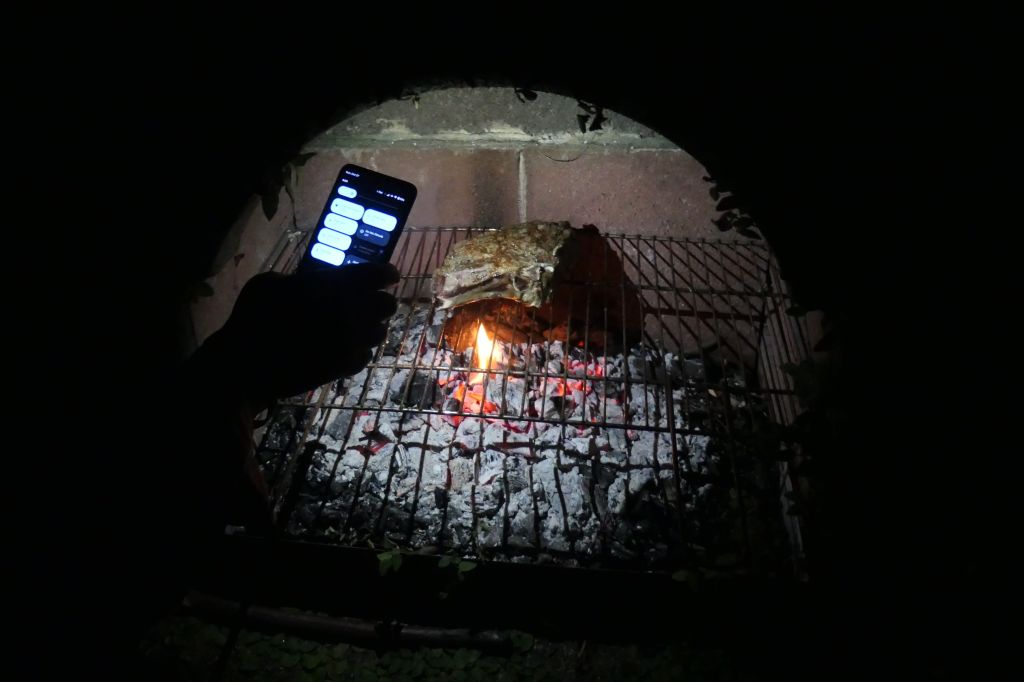
Getting a good fire to burn down to wonderful coals took long enough that the sun set before the cooking could begin. Have no fear, armed with cellphones, a small light, and some wooden spoons, that chunk of beef would absolutely get cooked, and it WOULD be delicious (declared Todd).


And just what was Susie doing this whole time?

Hey! You mean besides photo journaling, running back and forth up and down the stairs to fetch things, cook the sides, set the table, uncork the wine, etc.?

Well, drooling, of course.

When we finally sat down to dig in, the meal was absolutely “delizioso.” A bit late, perhaps, but perfect. Wait, we’re in Italy. It wasn’t late; it was right on time, speaking from our new world perspective. In fact, that steak was great for several days!


To cap things off, the sun came out the next glorious day and we could finally do a bit of laundry, Italian style!

And that, friends, ends our tale of “Italian beef!” 😉