Trullo in Puglia

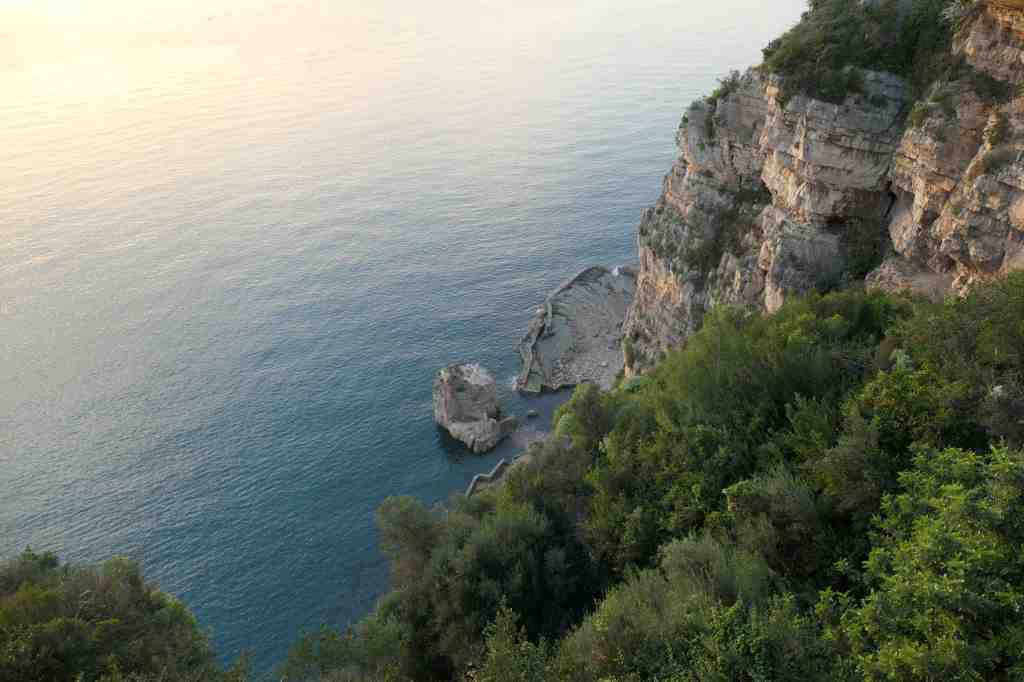
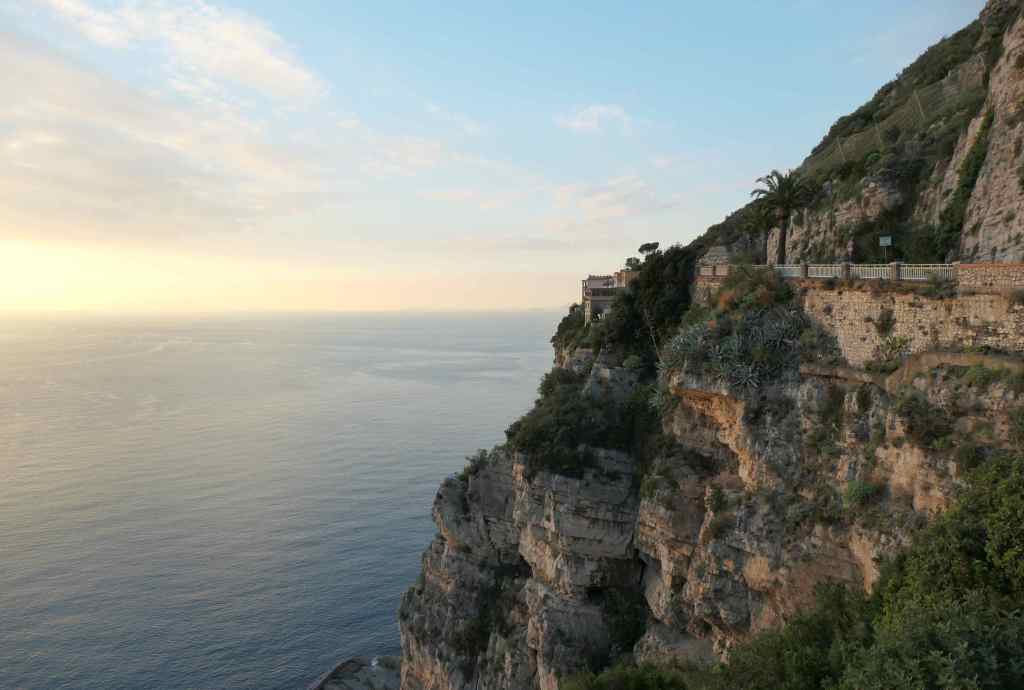
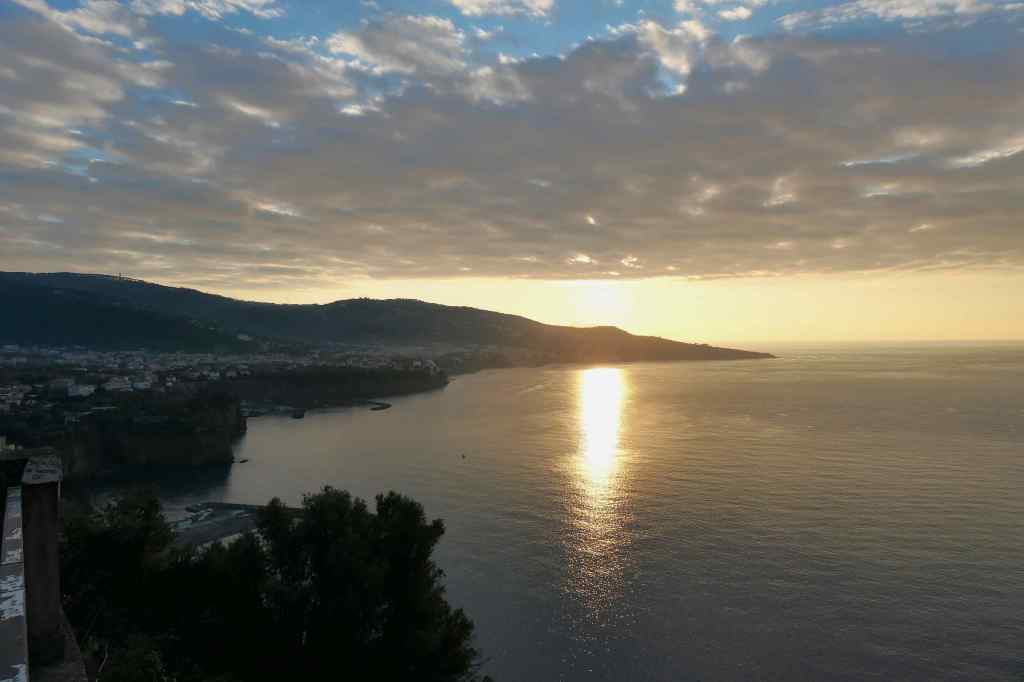
From that wonderful stop on the Amalfi Coast, we decided to head east across Italy, to the other side, for a short stay in the heel of the boot, Puglia (“poo lee uh”). The route took these former cruisers teasingly close to the shore, so we made a detour to see the Adriatic Sea. And just happened to step out of the car in time to catch a sailboat entering a marina, fenders at the ready! Look at the sea, how calm! Nice!

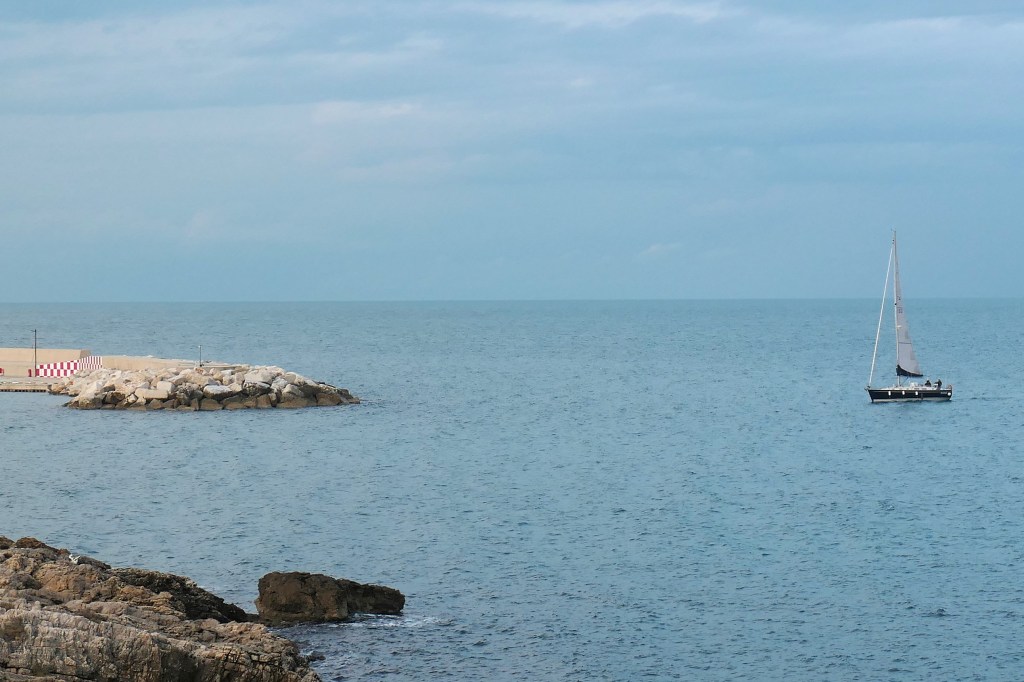
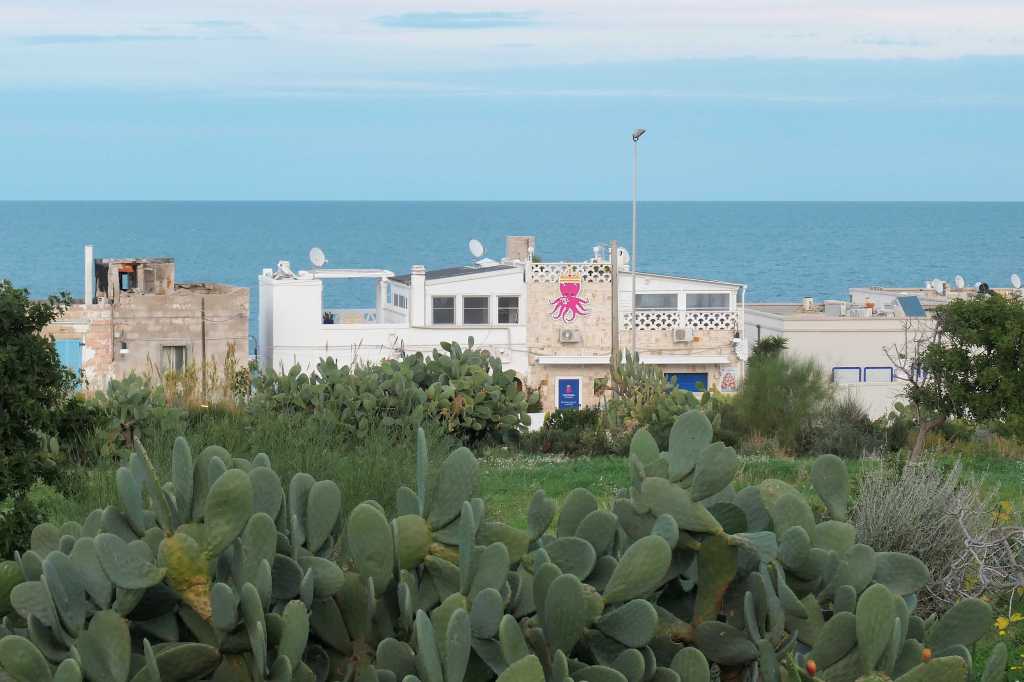
After taking a “shortcut” or two and reroutes for lunch, a road closure, a traffic jam, getting over a mountain, etc., we turned what was supposed to be a four-hour drive into more than seven. Another Olsen M.O. We ended up so far behind that we found ourselves searching for the destination in the dark. Again.

The GPS is typically close but not always accurate, and the directions provided by the owner took us to the wrong place. As we pulled up to the festively lit (incorrect) house, a smiling woman who spoke absolutely no English stepped out to assist. Recognizing the hosts’ names in our gibberish, she held up a hand for us to stay put, went back inside and returned with two teenage boys, telling us through gestures that we’d come too far and should turn around to follow the boys – now doubled up on a motorbike – to the proper house. We got a kind-hearted Italian escort to the correct gate, where we finally found the rental owner waiting, thanks to a phone call from her friendly neighbor!

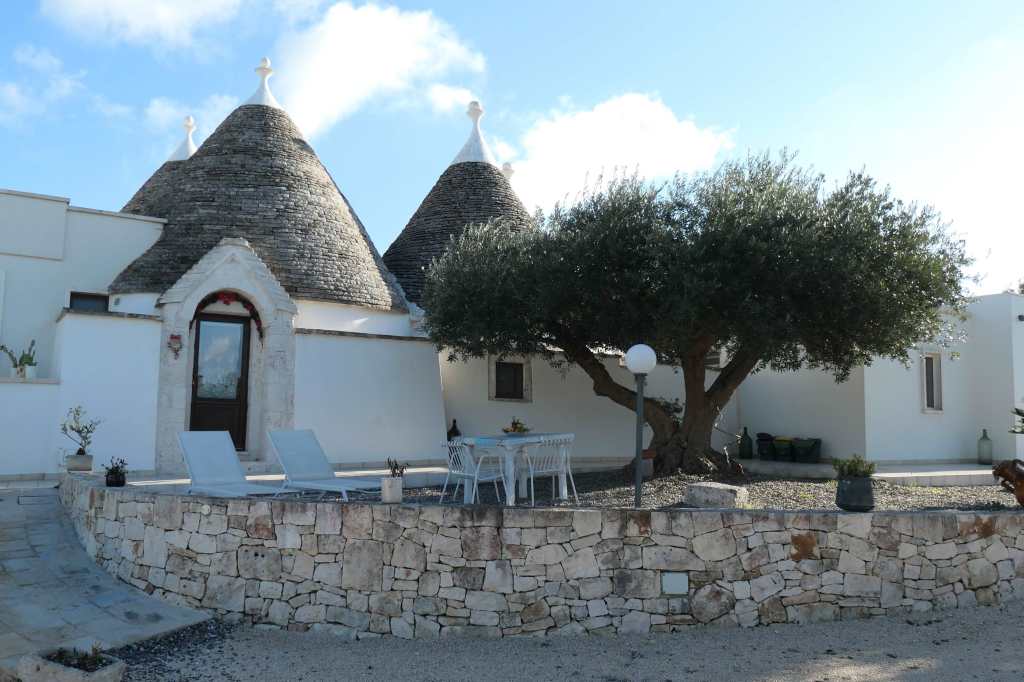
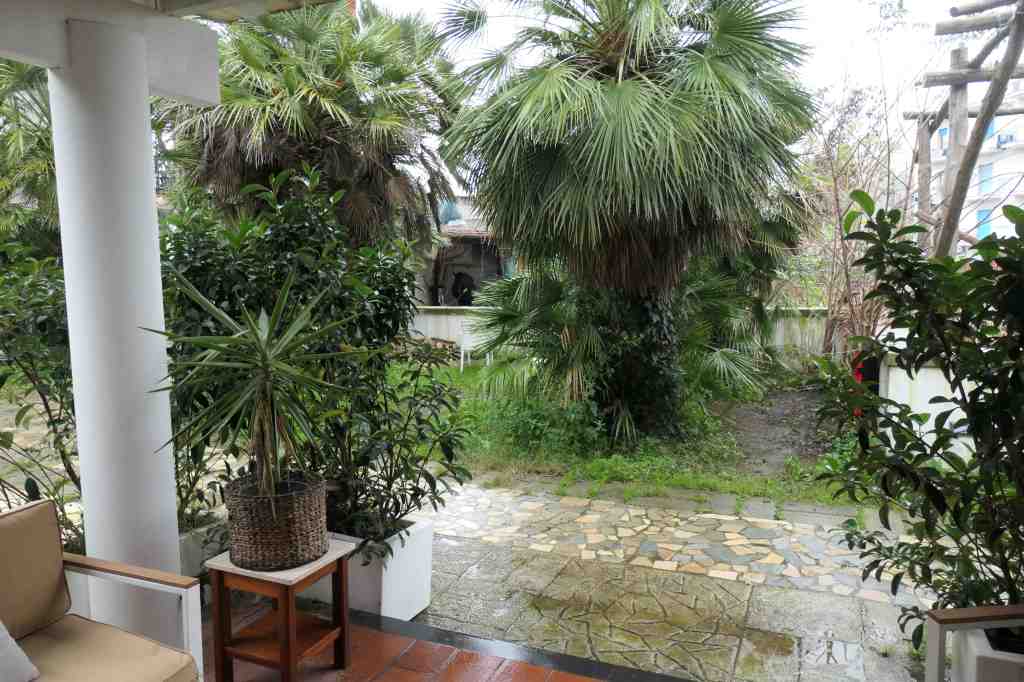
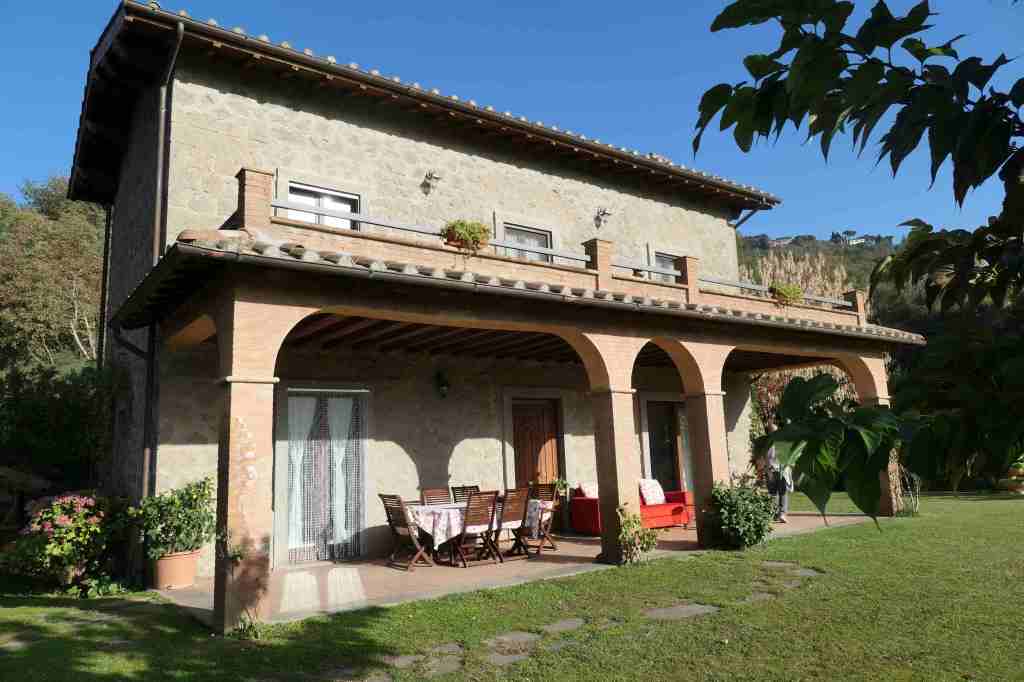
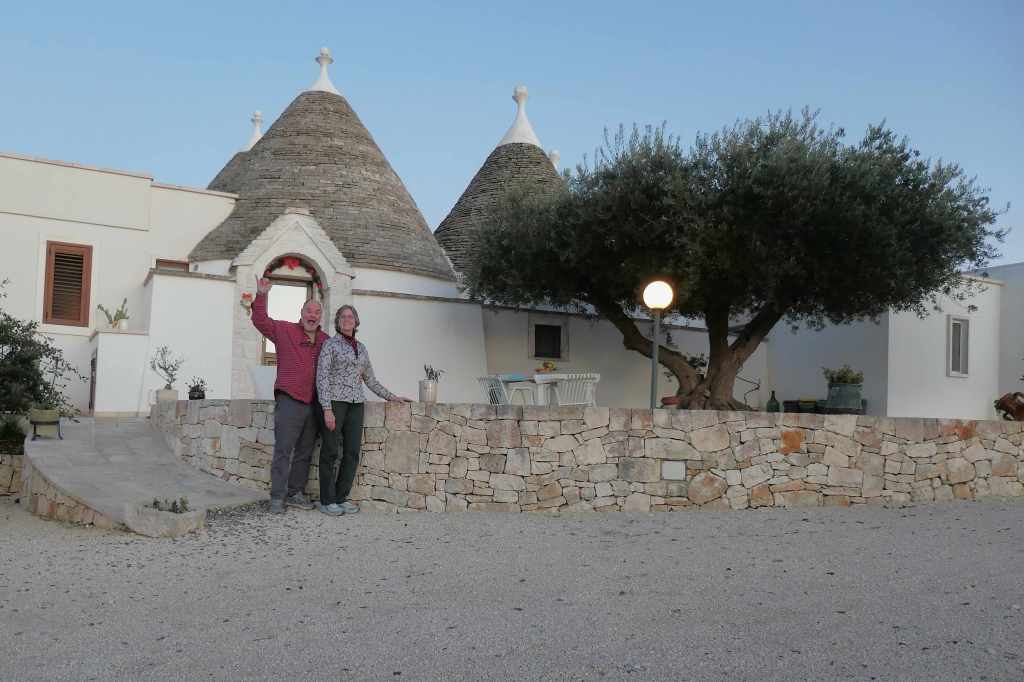
In the morning light, we saw our spot.
We went back another day to photograph some of the things we’d seen whilst zipping along in our little car in the dark. Most of all, the amazing olive trees we’d marveled at but could barely see at dusk. Bigger than any we’ve seen in this land that’s covered in them!
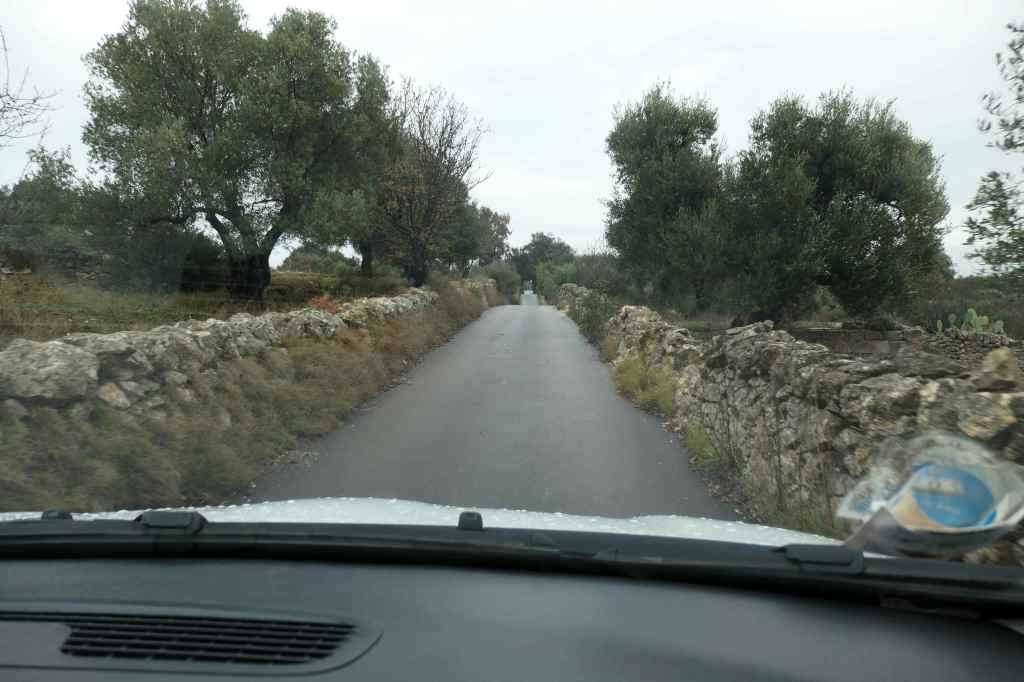
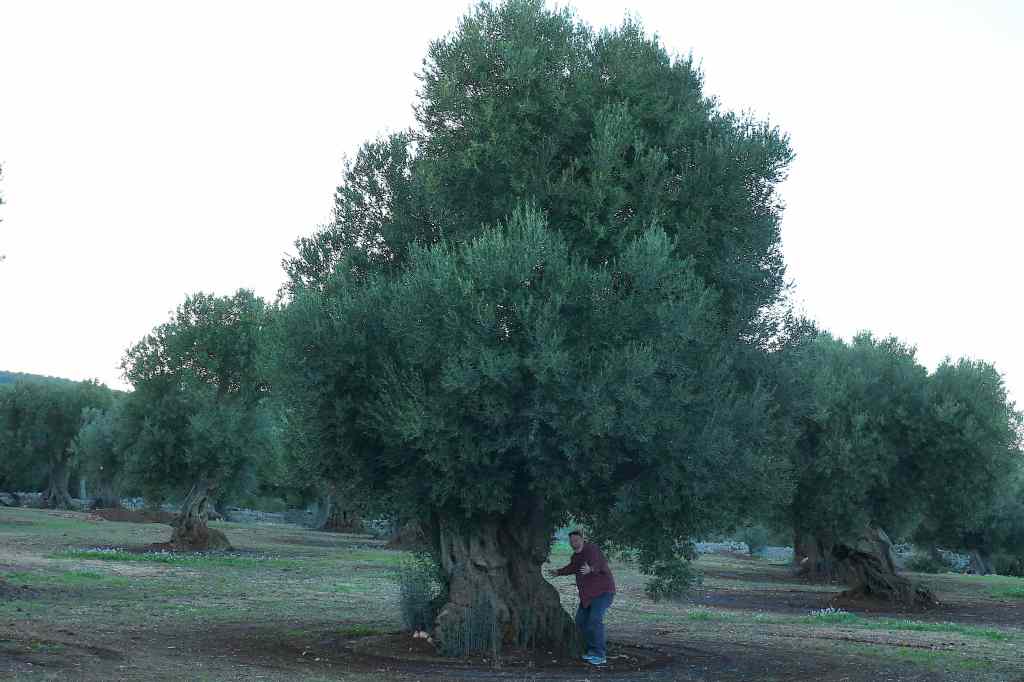
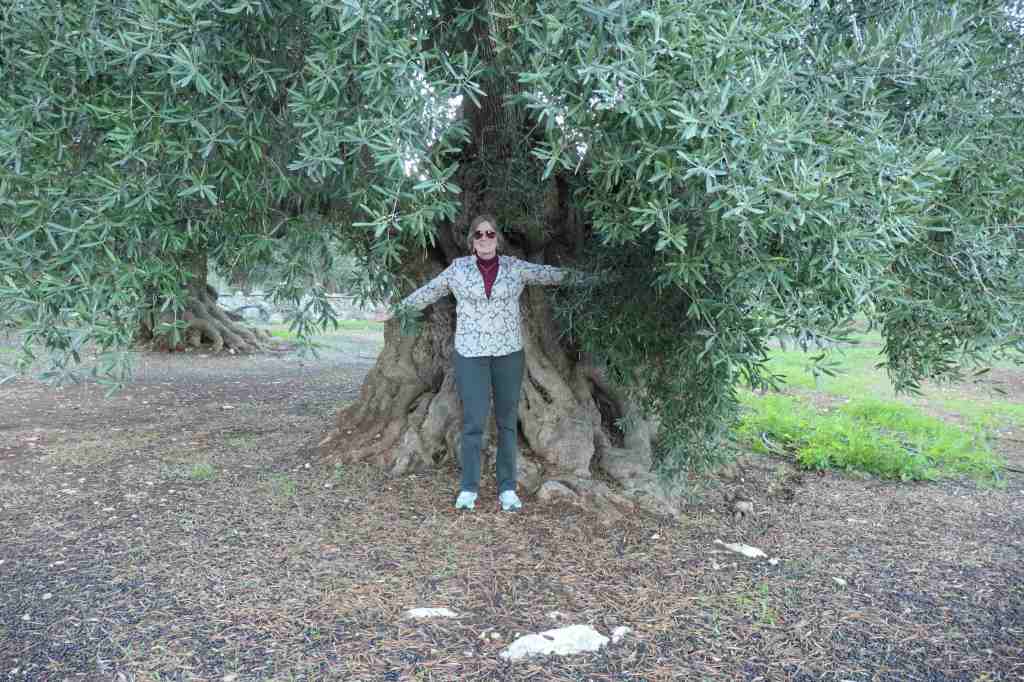
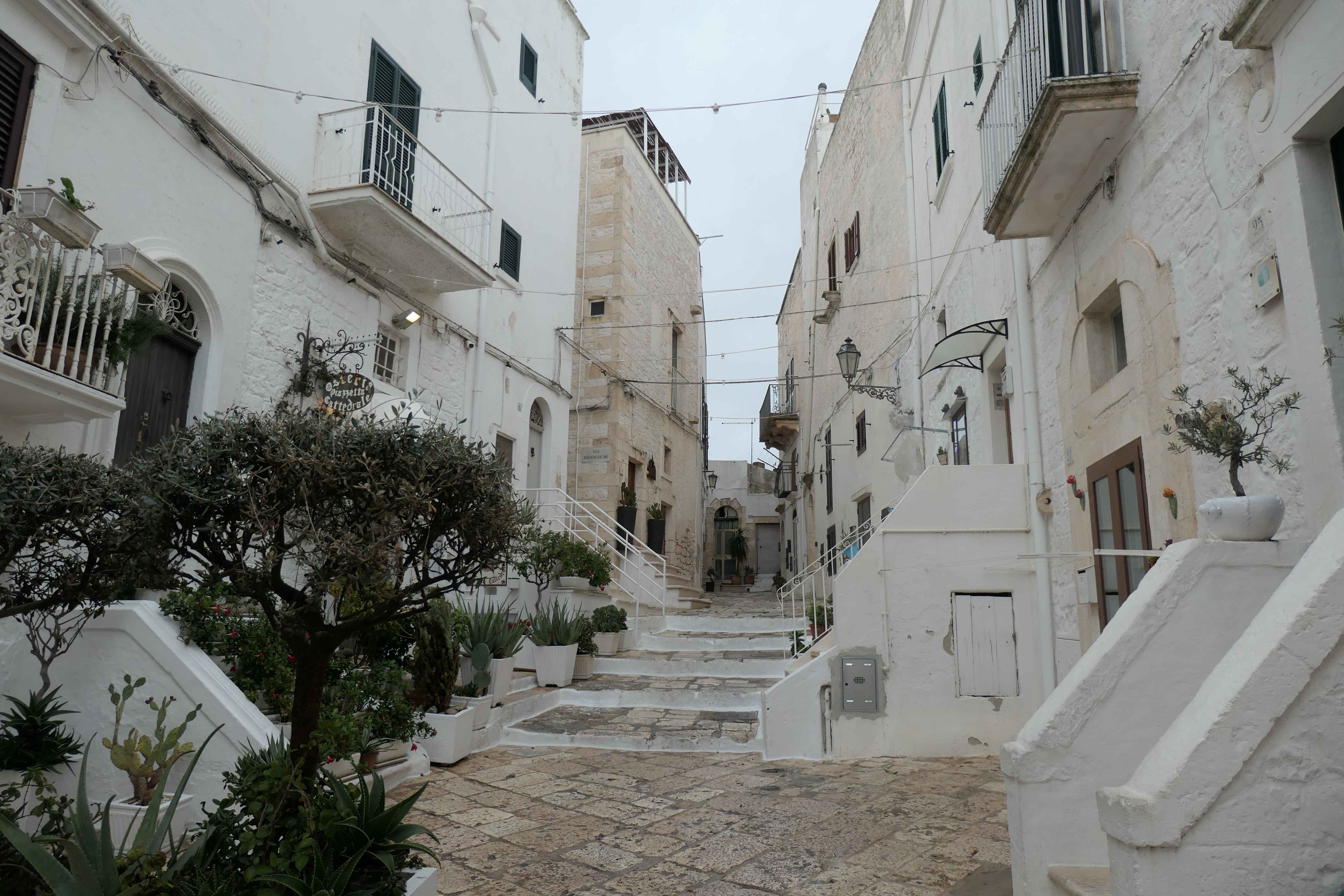
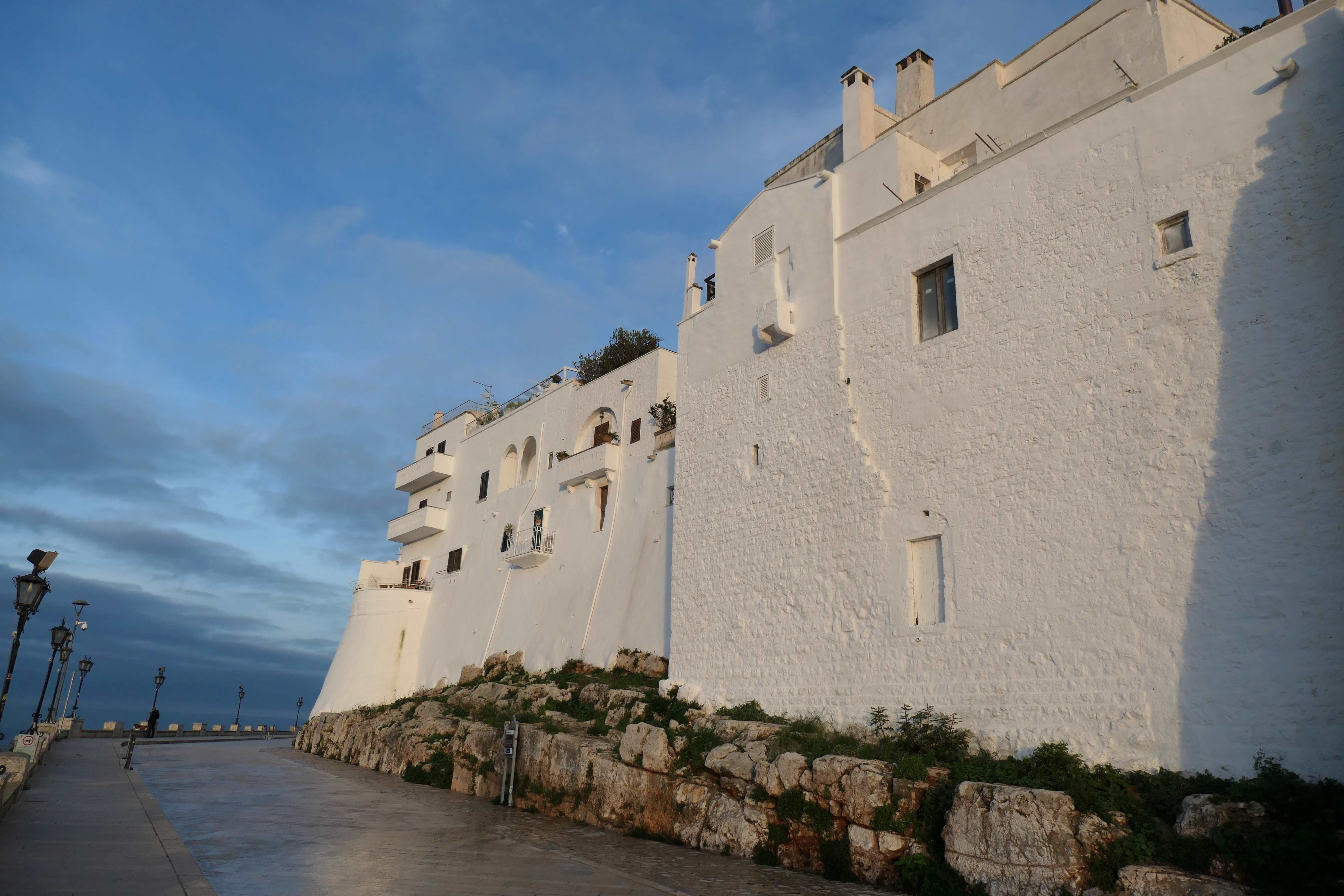
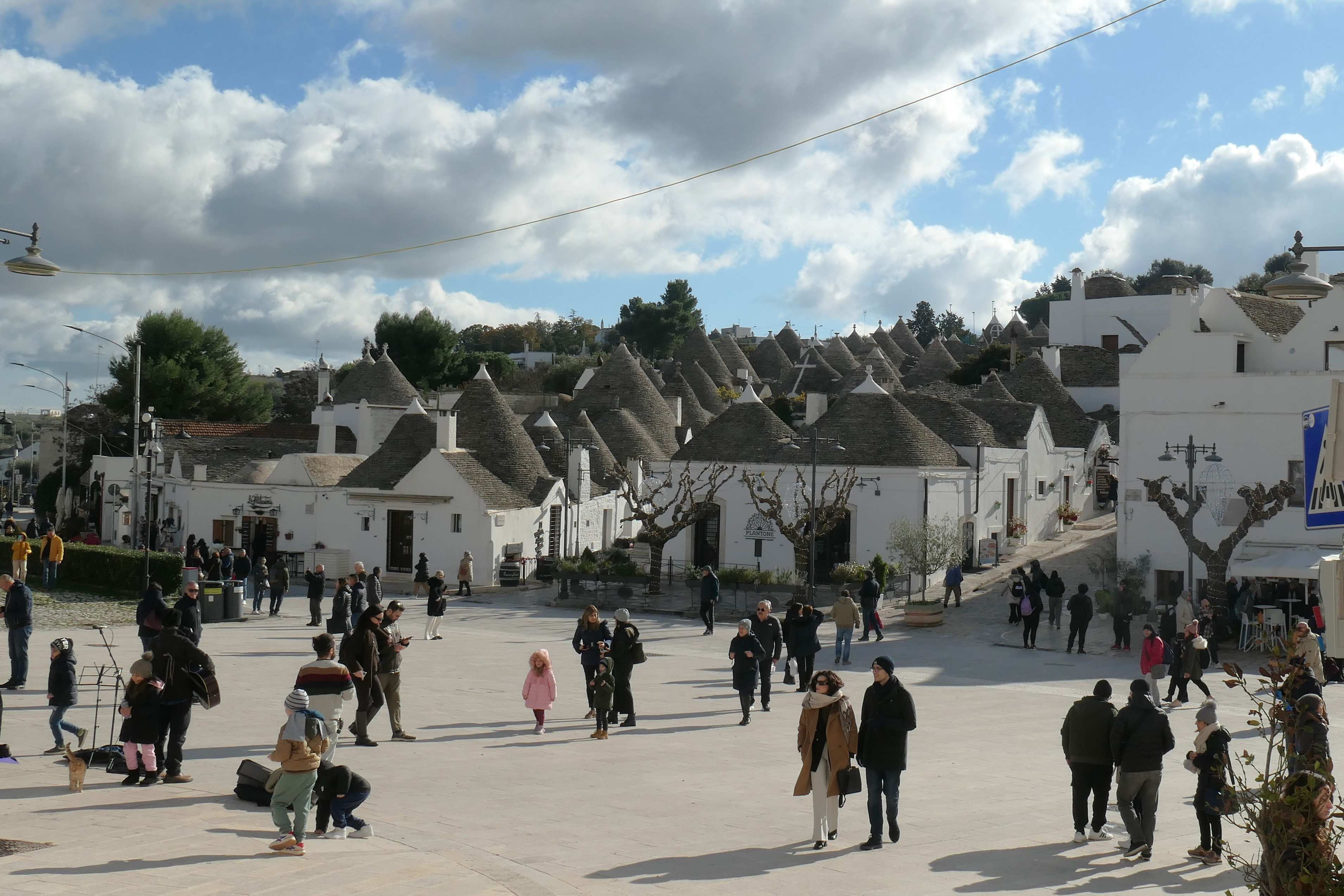
During the tree-hugging “backtrack,” we sidetracked again. Ha! This time to check out Ostuni in the Province of Brindisi. The “White City” of Ostuni and its nearby towns, known for producing high-quality olive oil (go figure!), strangely, is the fifth in Italy by percentage of British residents and the first for sale of houses and villas.
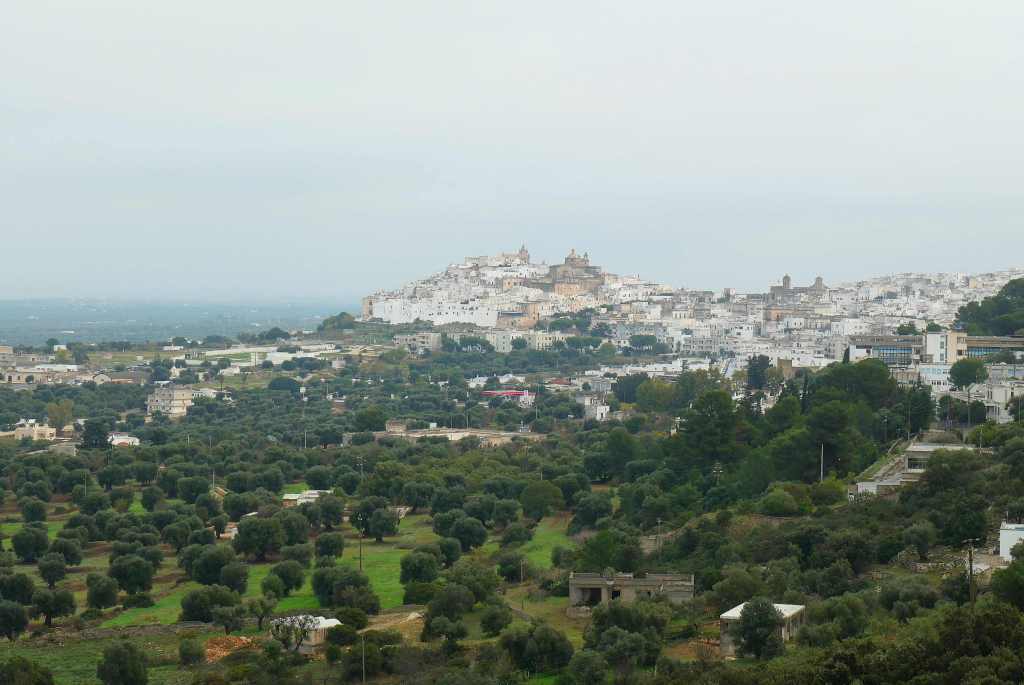
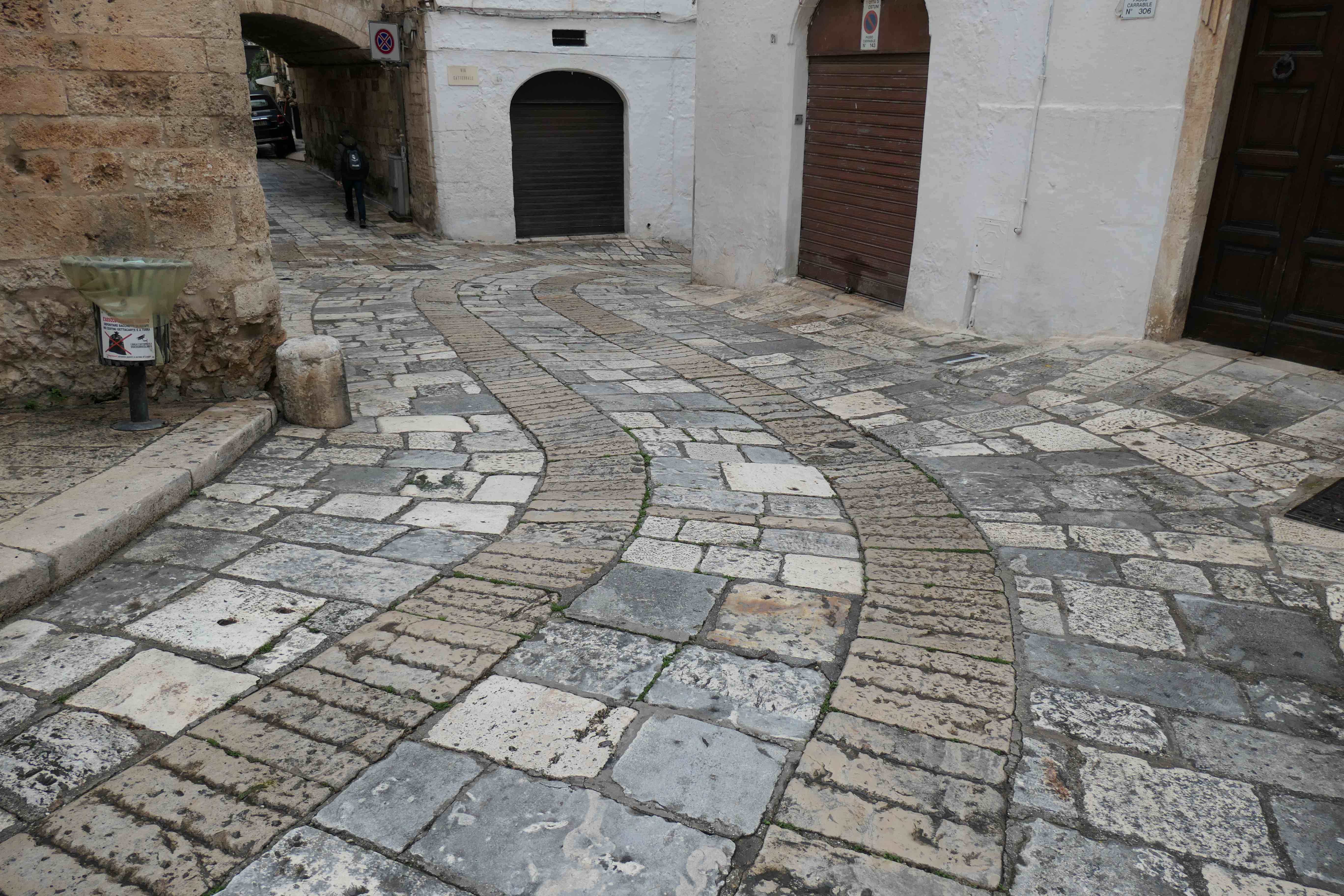
Being among the main towns attracting tourists in Puglia, Ostuni has a population of about 32,000 during the winter, that swells to 200,000 in the summer. In December, we had the maze of hilly white streets in the Old Town area pretty much to ourselves. (Yeah planning… 🙂 )
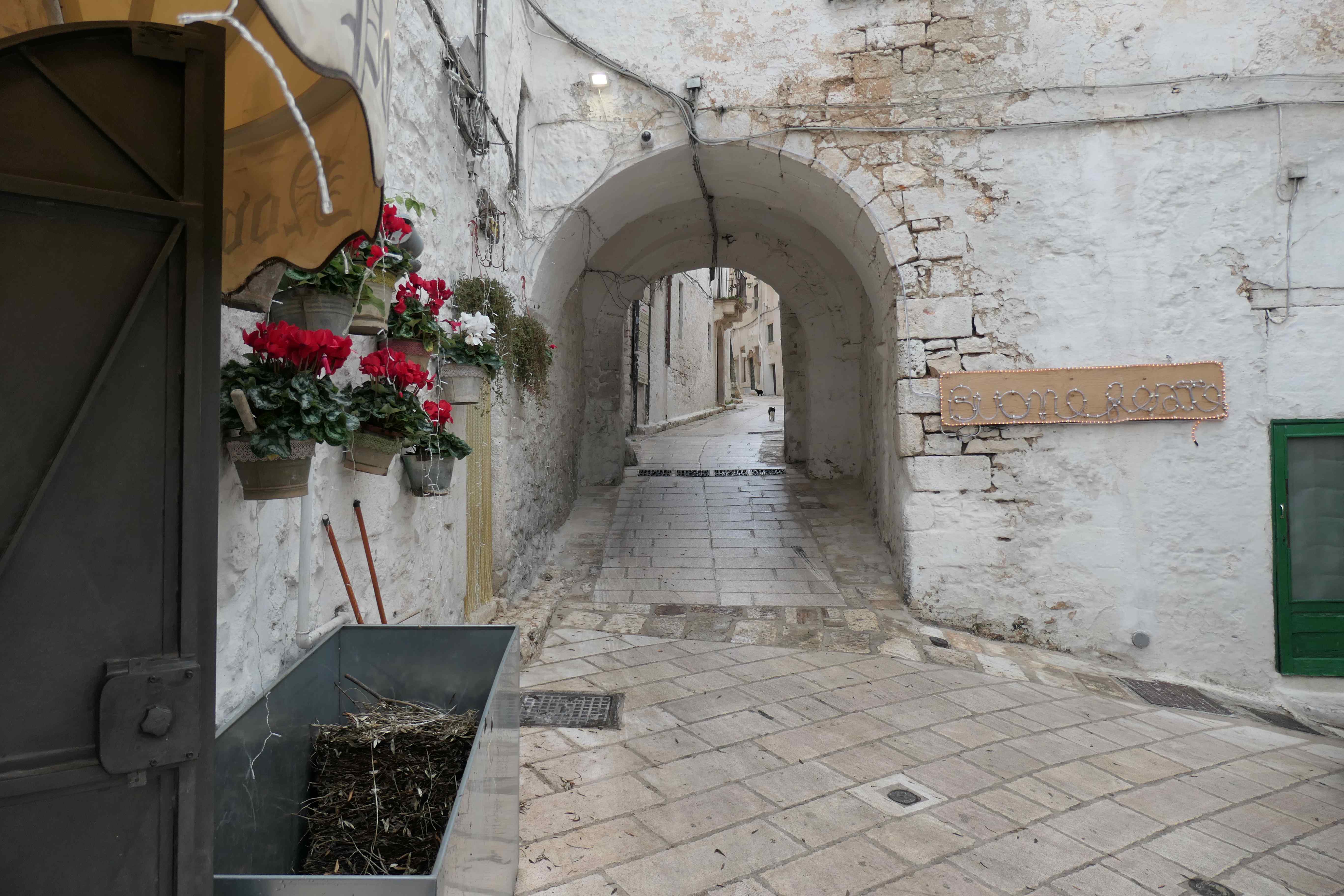
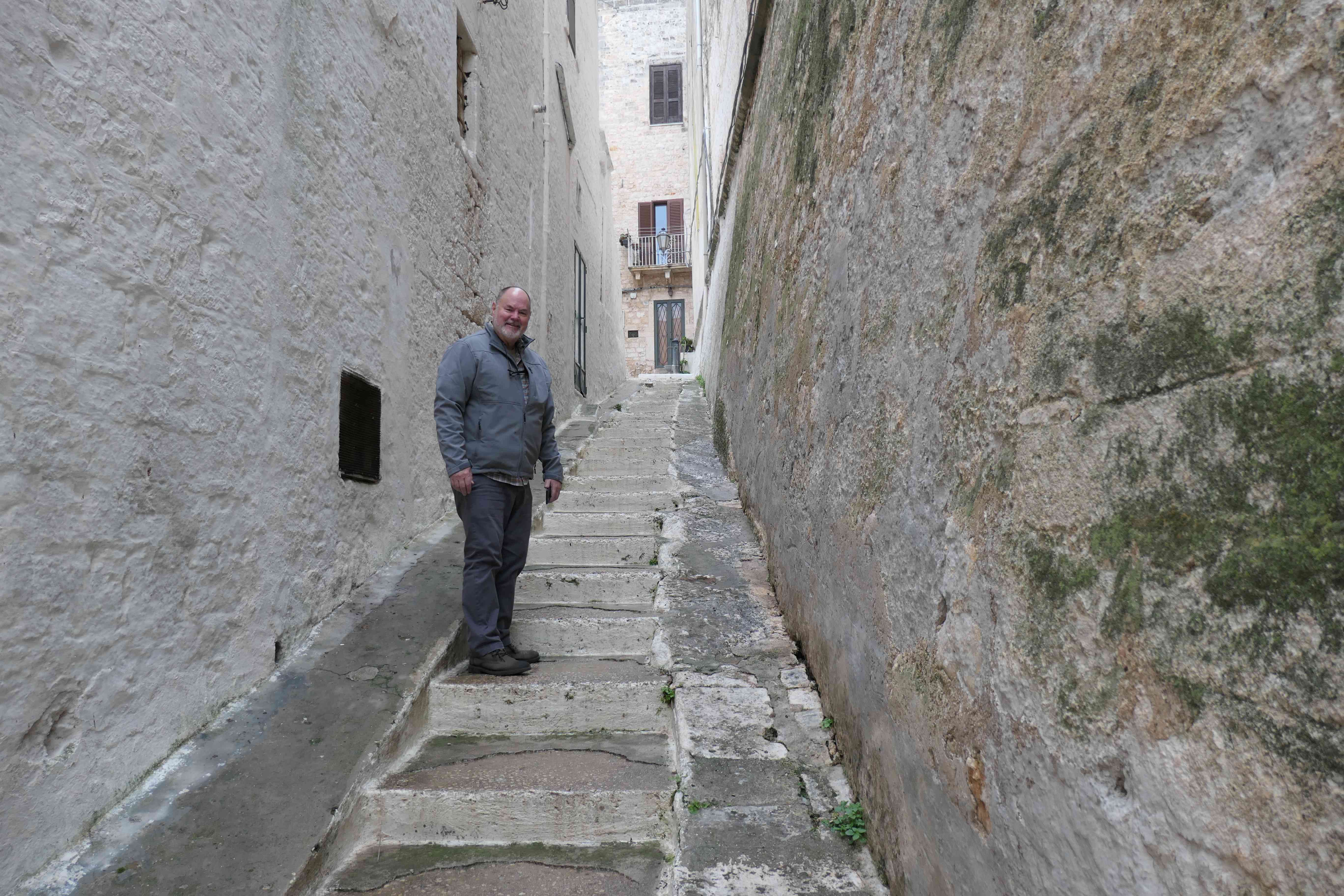
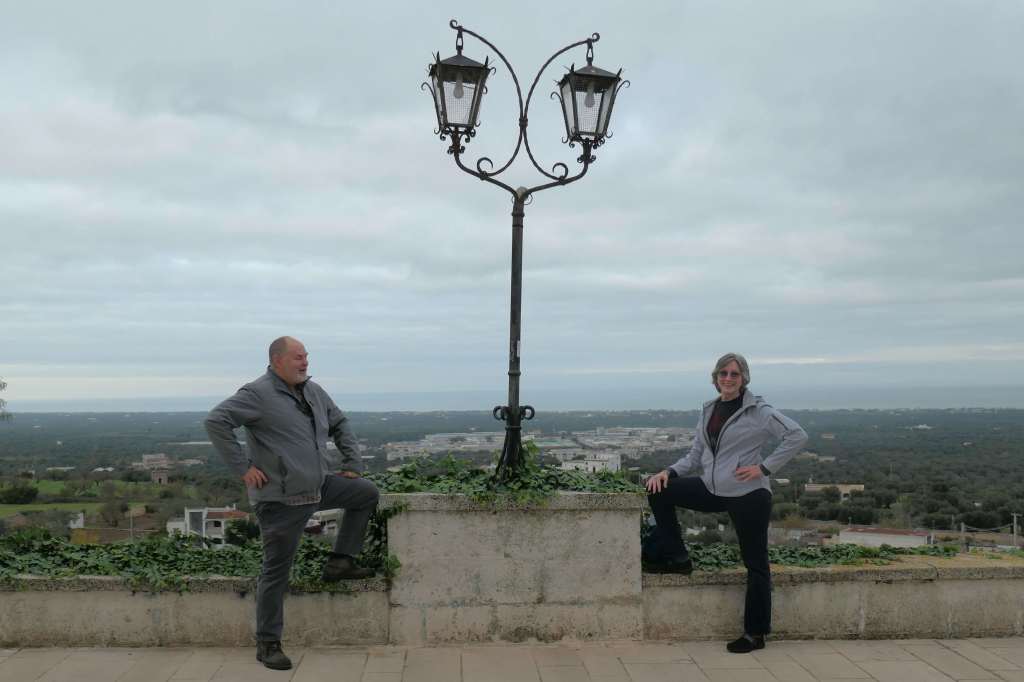
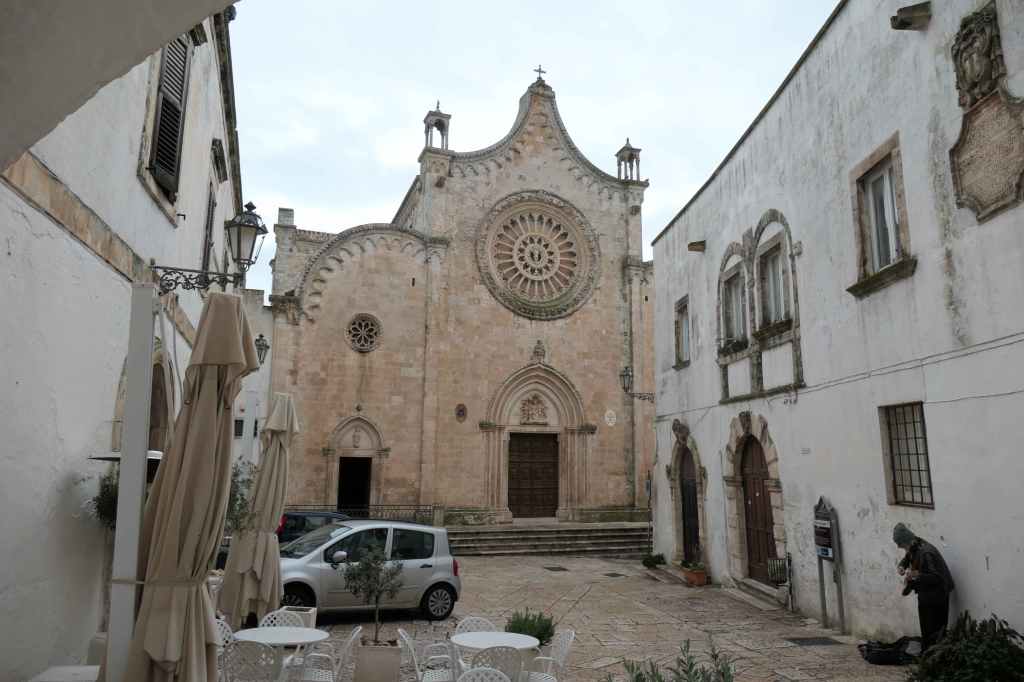
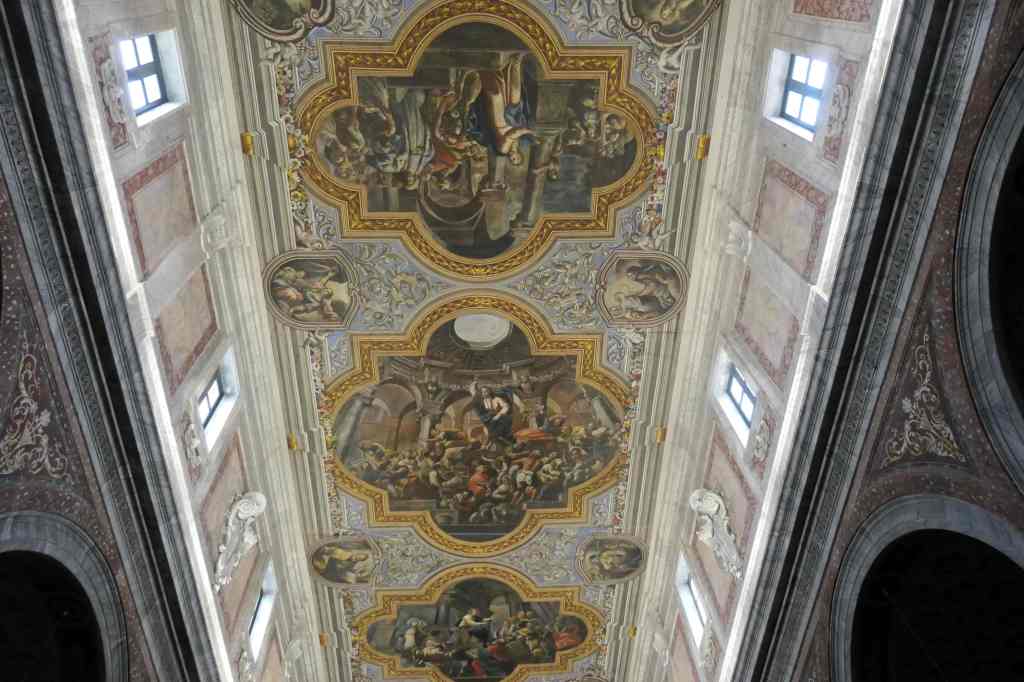
After stopping by the historic cathedral in the center of town, we took a moment to clown around with the architecture and take in the view, where we met a nice young man from the United States.
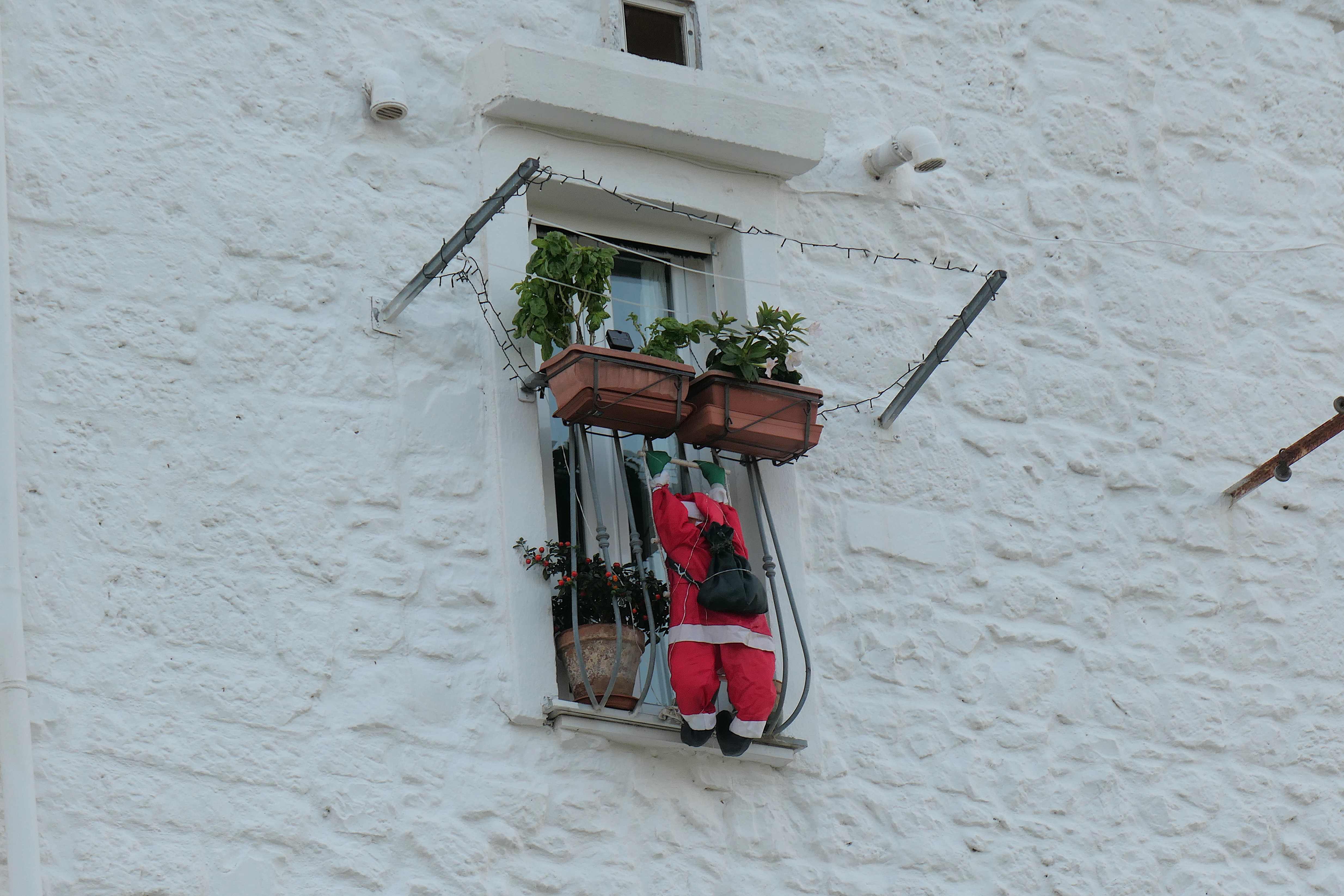
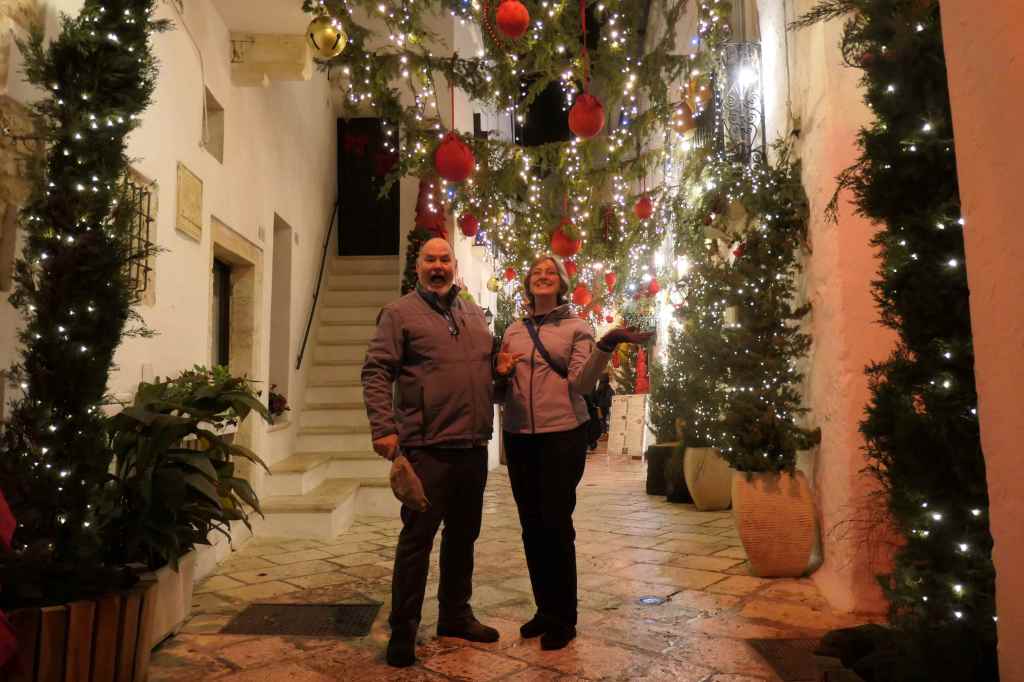
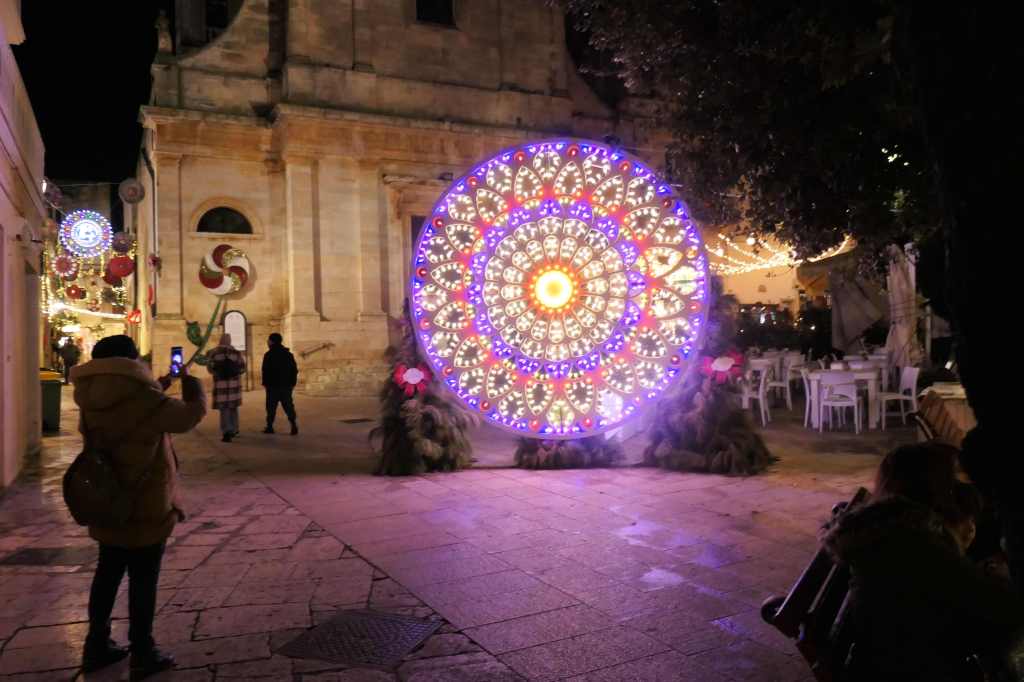
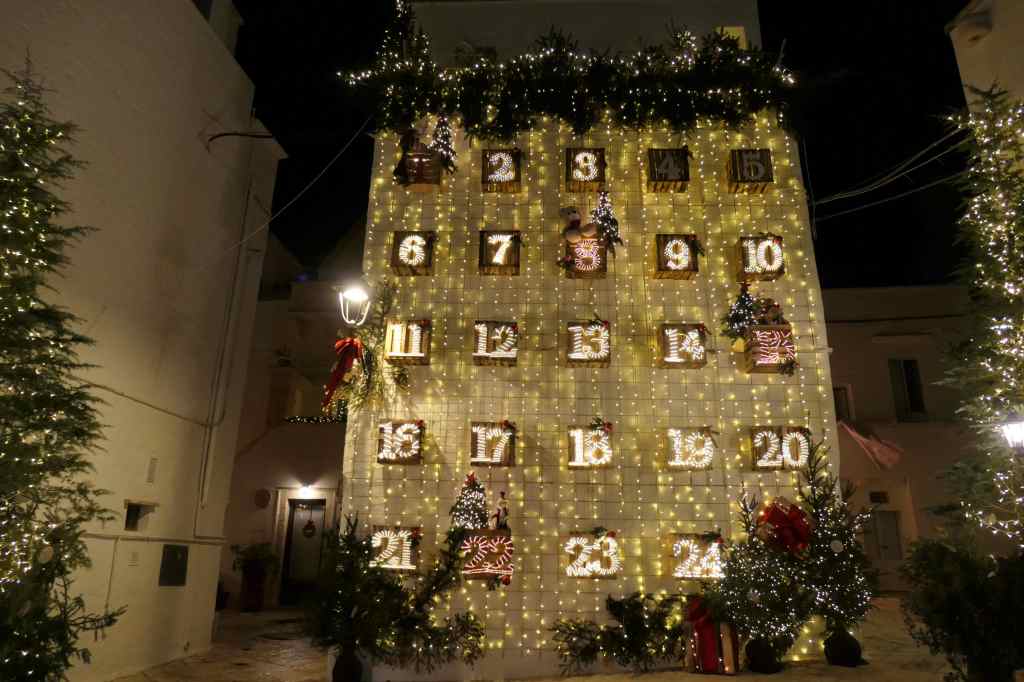
On the way back to the rental, at the suggestion of our host, we explored another charming, white-washed hilltop town to sip hot chocolate and enjoy the Christmas lights. Locorotondo, a town within the Metropolitan City of Bari, is a winner of the coveted “Most Beautiful Villages in Italy” award, and on this night, the town was wearing lots of sparkles!
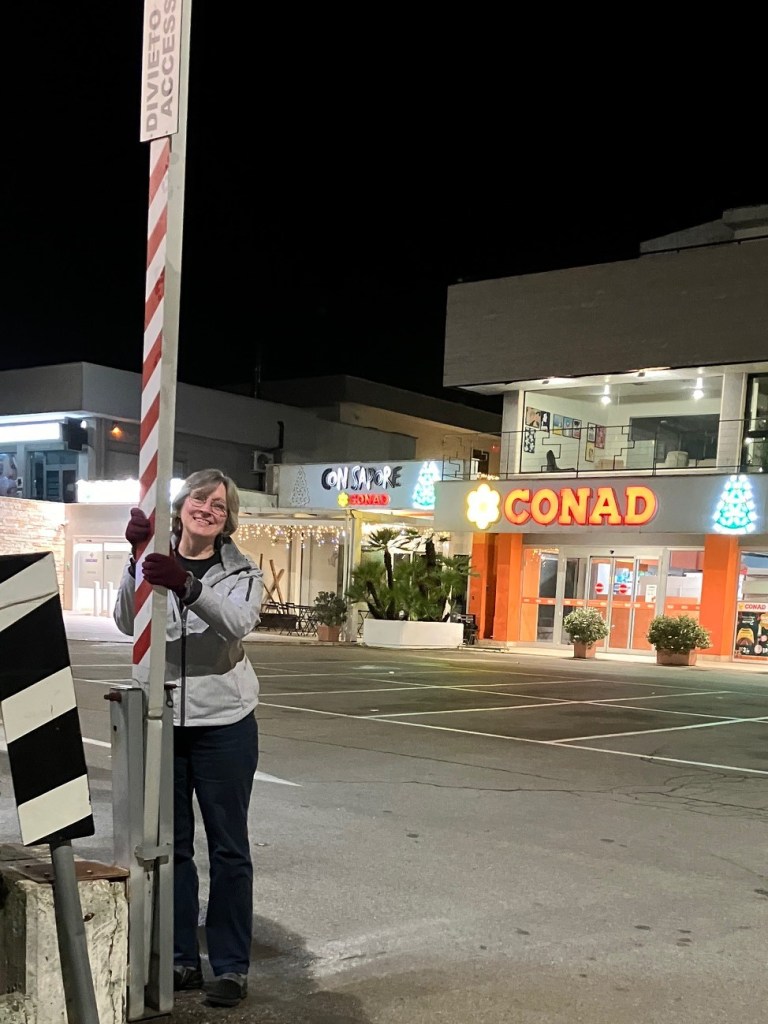
With all that walking, we’d worked up a fair appetite, so we stopped at a Conad market for dinner supplies. By the time we’d made our purchases, however, our appetites far exceeded “fair,” so taking the recommendation of a store employee, we stowed the purchases, left the car parked and headed “just across the street” to find the Fidelio Restaurant, which was, 1) a bit further than expected, and 2) … CLOSED.

Todd thinks, hmm what’s that lit up a little farther down the street? With some help from Google, he made a call. (Reservation? Yes, please, can you take us in ten minutes? We’ll walk slowly. 🙂 )

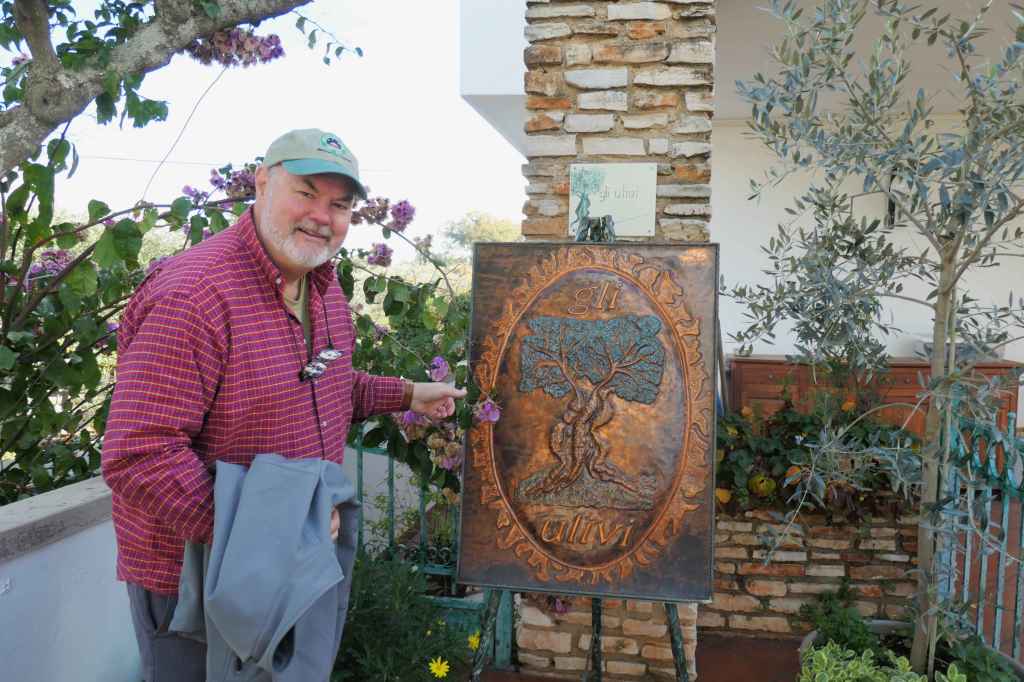
We arrived to find the lively Restaurant Gli Ulivi (“Olive Trees”) packed with locals. The prices were more than fair, and the food was great! We met and enjoyed chatting with one of the well-spoken principals, Vito.

With full bellies and restored spirits, we cheerfully headed back to the parking lot to retrieve the car but arrived to find the grocery store closed and gates blocking both entrances to the street. Our car sat all alone, locked in!

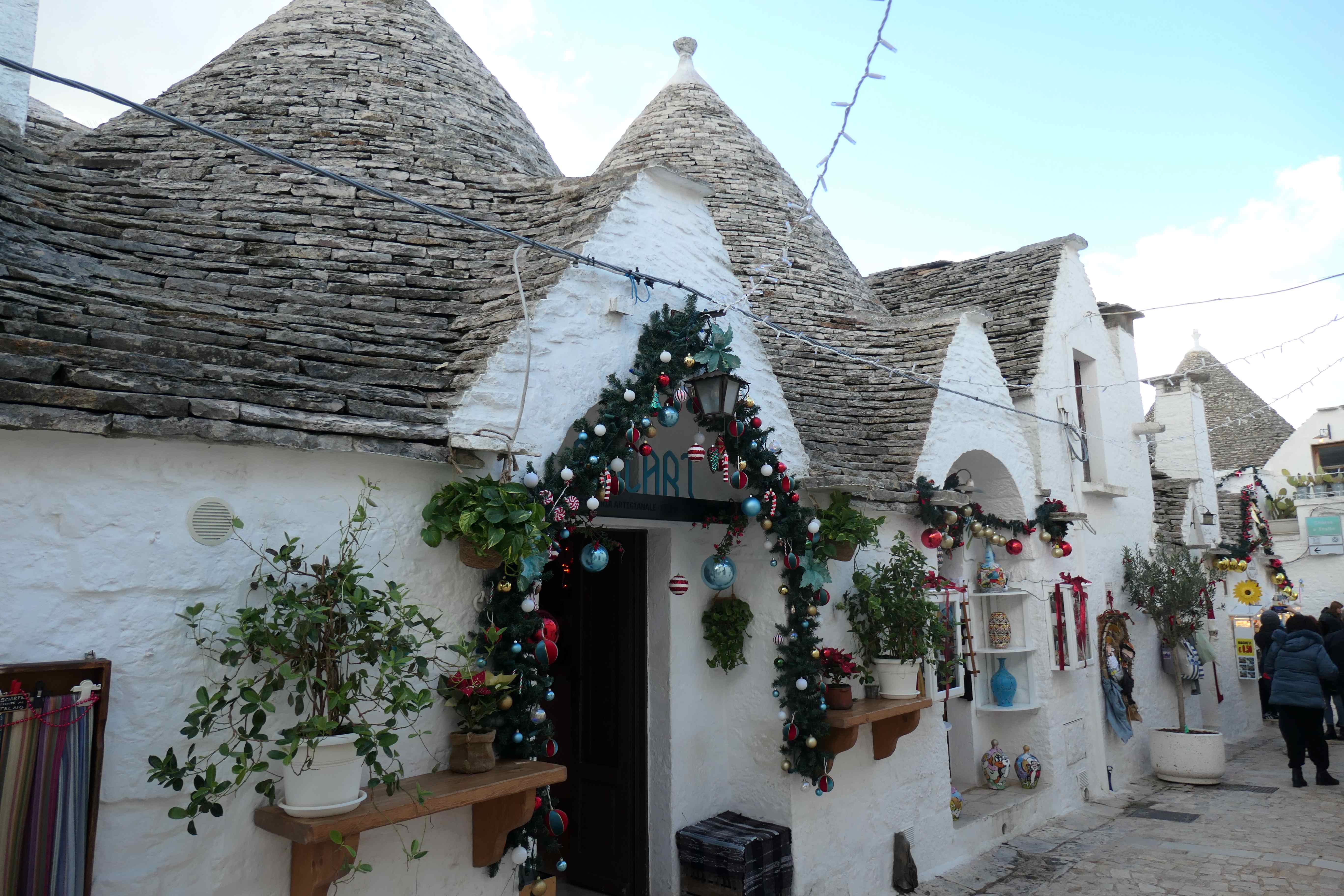
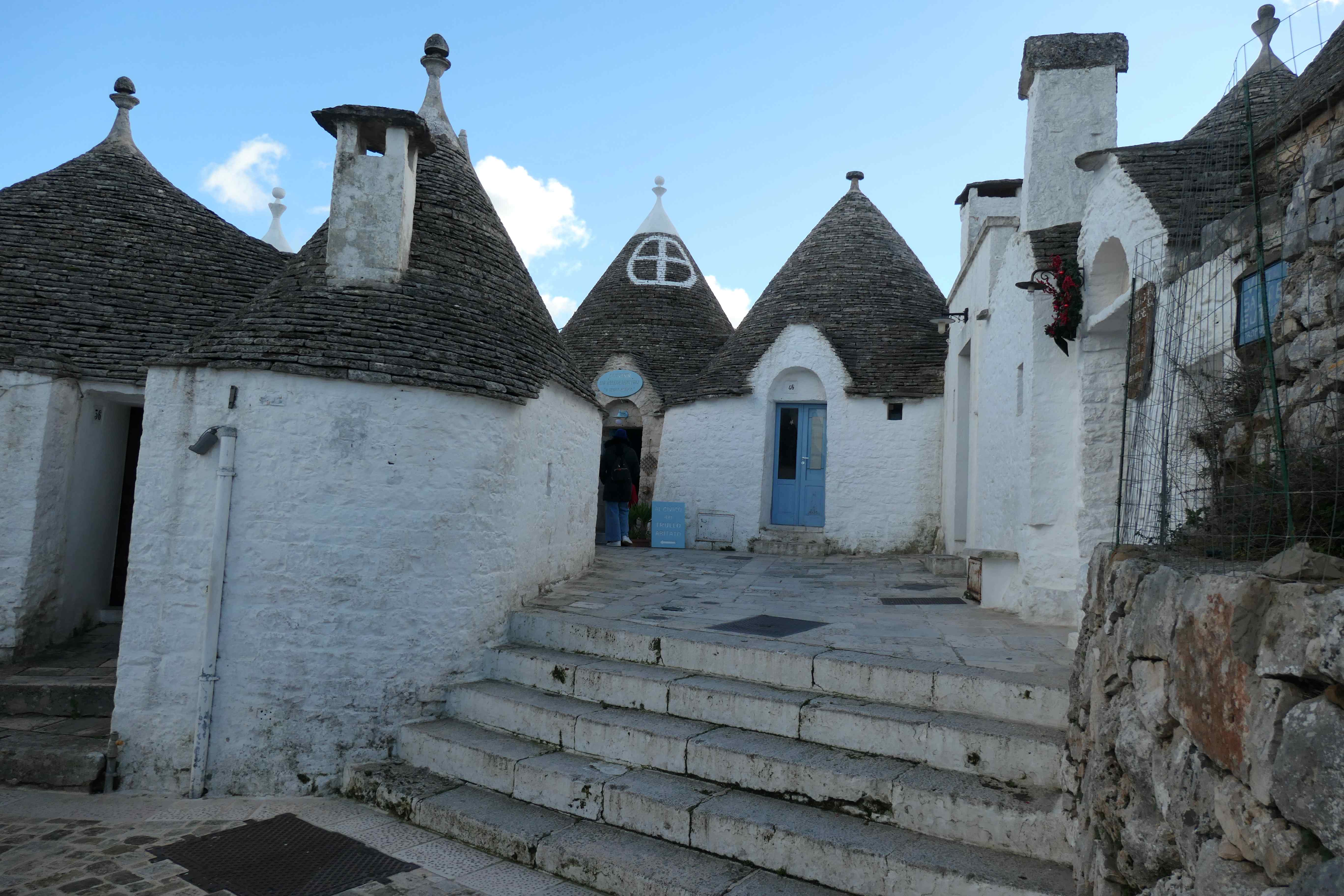
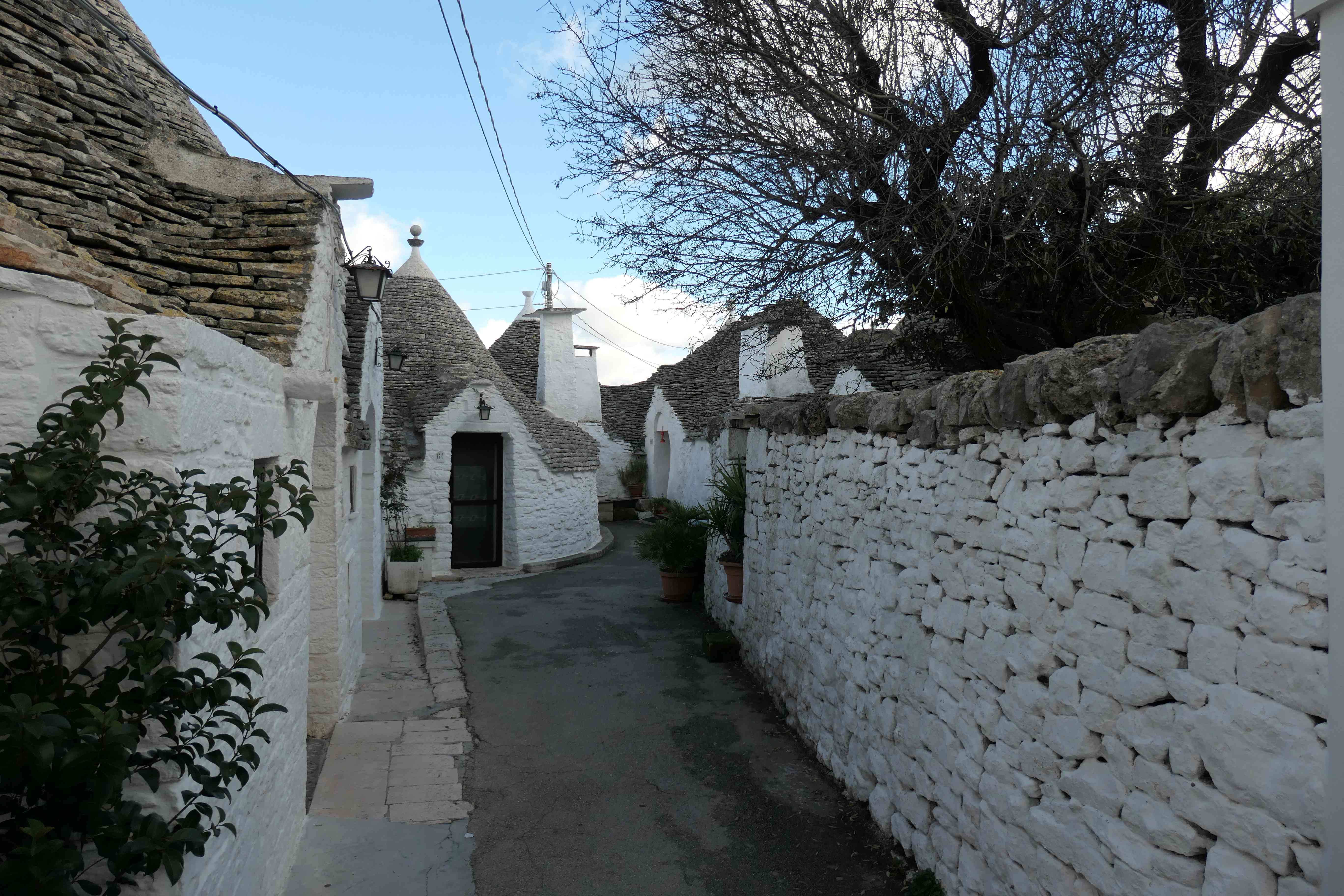
We chose the area near Alberobello for our stay in the boot specifically for the opportunity to sleep in a trullo. But just what is a trullo?

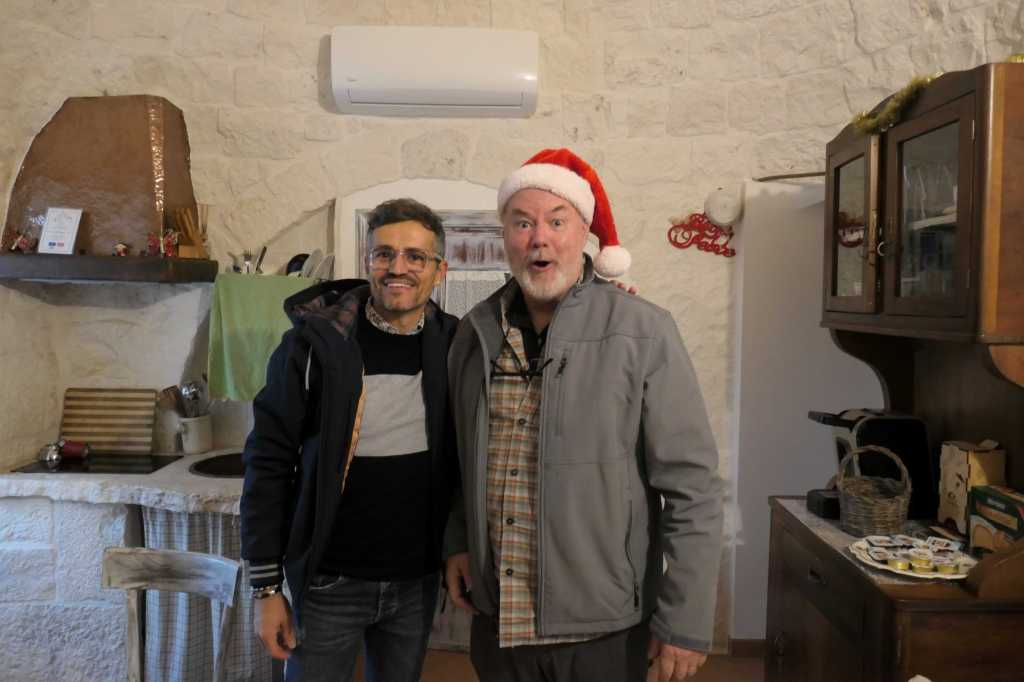
Using Google Translate, our host, Angelo, proudly provided the history of his trullo, which has been in the family for three generations.

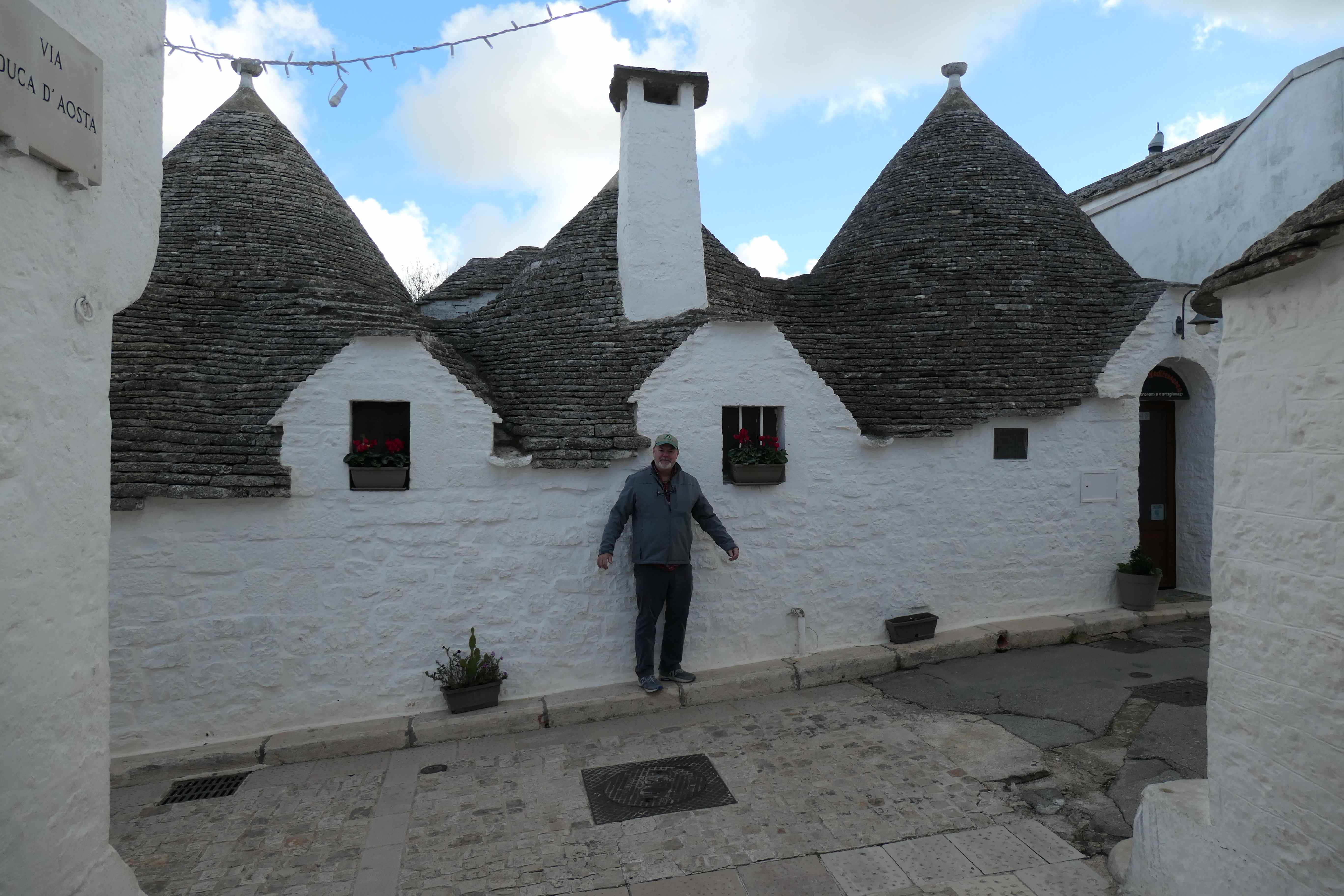
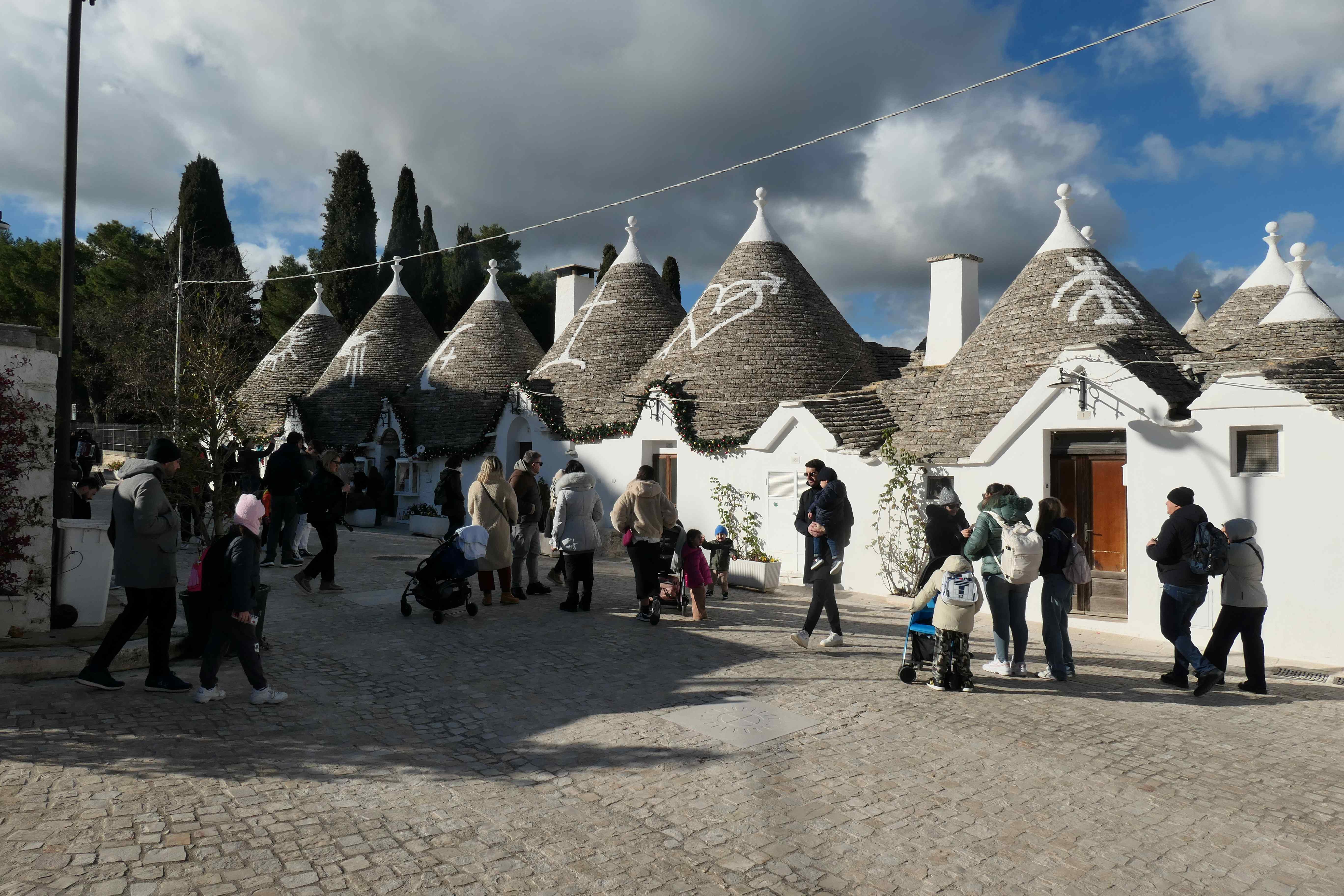
Specific to the Itria Valley in Puglia, trulli (plural of trullo) are dry-stacked stone huts with walls exceeding three-feet thick and double layer conical stone roofs. Originally built as temporary field shelters or, as in Angelo’s case, storehouses for grain, they became simple, efficient homes that could be enlarged as the family grew or “easily” torn down when the tax inspector was in the area. The rooftop pinnacle stone represented the signature of the stonemason and that the trullo was finished and now occupied.

After we’d been introduced to the history of Angelo’s family trullo, we headed to the enchanting town of Alberobello, Puglia’s small town full of unique, stone-roofed trulli homes. A UNESCO World Heritage Site, Alberobello has also been awarded as one of the “Most Beautiful Villages in Italy.”
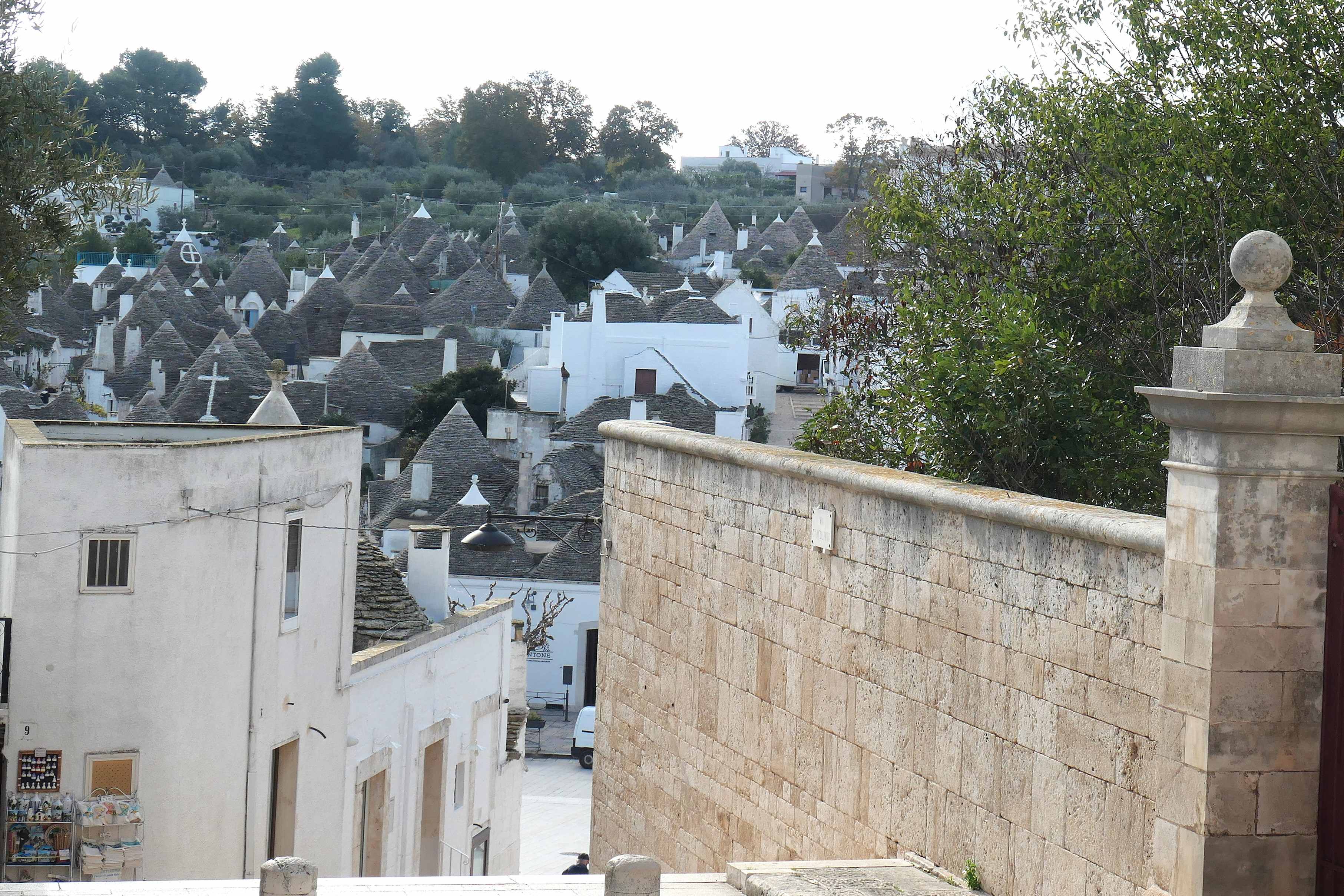
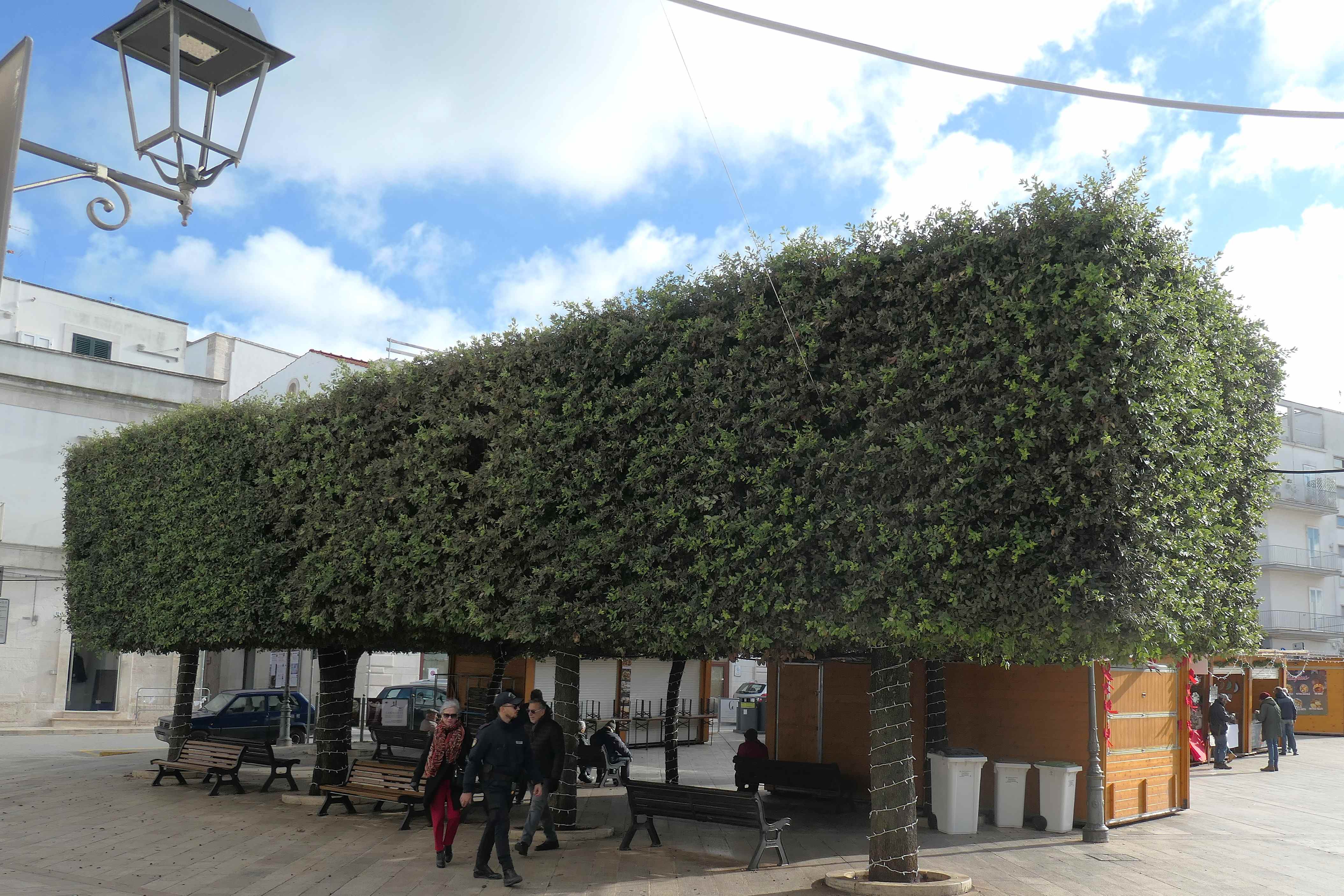
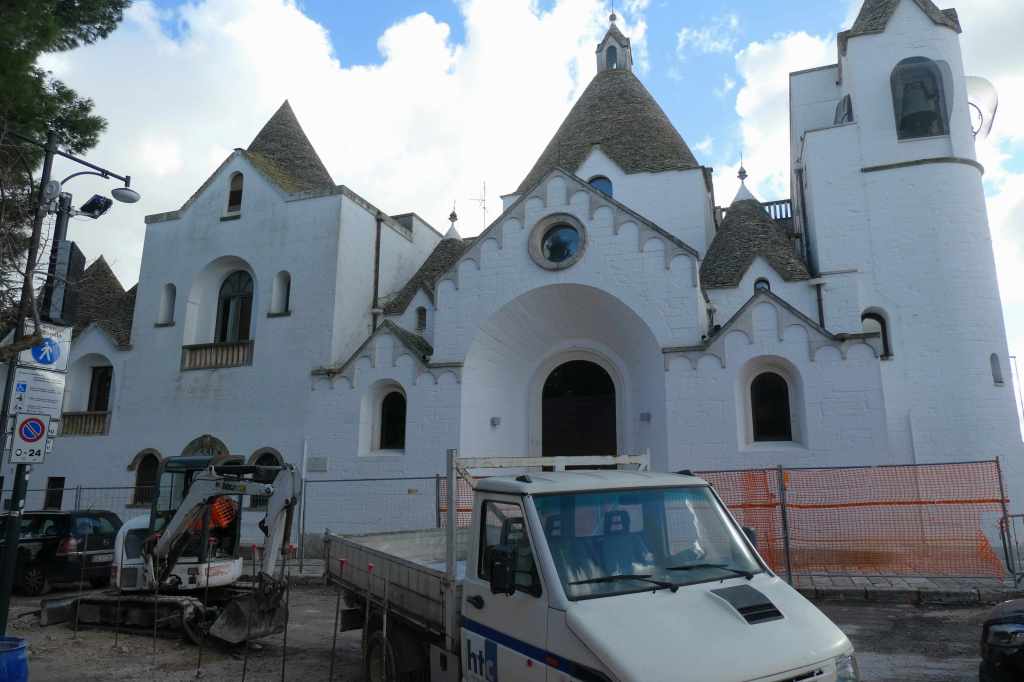
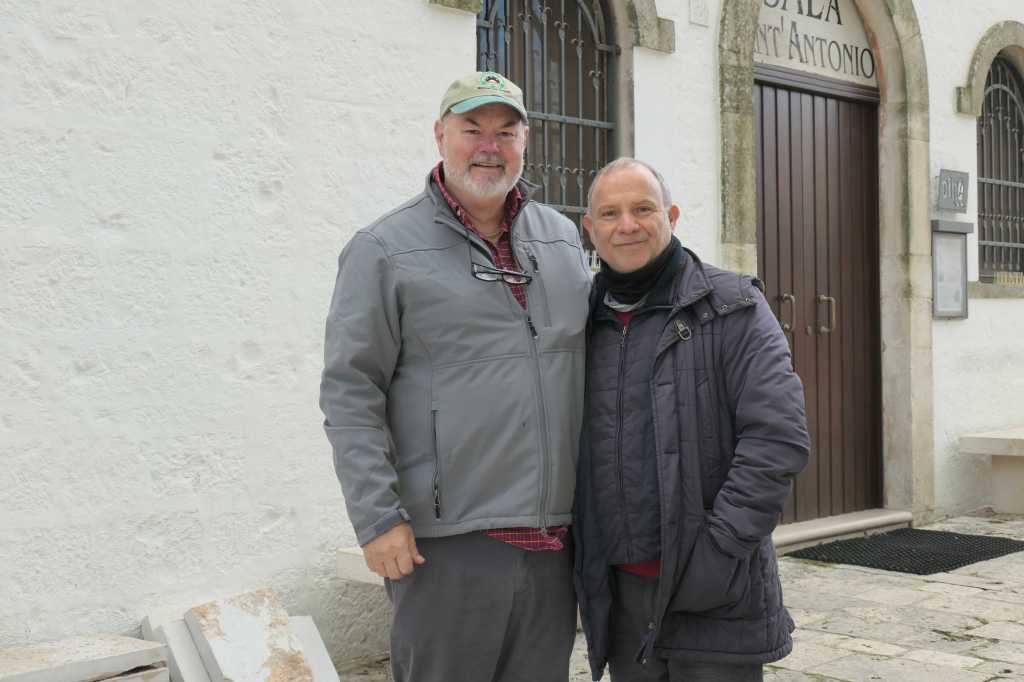
We made our way through the dual villages to the large church at the far end of the historic area to find it closed due to an exterior construction project. As we turned to retrace our way through Alberobello, we practically bumped into… Vito, from the restaurant the night before!
We’re going to miss all of the olive trees!
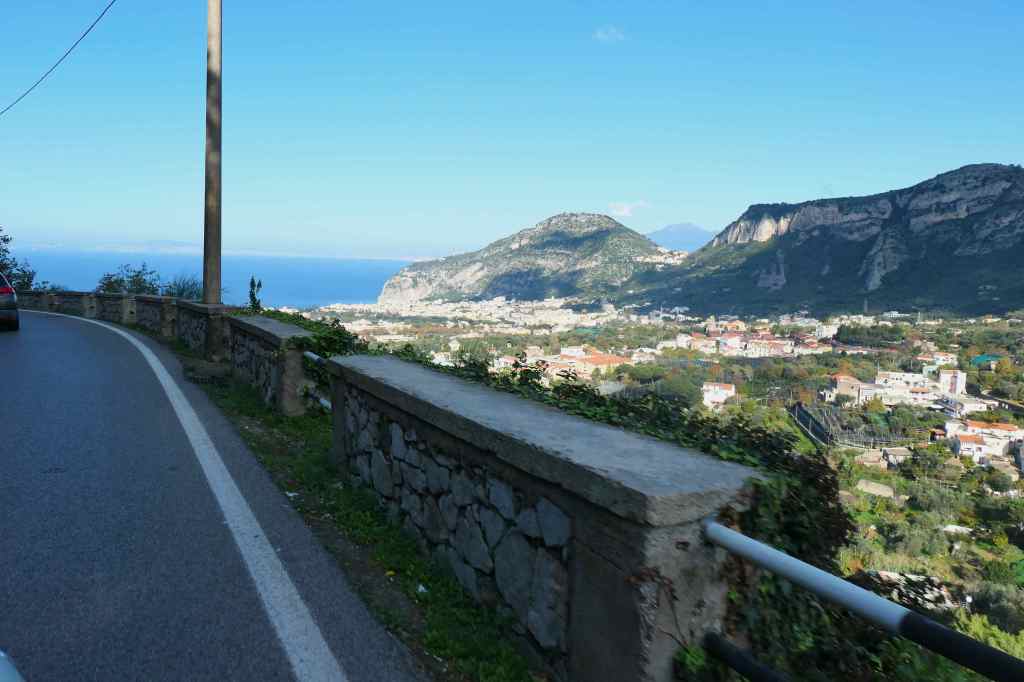
Amalfi… warm hearts

Now that we had our taste of Rome, it was time to move on. We reversed the process we’d used to get into the city by hiring a car service to take us to the airport to pick up another rental car for the rest of our adventure in Italy. (And we’d thought the first driver was a bit aggressive. This one? Mamma Mia, what a gutsy guy!)

Mobile again, our next stop was Massa Lubrense, 16 miles southeast of Naples out on the Amalfi. The drive was spectacular, along the side of the mountains looking out at the sea as we skirted the city of Naples.

Ah, Naples! World famous pizza, here we come! A-n-d… oops. Our timing was such that the restaurants were between lunch and dinner service, i.e. closed. Seems like our MO.


Forget the pizza, Todd had another surprise for Susie at our next rental.

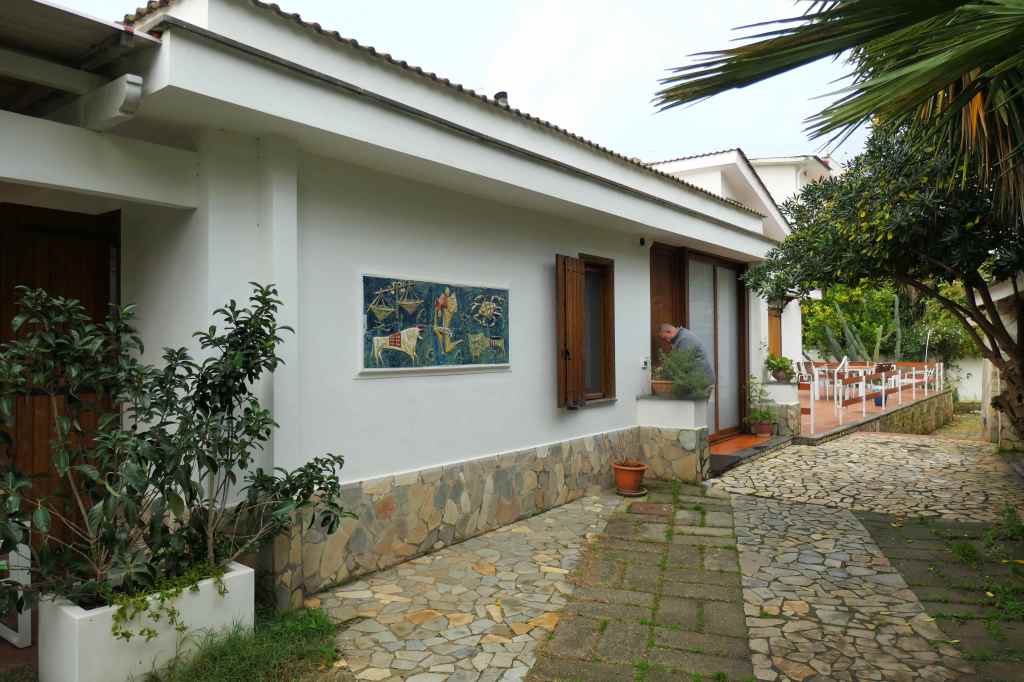
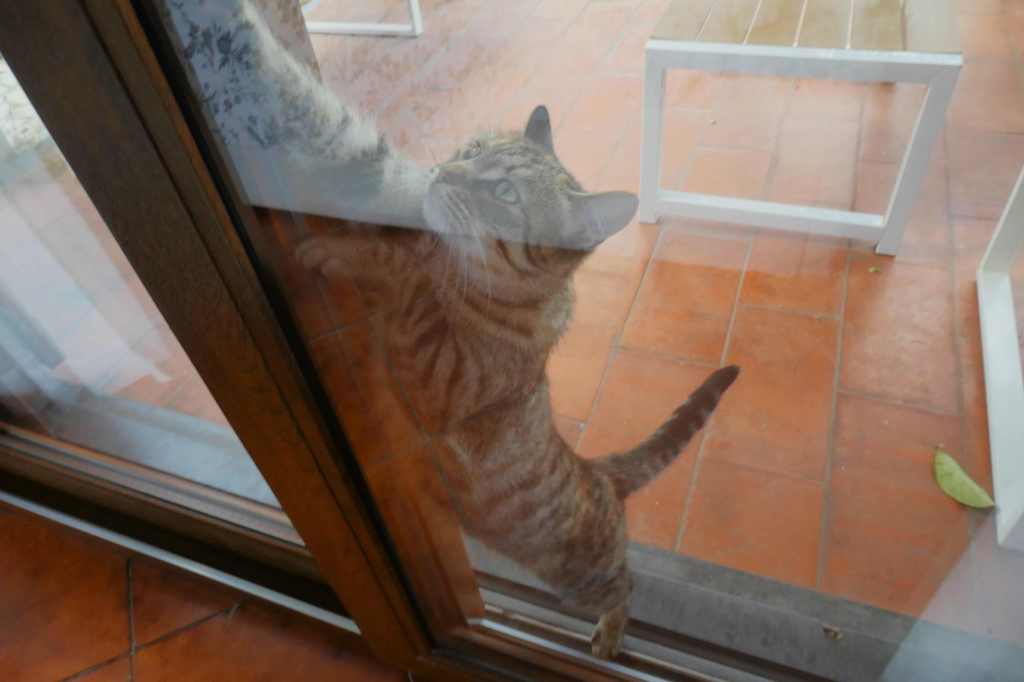
Federo had a little competition from another of the owners’ pets, a very clever gatto (cat).


Our host, Donato, had warmly greeted us and showed us around the apartment upon our arrival. During the first few days of our stay, we were able to meet Donato’s wife, Alessandra, and son Vincenzo, as well as their friend Rosa.

Next thing we knew, it was Thanksgiving. Time for a special meal! At least for the two of us from the United States. 🙂

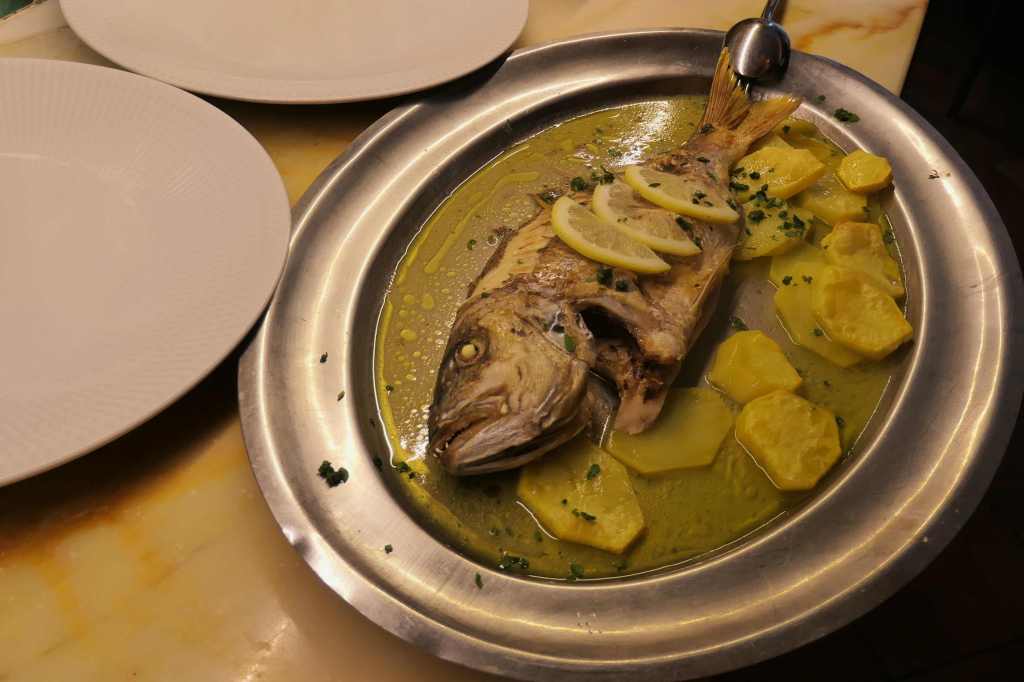
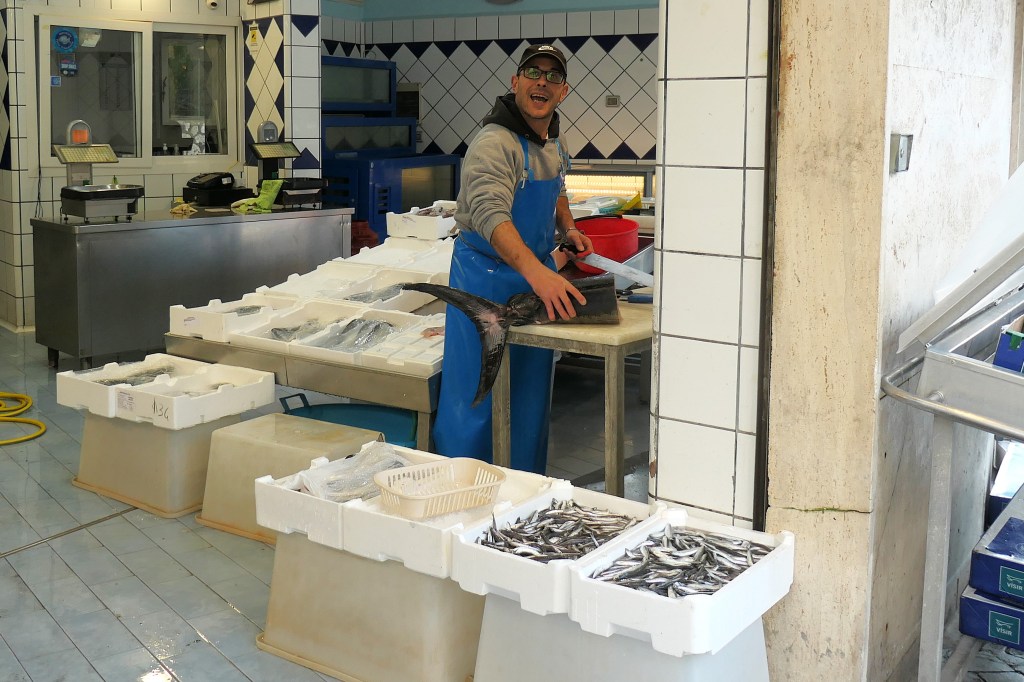
On Donato’s recommendation, we walked to Lo Stuzzichino Restaurant in the nearby village of Sant’Agata sui Due Golfi to enjoy a non-traditional feast. The owner, Mimmo, showed us to a table, then returned bearing a tray on which was laid a raw, whole fish, “fresh from the sea!” which he enthusiastically suggested for our dinner. Okay. Who are we to argue?


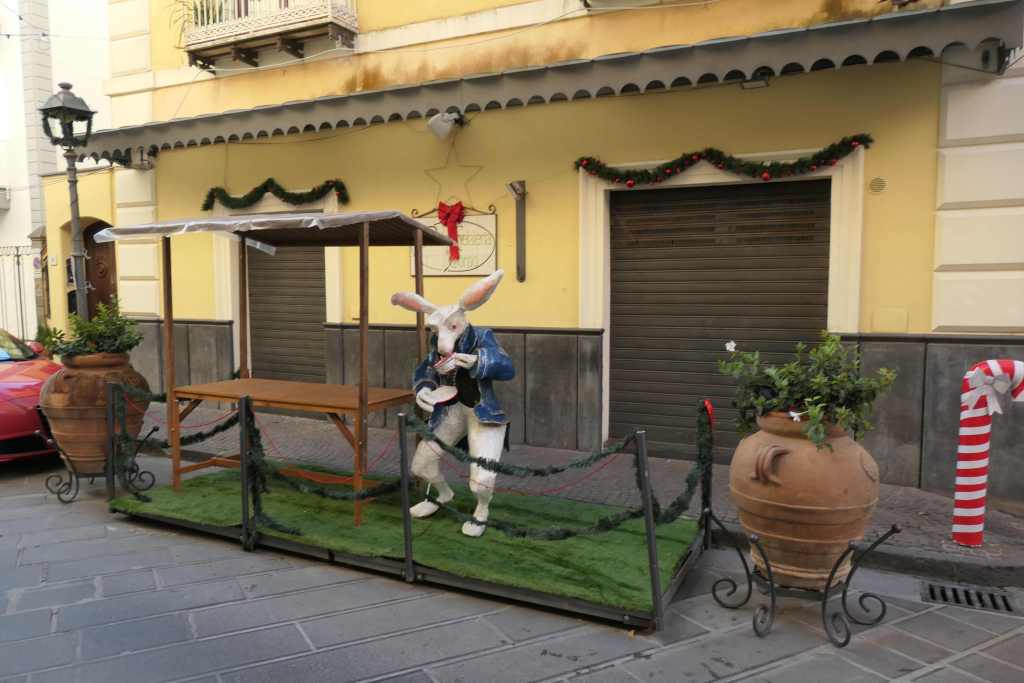
A few days later, one of the shopkeepers invited us to return for a Christmas Street Festival that evening. Lights. Food. Fun.


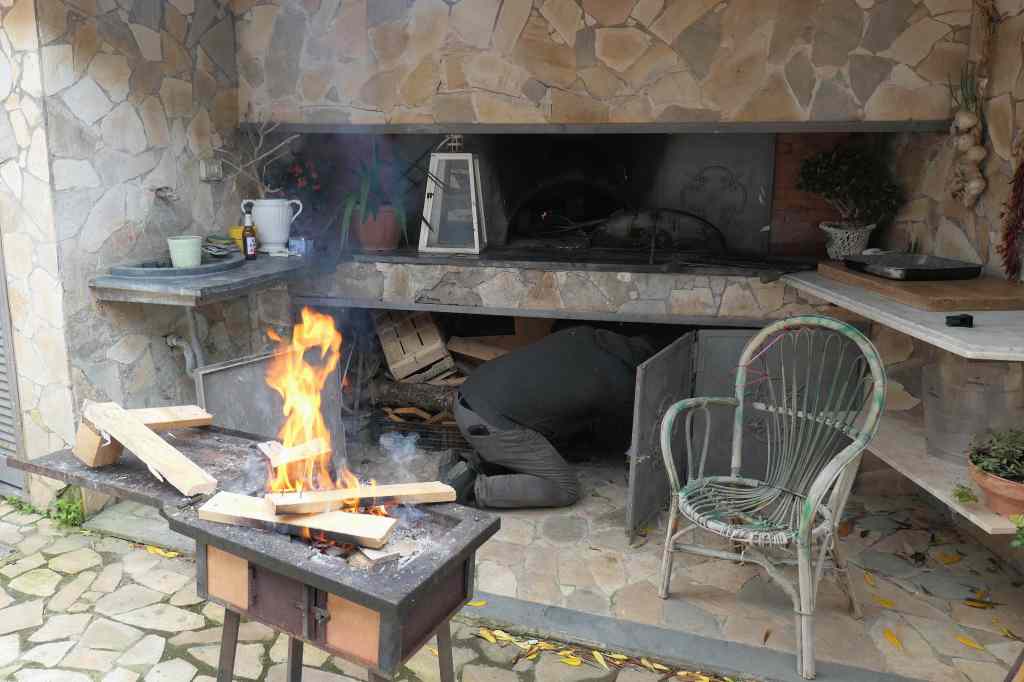
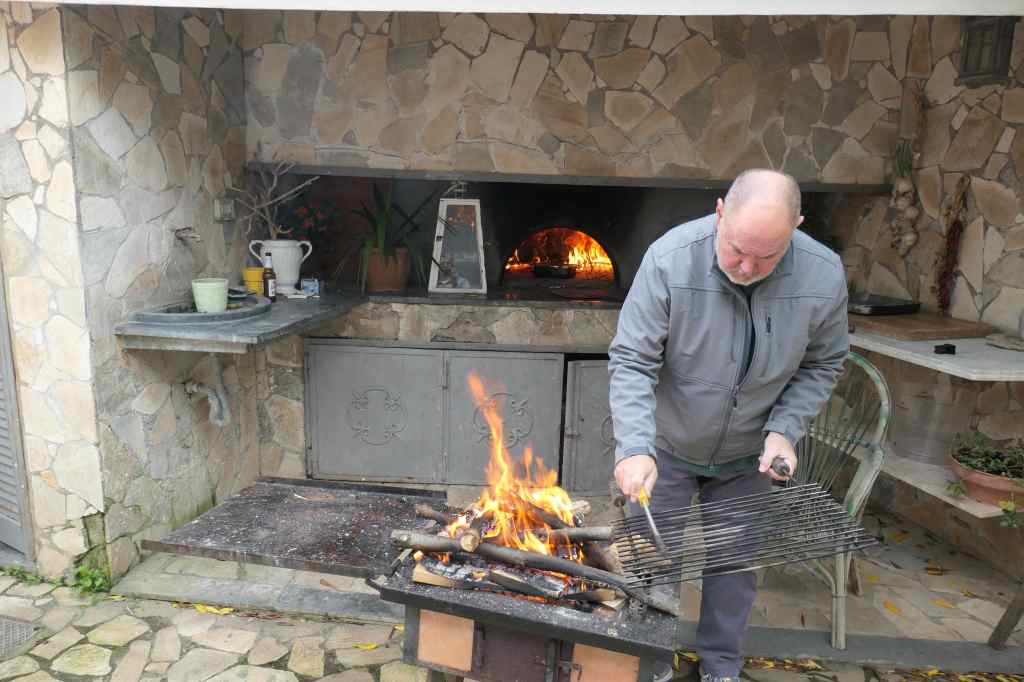
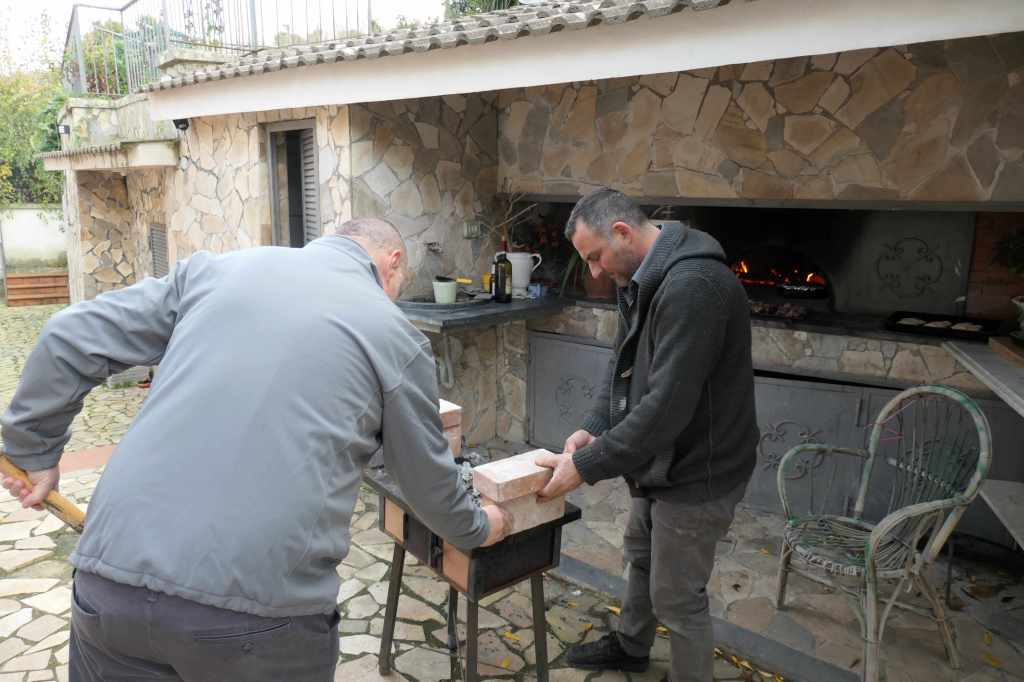
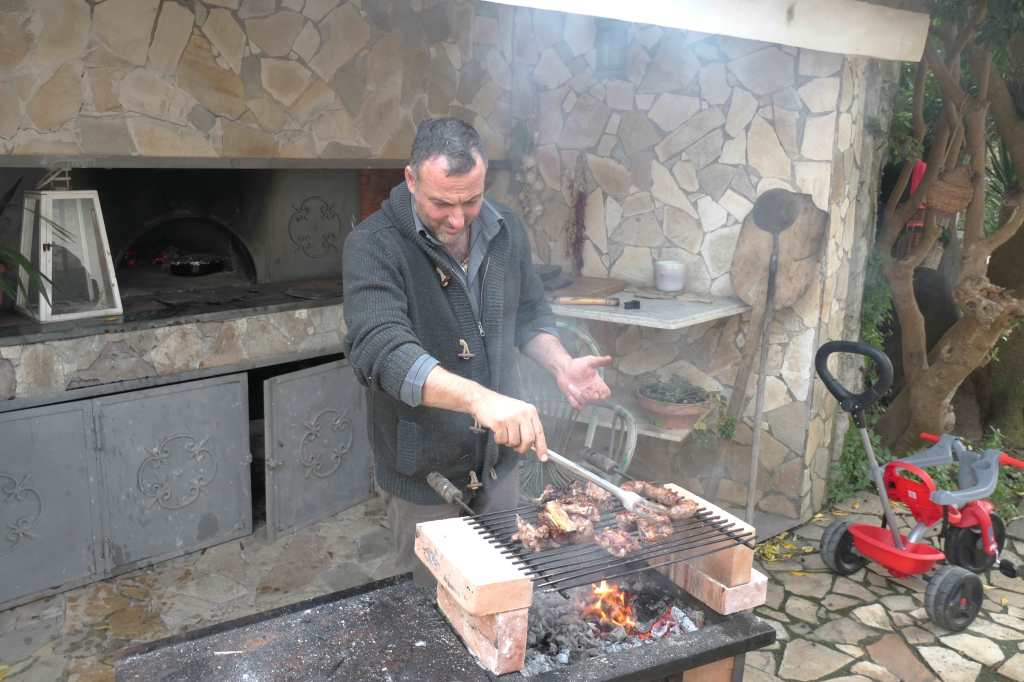
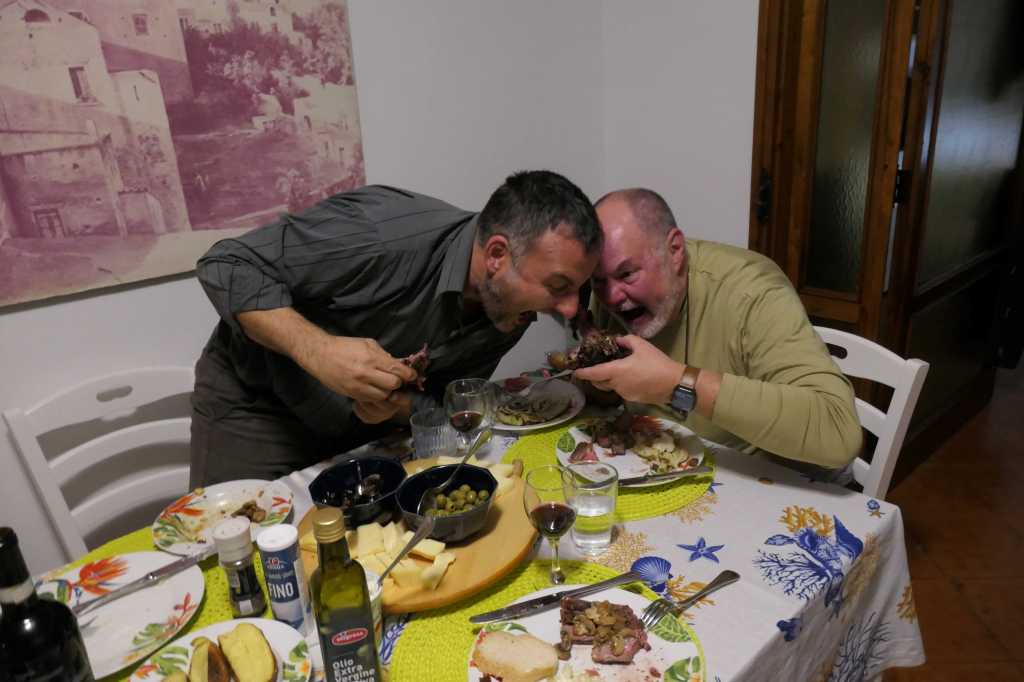
Donato stopped by frequently during our stay to ensure all was well and surprise us with small tastes of Italy such as fruit, sparkling wine, beer, pastries, bread, a fresh ball of Mozzarella, and milk straight from the dairy. One day he suggested we fire up the barbecue for some pork, Italian style. Heck yeah! We’re in!


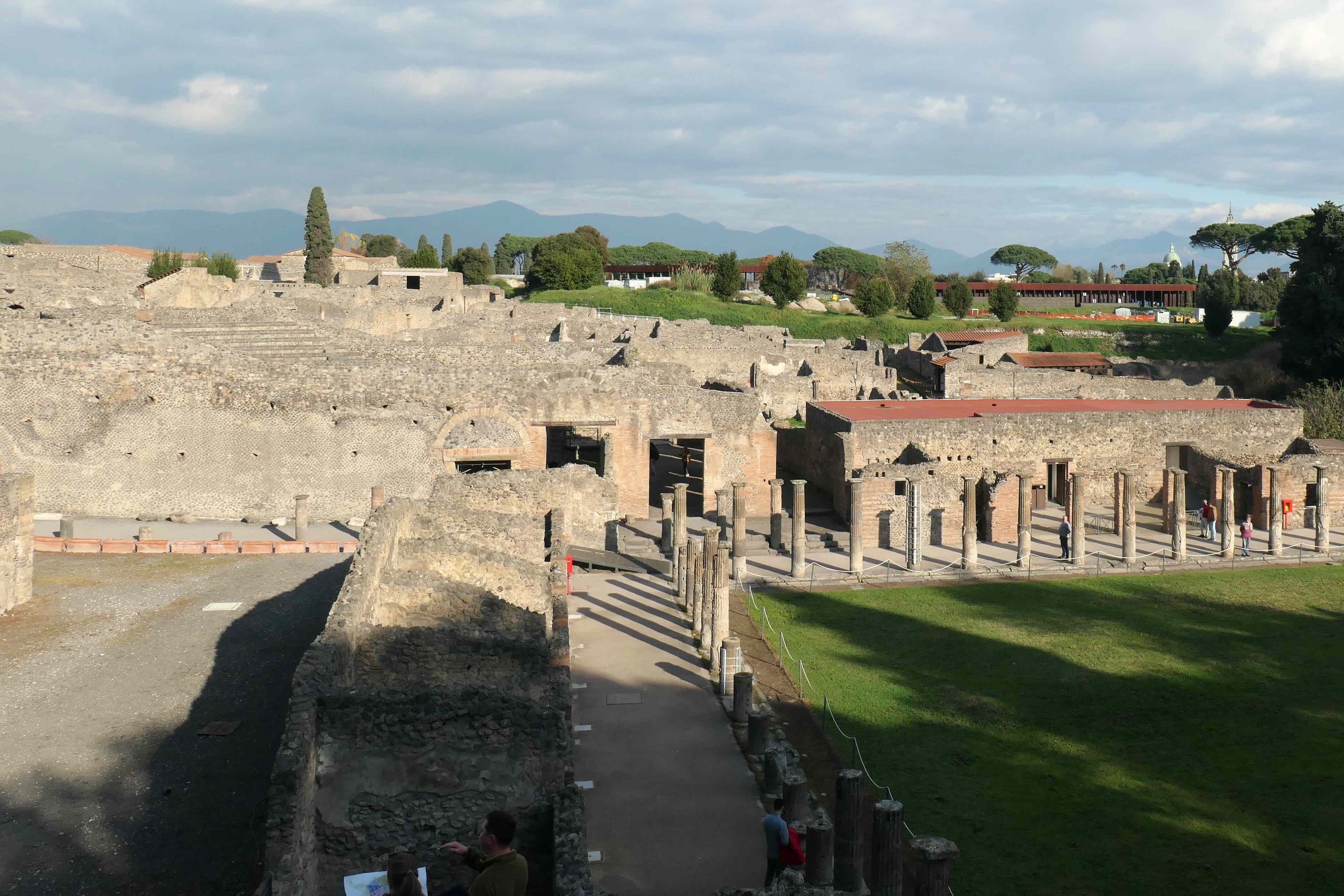
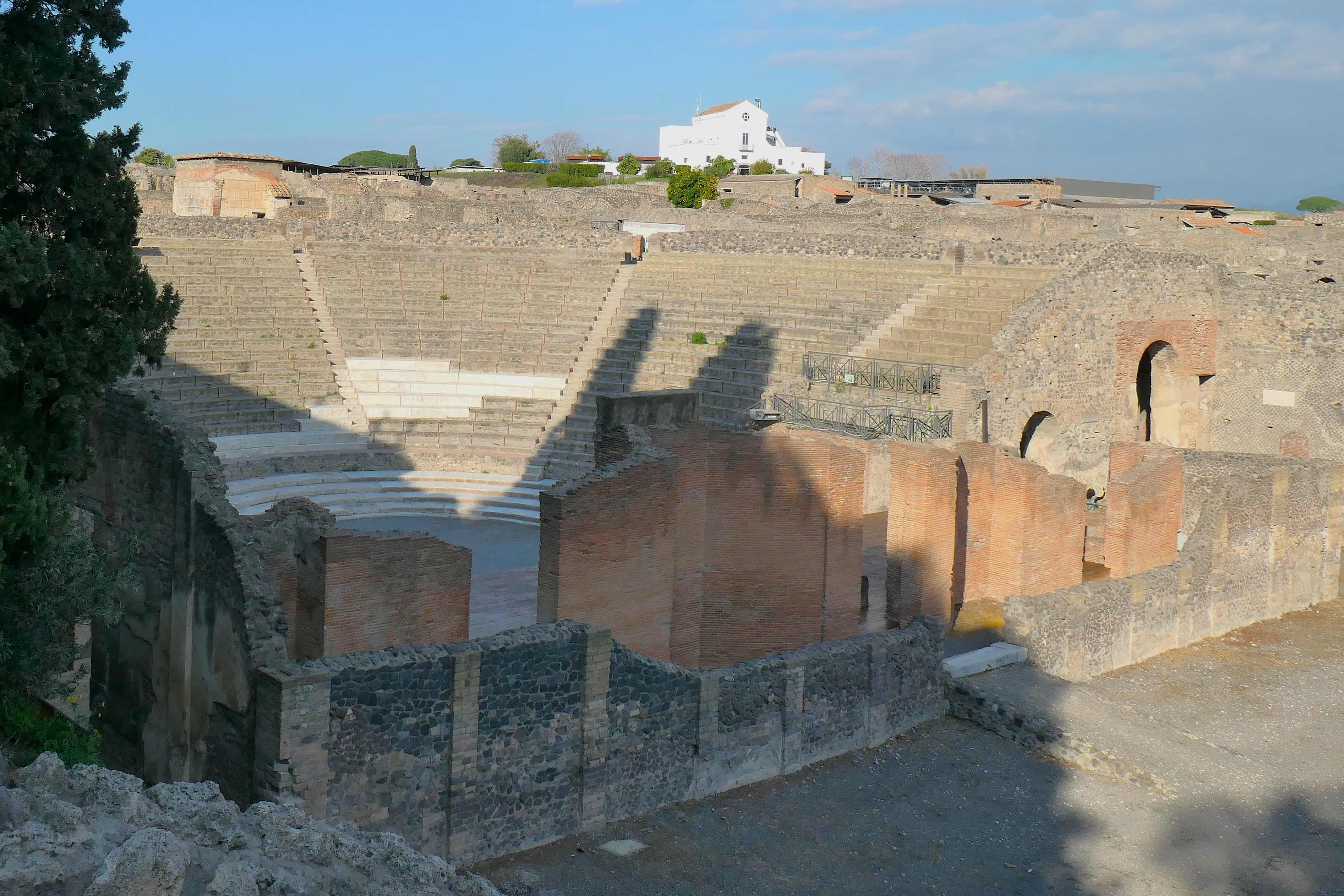
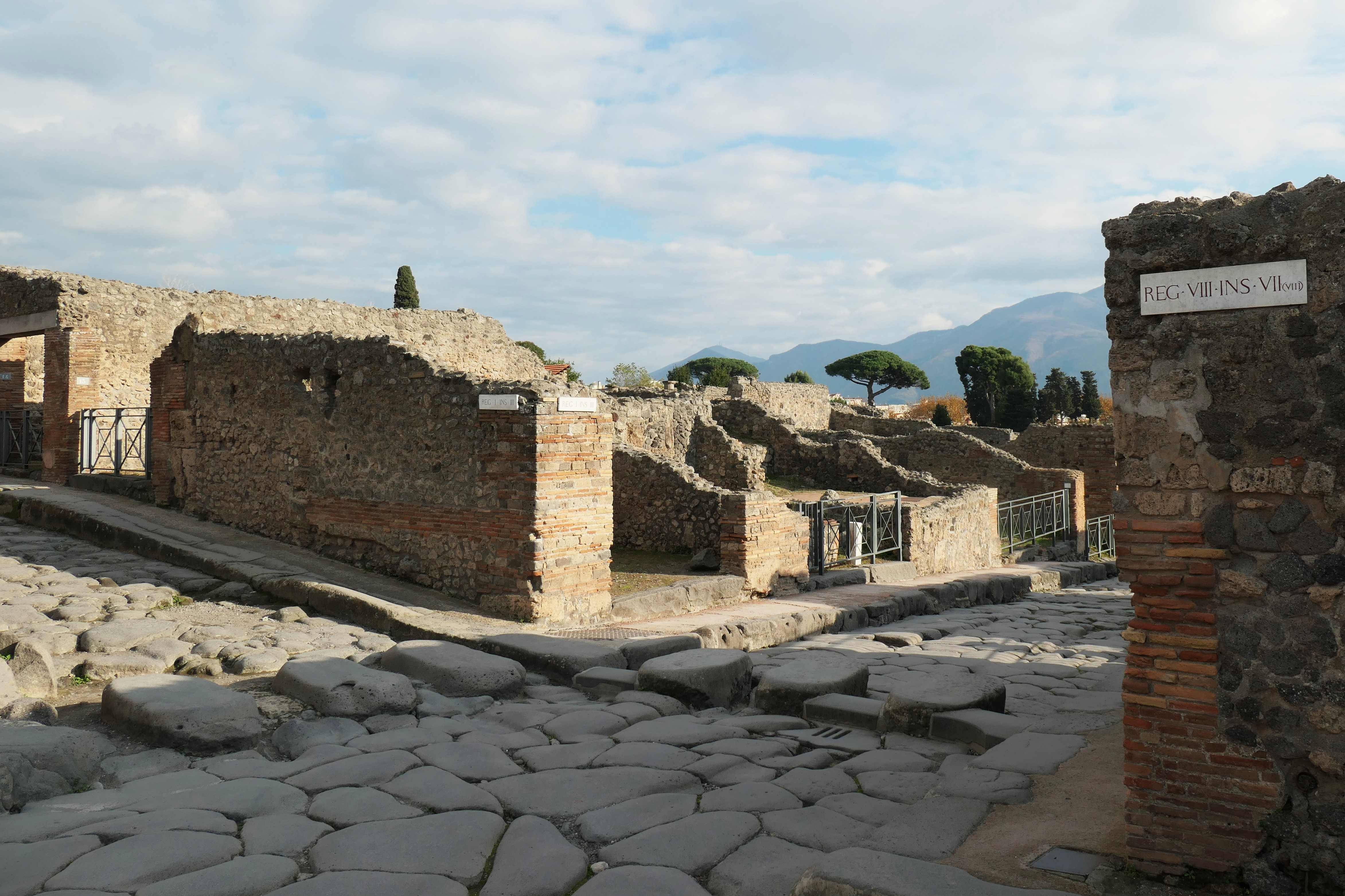
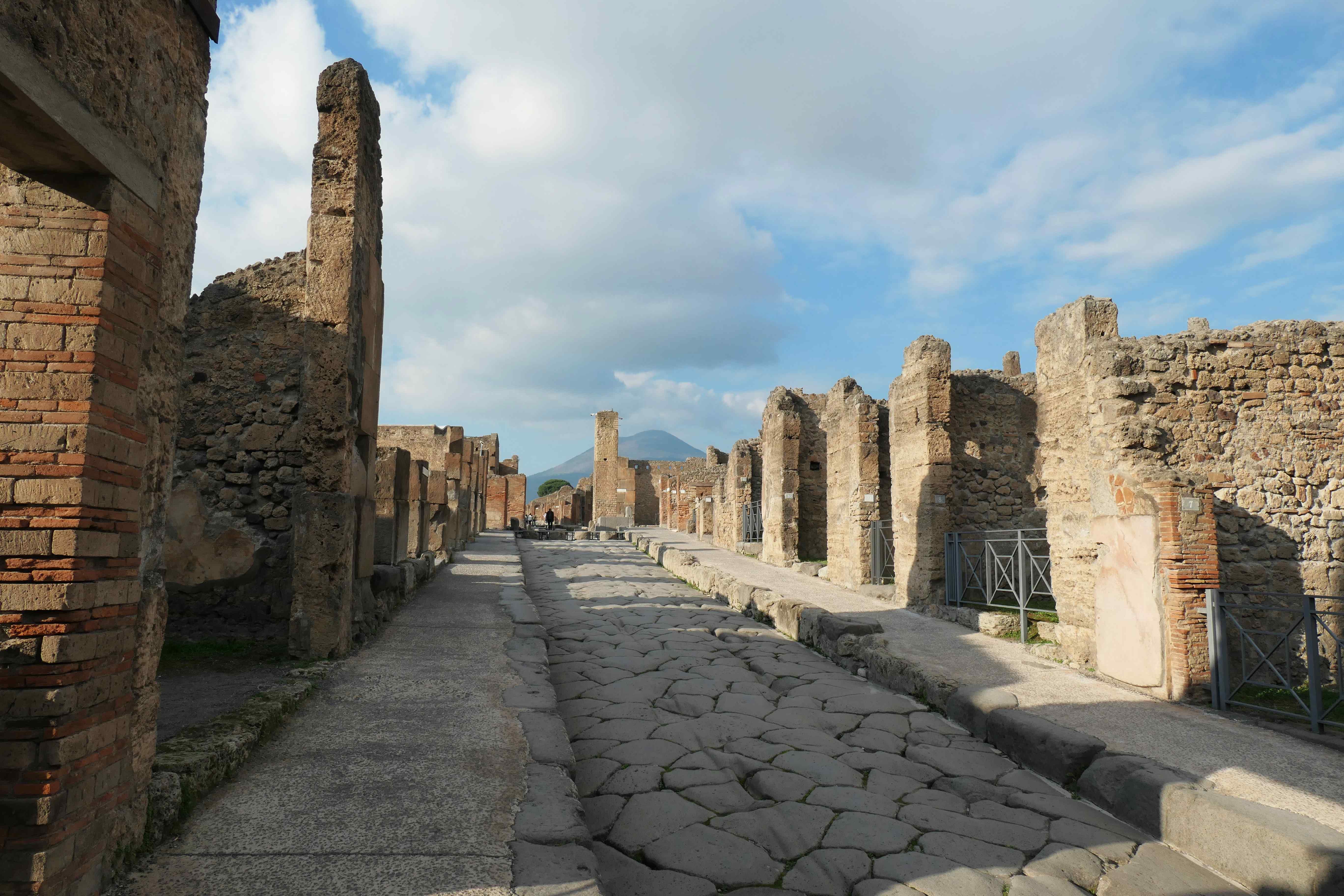
One of the things we were interested in seeing while we were this close to Naples was Pompeii.

Now, Todd, we know you love your history, but you agreed to keep the intro brief this time, remember?

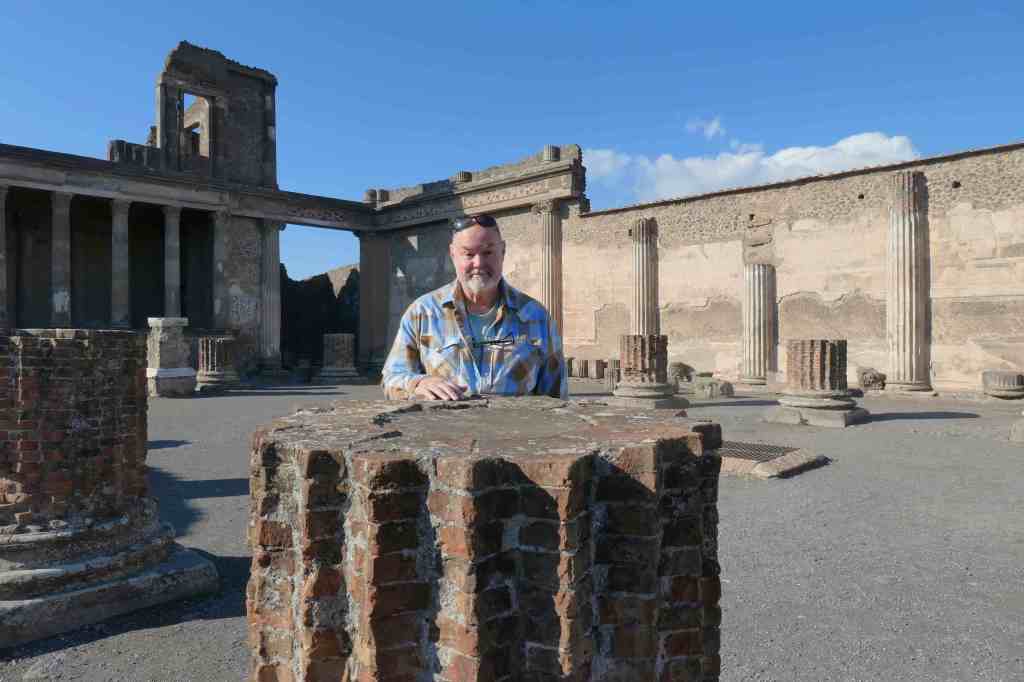
Okay. Here goes. When we purchased our tickets, they asked if we’d like the 3-Day Pass. What?? Three DAYS? Umm. We were thinking more like three hours. Maybe four. With single-day tickets in hand, off we went… into a really LARGE ruin of a once-thriving civilization.

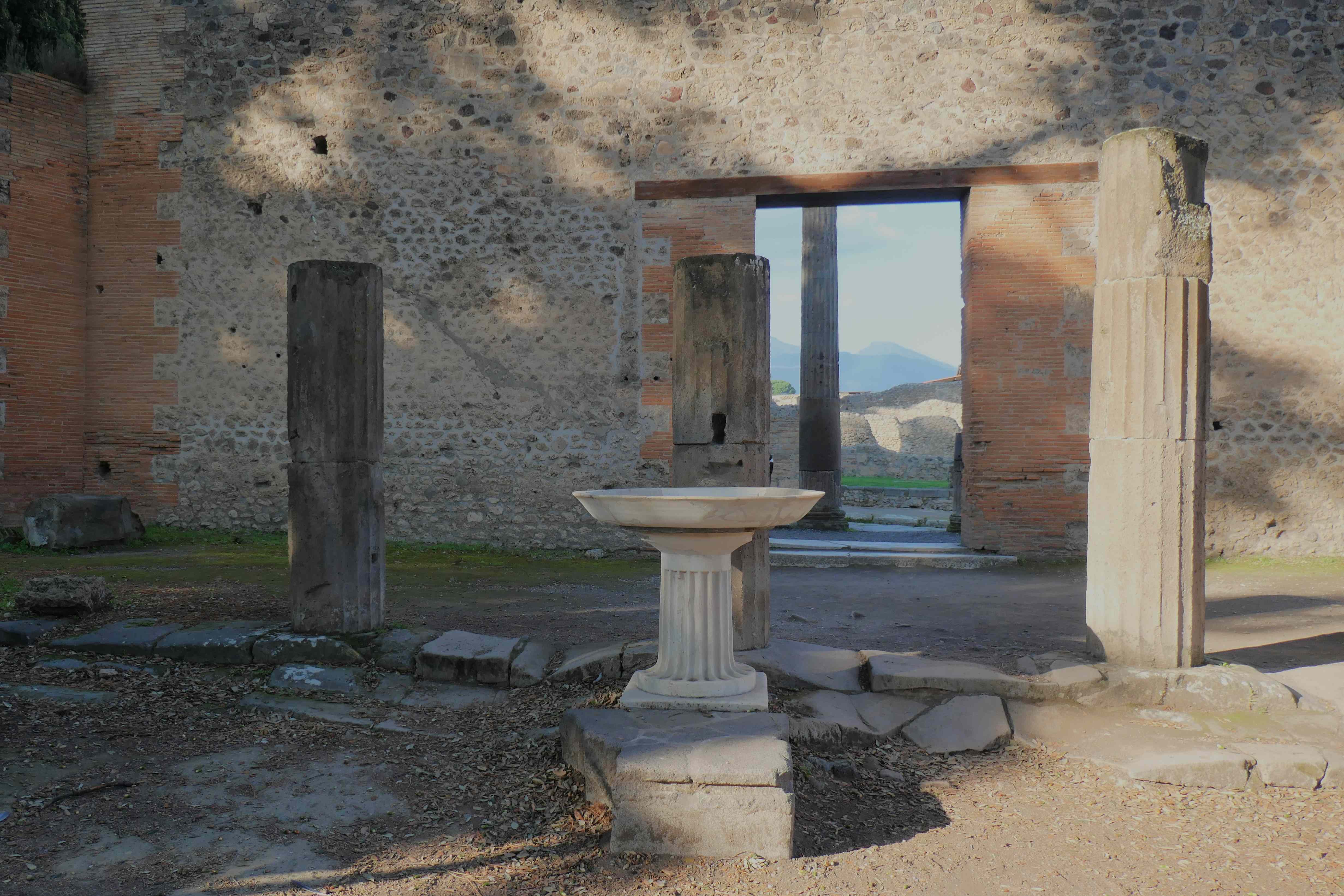
Pompeii? Now we are talking OLD. Think 800 BC. Really took off in 540 BC with the Greeks! But what’s amazing is the eruption we’re familiar with was in 79 AD. There was a dude who witnessed it and wrote about it! Most of the 15,000 people left in time. Only the unlucky got buried by the 20 feet of ash. The city was untouched through a couple more eruptions and 1500 years! Since 1592, it’s slowly been rediscovered and looted, all 160 acres. But even the art that was left on the walls is stunning. (And accurate. There’s a bordello that Nana just couldn’t bring herself to photograph, this being a G-rated website and all…)
The sun was setting along the Amalfi Coast as we made our way back to the rental, talking about ancient civilizations and volcanoes. And thinking about the world-famous pizza we’d once again missed due to improper timing. Sigh.


A couple of days before our time in Massa Lubrense came to a close, we and our gracious hosts made a plan to get together for another barbecue on the last night of our stay. This time, however, we would treat them to a traditional American-style dinner from the grill. Steak! While Donato and Alessandra were busy with work and appointments, we strolled back into town for supplies.

As luck would have it, it rained that evening. And rained. And rained. But what could be done? It was our last night, and we had large steaks ready for grilling.


In the past, we’ve alluded to the fact that we fudge the dates a bit when we publish the posts to try to keep our own historical record accurate. As we wrap up and publish this post dated December 4, it is actually Christmas Eve. We will soon be heading to dinner followed by a late church service, and we are thinking of family and friends with love in our hearts. We wish you all Buon Natale! (Merry Christmas!)

Wait. Does this mean no more apples?

The City of Seven Hills

At the end of the last post, we were ready to leave Rome. WAIT. What?? Hang on just one gladiator-sparring minute. What about the Vatican? The Colosseum? The Forum? Etc.?

Well, of course, we saw as many of the famous landmarks to which our shoes could carry us in the six days we allotted to the Eternal City. (We snapped nearly a thousand photos to prove it.)

This post is hereby dedicated to the classics. Ready, go!


Let’s start with a really obvious one, Vatican City, which we could do because we had tickets! Yes, we prebooked a private three-hour tour. (Lessons learned.)

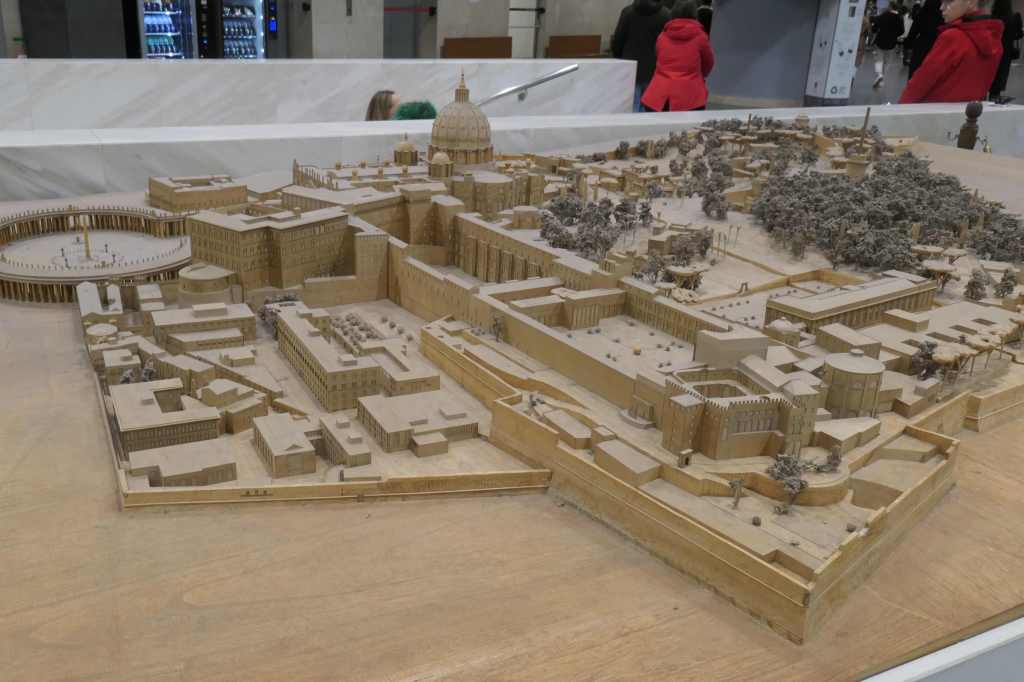
The Vatican. Oh my, there is just so much history. Too much! An enclave surrounded by modern Rome on all sides. Slowly established across the Tiber River from Rome, in a big marshy area. Before the Church arrived, the area was developed really early, like the early 50’s AD ;-), by Nero who built a large circus there. That meant fill it in, flatten it out, and put in a big “racetrack.”

The Vatican City State is now, in fact, the smallest country in the world, and the Pope is technically a royal! 2024 population of 496. Of note, the area (less than 1/4 sq. mi.) wasn’t within the ancient wall of Rome, so it ended up with its own wall. Now it’s a tiny walled country within the city of Rome!


Early one morning, we walked a few kilometers to the main gate of the Vatican to meet our private guide, Fabi, a lucky and excellent choice. Full of life, full of energy, full of information! We cut to the front of very long lines and always had any questions answered during an almost steady stream of facts. It’s not enough to say, “there’s a lot of stuff there.” There’s an overwhelming amount of stuff.

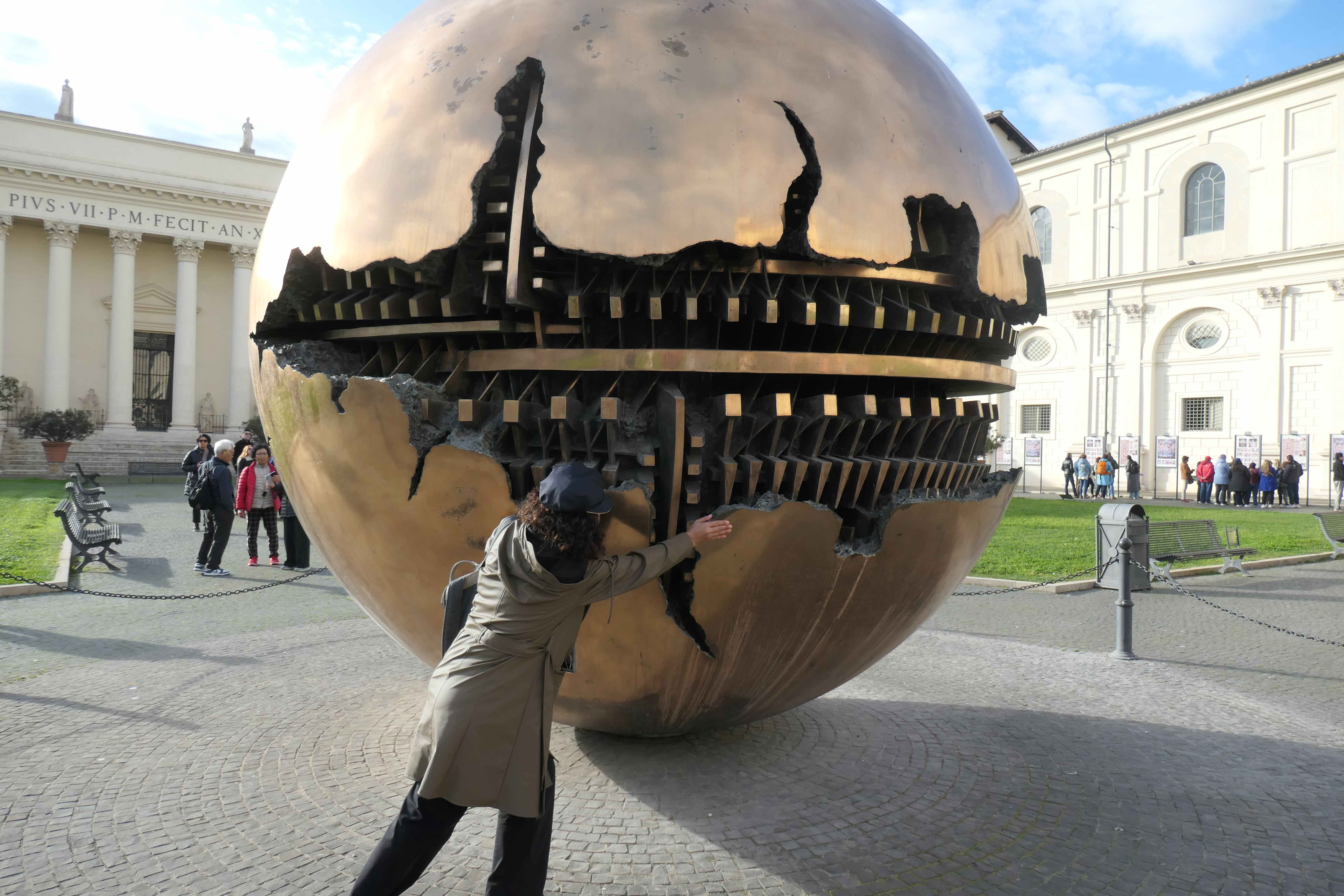
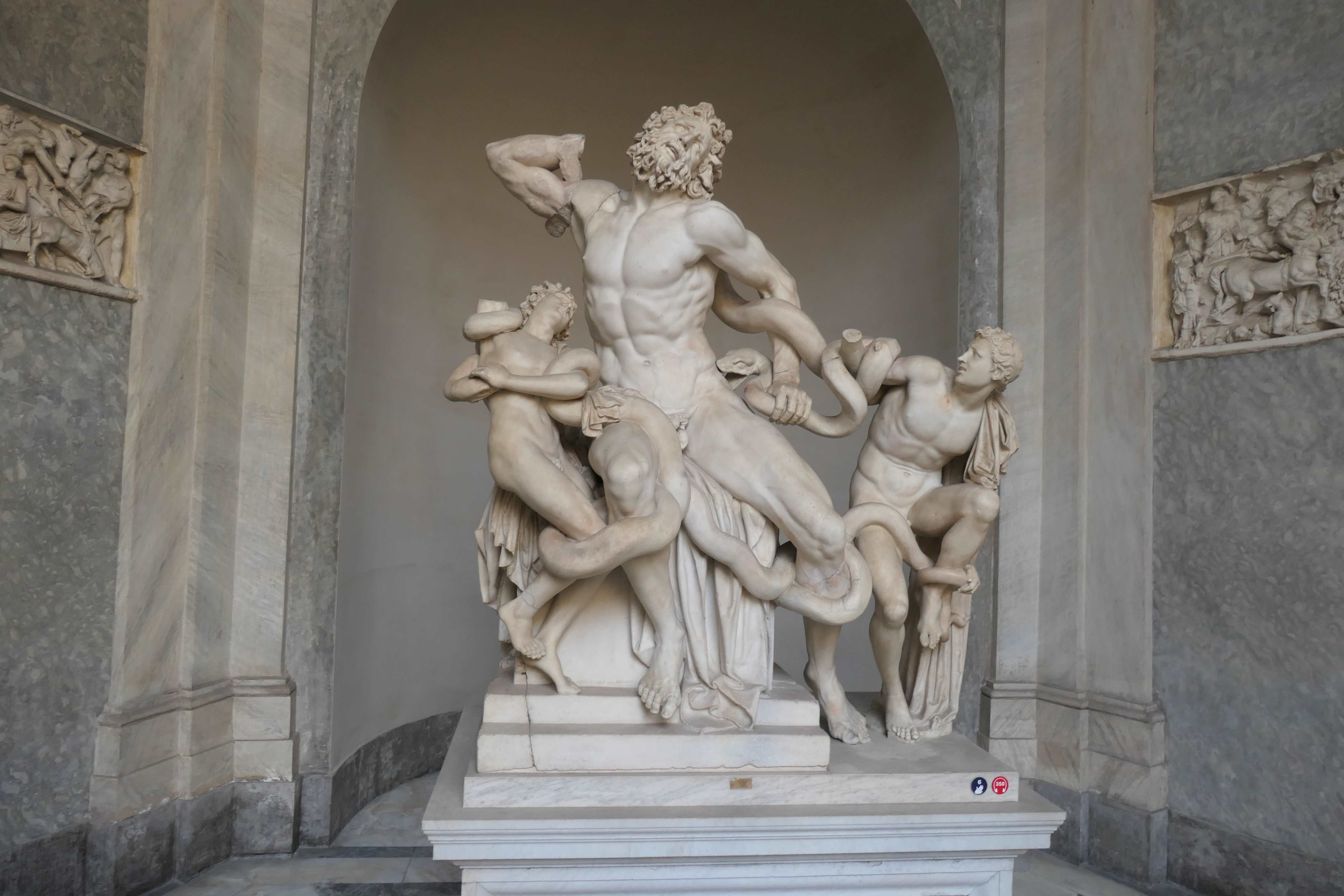
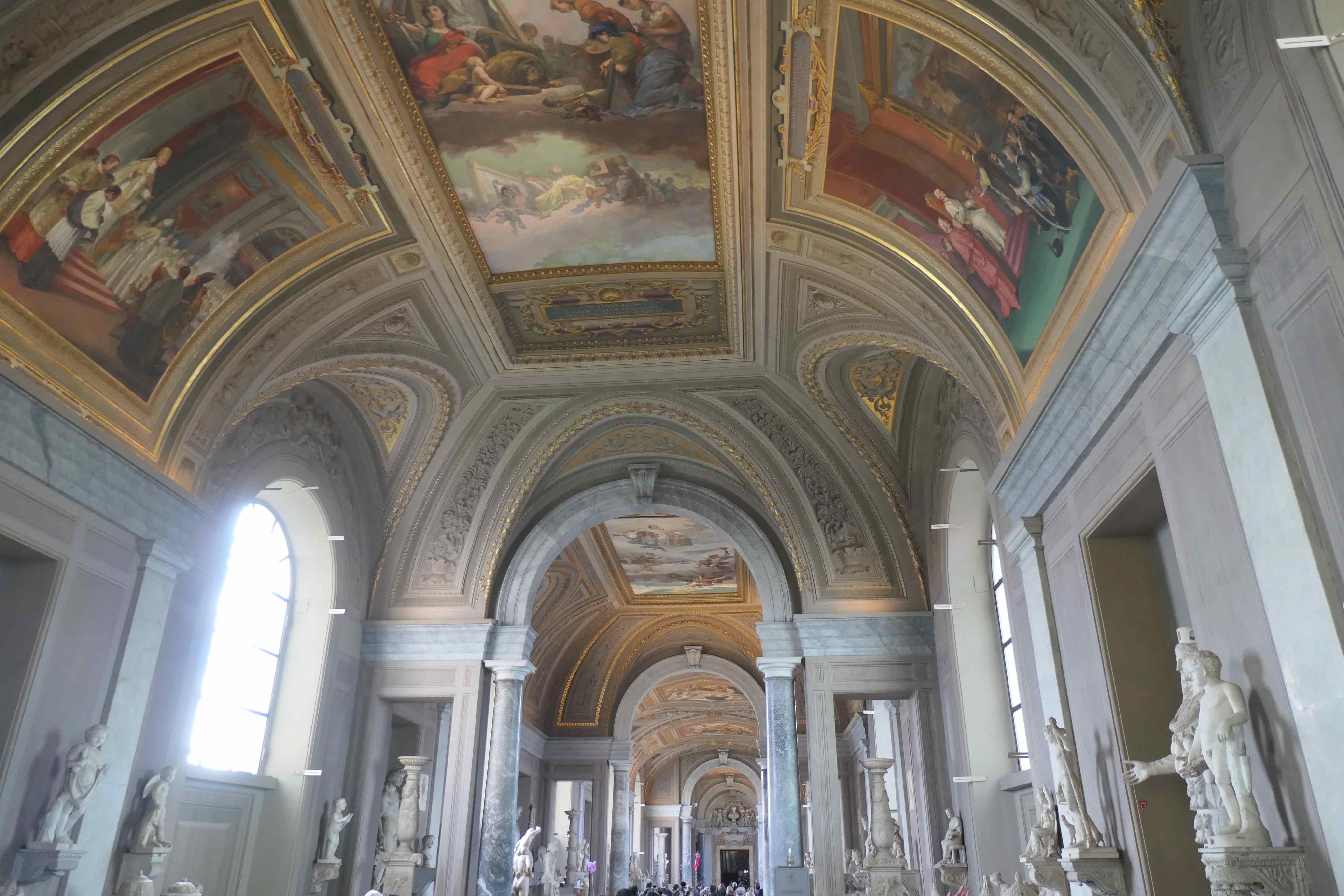
First on the list were the Vatican Museums. Notice plural. They are so numerous, it’s hard to get an accurate count. We saw only a few. Needless to say, the Catholic Church has been collecting stuff for a very long time, and it would take days to see just what they exhibit, so our tour focused on the popular highlights.

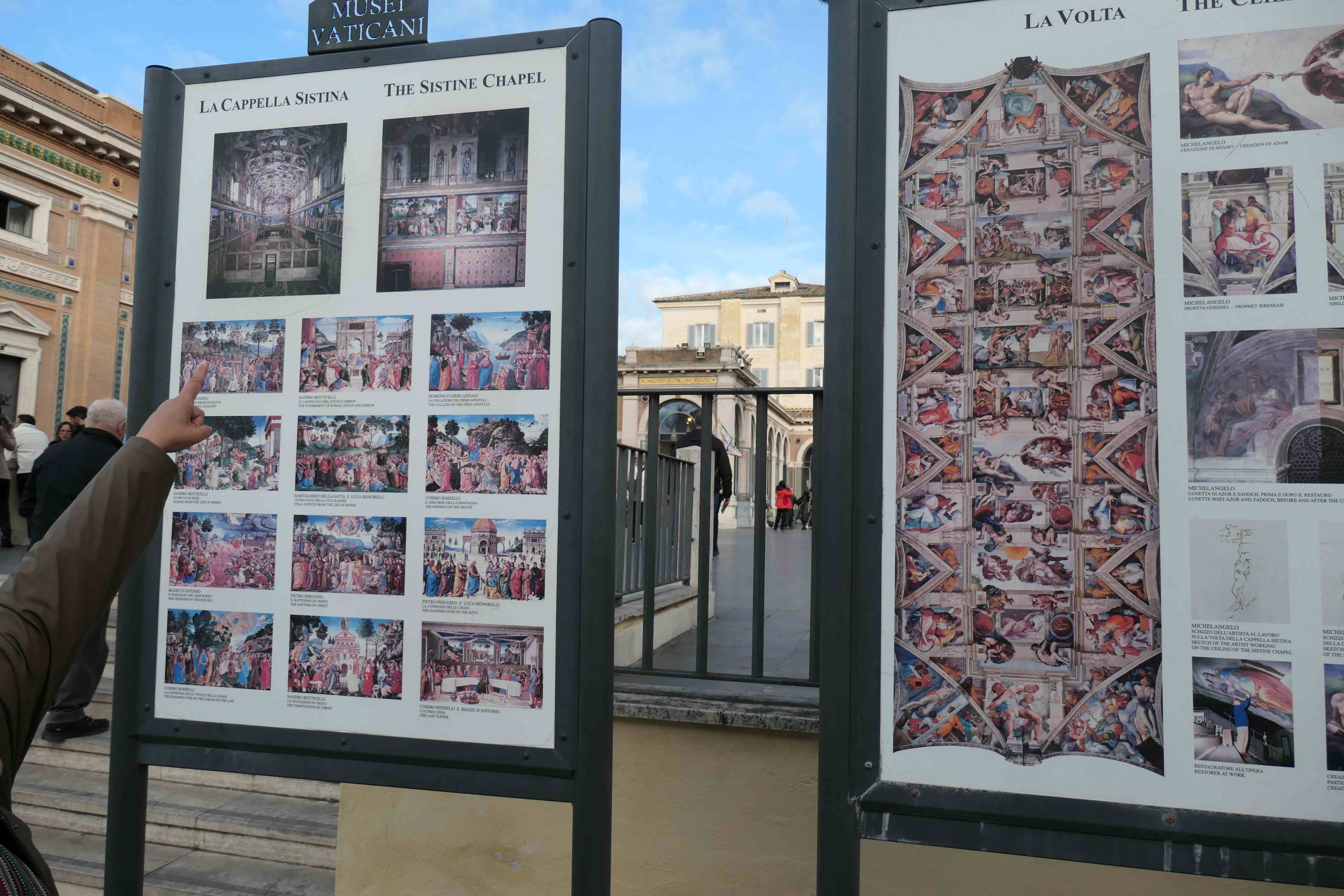
After the museums, we finally arrived at the Sistine Chapel. What to say about that ceiling? “Wow” just doesn’t cut it. We joined the crowd to stare upward in amazement at the absolutely magnificent frescoes painted by Michelangelo from 1508 to 1512. (Remember, no photos allowed. And… 🤫) After a time of silent oohs and aahs, we cued Fabi – quietly waiting near the exit – that we were ready to move on.

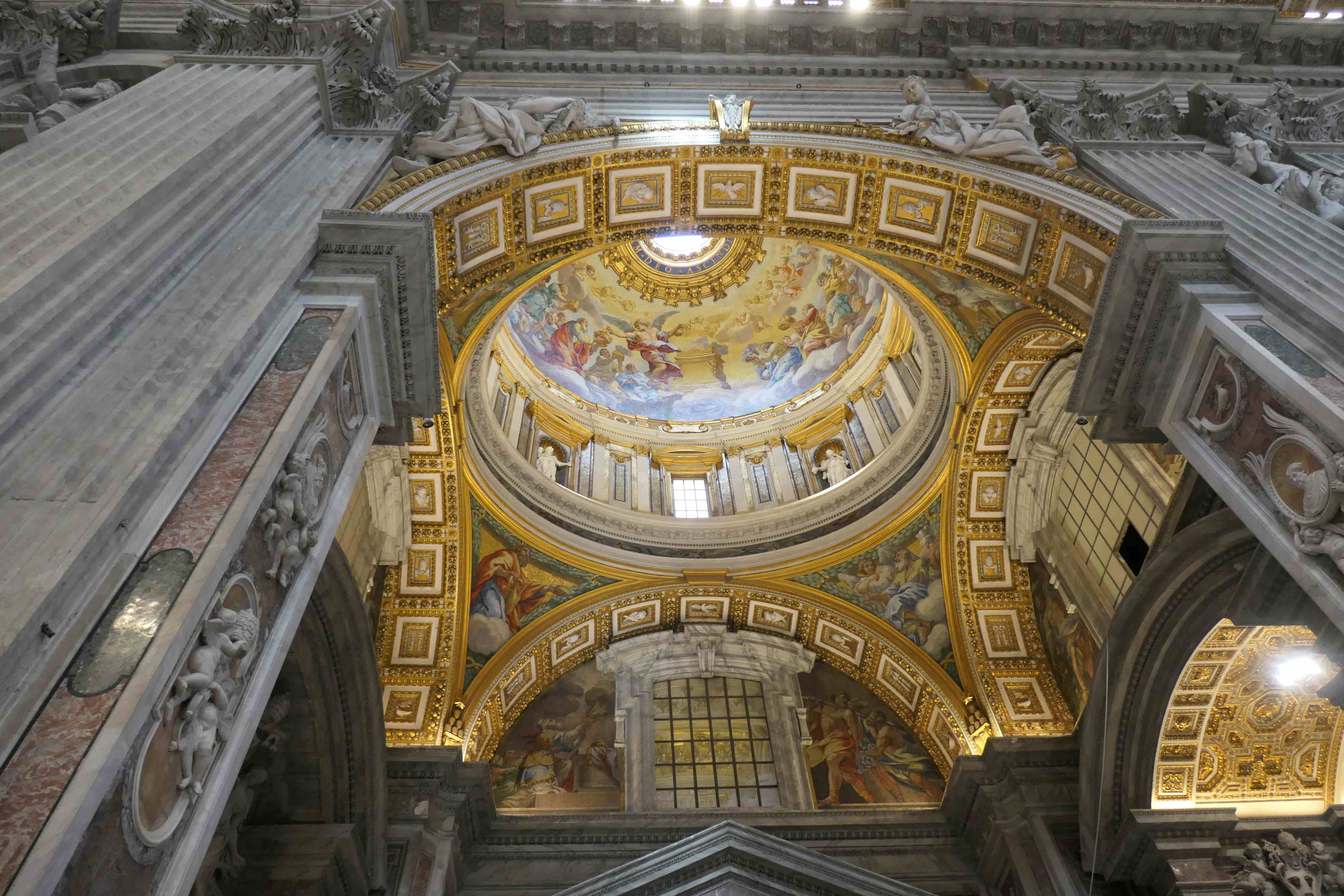
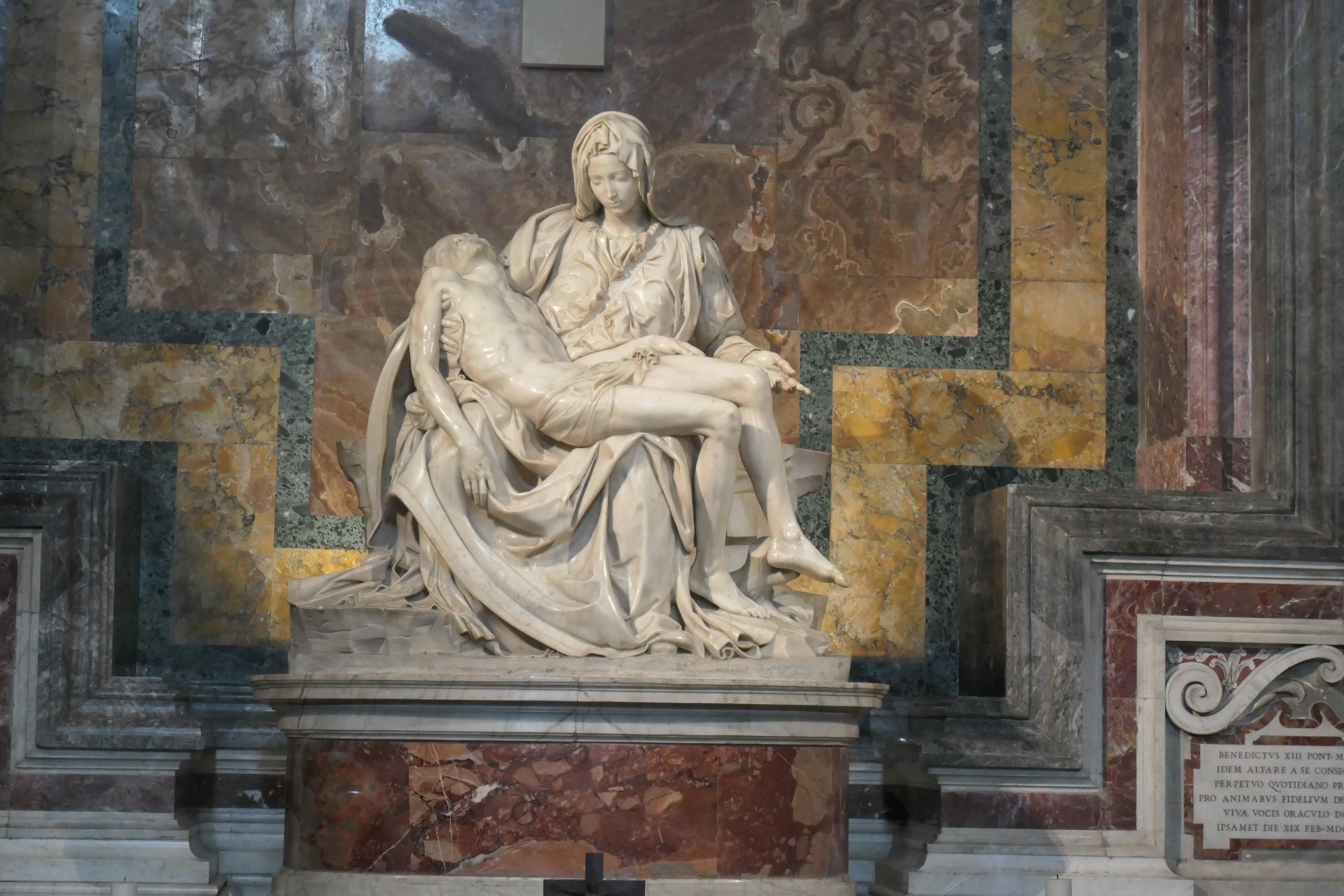
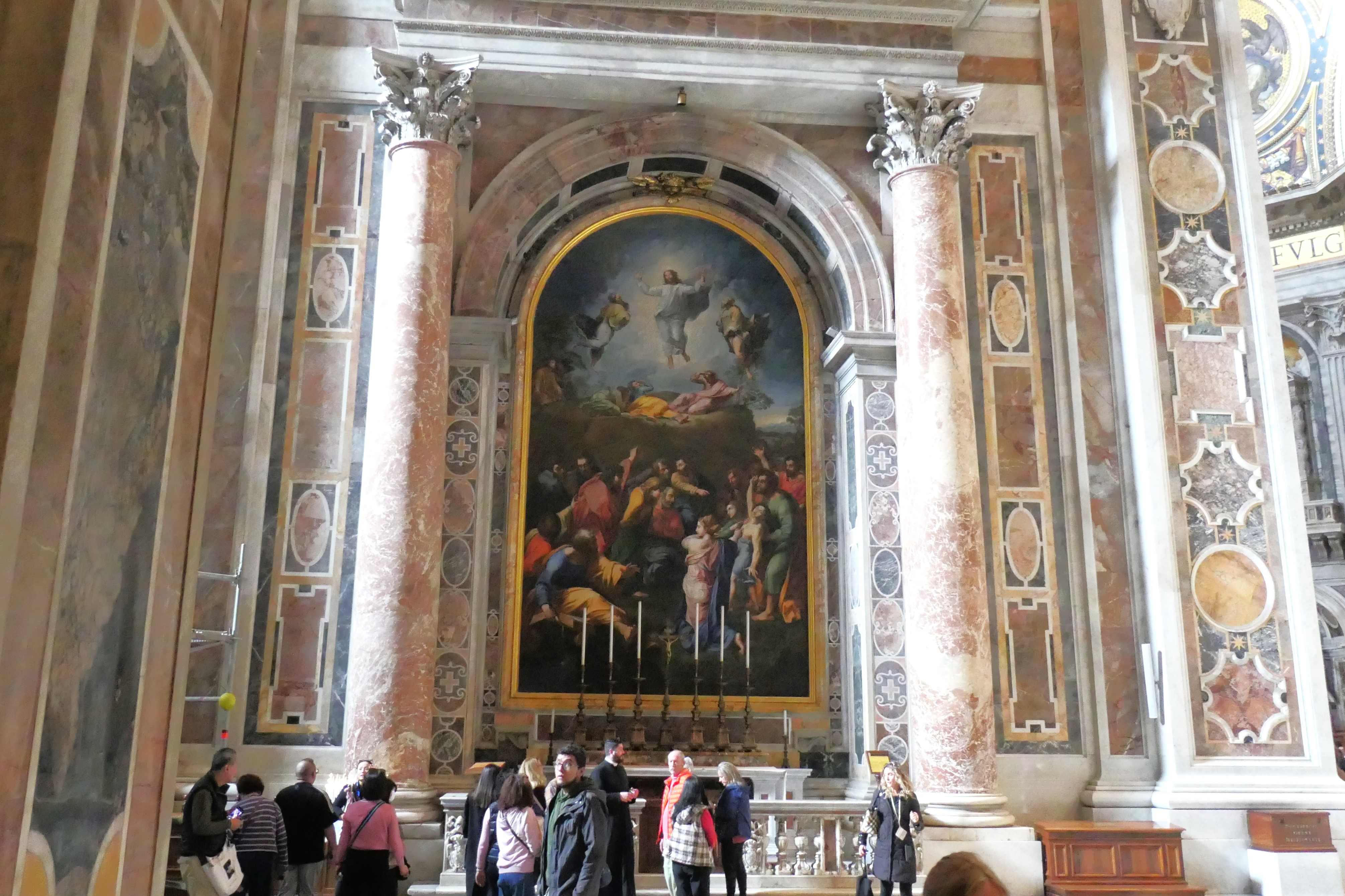
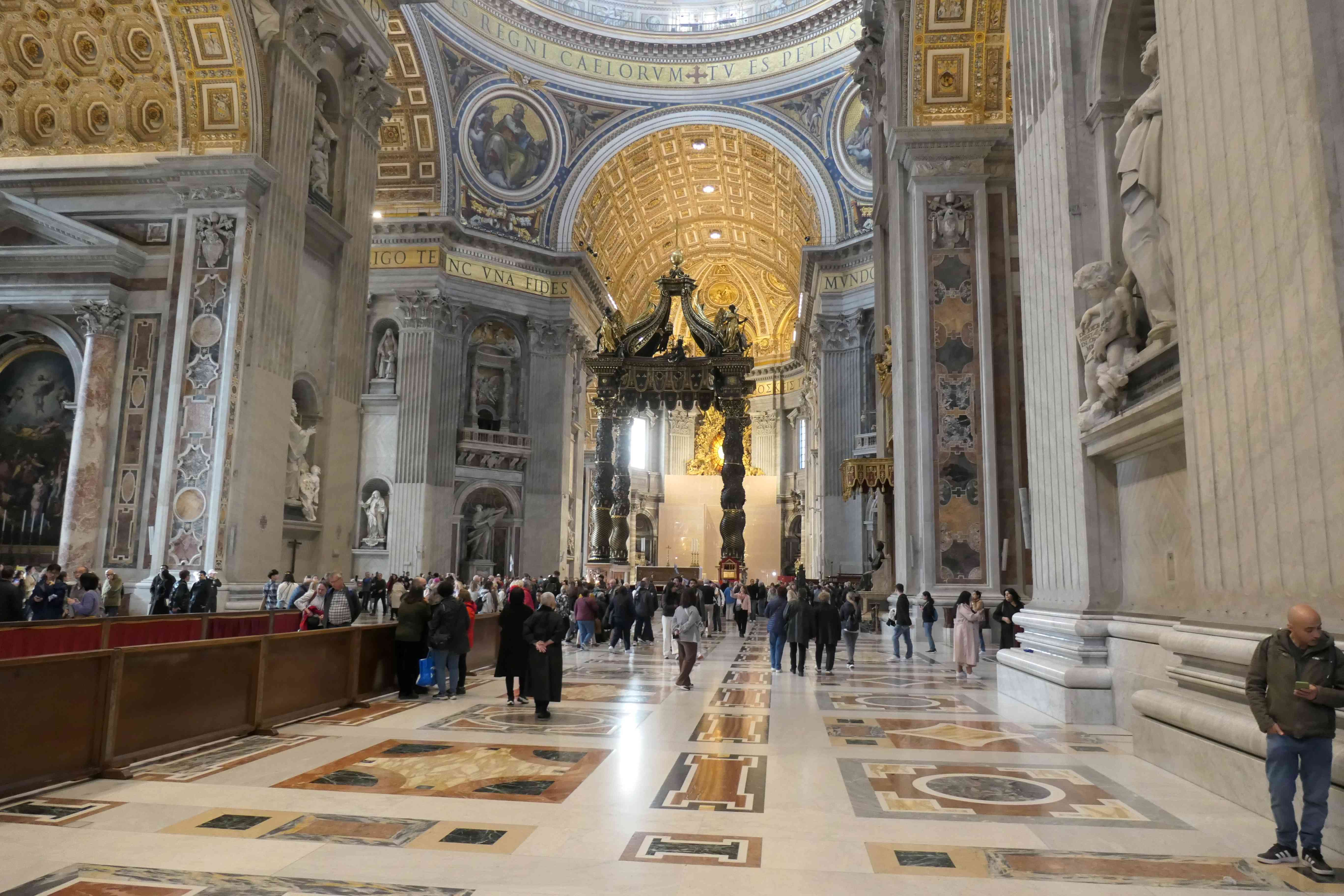
Next stop on the tour? St. Peter’s Basilica, the largest church in the W-O-R-L-D! The Old St. Peter’s Basilica, finished in 322, was built on the burial site of the Apostle Peter, then, as you might guess, demo’d in 1506 to build the “new” basilica during a 120-year period from 1506 to 1626. Unlike modern man, the Romans whacked down old stuff and just recycled the materials to rebuild it!

The size of the structure is overwhelming. Ceiling hundreds of feet above you, mosaic paintings 25-30 ft tall, giant structures in the room, and everything ornately decorated.

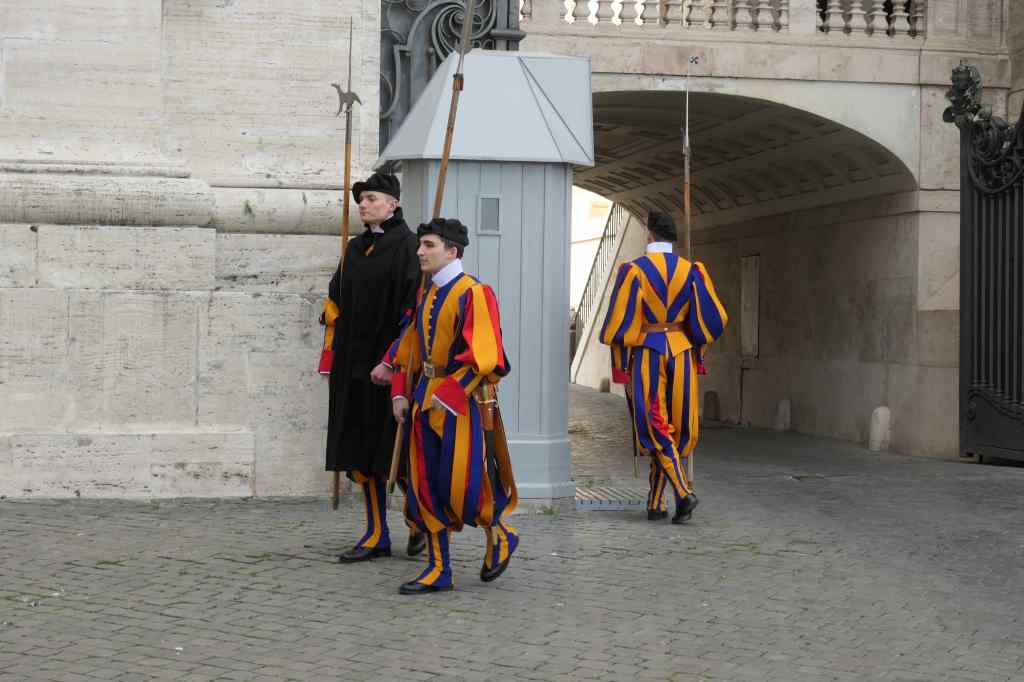
After going inside the basilica, we rejoined Fabi near the square just in time to witness the changing of the Pope’s personal Swiss Guard. They may dress funny, but they were on point and in sync. (And just read about them – you don’t want to mess with them.)

* Oh, a random tidbit regarding fig leaves: apparently, it depended on who was in charge at the time as to whether or not statues and paintings were “adorned” after the fact by the addition of fig leaves or left in their more “natural” state. 🫢🫣


We just happened to visit Rome as it was preparing for the 2025 Jubilee. “Jubilee” is a holy year that’s been periodically declared by the popes since 1300. The interval between Jubilees has changed several times throughout history but is now 25 years. Rome will soon be a destination for millions of pilgrims from all over the world, and the preparations are intense!

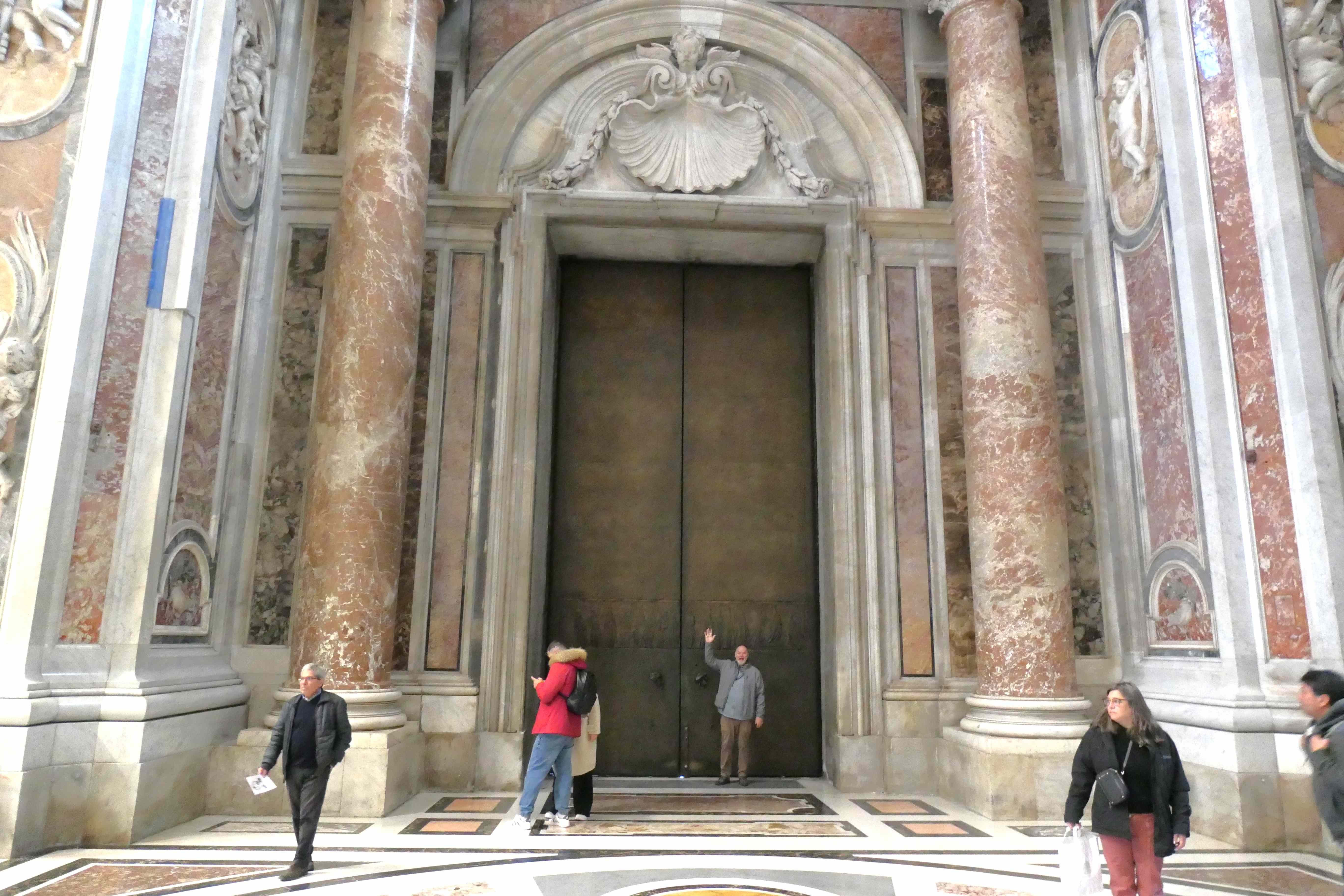
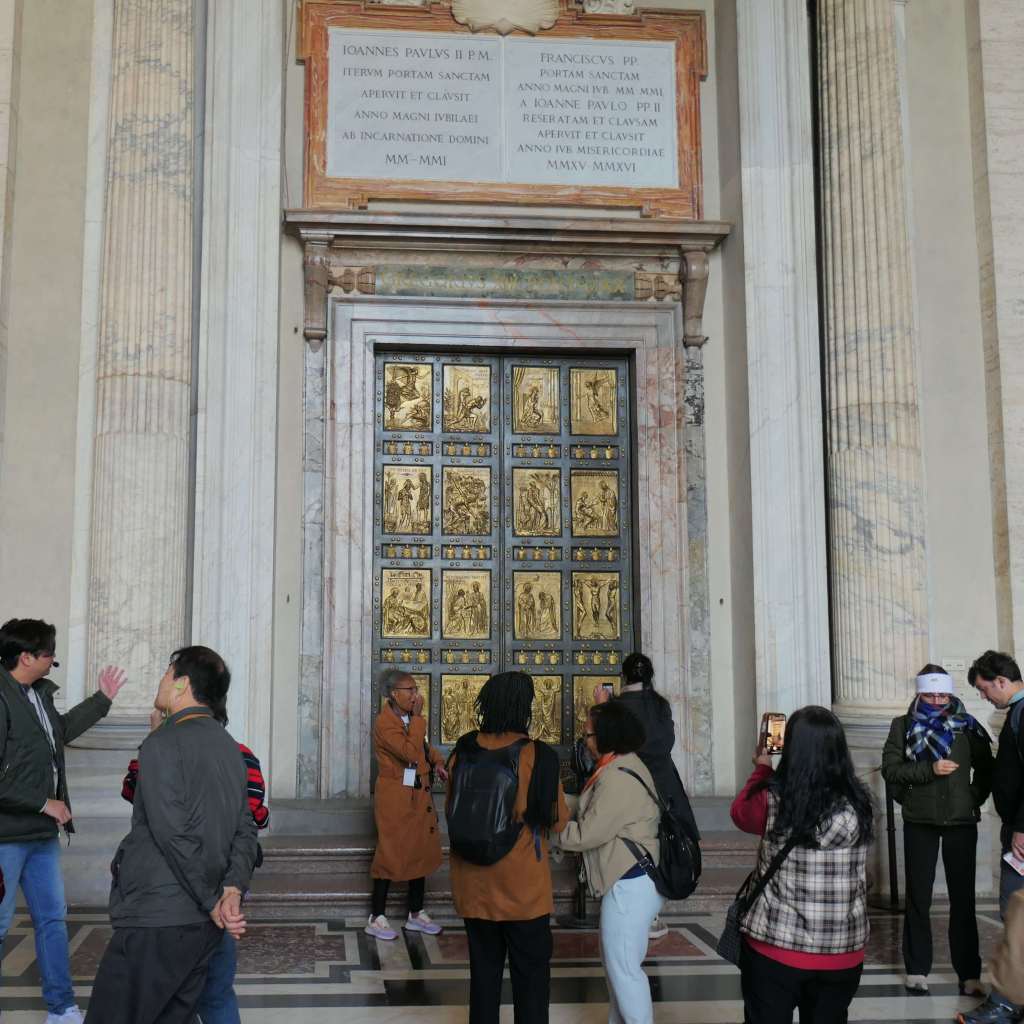
So, that very special big bronze door into St. Peter’s Basilica is opened just once every 25 years!

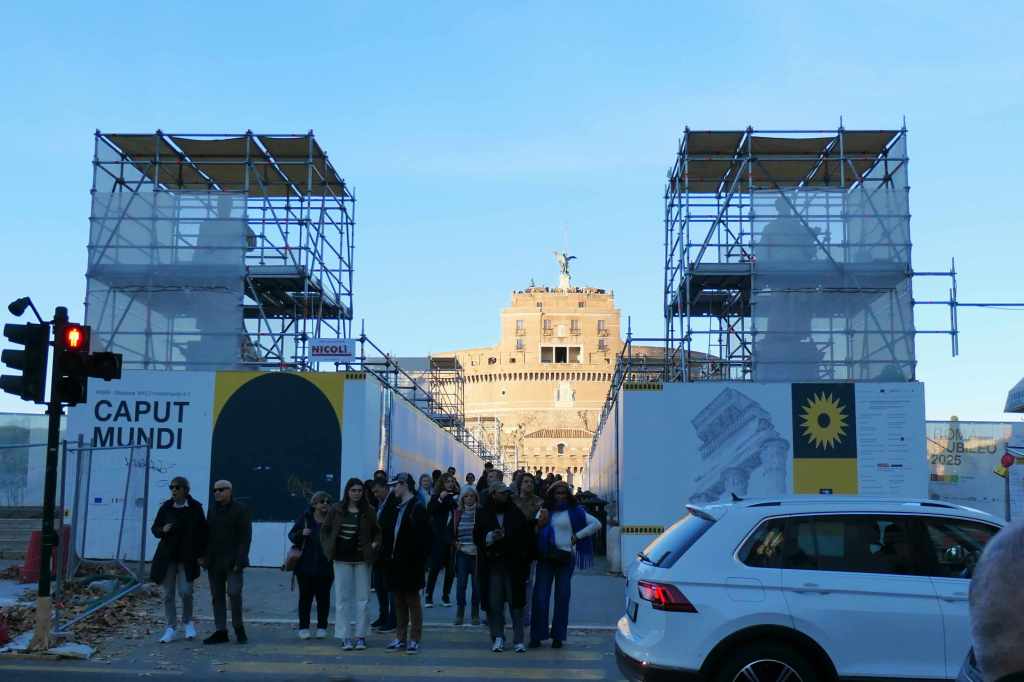
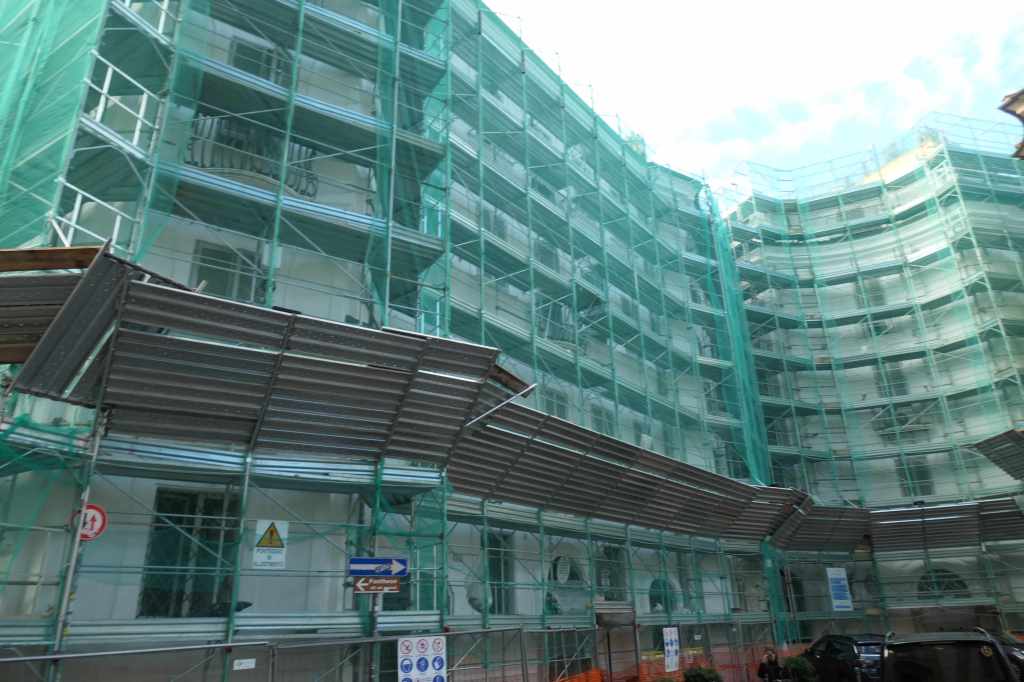
Other than the fact that much of Rome seemed to be encased in preparatory scaffolding, cranes, and bubble wrap, boy did we time our visit well! See Rome and get outtathere! Whew.

The only impact for us was to our photos. For instance, having read about the scenic bridge and approach to the Castel Sant’Angelo (Mausoleum of Hadrian erected between 134 and 139 AD), we set off with new friends Gonzo and Yvonne Sunday afternoon to get some great shots. Oops. Or not.


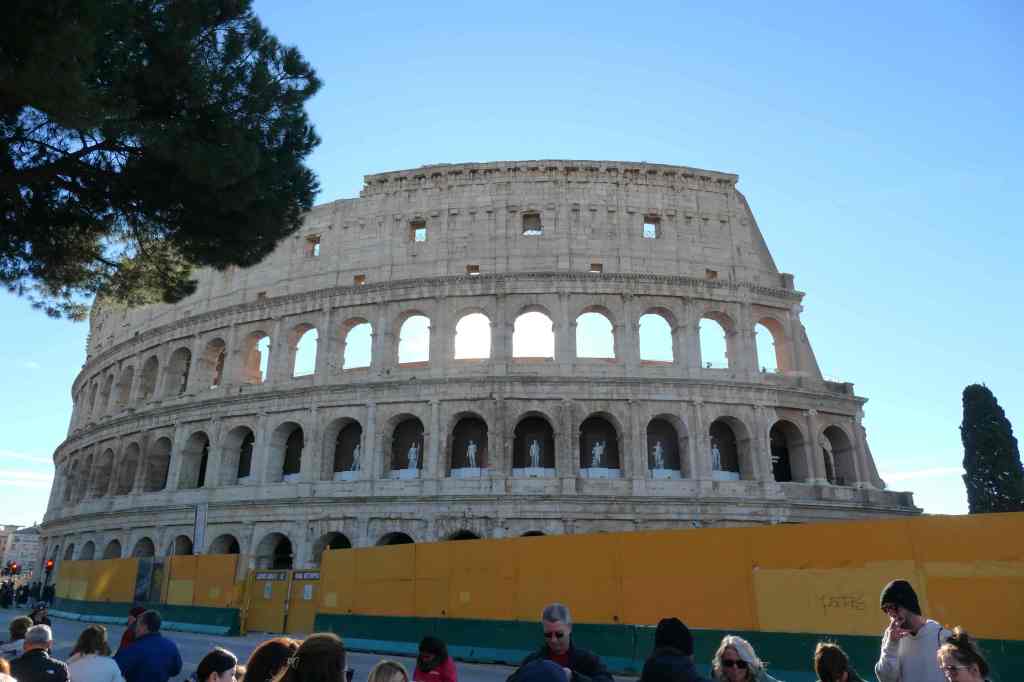
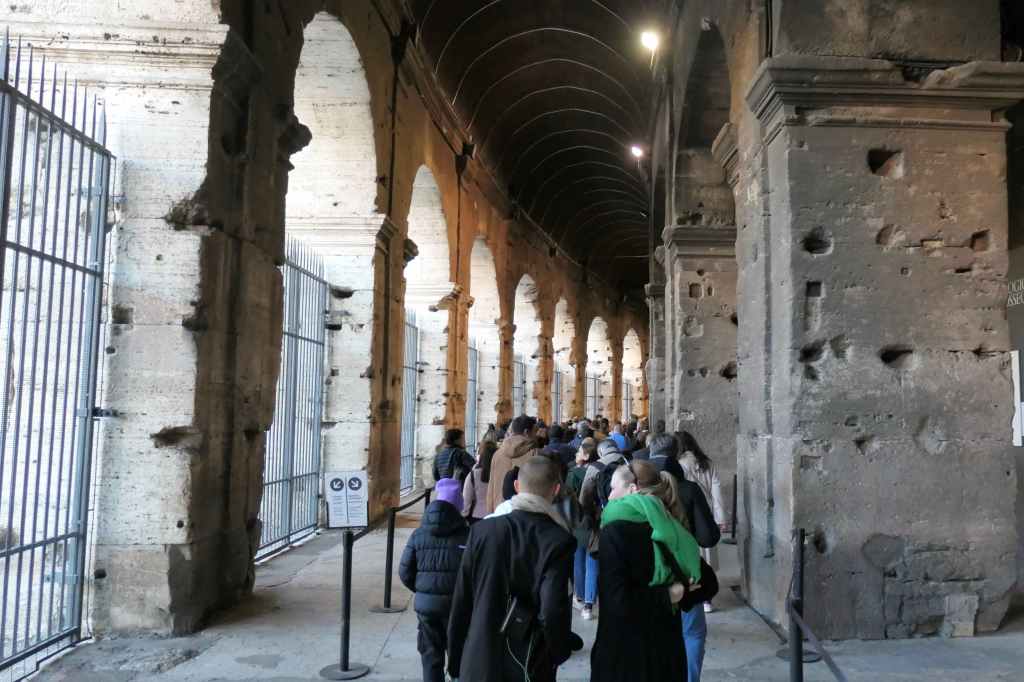
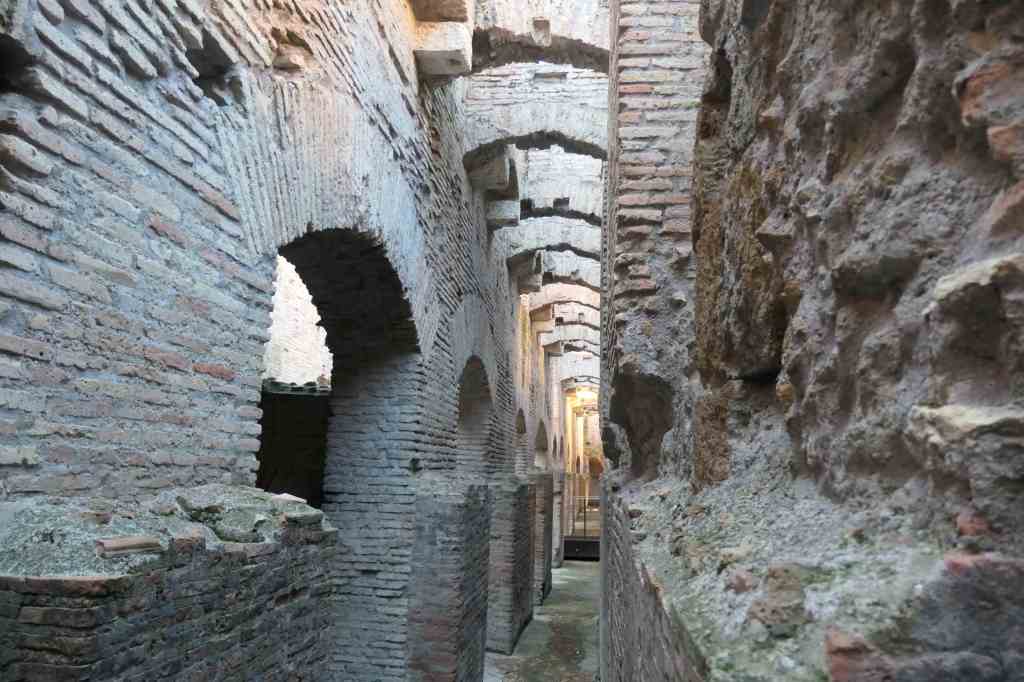
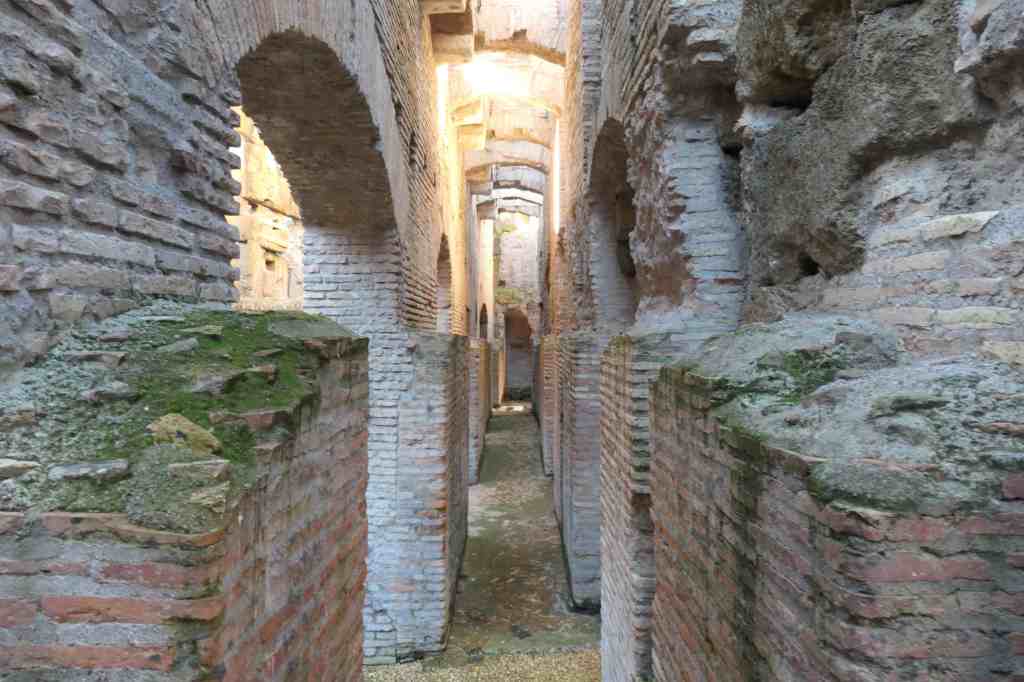
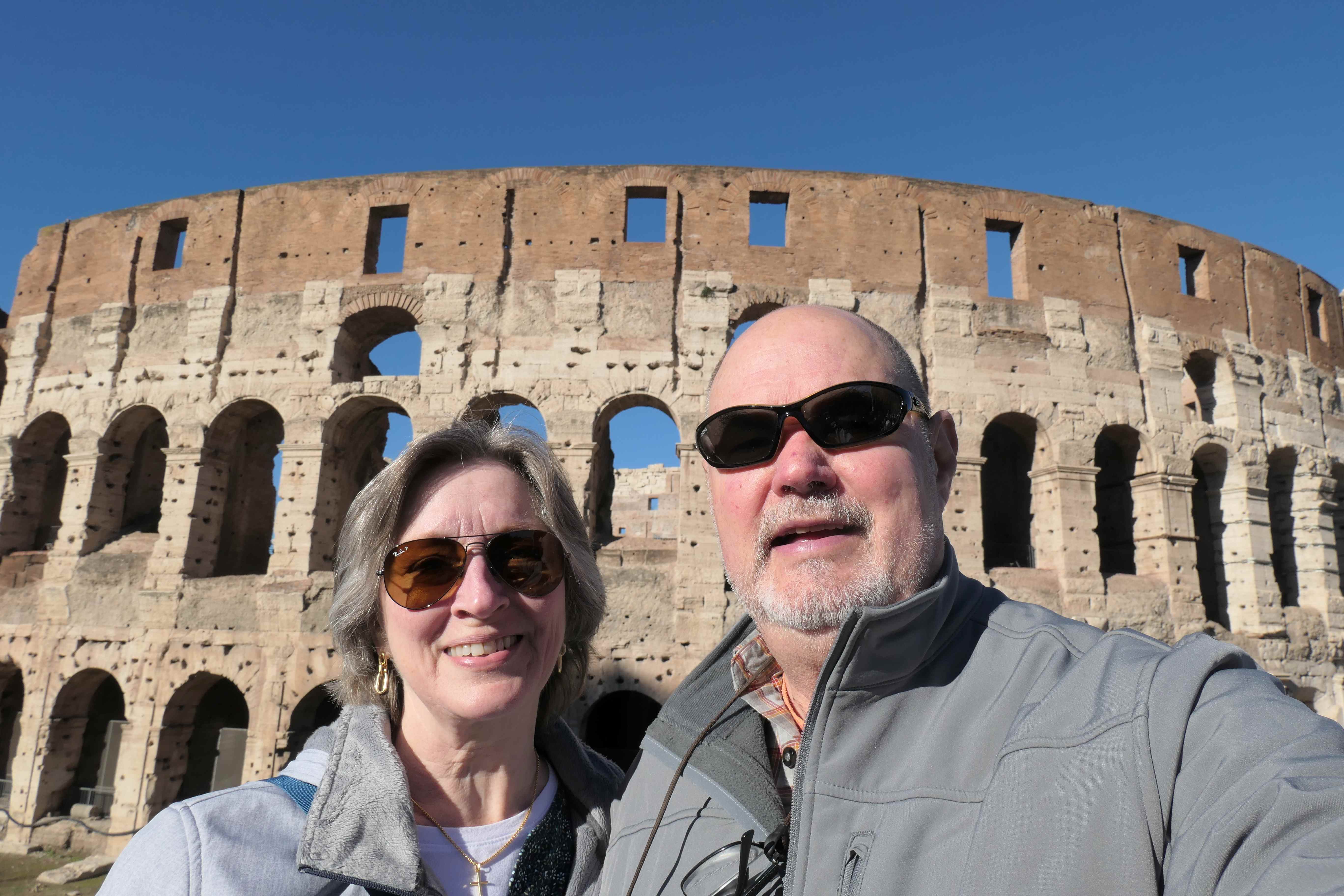
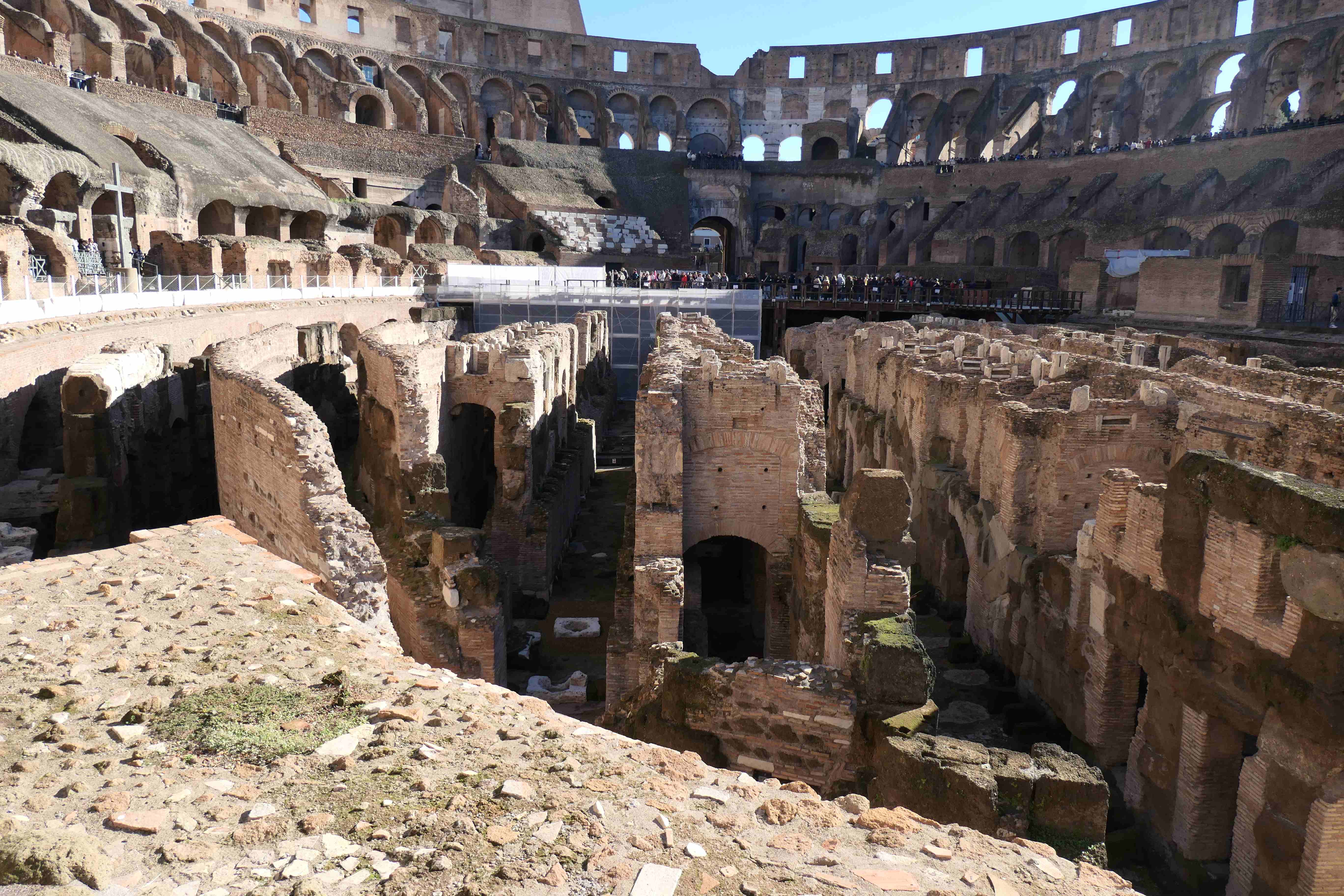
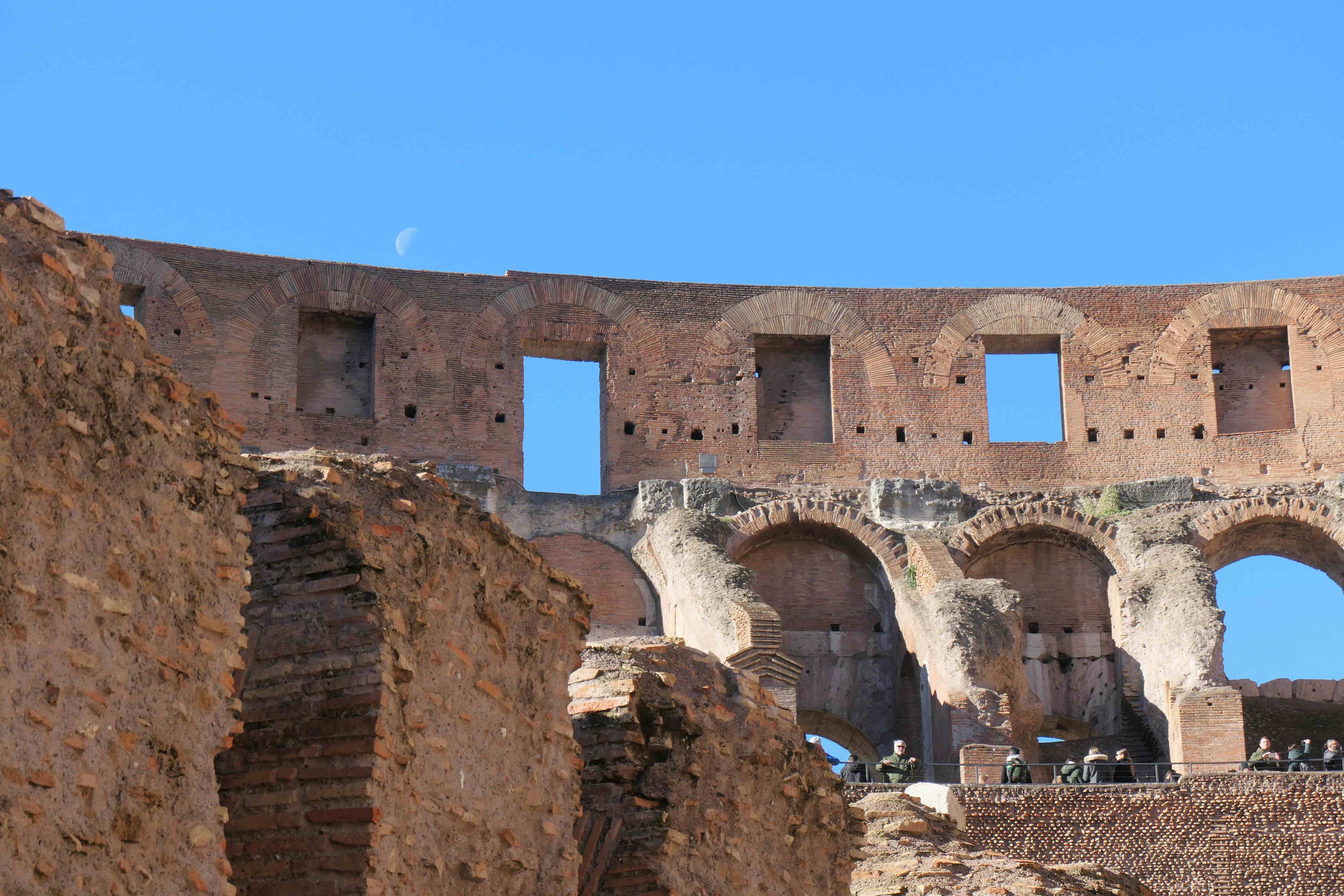
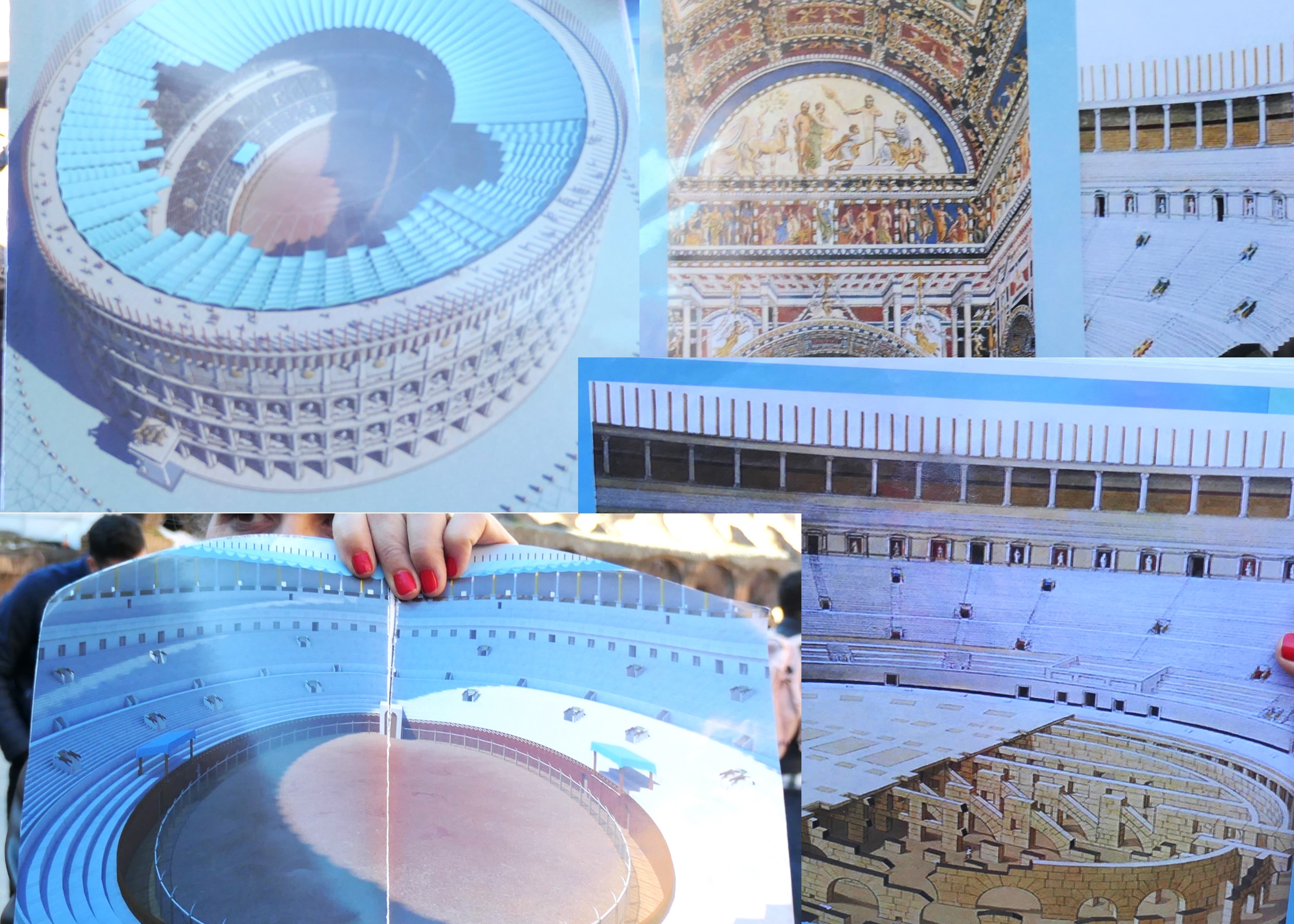
Now, did someone mention gladiators? Can’t think of Rome without also thinking of the Colosseum, originally simply called the amphitheatrum. (“Simply?” Ha!) Biggest in the world, still. As entertainment for the masses, admission was free. The wooden floor was covered by sand, and there were a bunch of ways in and out to the floor. The Colosseum was used for all kinds of purposes still being argued. Think lots of different shows, animal acts, juggling, you name it. But certainly fights. Between animals, against animals, etc. It’s told they even flooded it enough to depict a sea battle! It’s that big! Heck, it’s so old, Rome used it as a quarry from which to build other stuff!

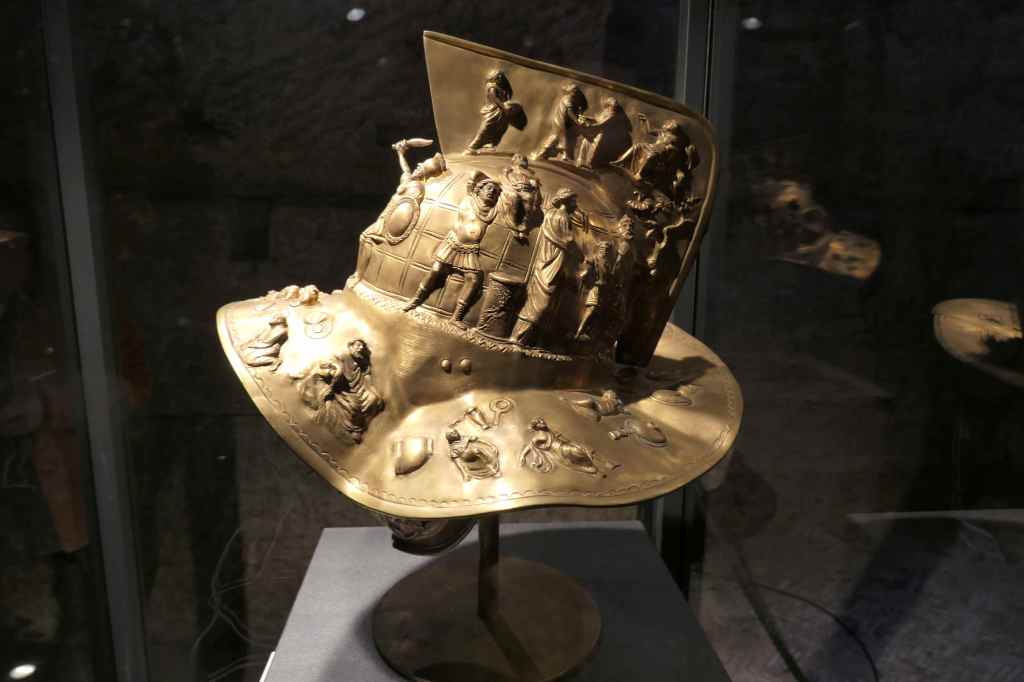
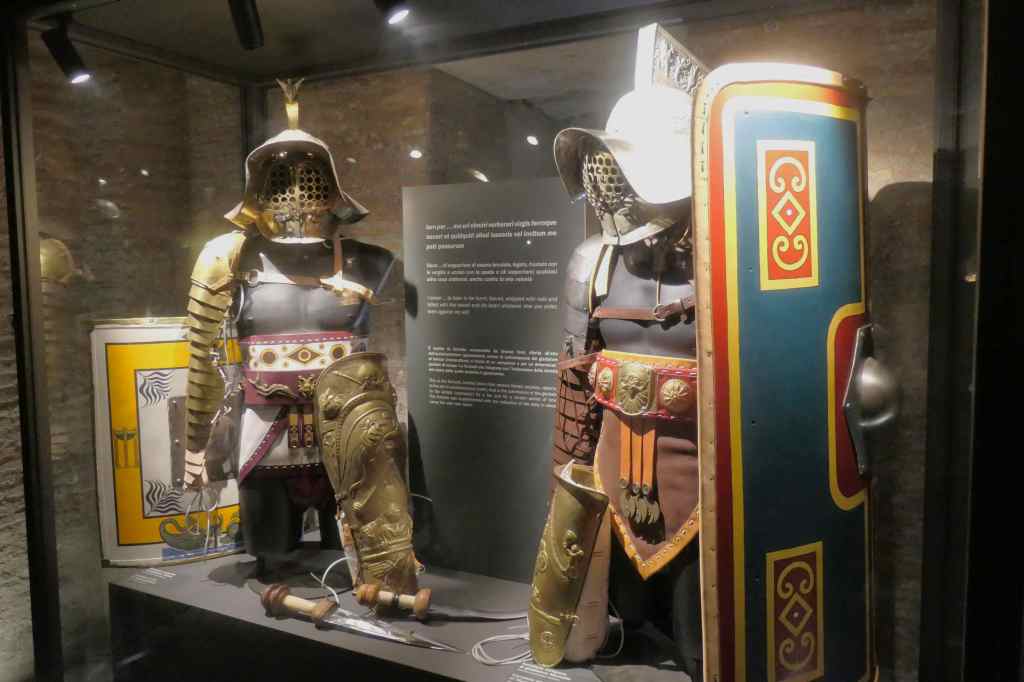
During the Underground portion of the tour, we learned more about the most well-known aspect of the place, the gladiators. Depending on the stories, they were more well-trained actors than anything. They lived like Hollywood stars. Their owners had a lot invested in them and certainly didn’t want the dudes to die. History claims only 30% of the fights ended in death. The details on their uniforms, from 100 AD are just stunning.

We learned a lot! And with imagination could practically hear the roar of the crowd!

* Oh, here’s a random tidbit regarding the fights: The movies are wrong about the thumb👎. Thumb down is actually believed to mean put the sword down, as this guy is too valuable to kill. Ah, Hollywood.


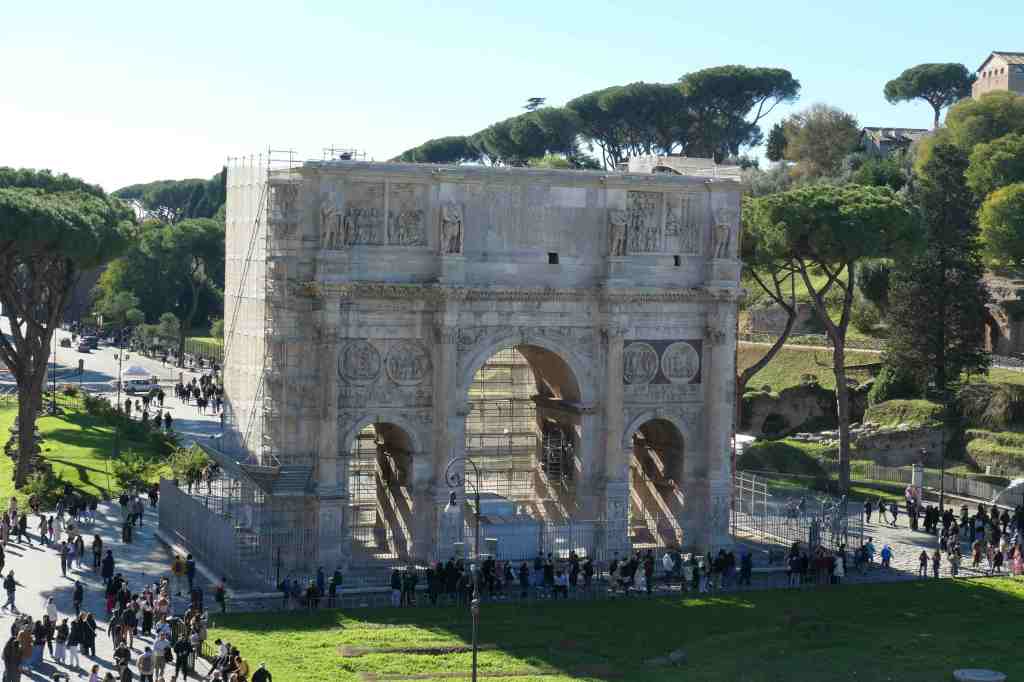
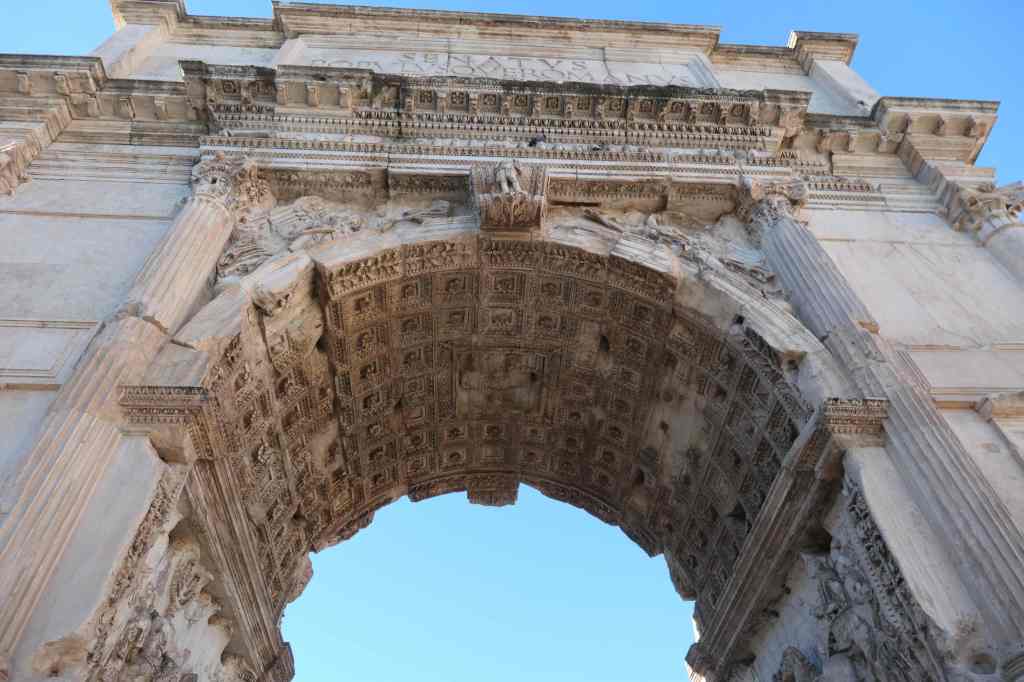
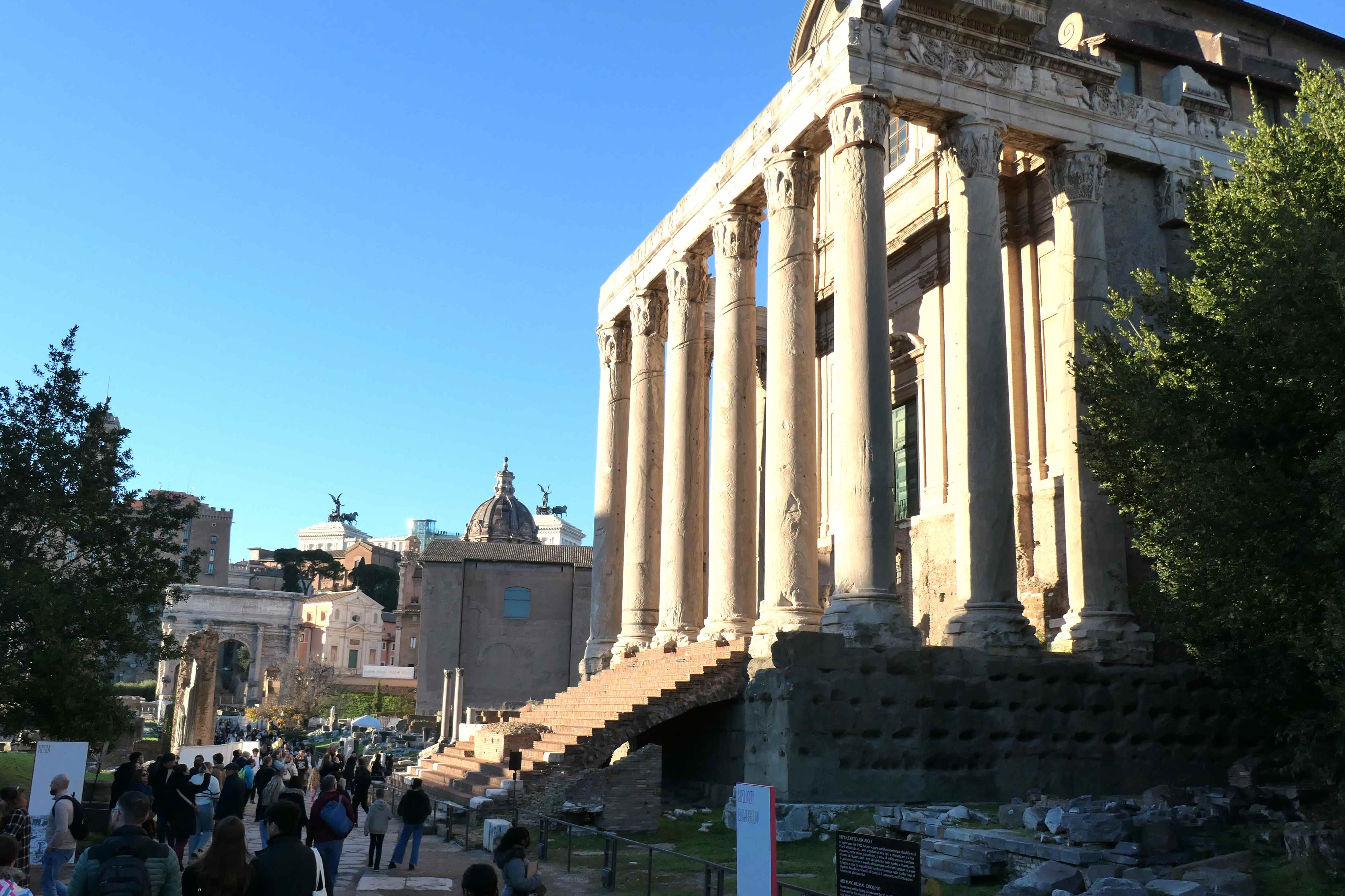
Heading towards the Palatine Hill, outside the Colosseum, is the Arch of Titus. Triumphal arches were earned by victorious generals with at least 5000 enemy soldiers killed in battle. They still have a few of them here.


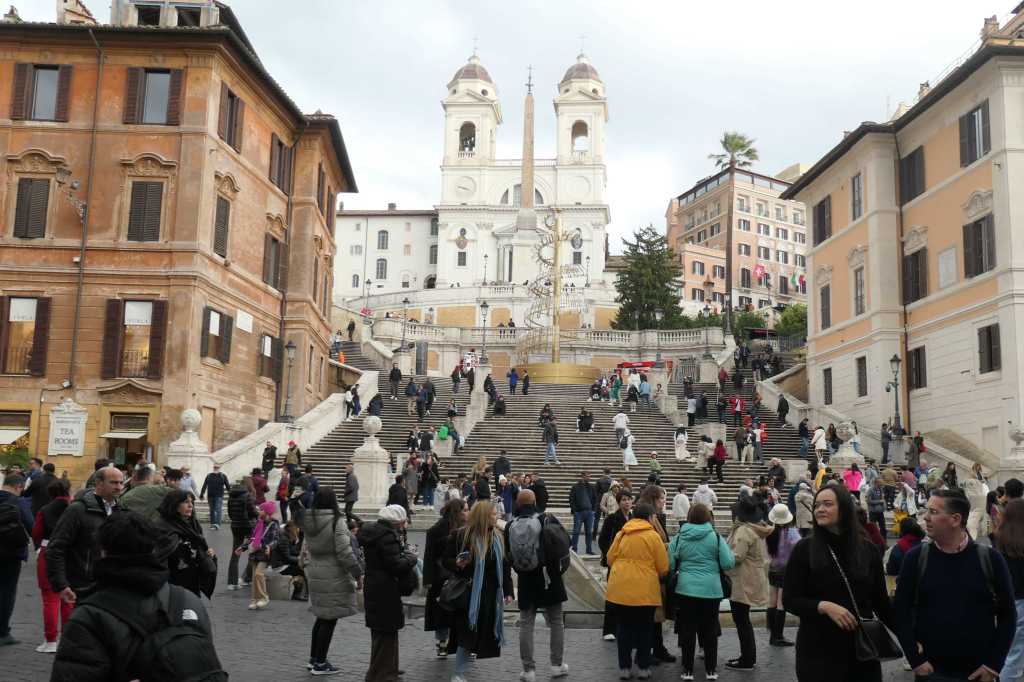
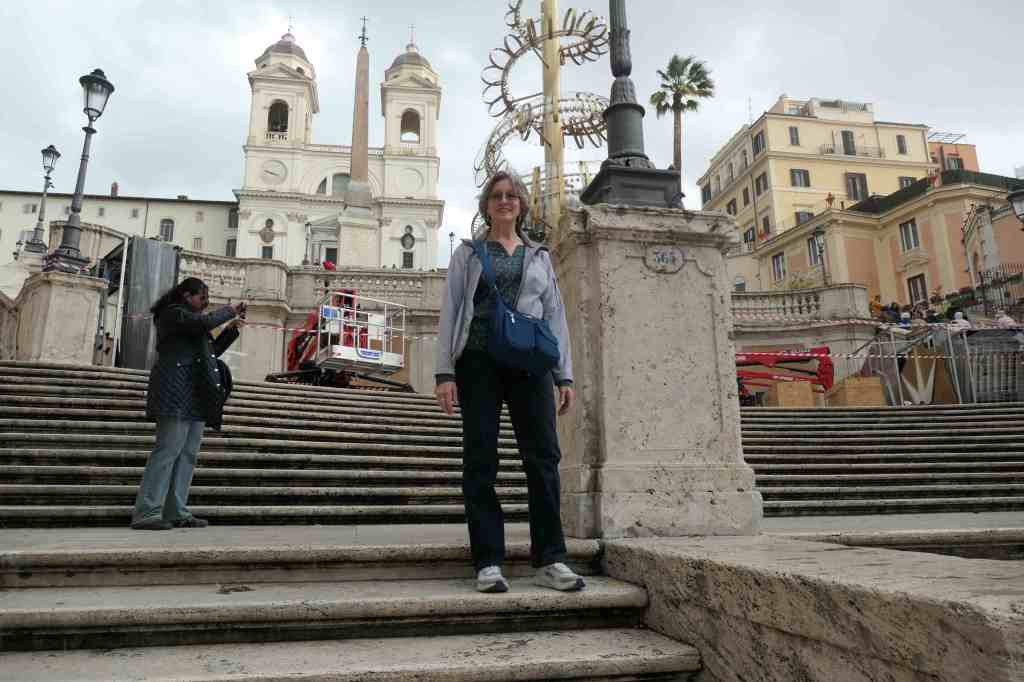
From the Palazzo di Spagna (Spain Square) – that’s right Spanish in the middle of Rome – the 135 famous Spanish Steps take visitors up to the beautiful Trinità dei Monti, a French (we know, confusing) church built in the early 1500s. Spain’s embassy to the Vatican (Holy See) has been located near the bottom of the steps since 1480. And the beautiful steps, themselves? Not built until the early 1700’s.


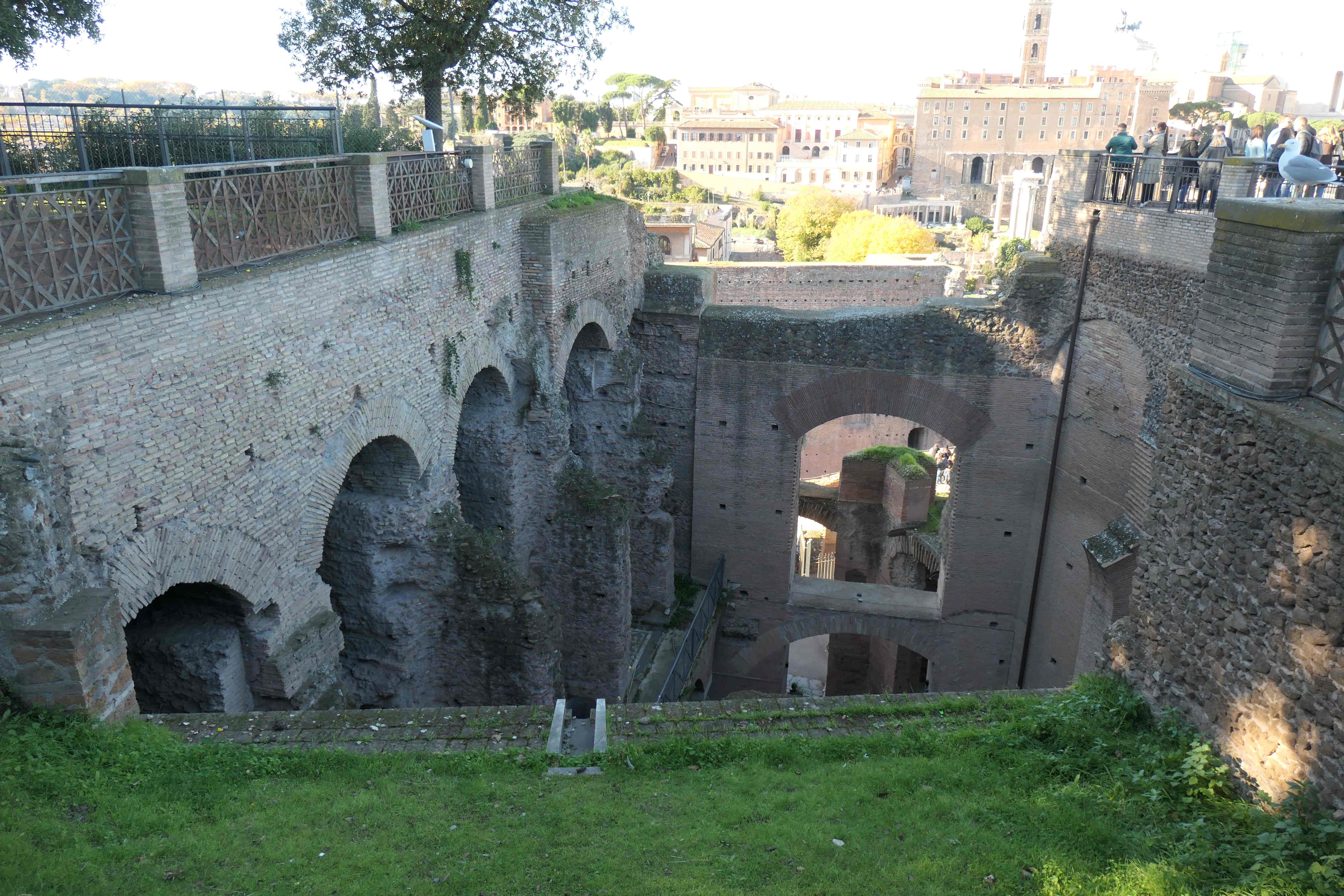
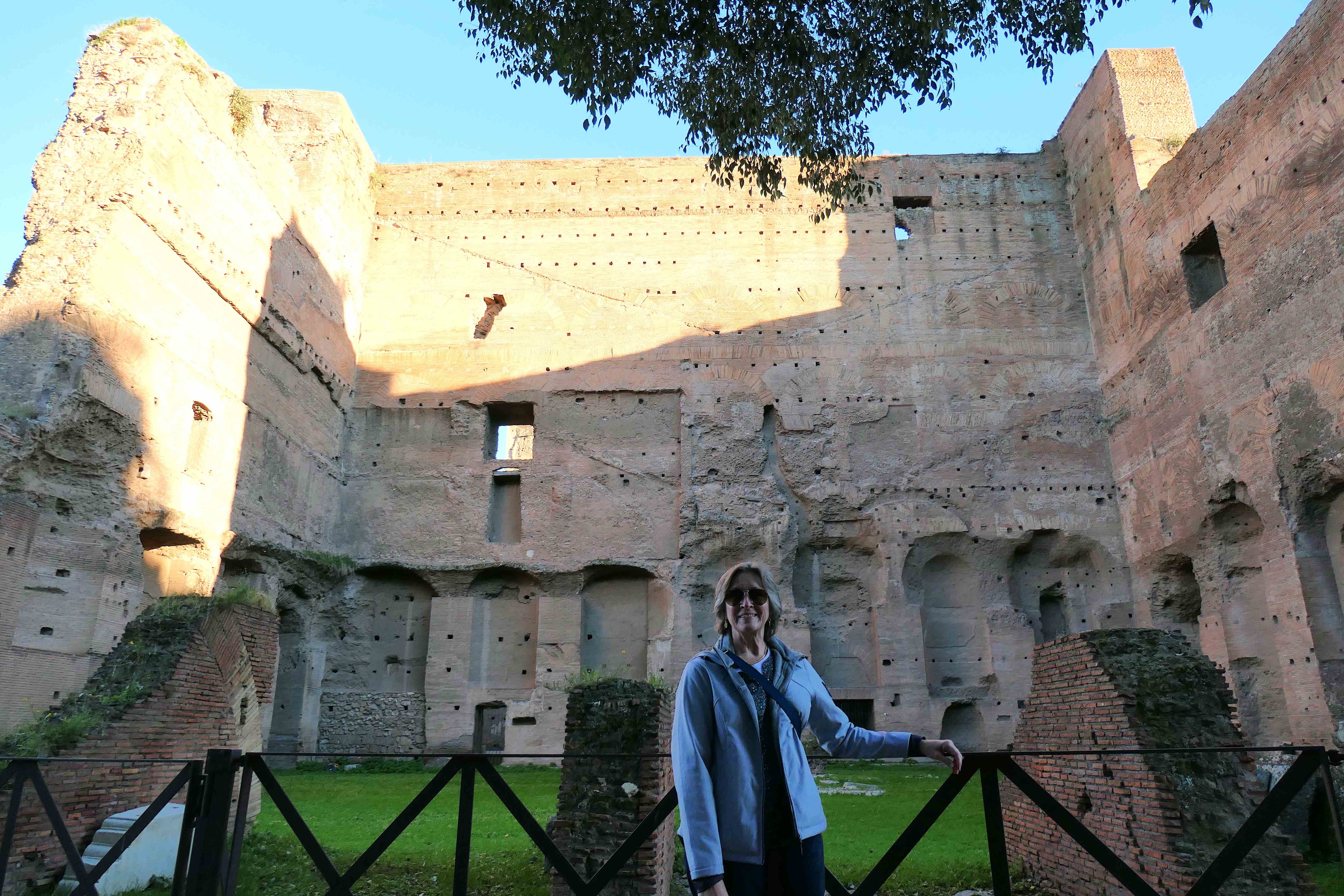
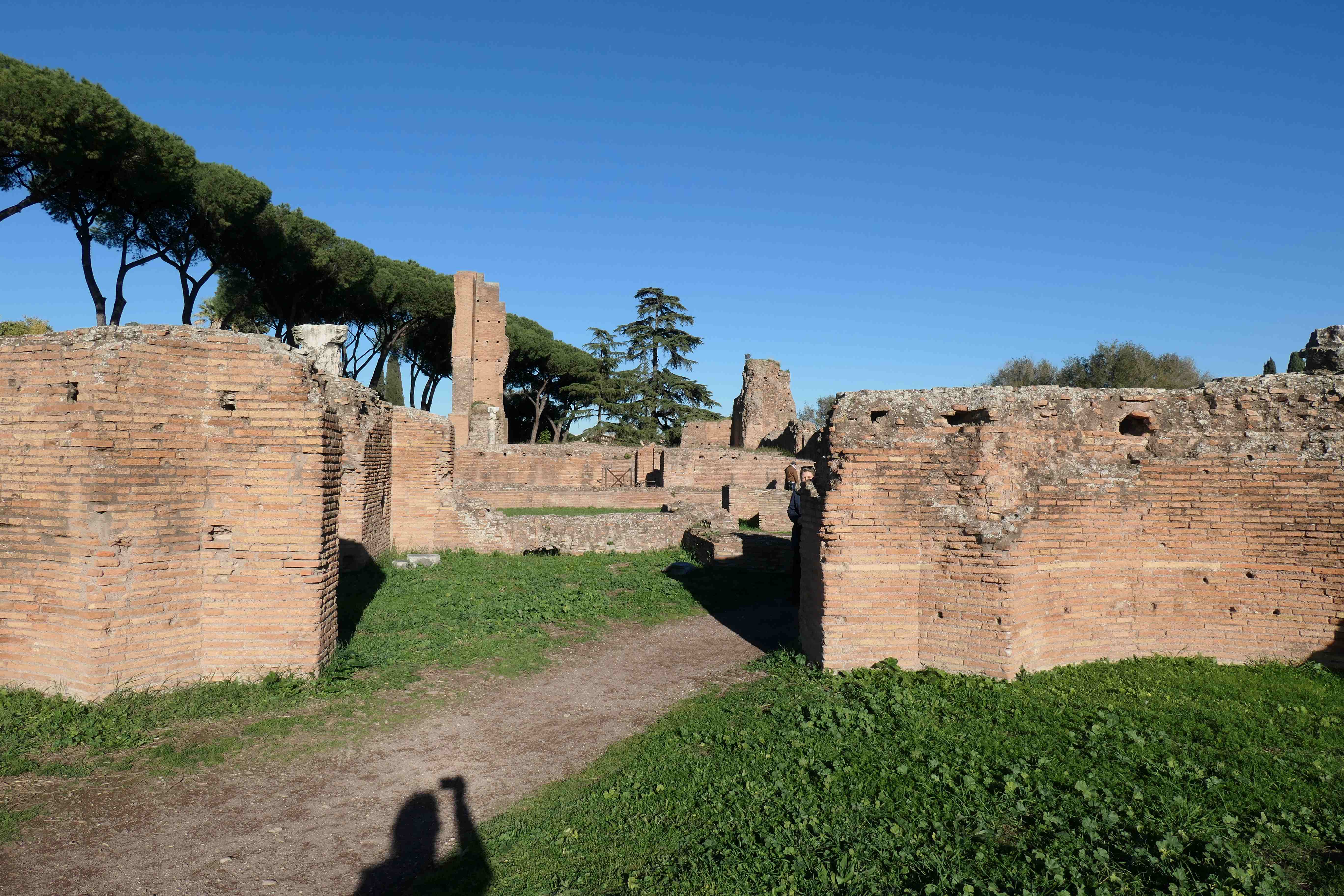
Going way, way back, Palatine Hill is thought to have been named by Evander of Pallene, an important Greek, 60 years before the Trojan War (1200 to 1300 BC)! Moving forward, tradition then holds that Rome was created right here as one of the seven hills, when Romulus and Remus founded the original city in 753 BC! It was the center of Rome for many, many years. All the really rich important folks lived up on the hill, overlooking the center of Roman life and government, the Roman Forum.

See, the history around here is amazing! They wrote stuff down! Enough, Todd.😇


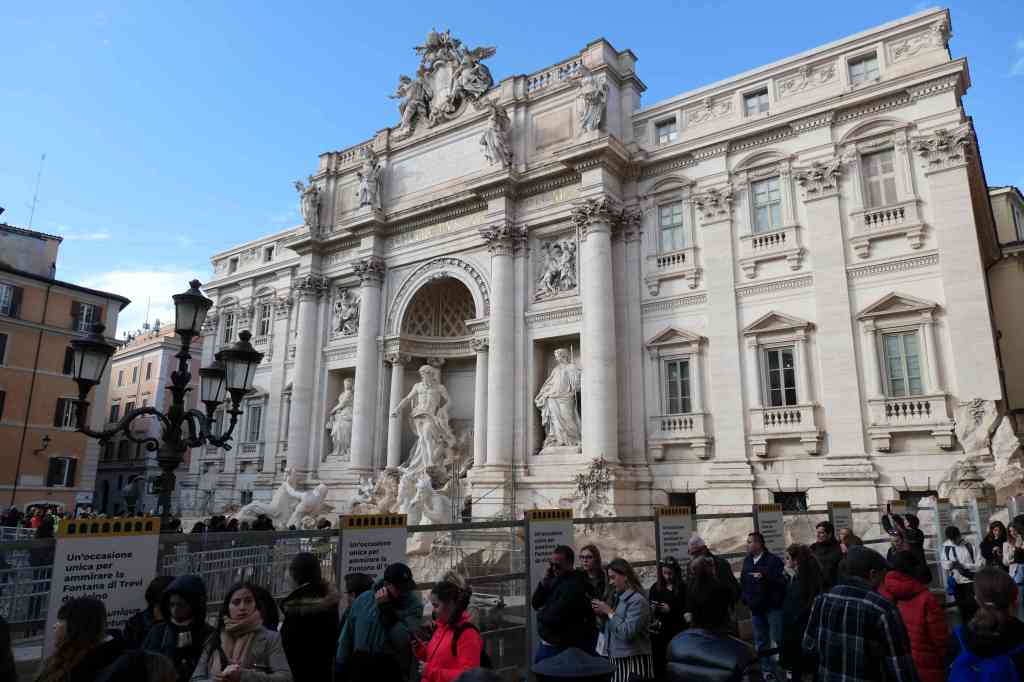
As one last instance of the Jubilee bubble wrap phenomenon, here’s a shot of the well-known Trevi Fountain. We found the crowd easily enough. They were being held back by scaffolding and fencing so the fountain can be cleaned.


Anyone paying attention to the dates of our posts may have noticed we are approximately a month behind. To that, we say, Rome wasn’t built in a day. And neither are these posts. Ha! 🙂

When in Rome

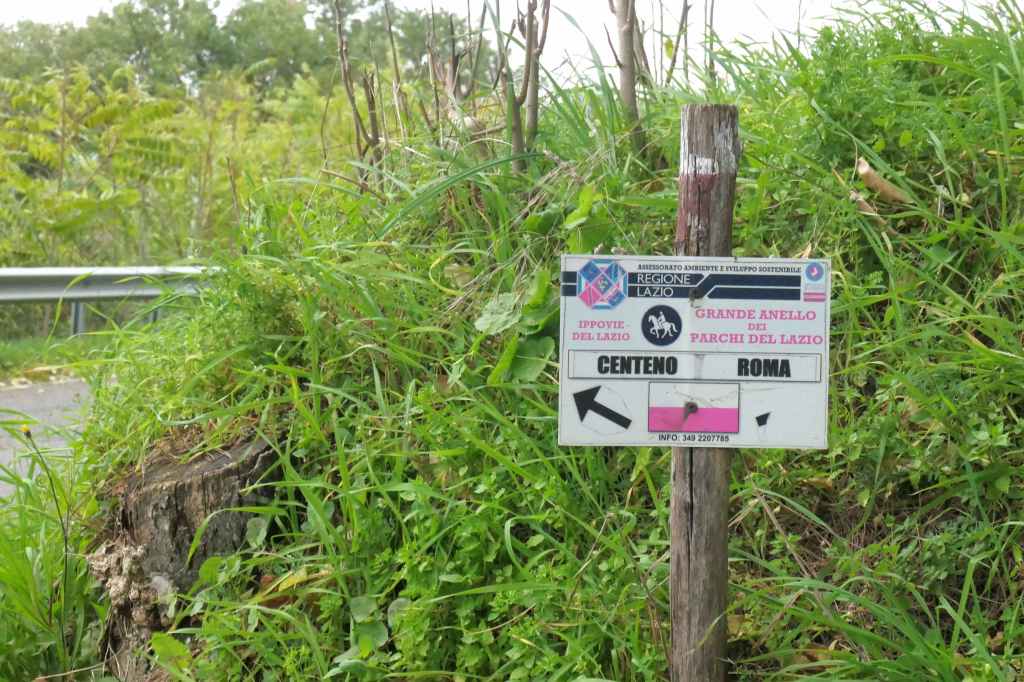
Heading out on November 20, we were surprised to find a handy sign outside the gate pointing us in the right direction. That’s right, we were headed to the big boy – Roma. That which was, at one time, the center of the world for goodness’ sake!

Well, to be fair, the arrow pointing in the right direction is actually missing, but we got the point. (The “point.” Get it? Sometimes we crack ourselves up.) 🙂

Wait. I thought all roads lead to Rome… ?


In renting Villa Perlata, we’d positioned ourselves for a two-hour drive to the Rome Fiumicino Airport, where we’d arranged to return the rental car and take car service into the city. We DID NOT want to be driving in Rome. (See? Proper planning. We can still do it!)

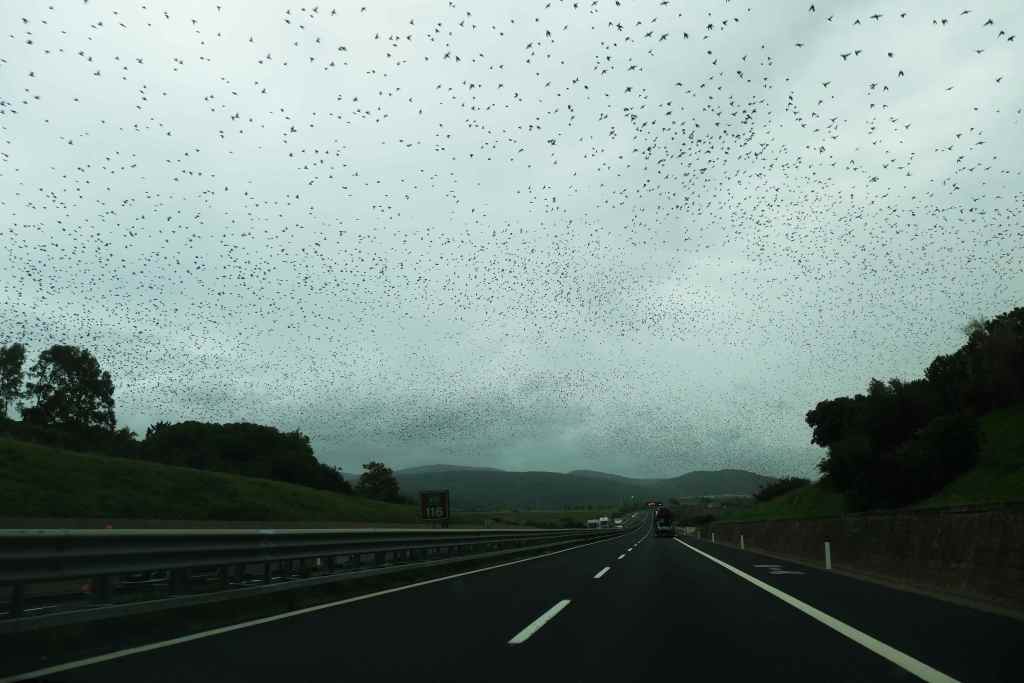
Under a brooding sky, we headed for Rome. The drive was nicely uneventful, except for a mile or so of highway covered by …


We marveled our way past the birds to the airport, which is 20 miles outside of the city. It’s weird to think Rome with all its strength is not on the water. You know, on a big port or something. The ride into the city was as crazy as expected, and the driver screeched to a stop at the door of the apartment building where the owner was waiting on the busy sidewalk to greet us.

Once we’d unpacked, we looked at each other and said, “Well, we’re in Rome. Now what?”

When in Rome, do as the Romans do, right? So, let’s walk. And eat.

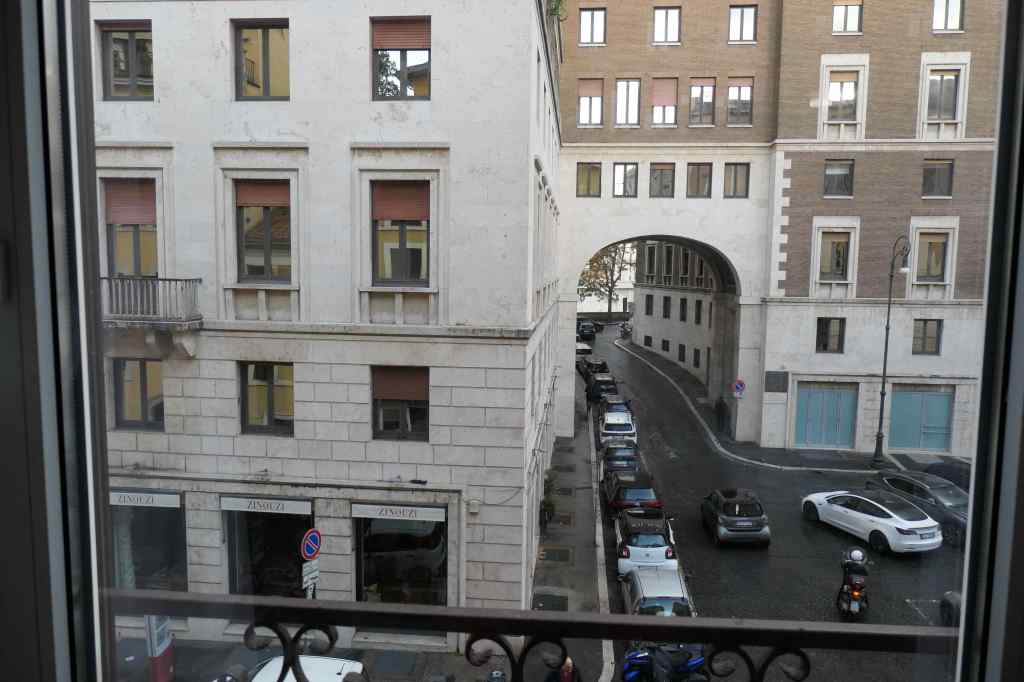
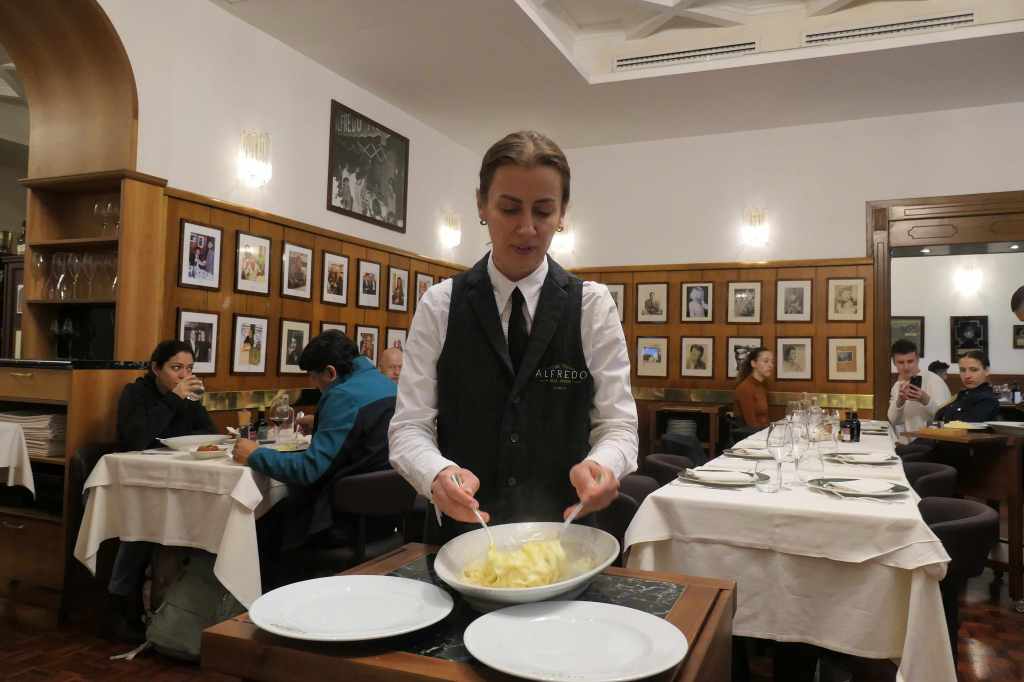
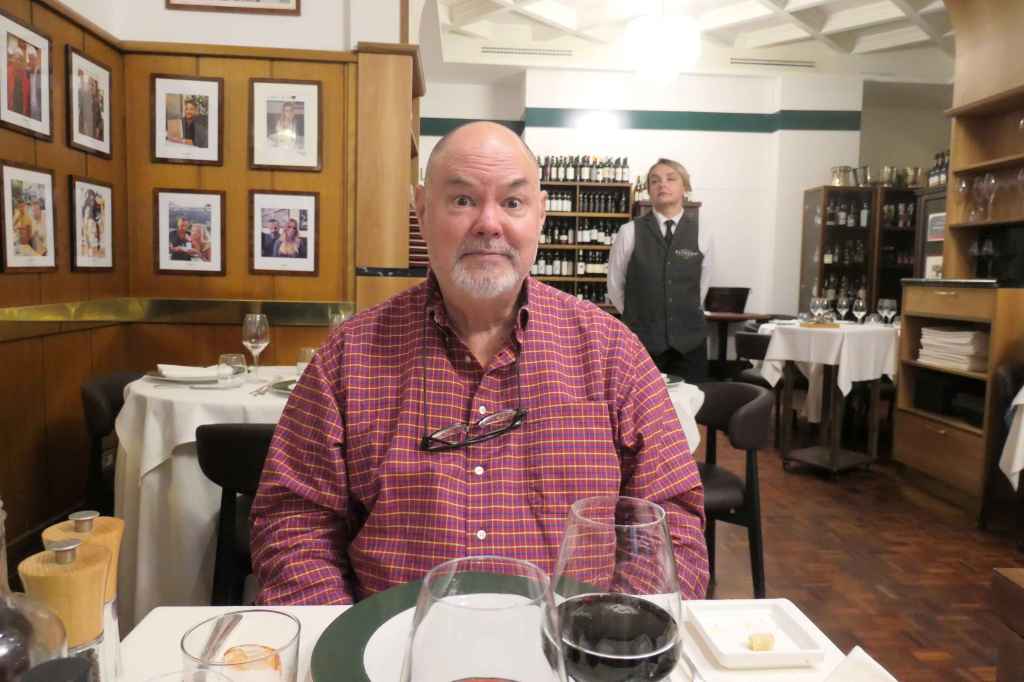
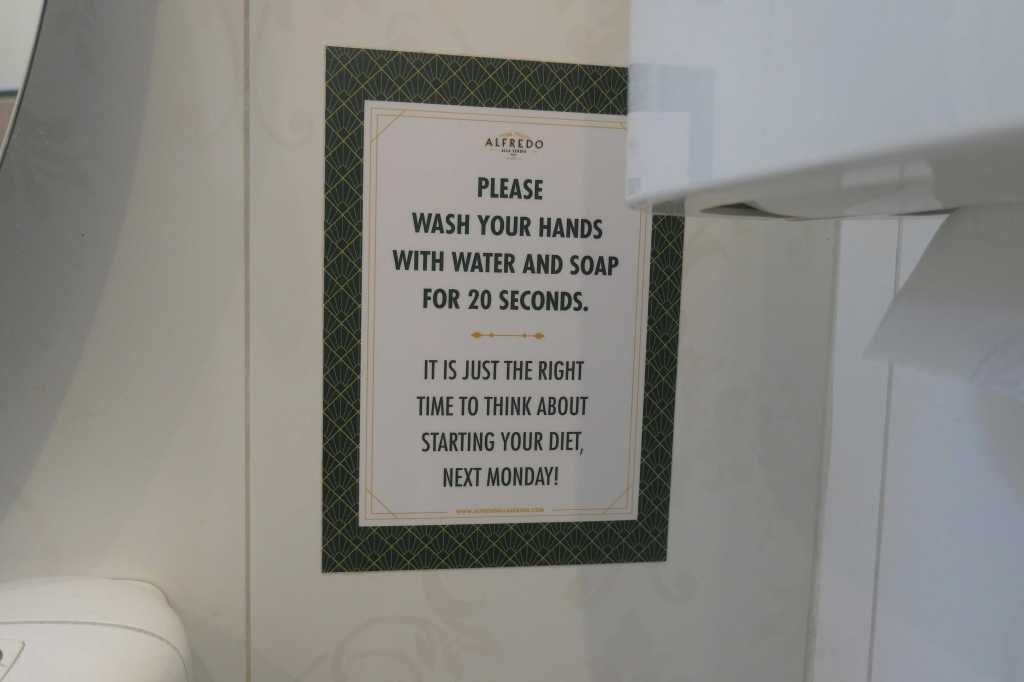
Before stepping out, Todd surprised Susie with the random bit of trivia that fettuccine alfredo was invented in Rome. (He can’t remember where he put his sleep pants, but he knows the origin of fettuccine alfredo??) 🙂 You don’t say, she asks? So, he proceeded to look it up, and found, “Hey, it’s close!” We went downstairs to get our bearings only to look up and see the sign on the next building over. Our first meal in Rome!


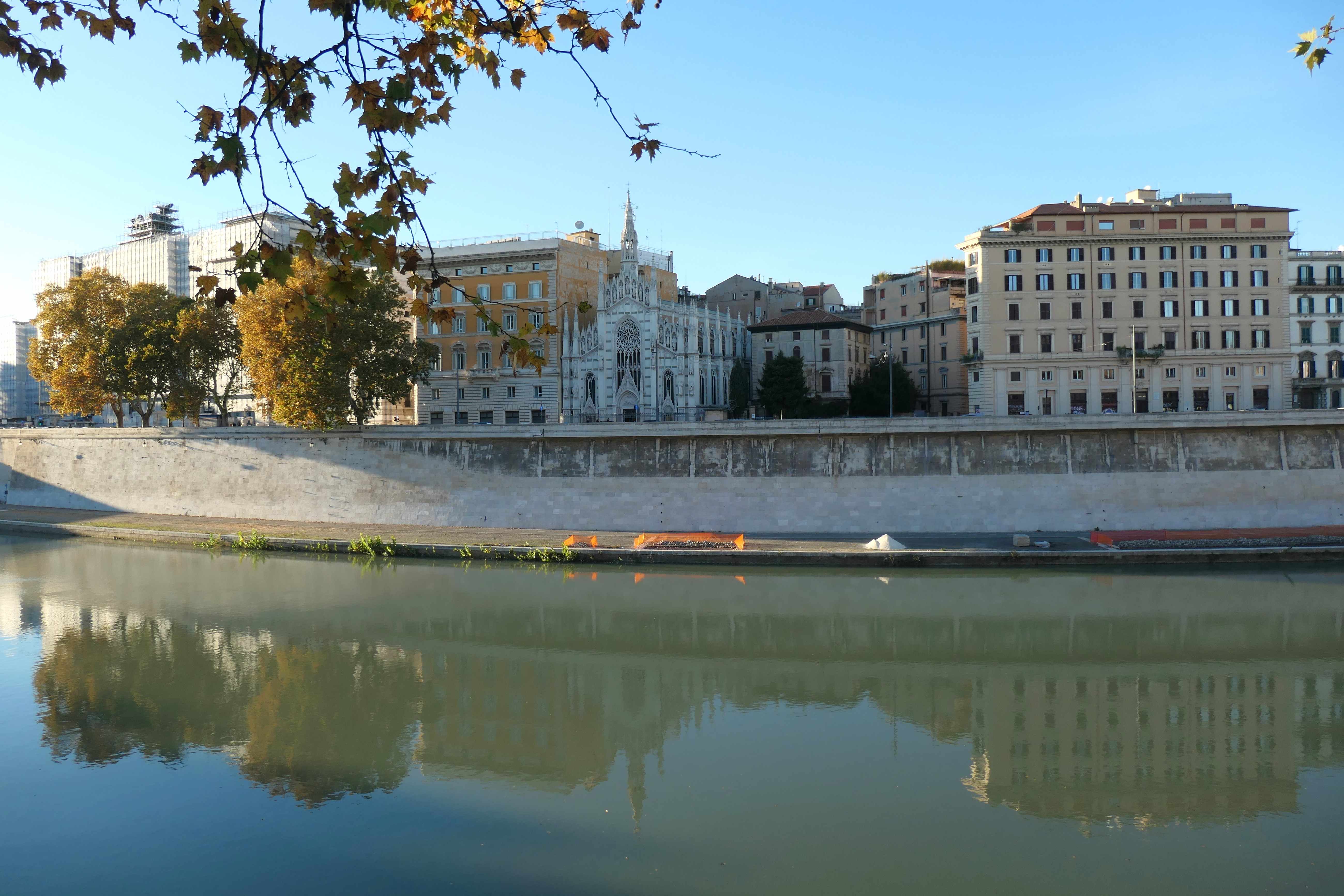
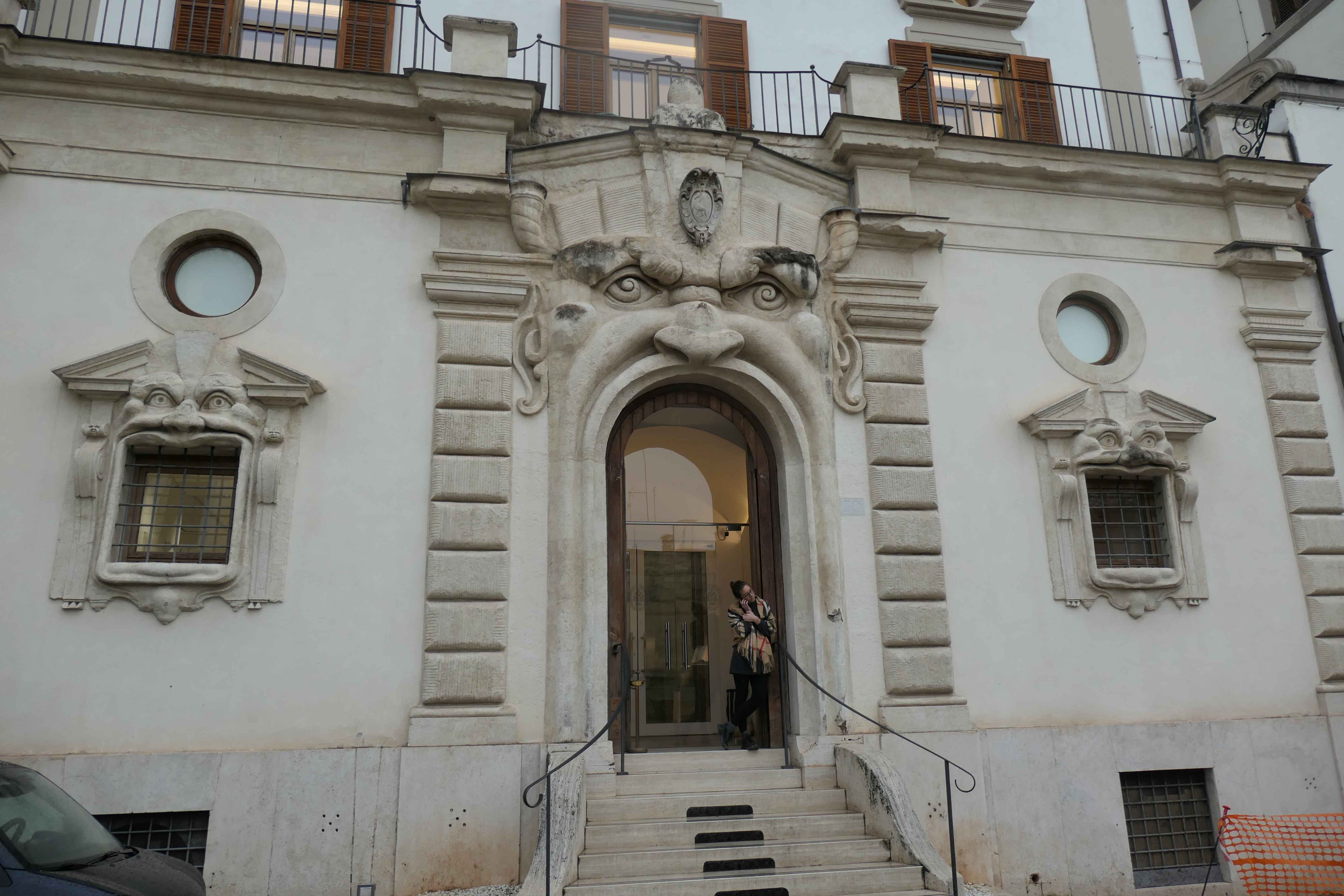
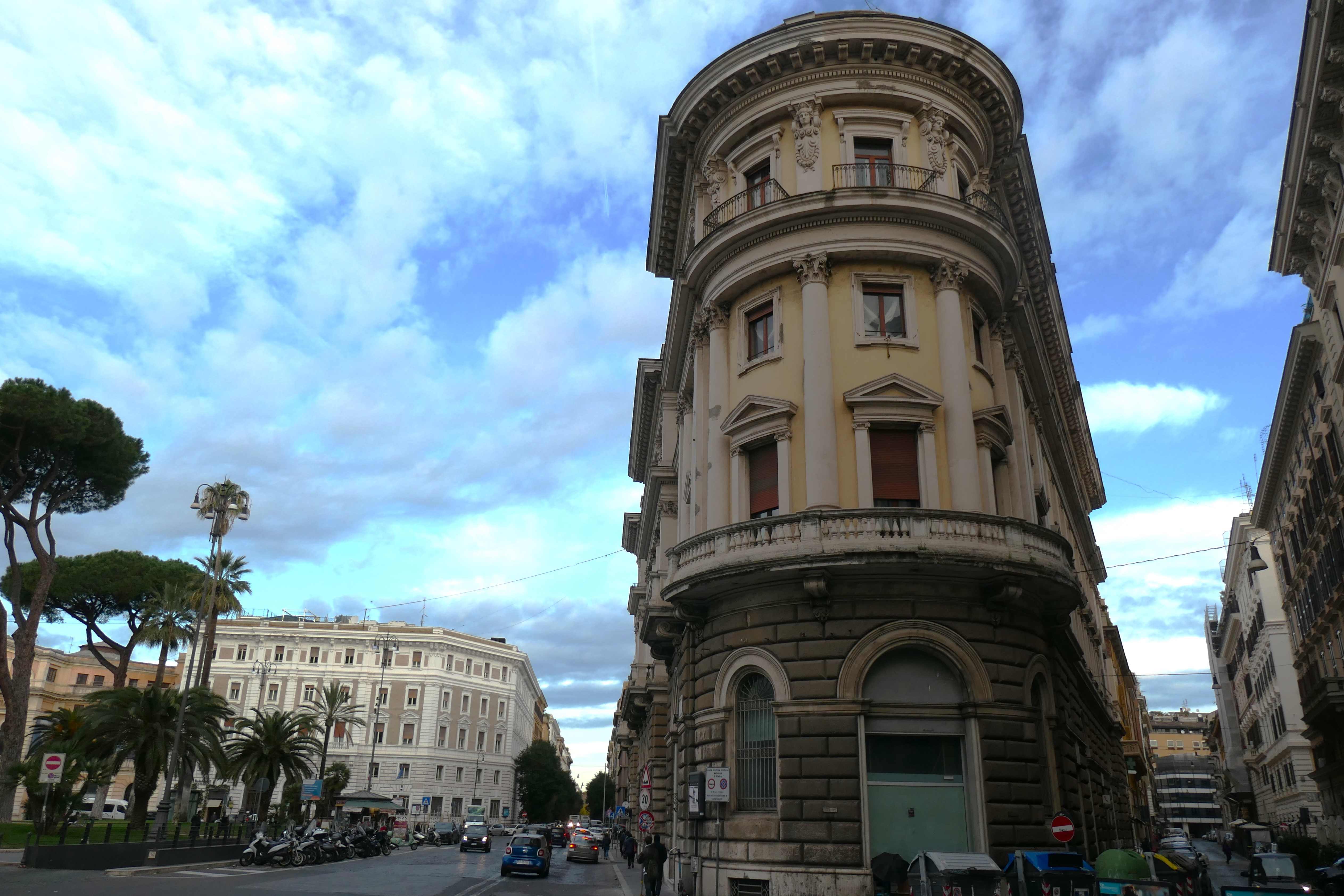
Now how do we quickly sum up a six-day visit to Rome? Truthfully, it simply can’t be done. There is so much history, so much extraordinary architecture, so much beauty, so much bustling about and so much shopping. Oh, and the great food and the people! (Not to mention nearly a thousand photos.) All that one might hope to find in an amazing world-renowned city. Wow! So, here are just a few architectural sights:


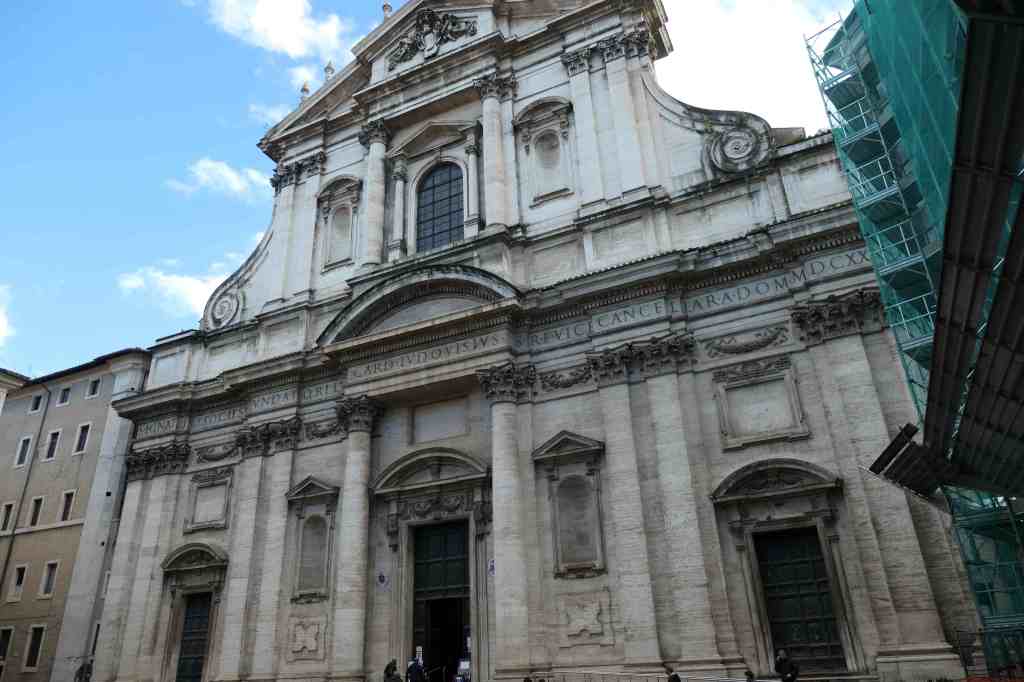
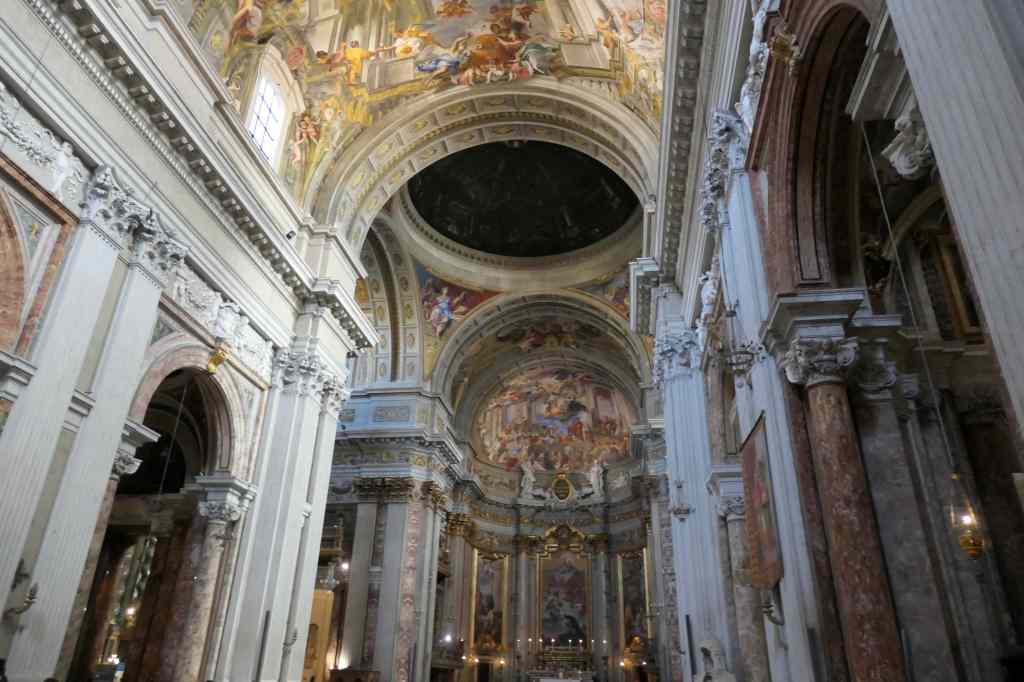
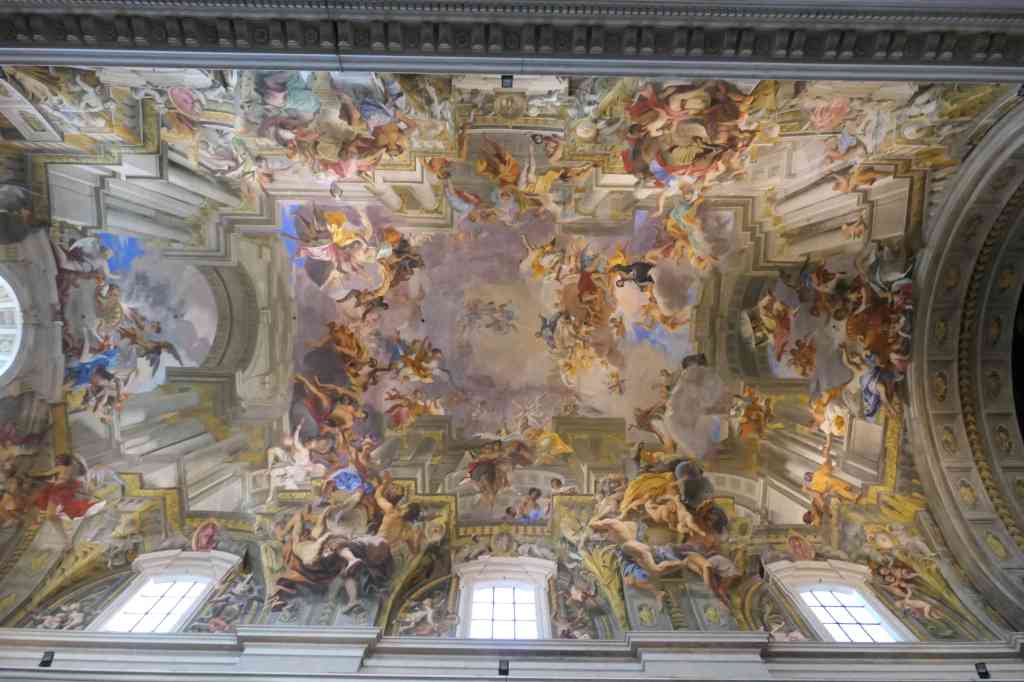
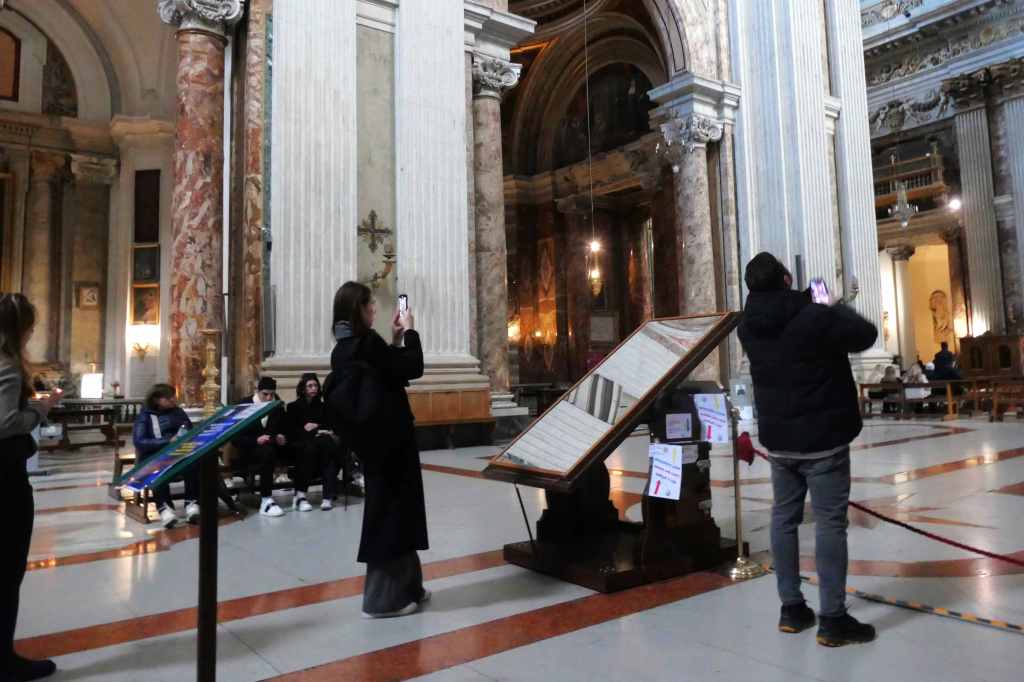
In our wanderings, we stepped into many historic churches all over the city. In one we found a long line of people waiting to look into a large mirror on the floor. Huh? We did the mutual shoulder shrug, skipped the mirror thing, snapped a few shots, and agreed to research it later.

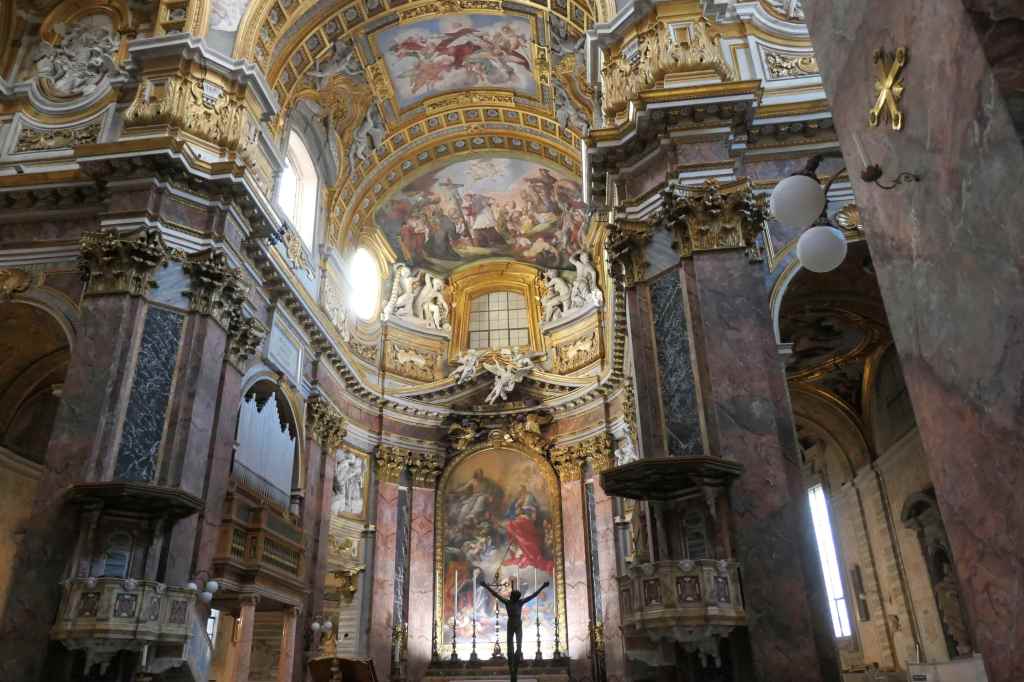
Turns out the Jesuit church of Saint Ignazio was originally designed to include a glorious dome, but the money ran out during construction in 1642. What? No dome?? What’s a church family to do? Jesuit brother and painter Andrea Pozzo proposed a unique solution, offering to paint a life-sized illusion of a dome and barreled ceiling that would fool the eyes of visitors (as long as they looked up from the proper angle). His false masterpiece, painted between 1685 and 1694 on a single 56-foot canvas, still deceives the eye today! The church has kindly marked the correct spot on the floor and added a mirror for the best viewing angle.

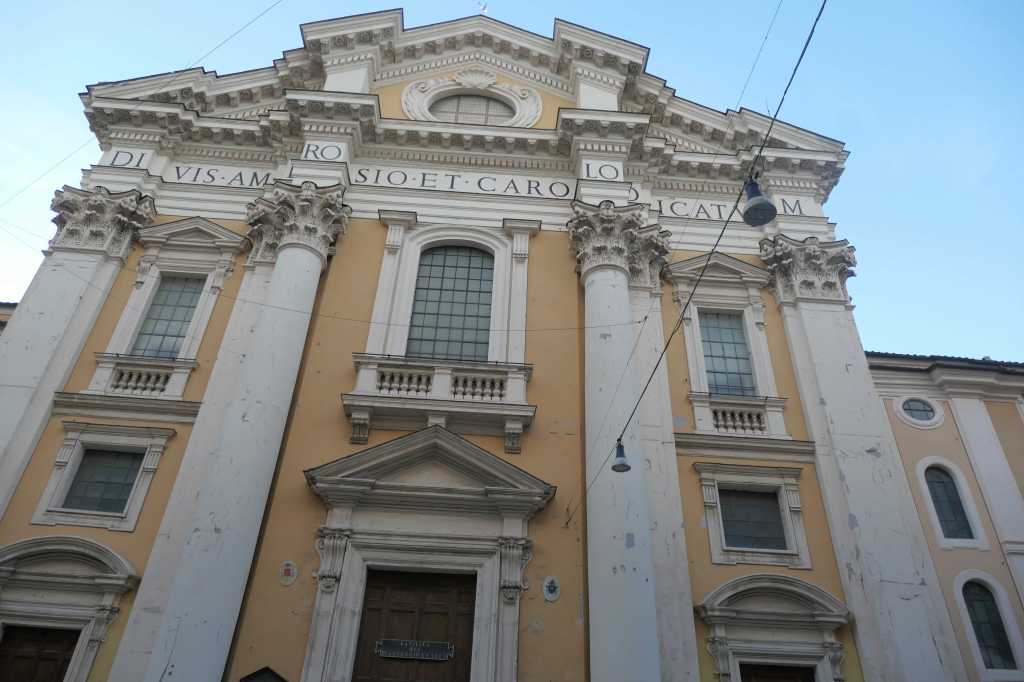
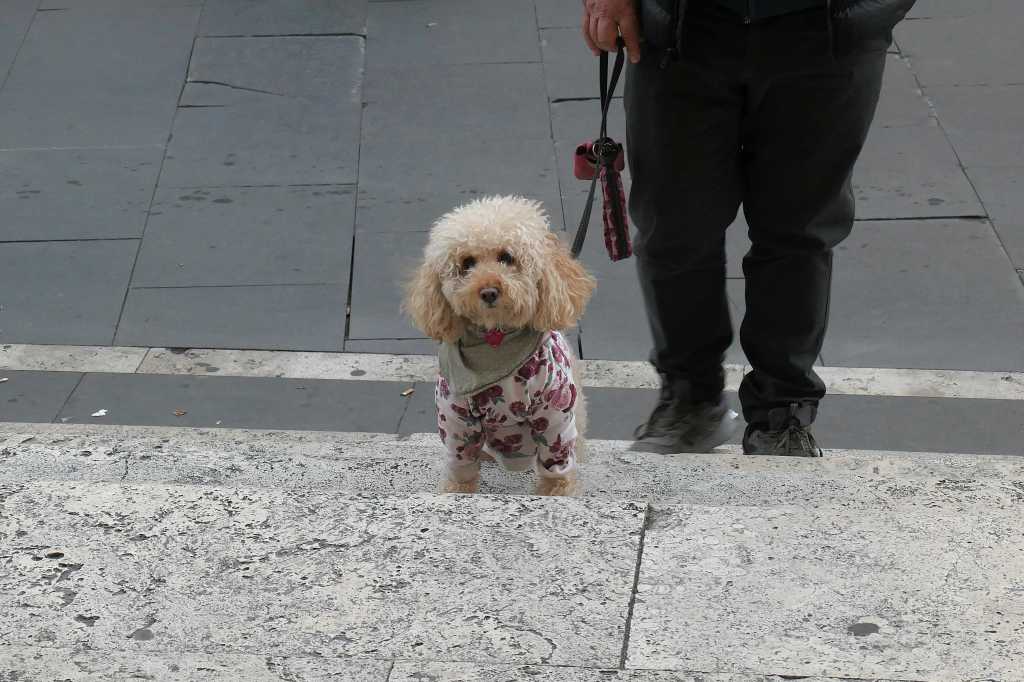
With roots back to a smaller church of the 1400’s, the Basilica San Carlo al Corso (below) is dedicated to Saint Ambrose and Saint Charles Borromeo, the patron saints of Milan, in recognition of their valuable construction work on the Sistine Chapel. Susie appreciated the little cutie waiting outside.


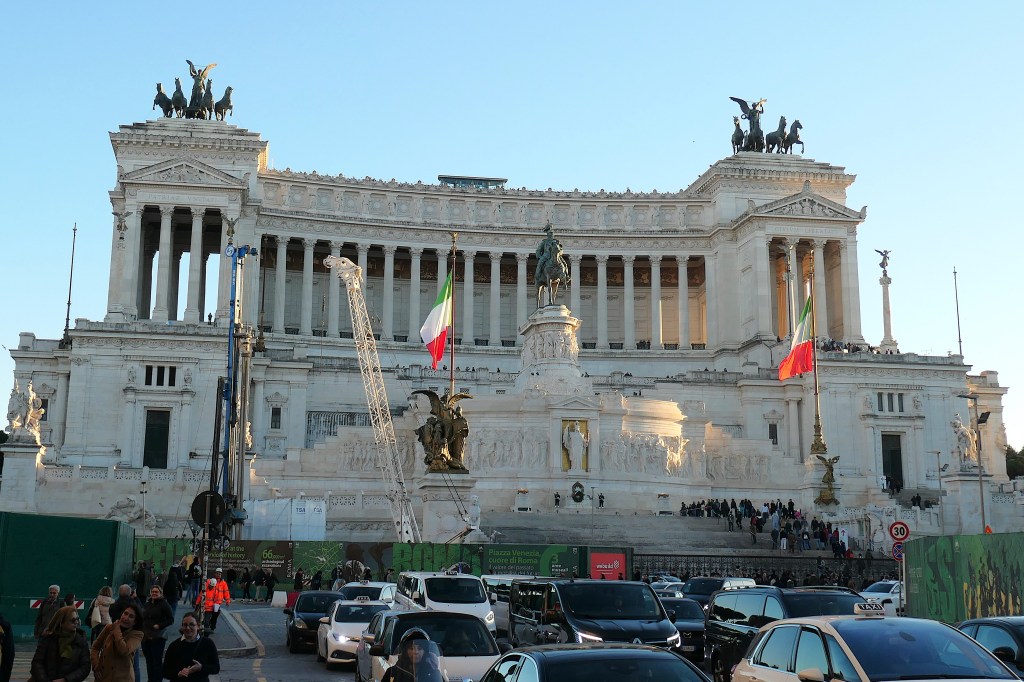
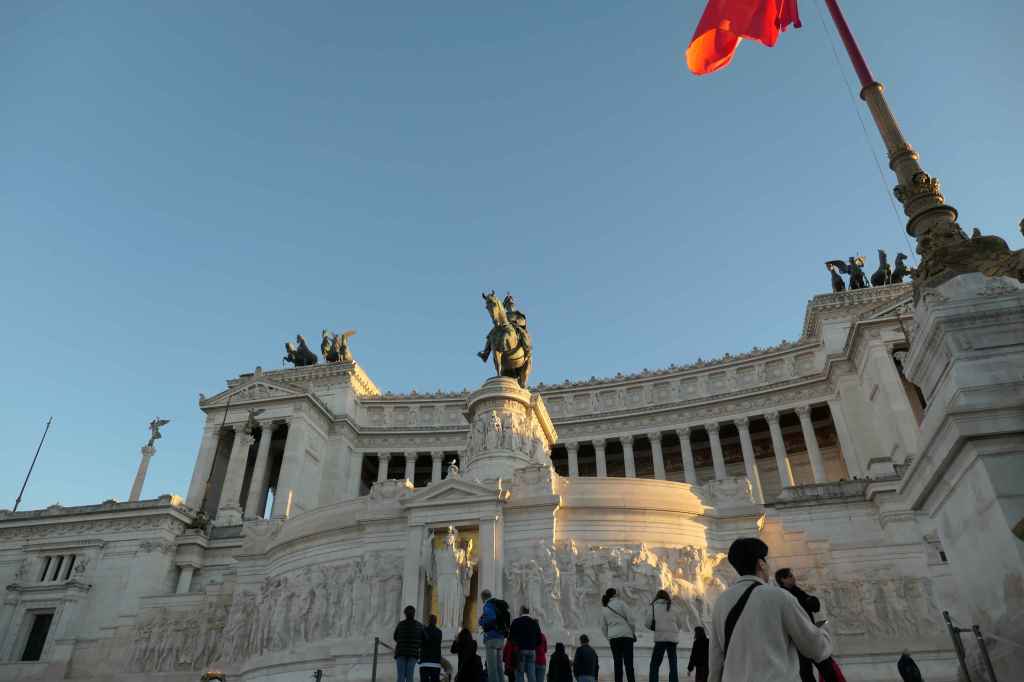
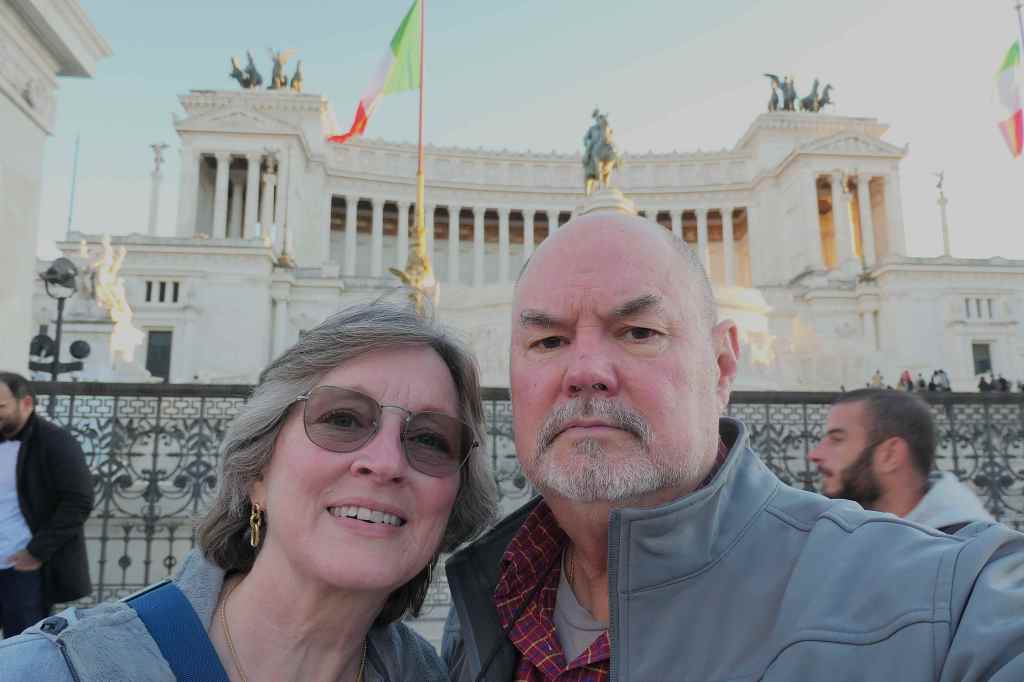
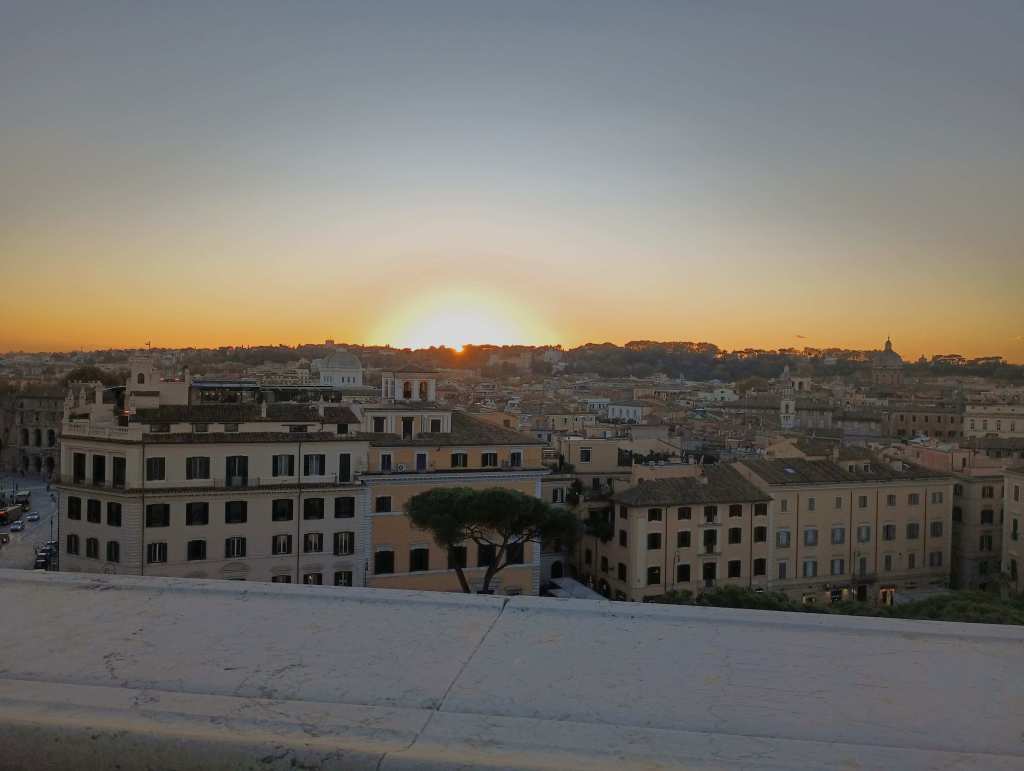
Visible from most of the old city is the towering Victor Emanuele II National Monument, the Vittorio, or colloquially known as “The Wedding Cake.” Interestingly, with all the ancient history in Rome, this monument is relatively new and one of the most important.

Alert! History coming!

In simple terms, the U.S. is older than Italy!

In 1861, while in the United States of America we were fighting ourselves, what we now know as Italy was created!

To celebrate and in honor of the first King of Italy, they built this amazing monument, reflecting both the really old style and the modern on the big Capitoline Hill. And wow, is it B-I-G!


As said, we can’t possibly cover it all. Here are just a few random fun shots:

Out and about:


We walked everywhere, easily averaging more than 6 miles (9 km 🙂 per day, all whilst watching – and sometimes dodging – the crazy drivers navigating the roads. Truth be told, the city has a large ZTL (Zona Traffico Limitato or Limited Traffic Zone). No permit = very bad/expensive fine. We completely understand why they don’t want “just anybody” trying to drive around the old city!


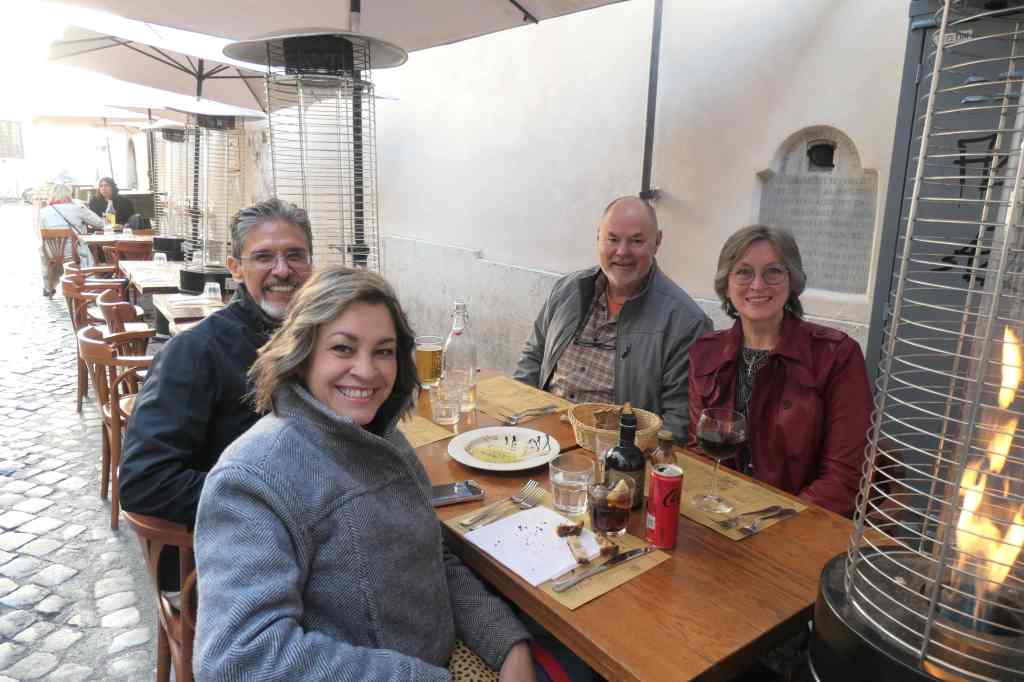
Friday afternoon we went looking for a little restaurant that was recommended as being off the beaten “touristy” path and arrived to find at least a dozen teenagers hanging out in the doorway (good sign, but why aren’t they in school?). We were pointed to a tight back corner next to another couple already dining. After exchanging courteous “Buon Giorno’s,” the female patron sweetly asked, “Parla Inglese?” (Do you speak any English?) Hot diggity dog! Our “Buon Giorno” was so good we came off as Italian!! 😉 Dang skippy! We laughed. They laughed. And thus, we met Gonzo & Yvonne from New Orleans. Small world.

We got together a couple of days later for an English-speaking church service before sharing lunch and exploring into the evening hours.


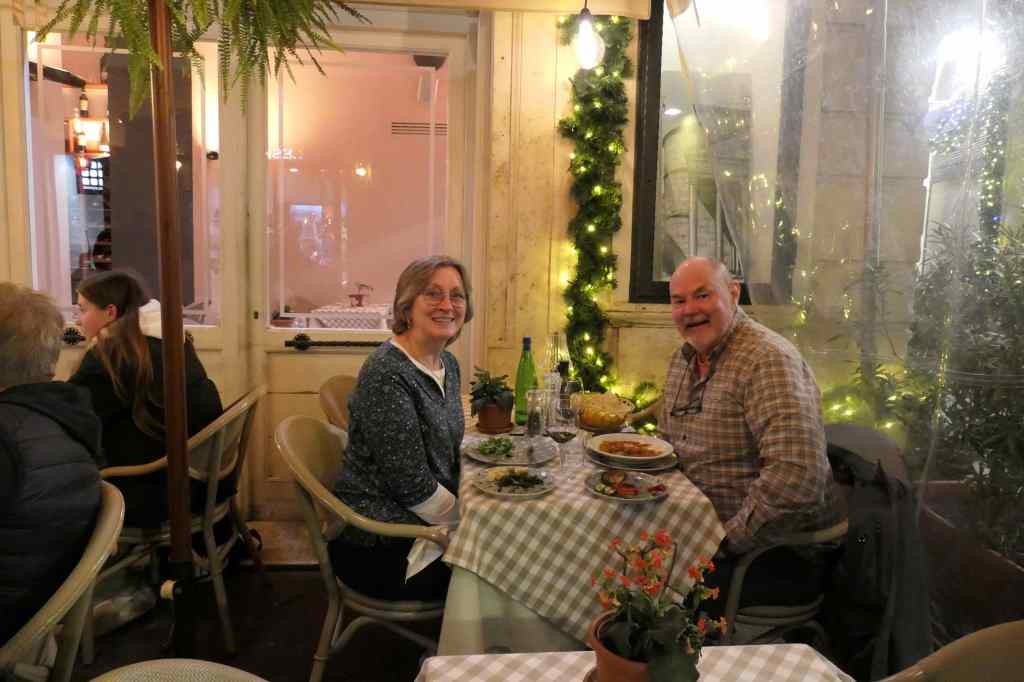
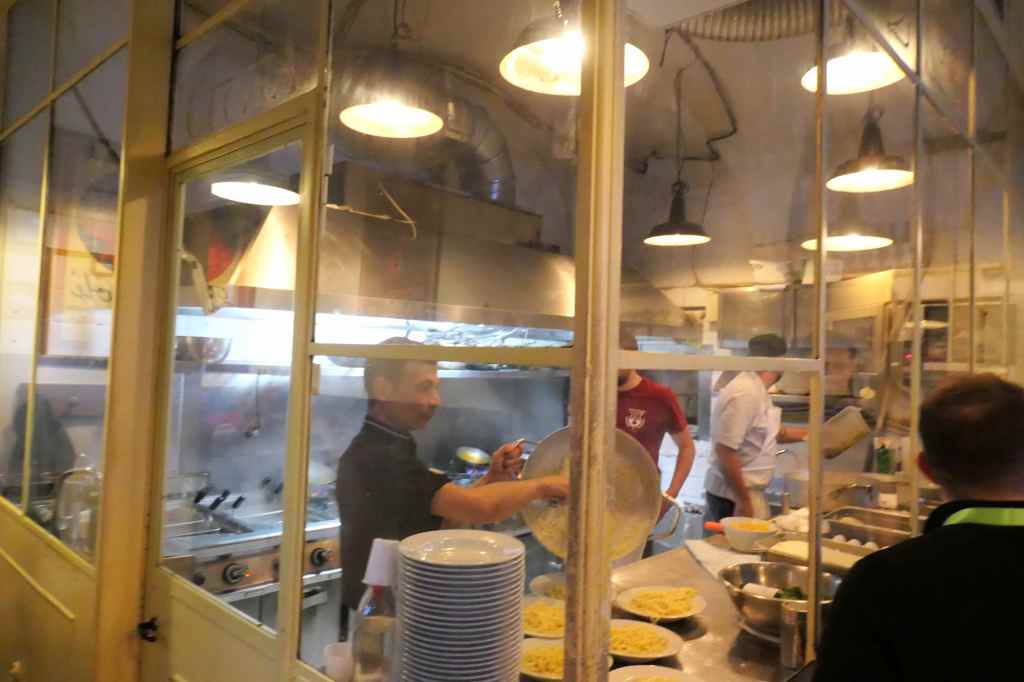
While in Rome, we walked and walked, but we also ate and ate… and, well, you get the drift.

“Est! Est!! Est!!!” …?

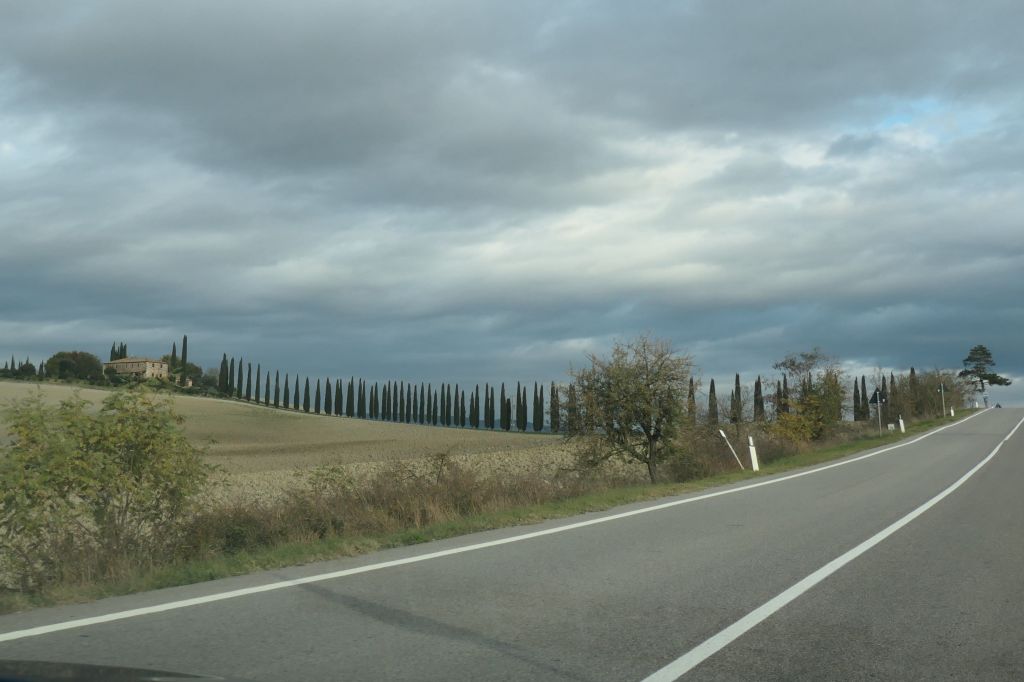
We’d been in Italy four weeks when we donned our only jackets as “raincoats” to load the car and check out of the cozy “Old Cave” duplex near Florence. We were headed for Villa Perlata in Montefiascone, 62 miles north of Rome.

To avoid a repeat of the “no advance tickets” wrinkle experienced in Florence, this next place was to be a “don’t move the car” stop where we would sit still for a couple of days and pin down what we’d do on our upcoming stop in… Rome! (And perhaps preorder some tickets this time?)

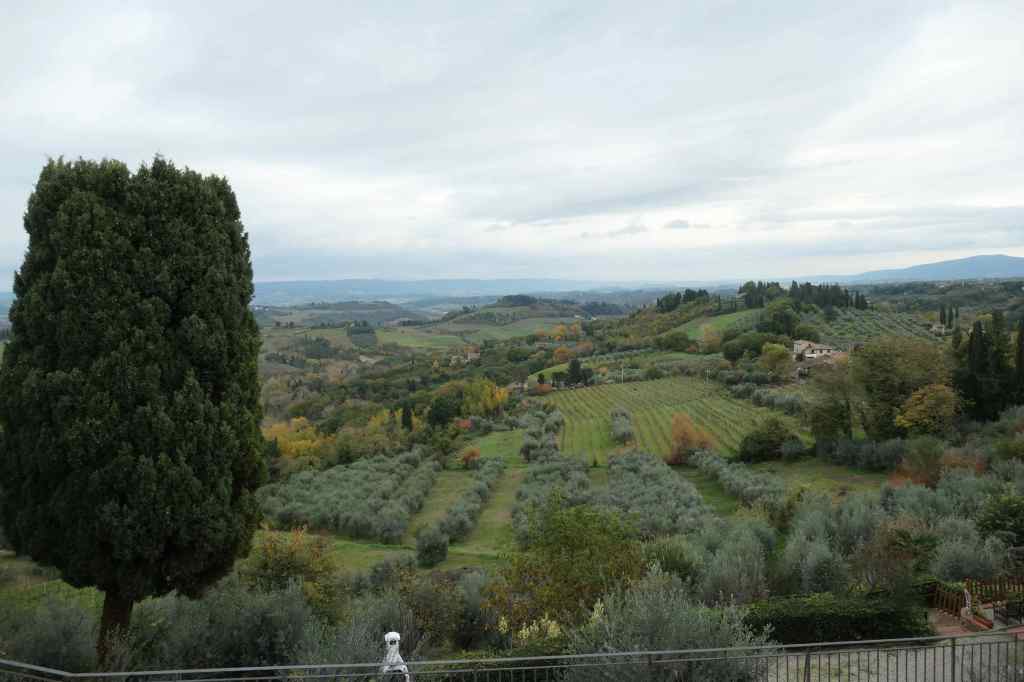
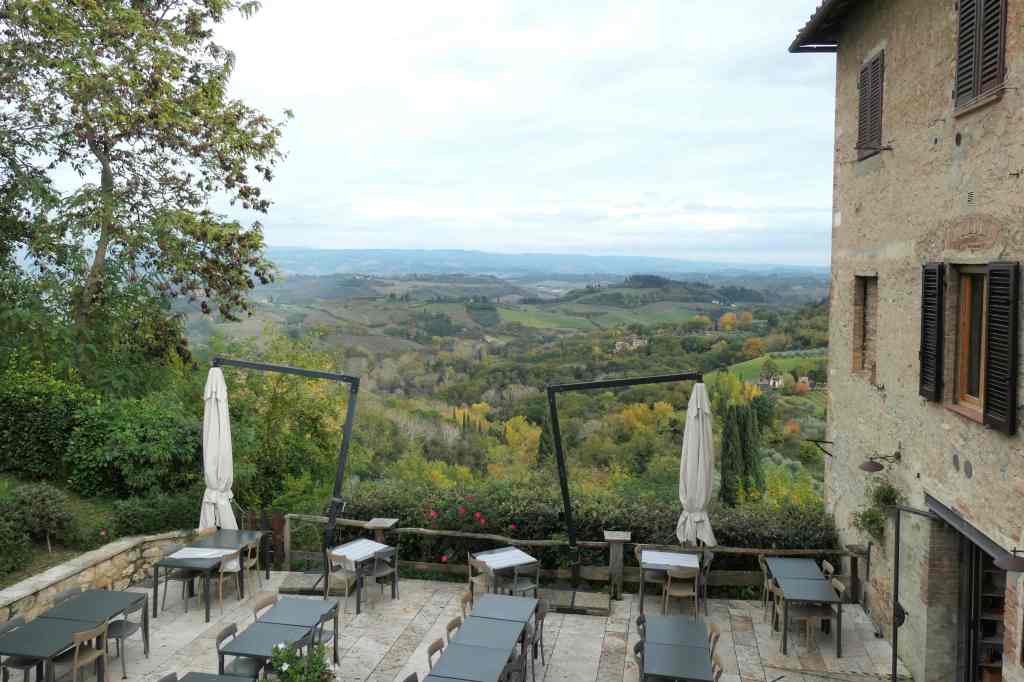
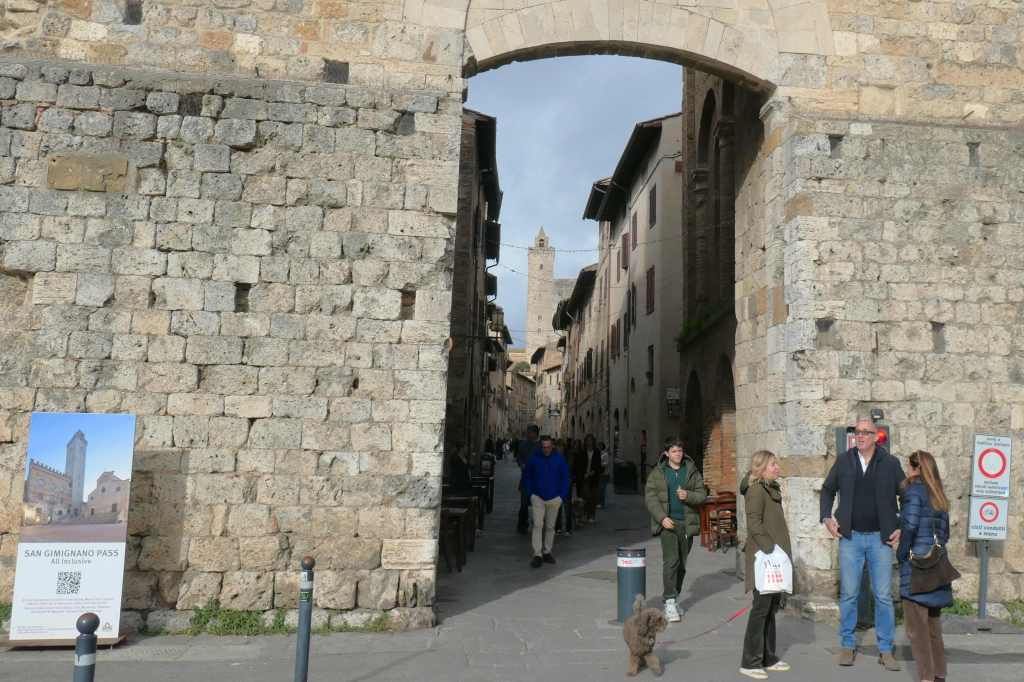
As we returned the keys to the friendly rental owner, Cristina, she suggested a scenic stop on our way south in San Gimignano, a village started in the 3rd century BC! The area took off as a town in 63 BC when a pair of rich brothers came from Rome to build really big castles. Then named Silivo, the town truly got noticed in 450 when Bishop Geminianus saved the castles from being wiped out by the troops of Attila the Hun! Okay, so one stop along the way can’t hurt, right? 🙂

And what a pretty stop it was!

The weather and time worked against us, so we saw it but didn’t really get to SEE it. Oh geez…


After gelato and a quick panino for lunch, we were back on the road to Montefiascone with its ancient Rocca dei Papi (Fortress of the Popes), cathedral and churches from the 14th century. Stop, Susie. Remember the plan. No sightseeing on this stop. Sigh.


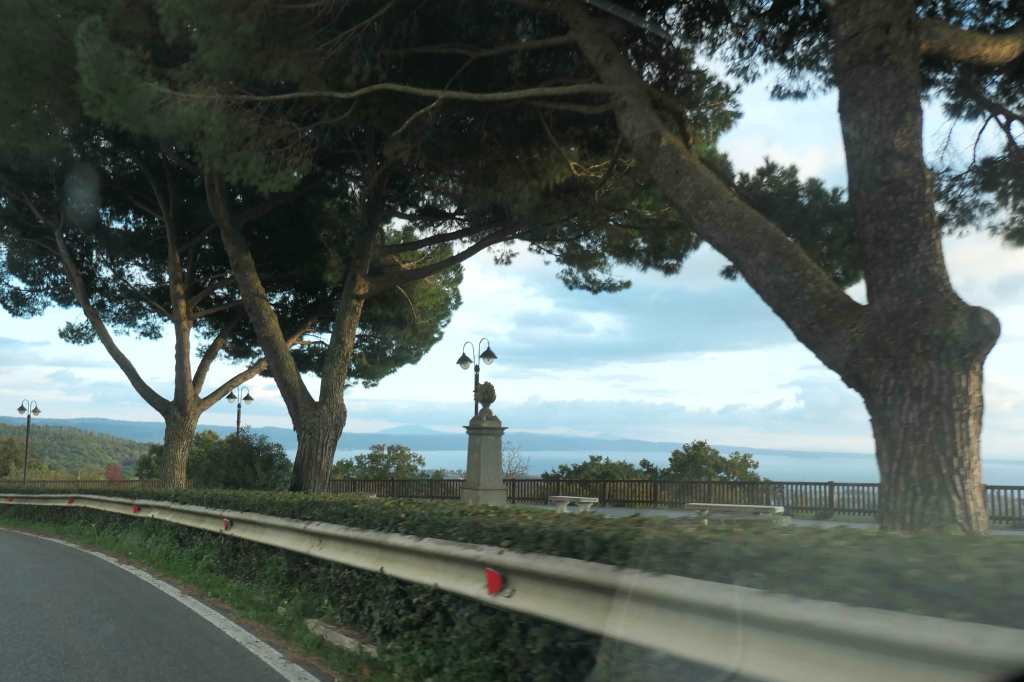
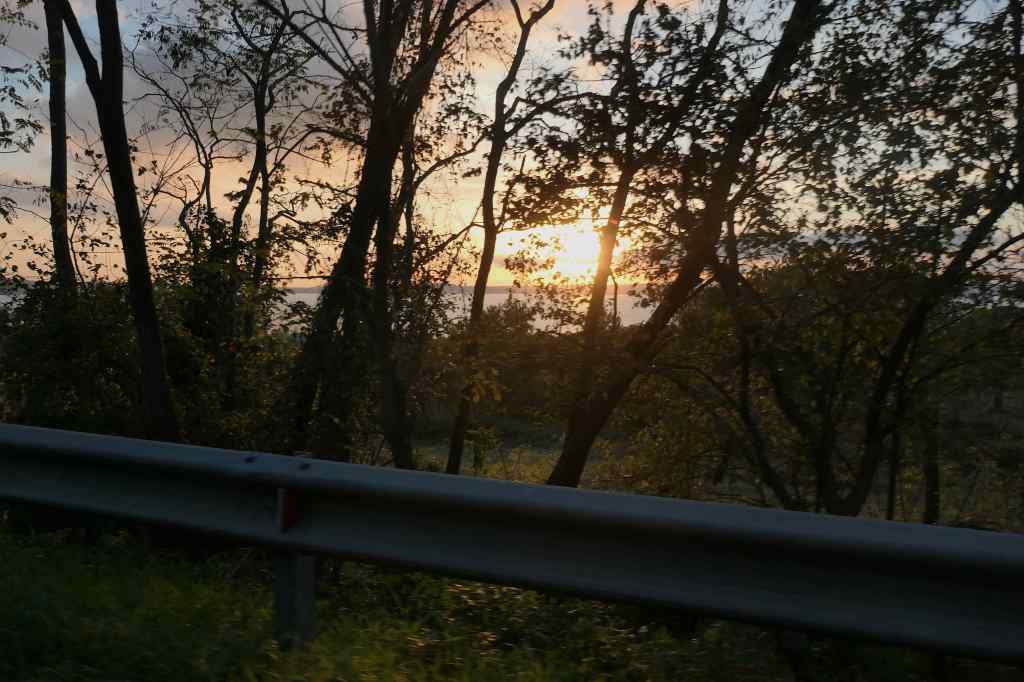
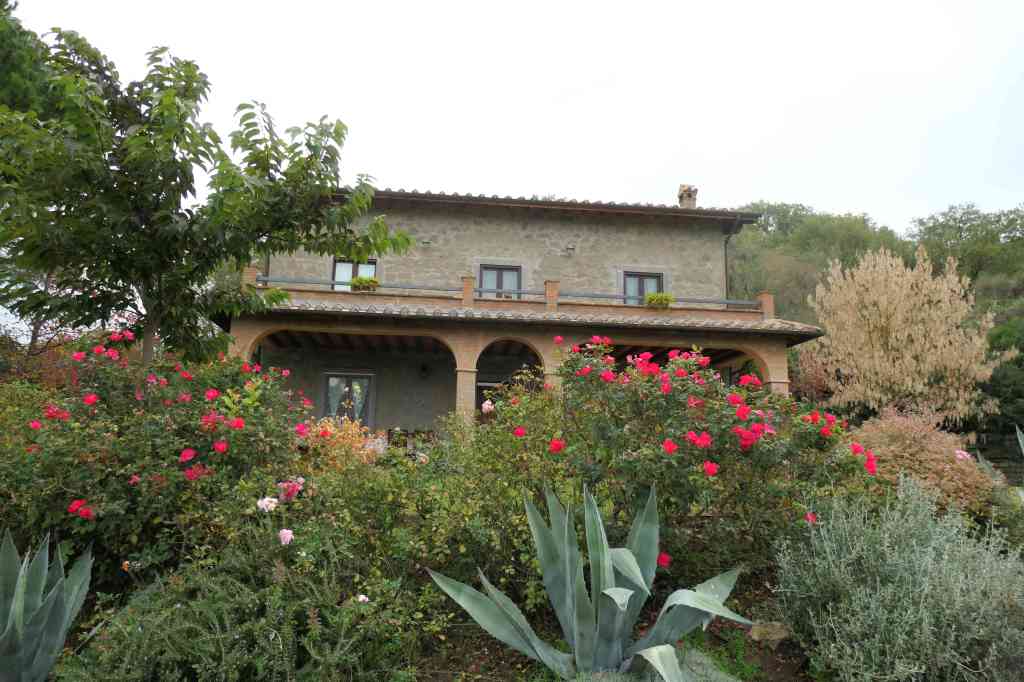
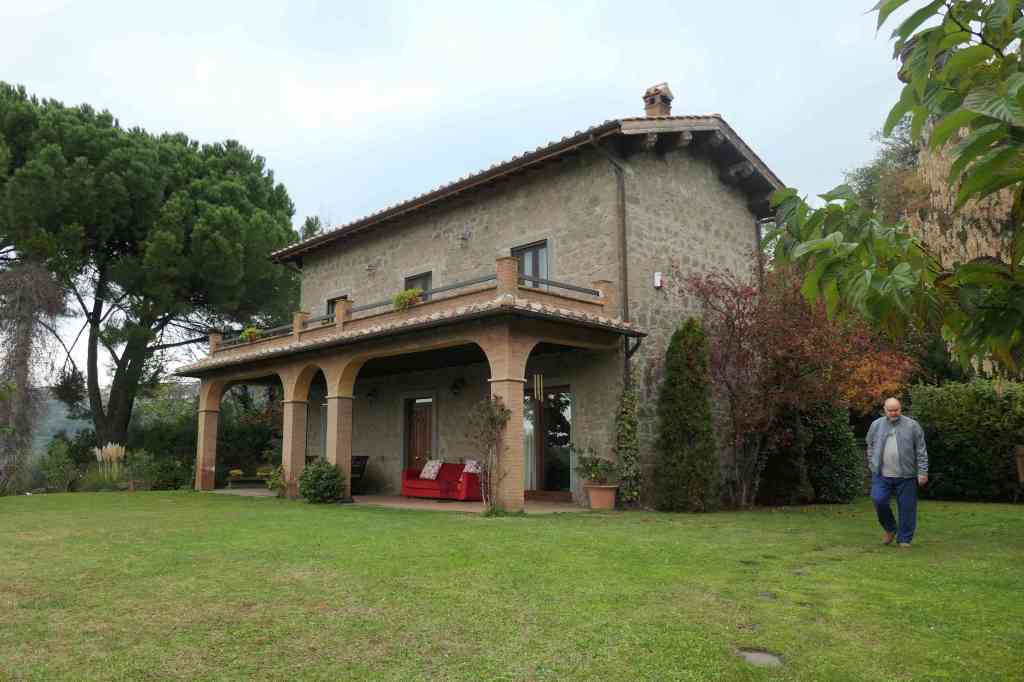
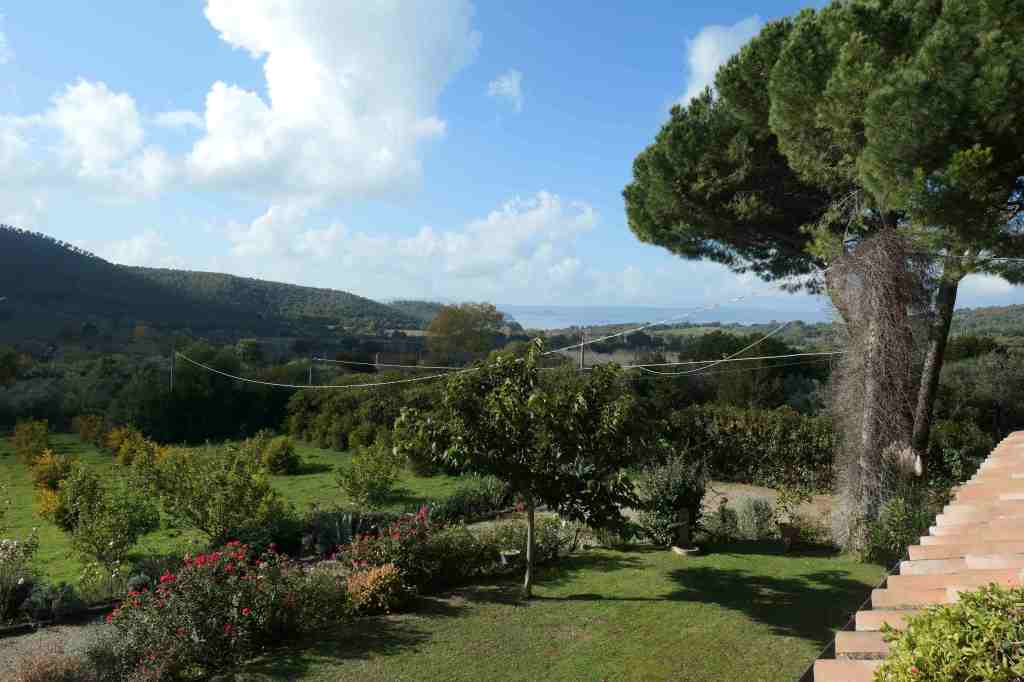
Villa Perlata in Montefiascone overlooks the 5th largest lake in Italy, Lake Bolsena, a great spot for former cruisers to sit still. On our drive along the lakeshore, we enjoyed the lovely sunset before quickly realizing sunset means darkness, like really dark! Once you drive beyond the parklike lakeshore, there are no more streetlights, and we still had to find the villa, pull the car up to the correct locked gate just off the road, walk along the shrubbery/fence line to find the small gate containing a lockbox, enter the code (thank goodness for phone flashlights) and acquire the keys.


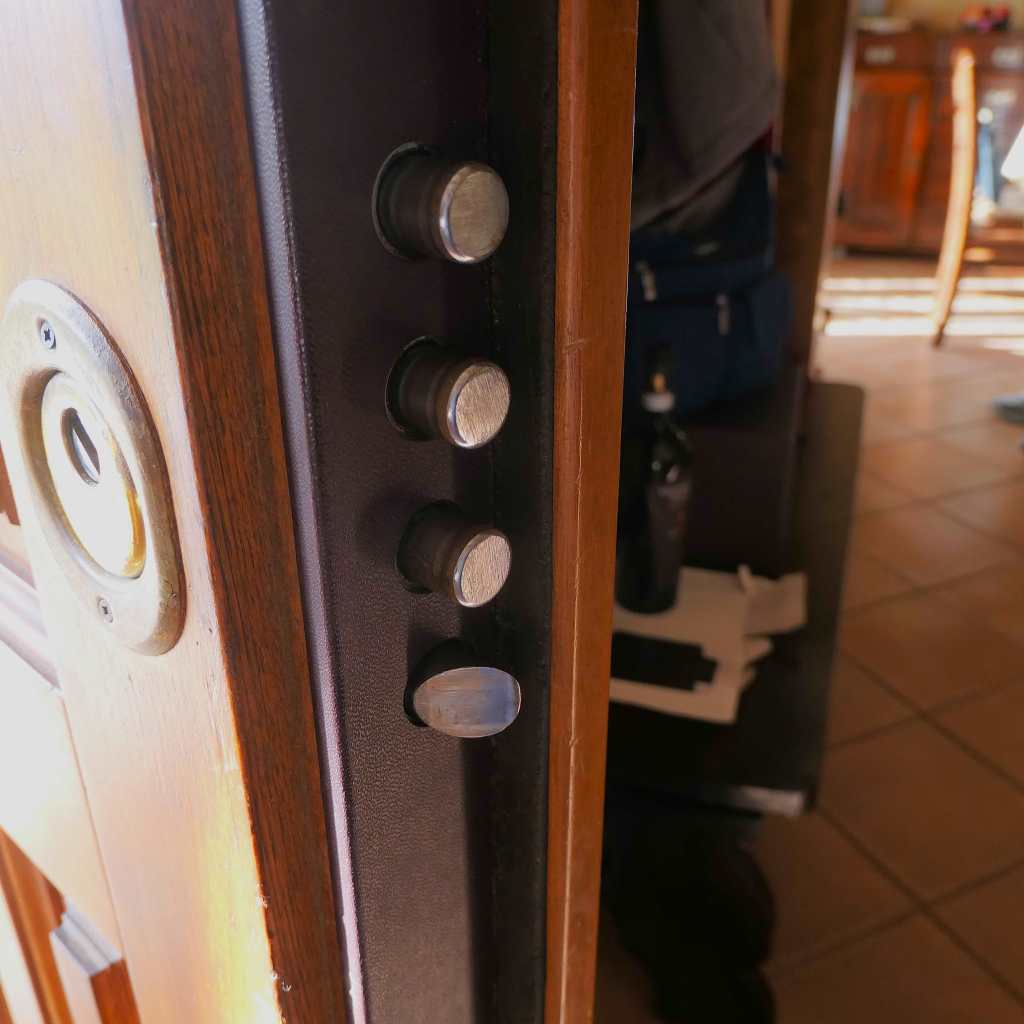
After we got our things inside and Todd locked the villa’s massive door in the inky darkness, Susie declared the villa we could barely see to be beautiful and excitedly stated she couldn’t wait to actually see the place in the morning. Ha!

There was a small issue with the dishwasher mysteriously turning itself on during the night and refusing to stop without turning off several breakers, but daylight revealed that the villa, while quirky, was, indeed, quite lovely.

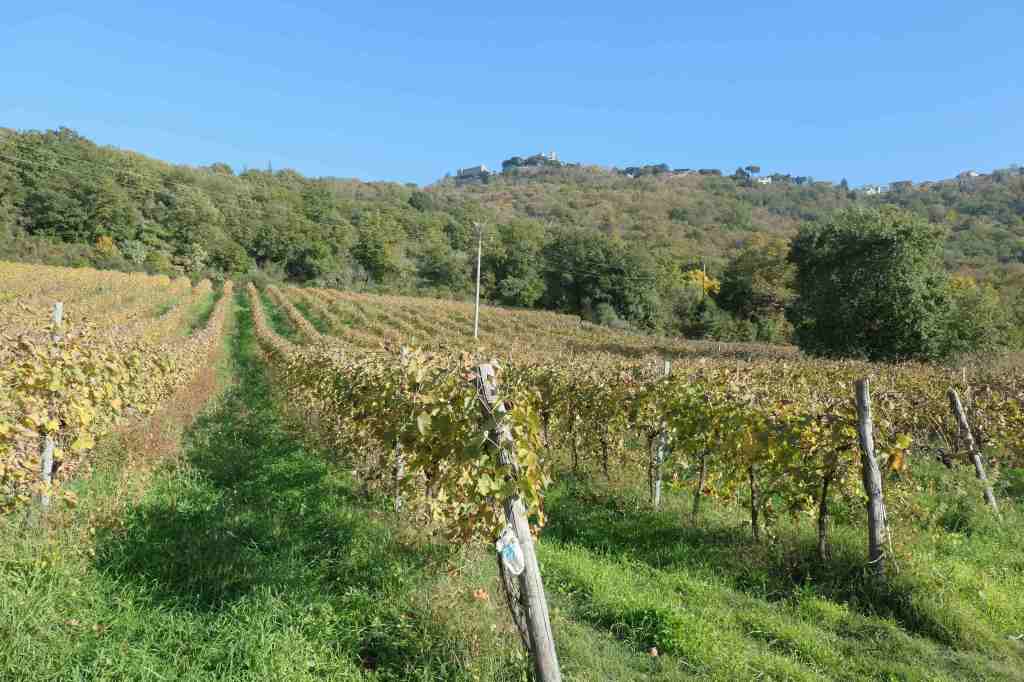
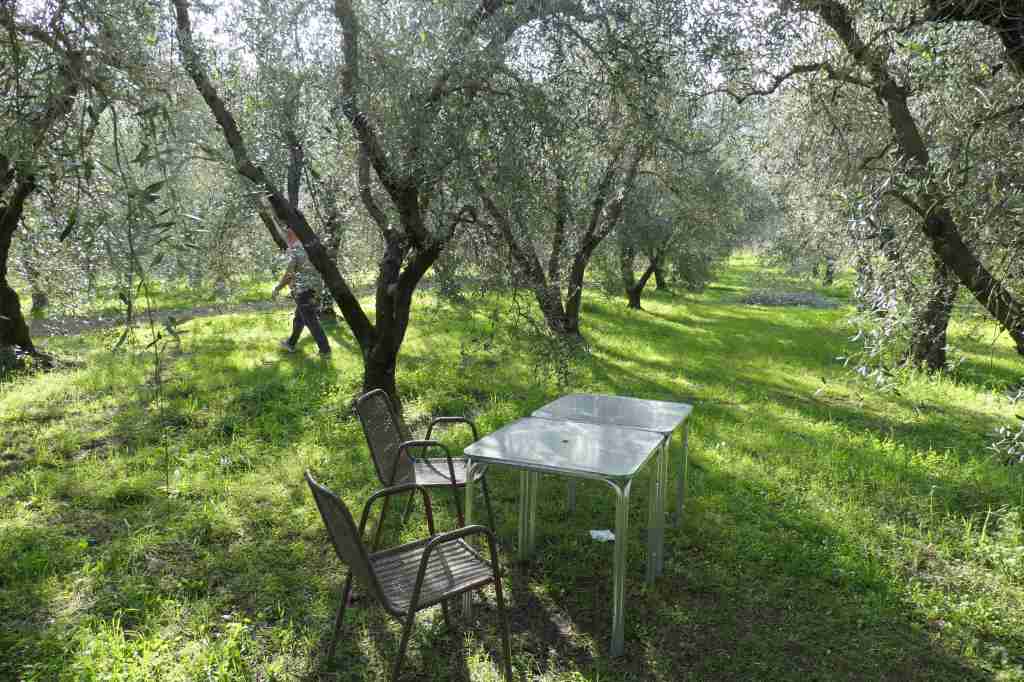
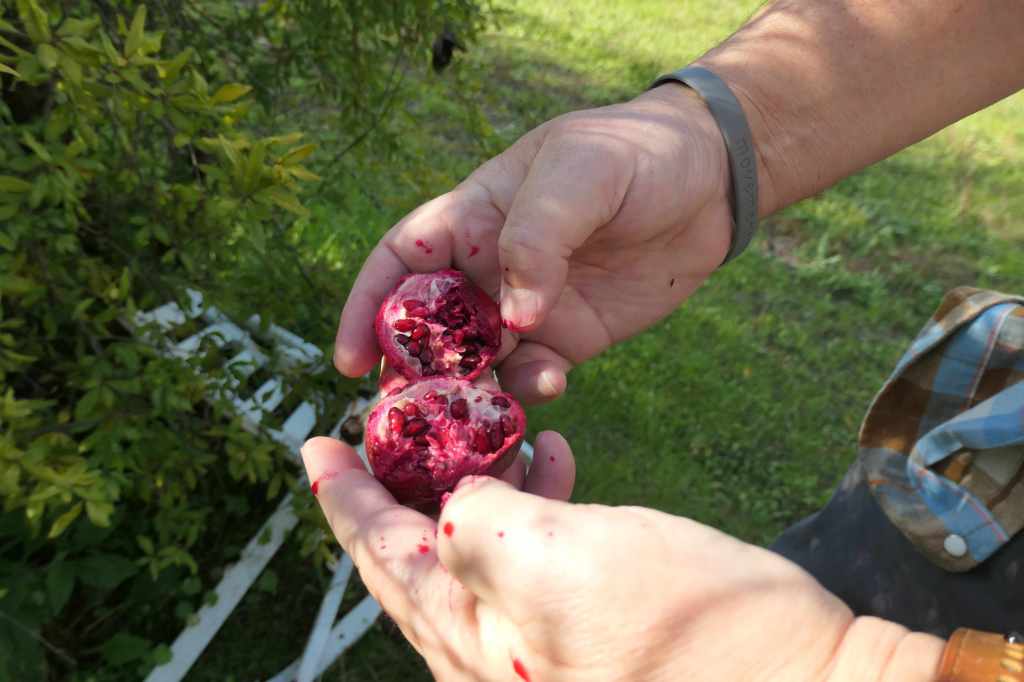
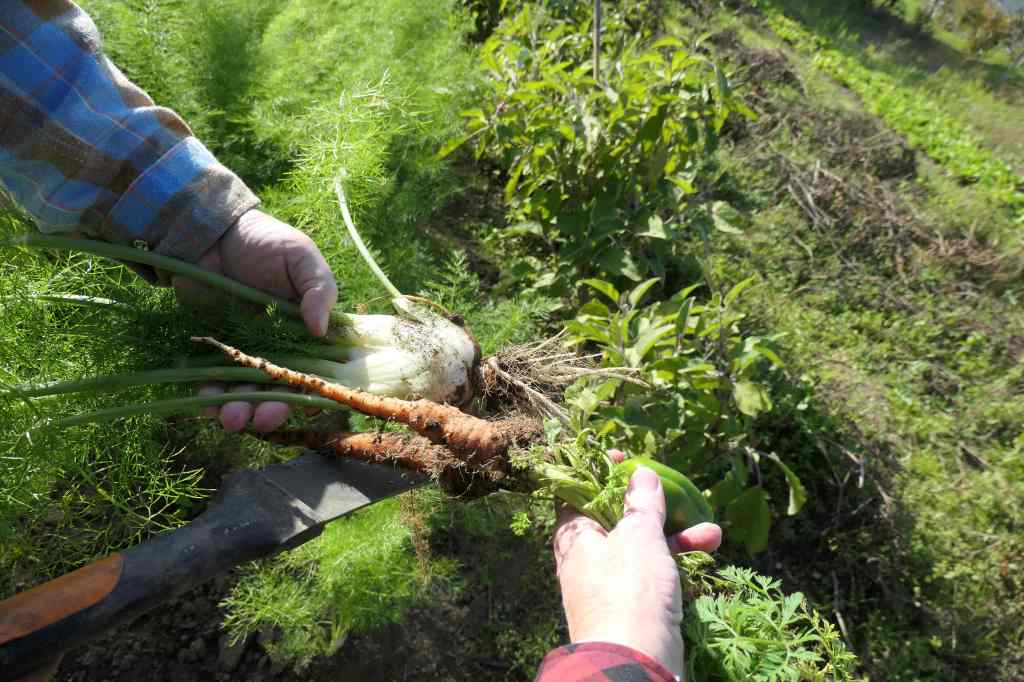
The owners said to help ourselves to any produce available in the garden and left us fresh olive oil they’d produced, as well as some local wine, “Est! Est!! Est!!! di Montefiascone.” Huh? Well, we’re glad you asked! 😇

Interestingly, we’d found ourselves in a wine region with a fanciful story and funny name that has been repeated for centuries. In general, the tale is that of a 12th-century bishop traveling to Rome who sent a servant ahead to find the best wines, with instructions to write ‘Est’ (Latin for ‘It is’ or ‘There is’) on the door of any inn where he was especially impressed with the wine so the bishop would know where to stop. Legend has it that the servant was so impressed with the wine being served at a Montefiascone inn that he enthusiastically scrawled “Est! Est!! Est!!!” on the door.

Today, the “Est! Est!! Est!!! di Montefiascone” wine region caters to tourists visiting the nearby Lake Bolsena, while the wine itself receives mixed reviews, such as “… the dullest white wine with the strangest name in the world” or the “… history is more compelling than what’s currently in the glass.” ¯\_(ツ)_/¯ Don’t know about the white, but we actually enjoyed the red that was left for us.


Not moving the car does not mean not moving ourselves, so we took daily walks to explore the grounds of the villa.


With our research done, tickets ordered, and souls refreshed, we sat back to enjoy the sunset.

Next, all roads lead to Rome!