At the end of the last post, we were ready to leave Rome. WAIT. What?? Hang on just one gladiator-sparring minute. What about the Vatican? The Colosseum? The Forum? Etc.?
Well, of course, we saw as many of the famous landmarks to which our shoes could carry us in the six days we allotted to the Eternal City. (We snapped nearly a thousand photos to prove it.)
This post is hereby dedicated to the classics. Ready, go!
Let’s start with a really obvious one, Vatican City, which we could do because we had tickets! Yes, we prebooked a private three-hour tour. (Lessons learned.)
The Vatican. Oh my, there is just so much history. Too much! An enclave surrounded by modern Rome on all sides. Slowly established across the Tiber River from Rome, in a big marshy area. Before the Church arrived, the area was developed really early, like the early 50’s AD ;-), by Nero who built a large circus there. That meant fill it in, flatten it out, and put in a big “racetrack.”
The Vatican City State is now, in fact, the smallest country in the world, and the Pope is technically a royal! 2024 population of 496. Of note, the area (less than 1/4 sq. mi.) wasn’t within the ancient wall of Rome, so it ended up with its own wall. Now it’s a tiny walled country within the city of Rome!
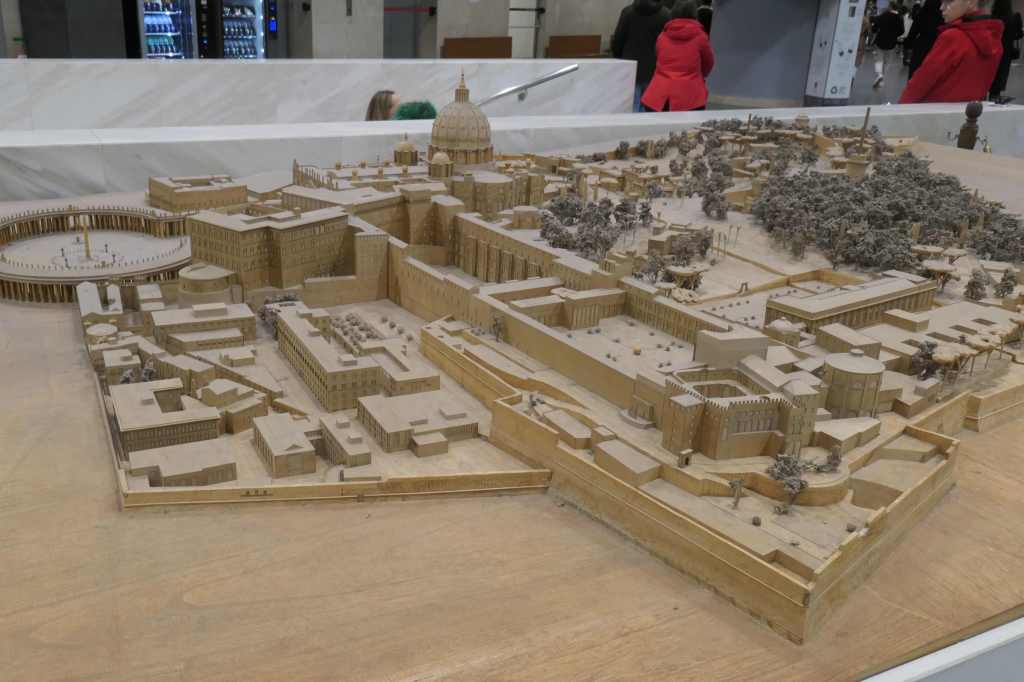
Early one morning, we walked a few kilometers to the main gate of the Vatican to meet our private guide, Fabi, a lucky and excellent choice. Full of life, full of energy, full of information! We cut to the front of very long lines and always had any questions answered during an almost steady stream of facts. It’s not enough to say, “there’s a lot of stuff there.” There’s an overwhelming amount of stuff.
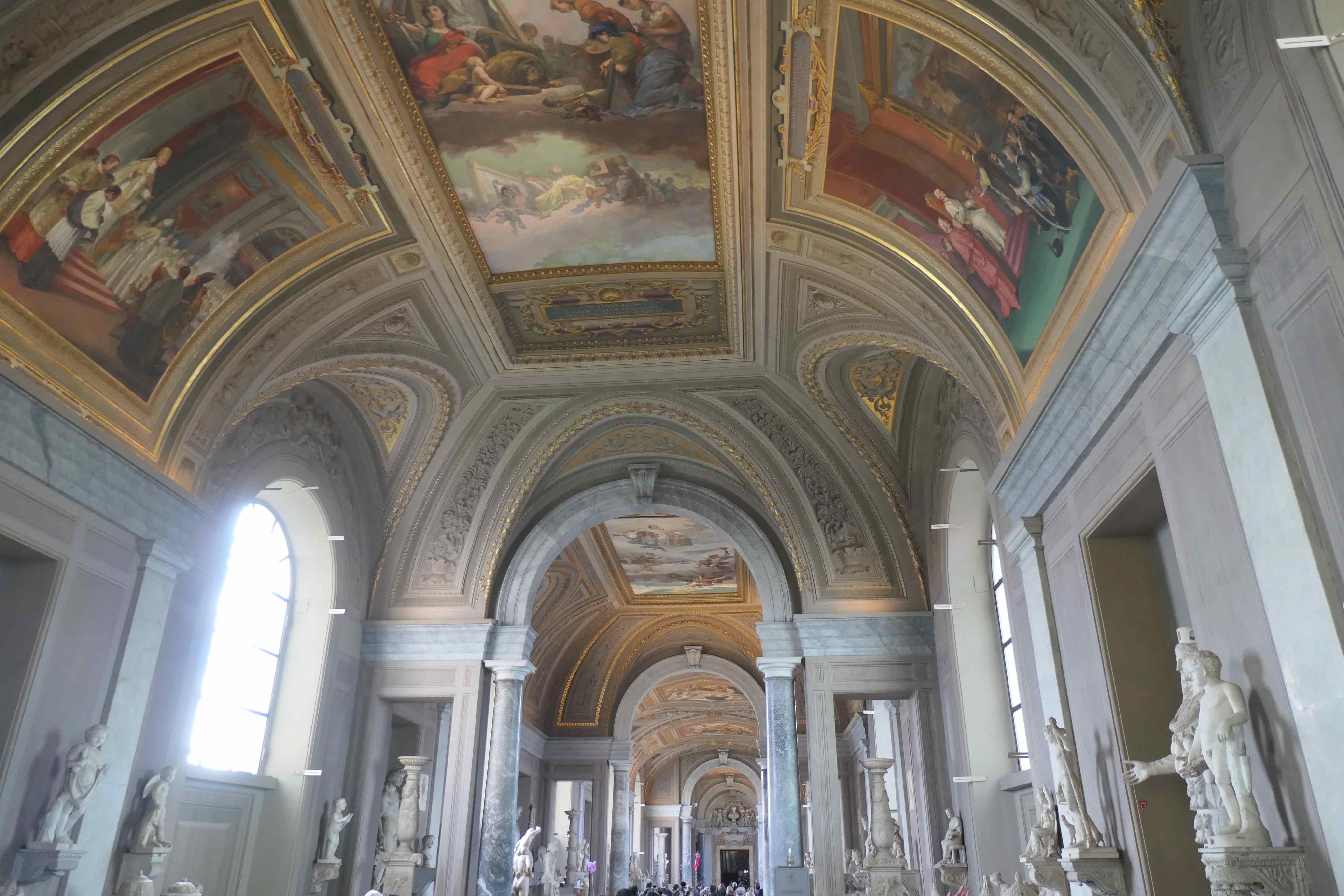
First on the list were the Vatican Museums. Notice plural. They are so numerous, it’s hard to get an accurate count. We saw only a few. Needless to say, the Catholic Church has been collecting stuff for a very long time, and it would take days to see just what they exhibit, so our tour focused on the popular highlights.
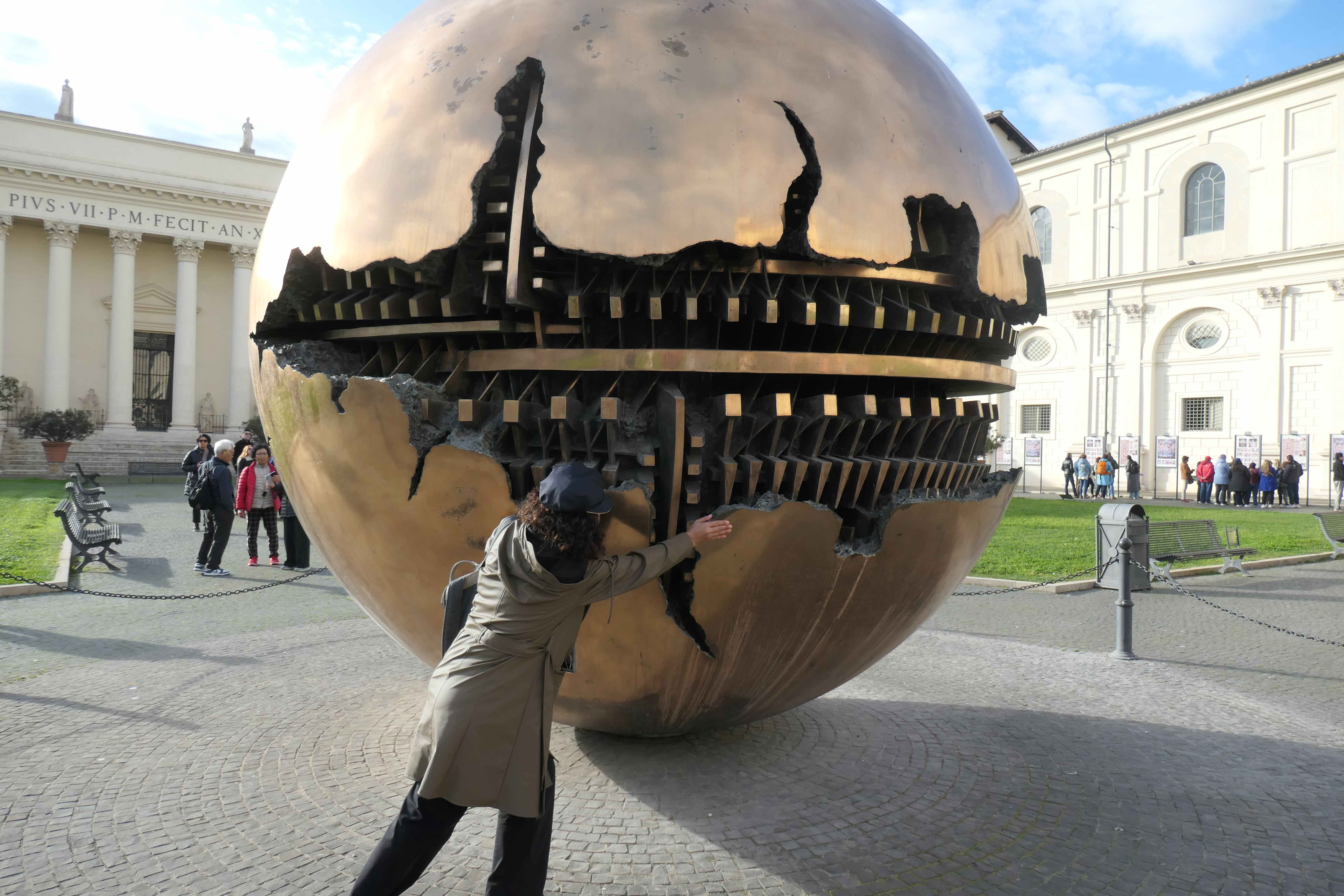
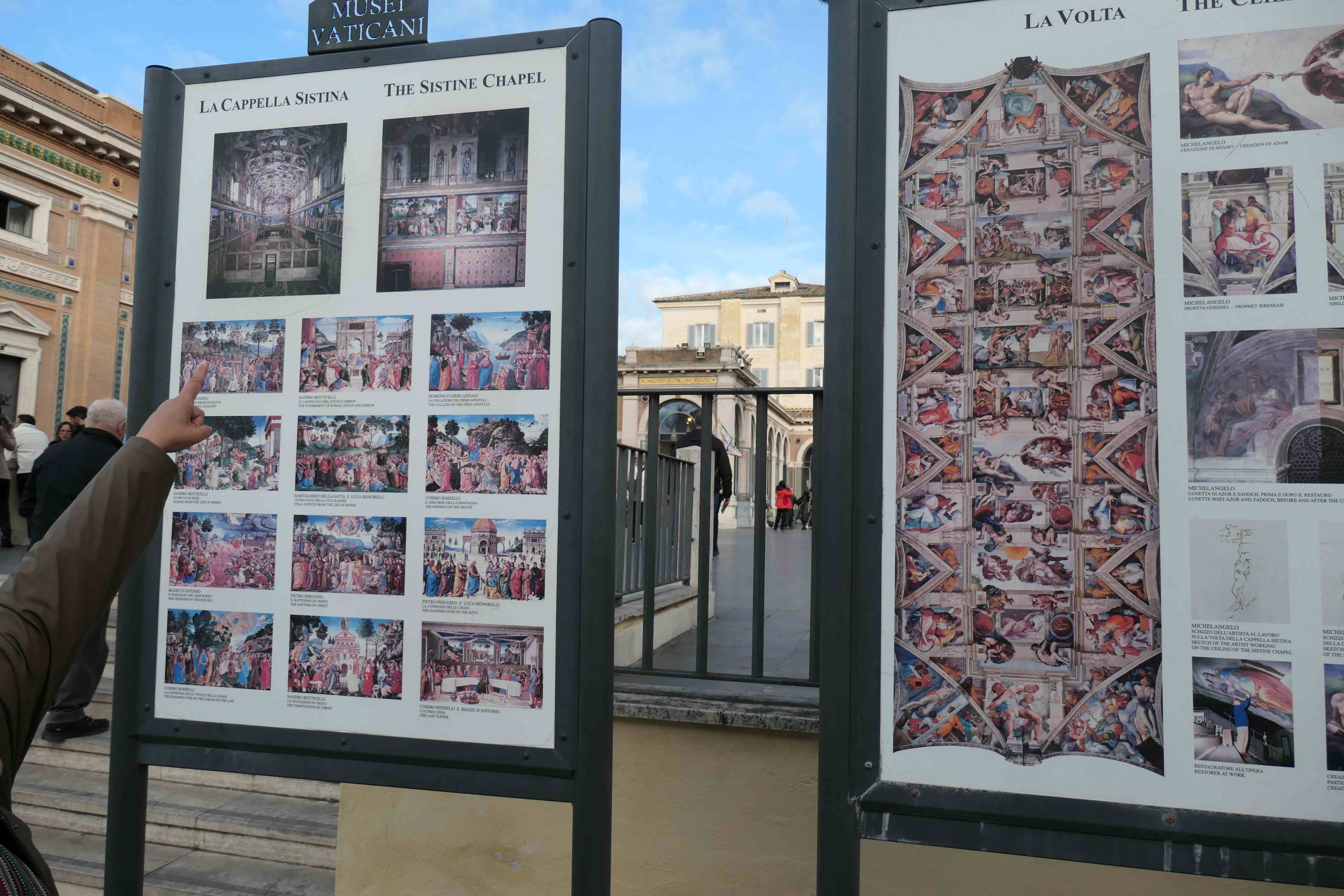
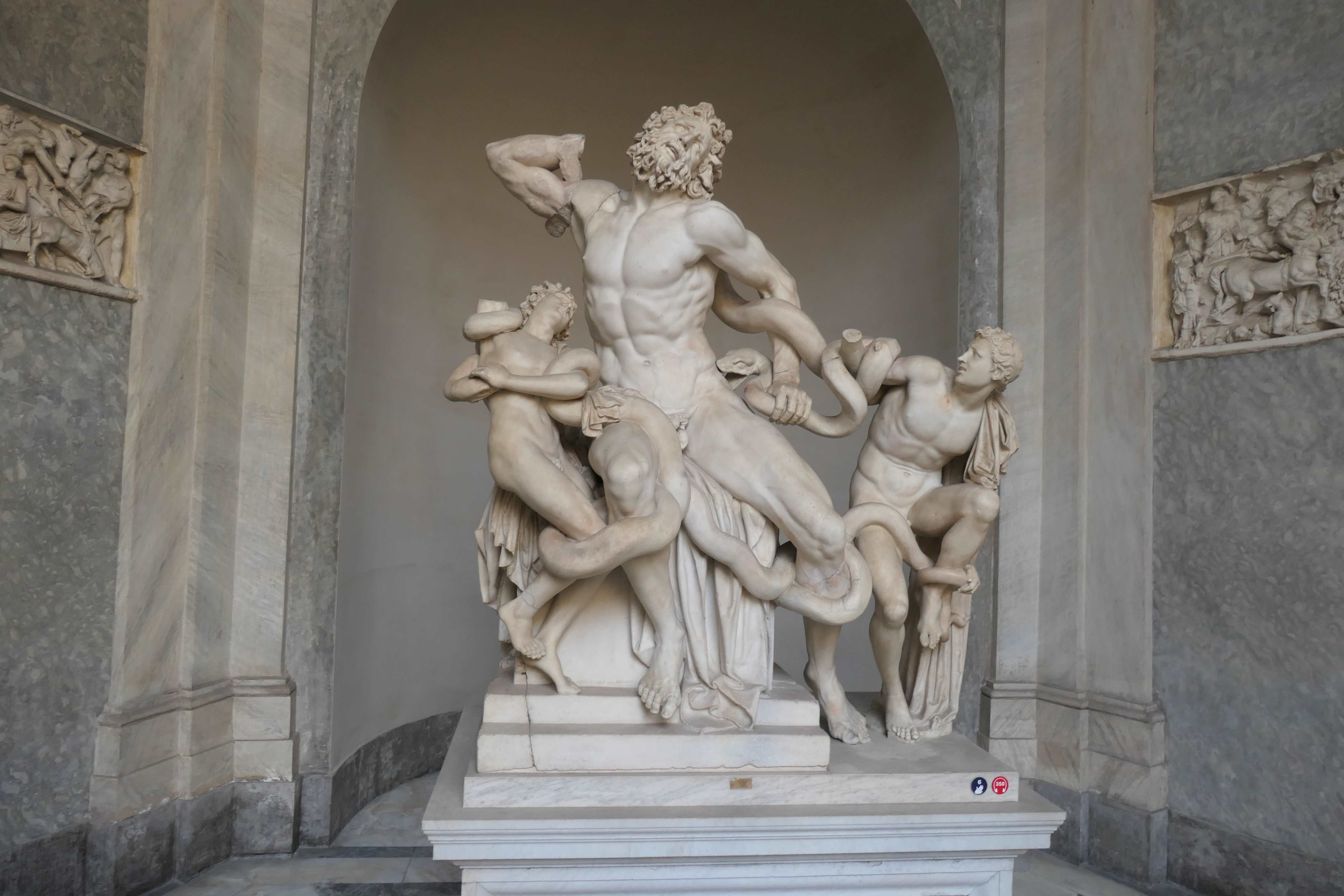

After the museums, we finally arrived at the Sistine Chapel. What to say about that ceiling? “Wow” just doesn’t cut it. We joined the crowd to stare upward in amazement at the absolutely magnificent frescoes painted by Michelangelo from 1508 to 1512. (Remember, no photos allowed. And… 🤫) After a time of silent oohs and aahs, we cued Fabi – quietly waiting near the exit – that we were ready to move on.
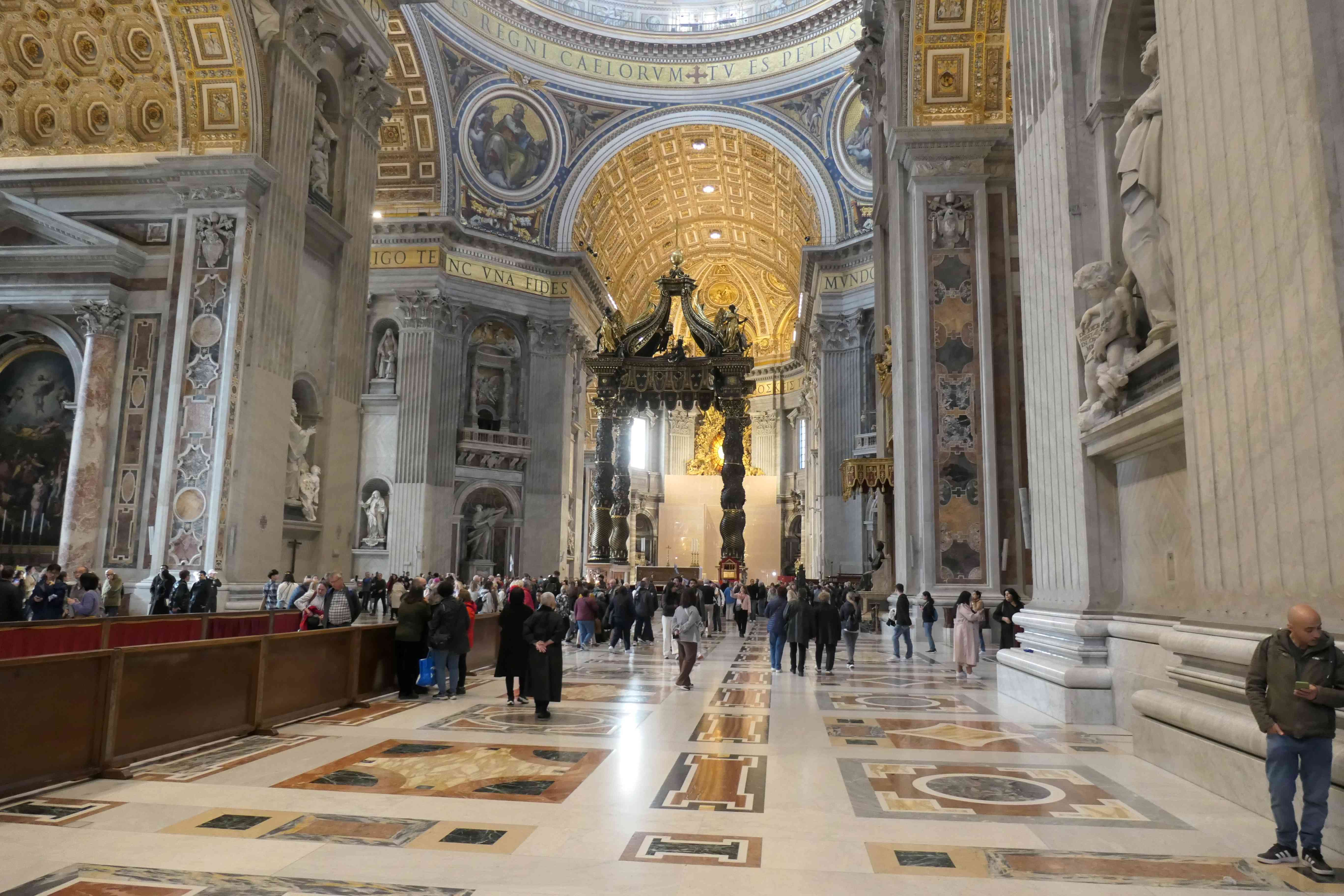
Next stop on the tour? St. Peter’s Basilica, the largest church in the W-O-R-L-D! The Old St. Peter’s Basilica, finished in 322, was built on the burial site of the Apostle Peter, then, as you might guess, demo’d in 1506 to build the “new” basilica during a 120-year period from 1506 to 1626. Unlike modern man, the Romans whacked down old stuff and just recycled the materials to rebuild it!
The size of the structure is overwhelming. Ceiling hundreds of feet above you, mosaic paintings 25-30 ft tall, giant structures in the room, and everything ornately decorated.

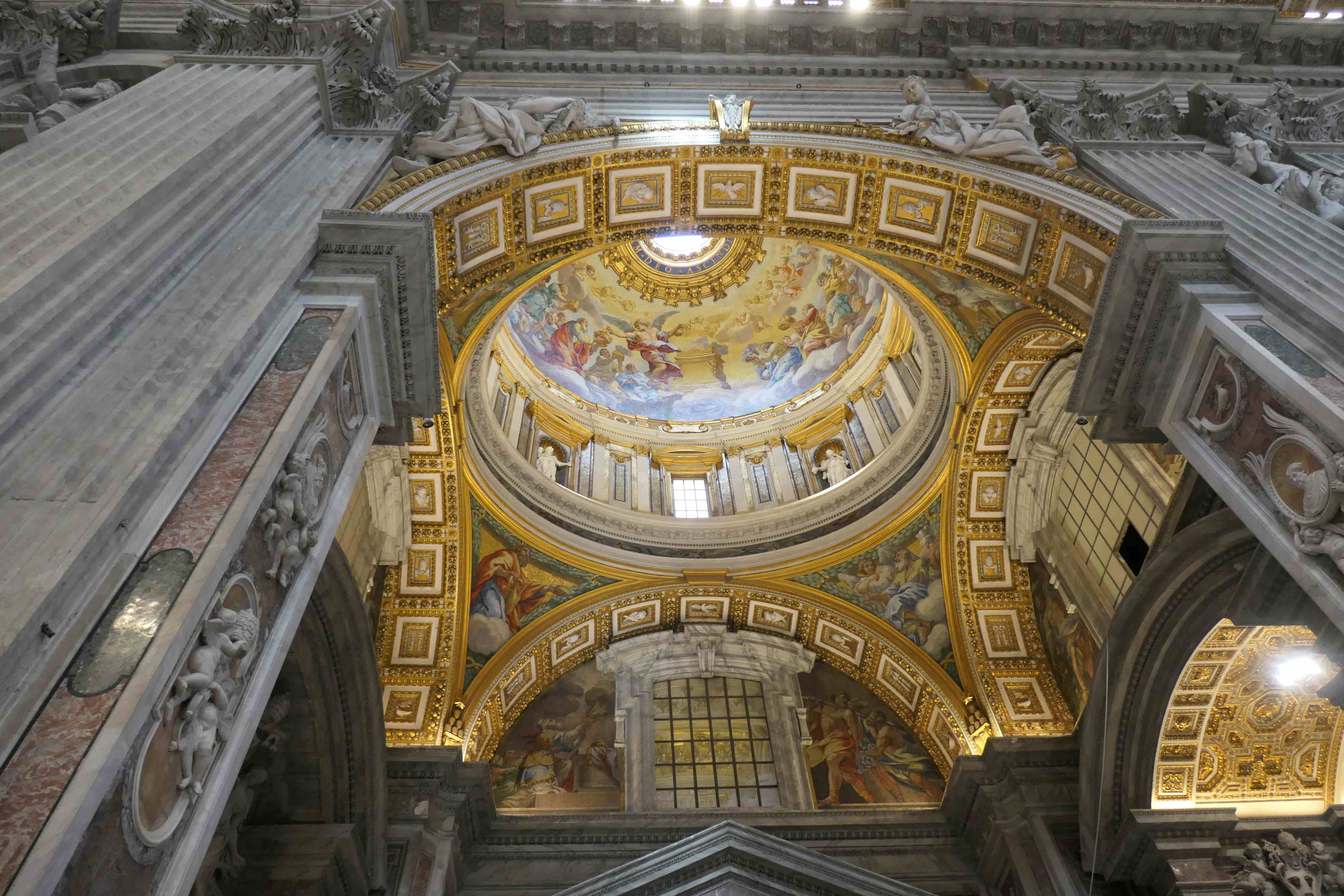
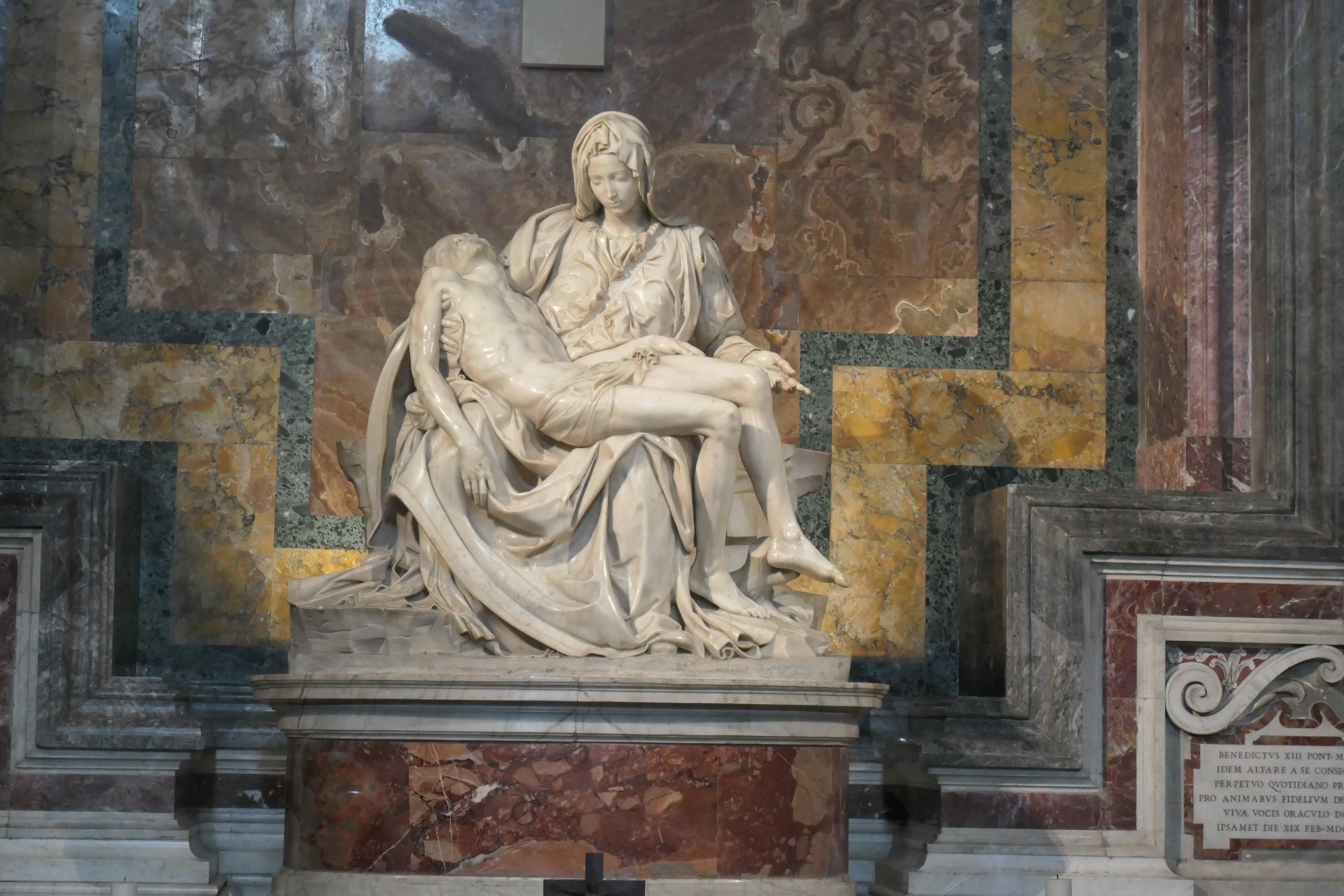
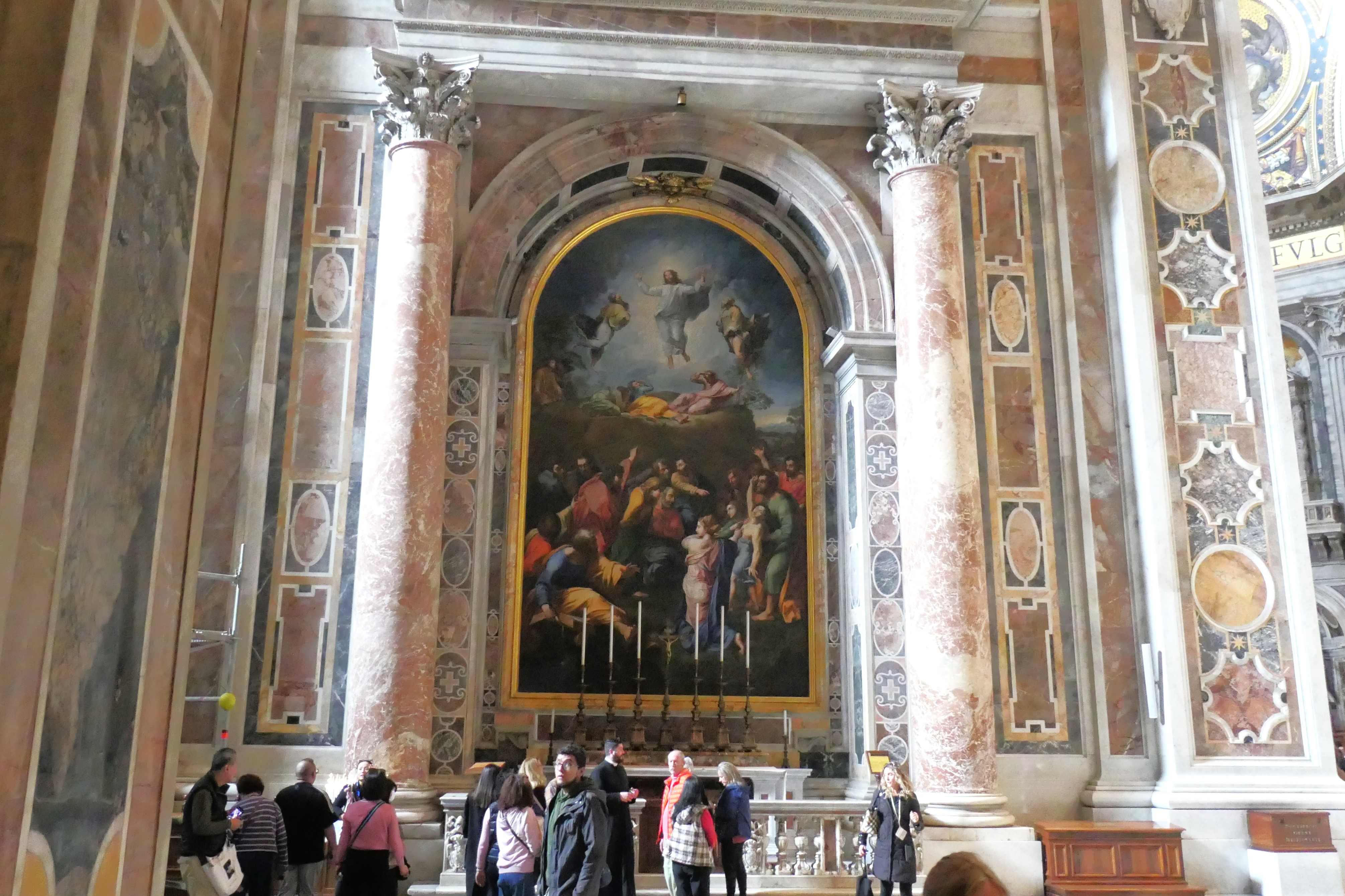
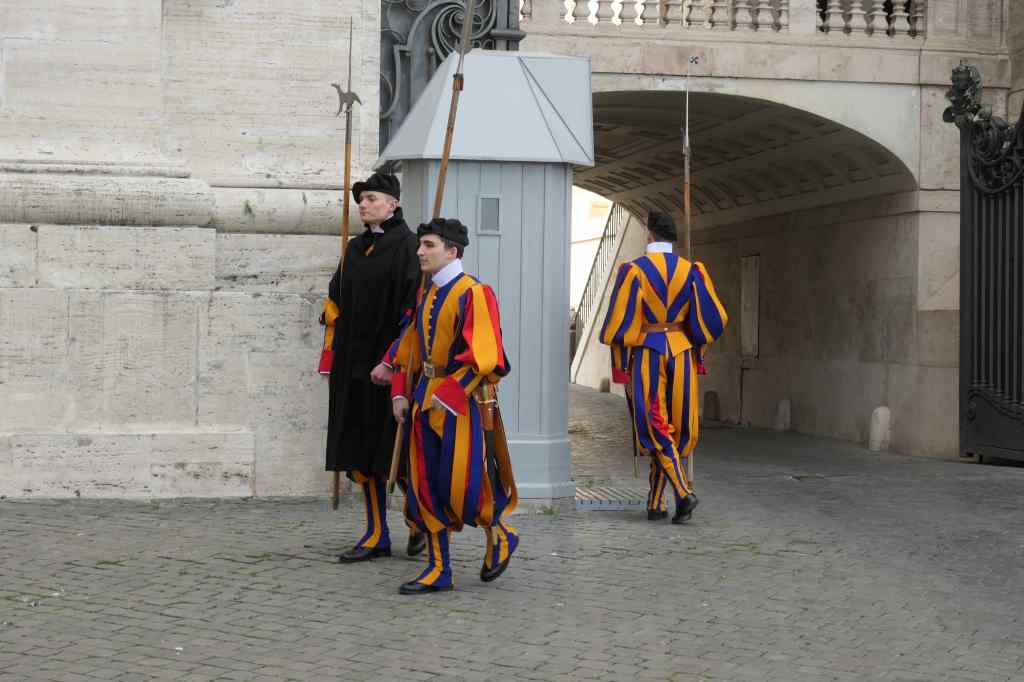
After going inside the basilica, we rejoined Fabi near the square just in time to witness the changing of the Pope’s personal Swiss Guard. They may dress funny, but they were on point and in sync. (And just read about them – you don’t want to mess with them.)

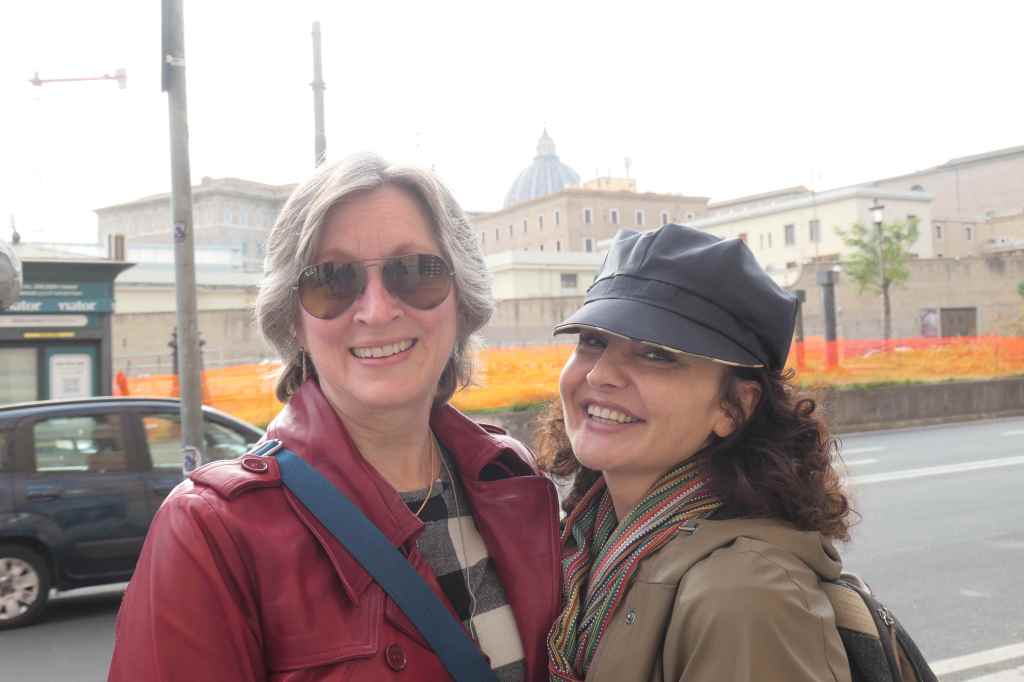
(We were shocked to learn her age but promised not to tell. 😉 )
* Oh, a random tidbit regarding fig leaves: apparently, it depended on who was in charge at the time as to whether or not statues and paintings were “adorned” after the fact by the addition of fig leaves or left in their more “natural” state. 🫢🫣
We just happened to visit Rome as it was preparing for the 2025 Jubilee. “Jubilee” is a holy year that’s been periodically declared by the popes since 1300. The interval between Jubilees has changed several times throughout history but is now 25 years. Rome will soon be a destination for millions of pilgrims from all over the world, and the preparations are intense!
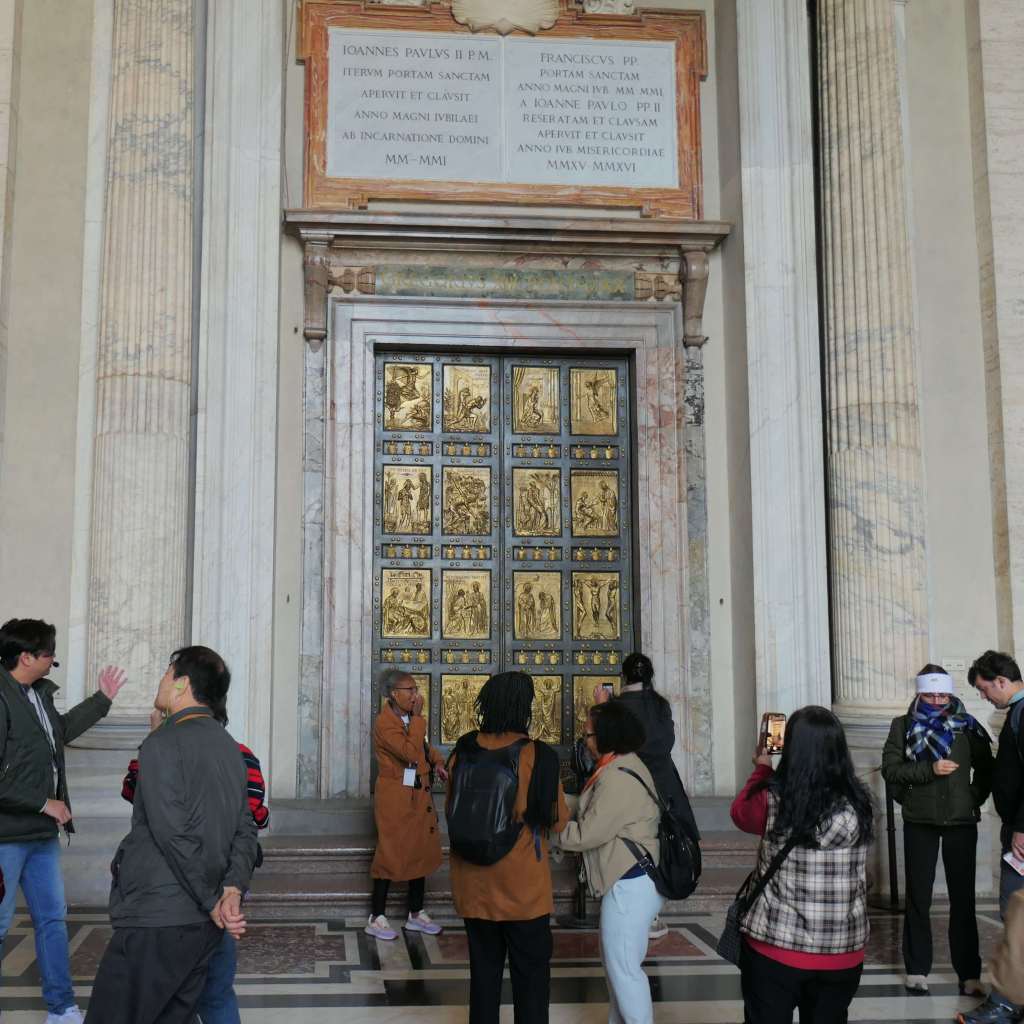
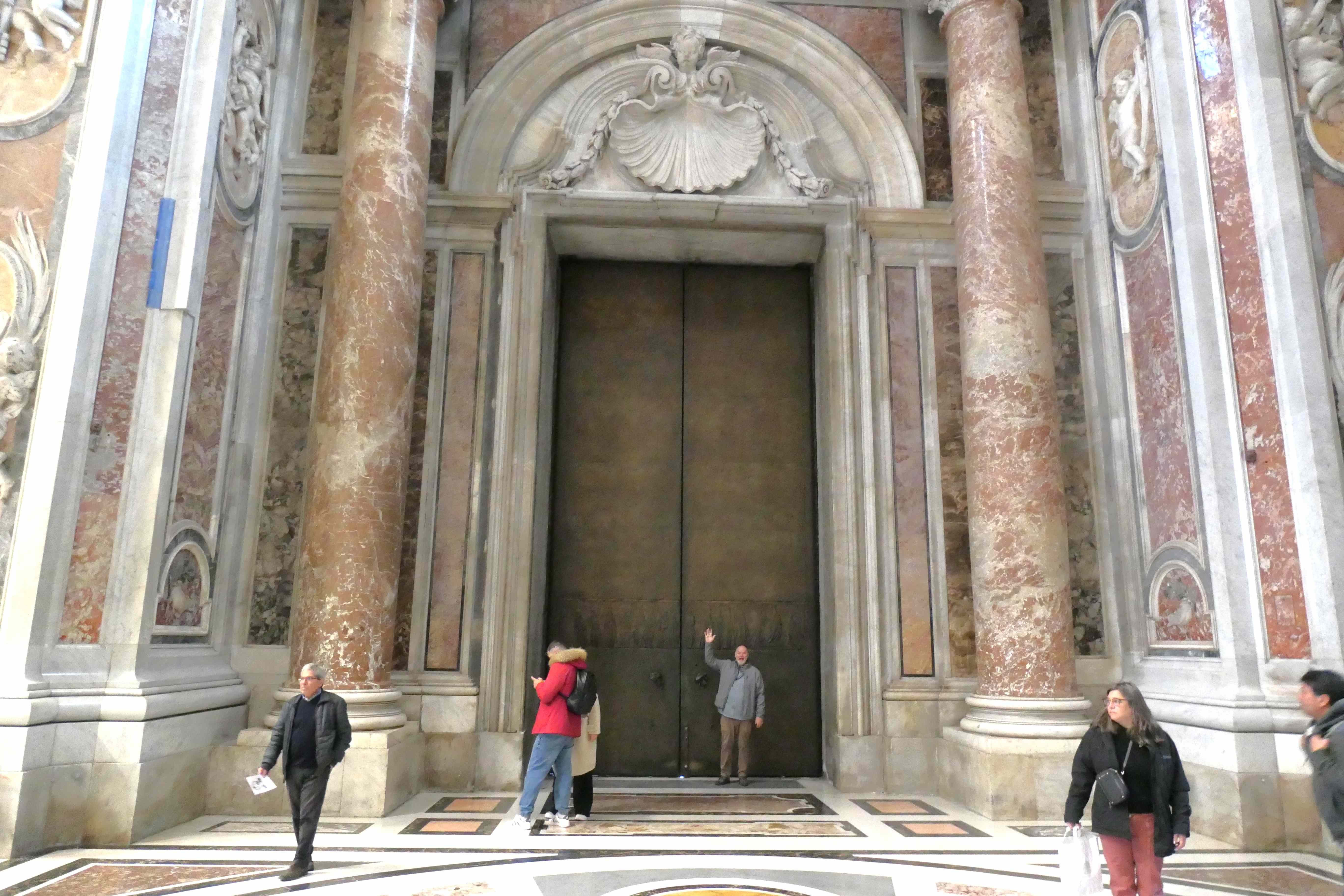
So, that very special big bronze door into St. Peter’s Basilica is opened just once every 25 years!
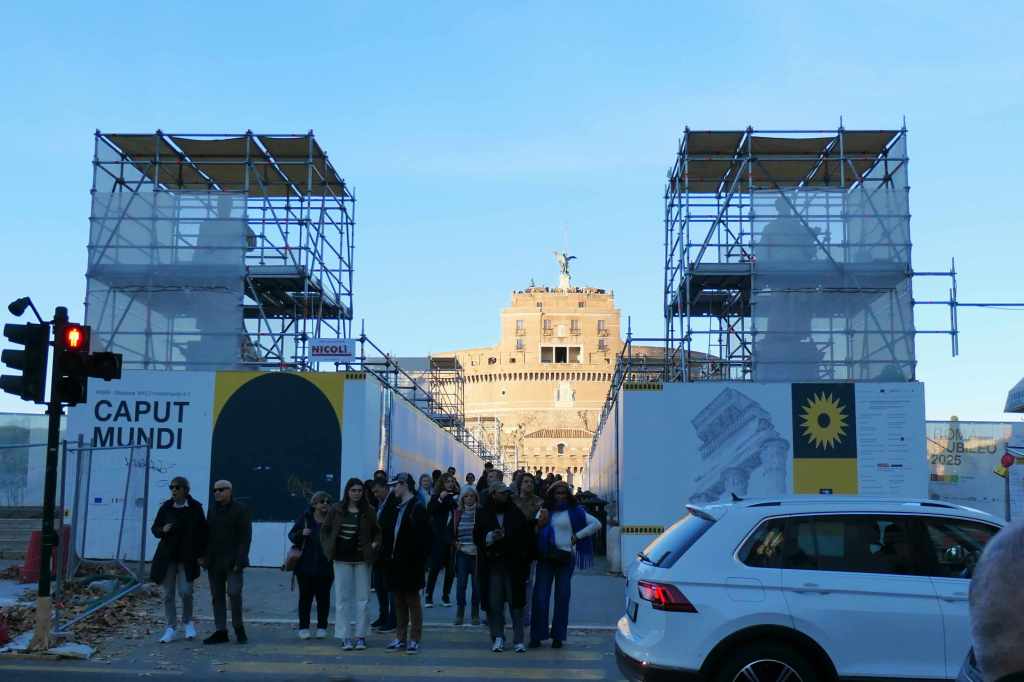
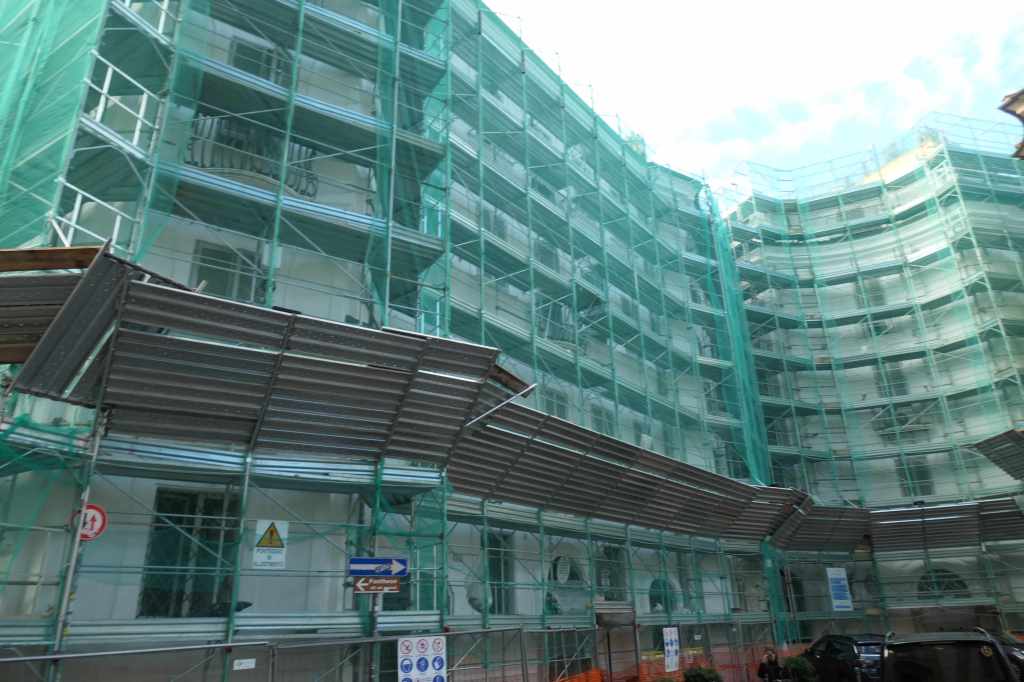
Other than the fact that much of Rome seemed to be encased in preparatory scaffolding, cranes, and bubble wrap, boy did we time our visit well! See Rome and get outtathere! Whew.
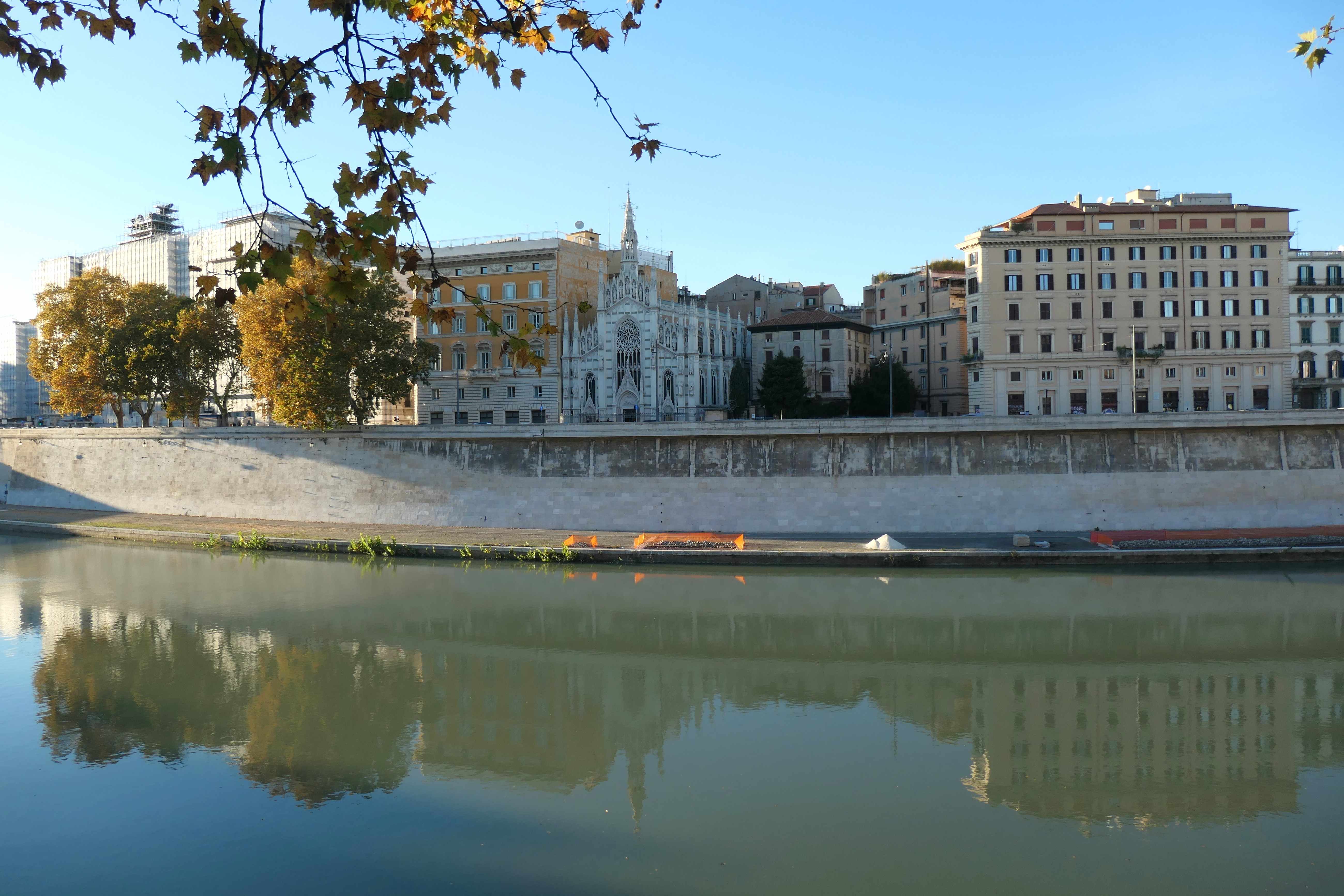
The only impact for us was to our photos. For instance, having read about the scenic bridge and approach to the Castel Sant’Angelo (Mausoleum of Hadrian erected between 134 and 139 AD), we set off with new friends Gonzo and Yvonne Sunday afternoon to get some great shots. Oops. Or not.
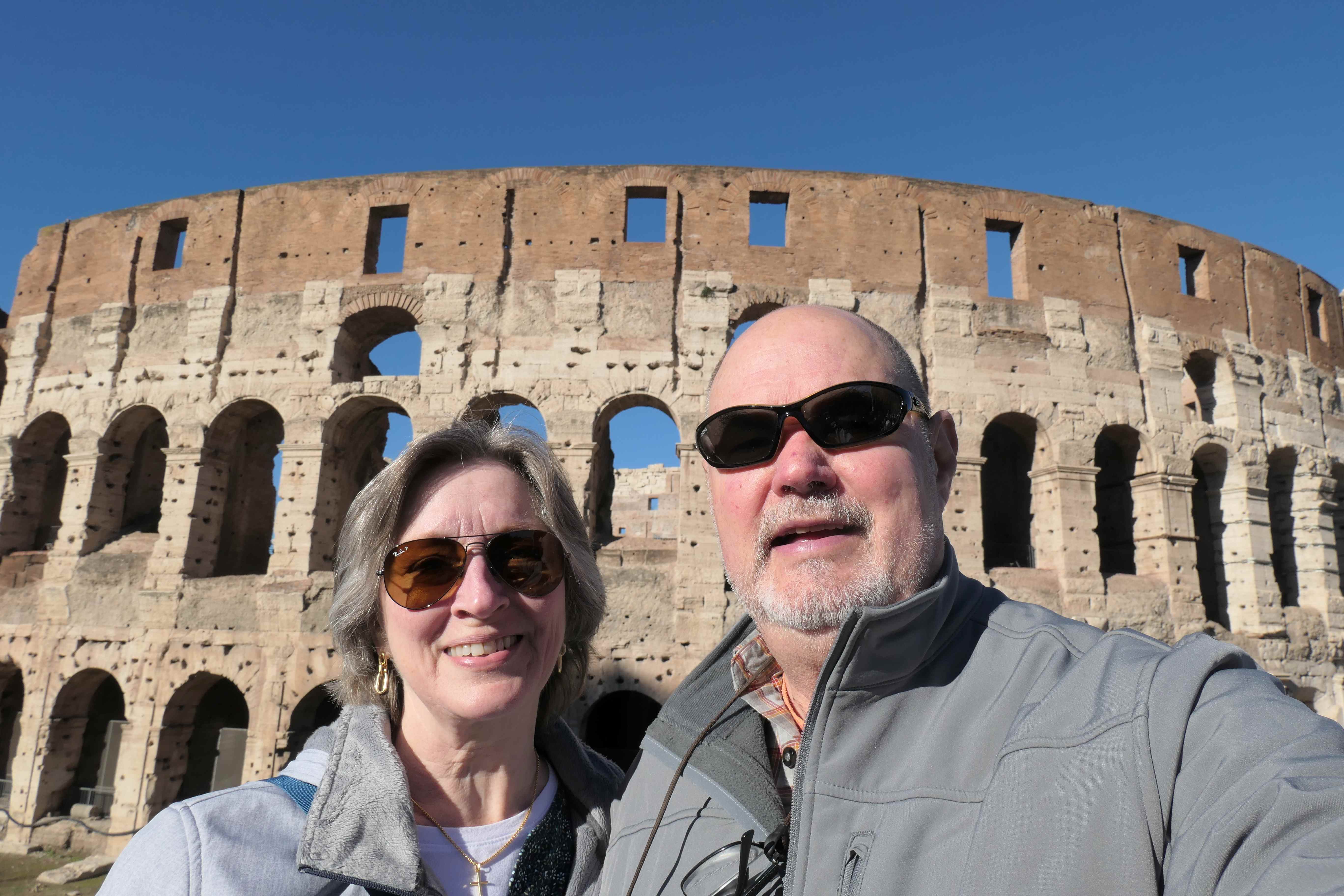
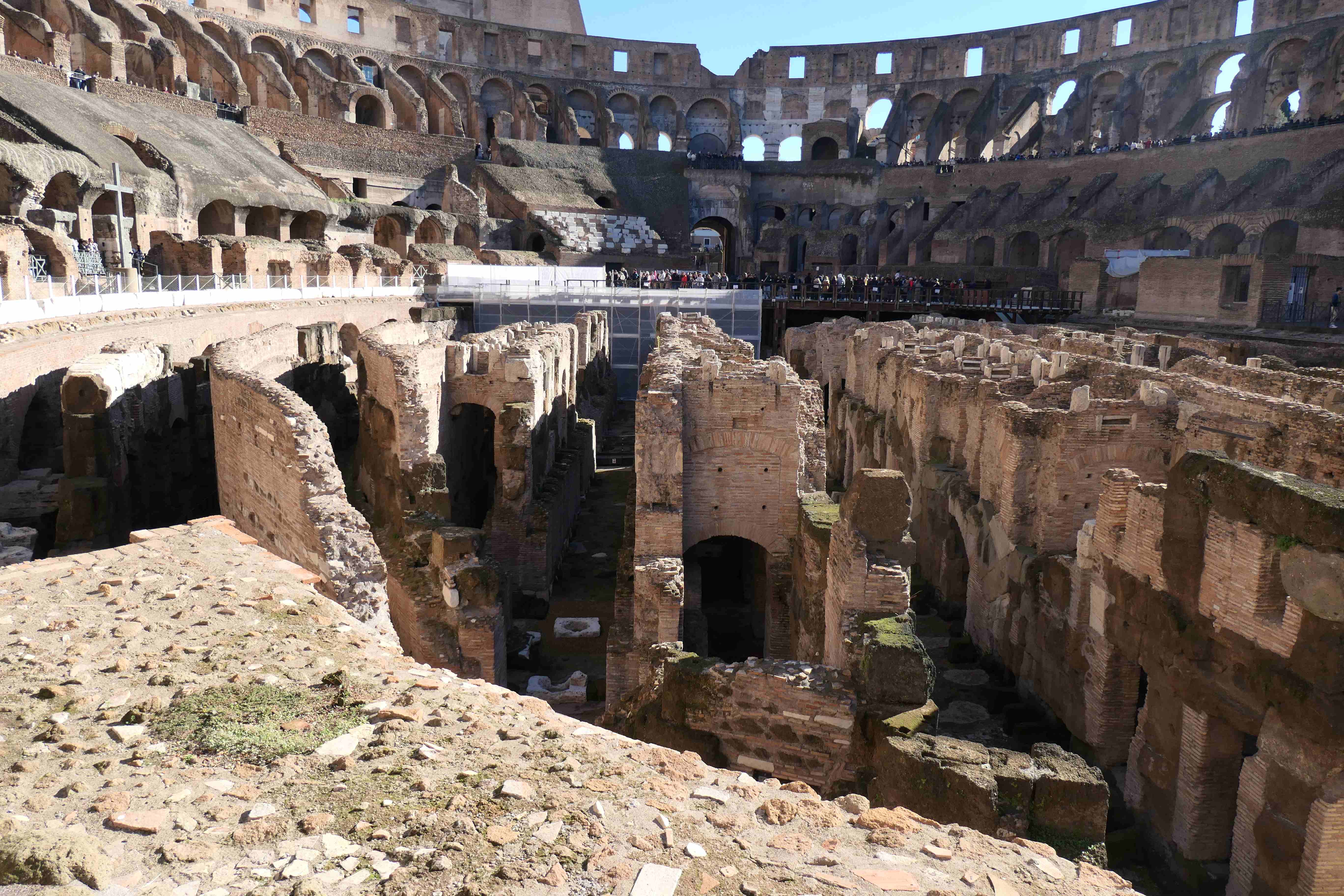
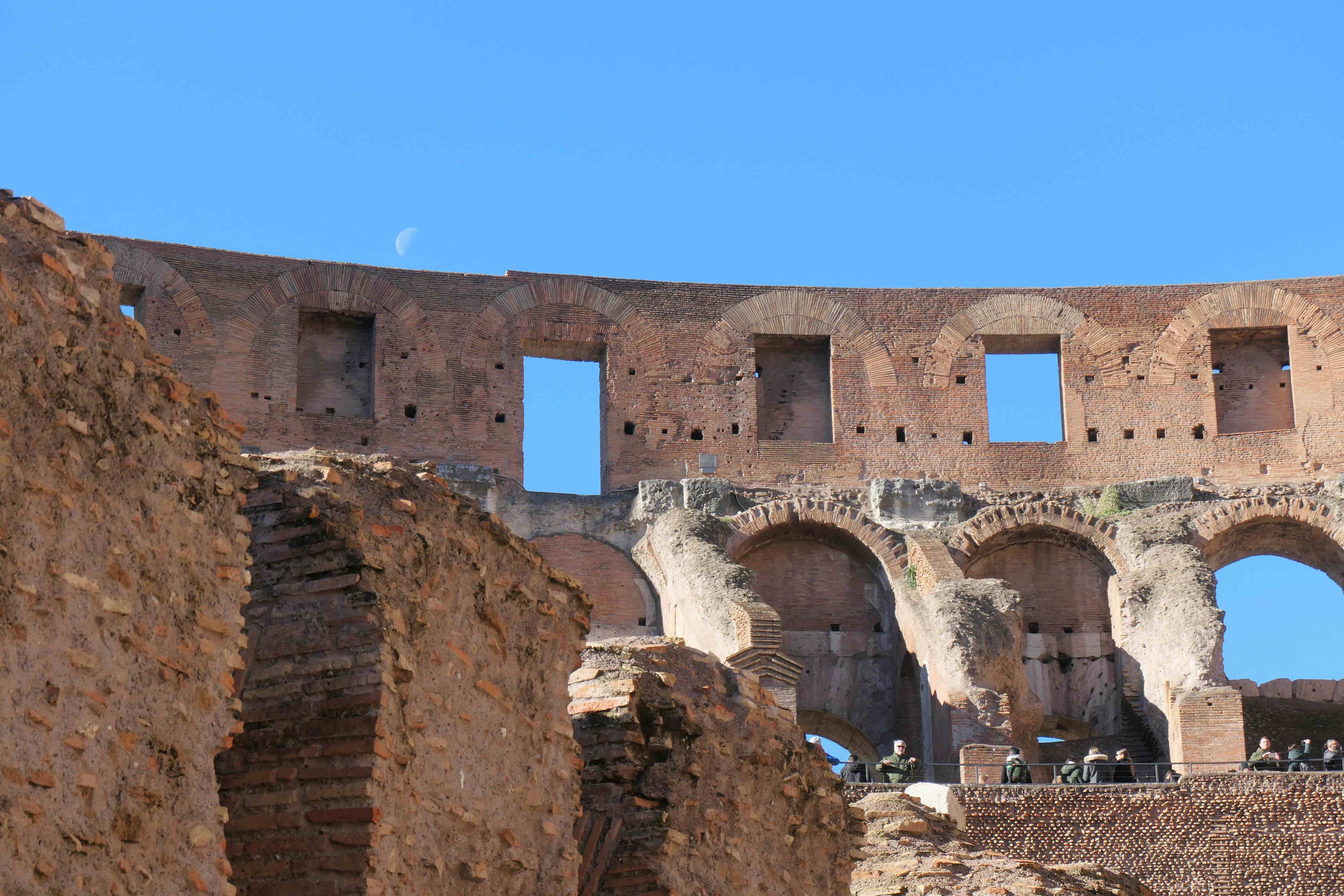
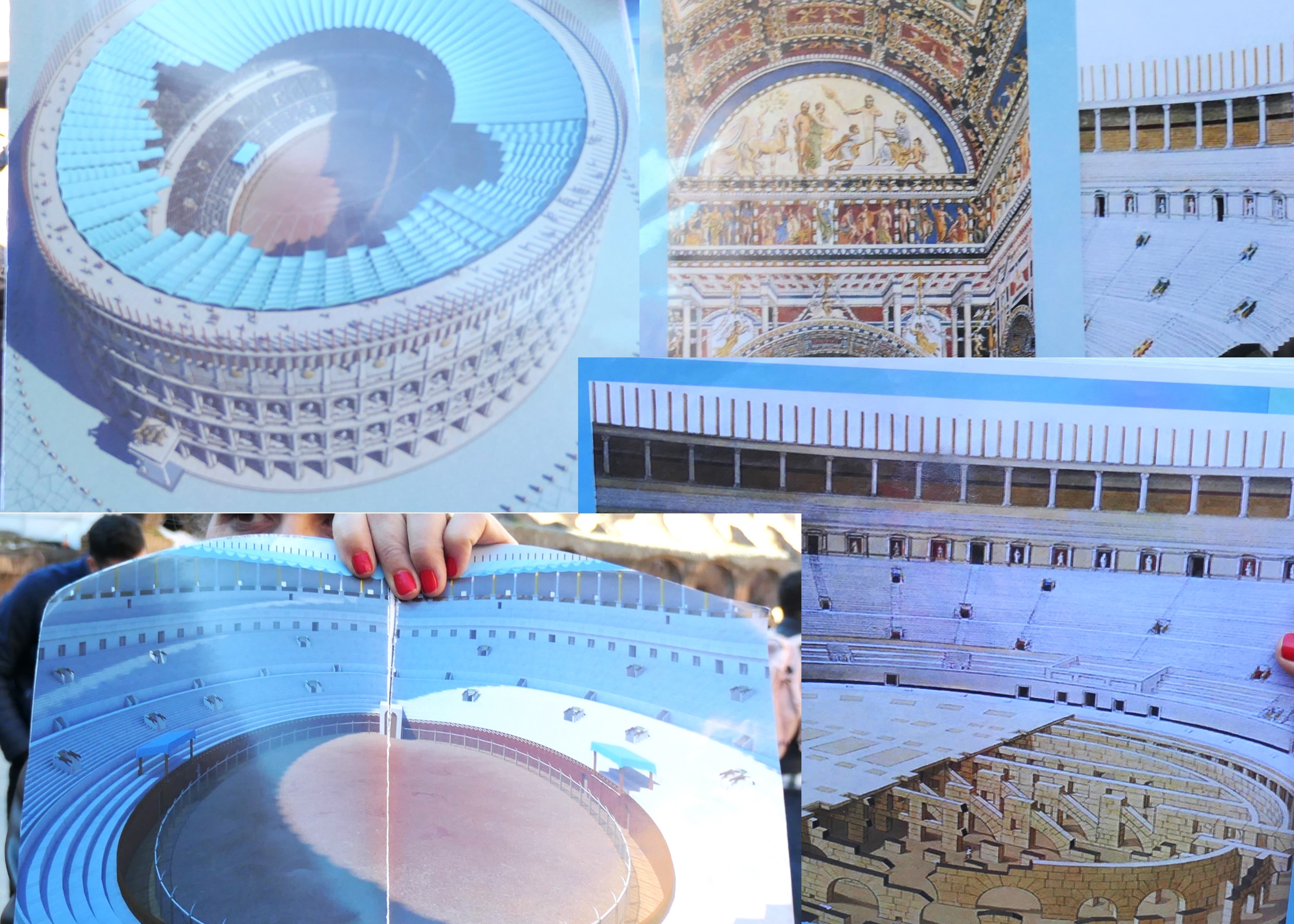
Now, did someone mention gladiators? Can’t think of Rome without also thinking of the Colosseum, originally simply called the amphitheatrum. (“Simply?” Ha!) Biggest in the world, still. As entertainment for the masses, admission was free. The wooden floor was covered by sand, and there were a bunch of ways in and out to the floor. The Colosseum was used for all kinds of purposes still being argued. Think lots of different shows, animal acts, juggling, you name it. But certainly fights. Between animals, against animals, etc. It’s told they even flooded it enough to depict a sea battle! It’s that big! Heck, it’s so old, Rome used it as a quarry from which to build other stuff!
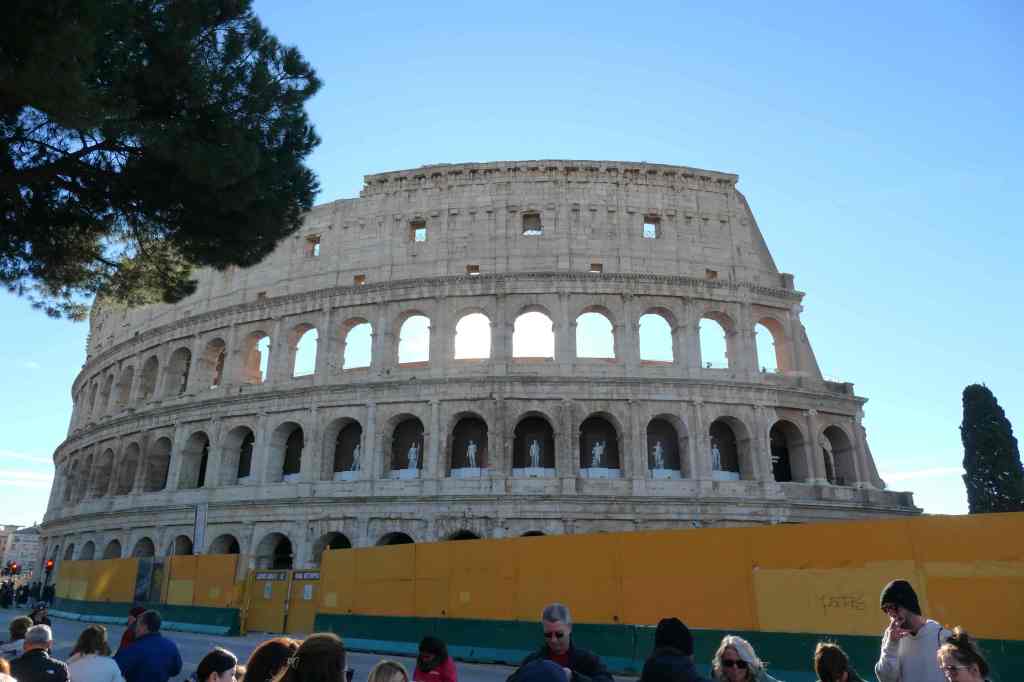
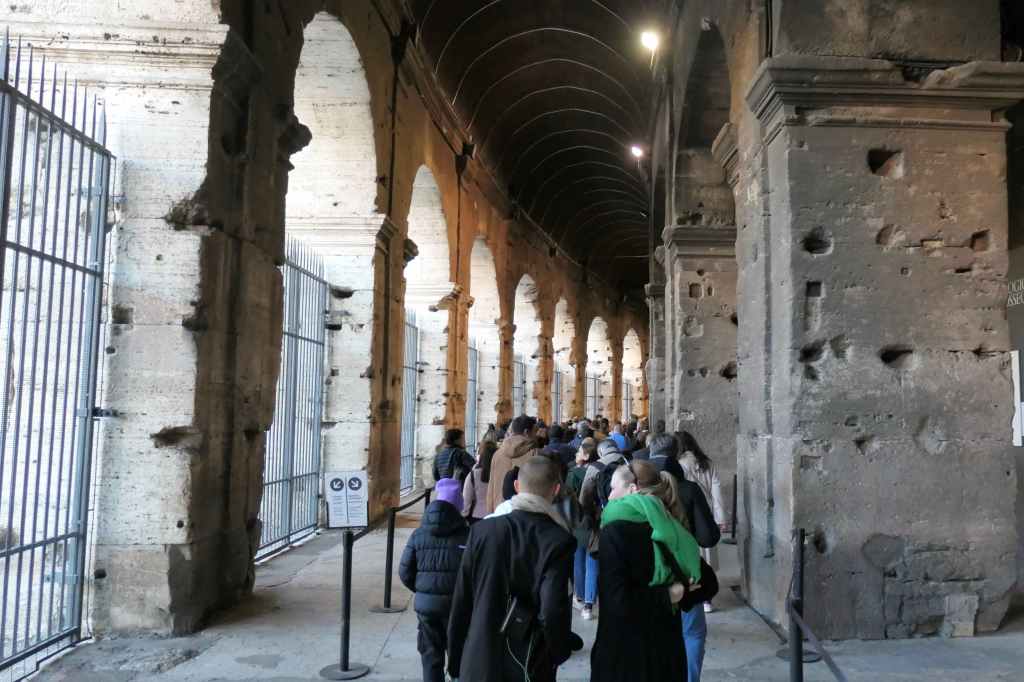
During the Underground portion of the tour, we learned more about the most well-known aspect of the place, the gladiators. Depending on the stories, they were more well-trained actors than anything. They lived like Hollywood stars. Their owners had a lot invested in them and certainly didn’t want the dudes to die. History claims only 30% of the fights ended in death. The details on their uniforms, from 100 AD are just stunning.
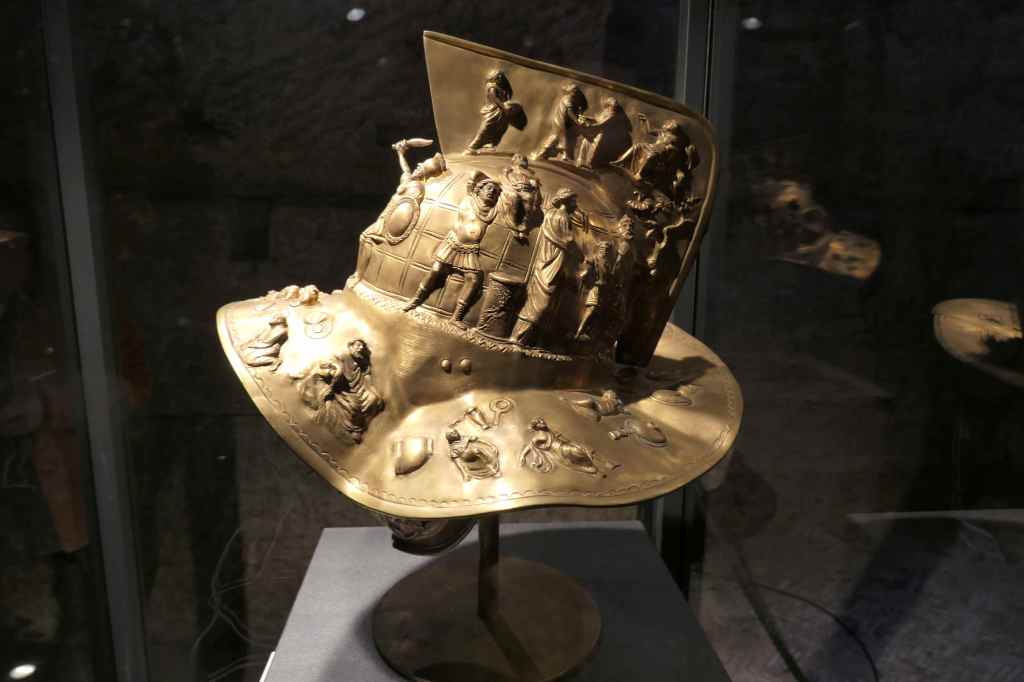
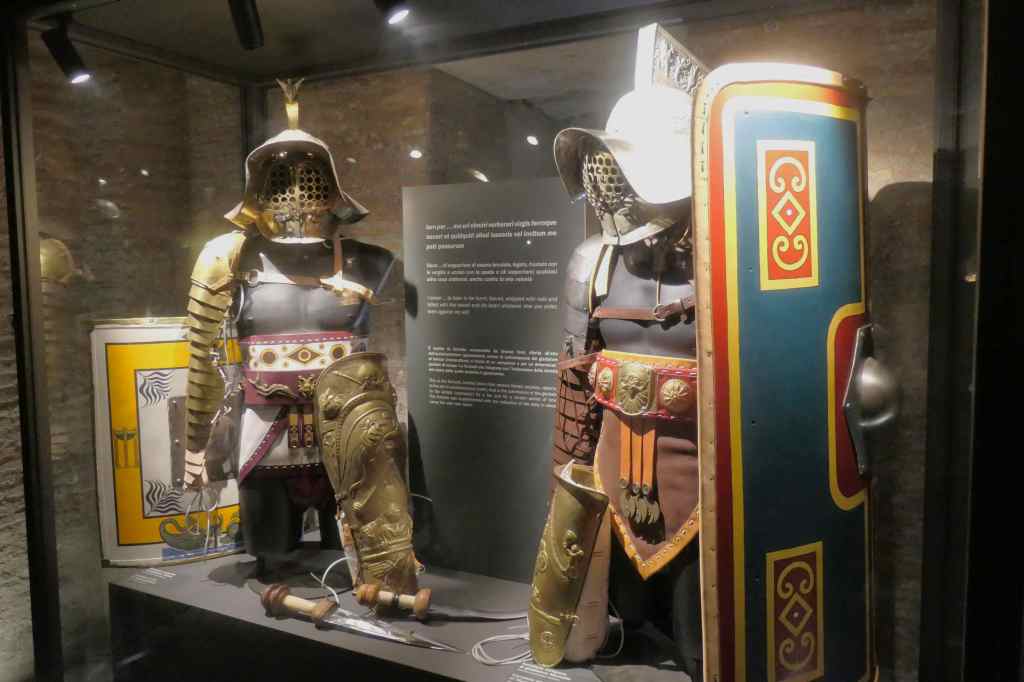
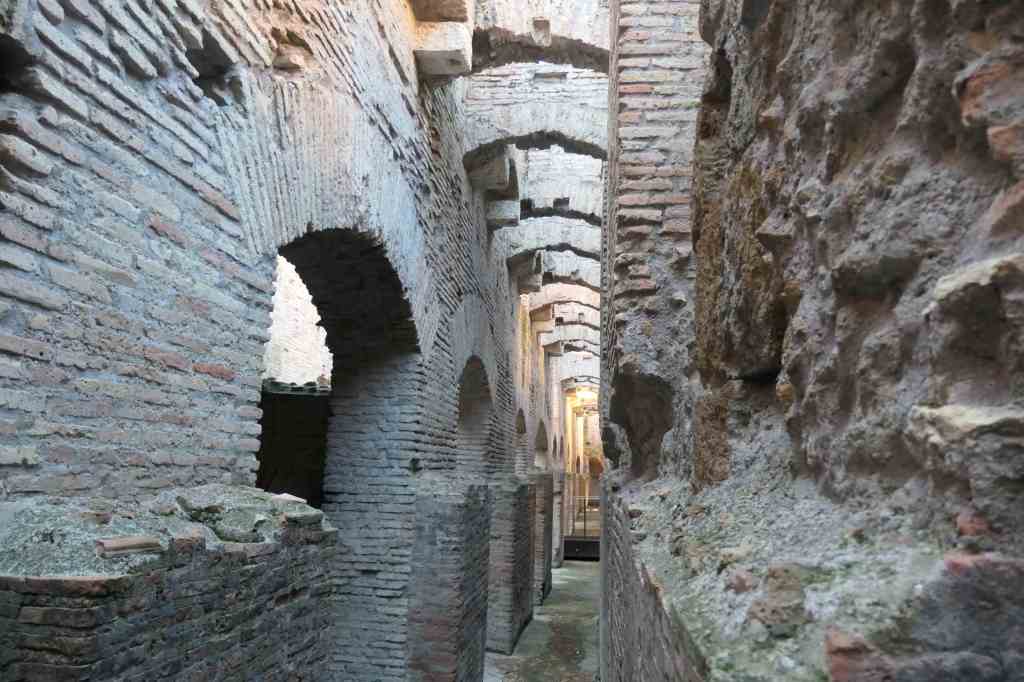
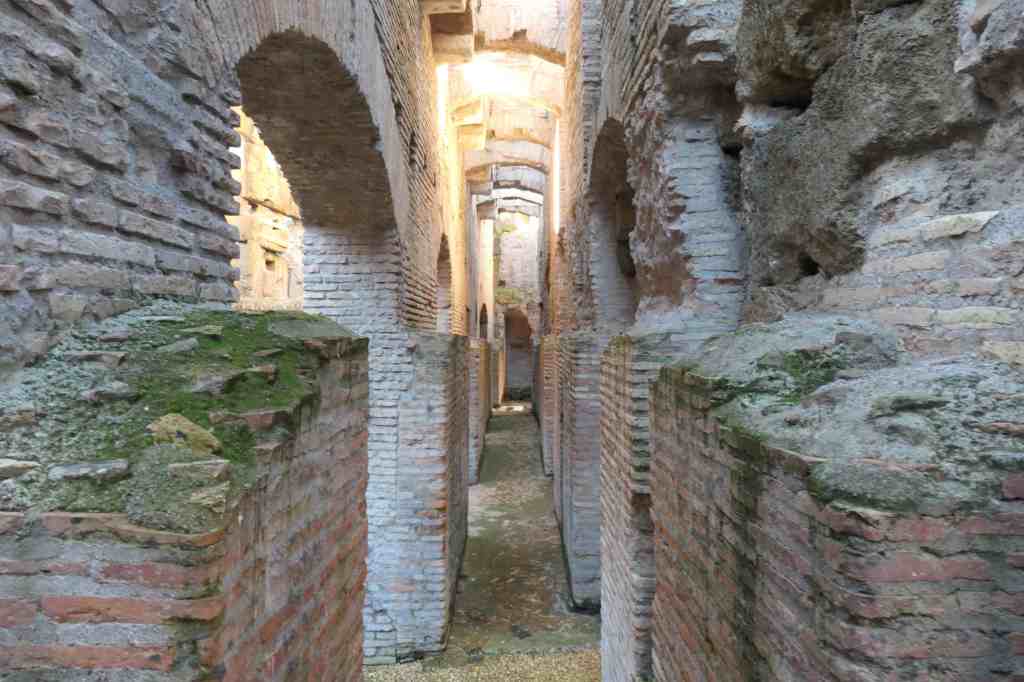
We learned a lot! And with imagination could practically hear the roar of the crowd!


* Oh, here’s a random tidbit regarding the fights: The movies are wrong about the thumb👎. Thumb down is actually believed to mean put the sword down, as this guy is too valuable to kill. Ah, Hollywood.
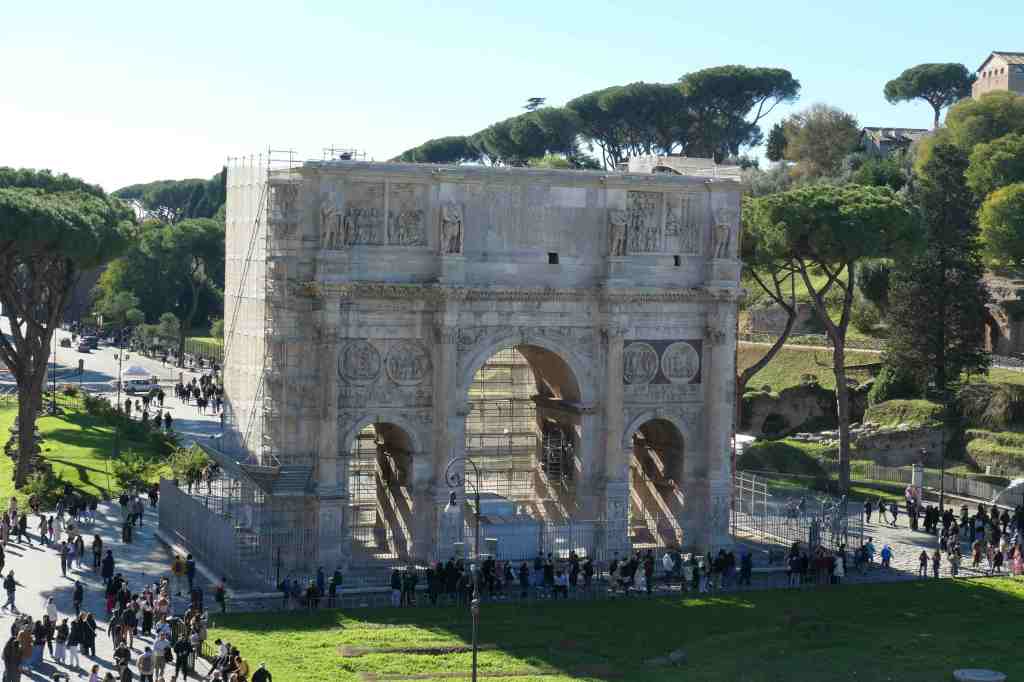
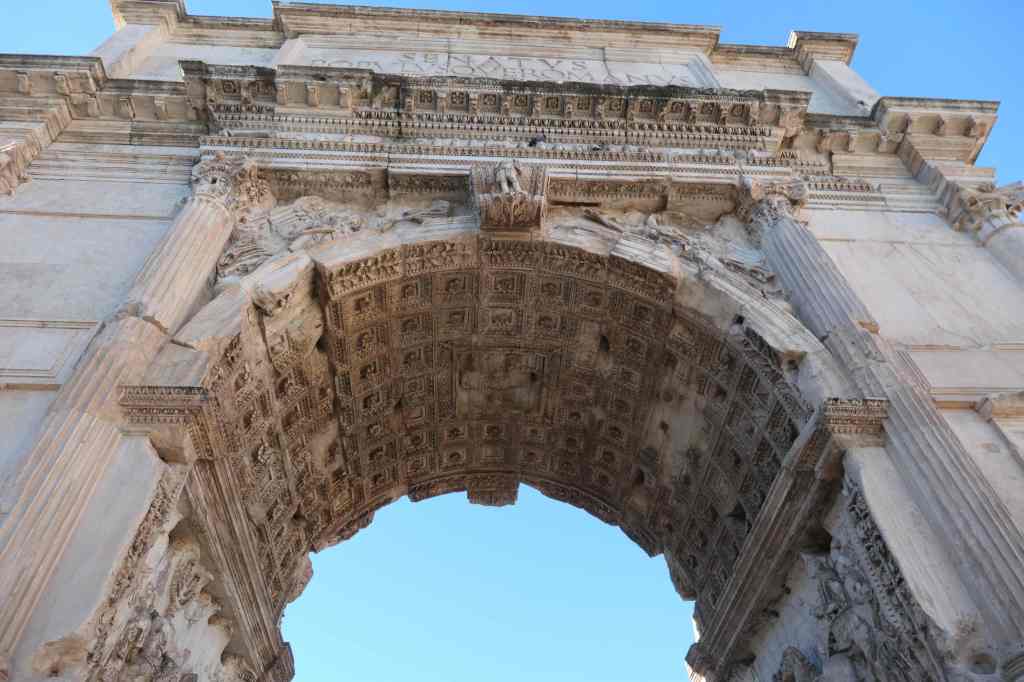
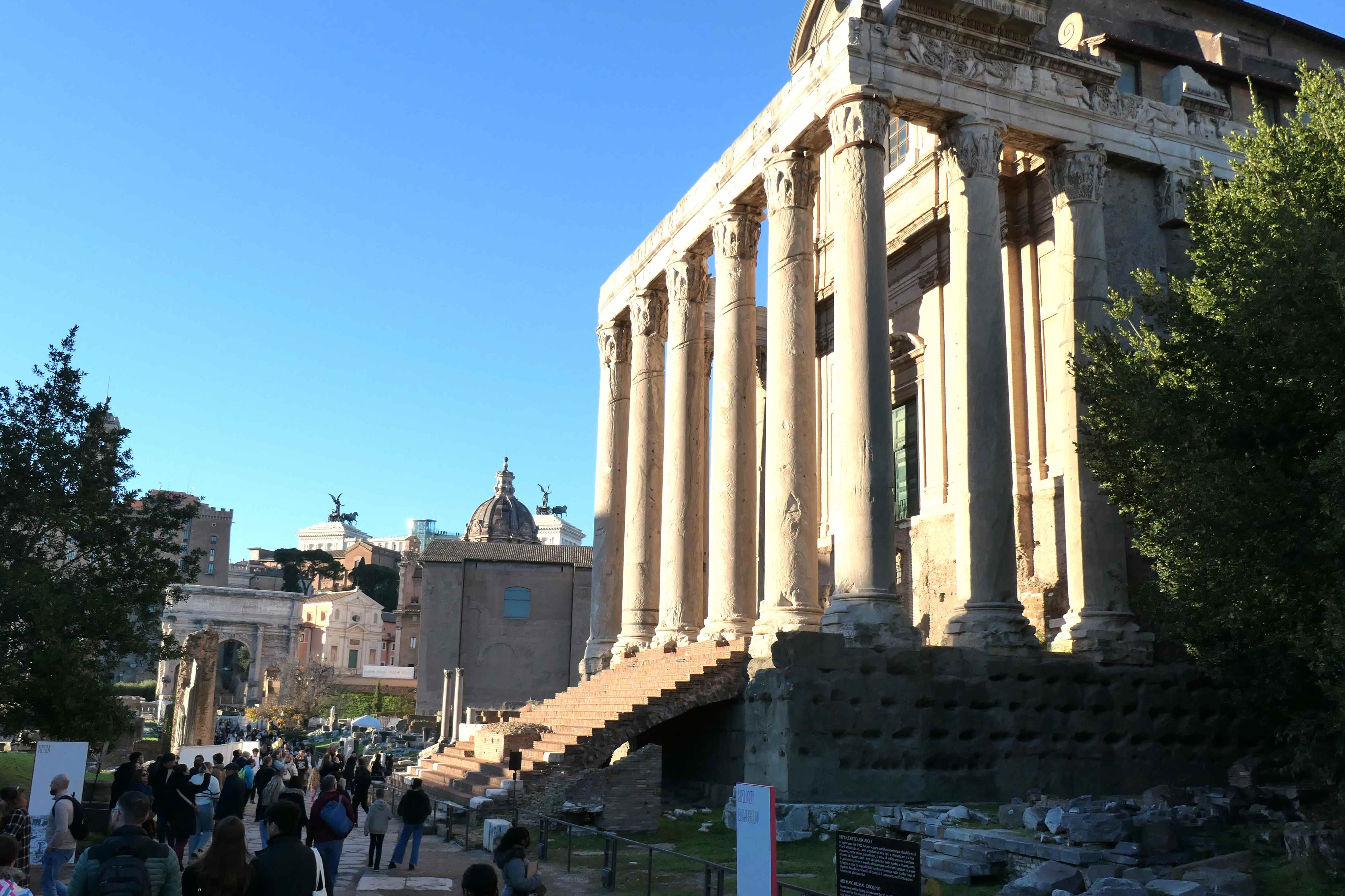
Heading towards the Palatine Hill, outside the Colosseum, is the Arch of Titus. Triumphal arches were earned by victorious generals with at least 5000 enemy soldiers killed in battle. They still have a few of them here.
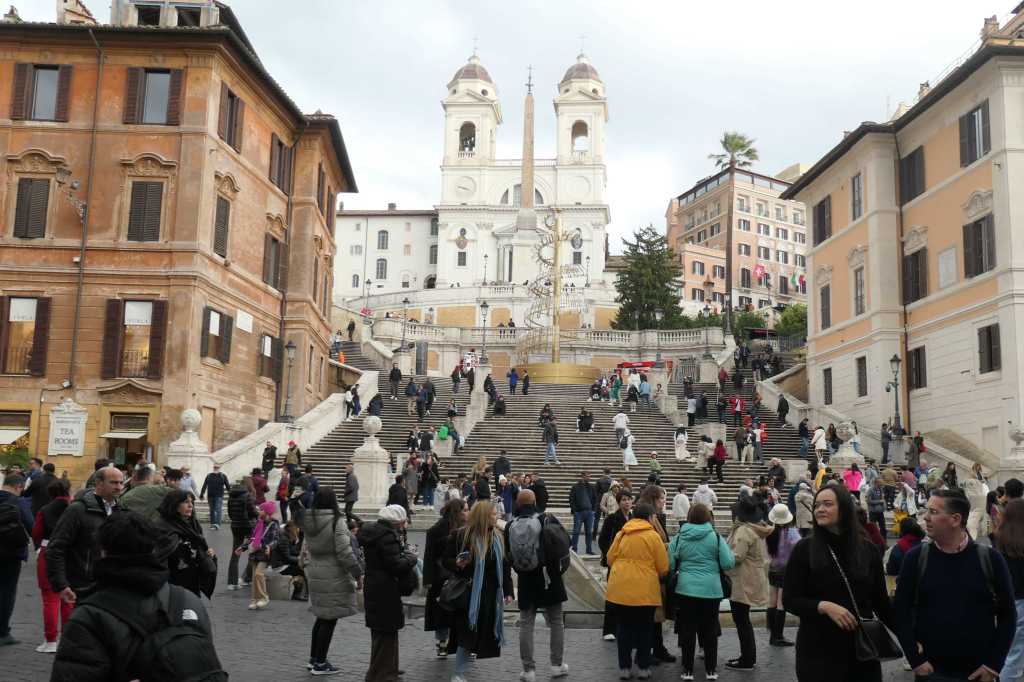
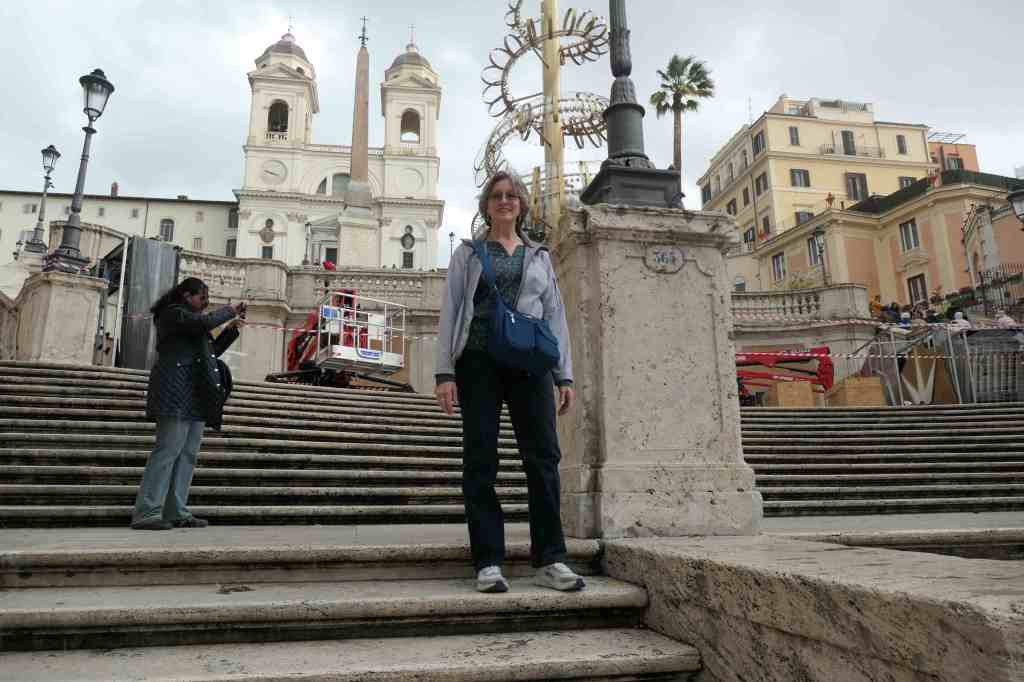
From the Palazzo di Spagna (Spain Square) – that’s right Spanish in the middle of Rome – the 135 famous Spanish Steps take visitors up to the beautiful Trinità dei Monti, a French (we know, confusing) church built in the early 1500s. Spain’s embassy to the Vatican (Holy See) has been located near the bottom of the steps since 1480. And the beautiful steps, themselves? Not built until the early 1700’s.

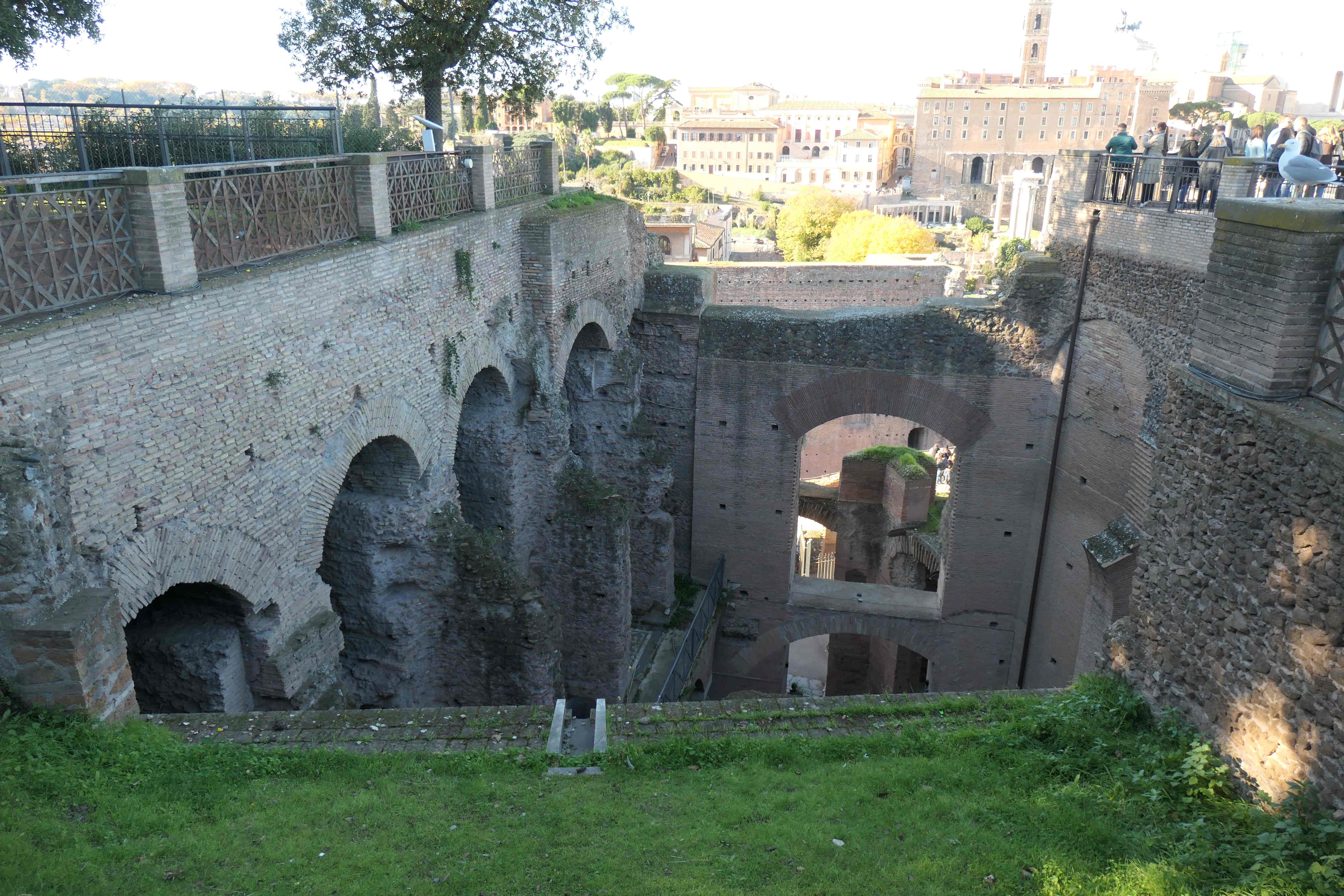
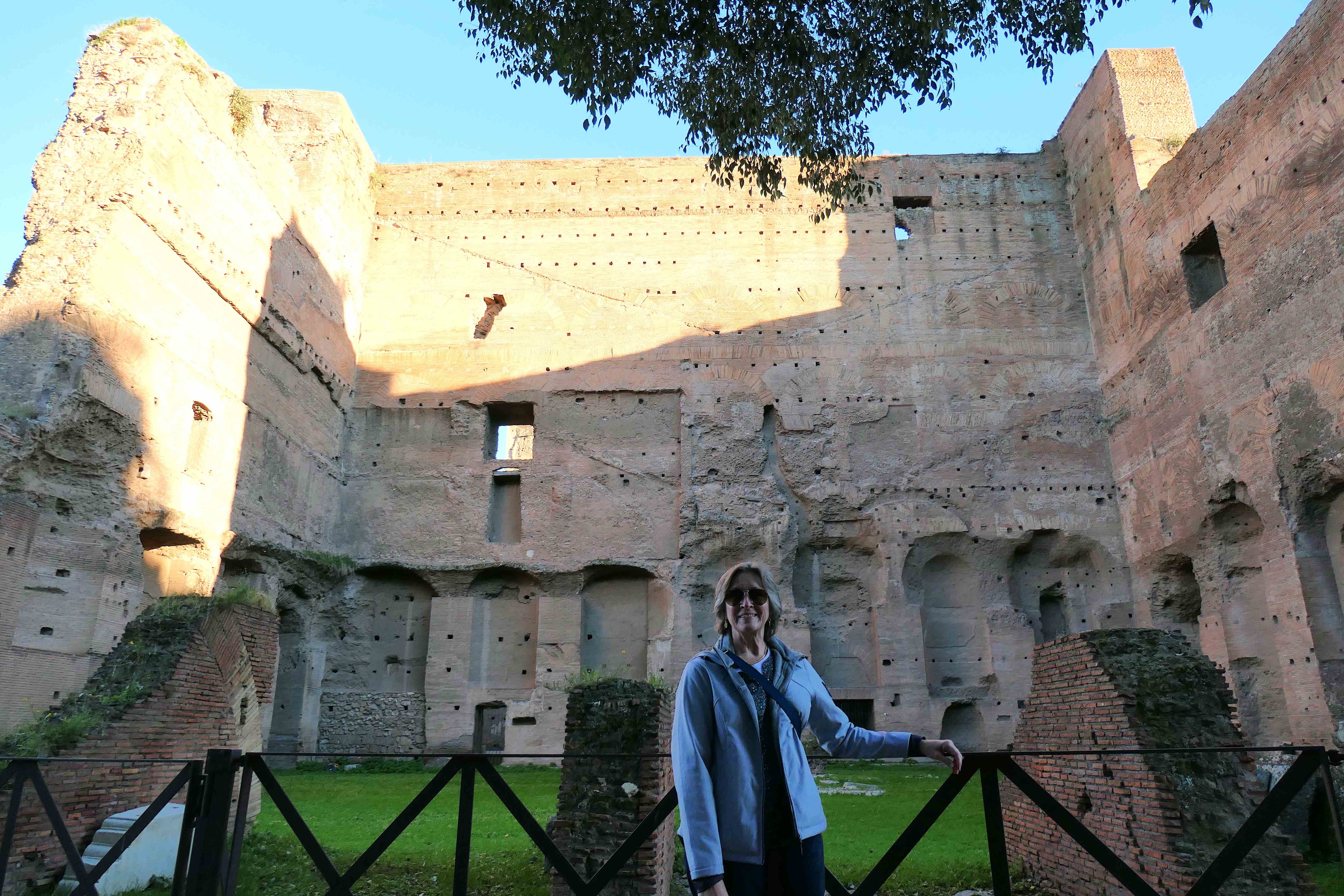
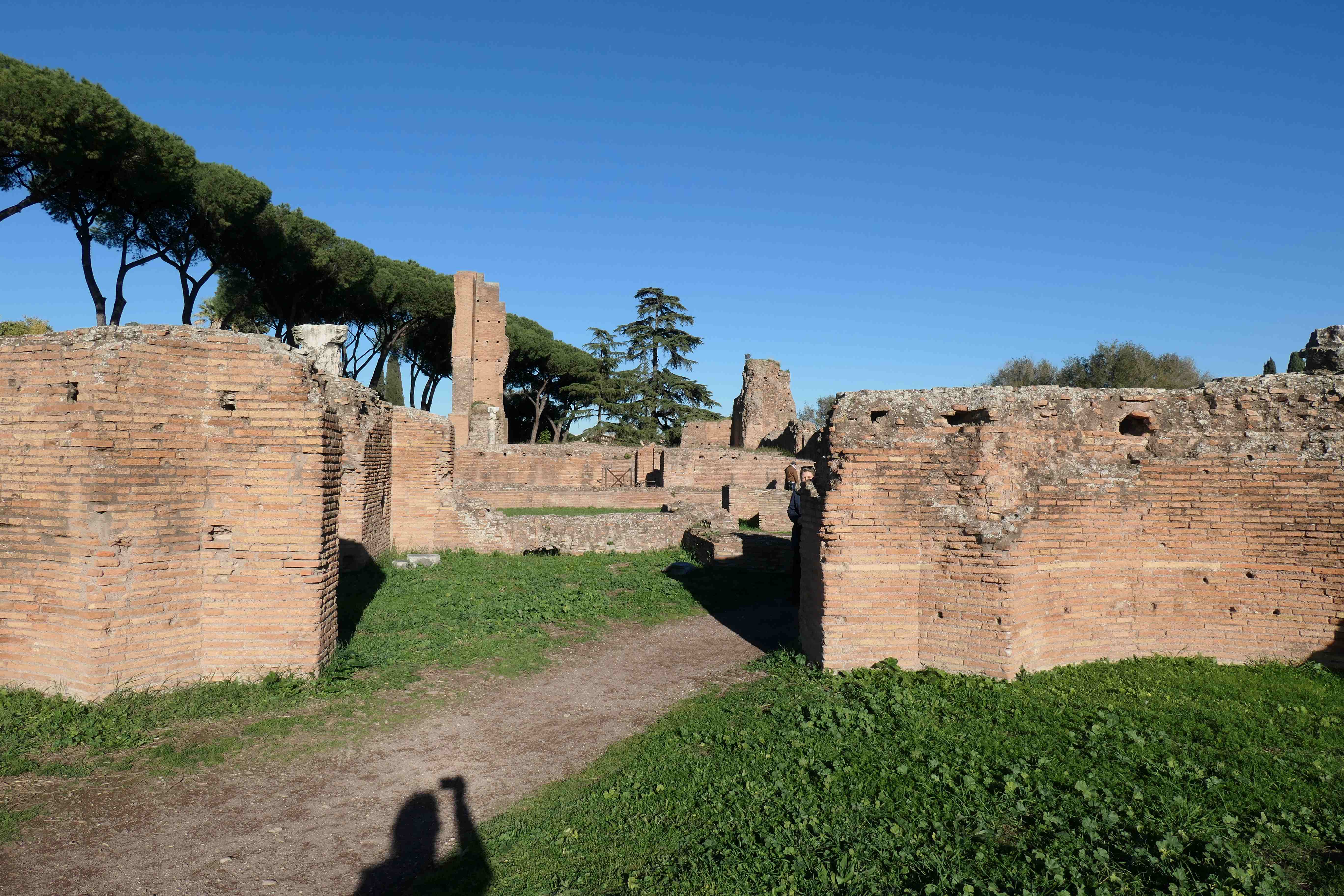
Going way, way back, Palatine Hill is thought to have been named by Evander of Pallene, an important Greek, 60 years before the Trojan War (1200 to 1300 BC)! Moving forward, tradition then holds that Rome was created right here as one of the seven hills, when Romulus and Remus founded the original city in 753 BC! It was the center of Rome for many, many years. All the really rich important folks lived up on the hill, overlooking the center of Roman life and government, the Roman Forum.
See, the history around here is amazing! They wrote stuff down! Enough, Todd.😇

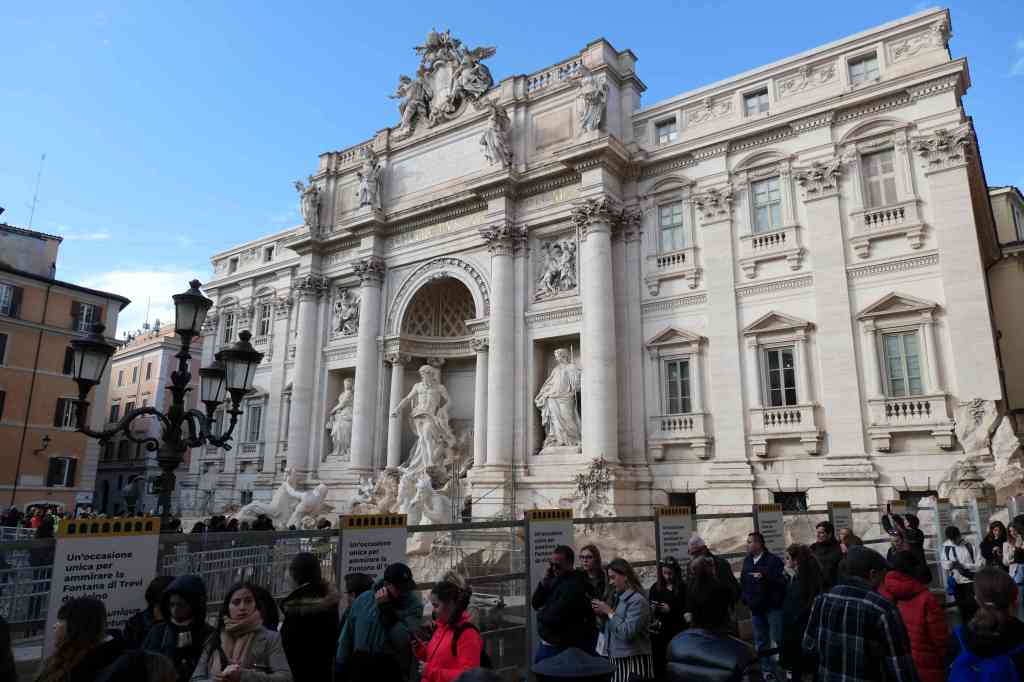
As one last instance of the Jubilee bubble wrap phenomenon, here’s a shot of the well-known Trevi Fountain. We found the crowd easily enough. They were being held back by scaffolding and fencing so the fountain can be cleaned.
Anyone paying attention to the dates of our posts may have noticed we are approximately a month behind. To that, we say, Rome wasn’t built in a day. And neither are these posts. Ha! 🙂







 Our Travels