Trullo in Puglia

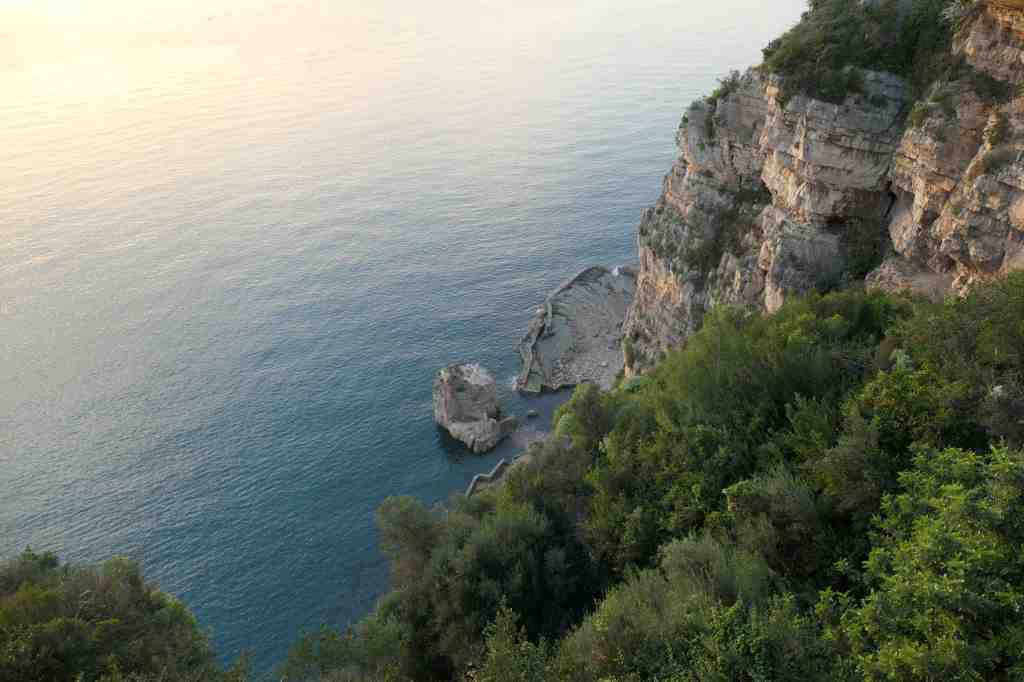
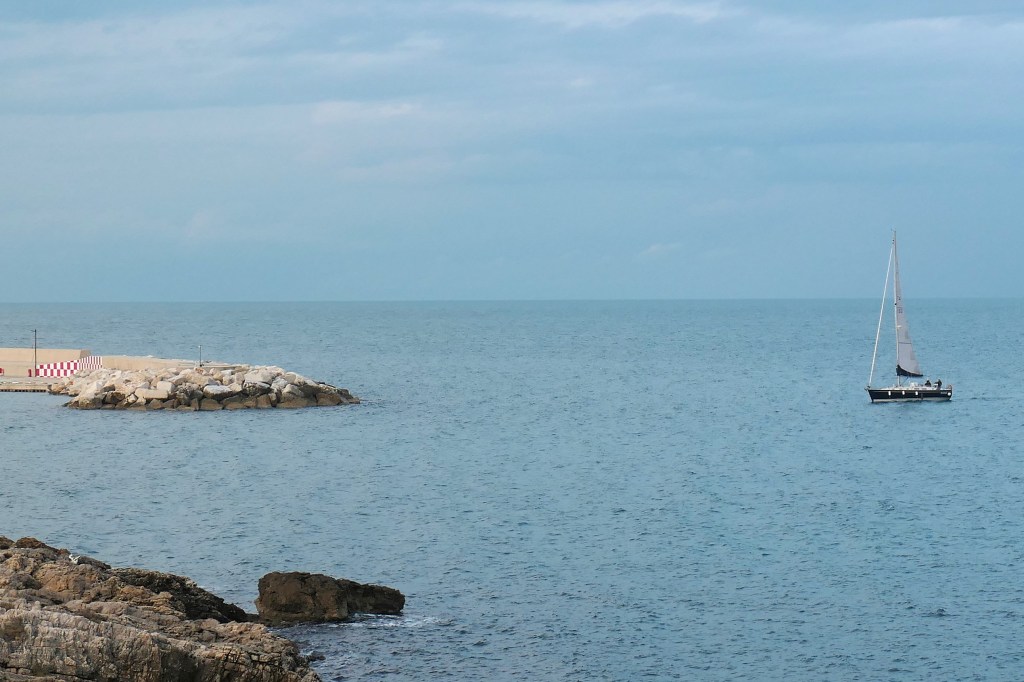
From that wonderful stop on the Amalfi Coast, we decided to head east across Italy, to the other side, for a short stay in the heel of the boot, Puglia (“poo lee uh”). The route took these former cruisers teasingly close to the shore, so we made a detour to see the Adriatic Sea. And just happened to step out of the car in time to catch a sailboat entering a marina, fenders at the ready! Look at the sea, how calm! Nice!

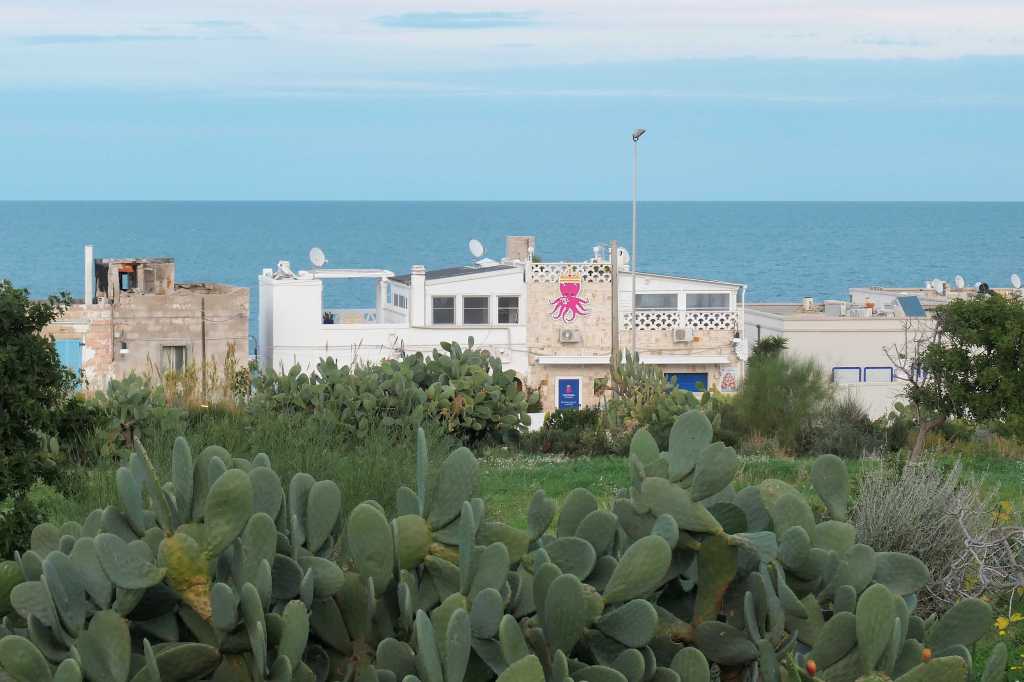
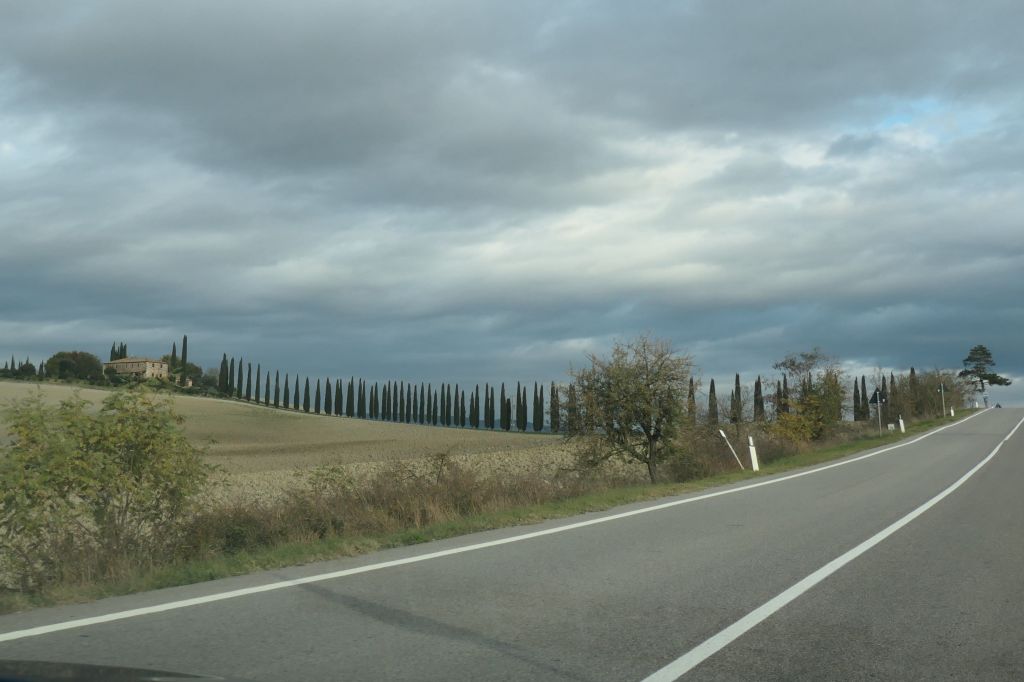
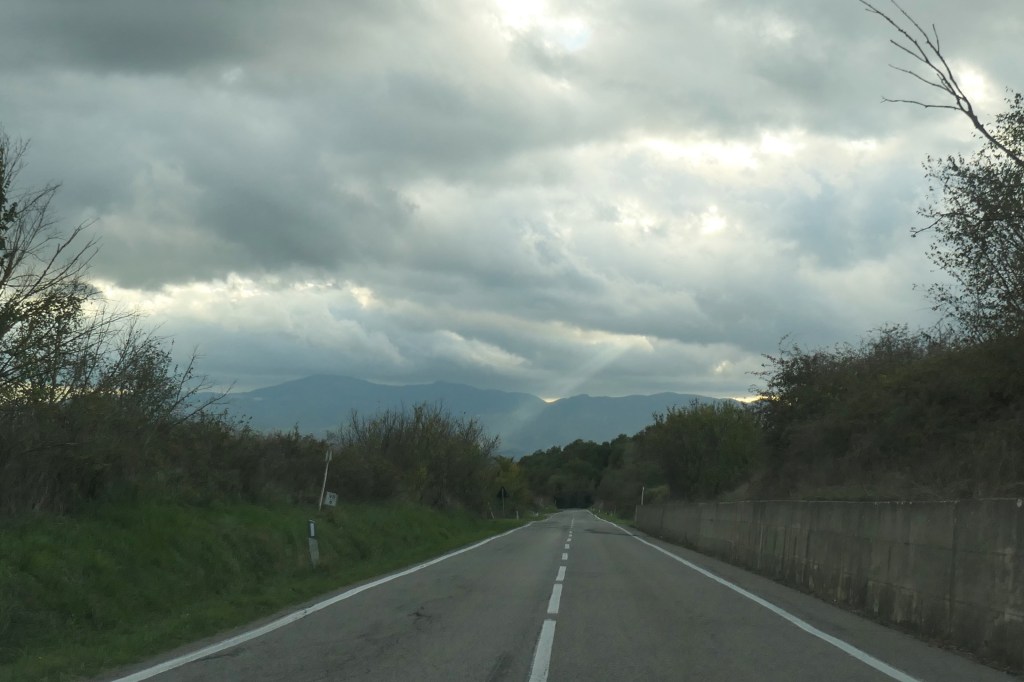
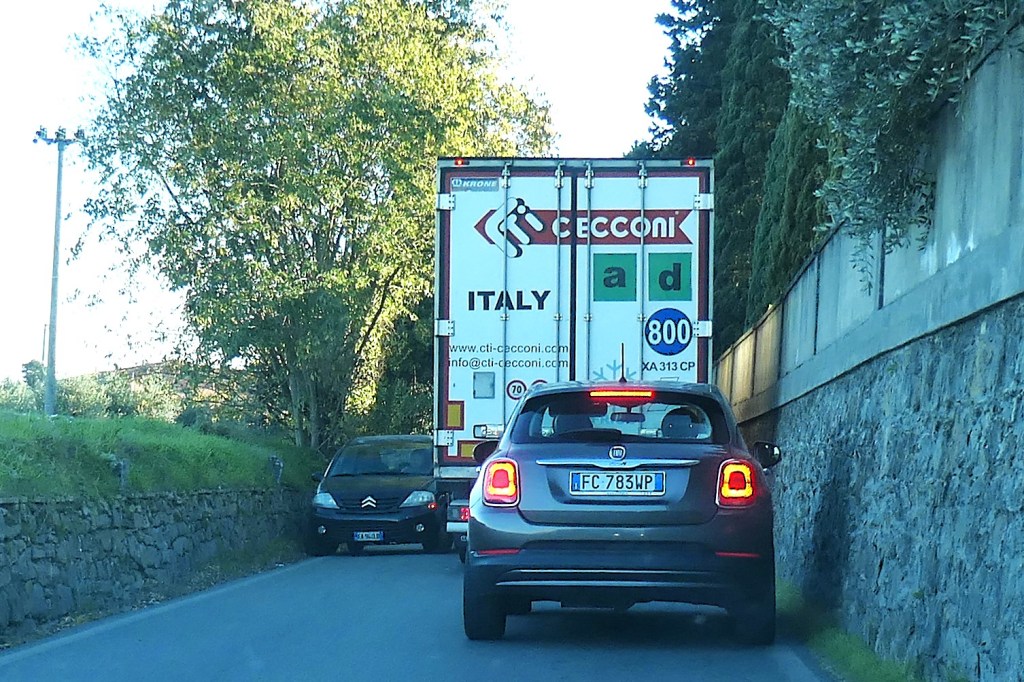
After taking a “shortcut” or two and reroutes for lunch, a road closure, a traffic jam, getting over a mountain, etc., we turned what was supposed to be a four-hour drive into more than seven. Another Olsen M.O. We ended up so far behind that we found ourselves searching for the destination in the dark. Again.

The GPS is typically close but not always accurate, and the directions provided by the owner took us to the wrong place. As we pulled up to the festively lit (incorrect) house, a smiling woman who spoke absolutely no English stepped out to assist. Recognizing the hosts’ names in our gibberish, she held up a hand for us to stay put, went back inside and returned with two teenage boys, telling us through gestures that we’d come too far and should turn around to follow the boys – now doubled up on a motorbike – to the proper house. We got a kind-hearted Italian escort to the correct gate, where we finally found the rental owner waiting, thanks to a phone call from her friendly neighbor!

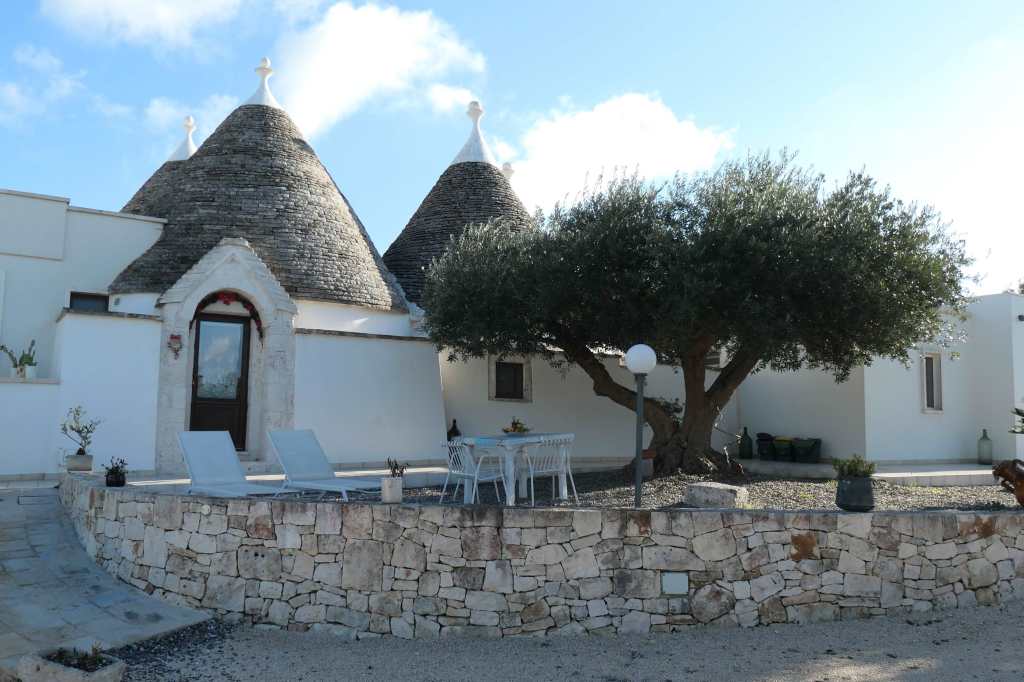
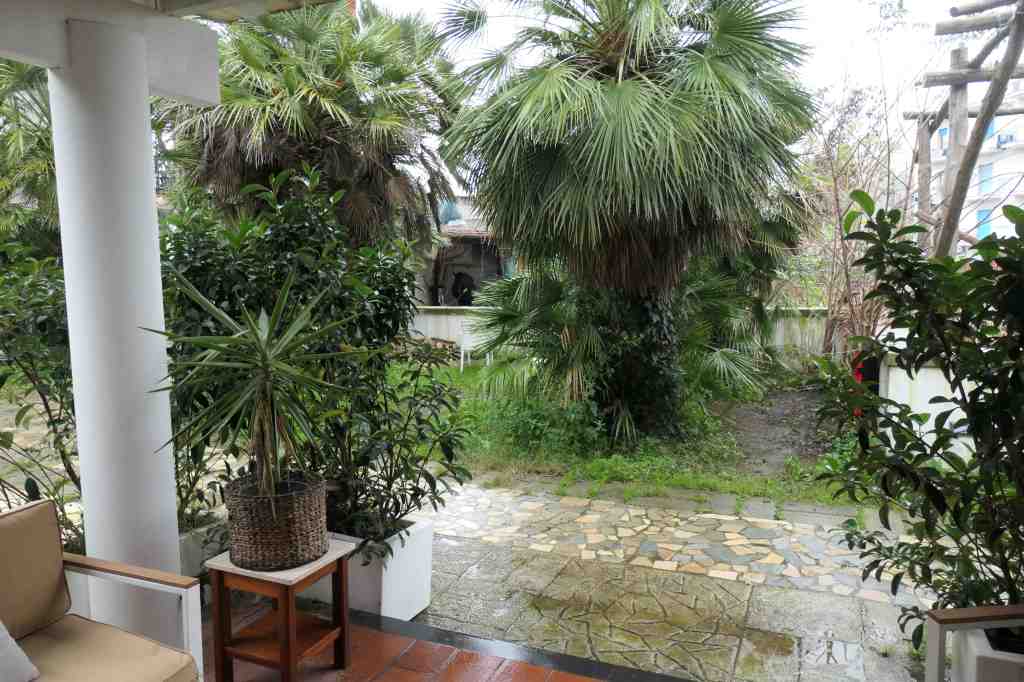
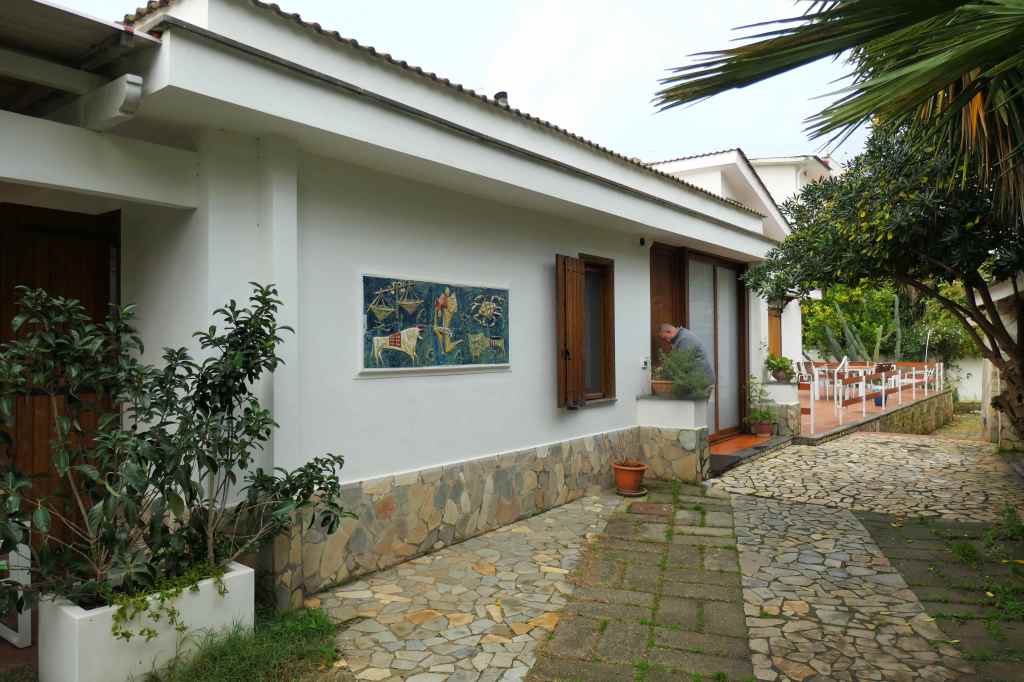
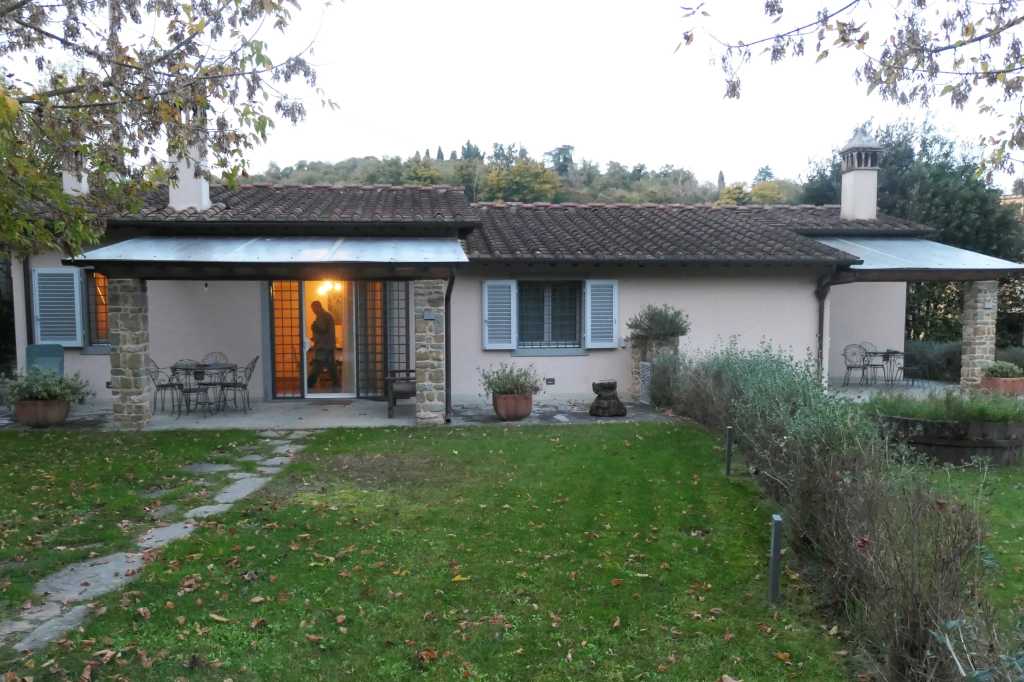
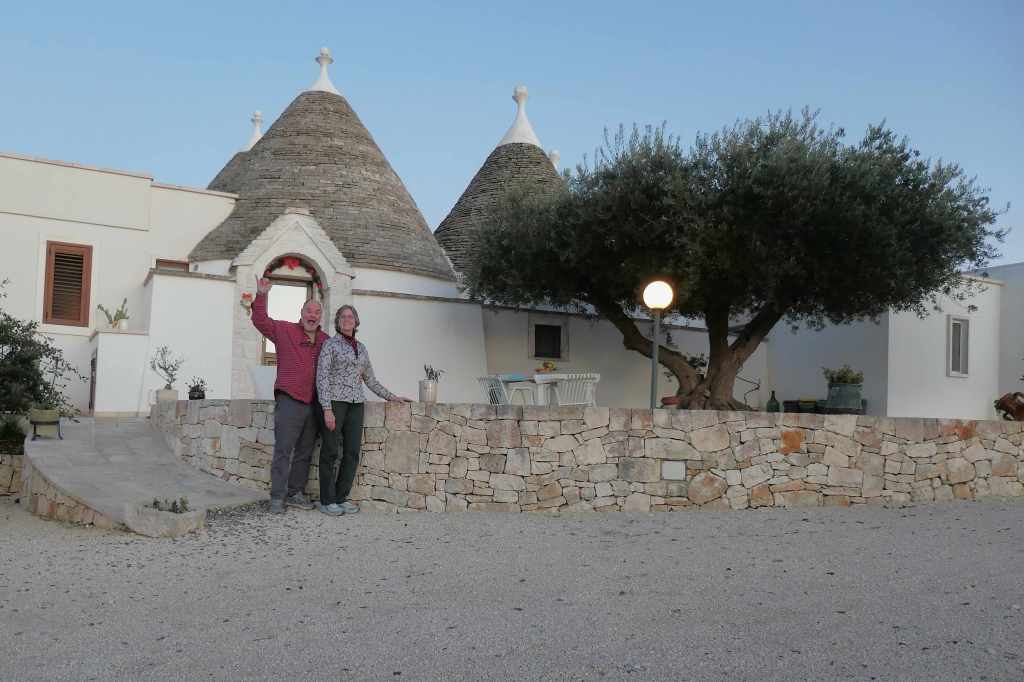
In the morning light, we saw our spot.
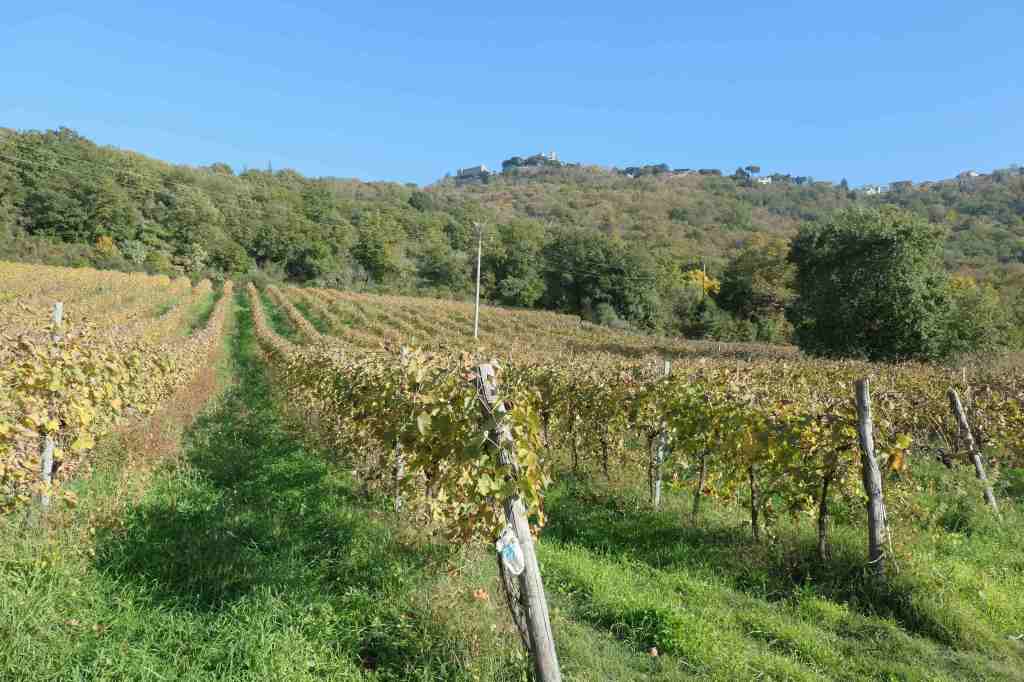
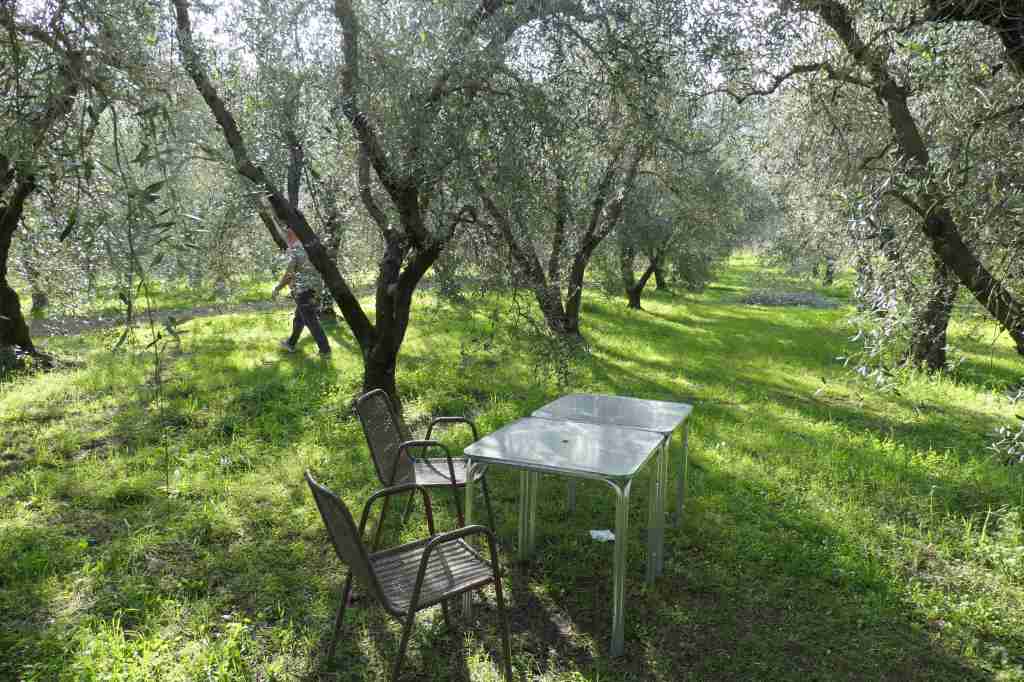
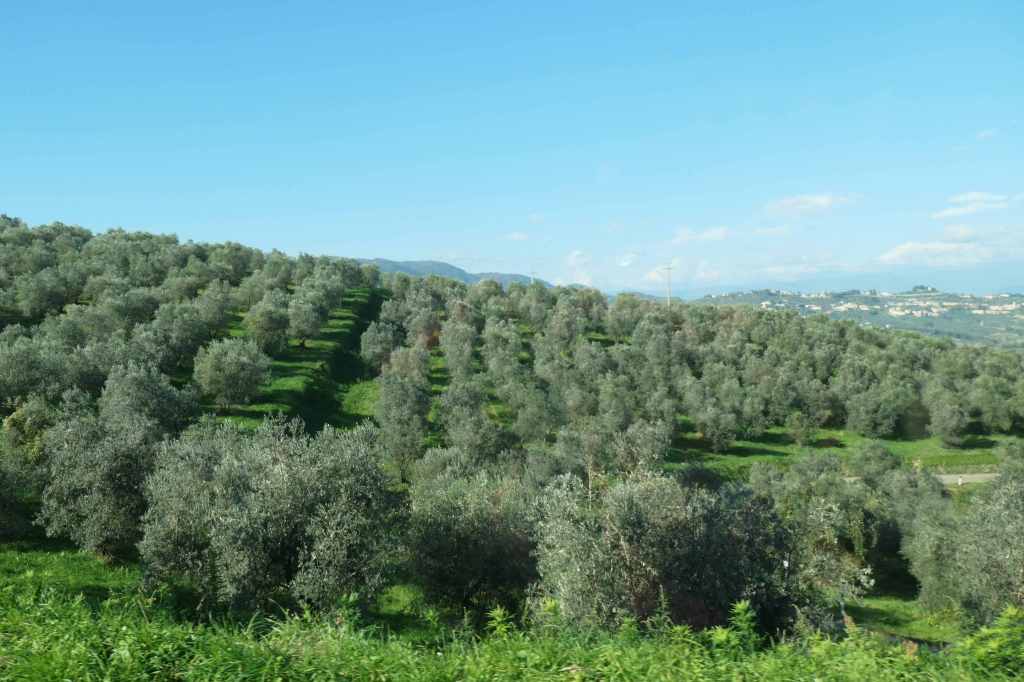
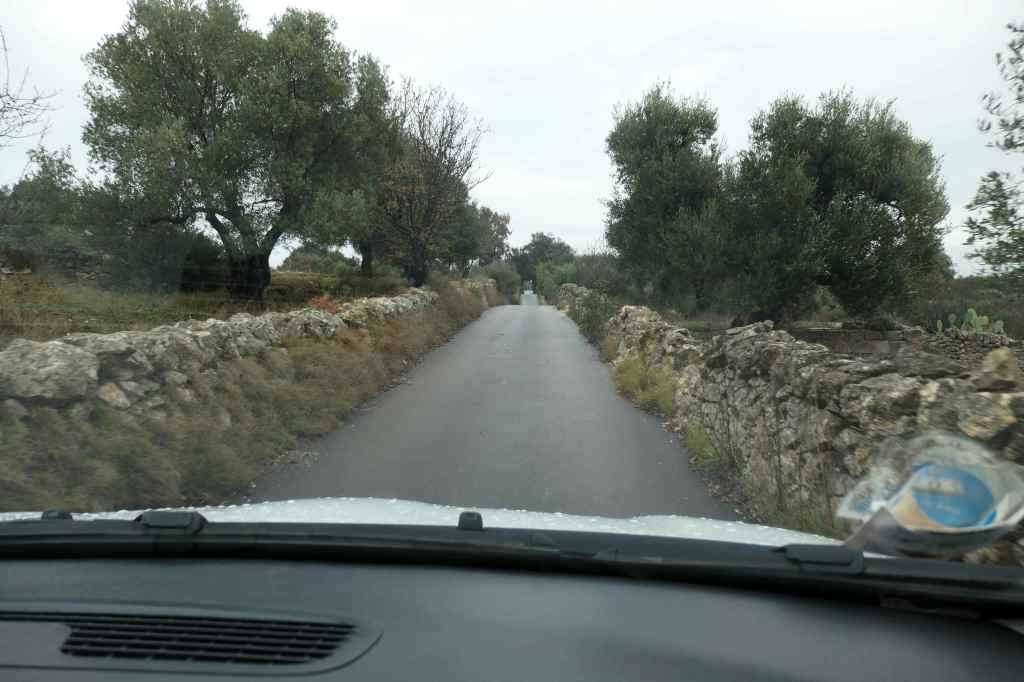
We went back another day to photograph some of the things we’d seen whilst zipping along in our little car in the dark. Most of all, the amazing olive trees we’d marveled at but could barely see at dusk. Bigger than any we’ve seen in this land that’s covered in them!
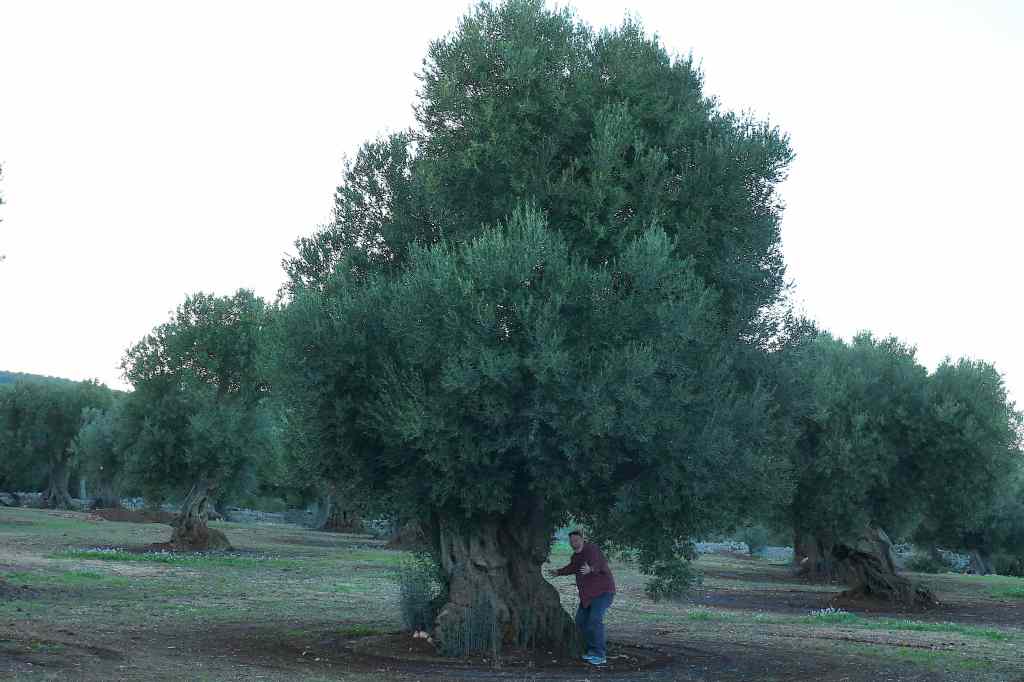
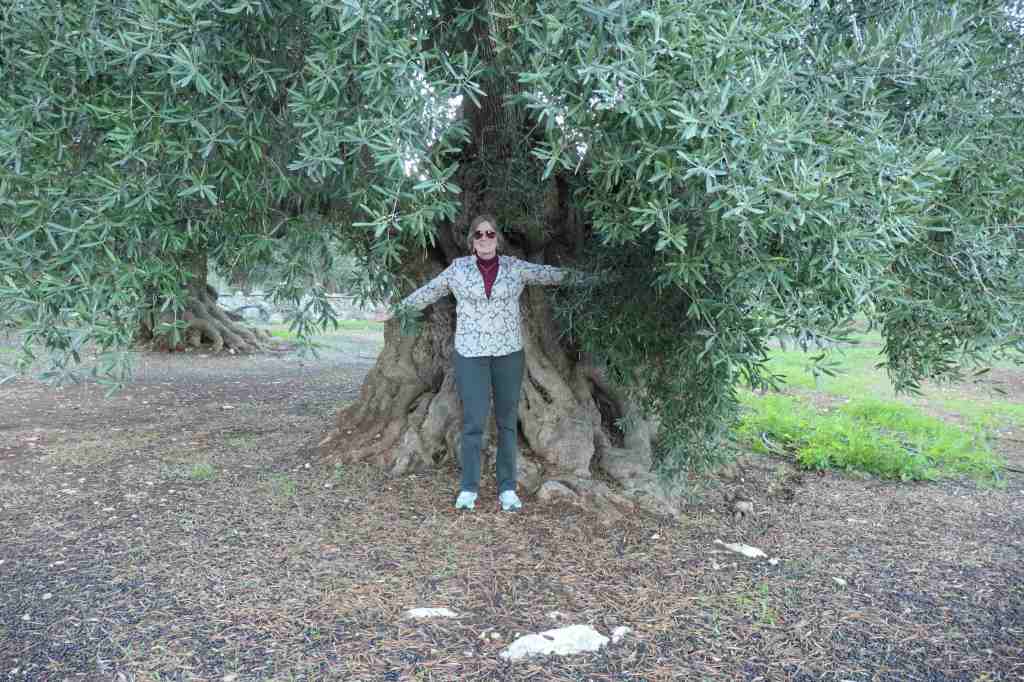
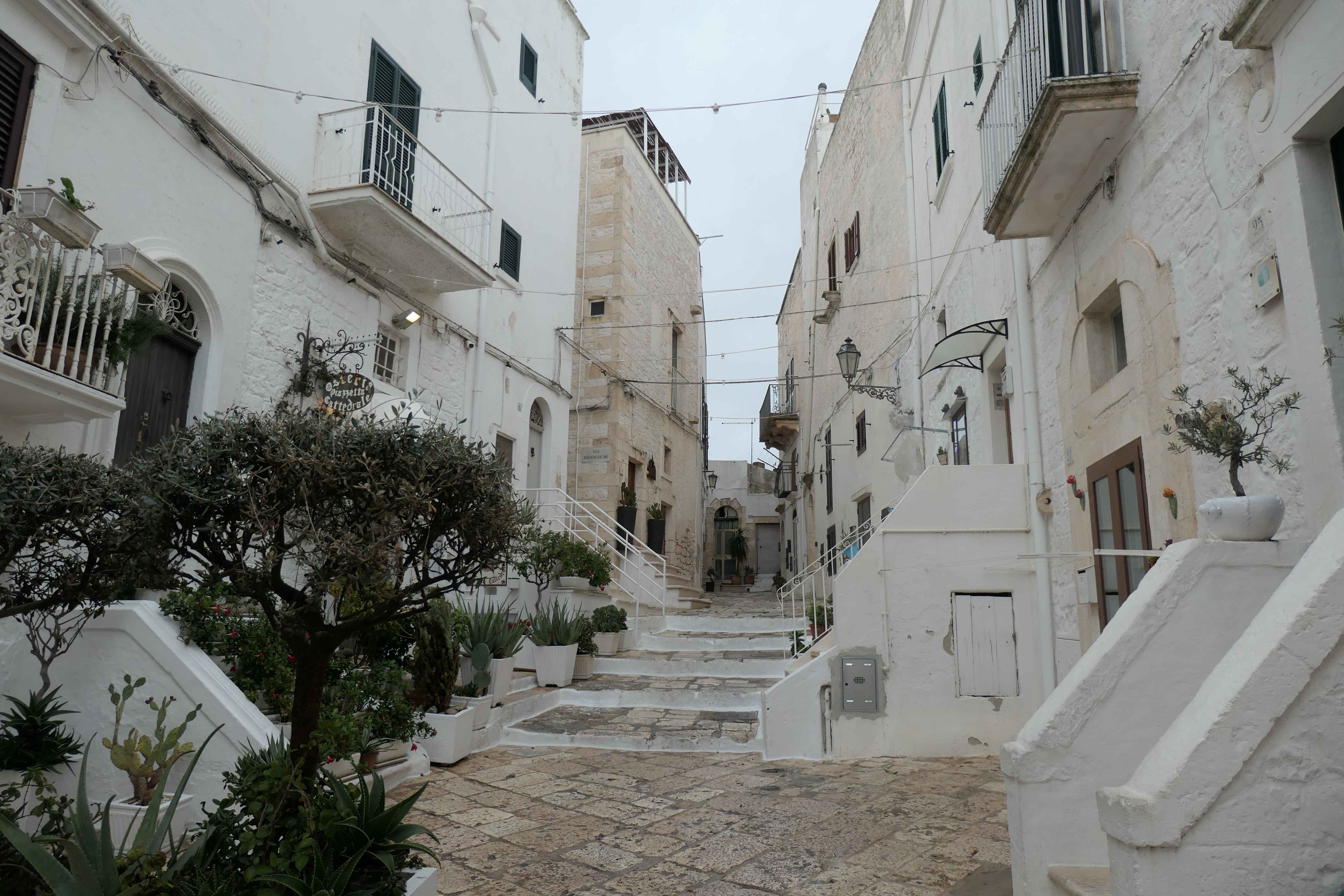
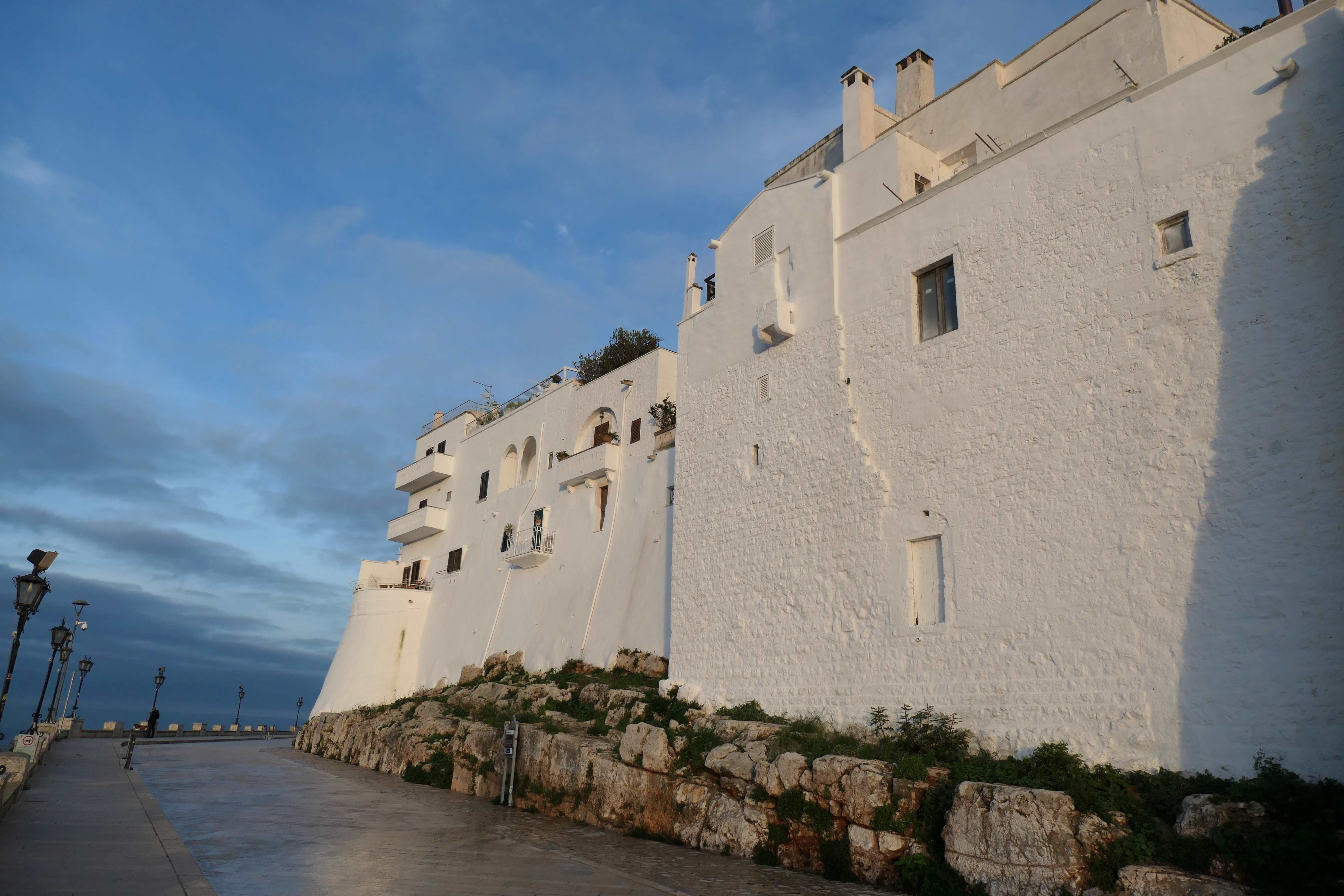
During the tree-hugging “backtrack,” we sidetracked again. Ha! This time to check out Ostuni in the Province of Brindisi. The “White City” of Ostuni and its nearby towns, known for producing high-quality olive oil (go figure!), strangely, is the fifth in Italy by percentage of British residents and the first for sale of houses and villas.
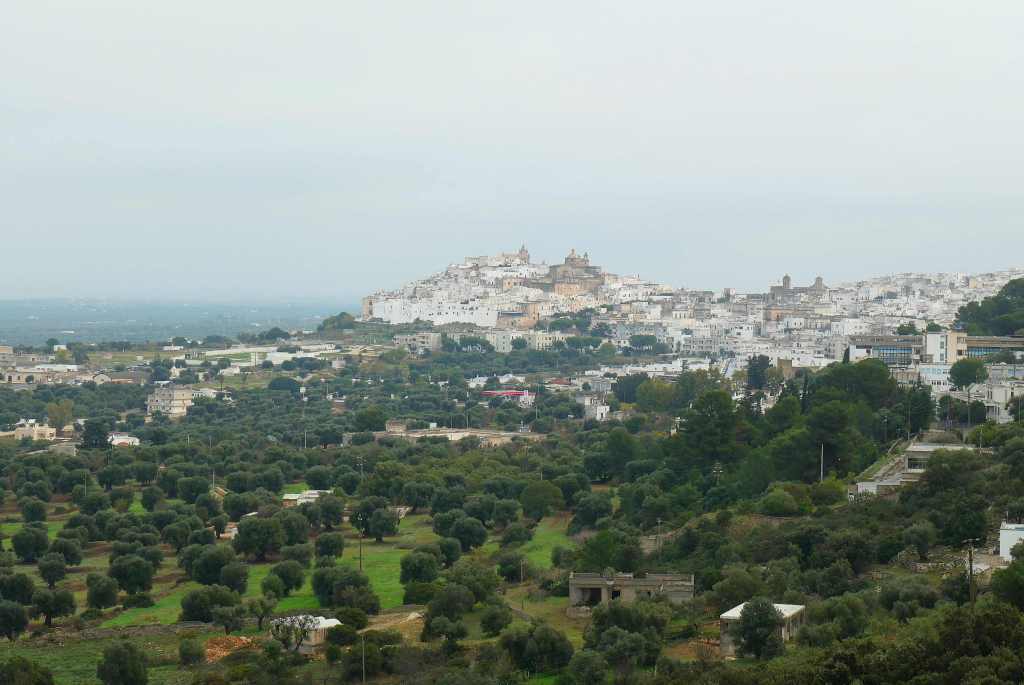
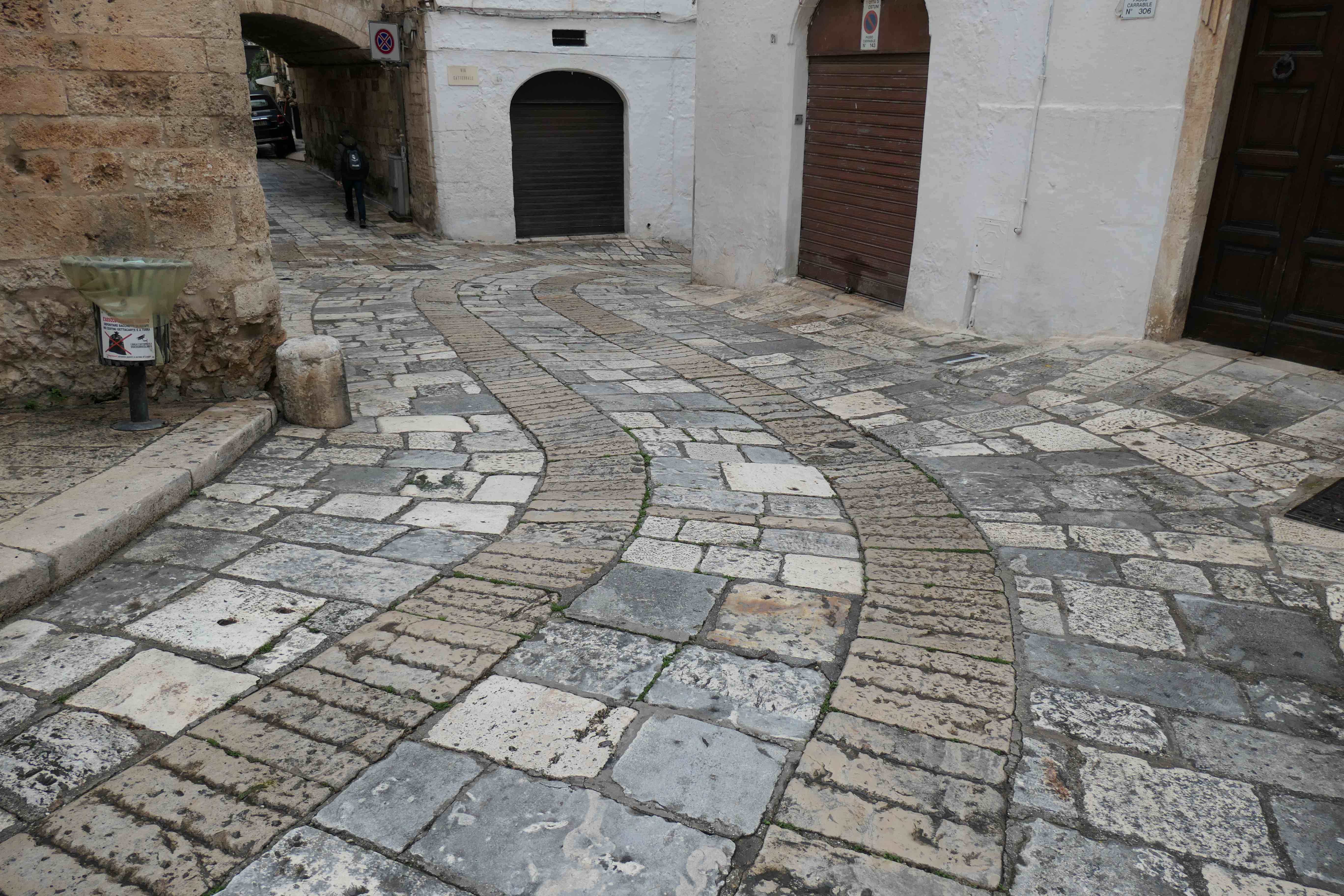
Being among the main towns attracting tourists in Puglia, Ostuni has a population of about 32,000 during the winter, that swells to 200,000 in the summer. In December, we had the maze of hilly white streets in the Old Town area pretty much to ourselves. (Yeah planning… 🙂 )
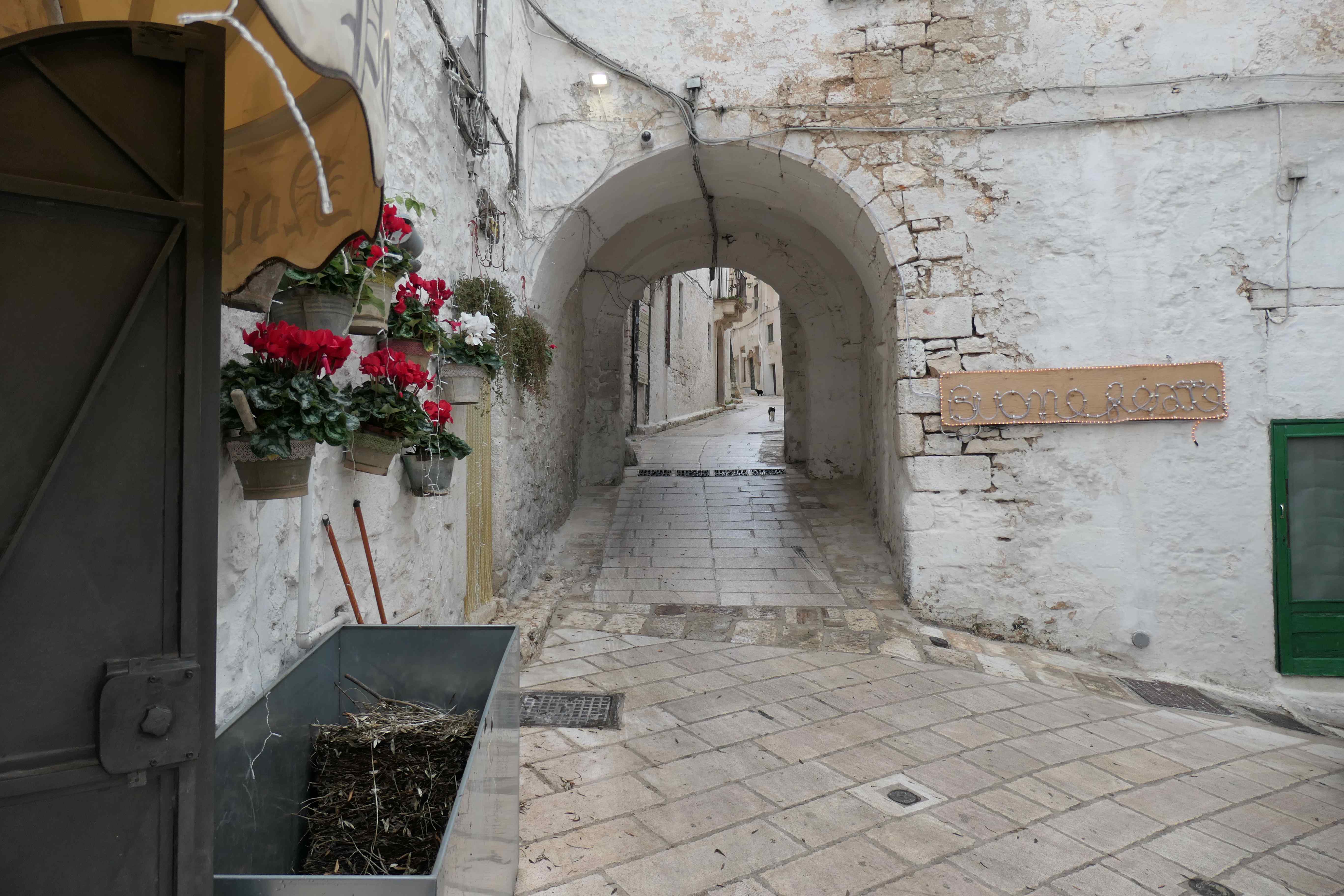
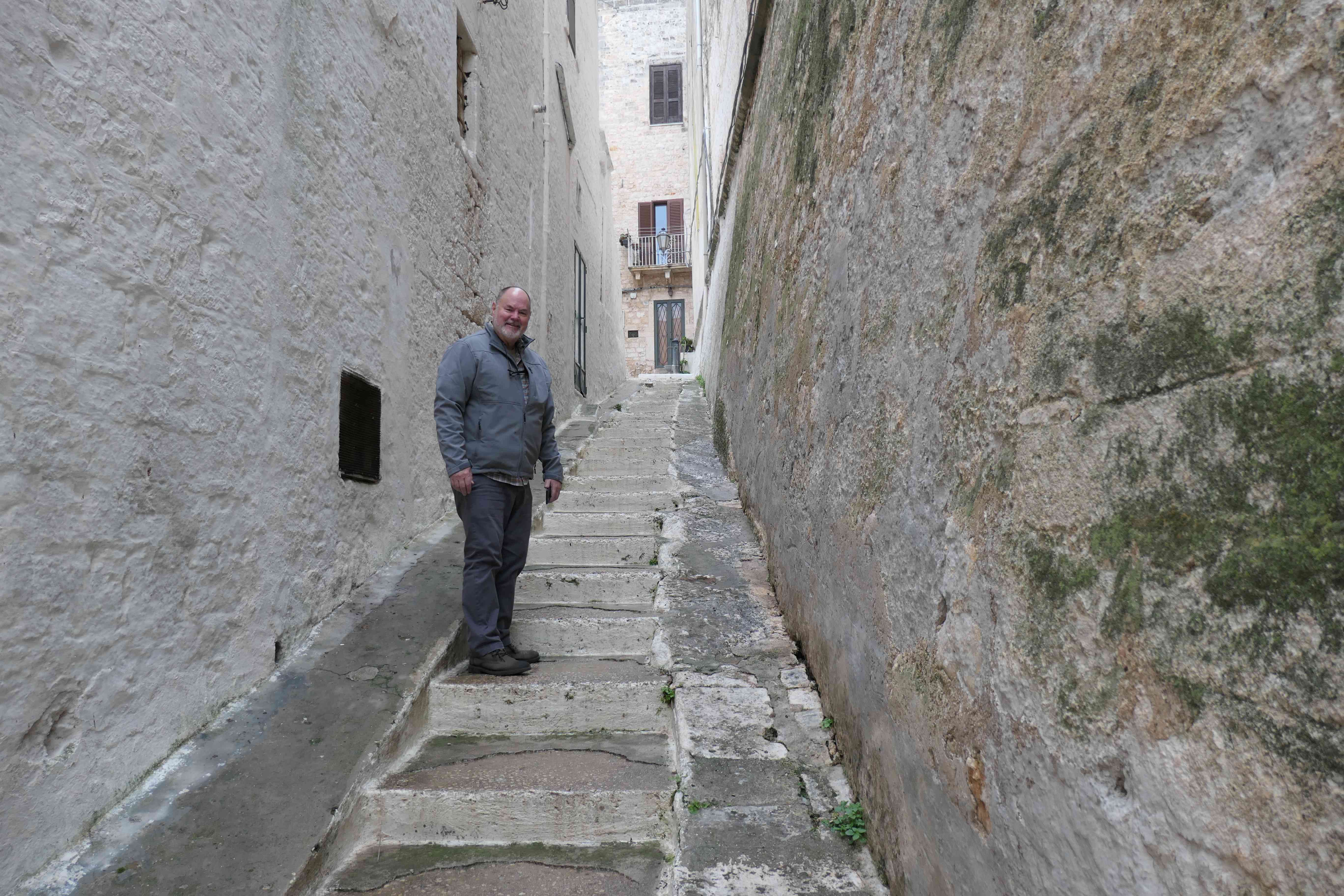
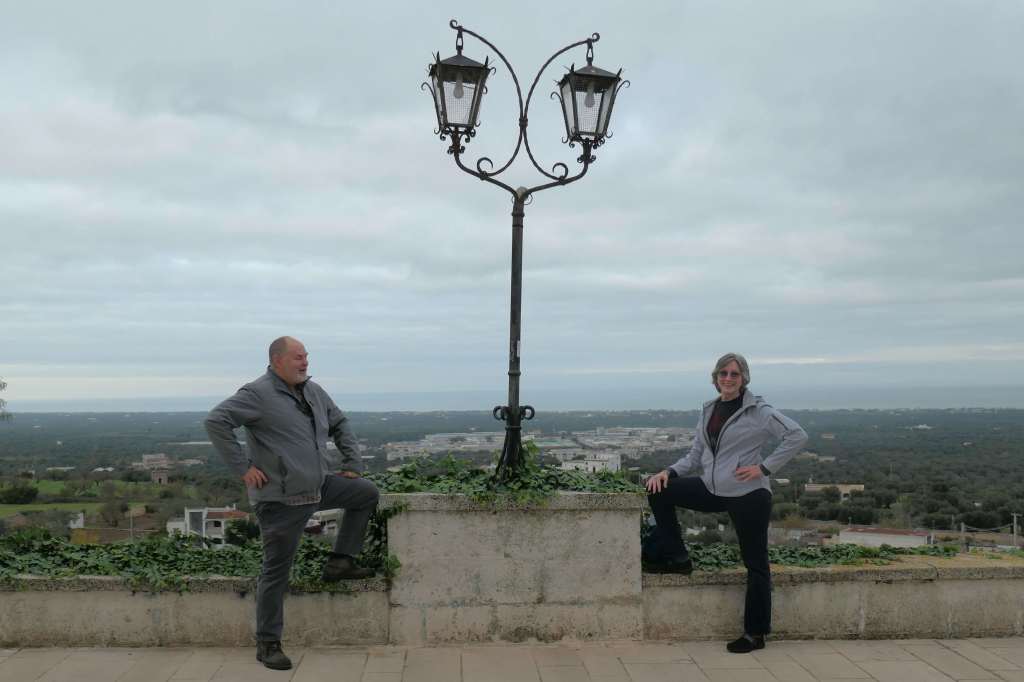
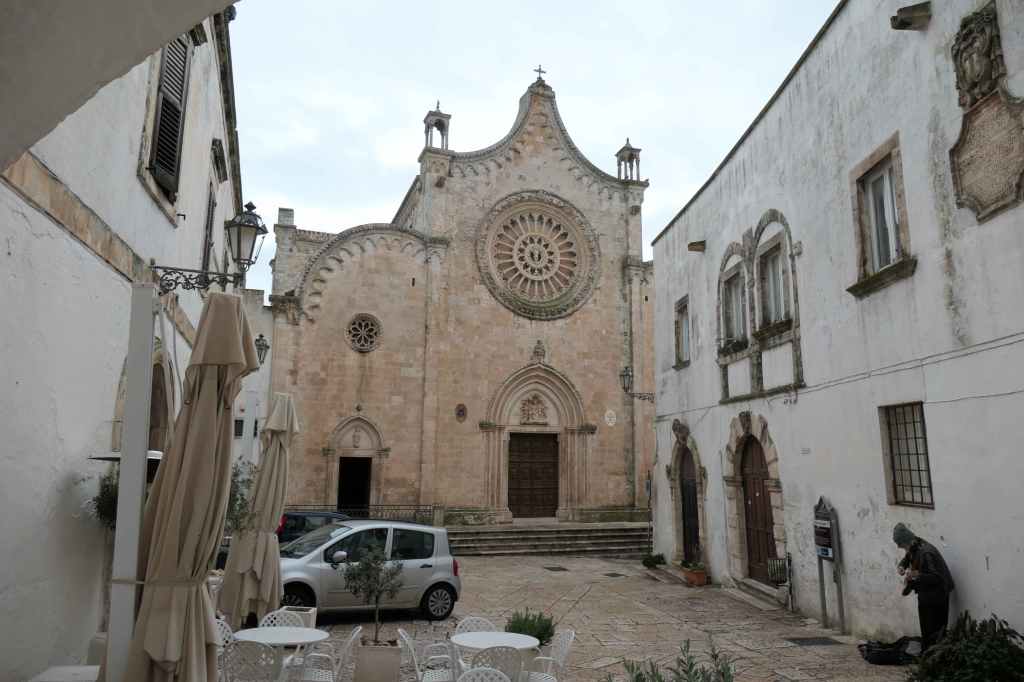
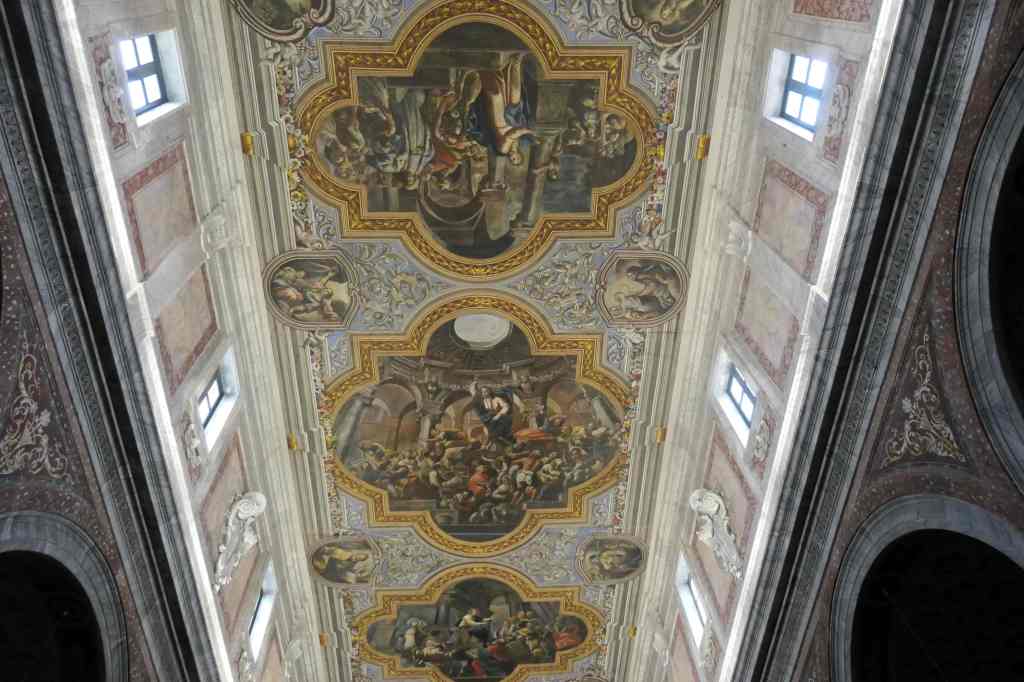
After stopping by the historic cathedral in the center of town, we took a moment to clown around with the architecture and take in the view, where we met a nice young man from the United States.
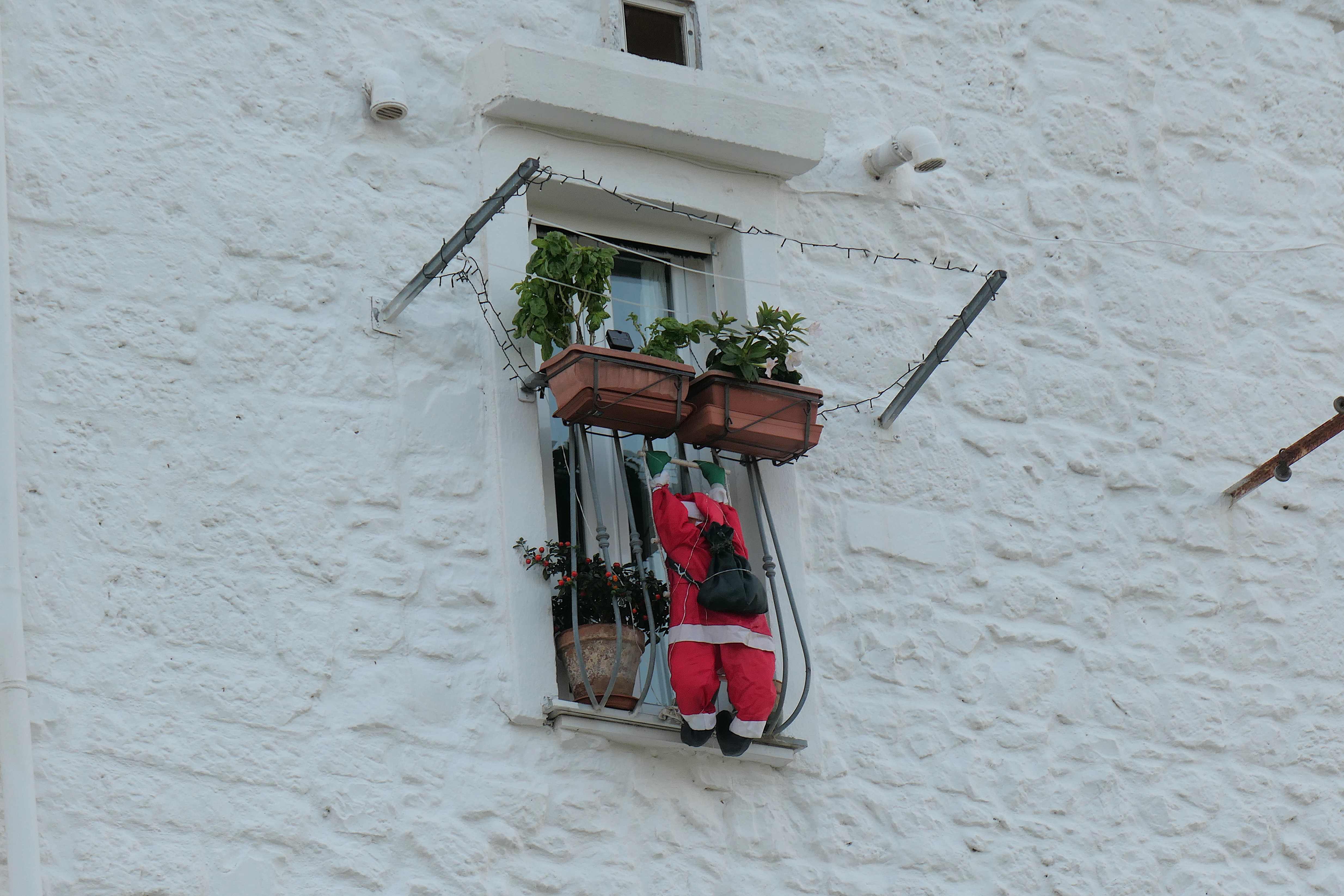
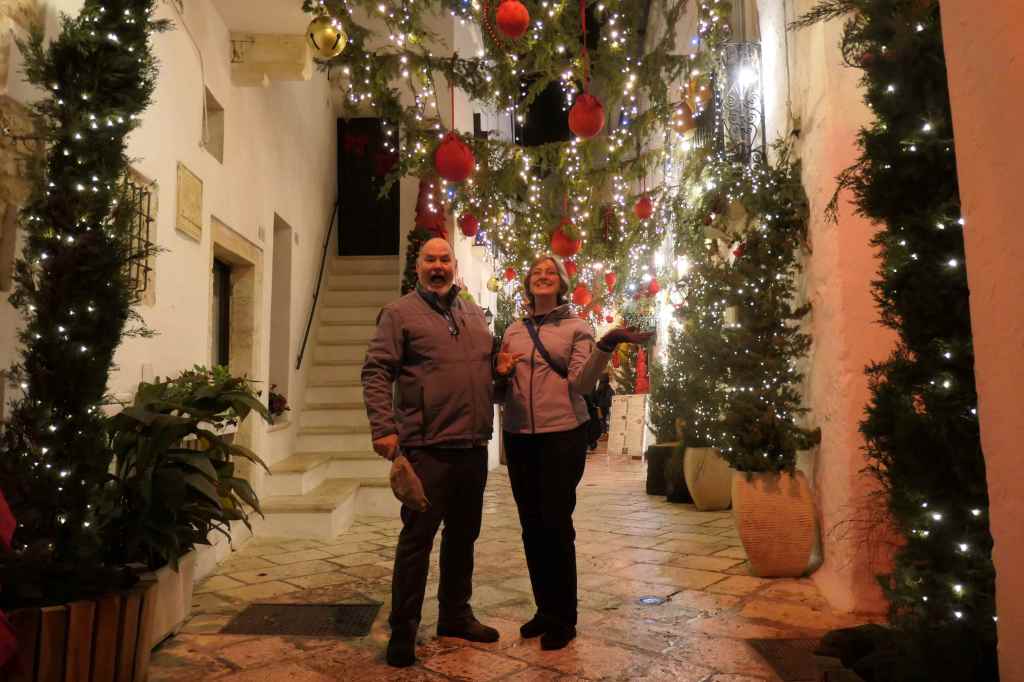
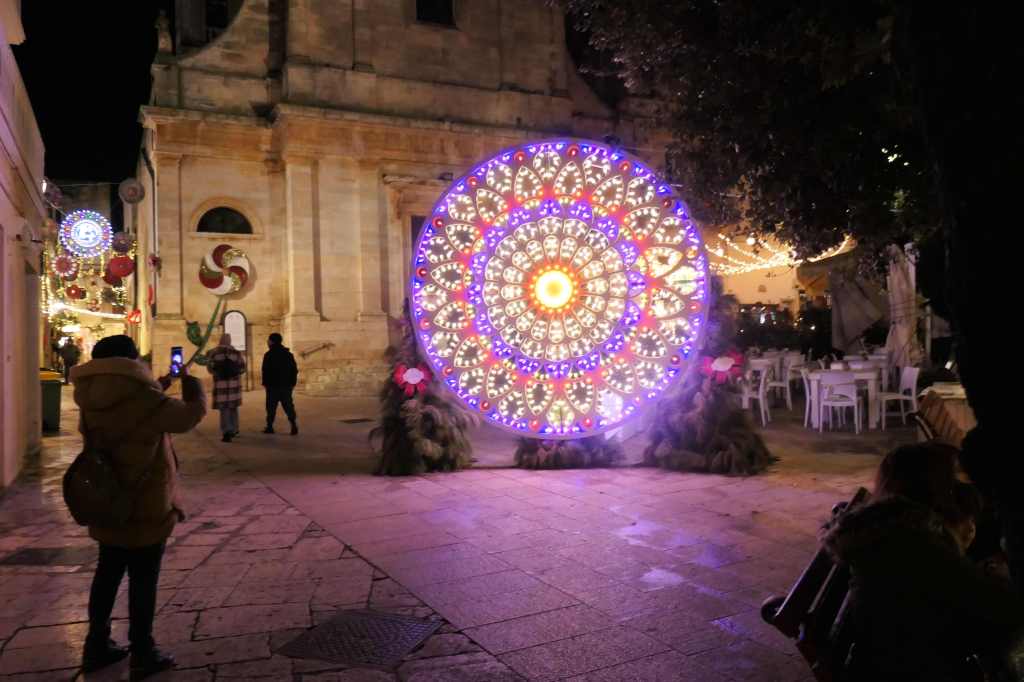
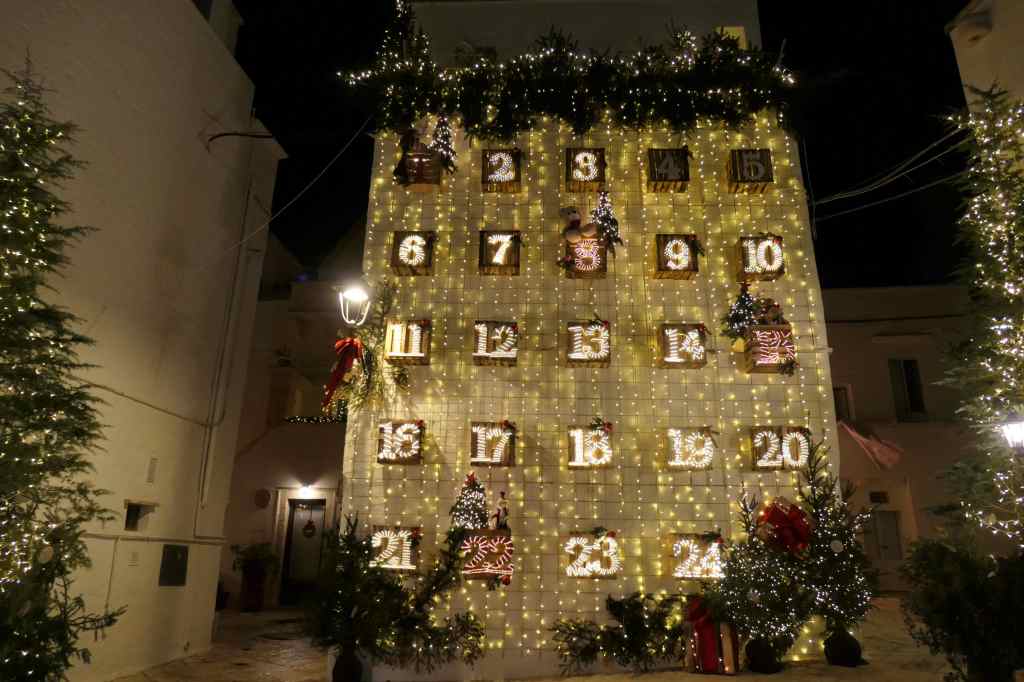
On the way back to the rental, at the suggestion of our host, we explored another charming, white-washed hilltop town to sip hot chocolate and enjoy the Christmas lights. Locorotondo, a town within the Metropolitan City of Bari, is a winner of the coveted “Most Beautiful Villages in Italy” award, and on this night, the town was wearing lots of sparkles!
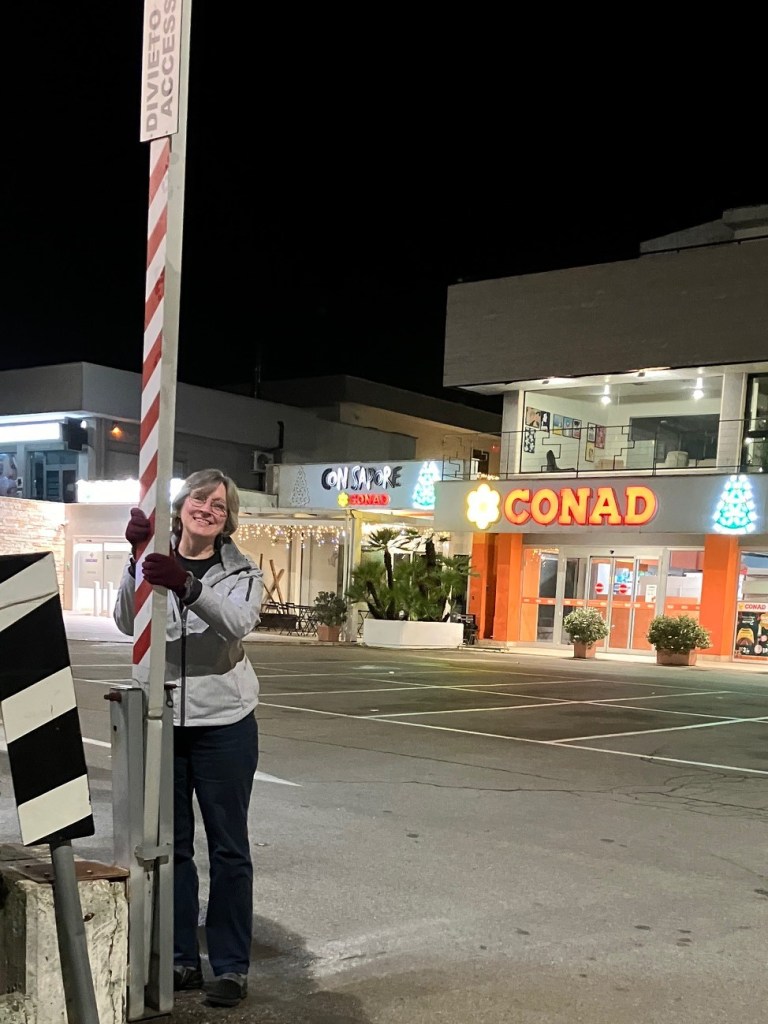
With all that walking, we’d worked up a fair appetite, so we stopped at a Conad market for dinner supplies. By the time we’d made our purchases, however, our appetites far exceeded “fair,” so taking the recommendation of a store employee, we stowed the purchases, left the car parked and headed “just across the street” to find the Fidelio Restaurant, which was, 1) a bit further than expected, and 2) … CLOSED.

Todd thinks, hmm what’s that lit up a little farther down the street? With some help from Google, he made a call. (Reservation? Yes, please, can you take us in ten minutes? We’ll walk slowly. 🙂 )

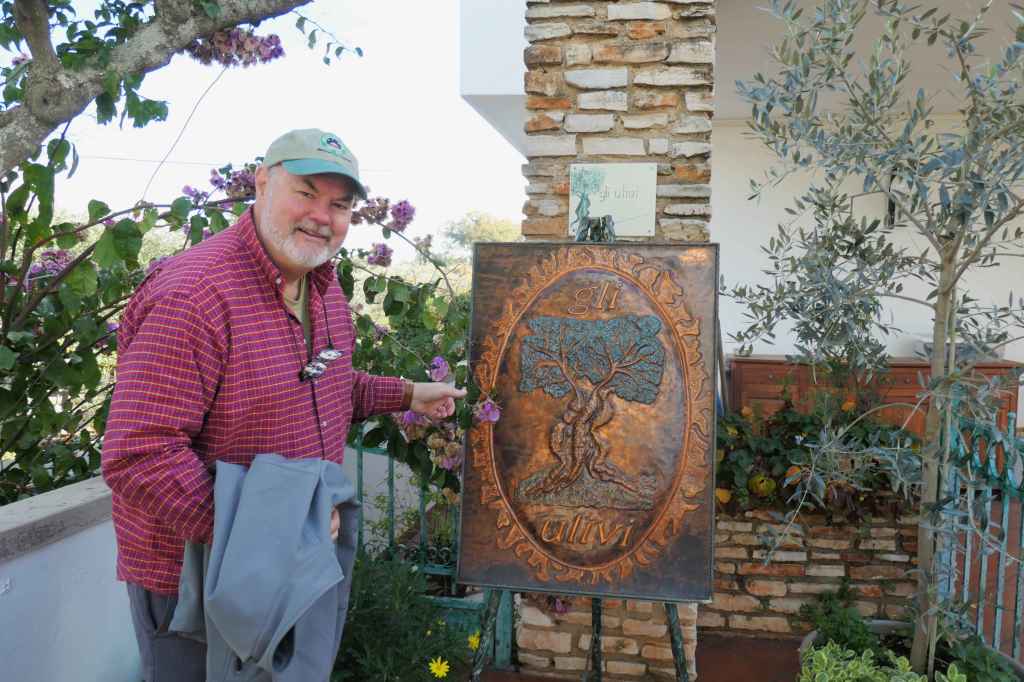
We arrived to find the lively Restaurant Gli Ulivi (“Olive Trees”) packed with locals. The prices were more than fair, and the food was great! We met and enjoyed chatting with one of the well-spoken principals, Vito.

With full bellies and restored spirits, we cheerfully headed back to the parking lot to retrieve the car but arrived to find the grocery store closed and gates blocking both entrances to the street. Our car sat all alone, locked in!

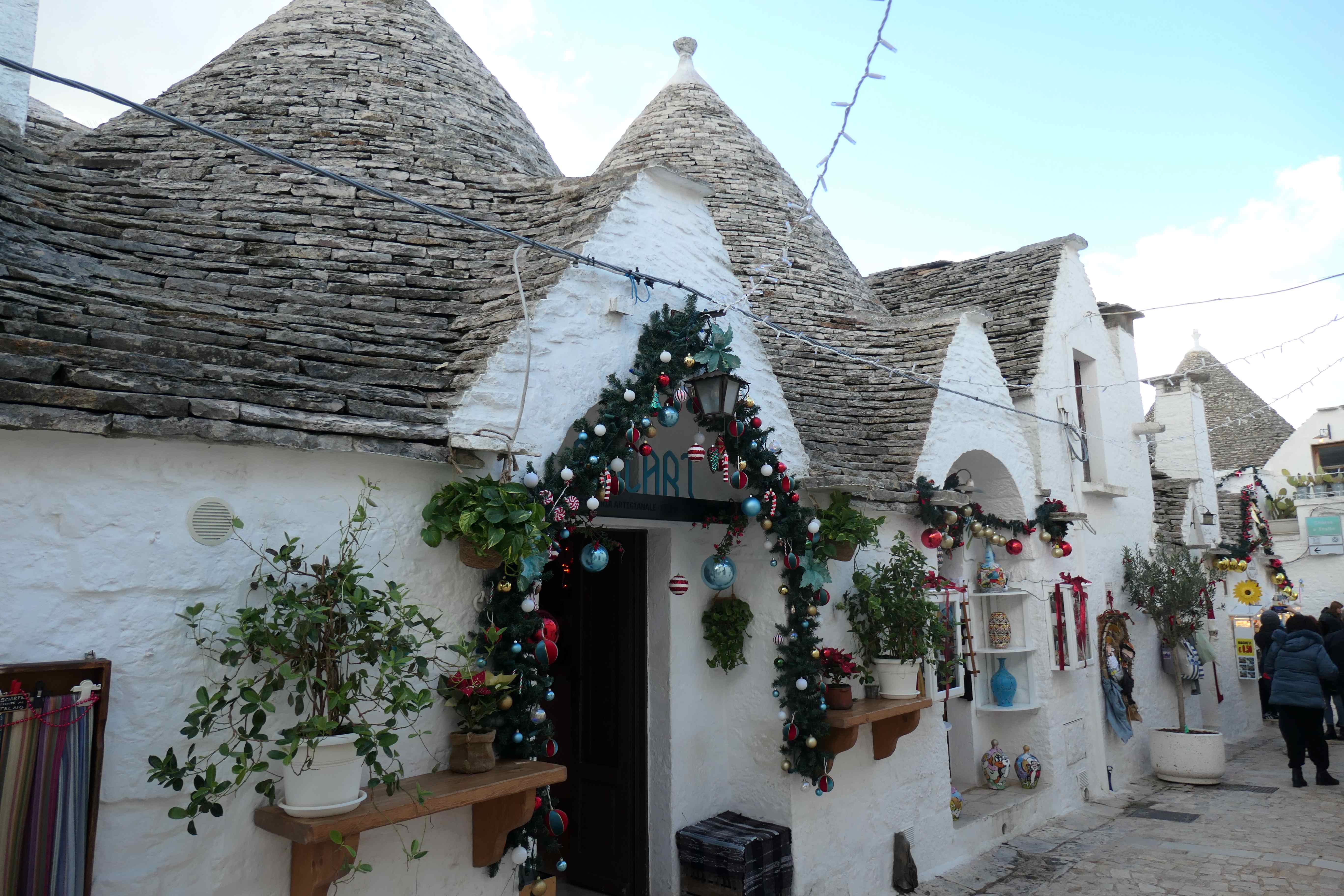
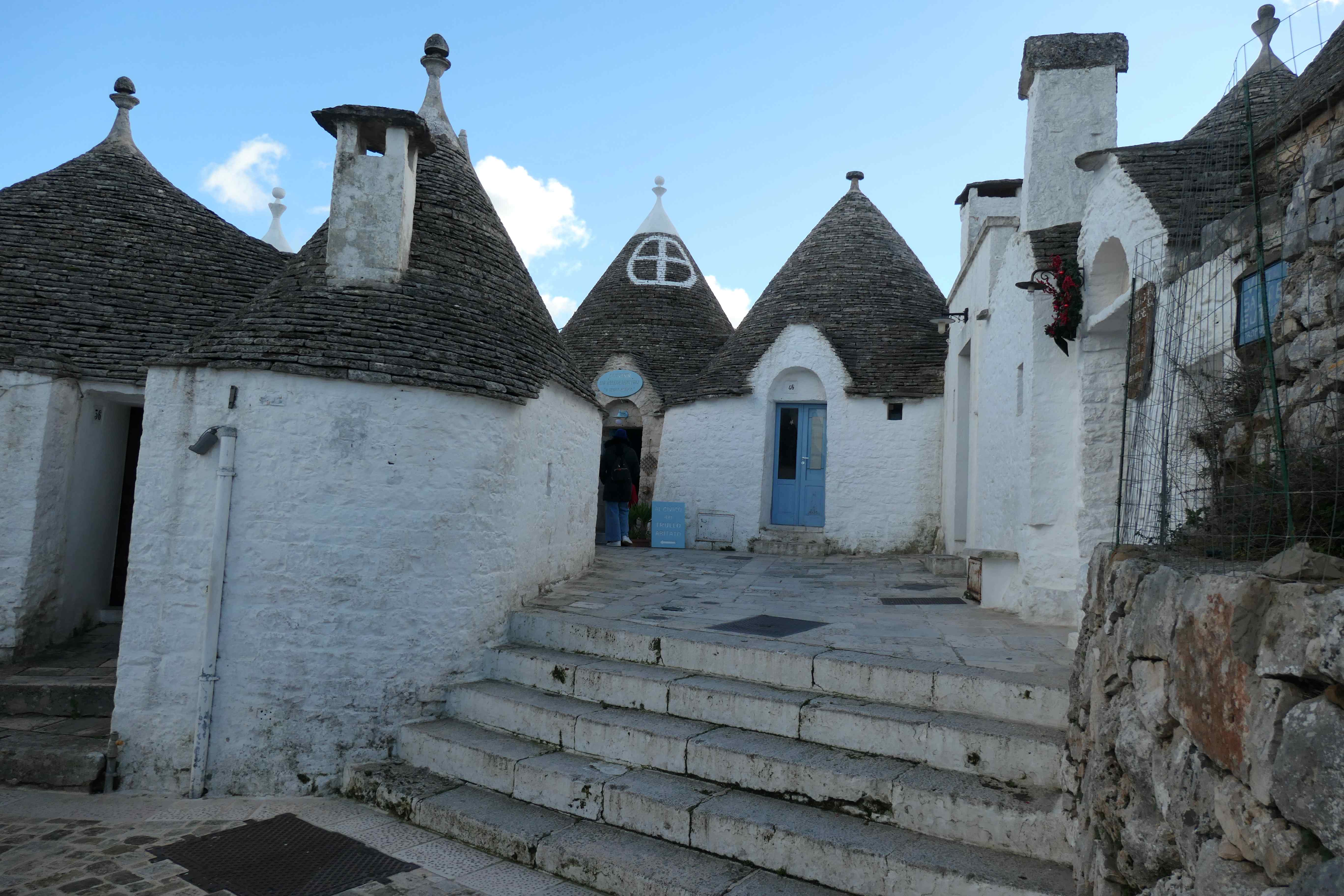
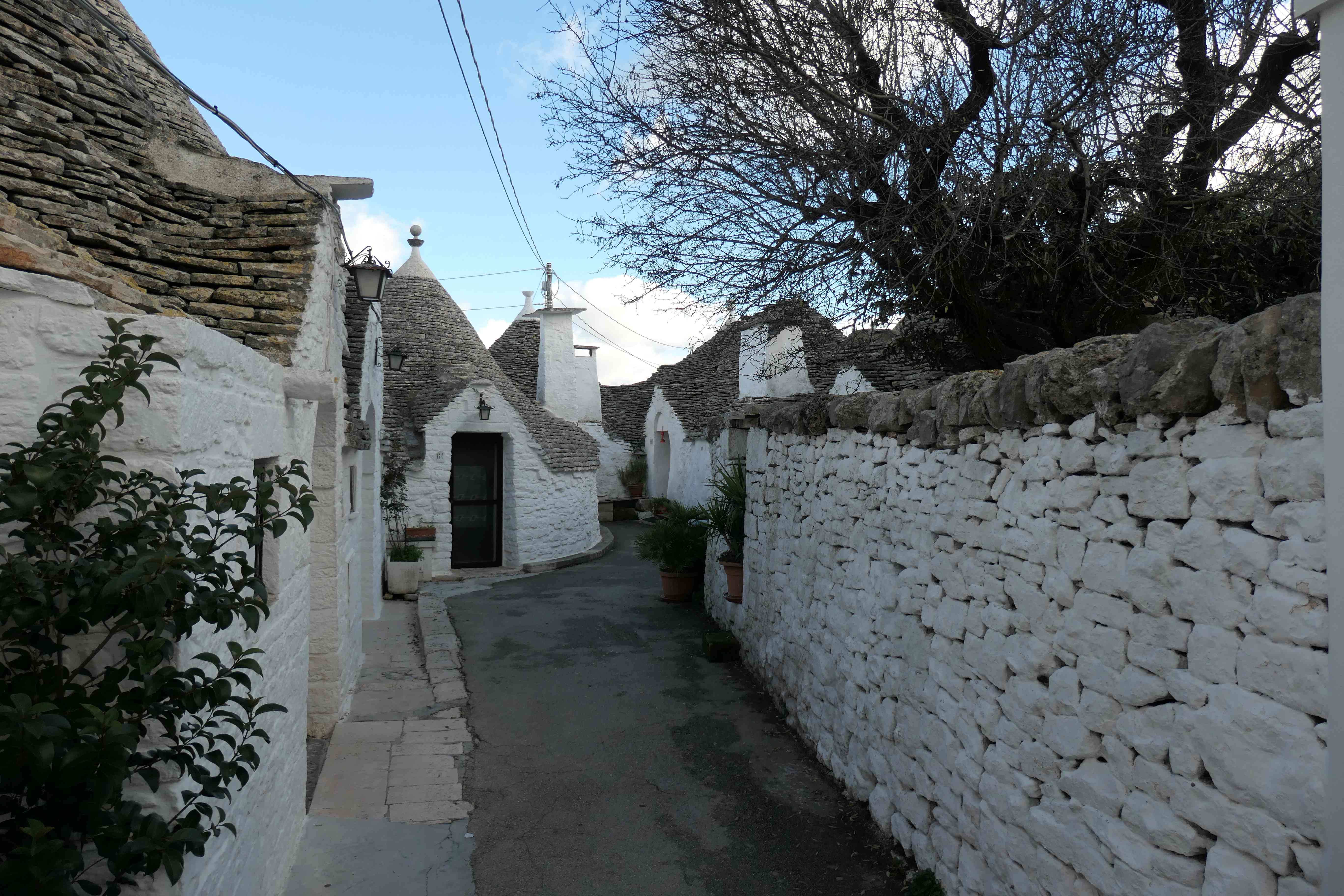
We chose the area near Alberobello for our stay in the boot specifically for the opportunity to sleep in a trullo. But just what is a trullo?

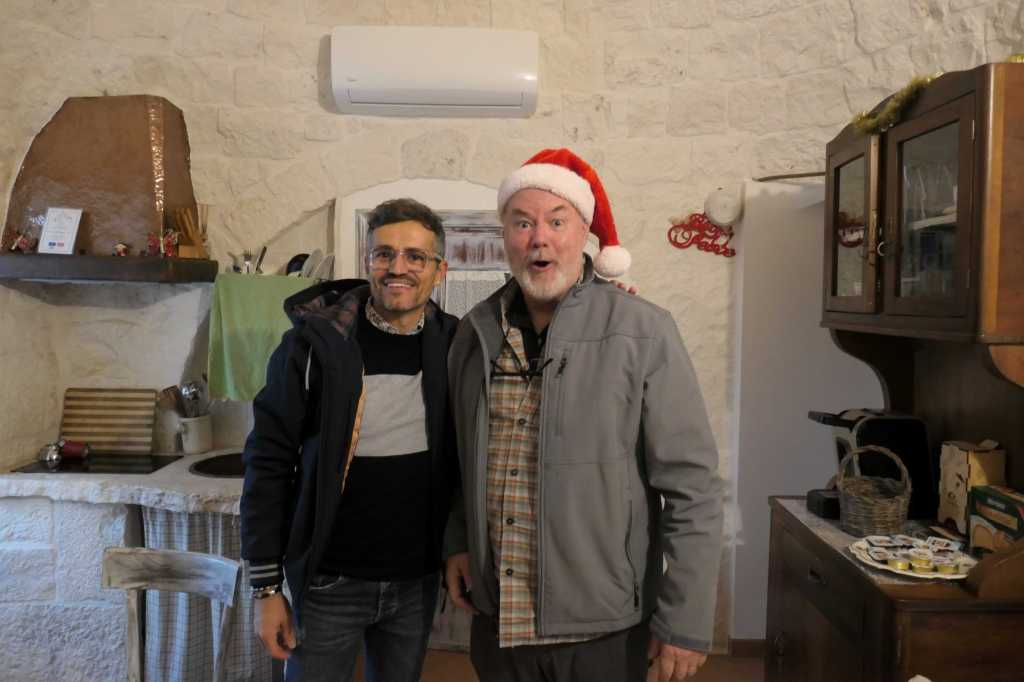
Using Google Translate, our host, Angelo, proudly provided the history of his trullo, which has been in the family for three generations.

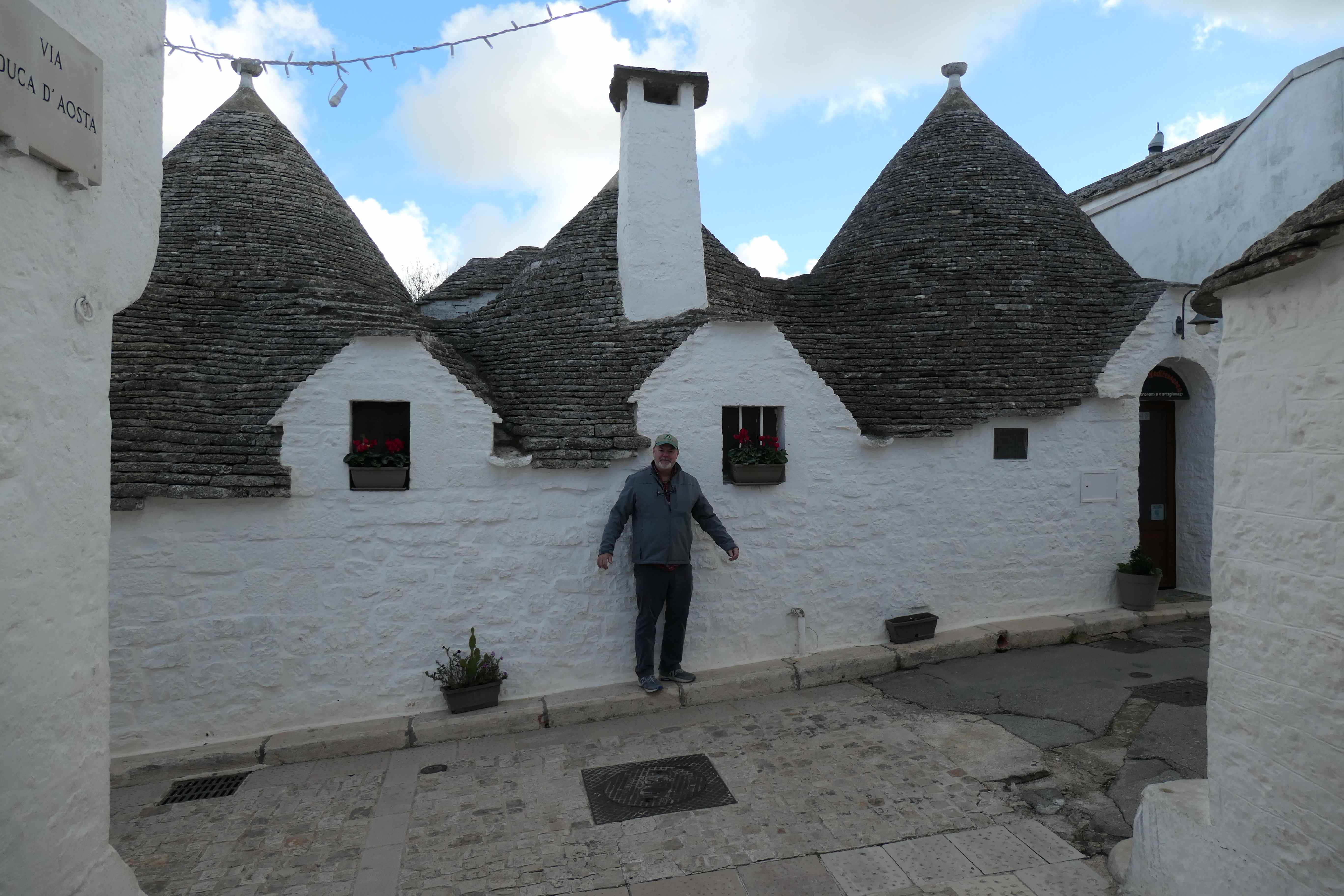
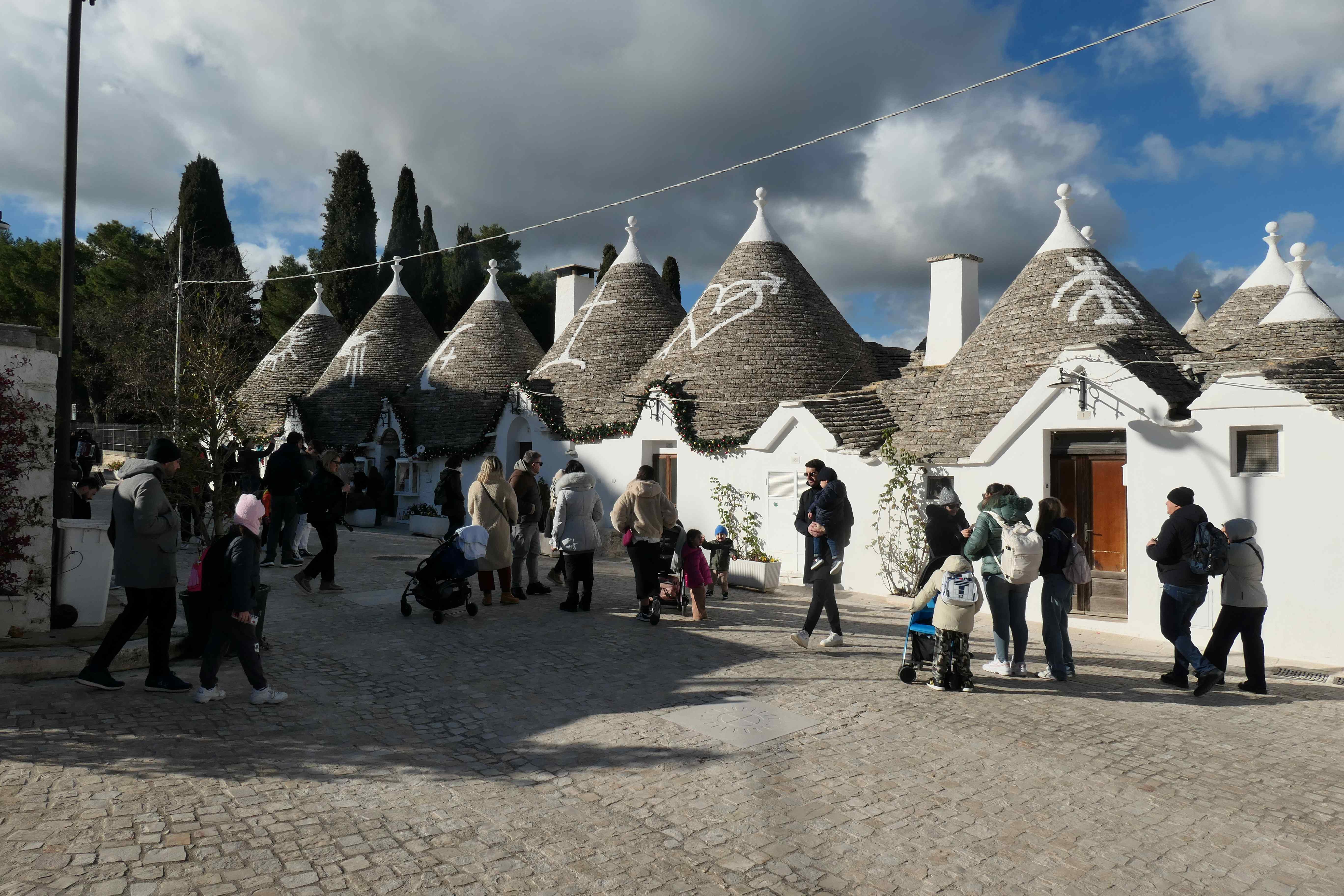
Specific to the Itria Valley in Puglia, trulli (plural of trullo) are dry-stacked stone huts with walls exceeding three-feet thick and double layer conical stone roofs. Originally built as temporary field shelters or, as in Angelo’s case, storehouses for grain, they became simple, efficient homes that could be enlarged as the family grew or “easily” torn down when the tax inspector was in the area. The rooftop pinnacle stone represented the signature of the stonemason and that the trullo was finished and now occupied.

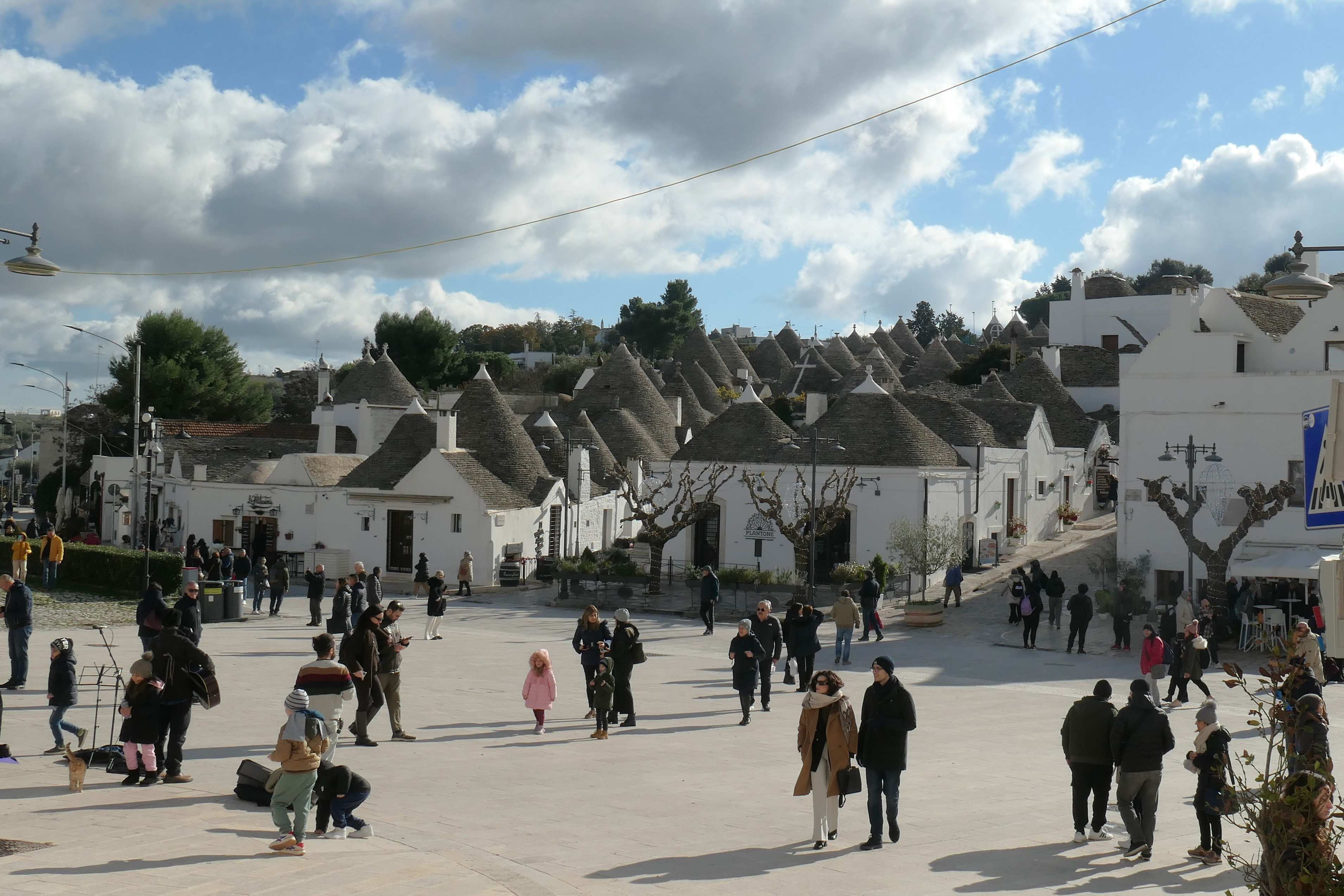
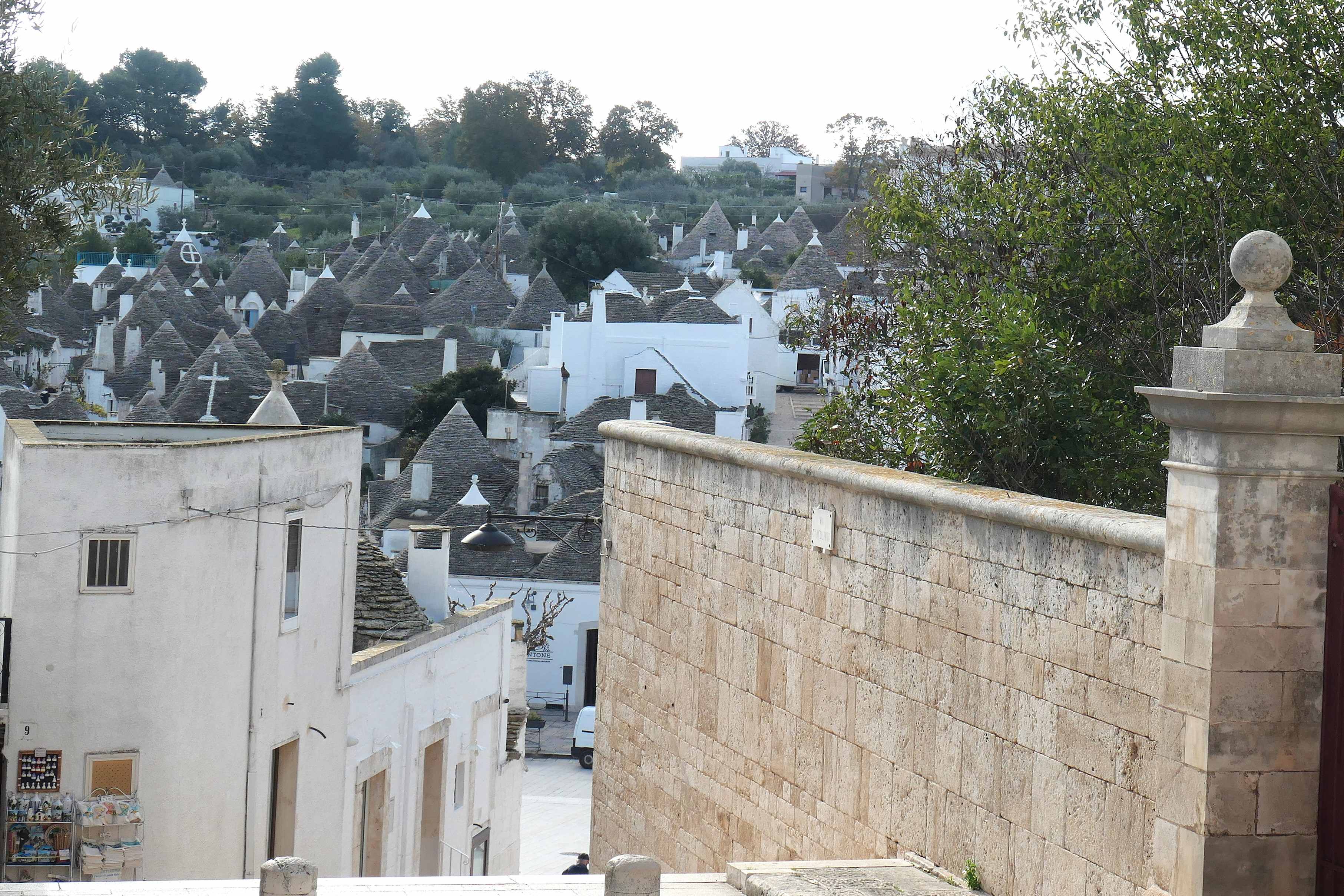
After we’d been introduced to the history of Angelo’s family trullo, we headed to the enchanting town of Alberobello, Puglia’s small town full of unique, stone-roofed trulli homes. A UNESCO World Heritage Site, Alberobello has also been awarded as one of the “Most Beautiful Villages in Italy.”
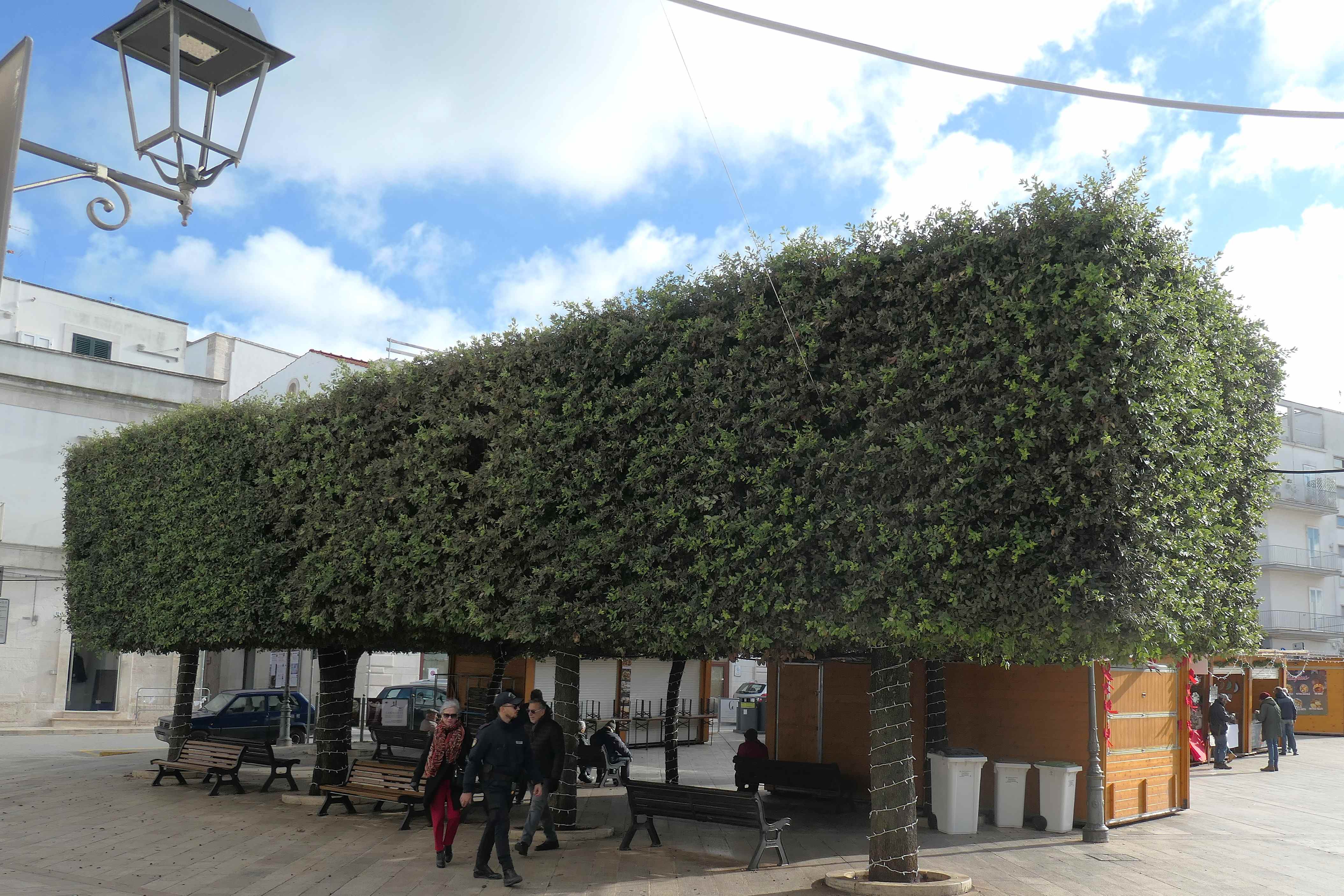
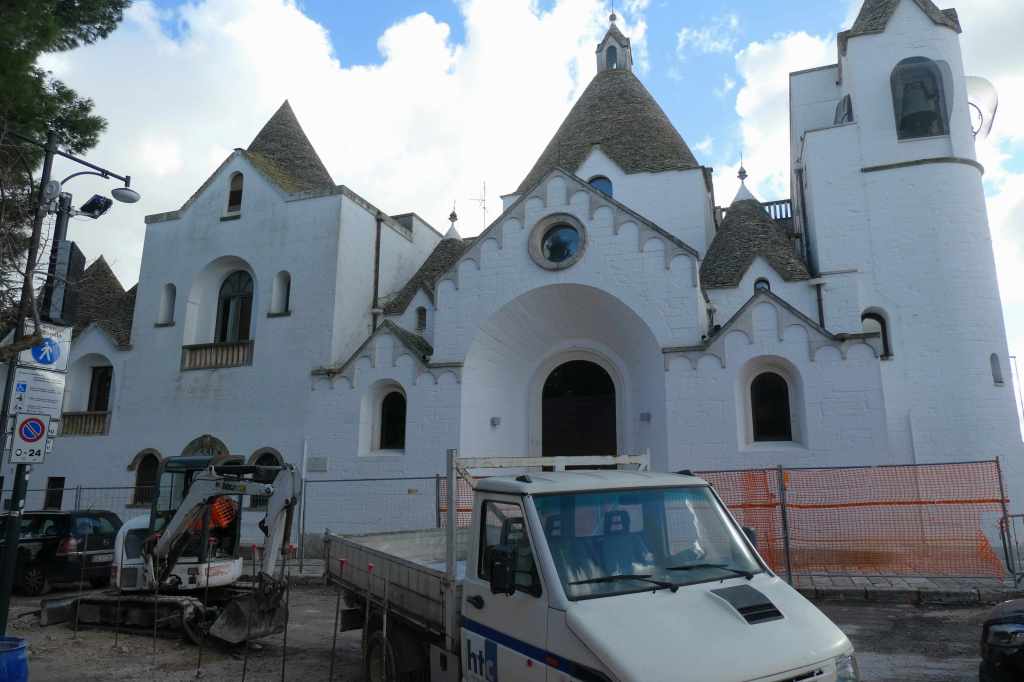
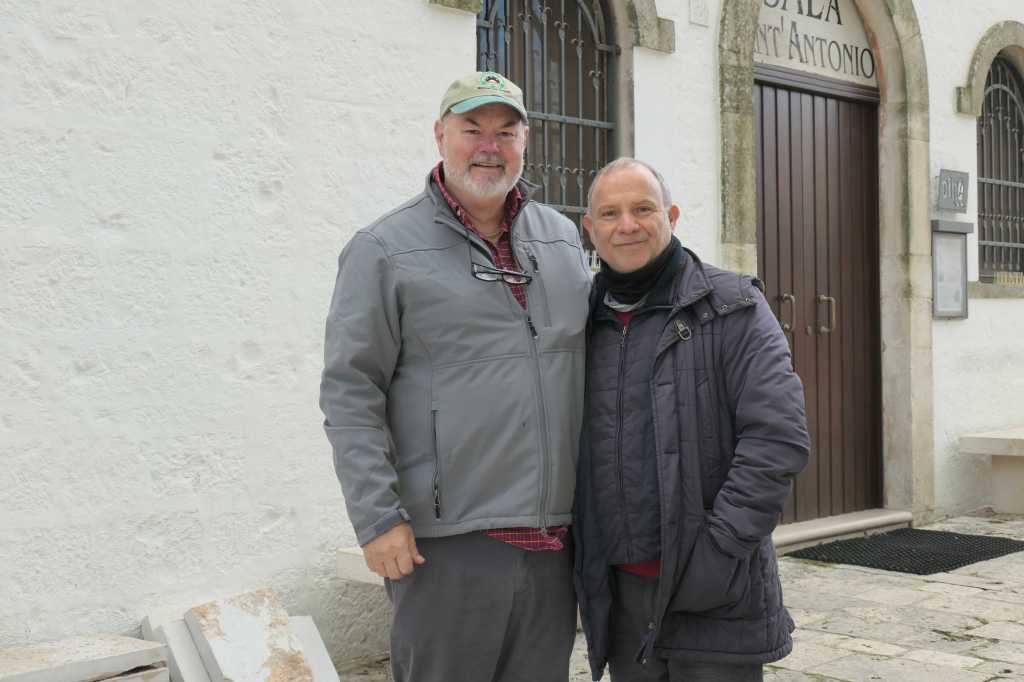
We made our way through the dual villages to the large church at the far end of the historic area to find it closed due to an exterior construction project. As we turned to retrace our way through Alberobello, we practically bumped into… Vito, from the restaurant the night before!
We’re going to miss all of the olive trees!
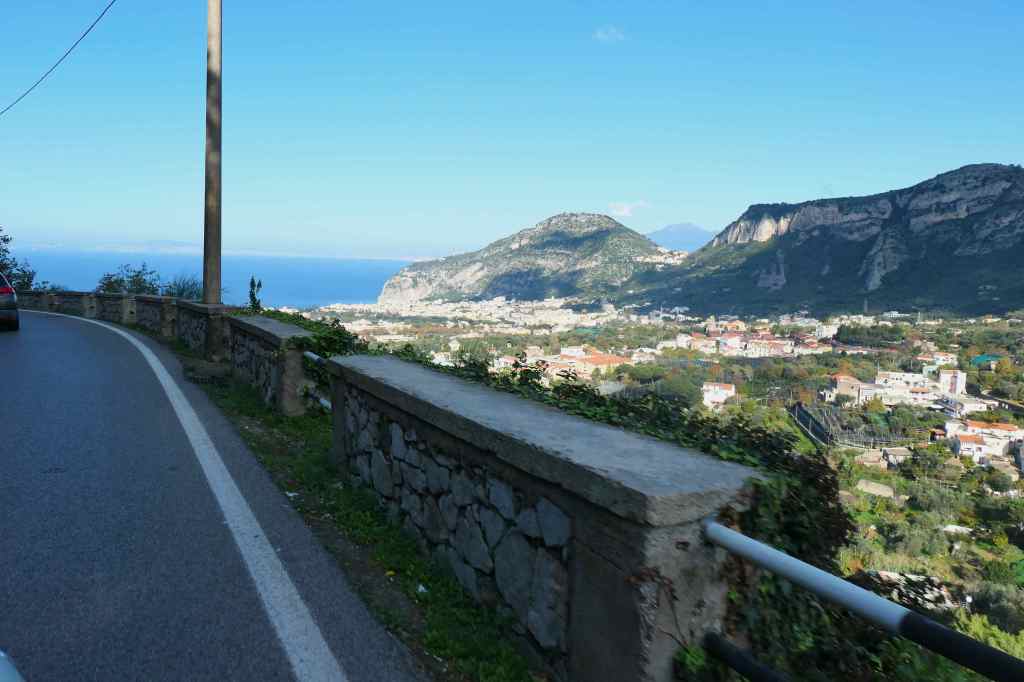
Amalfi… warm hearts

Now that we had our taste of Rome, it was time to move on. We reversed the process we’d used to get into the city by hiring a car service to take us to the airport to pick up another rental car for the rest of our adventure in Italy. (And we’d thought the first driver was a bit aggressive. This one? Mamma Mia, what a gutsy guy!)

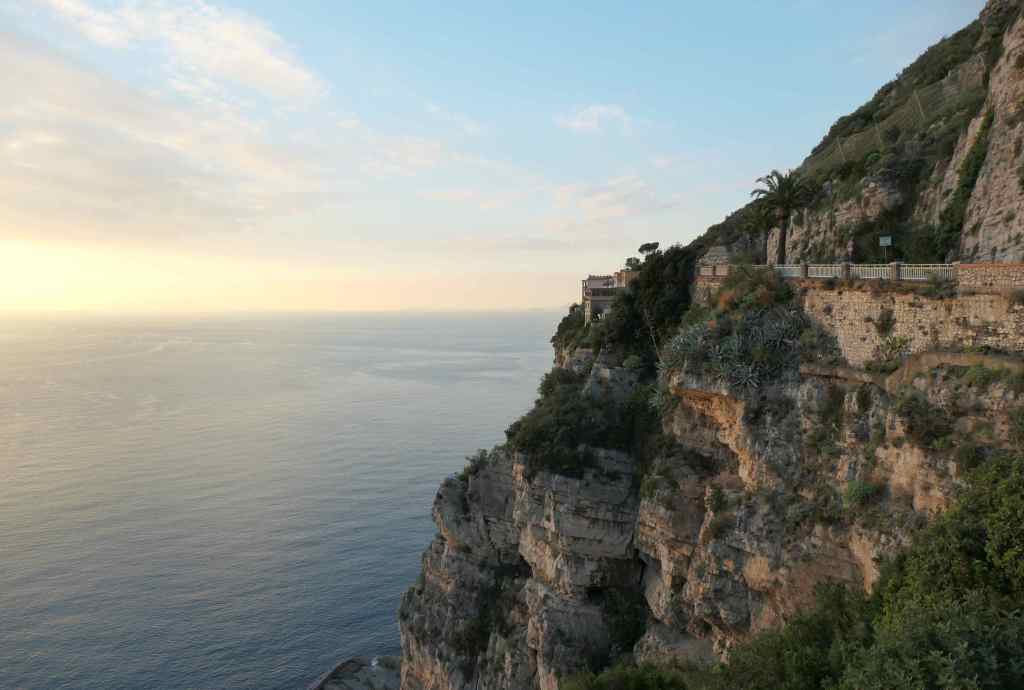
Mobile again, our next stop was Massa Lubrense, 16 miles southeast of Naples out on the Amalfi. The drive was spectacular, along the side of the mountains looking out at the sea as we skirted the city of Naples.

Ah, Naples! World famous pizza, here we come! A-n-d… oops. Our timing was such that the restaurants were between lunch and dinner service, i.e. closed. Seems like our MO.


Forget the pizza, Todd had another surprise for Susie at our next rental.

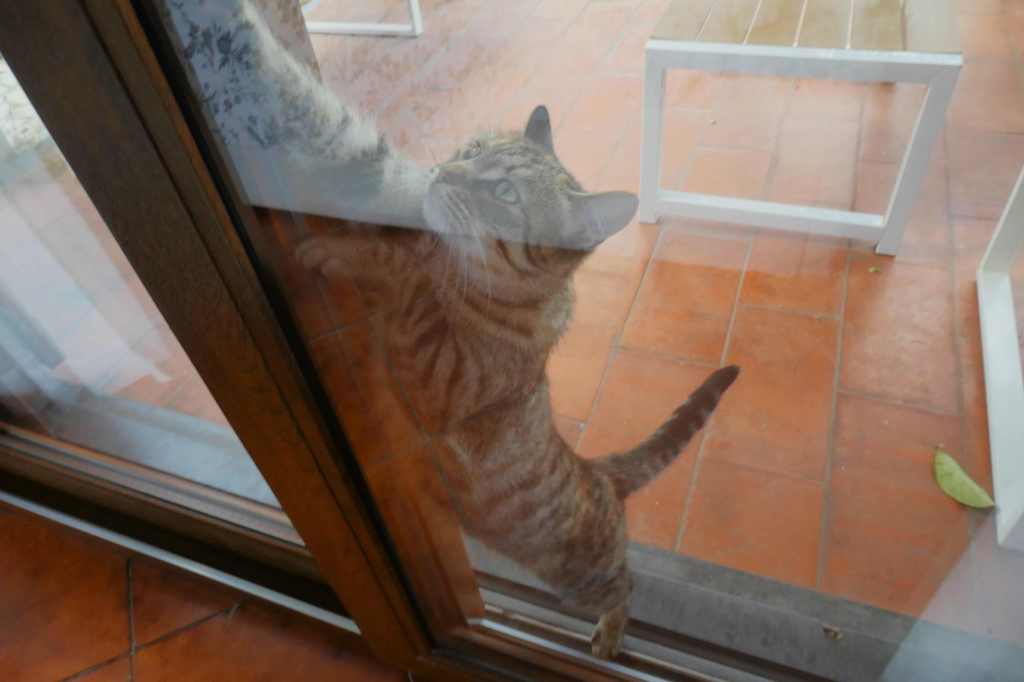
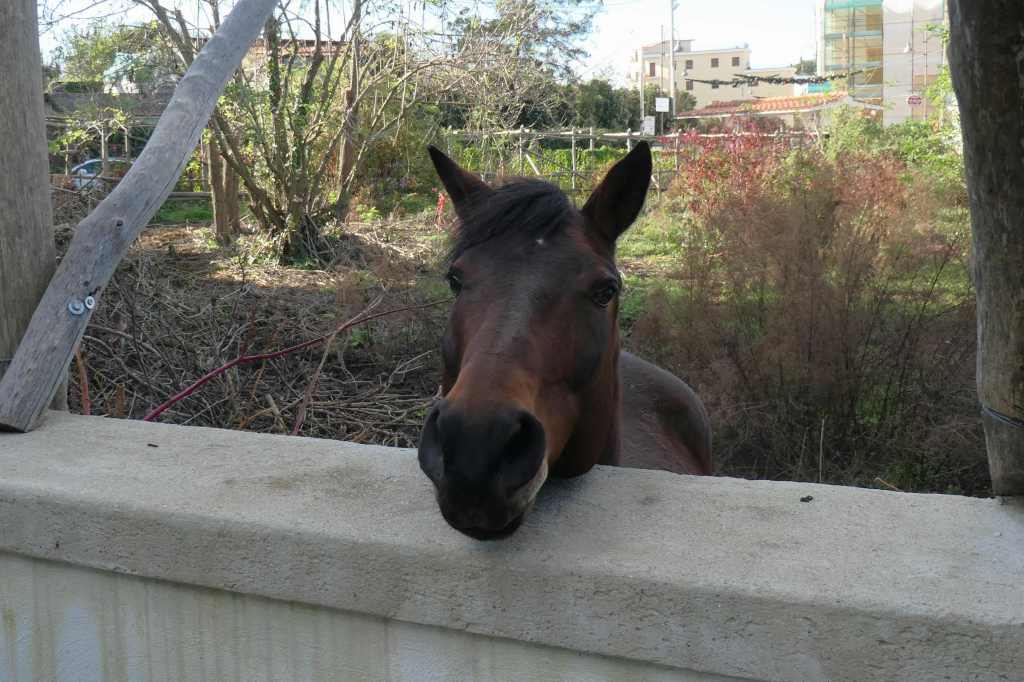
Federo had a little competition from another of the owners’ pets, a very clever gatto (cat).


Our host, Donato, had warmly greeted us and showed us around the apartment upon our arrival. During the first few days of our stay, we were able to meet Donato’s wife, Alessandra, and son Vincenzo, as well as their friend Rosa.

Next thing we knew, it was Thanksgiving. Time for a special meal! At least for the two of us from the United States. 🙂

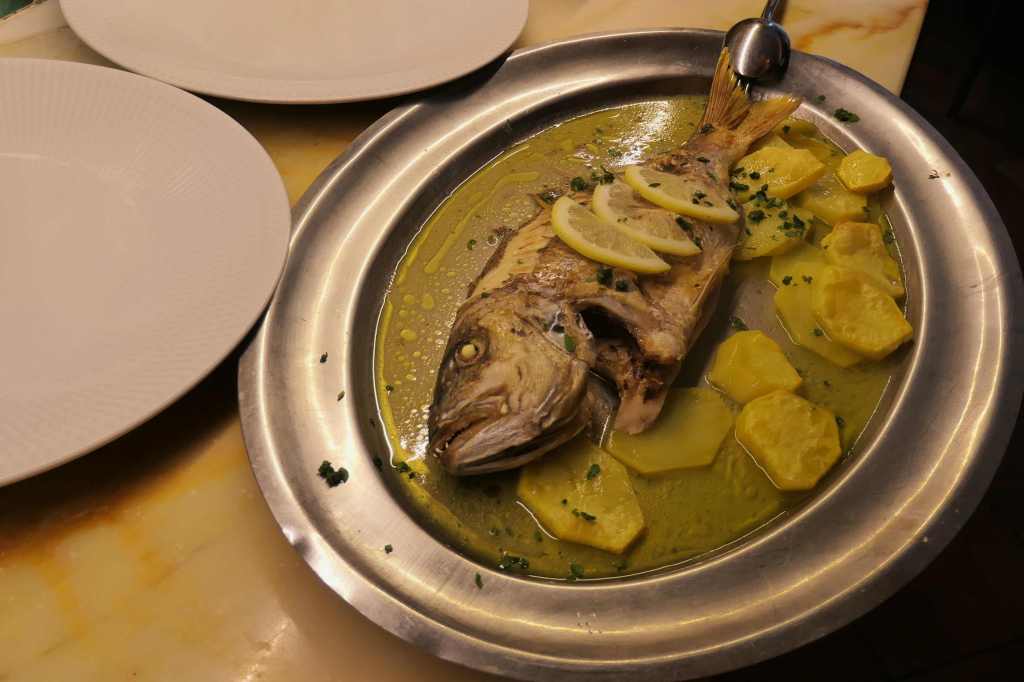
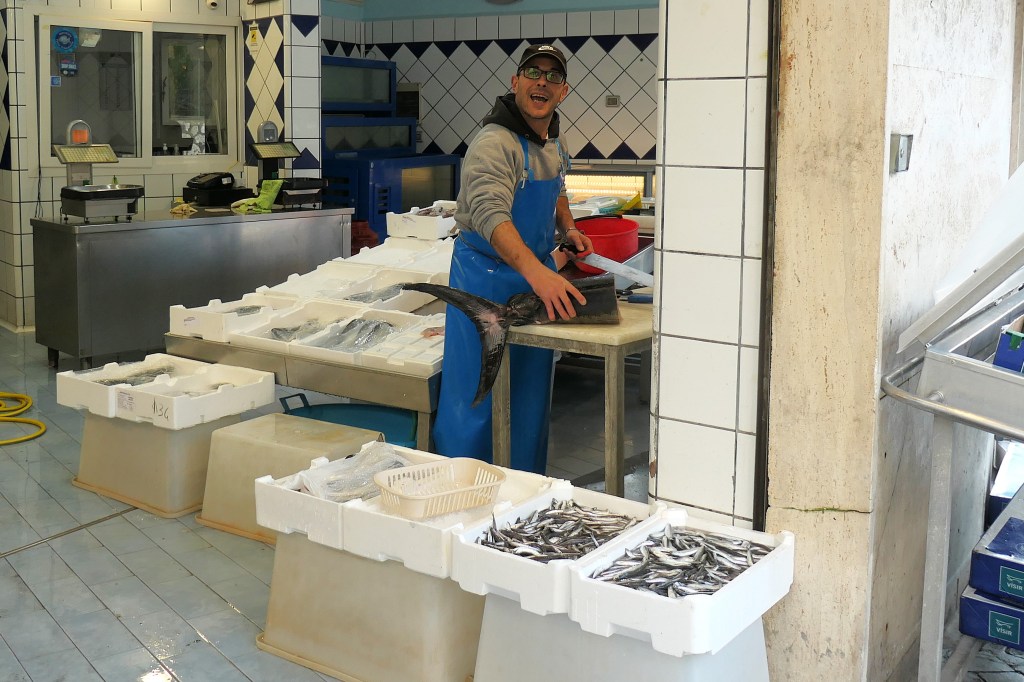
On Donato’s recommendation, we walked to Lo Stuzzichino Restaurant in the nearby village of Sant’Agata sui Due Golfi to enjoy a non-traditional feast. The owner, Mimmo, showed us to a table, then returned bearing a tray on which was laid a raw, whole fish, “fresh from the sea!” which he enthusiastically suggested for our dinner. Okay. Who are we to argue?


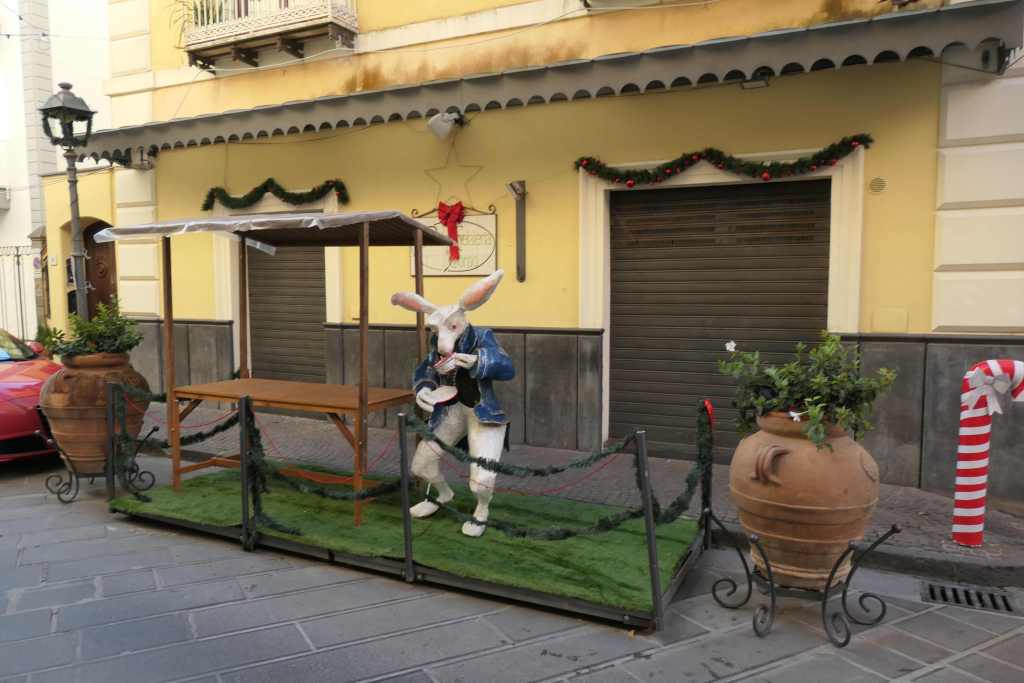
A few days later, one of the shopkeepers invited us to return for a Christmas Street Festival that evening. Lights. Food. Fun.


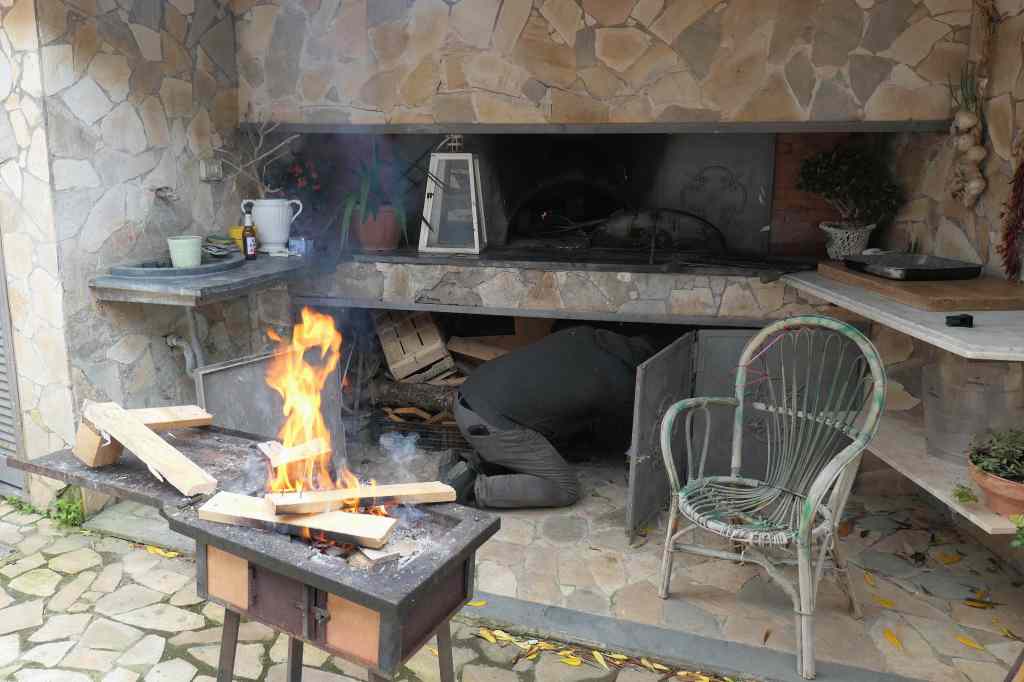
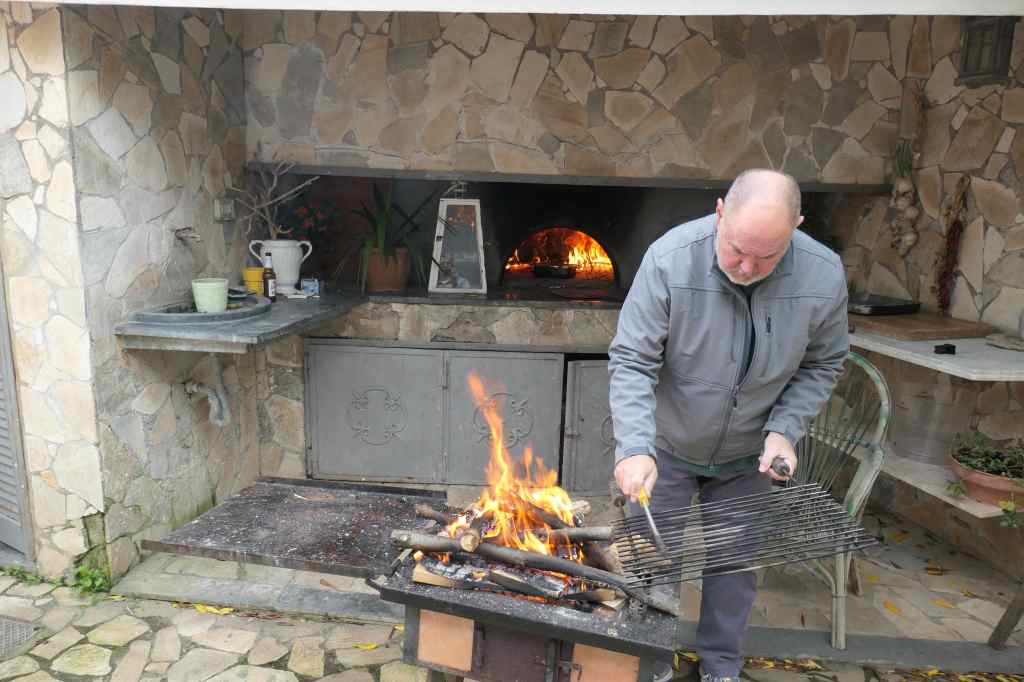
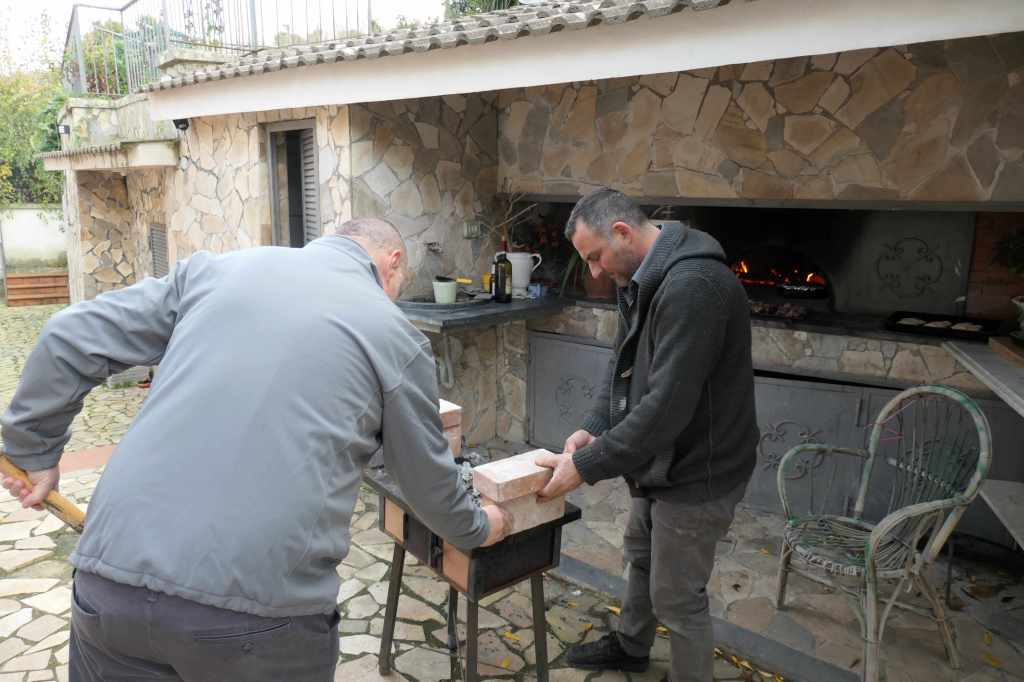
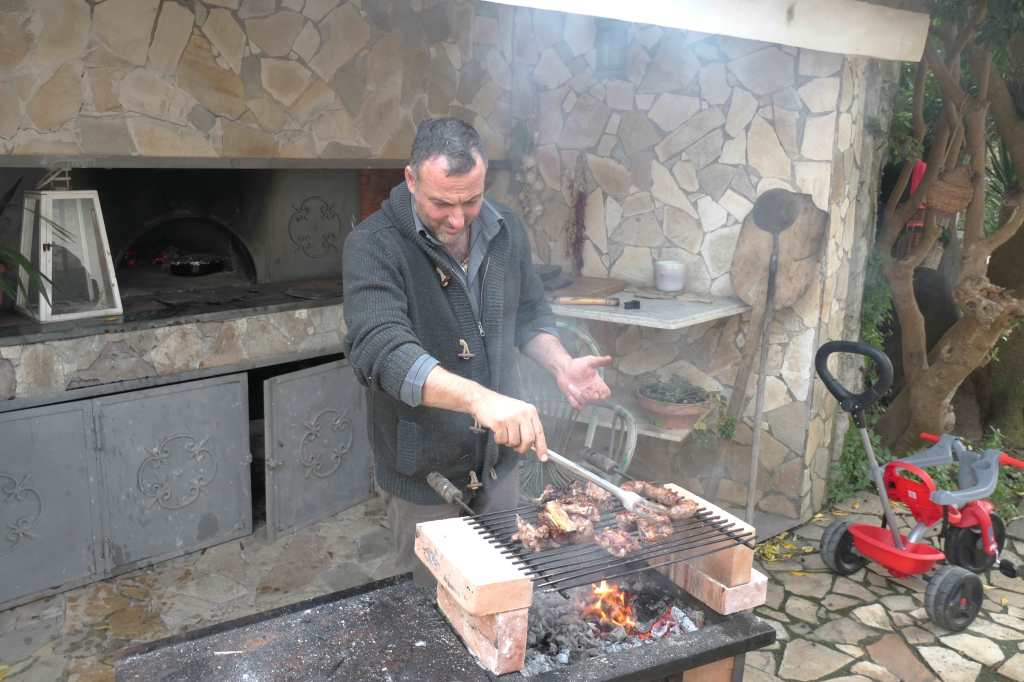
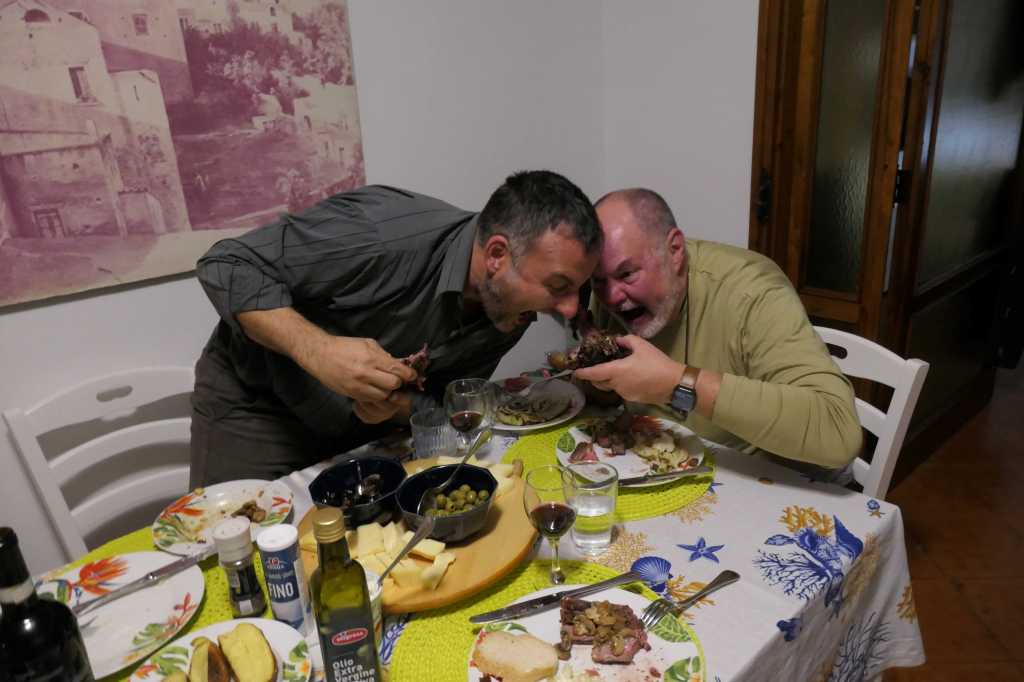
Donato stopped by frequently during our stay to ensure all was well and surprise us with small tastes of Italy such as fruit, sparkling wine, beer, pastries, bread, a fresh ball of Mozzarella, and milk straight from the dairy. One day he suggested we fire up the barbecue for some pork, Italian style. Heck yeah! We’re in!


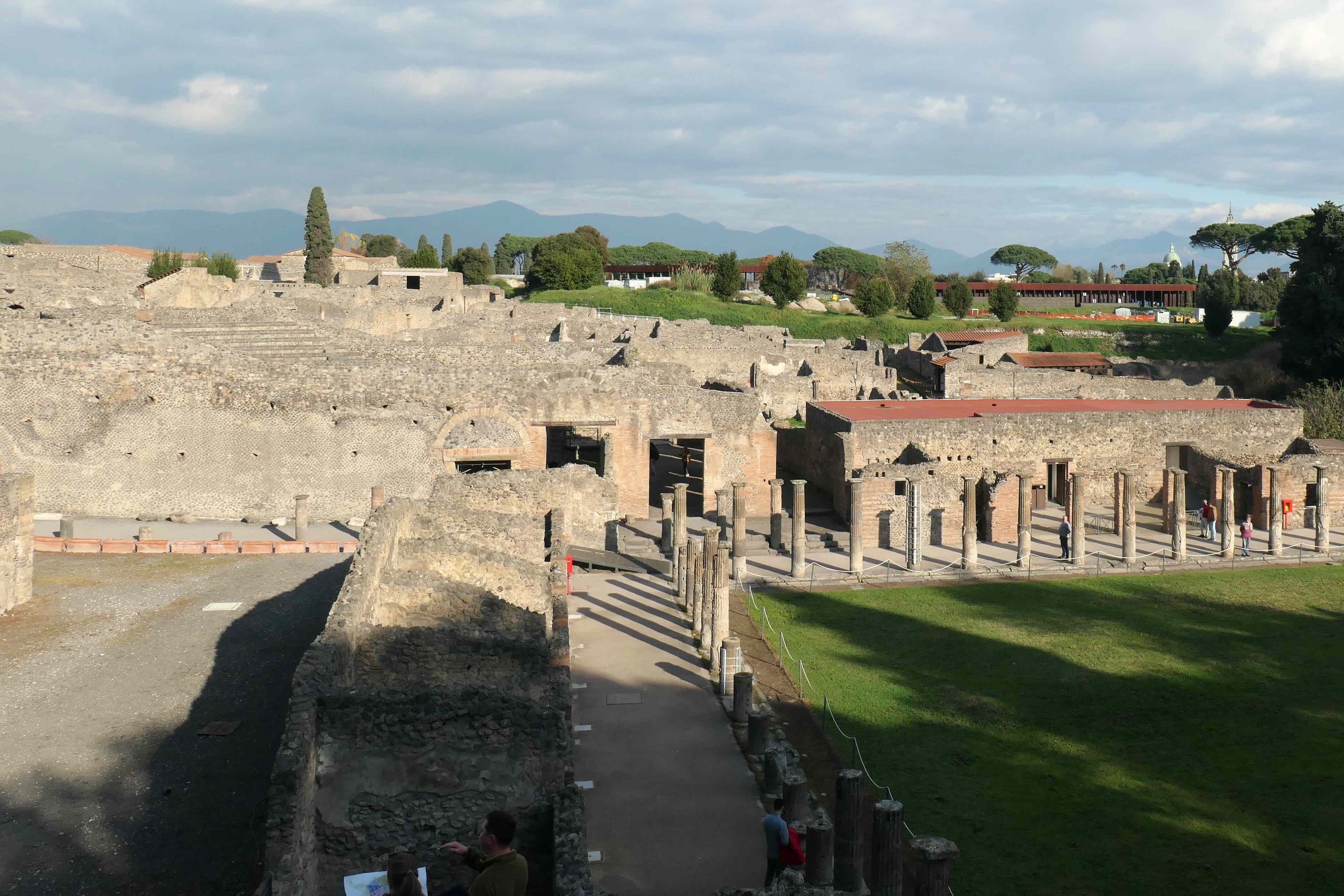
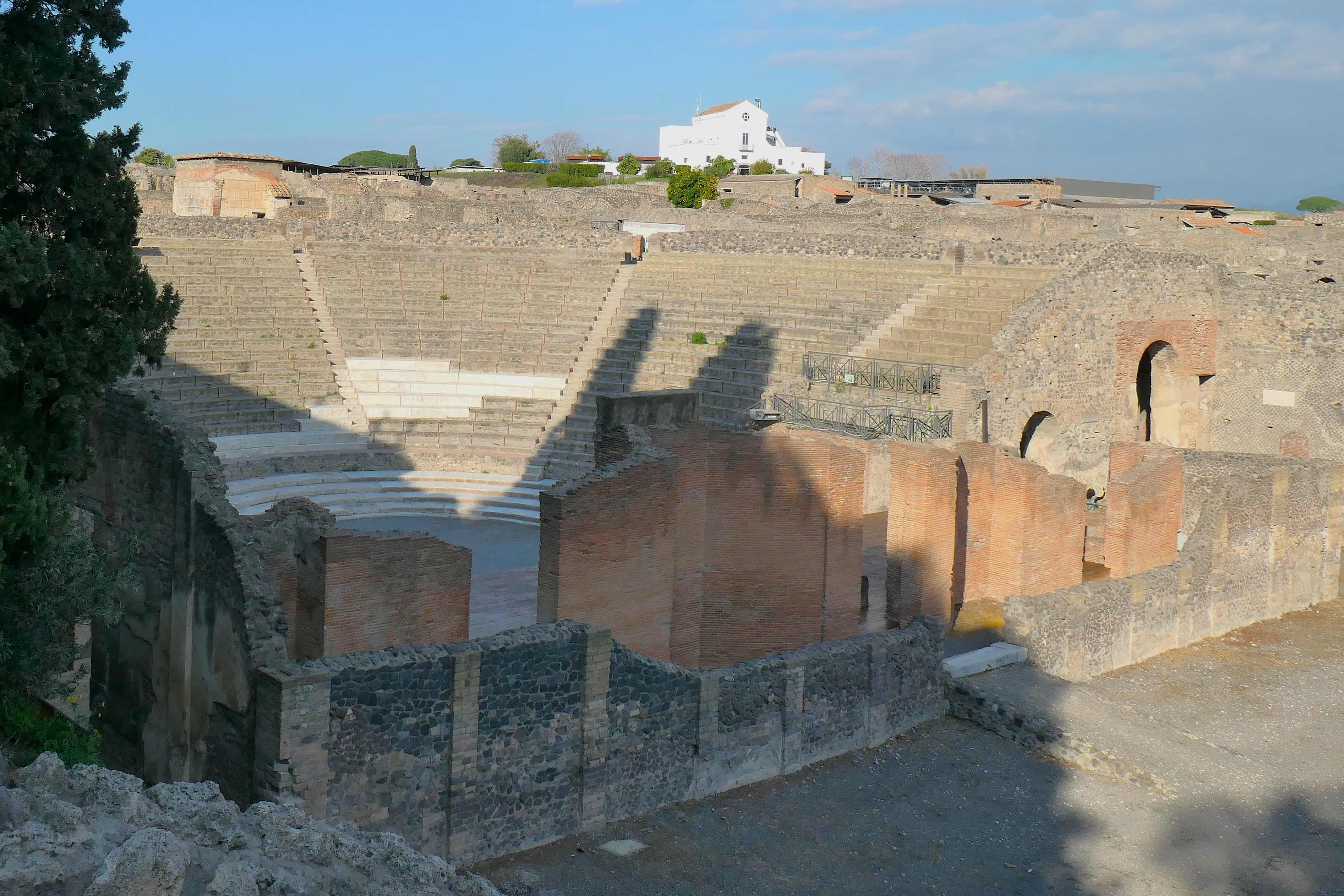
One of the things we were interested in seeing while we were this close to Naples was Pompeii.

Now, Todd, we know you love your history, but you agreed to keep the intro brief this time, remember?

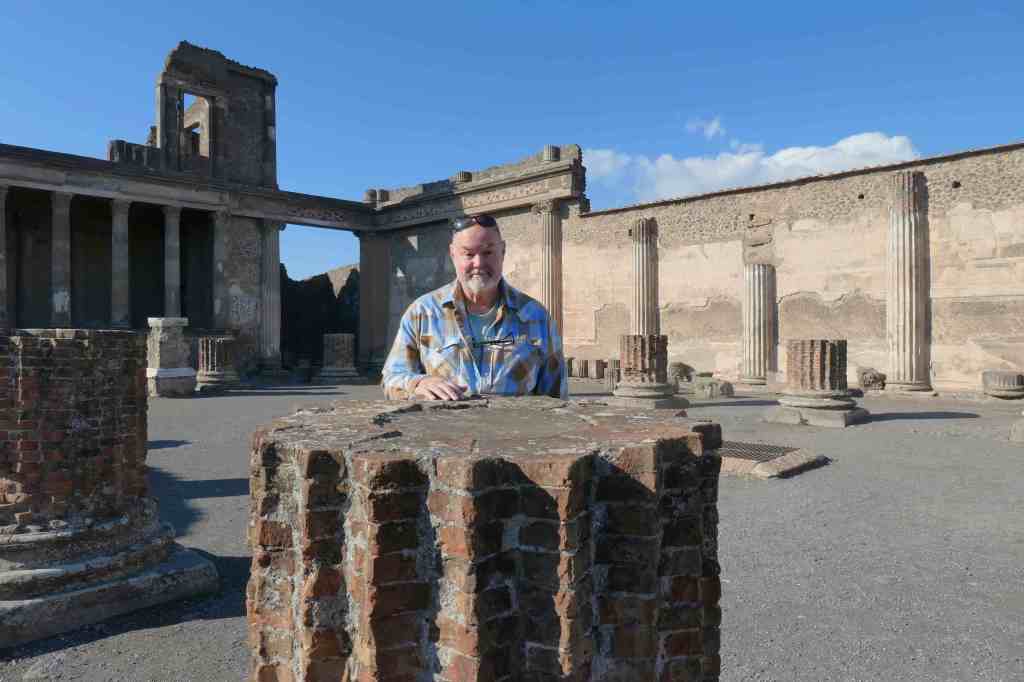
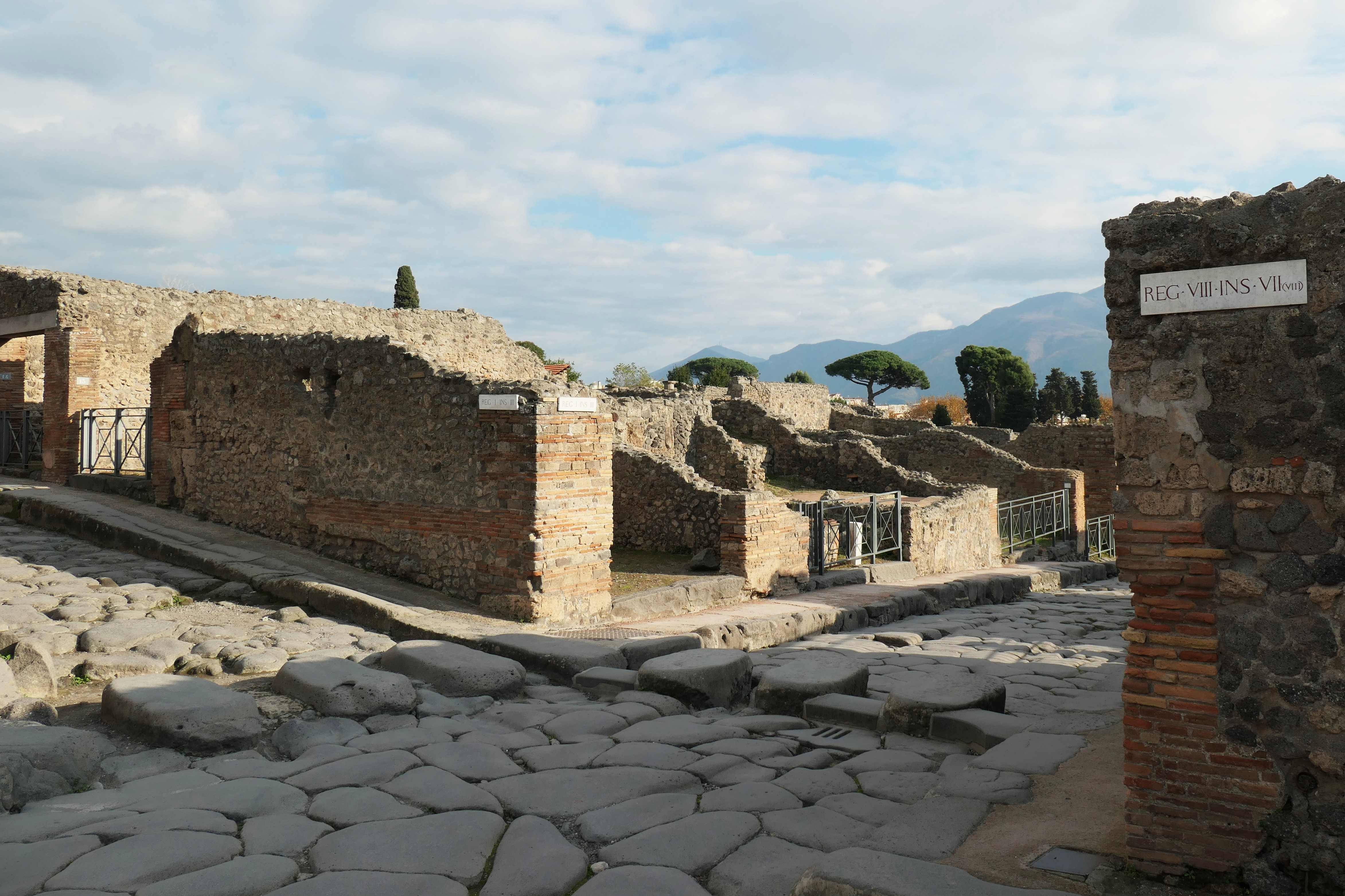
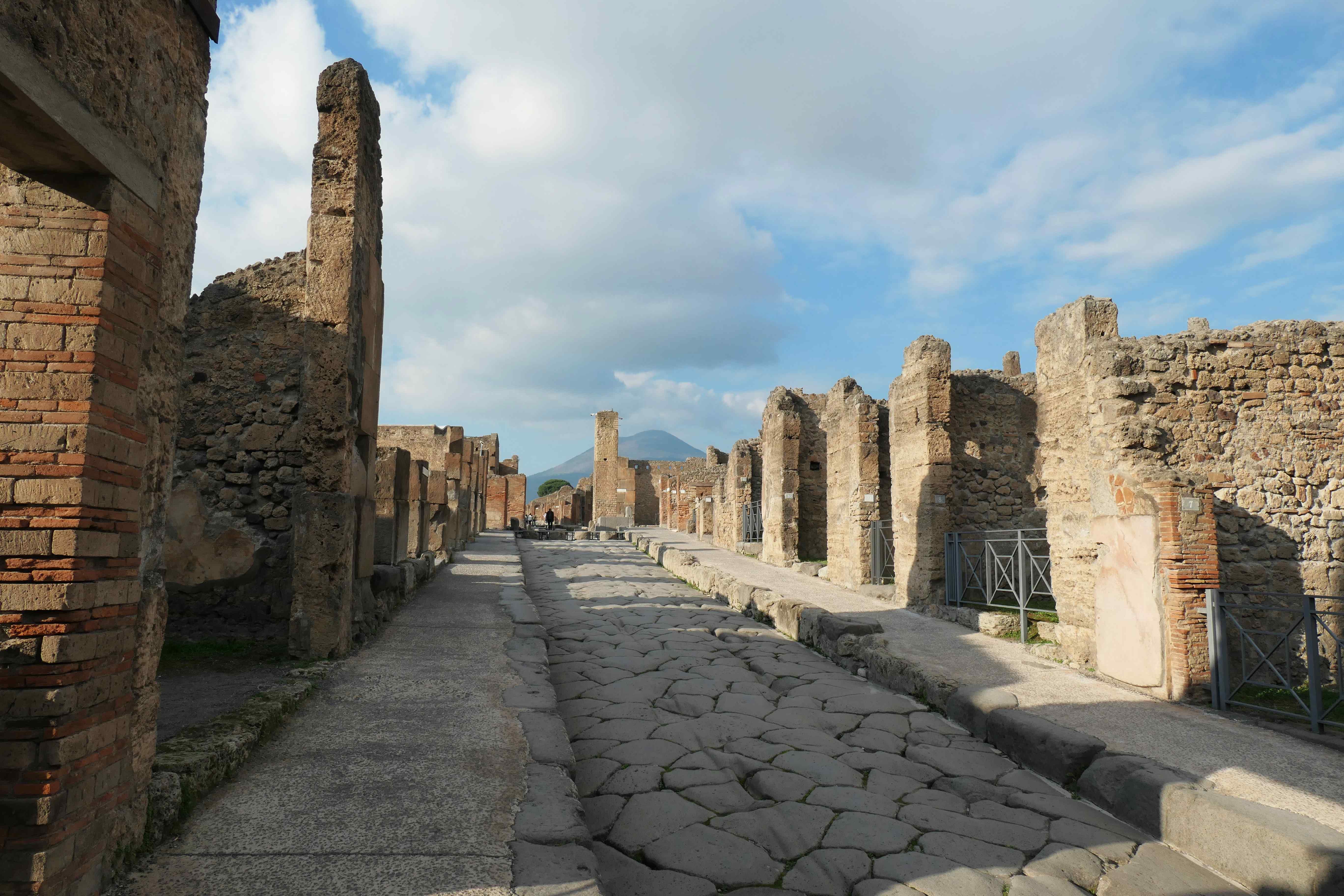
Okay. Here goes. When we purchased our tickets, they asked if we’d like the 3-Day Pass. What?? Three DAYS? Umm. We were thinking more like three hours. Maybe four. With single-day tickets in hand, off we went… into a really LARGE ruin of a once-thriving civilization.

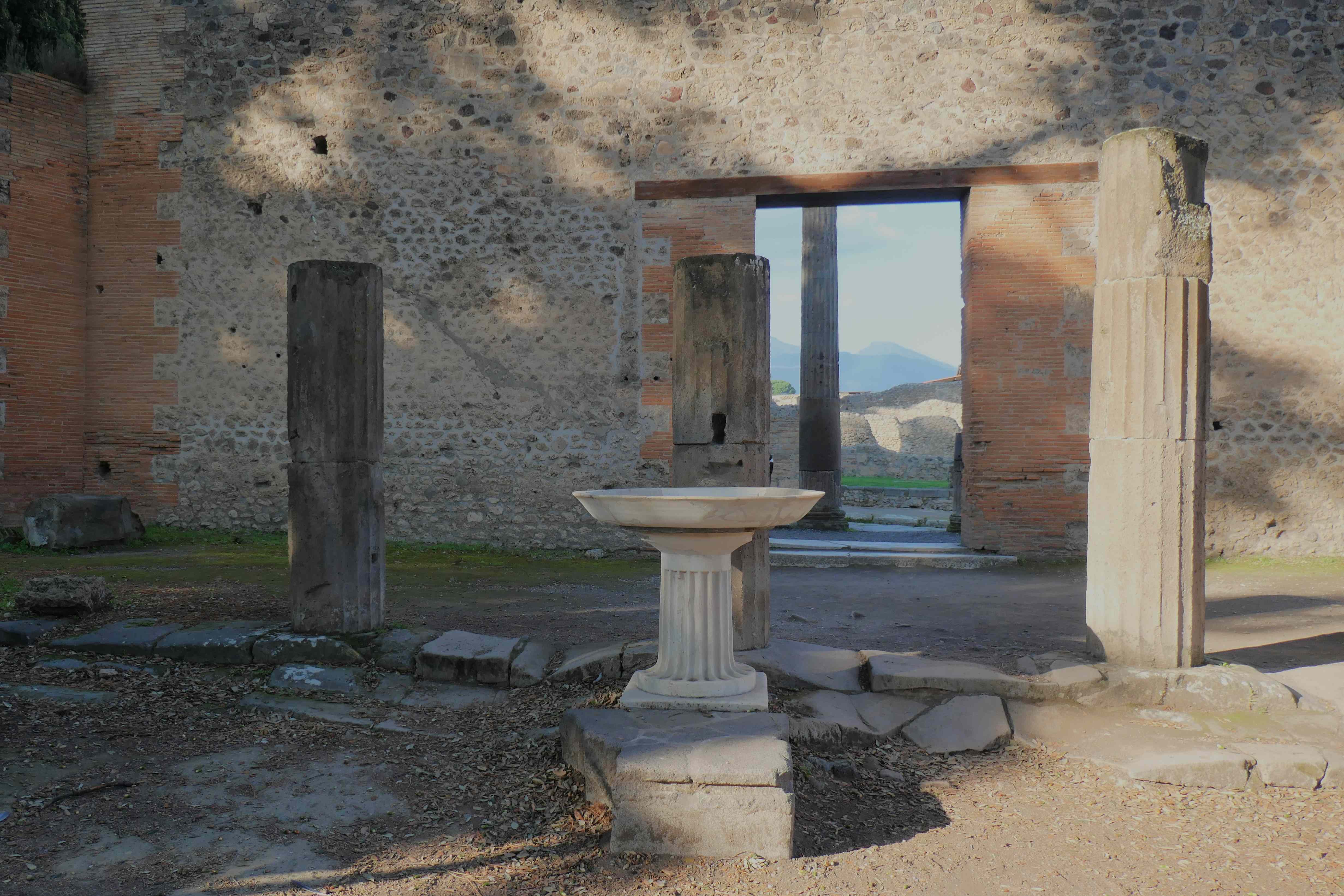
Pompeii? Now we are talking OLD. Think 800 BC. Really took off in 540 BC with the Greeks! But what’s amazing is the eruption we’re familiar with was in 79 AD. There was a dude who witnessed it and wrote about it! Most of the 15,000 people left in time. Only the unlucky got buried by the 20 feet of ash. The city was untouched through a couple more eruptions and 1500 years! Since 1592, it’s slowly been rediscovered and looted, all 160 acres. But even the art that was left on the walls is stunning. (And accurate. There’s a bordello that Nana just couldn’t bring herself to photograph, this being a G-rated website and all…)
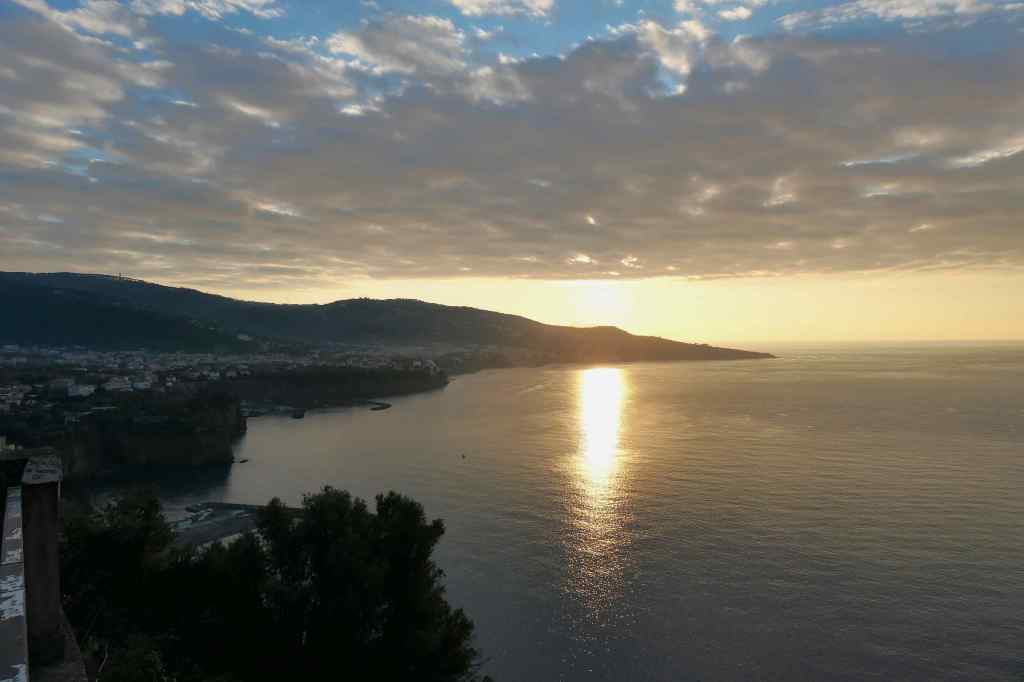
The sun was setting along the Amalfi Coast as we made our way back to the rental, talking about ancient civilizations and volcanoes. And thinking about the world-famous pizza we’d once again missed due to improper timing. Sigh.


A couple of days before our time in Massa Lubrense came to a close, we and our gracious hosts made a plan to get together for another barbecue on the last night of our stay. This time, however, we would treat them to a traditional American-style dinner from the grill. Steak! While Donato and Alessandra were busy with work and appointments, we strolled back into town for supplies.

As luck would have it, it rained that evening. And rained. And rained. But what could be done? It was our last night, and we had large steaks ready for grilling.


In the past, we’ve alluded to the fact that we fudge the dates a bit when we publish the posts to try to keep our own historical record accurate. As we wrap up and publish this post dated December 4, it is actually Christmas Eve. We will soon be heading to dinner followed by a late church service, and we are thinking of family and friends with love in our hearts. We wish you all Buon Natale! (Merry Christmas!)

Wait. Does this mean no more apples?

“Est! Est!! Est!!!” …?

We’d been in Italy four weeks when we donned our only jackets as “raincoats” to load the car and check out of the cozy “Old Cave” duplex near Florence. We were headed for Villa Perlata in Montefiascone, 62 miles north of Rome.

To avoid a repeat of the “no advance tickets” wrinkle experienced in Florence, this next place was to be a “don’t move the car” stop where we would sit still for a couple of days and pin down what we’d do on our upcoming stop in… Rome! (And perhaps preorder some tickets this time?)

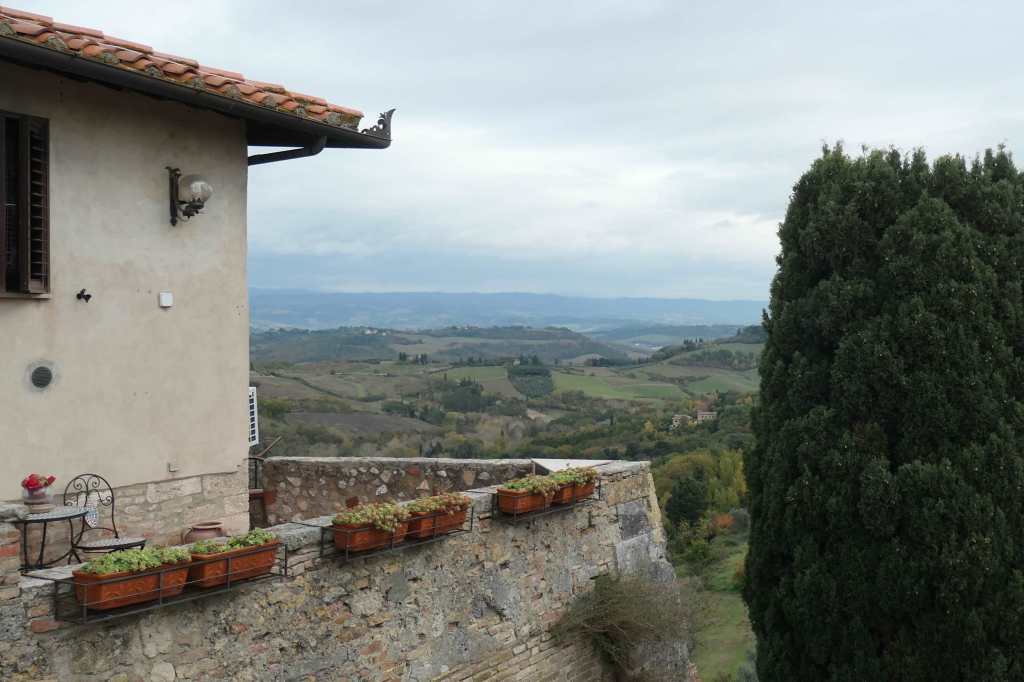
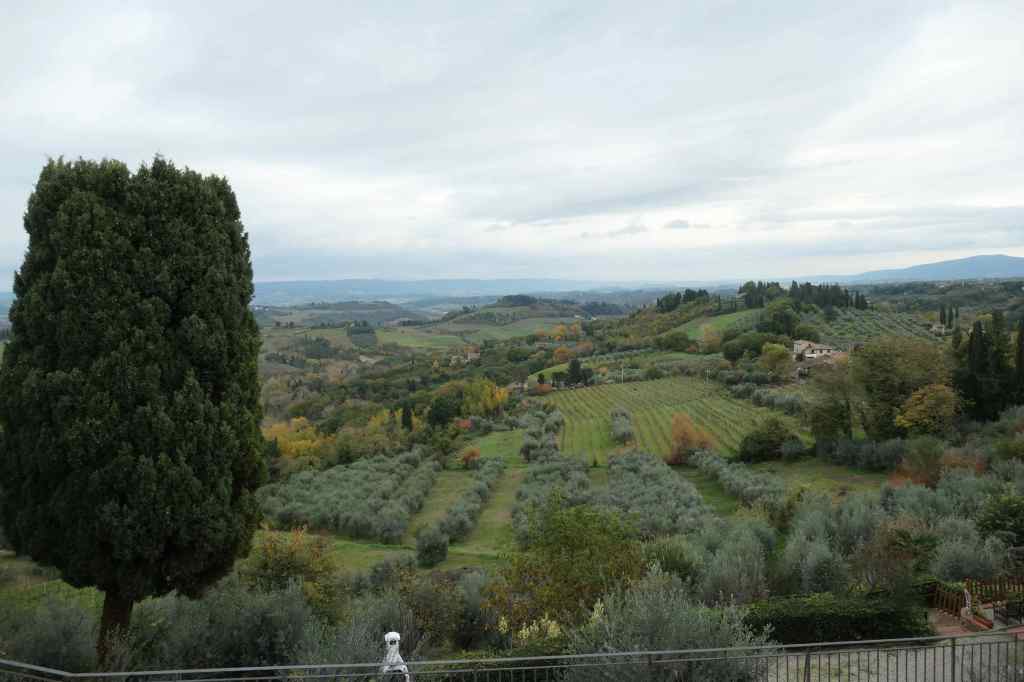
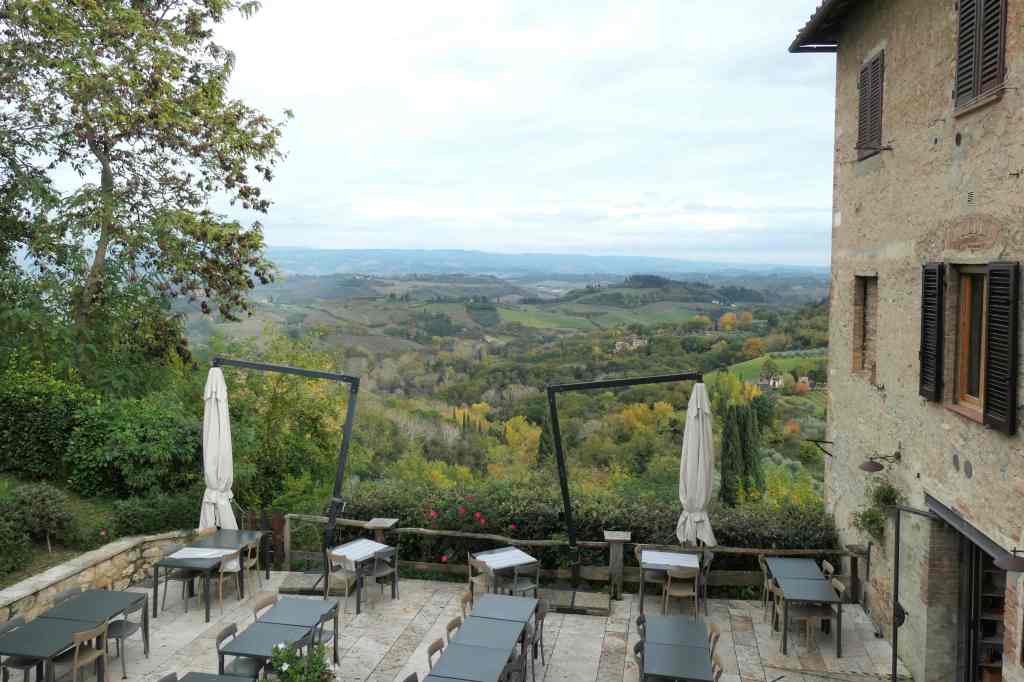
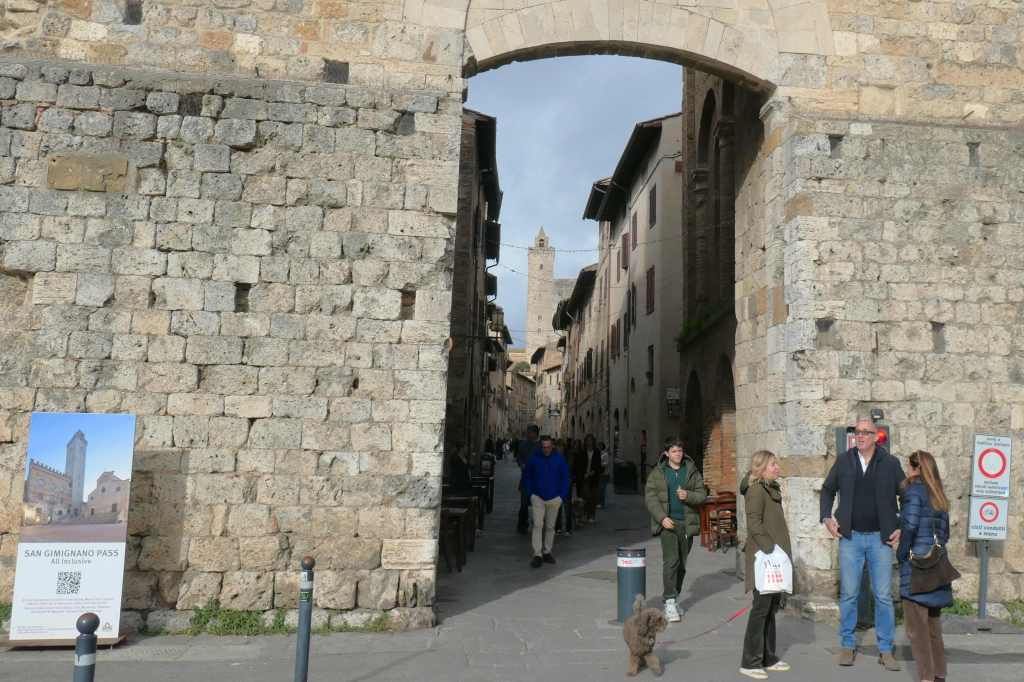
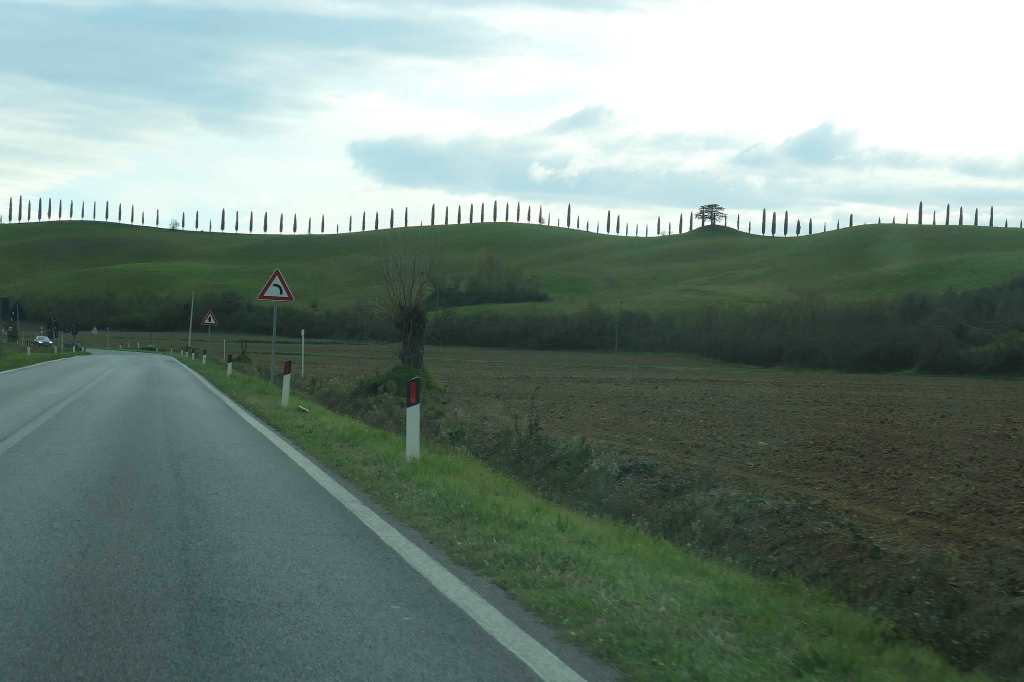
As we returned the keys to the friendly rental owner, Cristina, she suggested a scenic stop on our way south in San Gimignano, a village started in the 3rd century BC! The area took off as a town in 63 BC when a pair of rich brothers came from Rome to build really big castles. Then named Silivo, the town truly got noticed in 450 when Bishop Geminianus saved the castles from being wiped out by the troops of Attila the Hun! Okay, so one stop along the way can’t hurt, right? 🙂

And what a pretty stop it was!

The weather and time worked against us, so we saw it but didn’t really get to SEE it. Oh geez…


After gelato and a quick panino for lunch, we were back on the road to Montefiascone with its ancient Rocca dei Papi (Fortress of the Popes), cathedral and churches from the 14th century. Stop, Susie. Remember the plan. No sightseeing on this stop. Sigh.


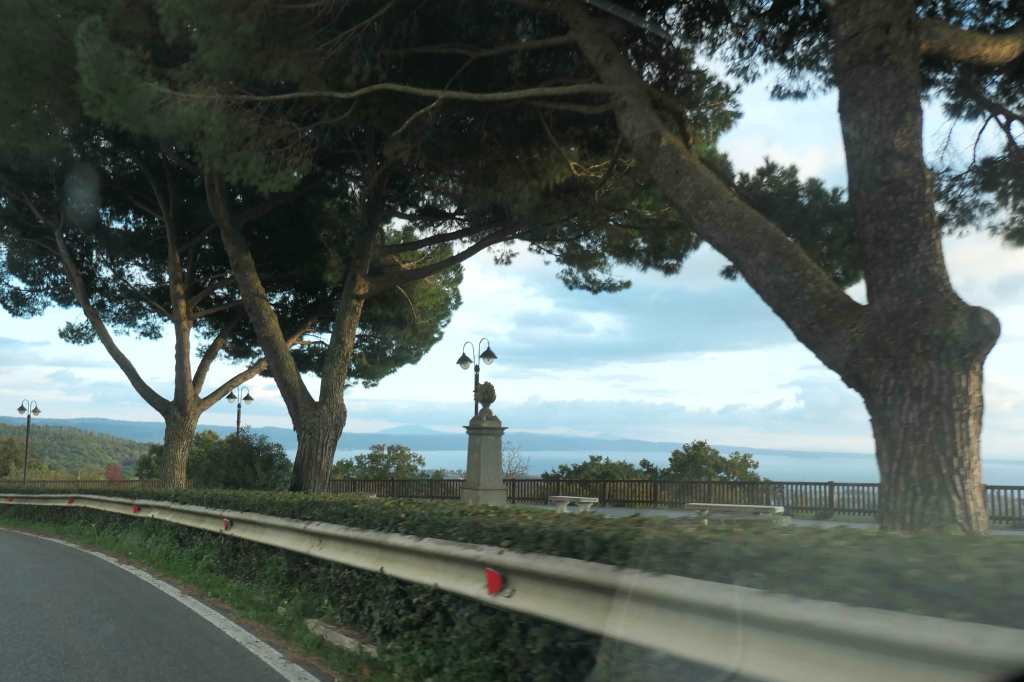
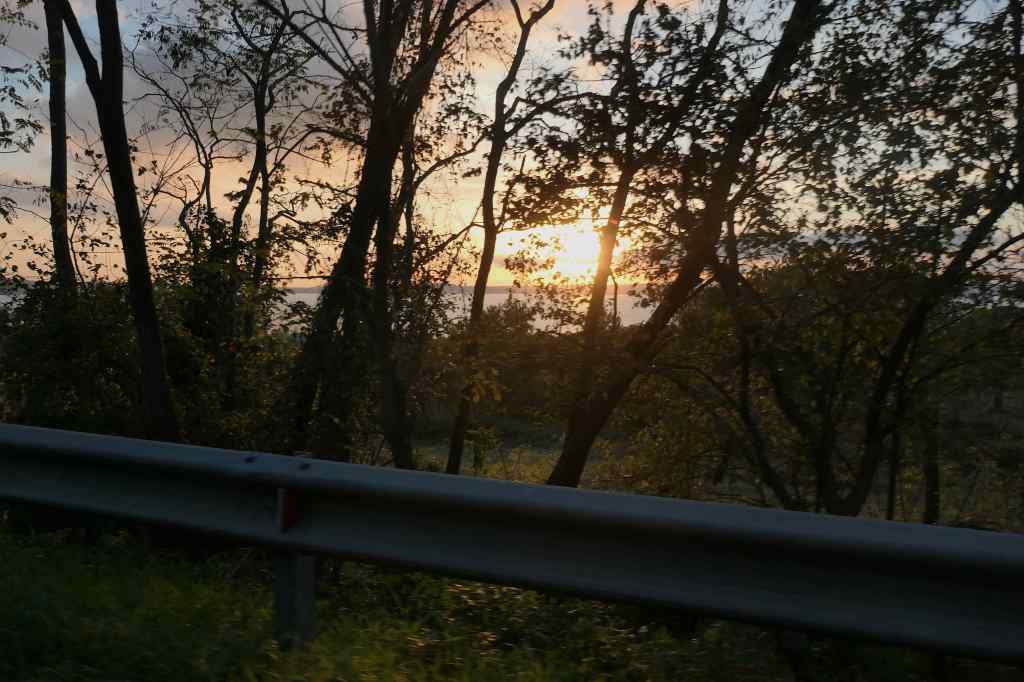
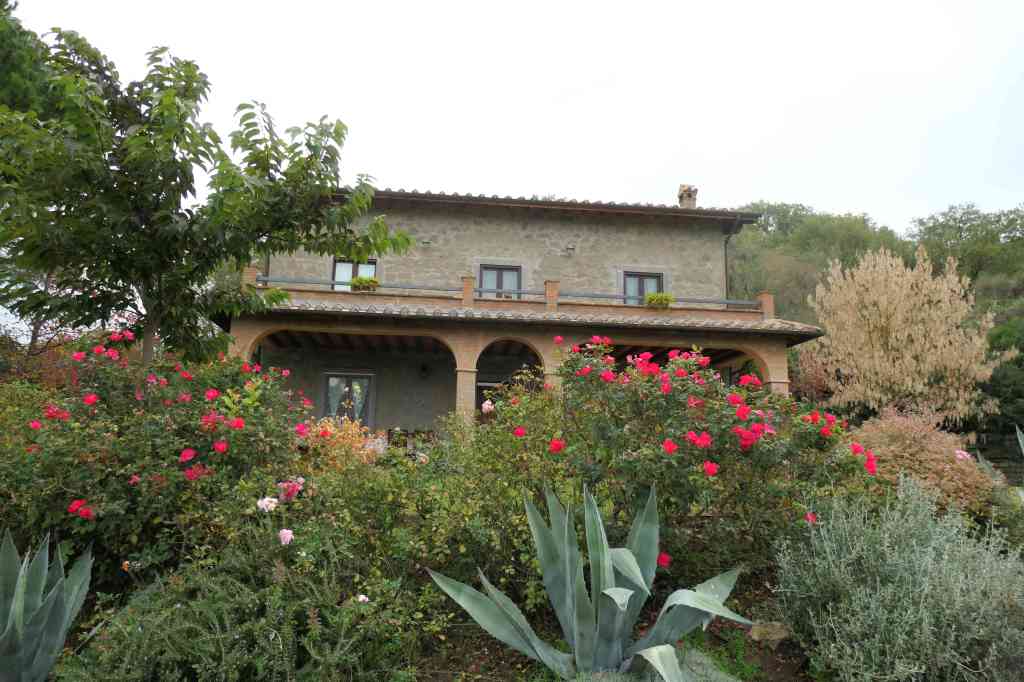
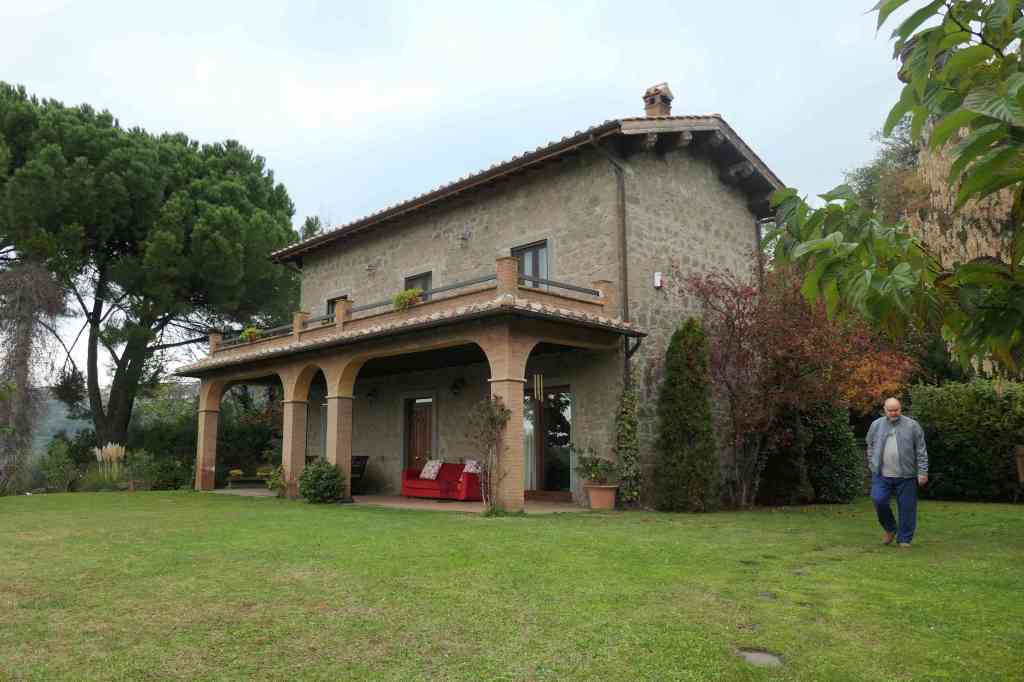
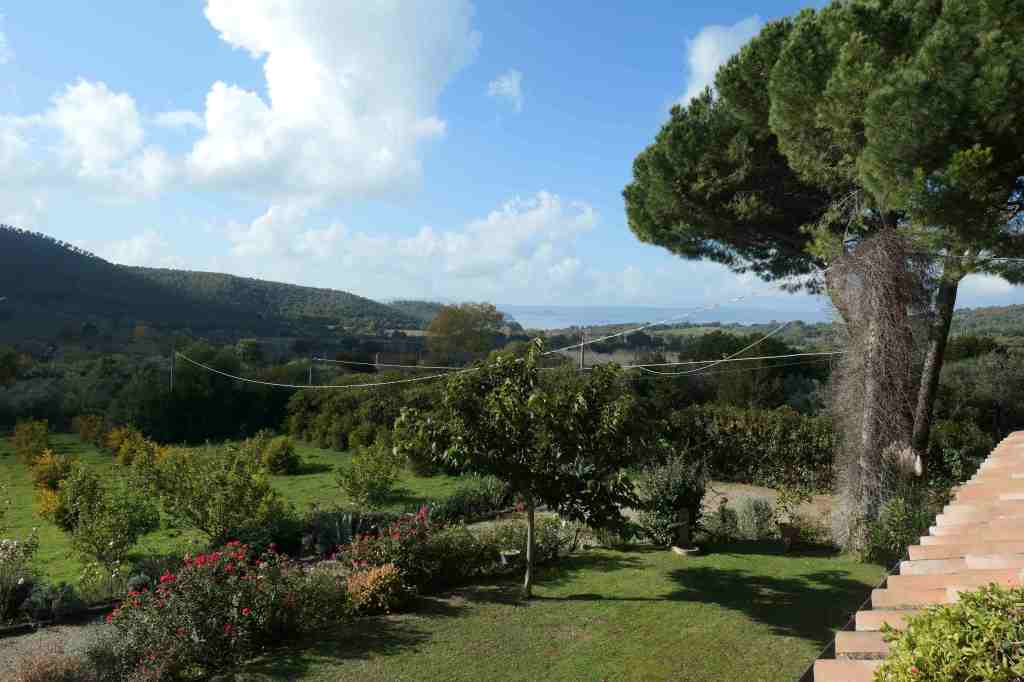
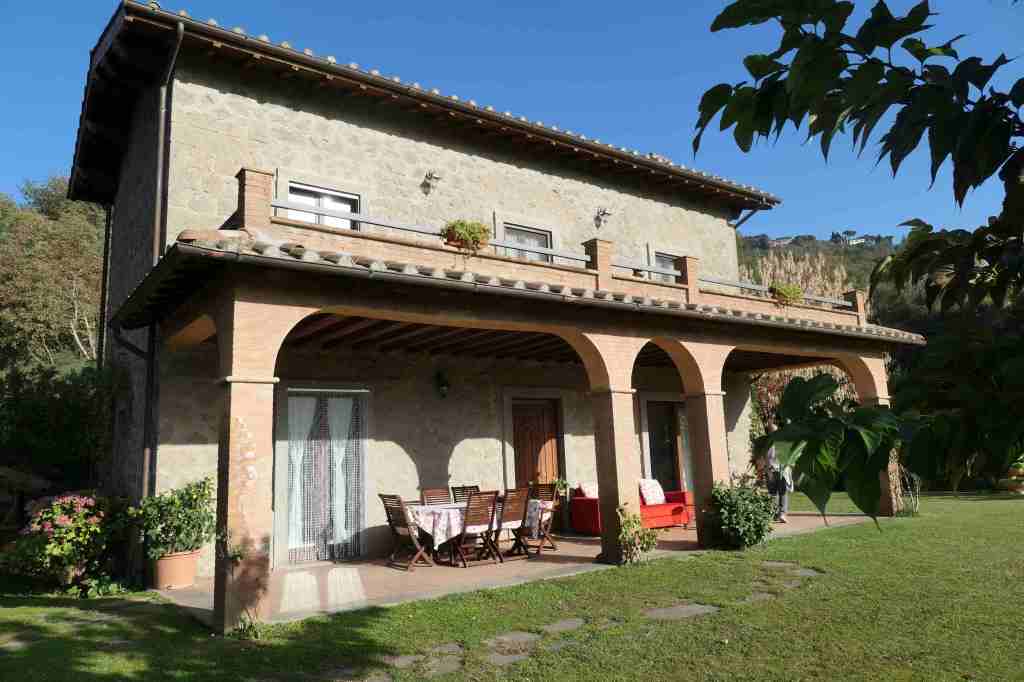
Villa Perlata in Montefiascone overlooks the 5th largest lake in Italy, Lake Bolsena, a great spot for former cruisers to sit still. On our drive along the lakeshore, we enjoyed the lovely sunset before quickly realizing sunset means darkness, like really dark! Once you drive beyond the parklike lakeshore, there are no more streetlights, and we still had to find the villa, pull the car up to the correct locked gate just off the road, walk along the shrubbery/fence line to find the small gate containing a lockbox, enter the code (thank goodness for phone flashlights) and acquire the keys.


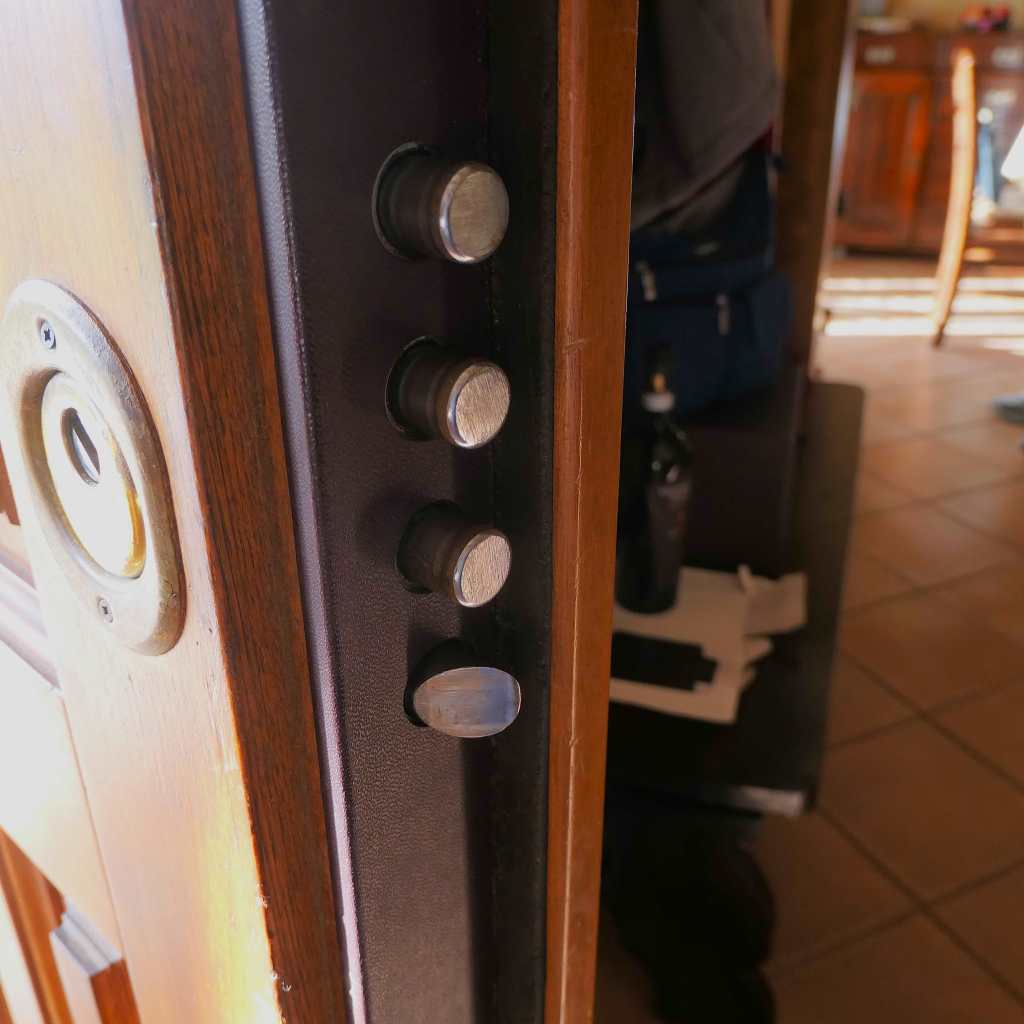
After we got our things inside and Todd locked the villa’s massive door in the inky darkness, Susie declared the villa we could barely see to be beautiful and excitedly stated she couldn’t wait to actually see the place in the morning. Ha!

There was a small issue with the dishwasher mysteriously turning itself on during the night and refusing to stop without turning off several breakers, but daylight revealed that the villa, while quirky, was, indeed, quite lovely.

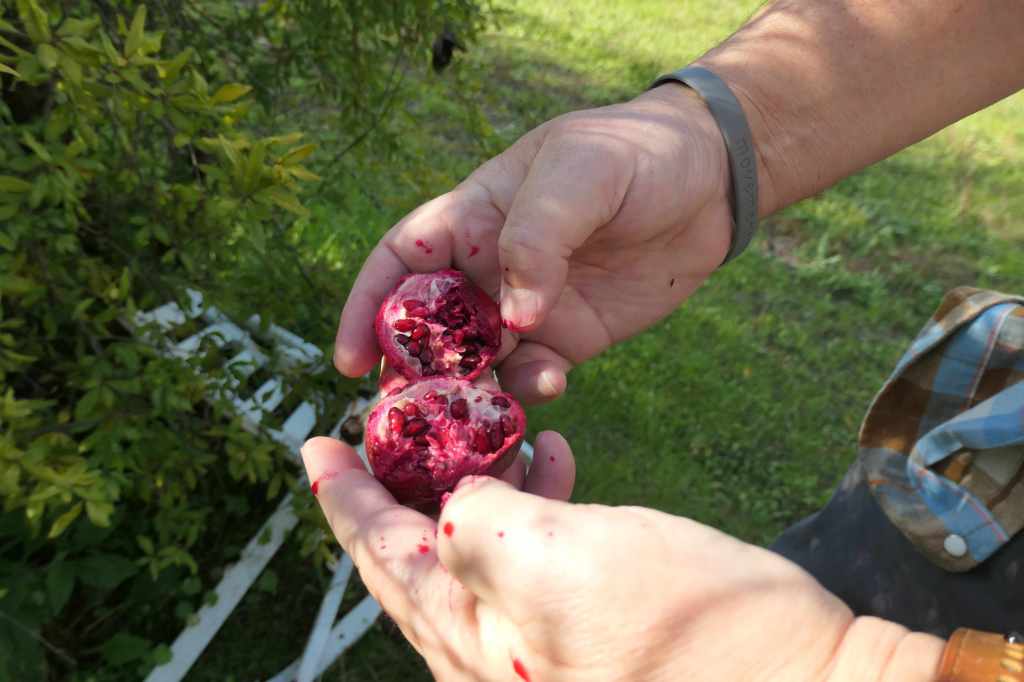
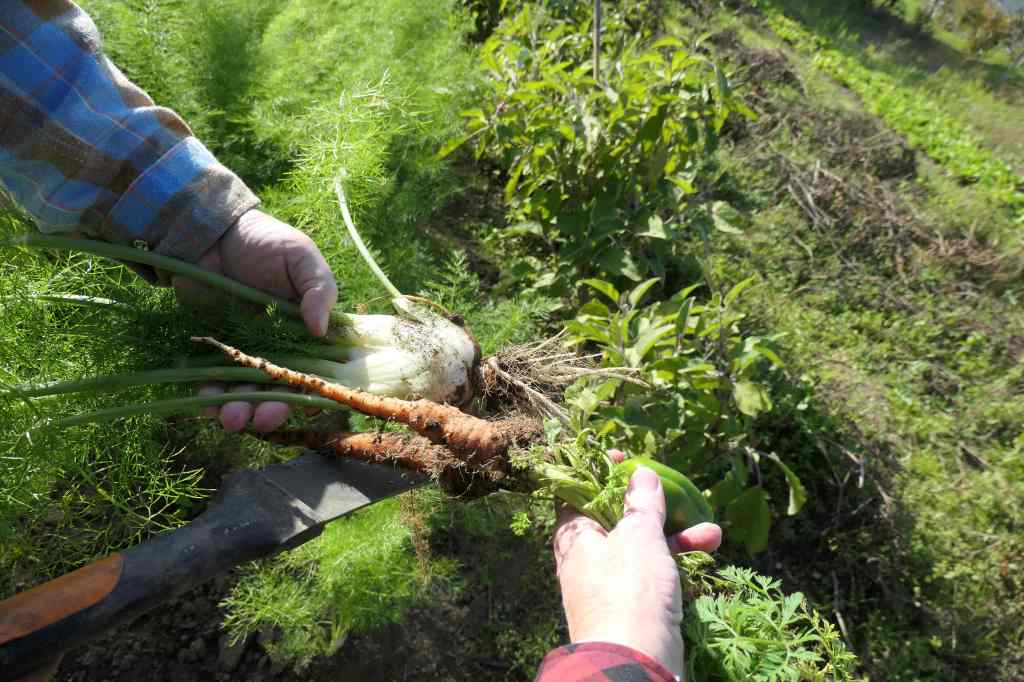
The owners said to help ourselves to any produce available in the garden and left us fresh olive oil they’d produced, as well as some local wine, “Est! Est!! Est!!! di Montefiascone.” Huh? Well, we’re glad you asked! 😇

Interestingly, we’d found ourselves in a wine region with a fanciful story and funny name that has been repeated for centuries. In general, the tale is that of a 12th-century bishop traveling to Rome who sent a servant ahead to find the best wines, with instructions to write ‘Est’ (Latin for ‘It is’ or ‘There is’) on the door of any inn where he was especially impressed with the wine so the bishop would know where to stop. Legend has it that the servant was so impressed with the wine being served at a Montefiascone inn that he enthusiastically scrawled “Est! Est!! Est!!!” on the door.

Today, the “Est! Est!! Est!!! di Montefiascone” wine region caters to tourists visiting the nearby Lake Bolsena, while the wine itself receives mixed reviews, such as “… the dullest white wine with the strangest name in the world” or the “… history is more compelling than what’s currently in the glass.” ¯\_(ツ)_/¯ Don’t know about the white, but we actually enjoyed the red that was left for us.


Not moving the car does not mean not moving ourselves, so we took daily walks to explore the grounds of the villa.


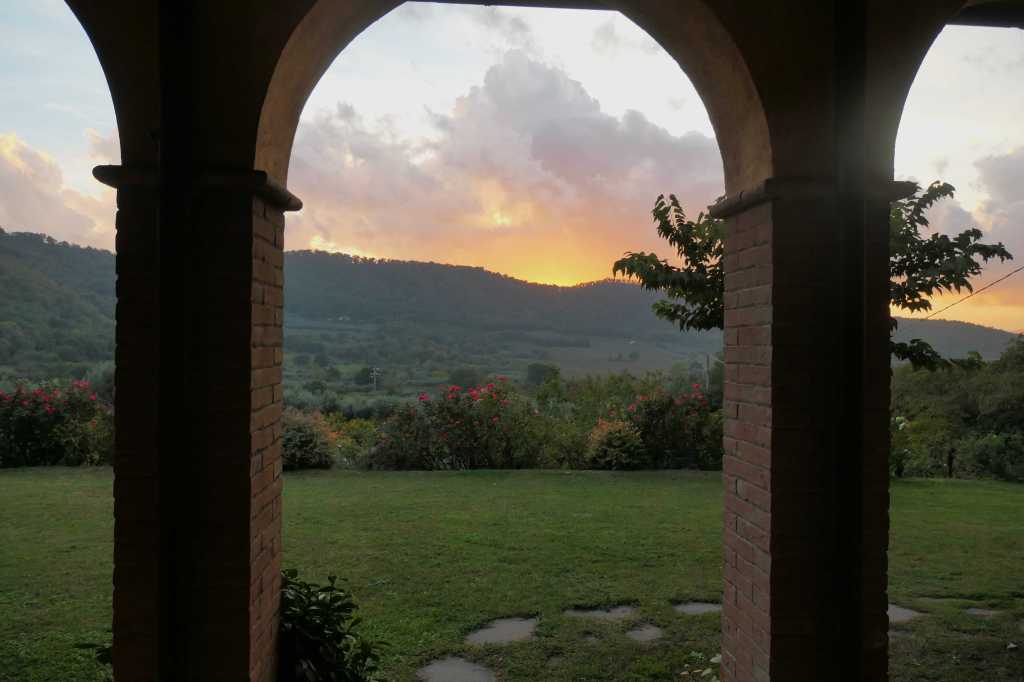
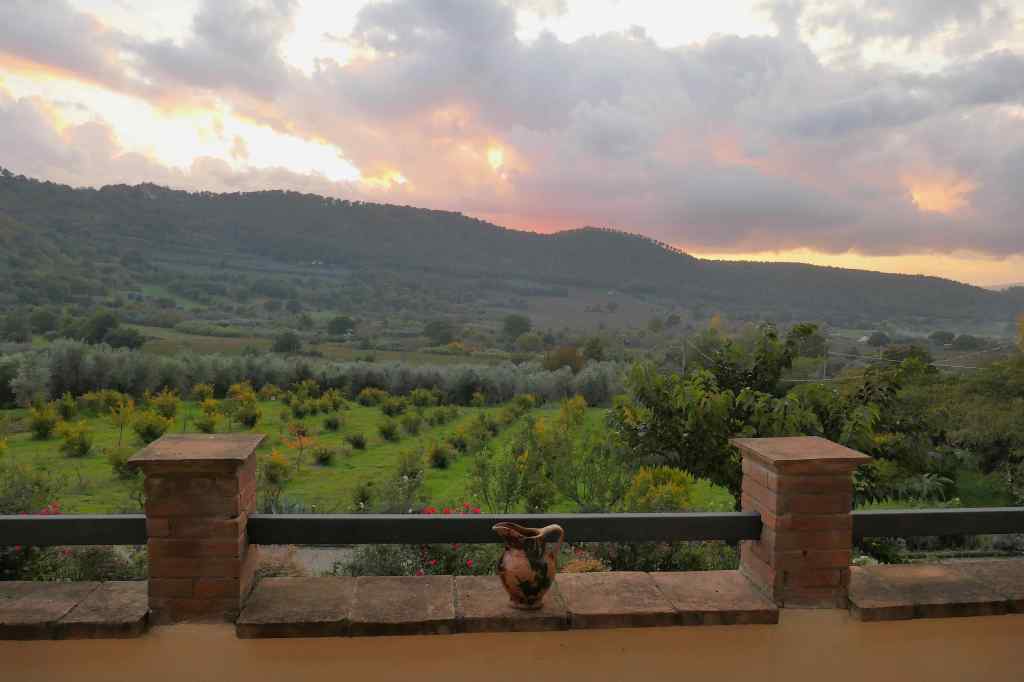
With our research done, tickets ordered, and souls refreshed, we sat back to enjoy the sunset.

Next, all roads lead to Rome!

Toscana- see, we’re Italian. Ha!

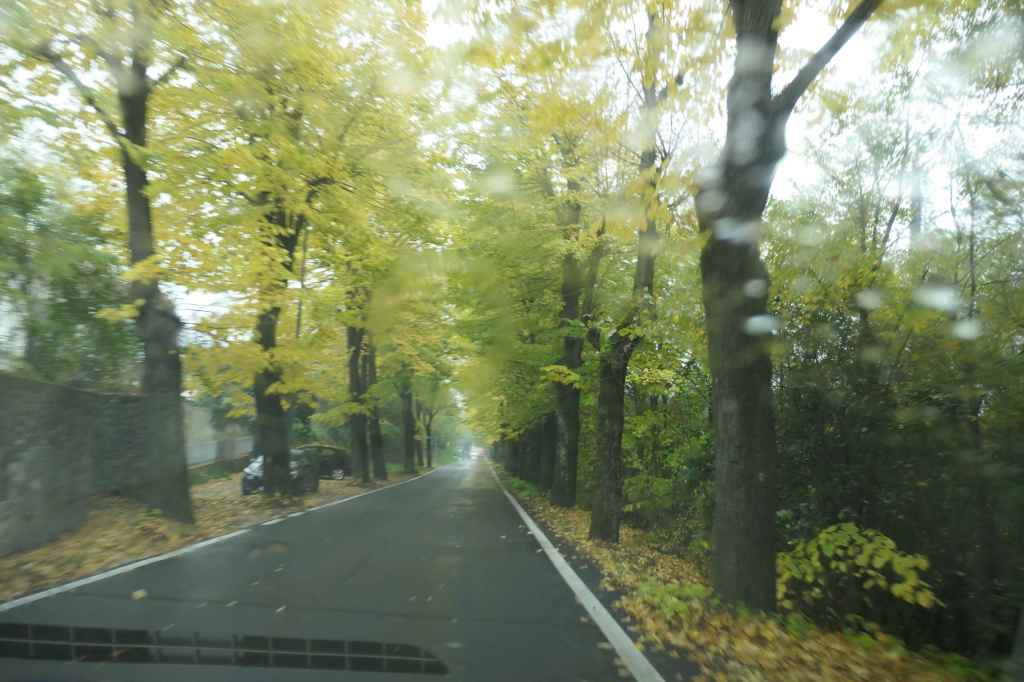
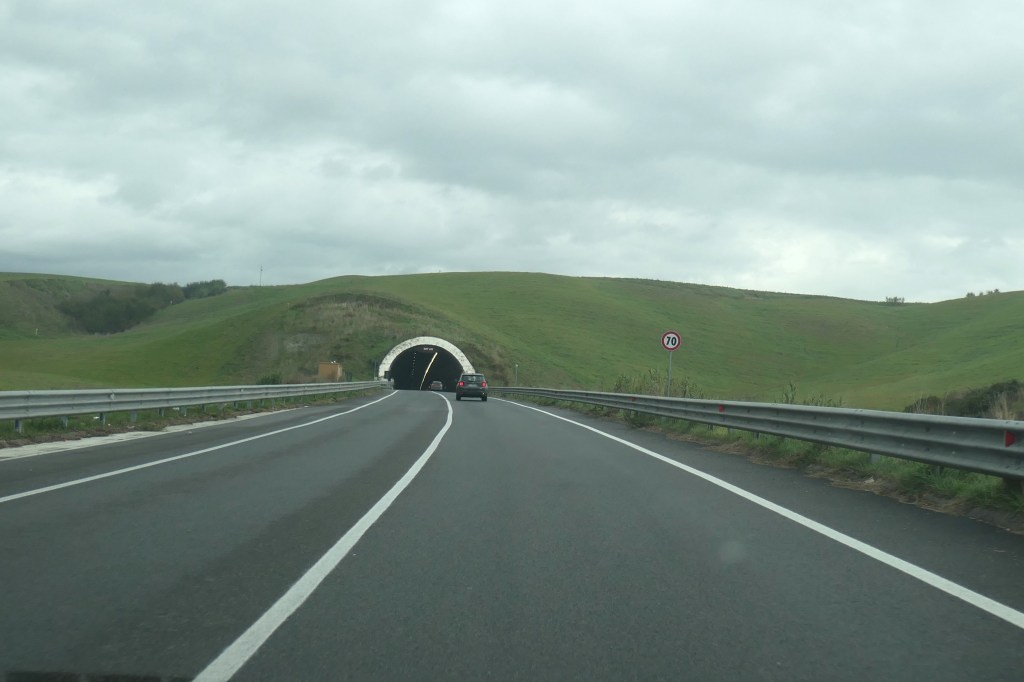
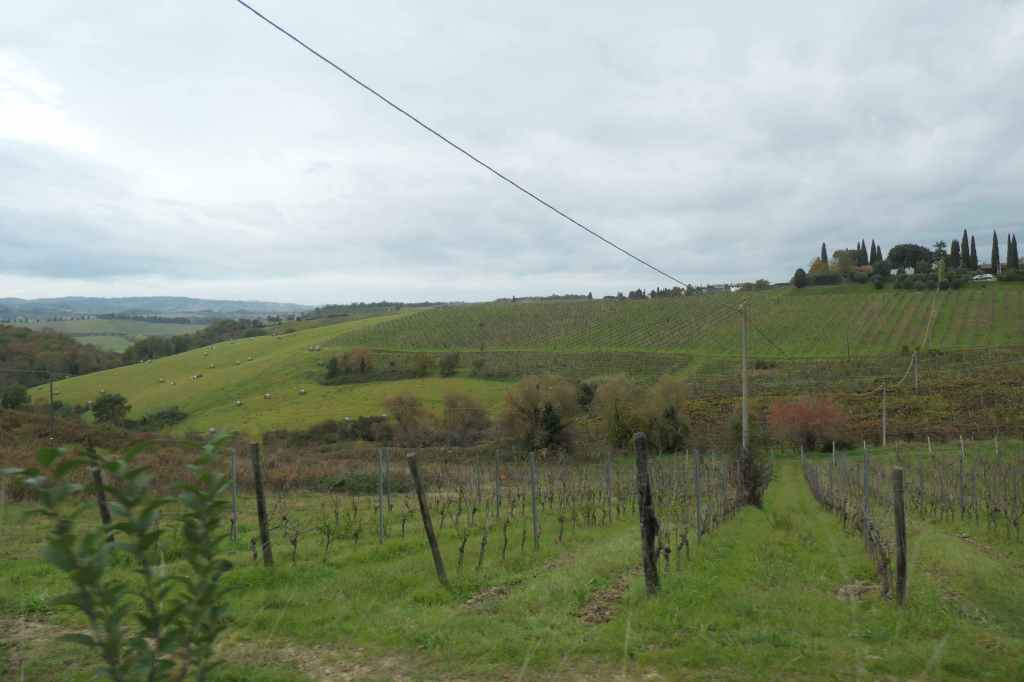
On November 12, we left Modena and the so-called “Motor Valley Penthouse,” bound for Carmignano in Tuscany. (Toscana in Italian 🇮🇹.) Famous in so many ways – wine; history; heck, even architecture! As well as plenty of Hollywood movies. The region stretches from the coast (think Pisa) all the way past the middle of the country, containing our target, Firenze (Florence)! As is the Olsen MO, however, we were going to stay outside of the “big-ish” city in the more peaceful countryside.


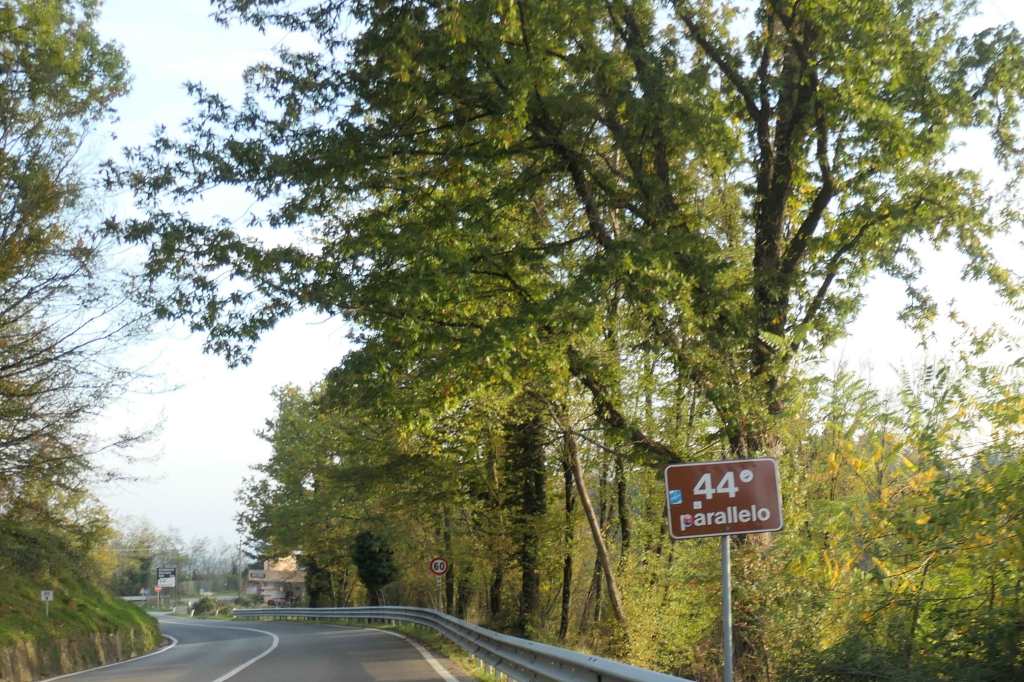
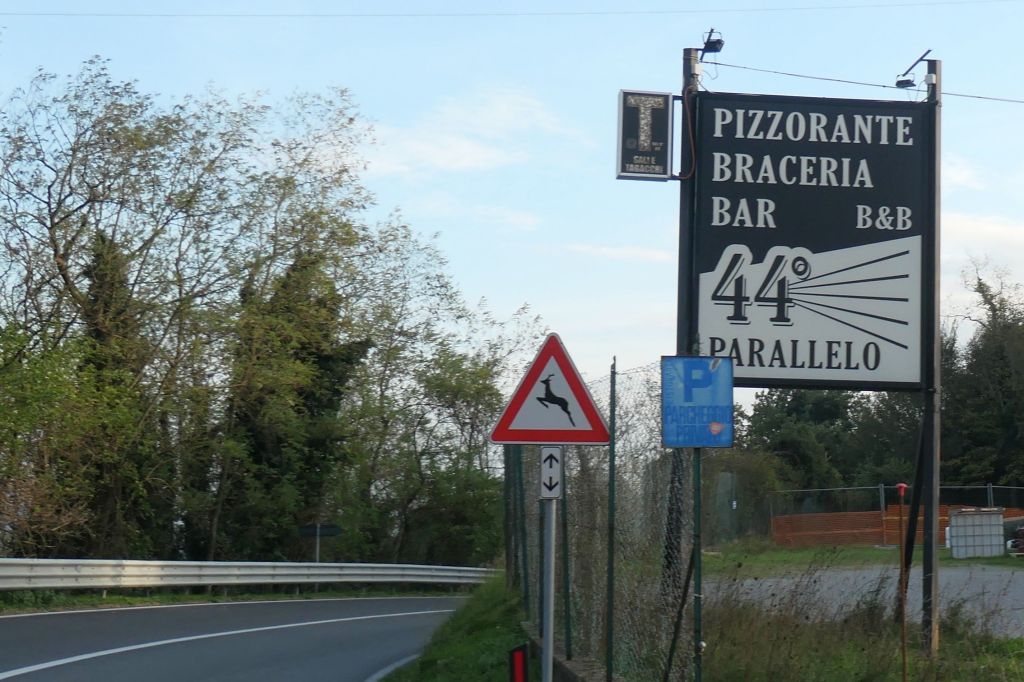
About an hour away from our stop at the Iris Cottage, we passed a sign that made us do a doubletake (and a U-turn for the photos). The 44th parallel?! Huh? Well, that got us thinking about where it lines up in the States. Bet you won’t come close (without cheating). Think right below Mt. Washington in New Hampshire. It’s more than 1100 miles straight from its northernmost point to its southernmost point in Sicily! Halfway down Sicily is lined up with… Richmond, VA! We sure hope the weather will be better when we get there. ha!

We spent a day or so settling in – unpacking, shopping for groceries, doing laundry, researching stops, etc. (And per Susie, downloading hundreds of photos…)

Then, it was time to explore!


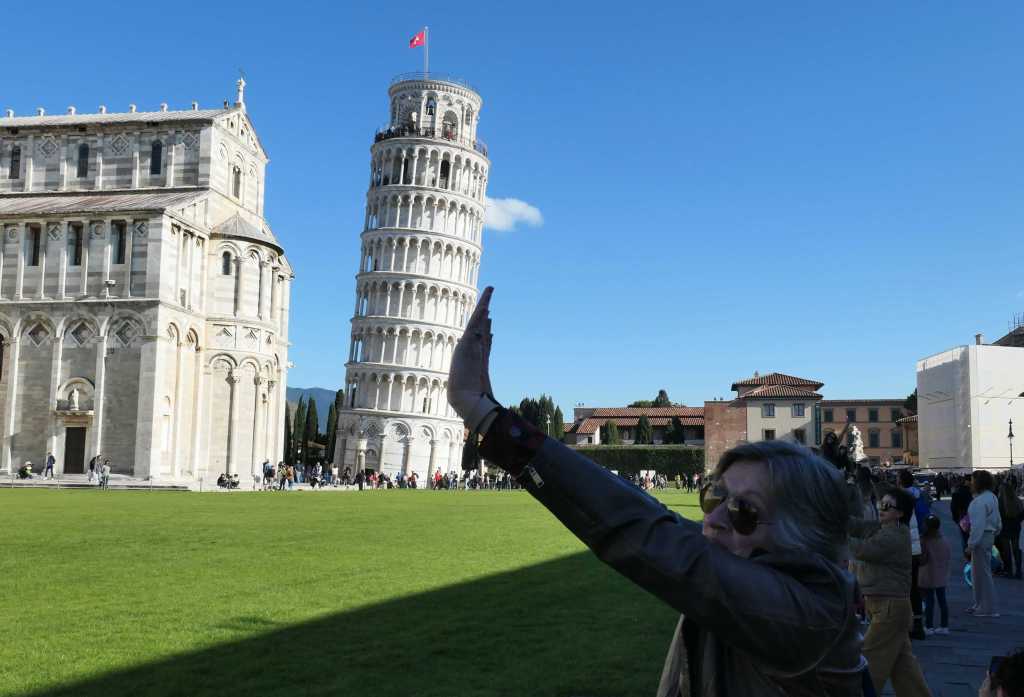
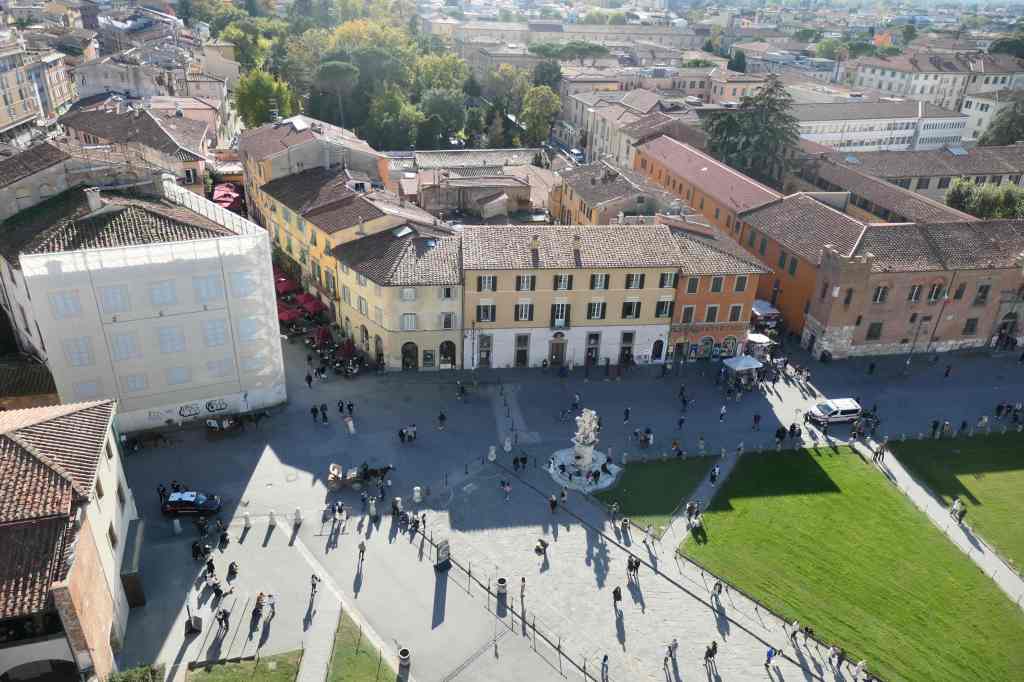
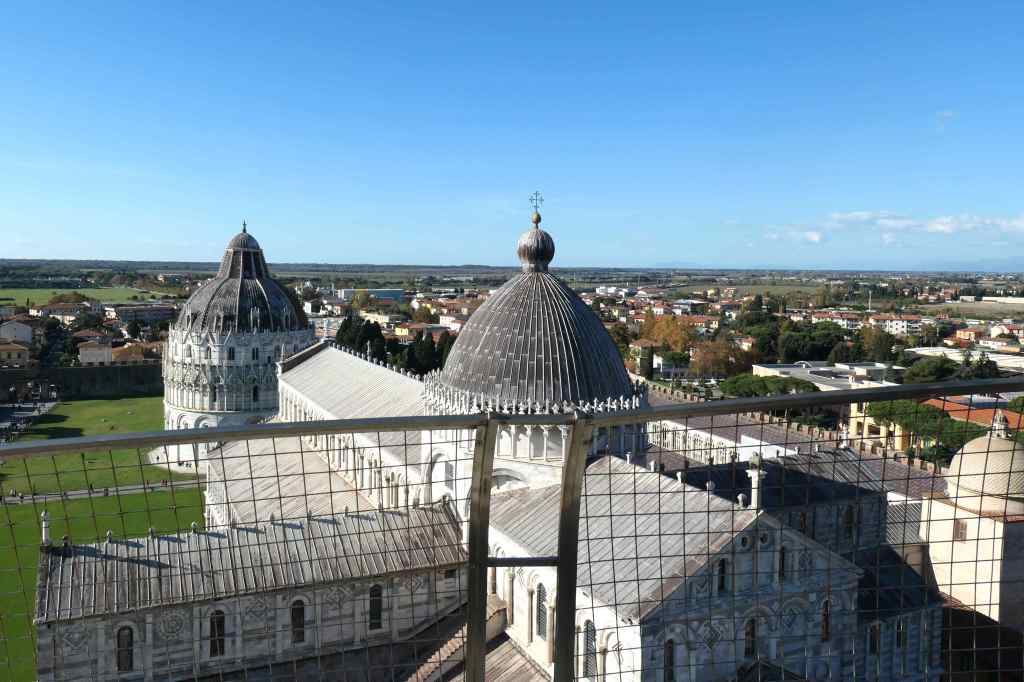
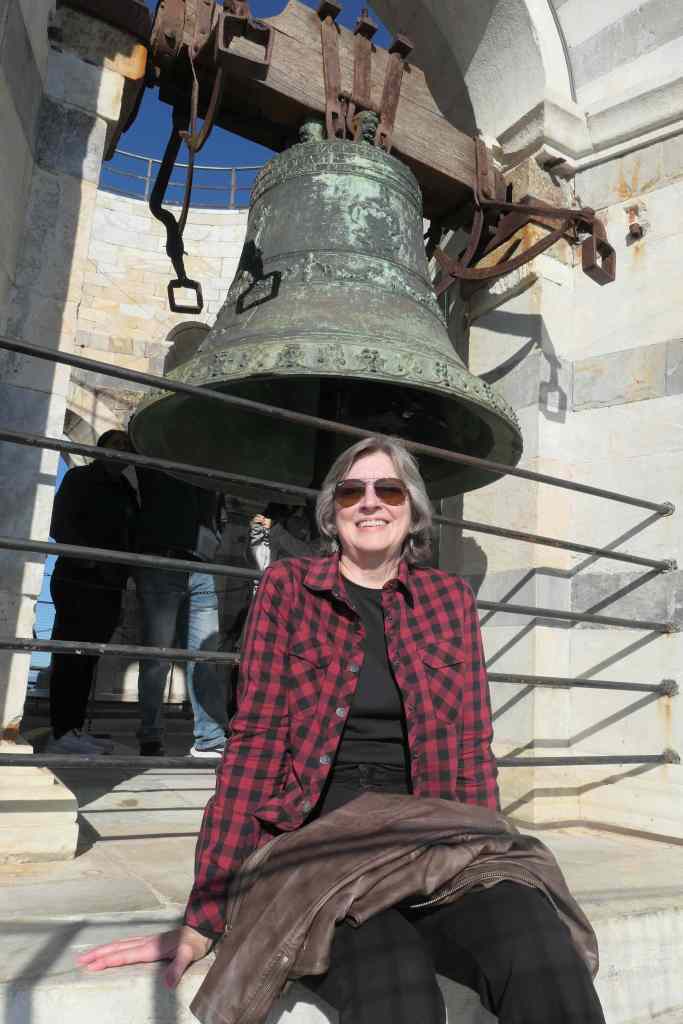
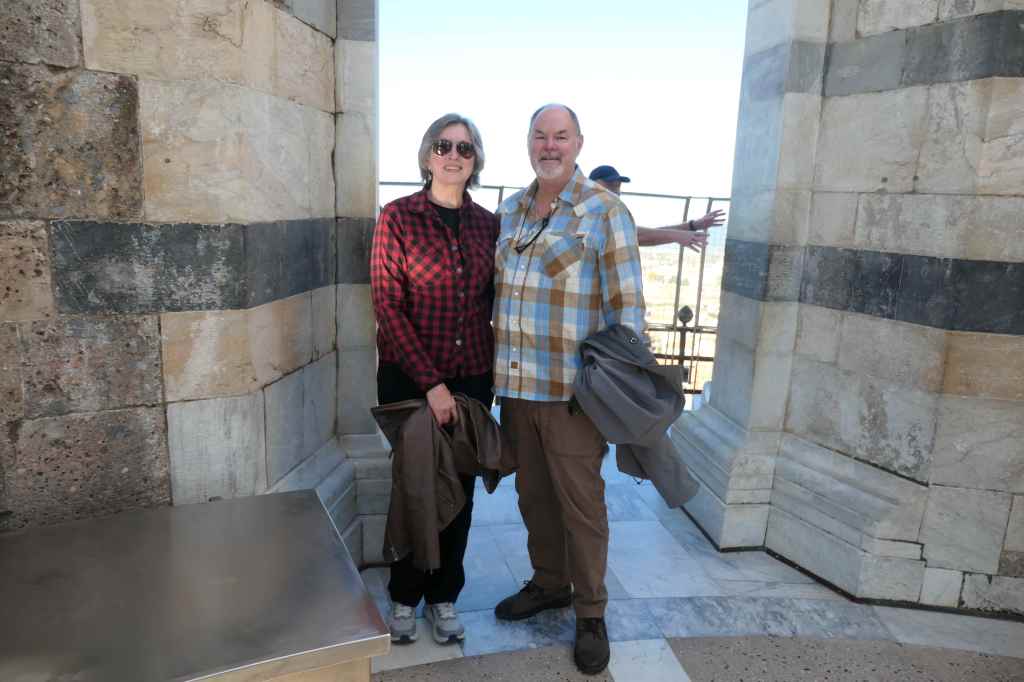
We were headed to Torre Pendente di Pisa (the Bell Tower of Pisa)!

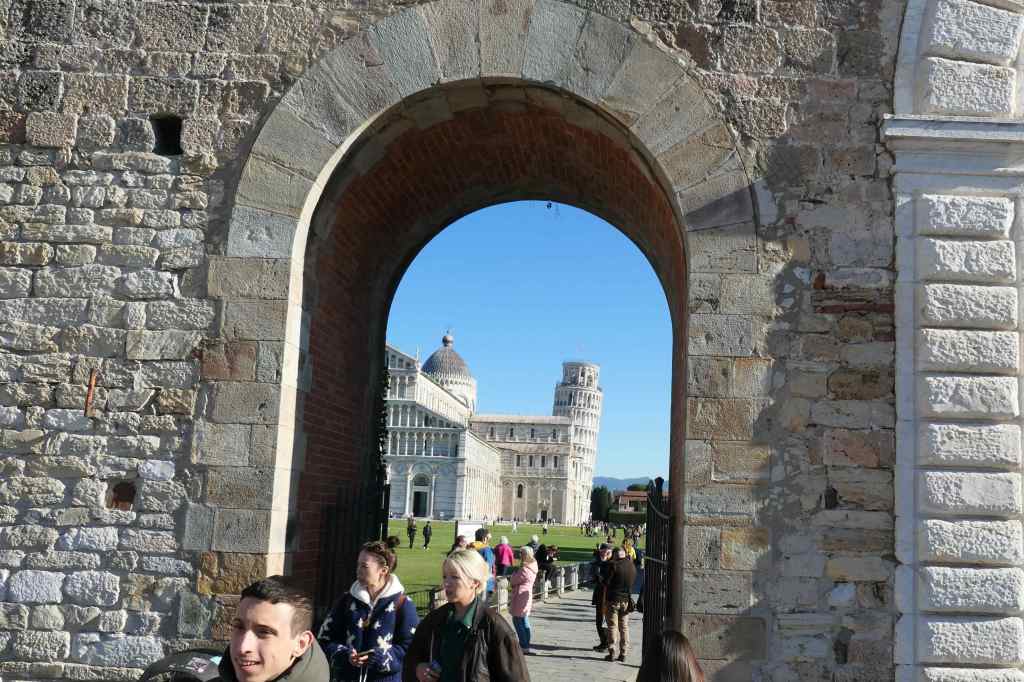
We followed the crowd through the archway onto the plaza and deftly wound our way through the many souvenir vendors, then joined the other tourists posing for photos of the landmark cathedral and bell tower.

After trying our hands at it (punny, get it?), we purchased tickets and joined the short line to go inside and climb to the top. While awaiting our turn with the rest of the group, we checked the stats for the freestanding bell tower:

  • Construction began in 1173 & was completed in 1399
  • The original height was 196′ 10″
  • It is now 183′ 3″ above the ground on the low side & 185′ 11″ on the high side
  • The walls at the base are 8 feet thick
  • The weight is estimated at 14,500 tons

No wonder the tower leans nearly 4 degrees on its unstable foundation!

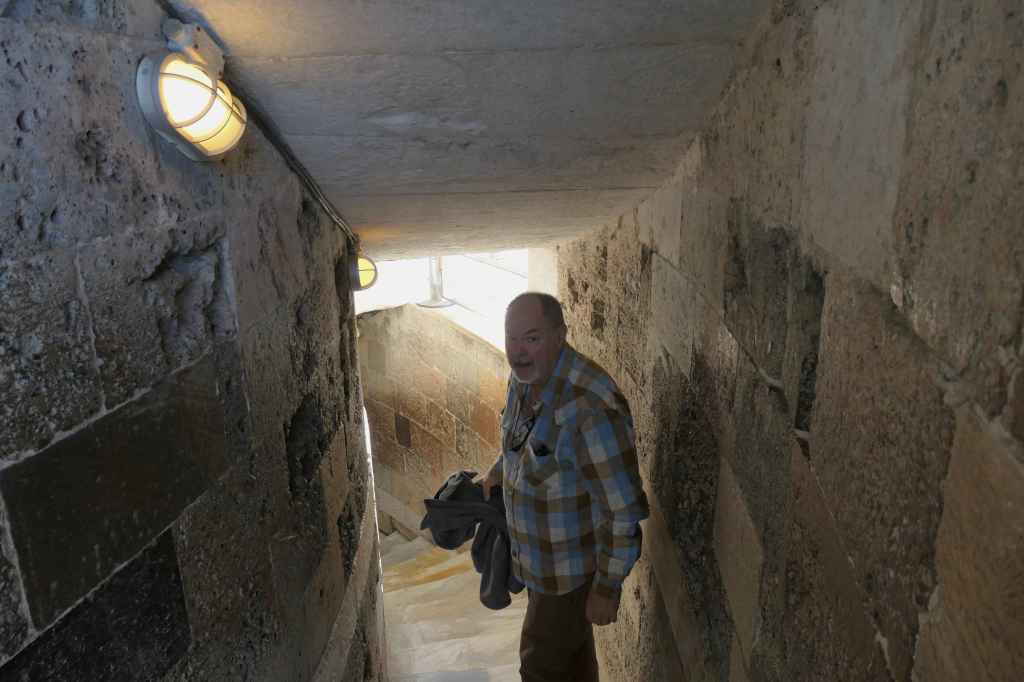
There’s a twisted stairway of 251 very worn steps to the top!


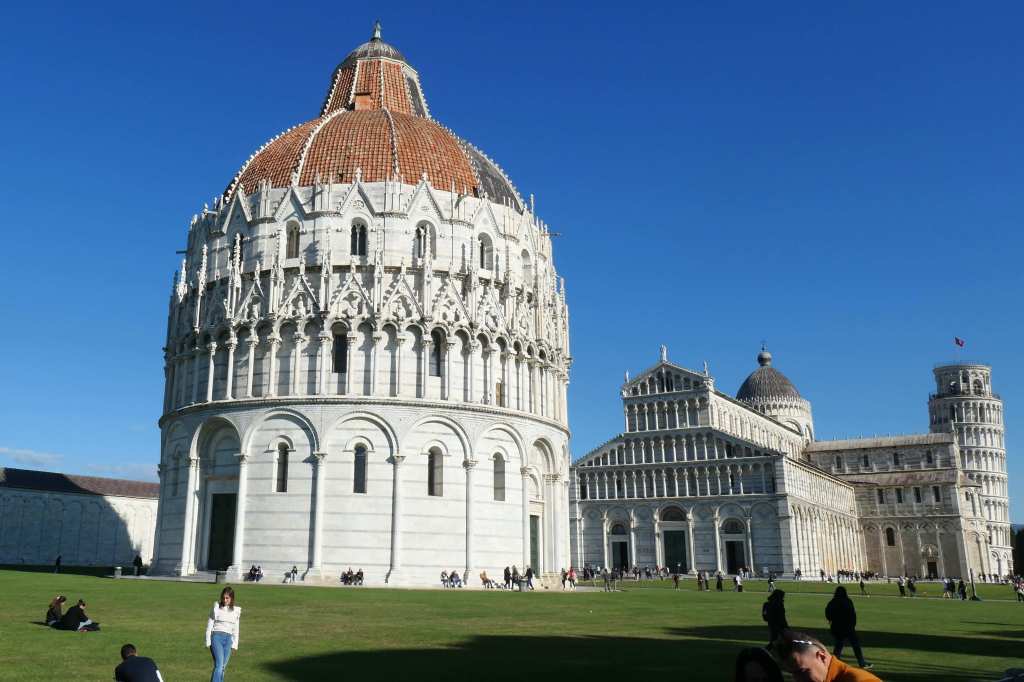
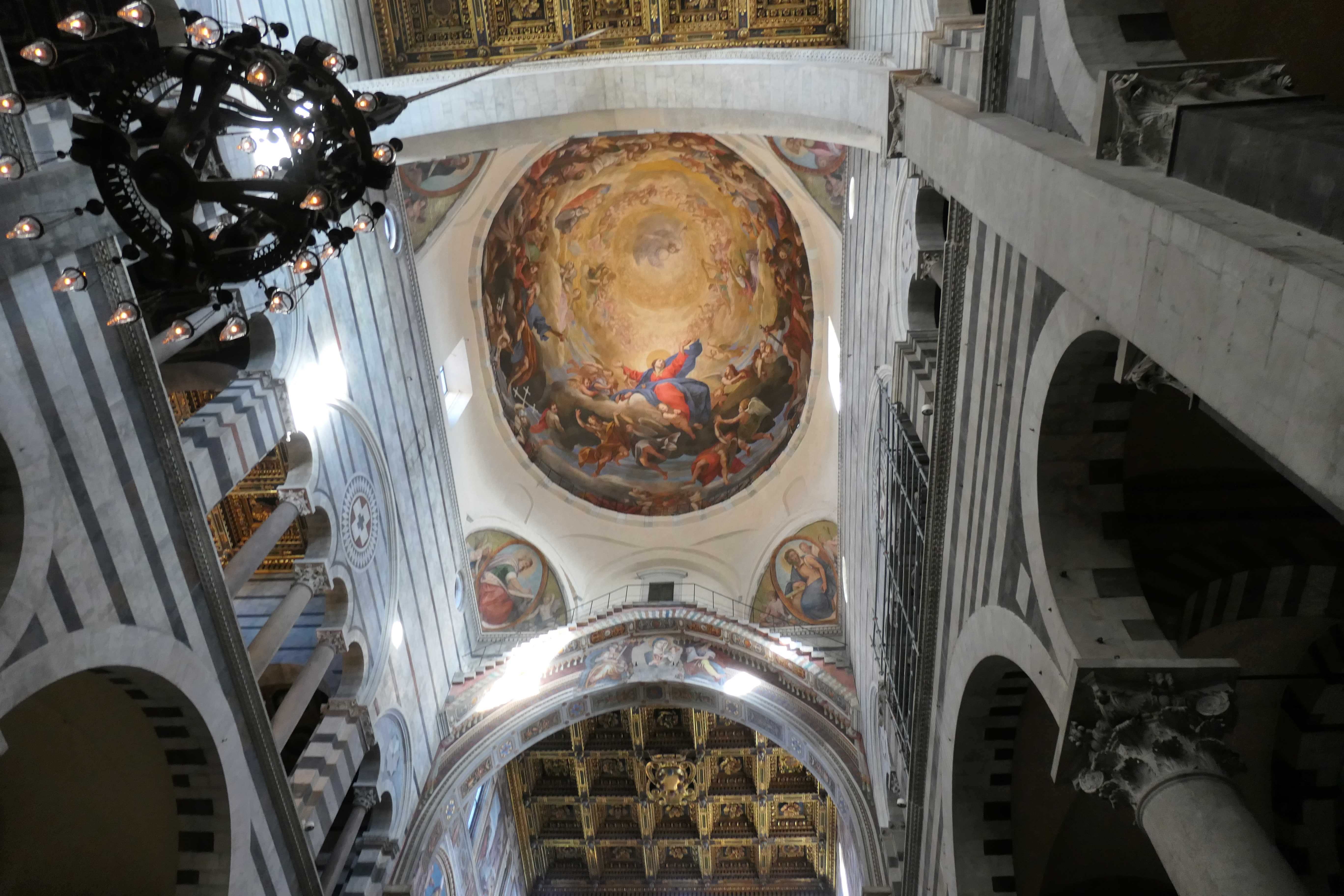
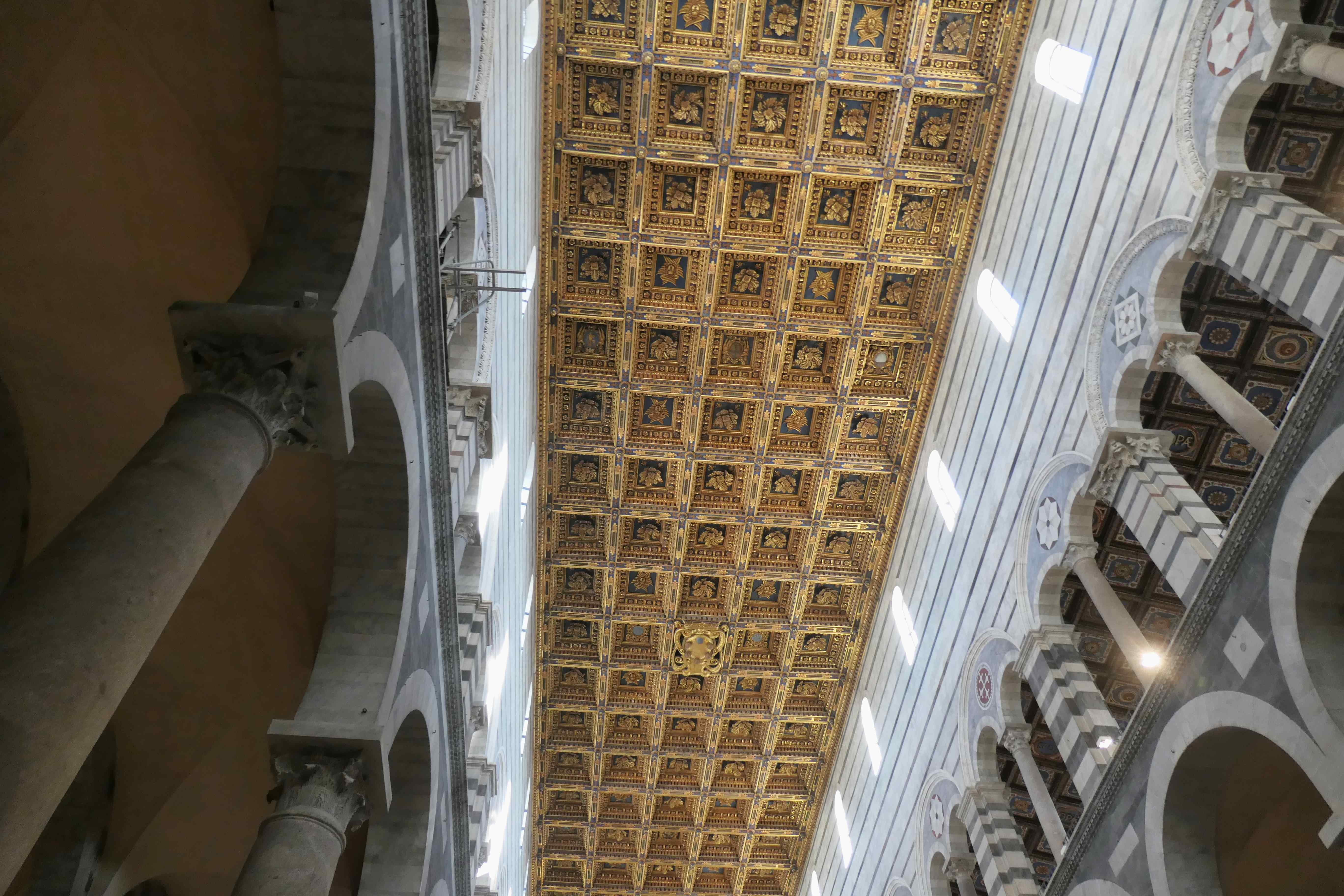
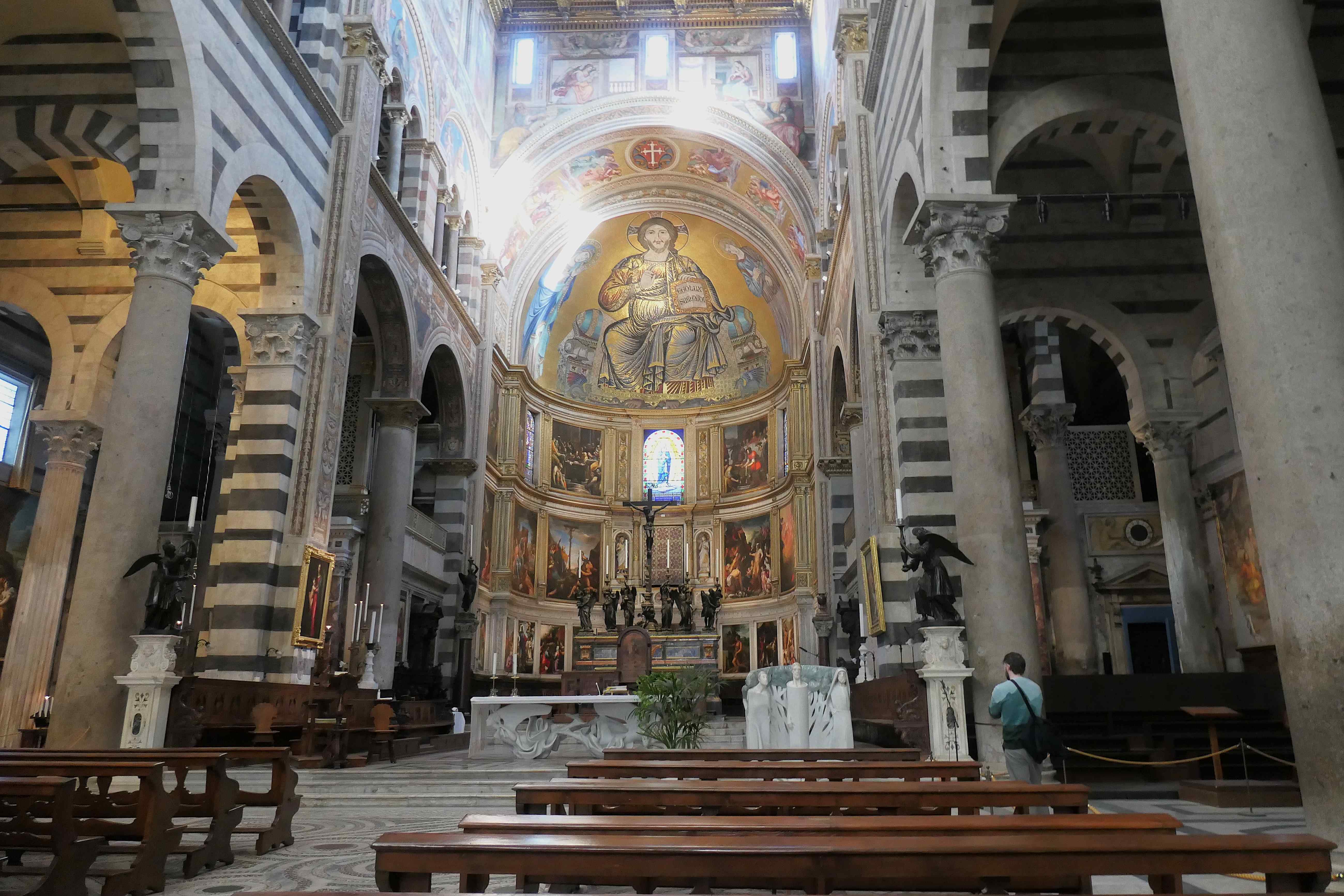
After regaining our equilibrium back on solid ground 🙂 , we went inside the cathedral, which, along with the baptistry, is also reported to be sinking. The interior of the cathedral is quite elaborate from top to bottom.

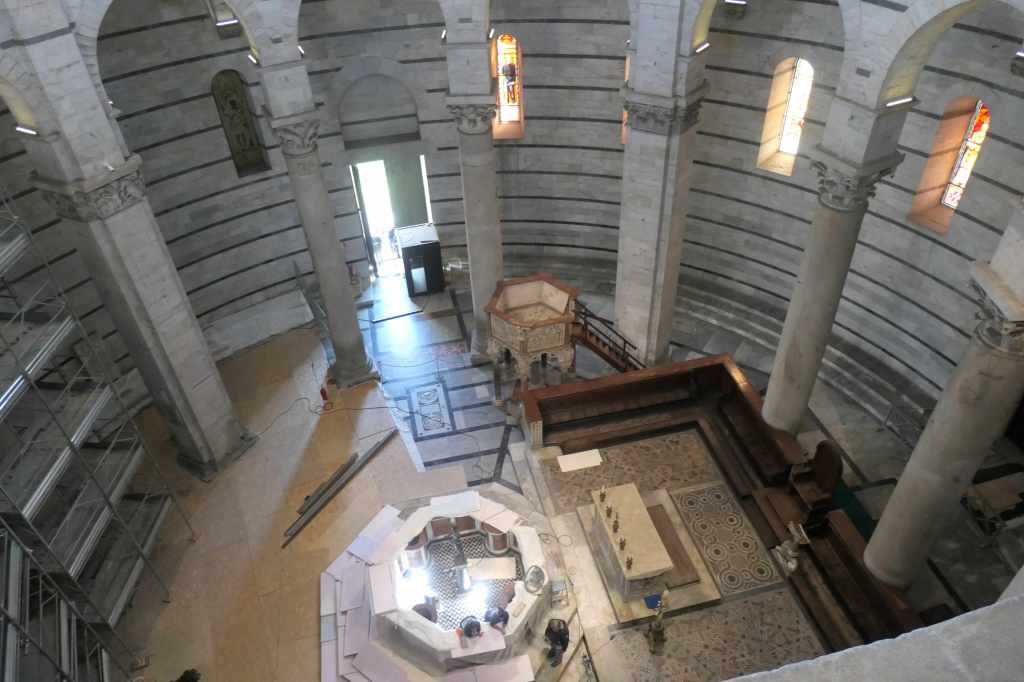
Yeah, kind of amazing, these cathedrals. Any-hoo, a quick stop and then more stairs (thankfully not tilted this time) in the massive Baptistry where Galileo was baptized in 1565.

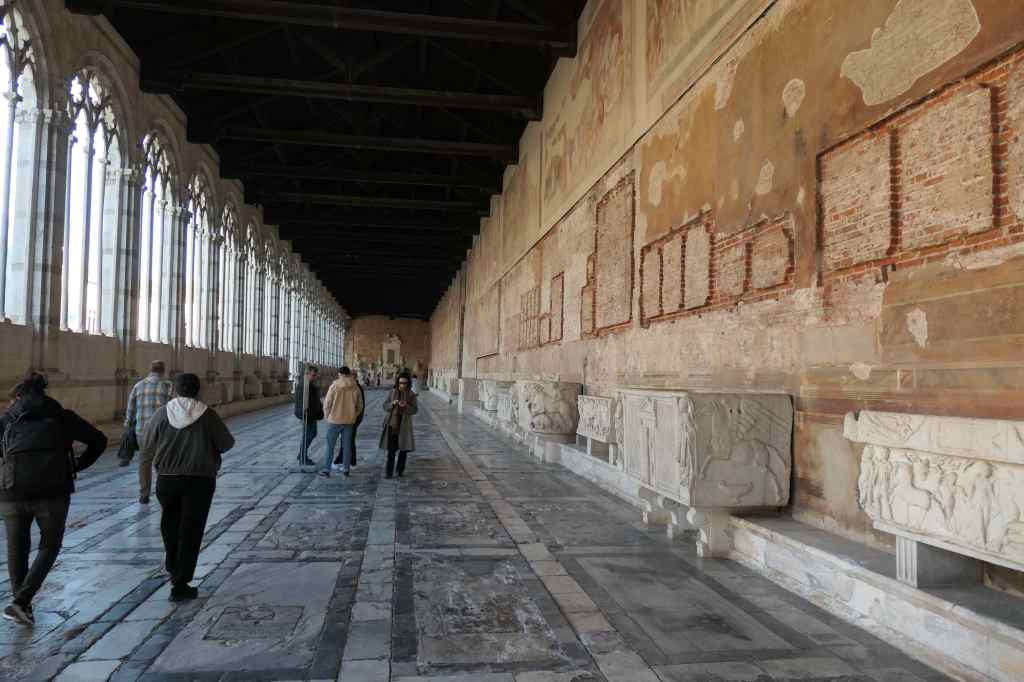
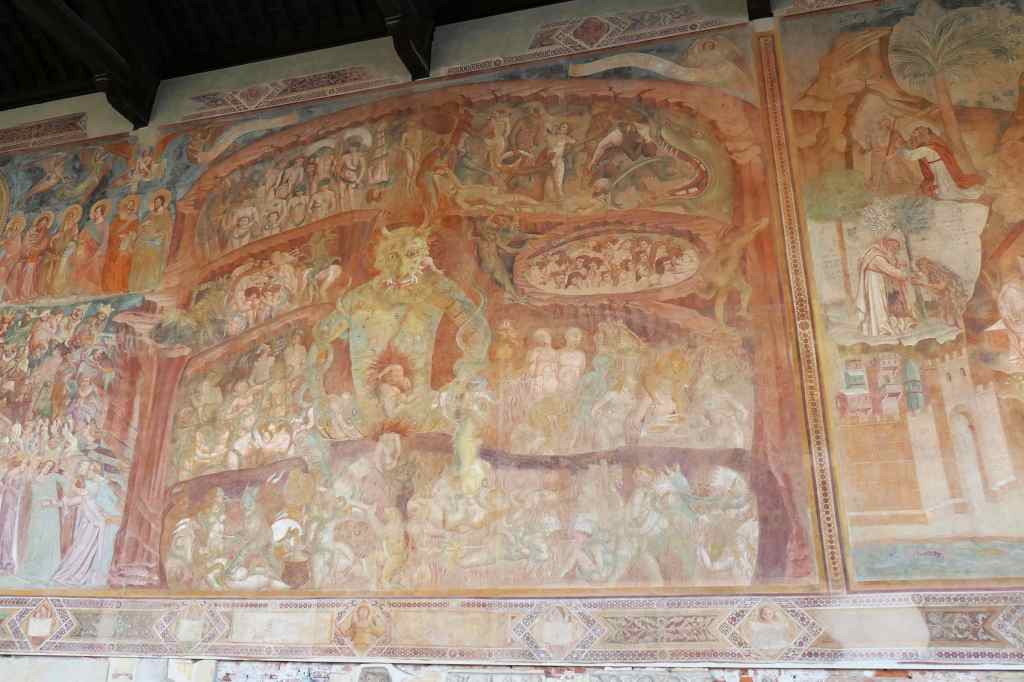
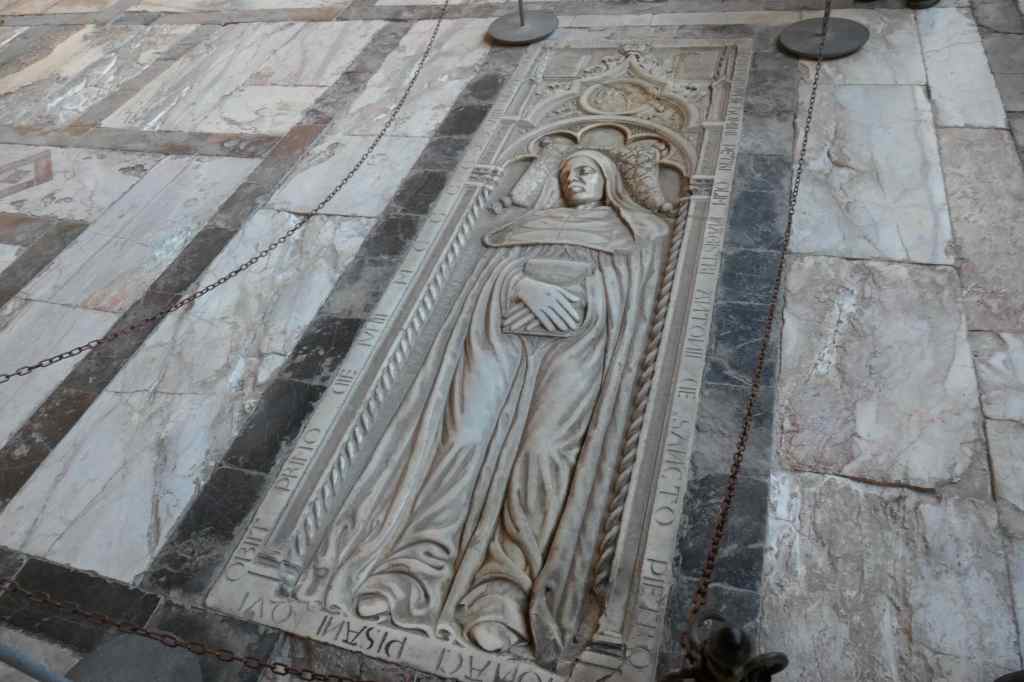
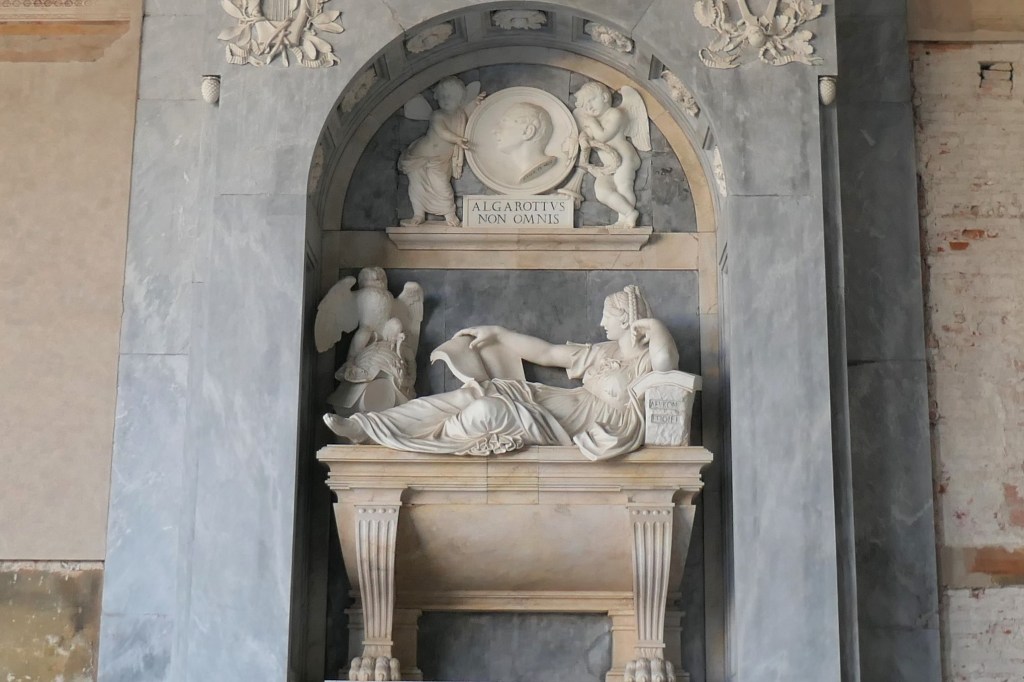
Our last stop in Pisa was the Camposanto Monumental Cemetary. Camposanto translates to “holy field” because it is said to have been built on 53 shiploads of sacred soil from Golgotha, the Hill of Calvary in Jerusalem. The construction of this huge, oblong Gothic cloister was begun in 1278 and completed in 1464.


Whoaaaa, that’s enough for one day.

The next day, we headed for Firenze! Florence to us non-Italian-speaking Americans. Come on, it’s not really English, either. ha!

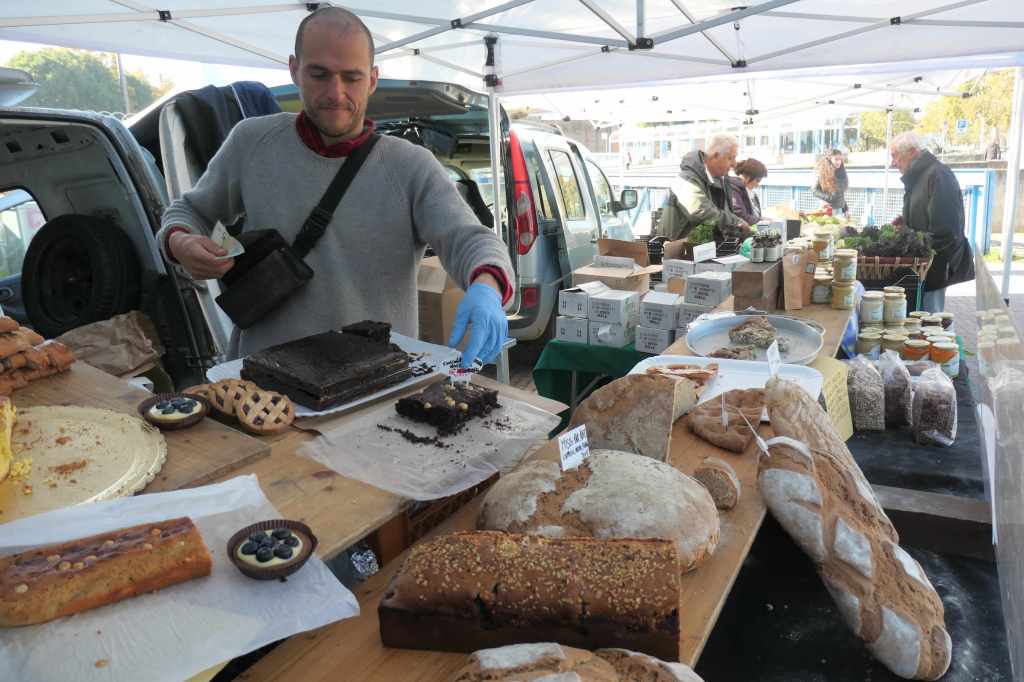
After a quick treat from the fresh market conveniently located just outside the parking garage, we walked into town to see what we could see.


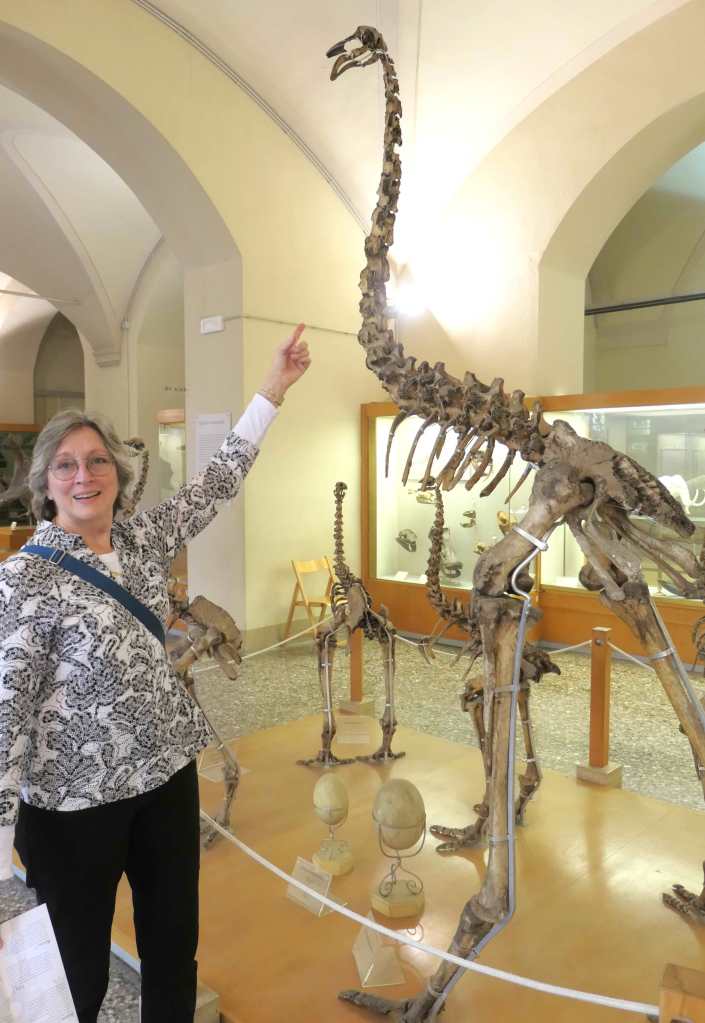
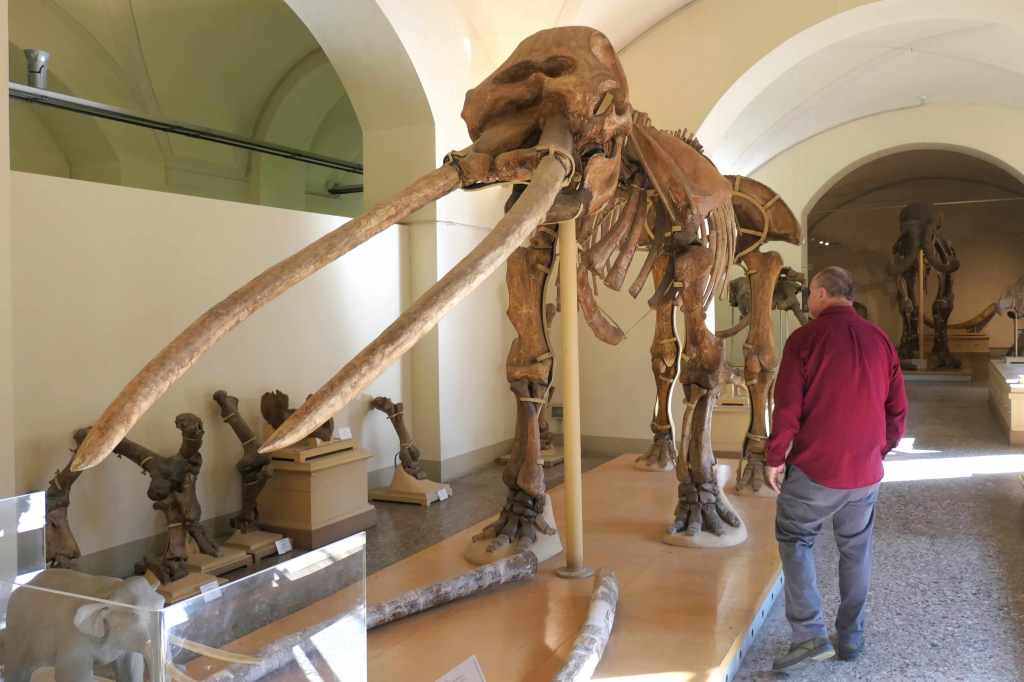
We were making tracks to the Piazzale Michelangelo to see David in all his glory when some prehistoric creatures near the sidewalk snagged our attention. The next thing we knew, we were talking to the animals in the Natural History Museum.


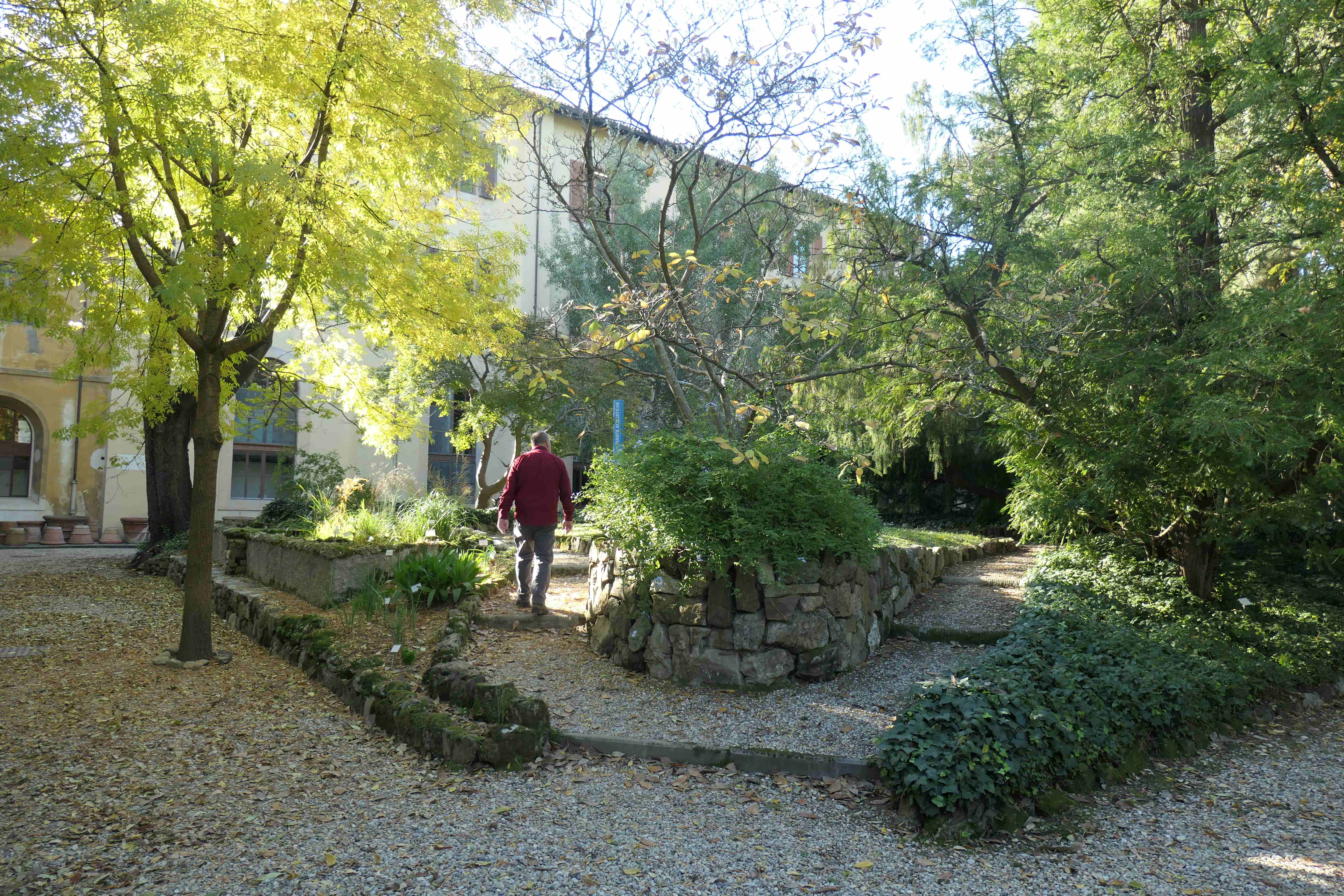
After all those skeletons, we needed something alive. Nothing could better fit the bill than a stroll through the third oldest garden in the world!

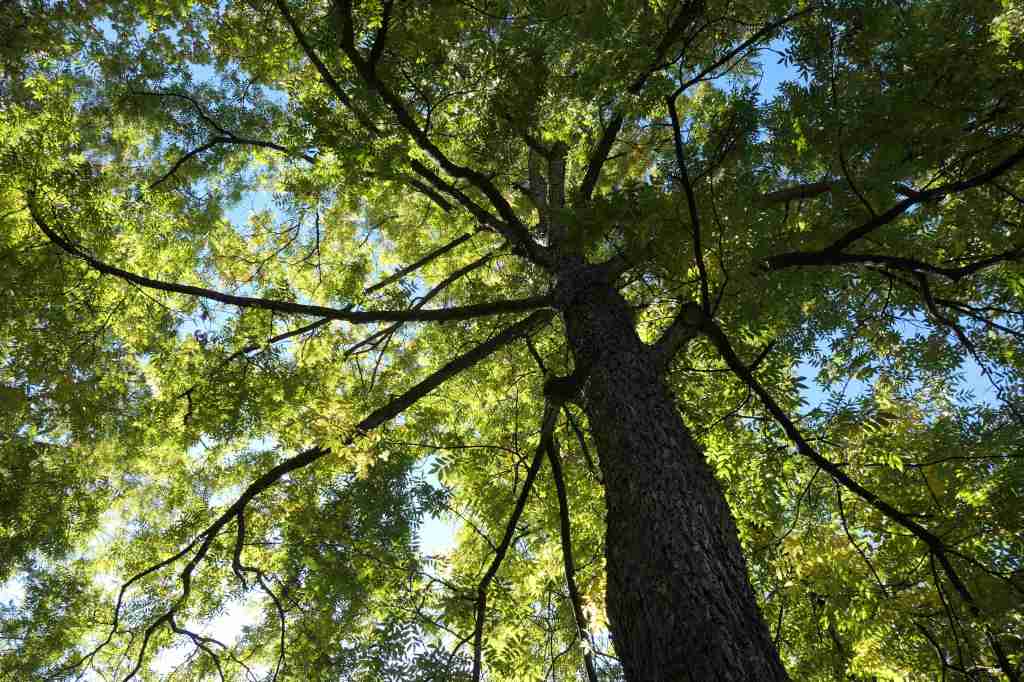
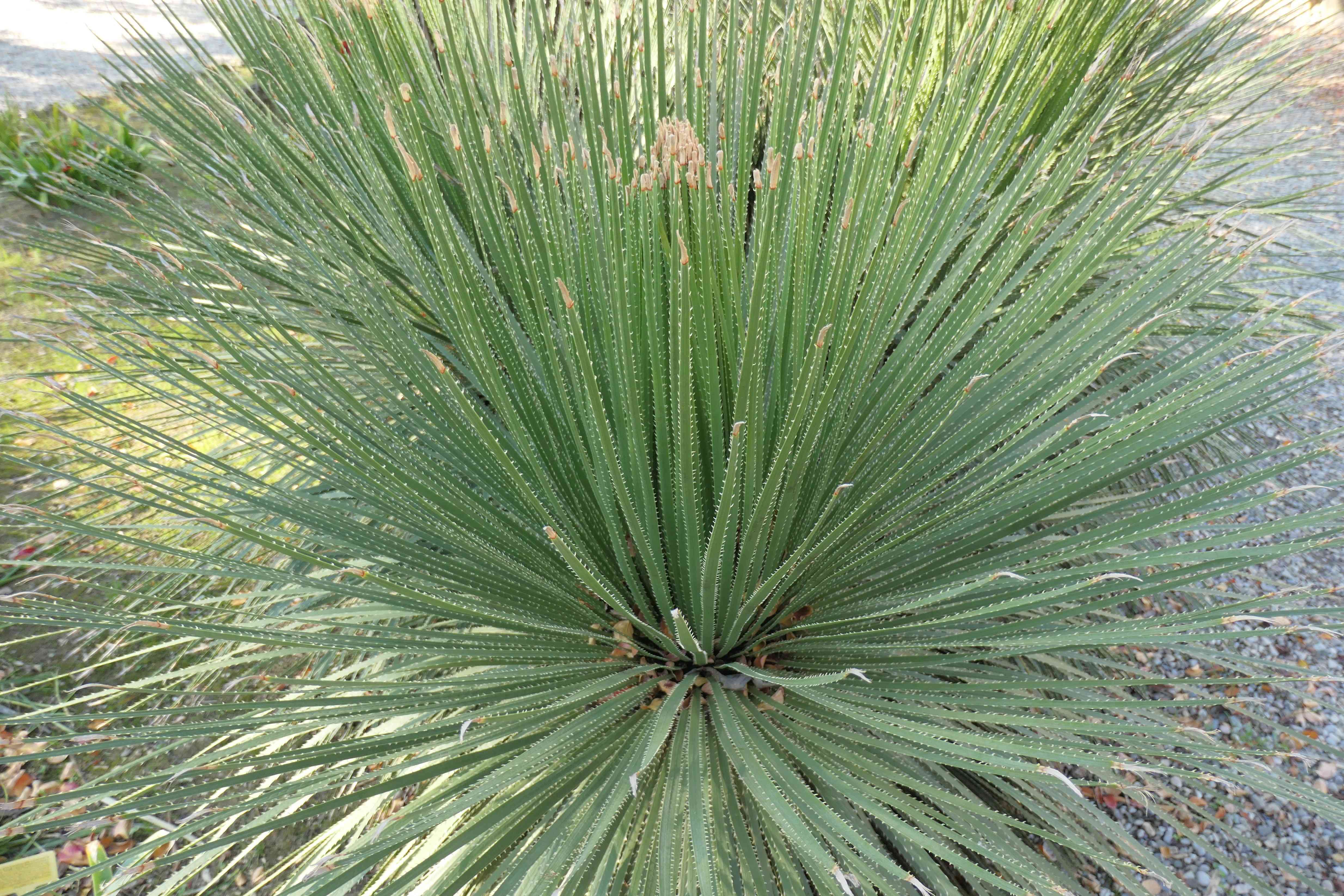
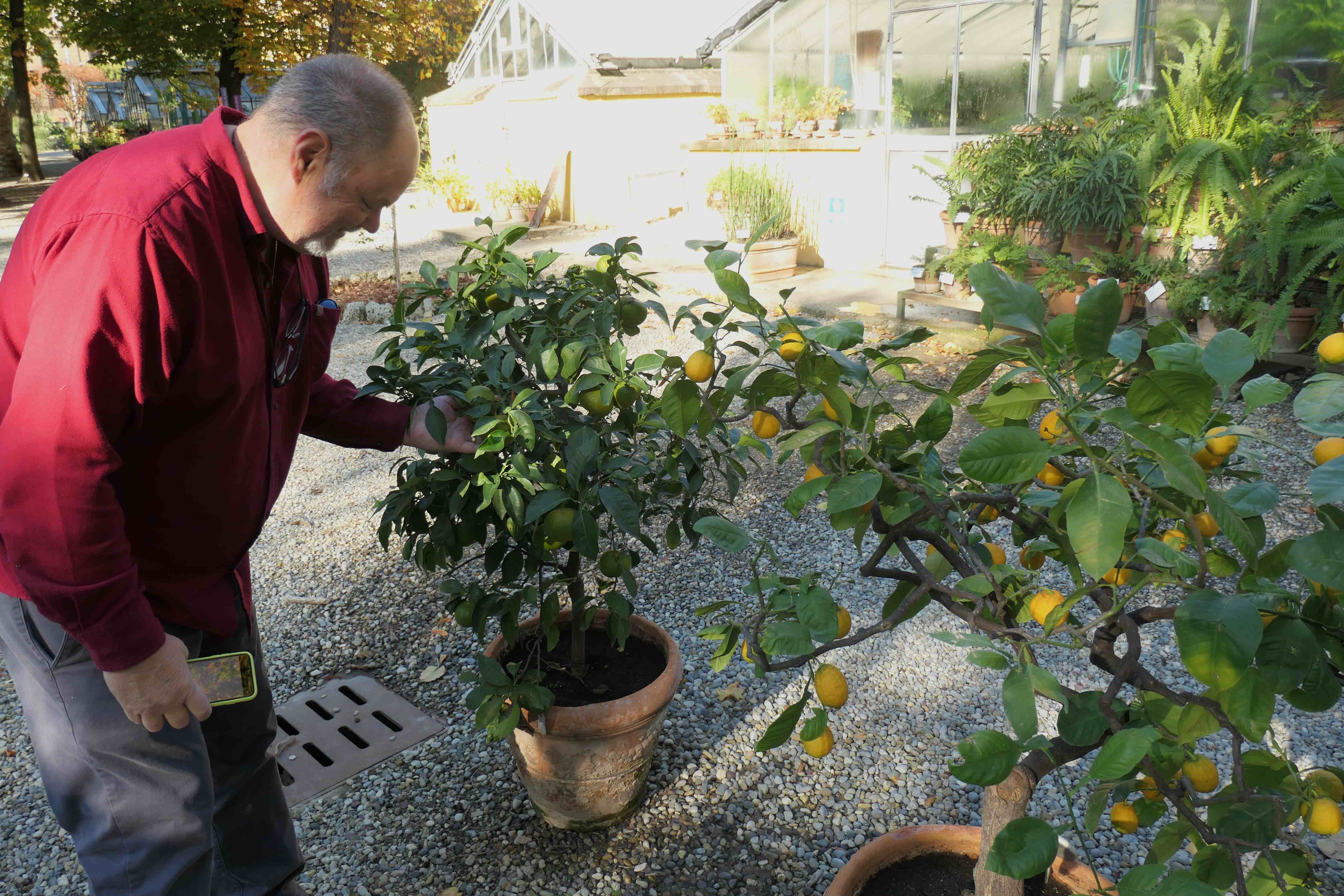
The Orto Botanico di Firenze was established by Grand Duke Cosimo dei Medici, in December 1545. And almost every plant tag in the place was read by Todd Olsen in 2024. 🤪 So many tree species that we have never seen! It was quite a walk.


So, a word about planning, or more accurately, the occasional hurried lack thereof. We didn’t prebook tickets to see David. Why? uh… Todd’s fault? Ha! Anyway, the line for those without tickets was just too much for these weary travelers. So, we’ll save Michelangelo and David for another trip.

Based on the remembrances of Todd’s dear mother, we did not want to miss a stop at Ponte Vecchio. Todd’s parents visited in the 60’s (his best guess 😇) and simply said, “Son, if you ever get to Firenze, you must go to the Ponte Vecchio.

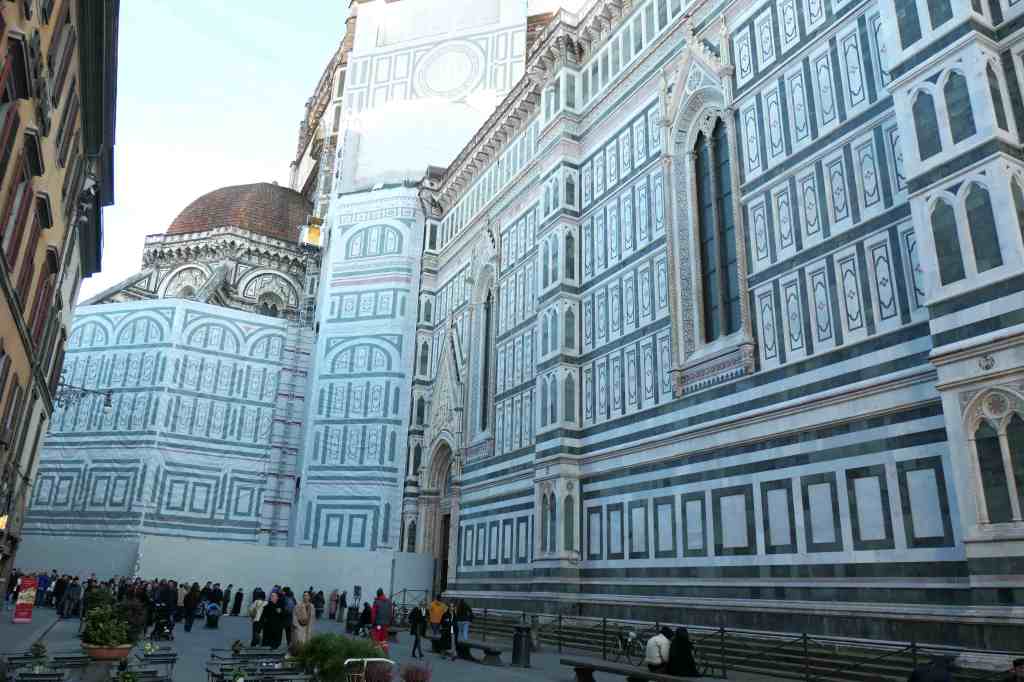
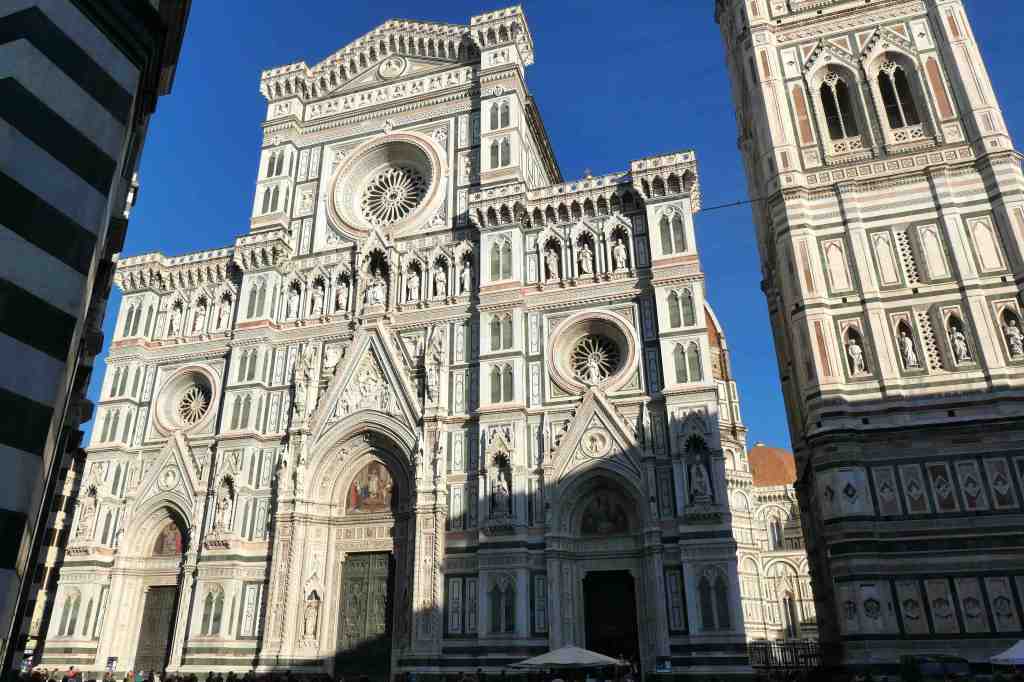
With Michelangelo’s piazza behind us, we quickly headed down the last street and rounded the corner onto the Piazza del Duomo (Cathedral Square) of Florence.

And…

WOW. 😃😃🤩

Talk about being stopped in your tracks!

Unfortunately, what also went on for blocks was the line to get inside and there we were without tickets (again). So, we took some photos, placed another item on the list for “next time,” and single-mindedly focused on reaching Ponte Vecchio before dark. Todd! Let’s go.


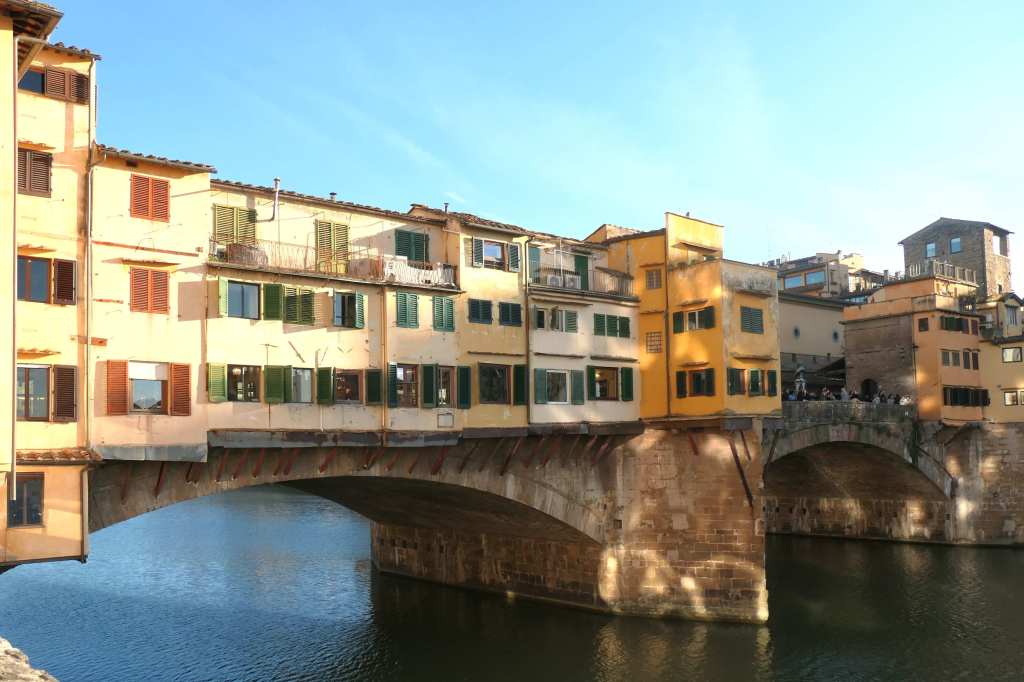
Okay. Okay. About this Ponte Vecchio, just what is it??

From Britannica, the Ponte Vecchio (‘old bridge’) “… is the first segmental arch bridge built in the West… and is an outstanding engineering achievement of Europe’s Middle Ages. Its builder, Taddeo Gaddi, completed the bridge in 1345.”

Through the centuries, the bridge has survived changes, floods, and wars. During World War II it was the only bridge across the Arno that the fleeing Germans did not destroy, instead blocking it by demolishing the medieval buildings on each side.

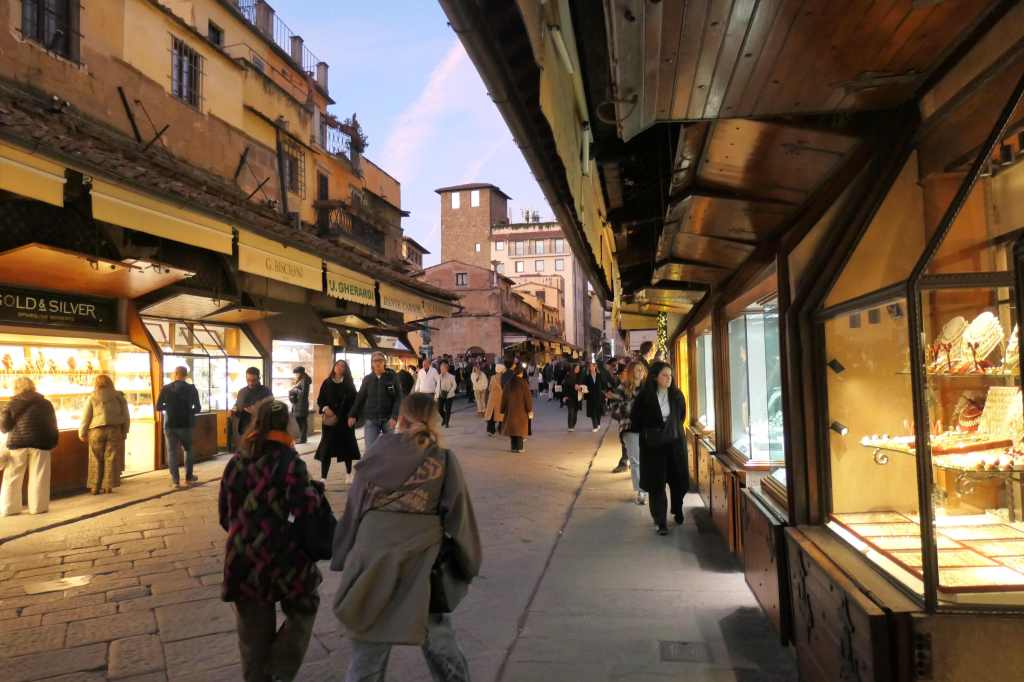
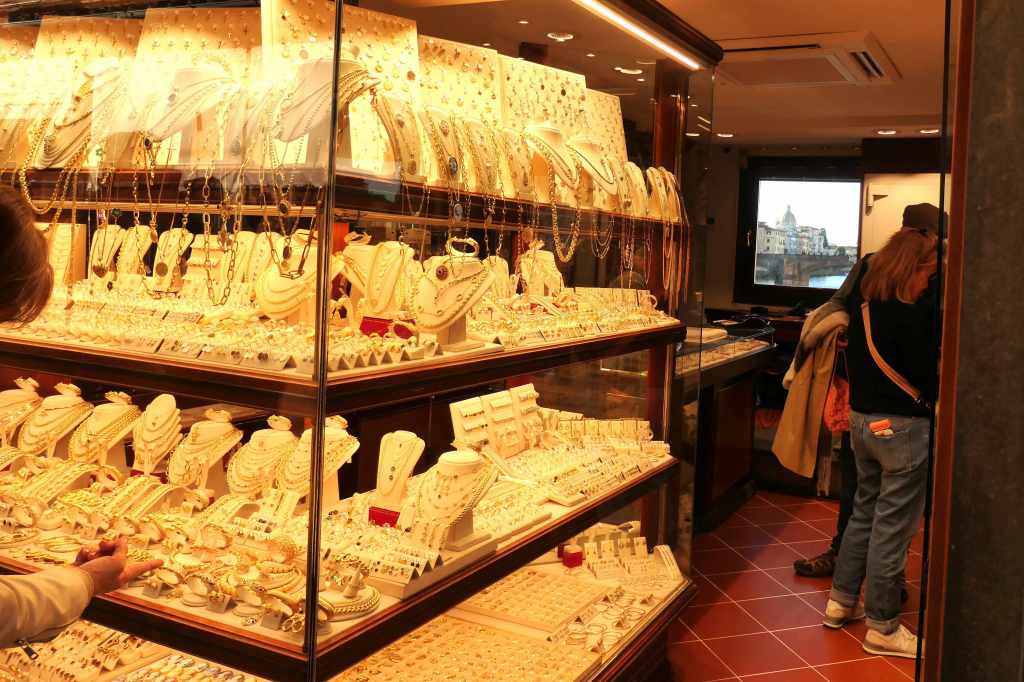
There have been shops on Ponte Vecchio since the 13th century, initially all types of shops – including butchers, fishmongers, and tanners, whose waste, as one can imagine, caused a rank stench. In 1593, Ferdinand I decreed that in order to improve the wellbeing of all, only goldsmiths and jewelers (😍) would be allowed to have shops on what is now referred to as “the gold bridge”! (And with sky-high gold prices! Mama Mia! 🤯)

Look at all those sparkles! Do we have to leave…?? 😢

Hey, Italy’s to the east…

¯\_(ツ)_/¯

After enjoying a few days in Longview, TX with friends Terry and Lynn, we garaged our trusty steed(-ette?) Pearl in her temporary digs at their place. On the way to a wedding in Dallas Saturday, they then dropped us at a hotel near the Dallas Fort Worth Airport.

Amazing planning by the super planners!

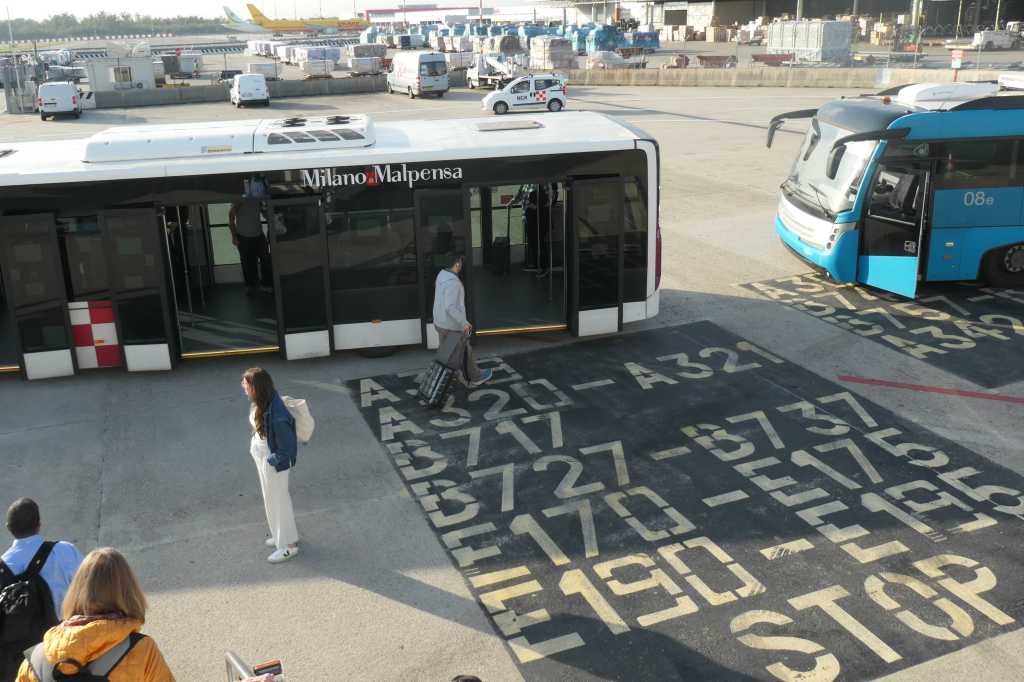
Sunday afternoon we flew to Atlanta to catch a long flight across the ocean all the way to Milano, Italy. The vagabonds are cruising by air! Luckily, we didn’t have anyone next to us on the 9-hour leg. That’s a long way! But arrival was exciting, and customs was a wonderful non-event.

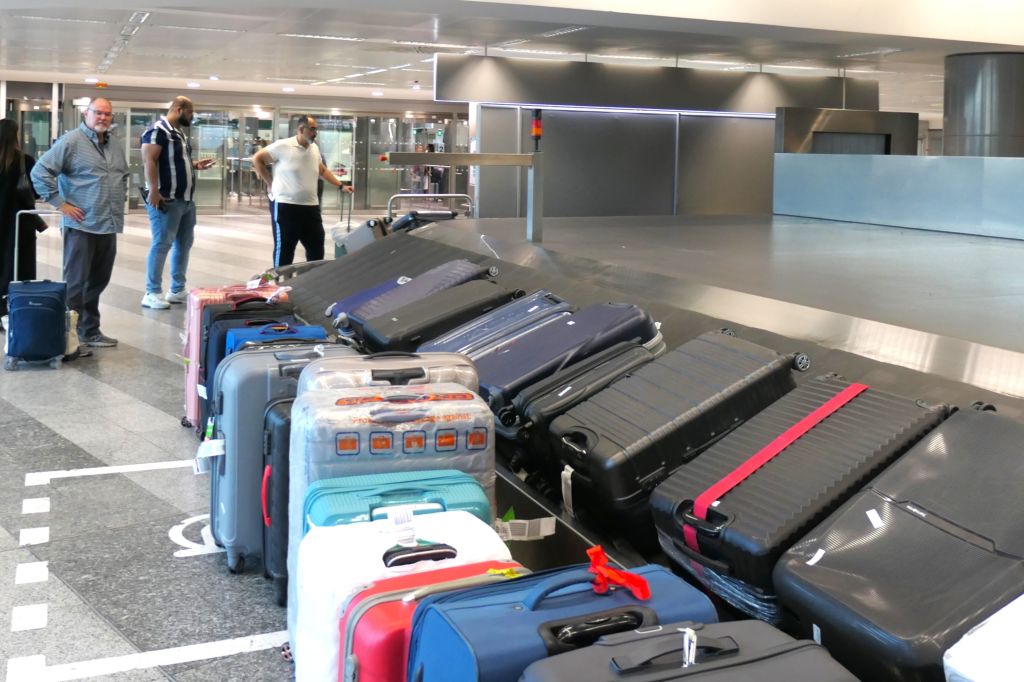
After securing our suitcase (Score! No lost luggage!), we followed the signs to the “Noleggio Auto” in the airport, pulled a number and settled in for a bit of a wait.

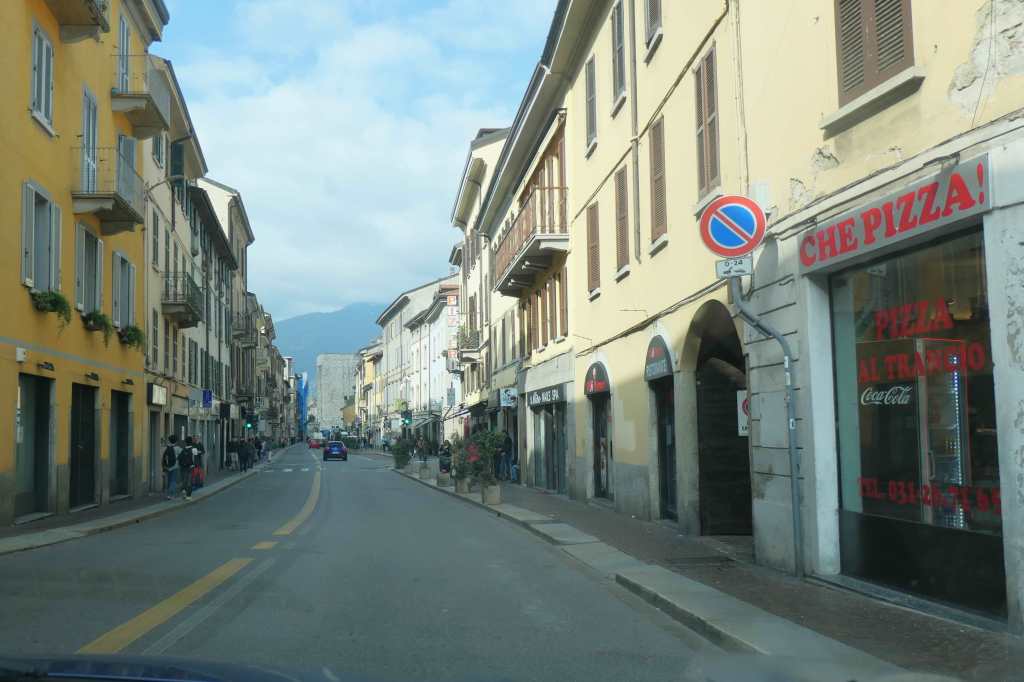
Once handed the key to a snazzy blue Renault, we hit the road amongst a plethora of signs, all unreadable to these Americanos. Fortunately, many of the important ones are symbols: Stop, Yield, Merge, Do Not Enter, No Parking, etc. (And at least the Italians drive on the right. Ha!) Through the magic of cellphone navigation (yeah, T-Mobile!), – not to mention, we are so young and cool 😉 – we found a mobile phone store in Milano and picked up a local Tourist SIM card for our spare phone. Poor handsome dude spoke a smattering of “Inglese” to help us now somewhat babbling oldsters.

The next task was even more challenging – find a market and purchase enough food to scrounge up dinner and breakfast at the rental so we could get some much-needed sleep before facing a larger provisioning trip. That first attempt at grocery shopping was certainly entertaining… until our “young cool side” remembered that crazy cellphone. We are now learning how to make the best use of Google Translate. And it’s Fantastico!


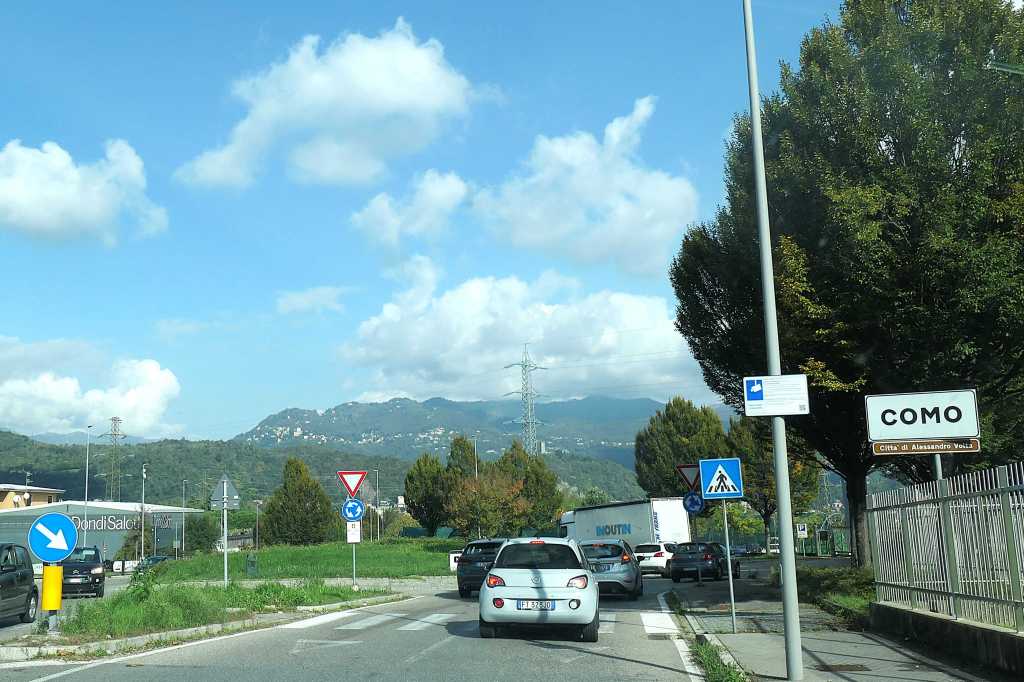
As to driving? Nothing like going rapidly from 85+mph (135+ kph) to a crawl (and everything in between) whilst operating a manual stick in a foreign country. Yahoo! Navigating through and around Milano’s larger roads turned out to be good training for things to come when we reached the Como area. Mamma mia!


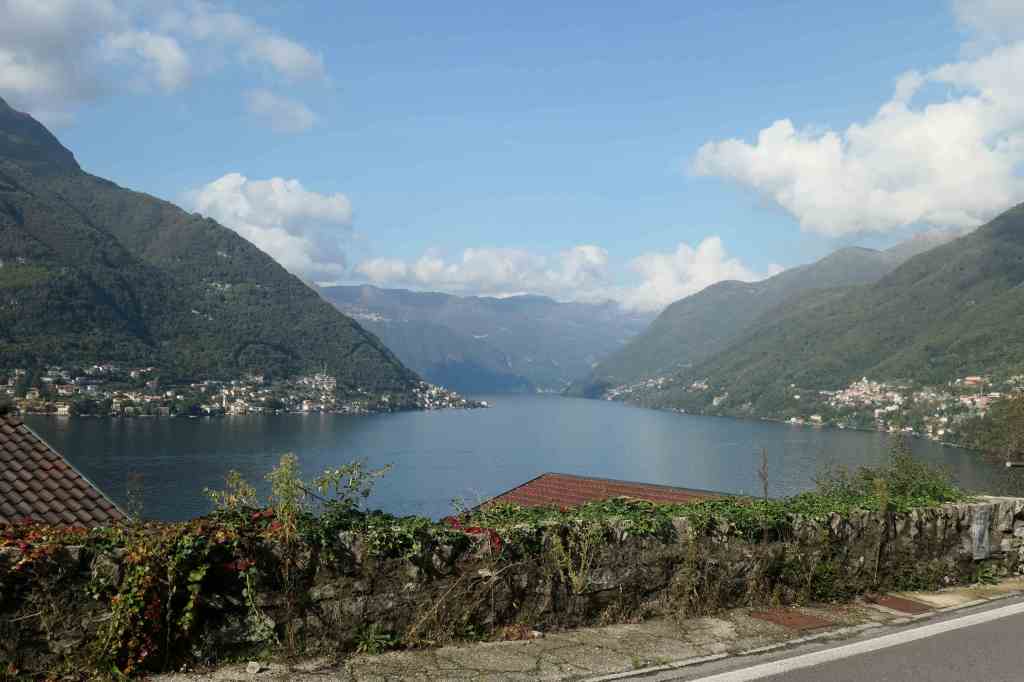
About an hour outside of Milan, we were rewarded with our first glimpses of the famous Lake Como!


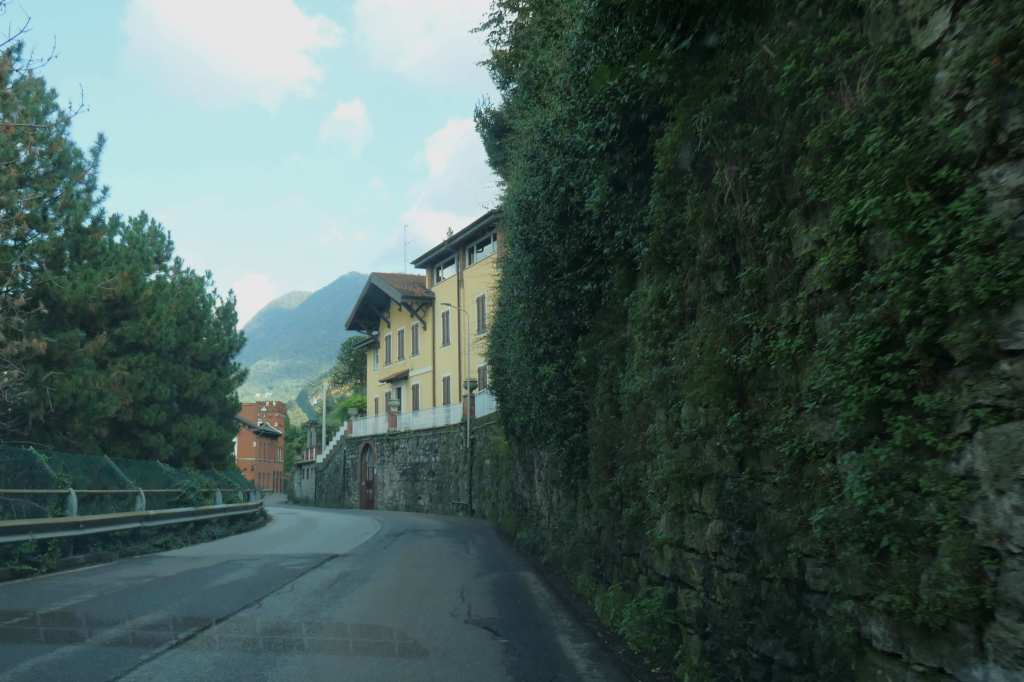
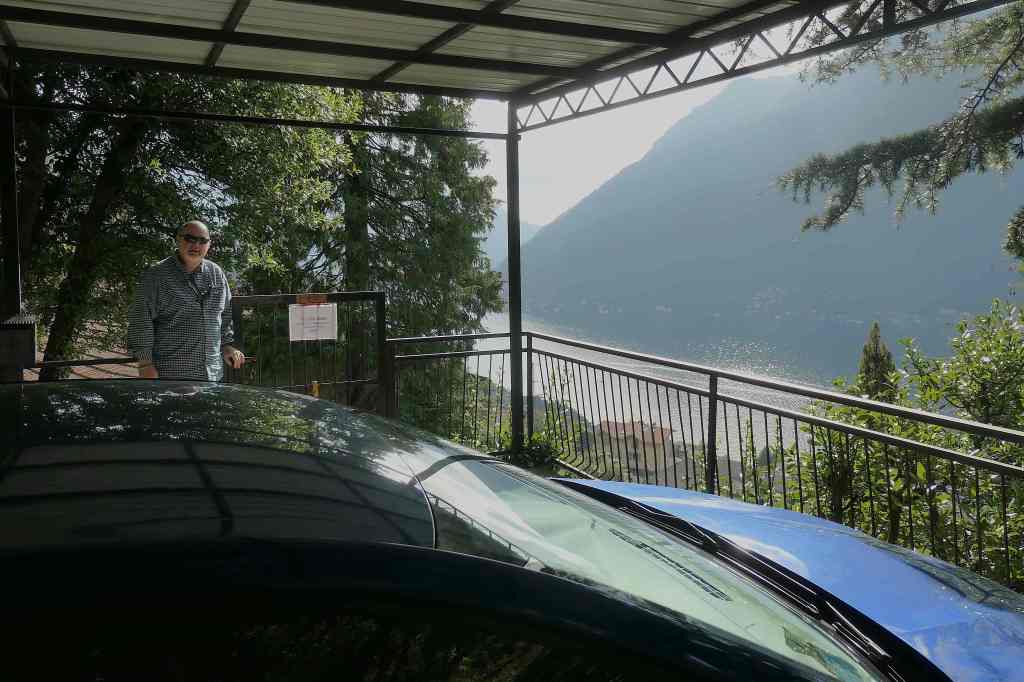
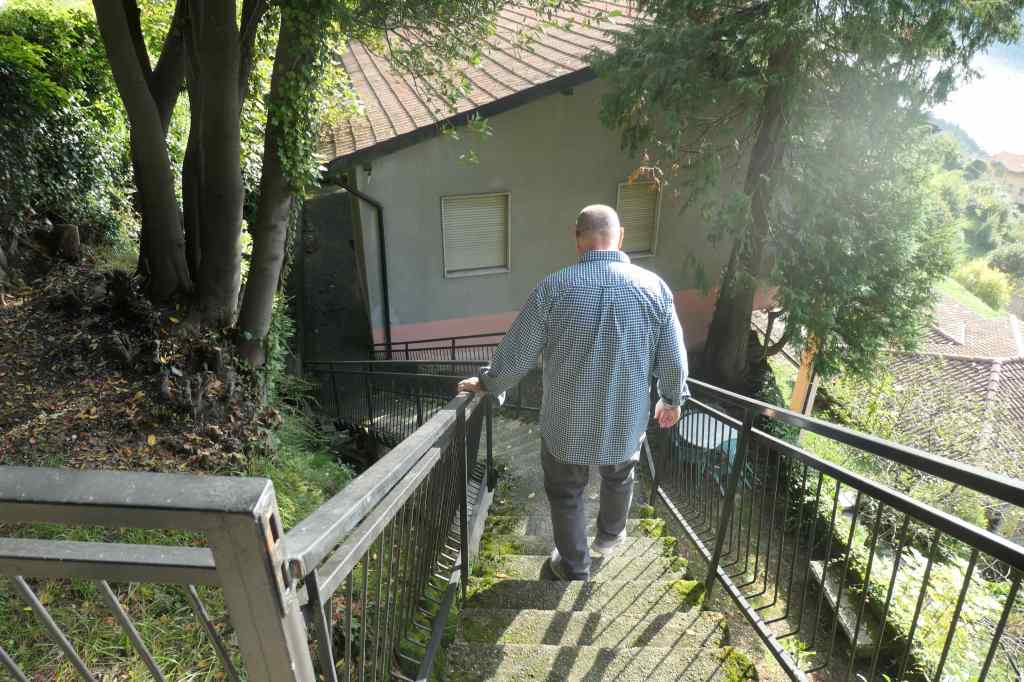
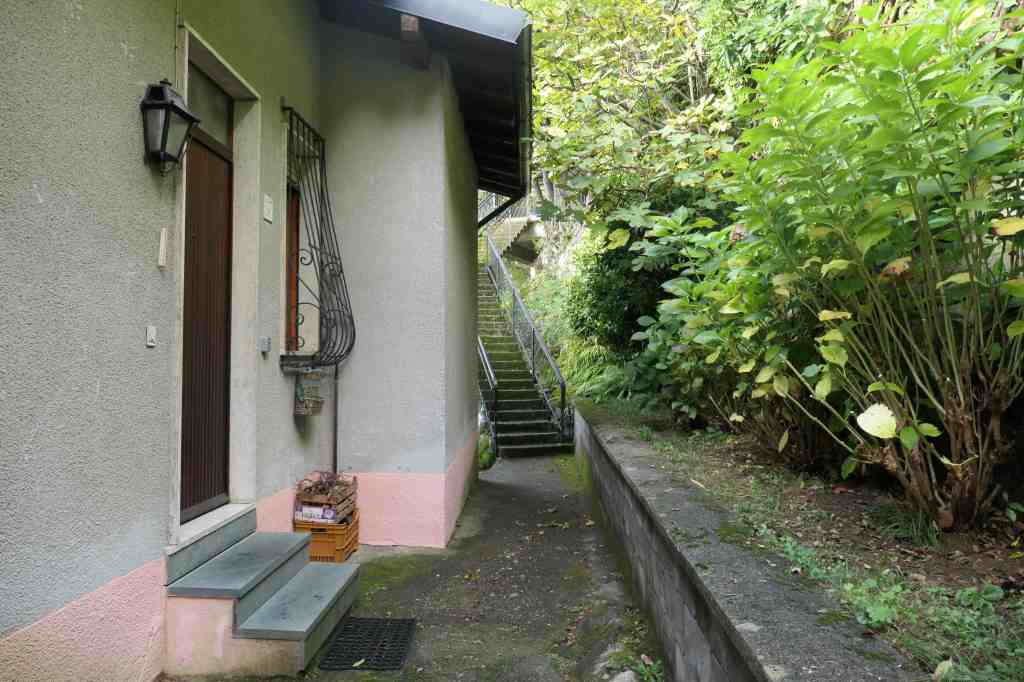
Another 30-minutes of increasingly narrow, twisting roads and several hairpin turns up the mountain (double mamma mia!), and we found our first home away from home between Como and Belagio.

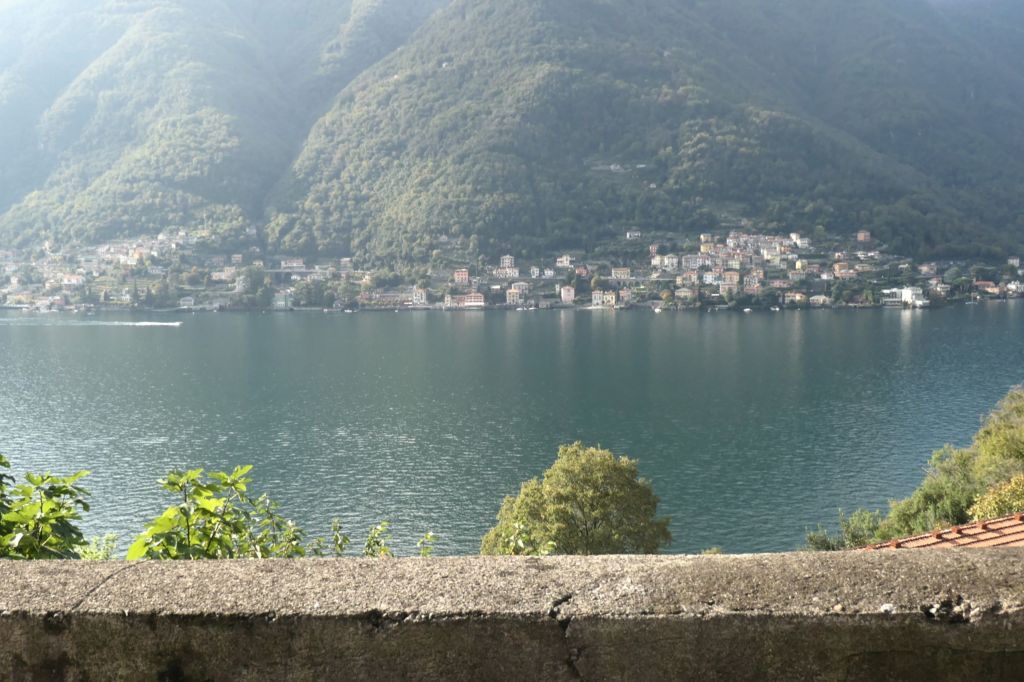
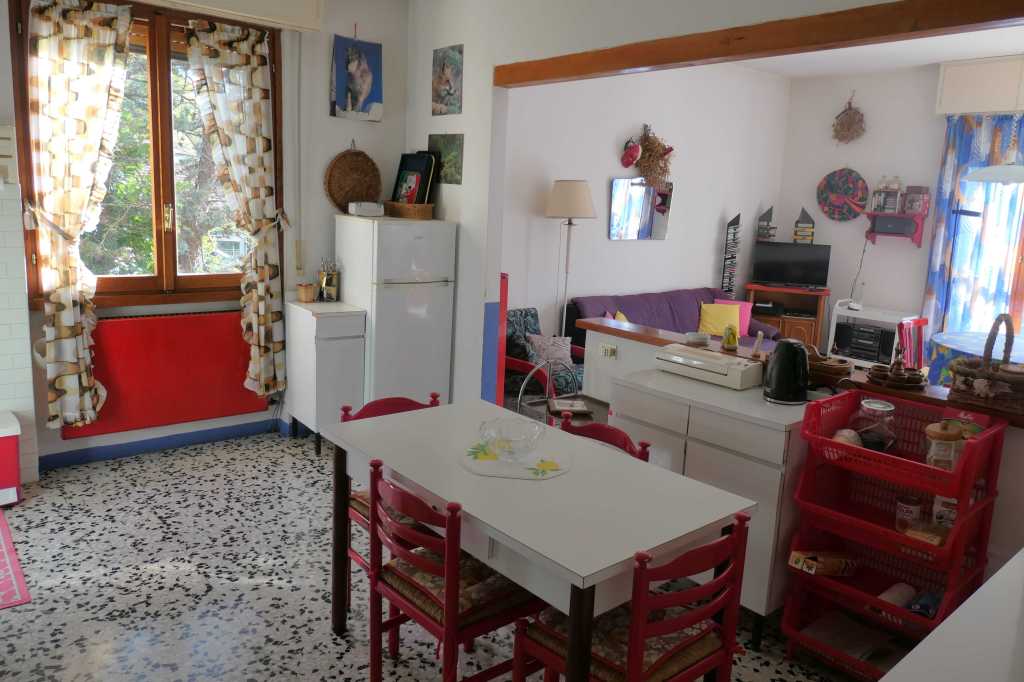
We’ve spent our first few days sleeping, provisioning, sleeping, enjoying the view, sleeping, and getting used to things. We can’t wait to explore and share the adventure. For now, arrivederci, one and all!